Artículos similares a Tapa (barkcloth) by the Mbuti of the Republic of the Congo, Africa / Tapestry
Cargando vídeo
¿Quieres más imágenes o vídeos?
Solicita imágenes o vídeos adicionales al vendedor
1 de 22
Tapa (barkcloth) by the Mbuti of the Republic of the Congo, Africa / Tapestry
865,63 €
Acerca del artículo
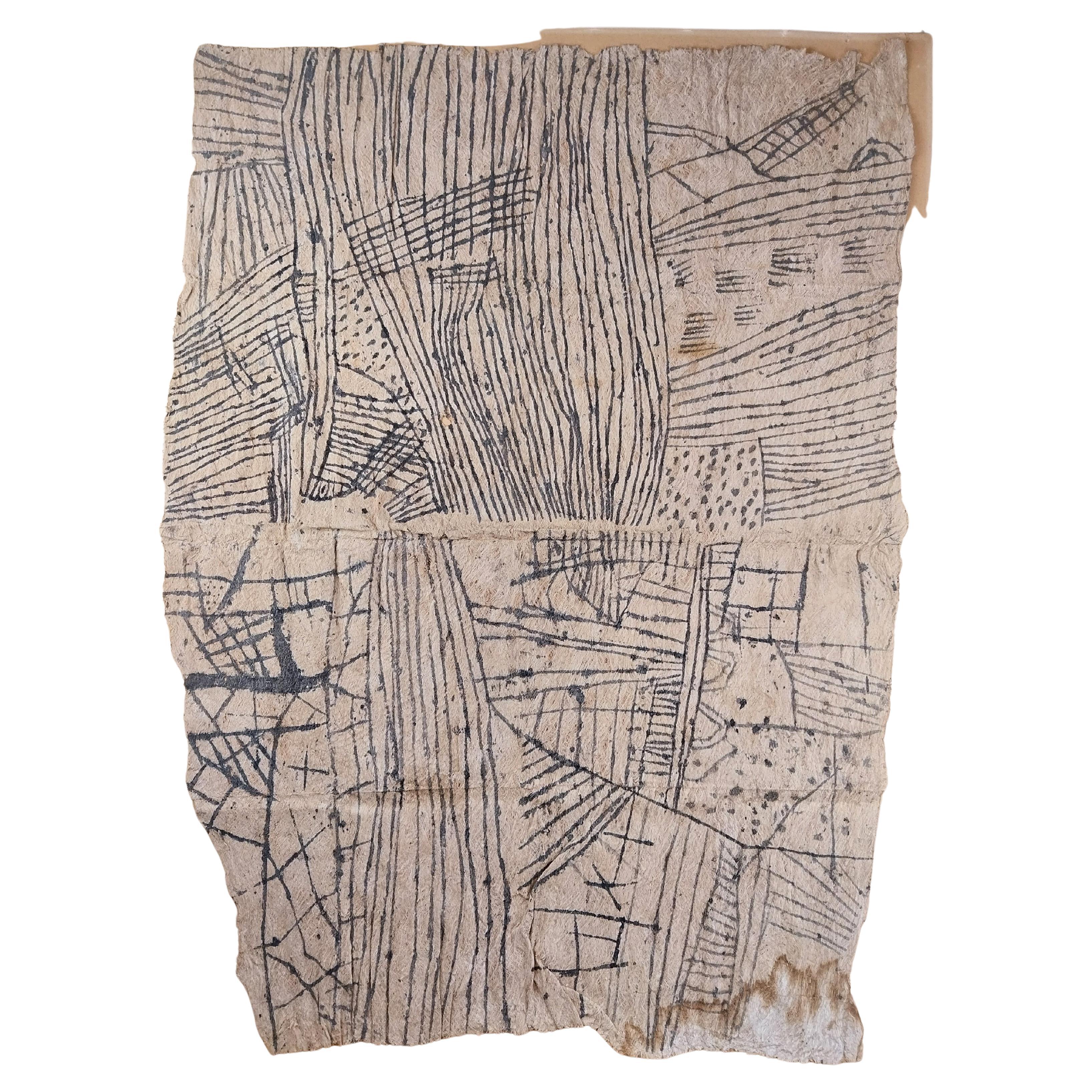
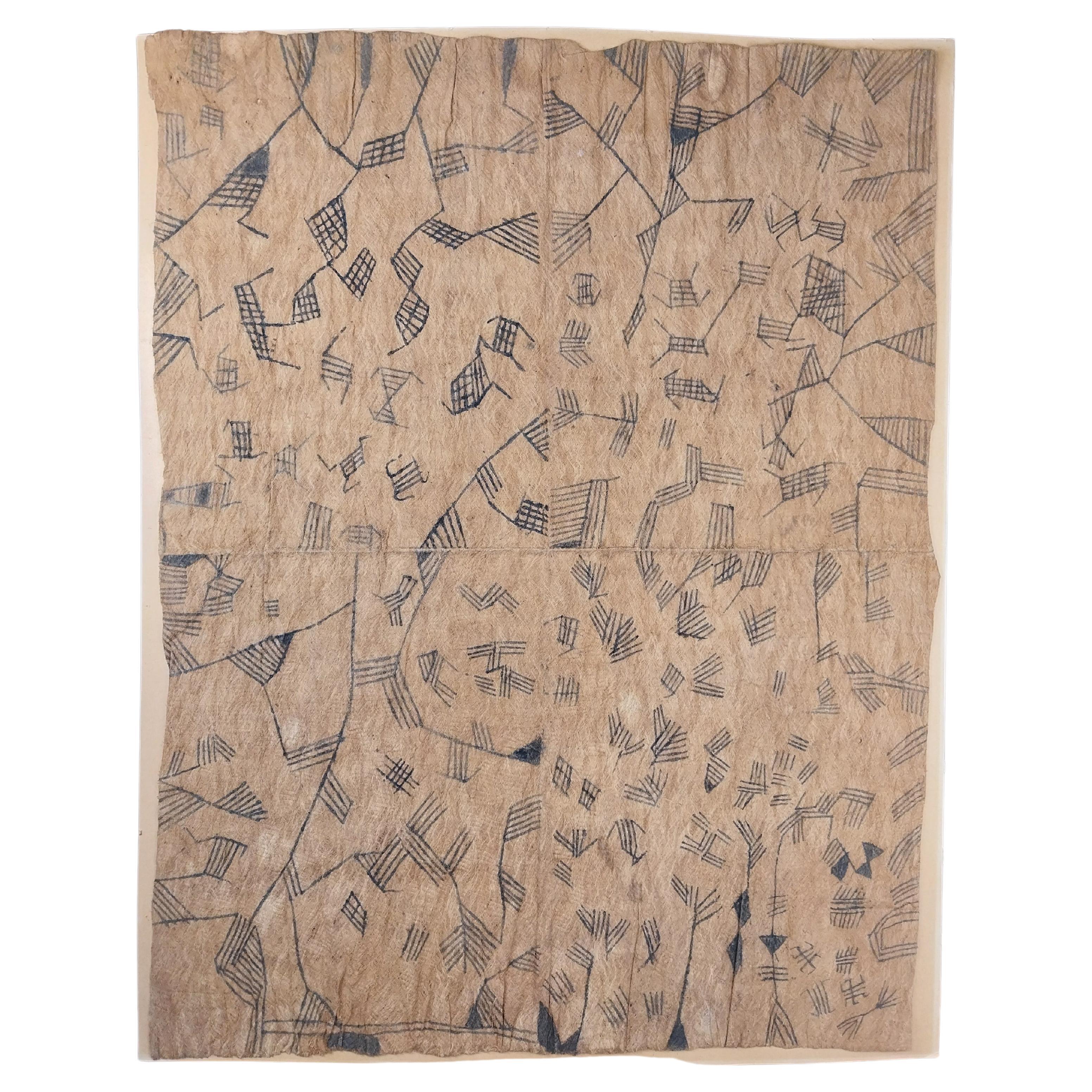
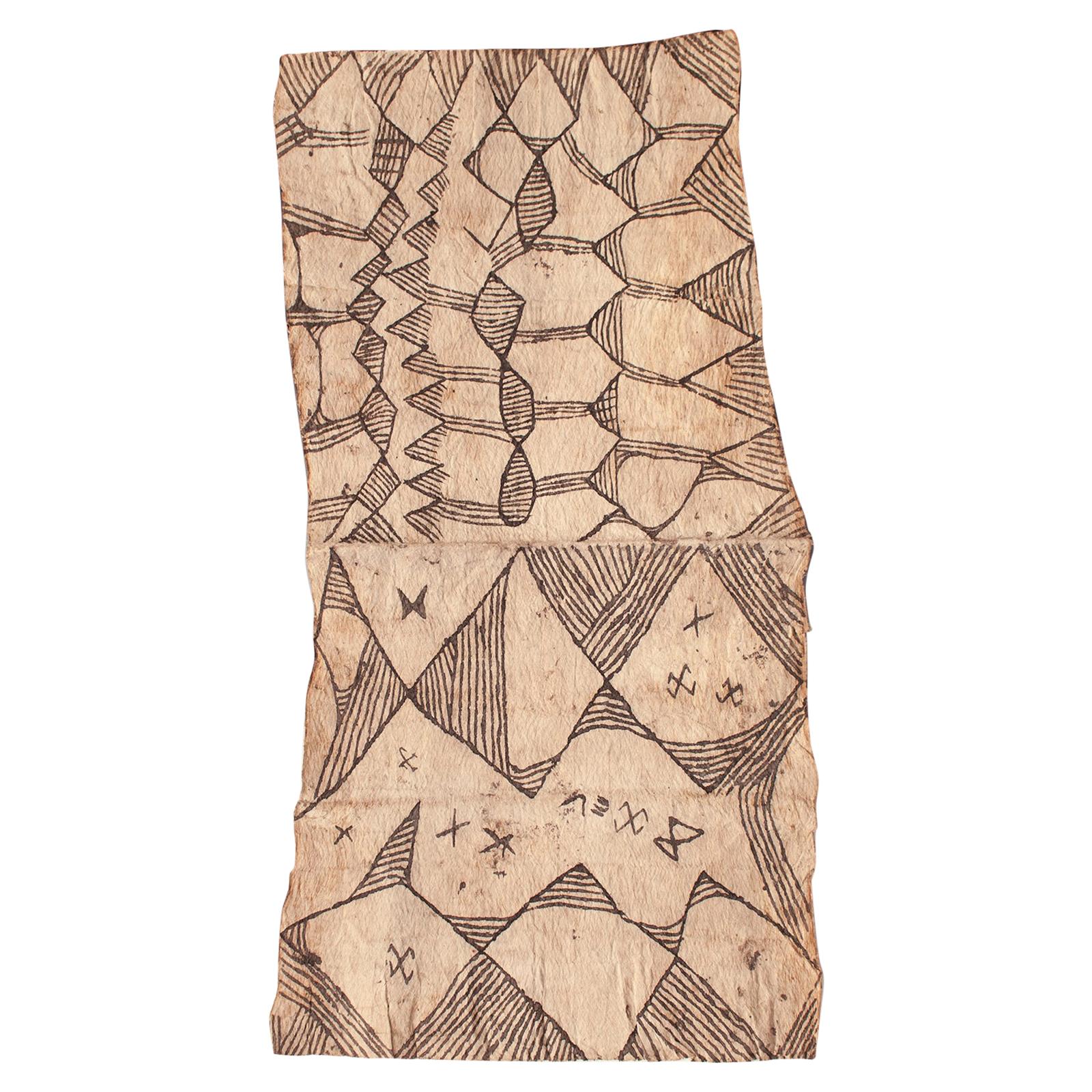
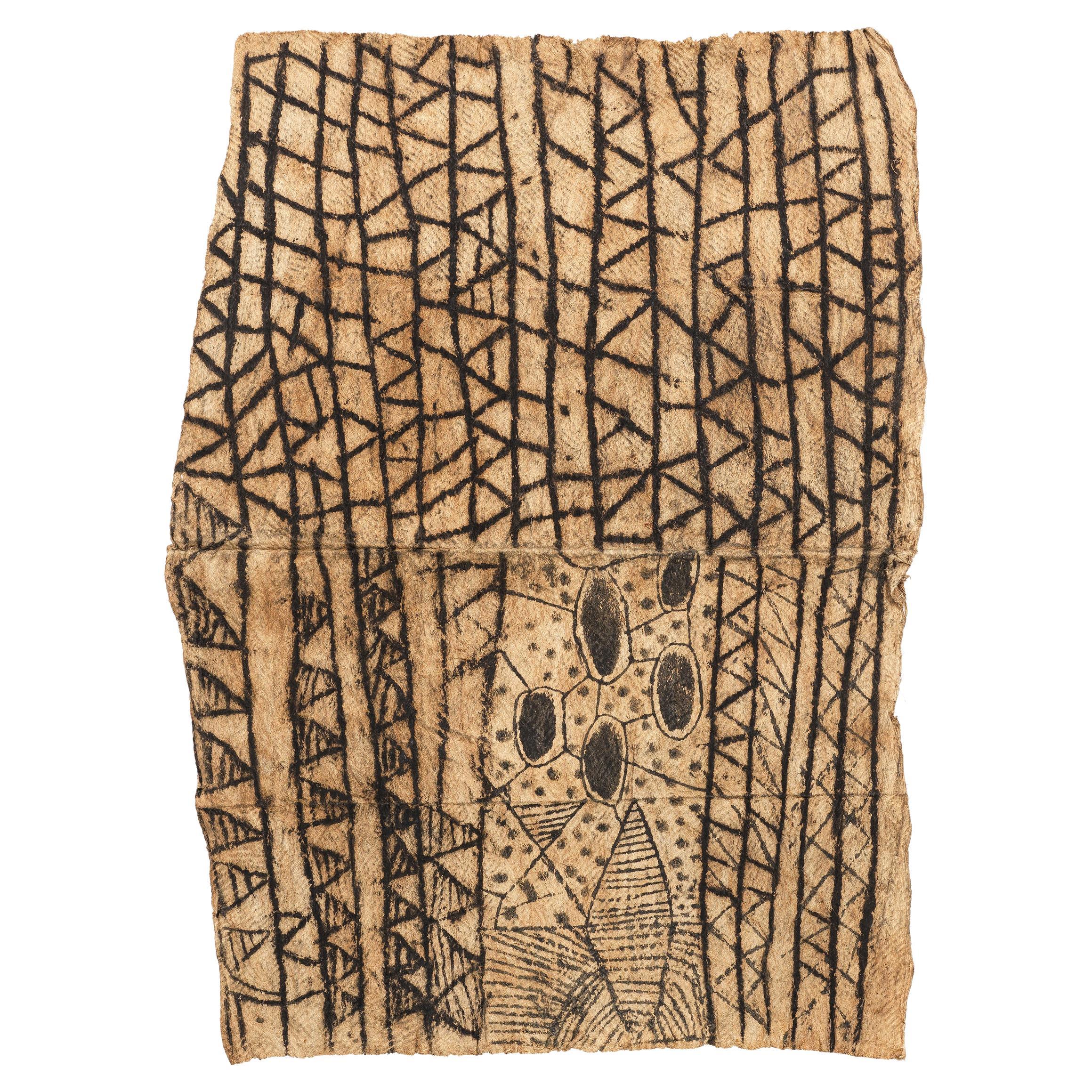
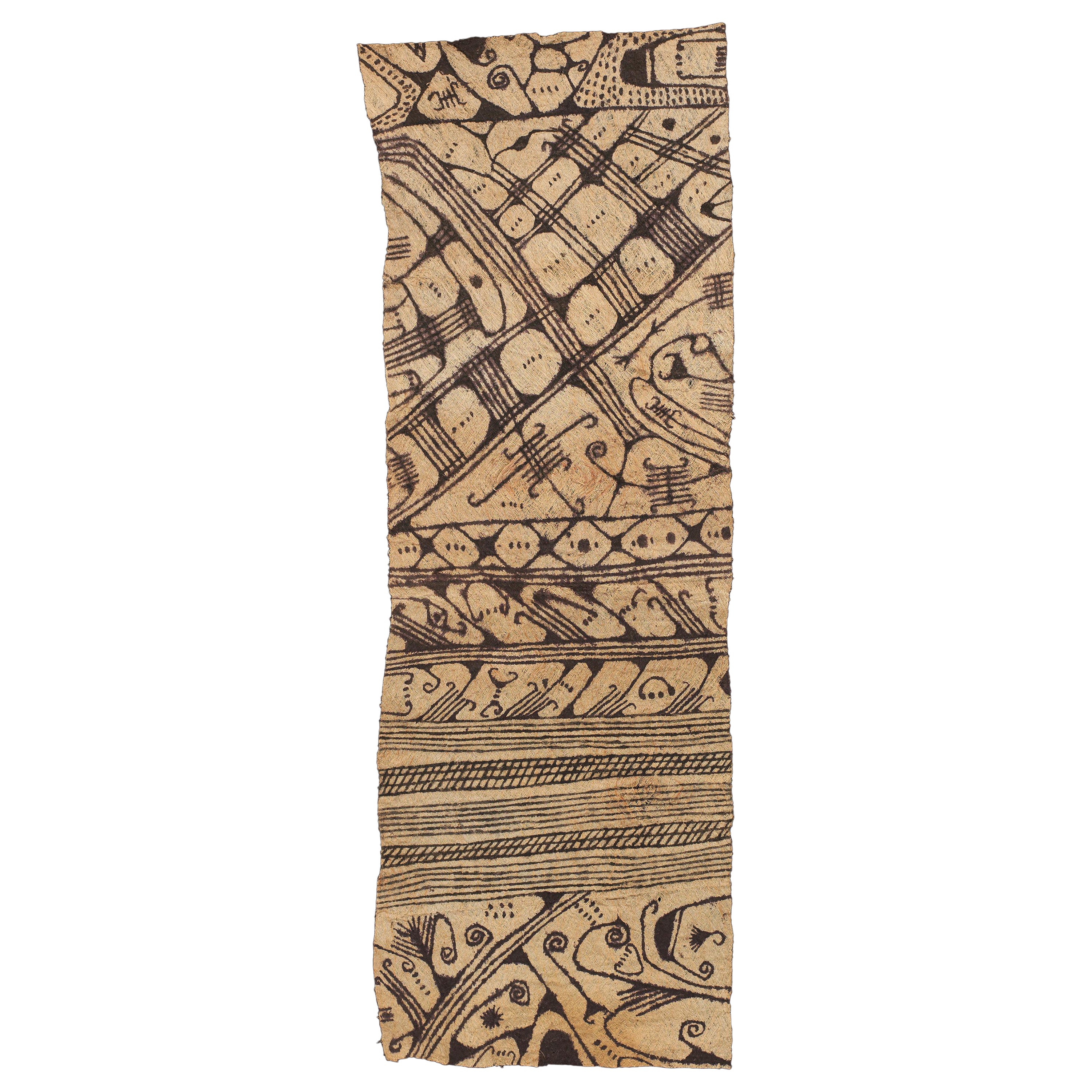
This is tapa (bark cloth) made by the Mbuti people, also known as pygmies, an indigenous people who live in the Ituri Forest, which stretches from northeastern Democratic Republic of the Congo in central Africa, near the border with Uganda. It is believed to have been made around the 20th century.
Tapa is a cloth made using a very primitive yet sophisticated technique: bark stripped from tree trunks is soaked in water, beaten to loosen the fibers, and then stretched into a cloth. While similar examples exist throughout Africa and Oceania, Mbuti tapa is known for its particularly free-flowing expression. (Reference materials excerpted from specialist books are included, so please take a look.)
What's unique about this cloth is that it isn't a finished "painting," but rather features improvised patterns drawn by women. Natural pigments are used, and the lines are drawn without rulers or outlines, relying solely on physical sensations. The resulting patterns are highly geometric, yet somehow organic, possessing the strength of abstract painting.
Naturally, these pieces were not created with the intention of being appreciated as works of art. They were created out of necessity, as part of rituals, daily life, or decoration. For this reason, they are free of greed or calculation, and possess a surprisingly pure and spontaneous expression.
While there is no clear interpretation of the meaning of the patterns, many Mbuti motifs are said to be abstractions of nature itself, such as plants, animals, and the sounds and rhythms of the forest. The repetitive lines and shapes seen in this piece are likely fragments of their everyday world, such as natural objects in the forest or animal tracks.
Over the years, the fabric has developed a soft, off-white color, and the edges display natural fluctuations and fraying. Rather than a perfectly symmetrical rectangle, the uneven contours, born from beating and stretching the bark, add to the piece's appeal. When hung on the wall, a texture completely different from that of paper or canvas is added to the space, creating a quiet sense of tension and depth.
It complements modern furniture, minimalist spaces, rustic wooden furniture, and even stone Buddha statues. Simply fastening it to the wall with thin pins or nails enhances the overall impression of the space. This is a rare piece of textile art that exudes a strong presence without being overly assertive.
Dimensions (when hung):
Width: Approx. 52.5 cm
Depth: Approx. 0.1 cm
Height: Approx. 62.5 cm
Weight: Extremely lightweight.
Item Number:
OB316
A unique piece born from the intersection of nature and human activity.
Opportunities to find a Mbuti tapa of similar quality and ambiance are likely to be extremely limited. It is highly recommended as both an interior piece and a piece of folk art/primitive art.
- Dimensiones:Altura: 62,5 cm (24,61 in)Anchura: 52,5 cm (20,67 in)Profundidad: 1 mm (0,04 in)
- Estilo:Otro (En el estilo de)
- Materiales y técnicas:
- Lugar de origen:
- Época:
- Fecha de fabricación:20th Century
- Estado:
- Ubicación del vendedor:Sammu-shi, JP
- Número de referencia:1stDibs: LU5487248099462
Sobre el vendedor
5,0
Vendedor Platino
Vendedores premium con una calificación de +4,7 y tiempos de respuesta de 24 horas
Establecido en 2015
Vendedor de 1stDibs desde 2020
1703 ventas en 1stDibs
Tiempo de respuesta usual: 6 horas
- EnvíoRecuperando presupuesto…Envío desde: senzoku, Japón
- Política de devolución
Partes de esta página se han traducido automáticamente. 1stDibs no puede garantizar la exactitud de las traducciones. El inglés es el idioma predeterminado de este sitio web.
Más de este vendedor
Ver todoAntiguo tejido de corteza africano/Siglo XX/Tejido de corteza pigmeo de Mbuti
Esta tela fue confeccionada por el pueblo mbuti, una tribu pigmea que vive en la República Democrática del Congo. Los mbuti son cazadores-recolectores que viven en la selva de Ituri,...
Categoría
siglo XX, Congoleño, Otro, Textiles
Materiales
Otro
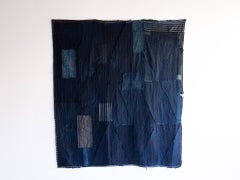
Japanese Antique Rag "BORO" 1800s-1860s / Abstract Art Wabi Sabi
This is an exceptionally old piece of Japanese fabric, dating back to the Edo period (1800s–1860s).
It has been carefully used to withstand the harsh winter cold.
Since ancient time...
Categoría
Antiguo, Mediados del siglo XIX, Japonés, Edo, Textiles
Materiales
Tela
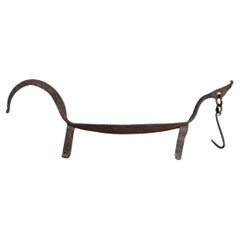
Siglo XX-Africano, Objeto de hierro fabricado por la tribu Lobi de Burkina Faso, África
Figurilla de hierro fabricada en África hacia el siglo XX.
En muchos países de África, los objetos de hierro se utilizan para objetos, monedas, herramientas y rituales.
Dogón, Kish...
Categoría
siglo XX, Burkinés, Tribal, Arte tribal
Materiales
Hierro
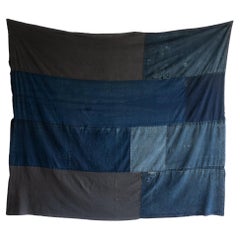
Trapo Japonés Antiguo "BORO" 1800s-1860s / Arte Abstracto Wabi Sabi
Se trata de un ejemplo excepcional de textil japonés *BORO*, que data de finales del periodo Edo (1800-1860). Cuidadosamente conservado durante generaciones, encarna tanto el ingenio...
Categoría
Antiguo, Mediados del siglo XIX, Japonés, Edo, Tapices
Materiales
Tela
Japanese Antique Wooden Board 1860s-1900s / Abstract Art Wabisabi
This Japanese antique wooden workboard was crafted during the Meiji period
1860s to 1900s
and is made from solid cedar wood.
Originally, this board functioned as a practical work su...
Categoría
principios del siglo XX, Japonés, Meiji, Arte decorativo
Materiales
Cedro
Cesta antigua japonesa tejida de bambú/Vasija colgante de pared/1868-1920/Mingei
Se trata de una cesta de bambú tejido fabricada en Japón entre los periodos Meiji y Taisho (1868-1920).
No sé si las cestas que utilizaban realmente los agricultores se reutilizaban ...
Categoría
principios del siglo XX, Japonés, Meiji, Arte decorativo
Materiales
Bambú
También te puede gustar
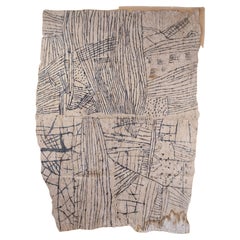
Tela tradicional Mbuti Ituri de corteza de Pygmee pintada a mano
Por OTHR
Tela tradicional de corteza de Pygmee pintada a mano Mbuti Ituri (Congo).
+/- 1920
Estas telas están hechas con el interior de la corteza del árbol de látex Ficus.
Una vez preparad...
Categoría
principios del siglo XX, Congoleño, Tribal, Arte tribal
Materiales
Madera
Tela tradicional Mbuti Ituri de corteza de Pygmee pintada a mano
Por Icons
Tela tradicional de corteza de Pygmee pintada a mano Mbuti Ituri (Congo).
+/- 1920
Estas telas están hechas con el interior de la corteza del árbol de látex Ficus.
Una vez preparad...
Categoría
principios del siglo XX, Congoleño, Tribal, Arte tribal
Materiales
Madera
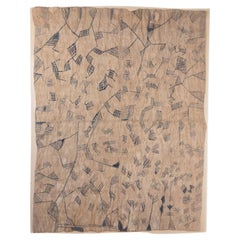
Tela fina de corteza de mbuti de los años 50 con motivos biomórficos
En la República Democrática del Congo, los patrones asimétricos, espontáneos y animados de las telas de corteza confeccionadas por las mujeres Mbuti para danzas, festividades y cerem...
Categoría
Vintage, Década de 1950, Congoleño, Tribal, Arte tribal
Materiales
Fibra natural
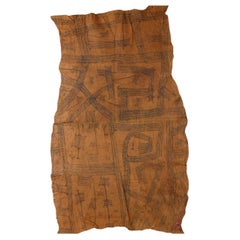
Pintura sobre tela de corteza del siglo XX, Pueblo Mbuti "Efe", R.D. Congo
Pintura sobre tela de corteza del siglo XX, pueblo Mbuti (Efe), Selva de Ituri, R. D. Congo
Un paño de corteza pintado del pueblo Efe, en la selva de Ituri, al noreste de la Repúbli...
Categoría
Vintage, Década de 1970, Congoleño, Tribal, Dibujos
Materiales
Fibra natural
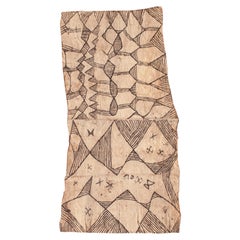
Pintura mbuti sobre tela de corteza, siglo XX
Pintura mbuti sobre tela de corteza
Selva de Ituri, RD del Congo
siglo XX
0,54 x 0,75 m (1'9″ x 2'6″)
Las excéntricas geometrías biomórficas y lineales de las telas de corteza Mbuti...
Categoría
mediados del siglo XX, Congoleño, Tribal, Pinturas
Materiales
Fibra natural
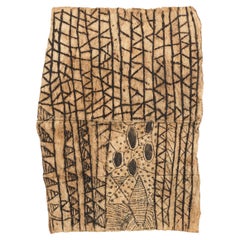
Pintura mbuti sobre tela de corteza, siglo XX
Pintura mbuti sobre tela de corteza
Selva de Ituri, RD del Congo
siglo XX
34,75 x 12 pulg. 87 x 30.5 cm
Las excéntricas geometrías biomórficas y lineales de las telas de corteza Mb...
Categoría
Vintage, Década de 1960, Congoleño, Tribal, Pinturas
Materiales
Fibra natural