Artículos similares a Ancient Indian Pala Schist Relief of Vishnu
¿Quieres más imágenes o vídeos?
Solicita imágenes o vídeos adicionales al vendedor
1 de 8
Ancient Indian Pala Schist Relief of Vishnu
15.589,77 €
Acerca del artículo
A classic representation of the god standing on a blooming lotus. With his four hands he holds the club (gada), the disk (cakra), the conch (sanka), and makes the gesture of giving (varada mudrâ). He is flanked by two female deities, one holding a fly whisk, the other a musical instrument. The lower register is occupied by the representations of the probable donors. The back of the composition is treated in the manner of classic throne backsplashes from the Pâla period, with superimposed elephants, vyala, makara, and flying deities. A dedicatory inscription is engraved under the lotus.
Notes
In this sculpture, the Hindu goddesses Lakshmi and Sarasvati flank the deity Vishnu, Preserver of the Universe. Along with Brahma and Shiva, he is seen as one of the three aspects of the embodiment of ultimate reality, but is also worshipped alone as the ultimate deity by some believers. When viewed as the Preserver, he operates alongside Shiva, who destroys the universe, and Brahma, who creates it. Here, Vishnu is presented in a full-frontal pose wearing the traditional adornments of a king. In his four hands, he holds his traditional primary attributes, a jewel, a conch, a flaming wheel, and a mace. The conch is a symbol of creation, the wheel symbolizes the cosmic law, and the mace symbolizes the power of the law. The jewel is a symbol of the fulfillment of the law, and this hand is extended in the wish-fulfilling gesture. Lakshmi holds a fly whisk while in her left hand, now lost, she probably held a lotus flower. Sarasvati plays a lute. This stele is Bengali in style, and would have originally been an independent element forming part of the architectural structure of a temple in eastern India. It would either have been set in a niche, or used as the main image of veneration. The iconographic features of the statue are standard for representations of Vishnu in the guise of Trivikrama, one of his twenty-four forms. The dwarf Vamana won back the universe from King Bali by transforming into Trivikrama and crossing the universe in three giant steps.
Provenance
China and India Company, Paris, 1994.
Private French Collection.
Cornette De Saint Cyr Paris, March 23, 2021.
Private Collection, Beverly Hills California.
- Dimensiones:Altura: 55,88 cm (22 in)Anchura: 26,67 cm (10,5 in)Profundidad: 12,7 cm (5 in)
- Materiales y técnicas:
- Lugar de origen:
- Época:
- Fecha de fabricación:12th Century AD
- Estado:Desgaste acorde con la edad y el uso. Visible accidents and losses to both the crown and face, the mace head, both lower arms, and lotus pedestal base. Large chip to proper lower right hand side of the stele border. Crisp details maintained throughout with some surface wear to background.
- Ubicación del vendedor:Los Angeles, CA
- Número de referencia:Vendedor: HQ.00581stDibs: LU10743248130892
Sobre el vendedor
Nuevo en 1stDibs
Se unió en los últimos seis meses.
Aún no hay opiniones
Vendedor profesional aprobado
Todos los vendedores superan estrictas normas de autenticidad y confiabilidad
Establecido en 2022
Vendedor de 1stDibs desde 2025
Tiempo de respuesta usual: 3 horas
- EnvíoRecuperando presupuesto…Envío desde: Los Angeles, CA
- Política de devolución
Partes de esta página se han traducido automáticamente. 1stDibs no puede garantizar la exactitud de las traducciones. El inglés es el idioma predeterminado de este sitio web.
Más de este vendedor
Ver todoAncient Indian Red Sandstone Figure of a Salabhanjika
This superbly carved female figure stands in graceful tribhanga pose clutching the branches of the tree above with both hands. She is clad in a sheer dhoti and generously adorned wit...
Categoría
Antiguo, siglo XV y antes, Indio, Antigüedades
Materiales
Arenisca
Ancient Indian Sandstone Figure of a Female Deity
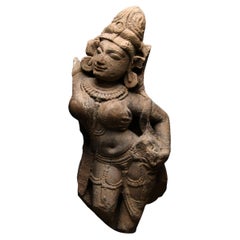
This sublime and sensuous female deity figure was likely part of a divine couple composition. The pairing of God and Goddess, often represented as Vishnu and Lakshmi, could be found...
Categoría
Antiguo, siglo XV y antes, Indio, Antigüedades
Materiales
Arenisca
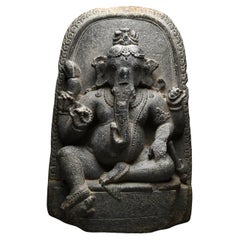
Estela de piedra negra de Pala de Ganesha
Sentado en lalitasana con el pie colgante apoyado en la rata, Ganesh aparece aquí sosteniendo un mala, un rábano y un cuenco de dulces en tres de sus manos, mientras que la cuarta se...
Categoría
Antiguo, siglo XV y antes, Indio, Antigüedades
Materiales
Piedra
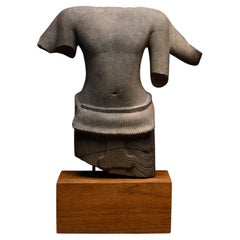
Antiguo Torso de Arenisca Jemer de una Deidad de Cuatro Brazos
Este impresionante torso jemer de pecho ancho representa probablemente a Lokesvara, el famoso bodhisattva de la compasión en el budismo. Nuestra deidad viste un sampot plisado con u...
Categoría
Antiguo, siglo XV y antes, Camboyano, Antigüedades
Materiales
Arenisca
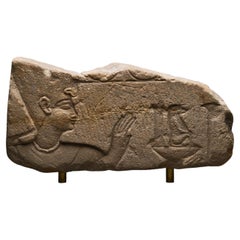
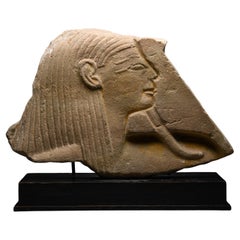
Antiguo relieve egipcio en piedra caliza
Esculpida en relieve hundido, esta soberbia talla de piedra caliza presenta a un faraón mirando hacia la derecha, con un amplio collar y la Corona Roja o la Corona Doble, precedida p...
Categoría
Antiguo, siglo XV y antes, Egipcio, Egipcio, Antigüedades
Materiales
Caliza
Antiguo relieve egipcio en arenisca de una deidad barbuda
Esta sorprendente imagen, esculpida en relieve hundido de una deidad masculina barbuda, representa probablemente a Hapi, el dios del Nilo. Los rasgos son prominentes, con líneas aud...
Categoría
Antiguo, siglo XV y antes, Egipcio, Egipcio, Antigüedades
Materiales
Arenisca
También te puede gustar
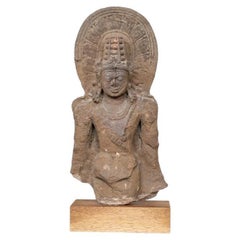
Antiguo relieve indio en arenisca roja del dios hindú Visnú
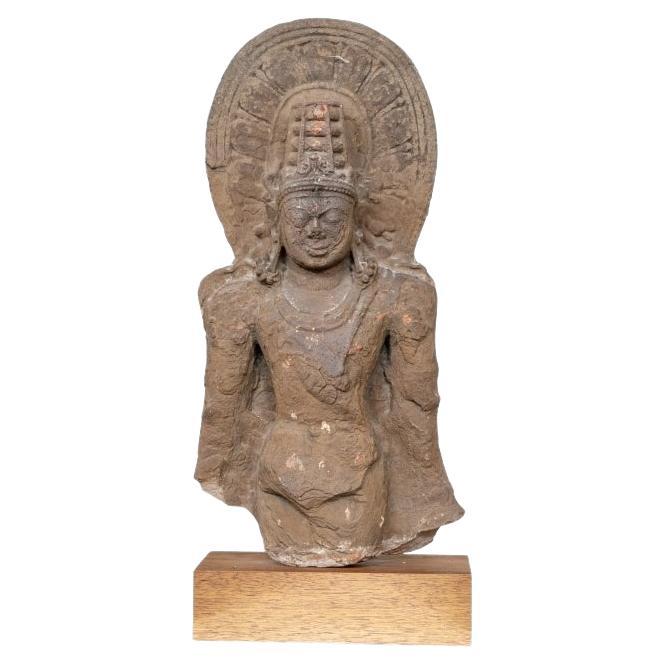
Excepcional busto antiguo de Vishnu tallado en piedra Montado sobre una base de madera. Ca. Siglos VII-XII d.C. Una antigua escultura de piedra tallada que representa a Vishnu, con...
Categoría
Antiguo, siglo XV y antes, Asiático, Agra, Antigüedades
Materiales
Arenisca
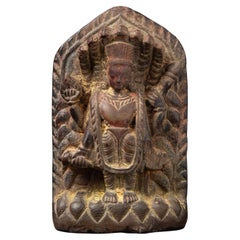
Estatua antigua especial de piedra de Vishnu de principios del siglo XVII, procedente de Nepal
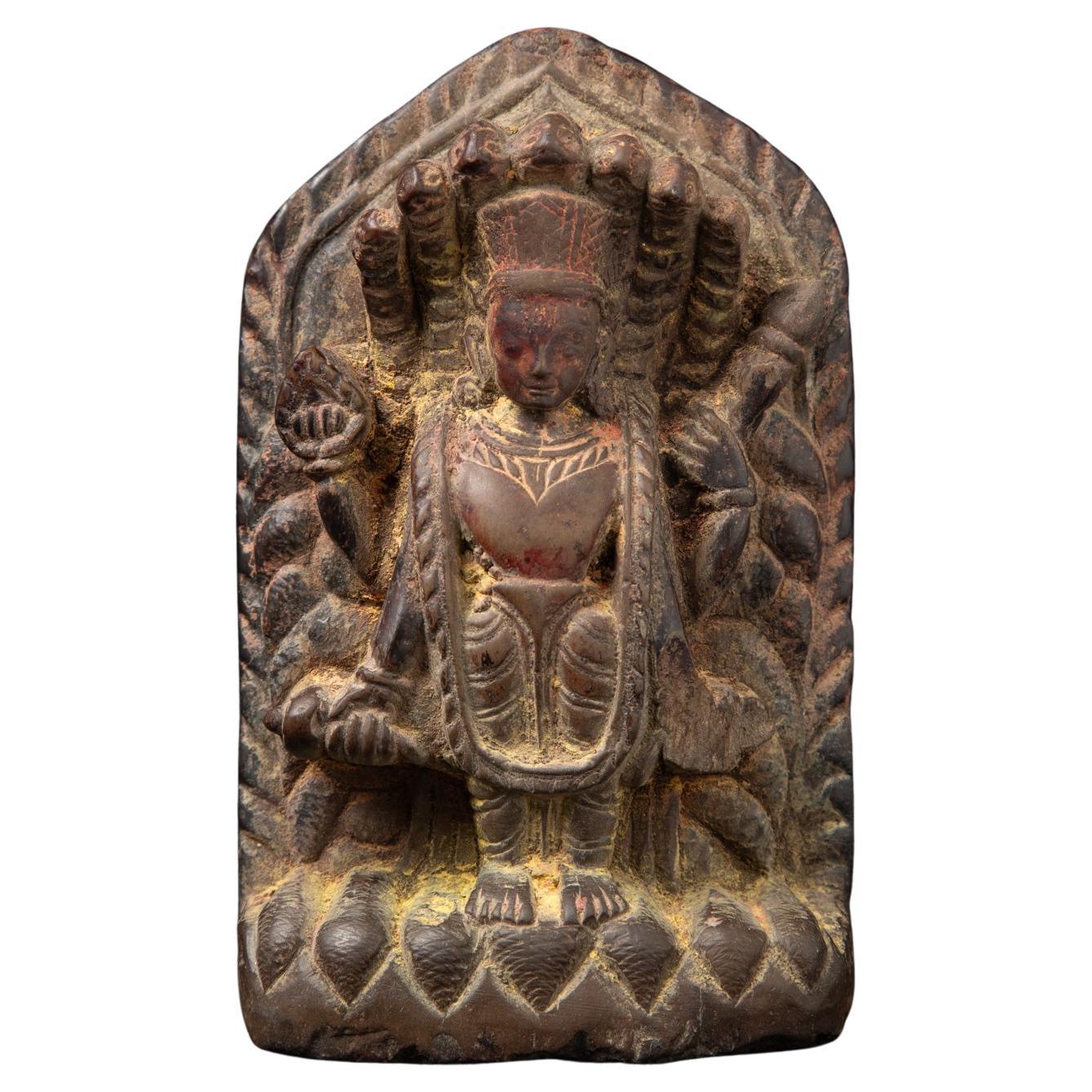
Esta estatua antigua especial de piedra de Visnú, originaria de Nepal y que se cree que data del siglo XVII o antes, es una notable pieza de arte sagrado y patrimonio cultural. Escul...
Categoría
Antiguo, principios del siglo XVII, Birmano, Esculturas y tallas
Materiales
Piedra
Siglo XVIII Antiguo panel de madera de templo indio procedente de la India
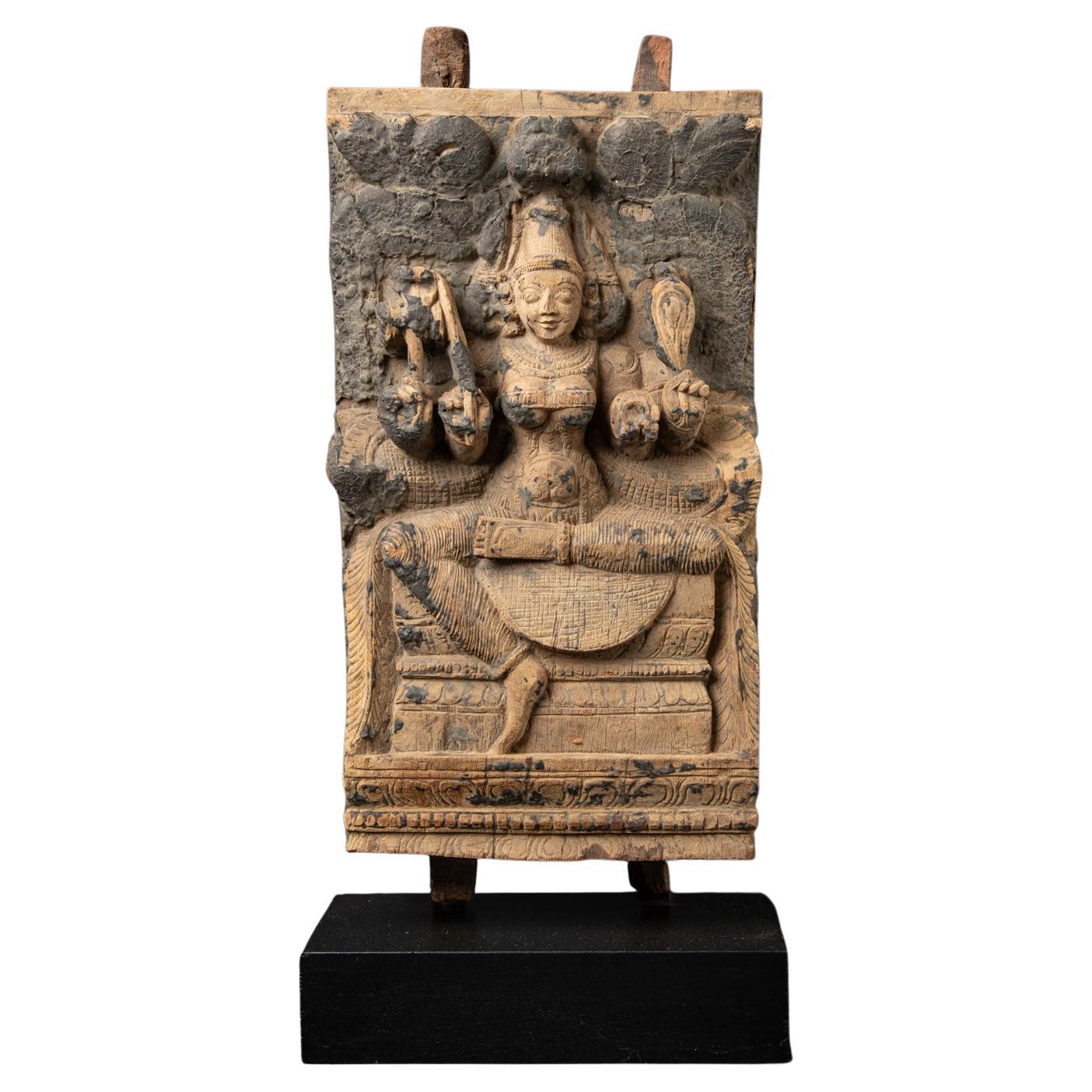
Este antiguo panel de madera de templo indio es un raro y exquisito artefacto del siglo XVIII procedente de un antiguo carro de templo de la India. Tallado por expertos en madera de ...
Categoría
Antiguo, siglo XVIII, Birmano, Esculturas y tallas
Materiales
Madera
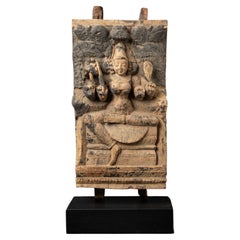
Siglo XIX Antiguo panel de madera de templo indio procedente de la India
Este antiguo panel de madera de templo indio es un artefacto excepcional del siglo XVIII, que originalmente formaba parte de un carro de templo tradicional utilizado en las procesion...
Categoría
Antiguo, siglo XIX, Indio, Esculturas y tallas
Materiales
Madera
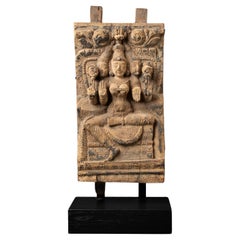
Estatua de piedra arenisca del siglo XIX de Saraswati con Ganesha y Kartikeya procedente de la India
Esta estatua de piedra arenisca de Saraswati, acompañada de Ganesha y Kartikeya, es una notable pieza de arte religioso indio. Realizada en piedra arenisca, tiene una impresionante a...
Categoría
Antiguo, siglo XIX, Indio, Esculturas y tallas
Materiales
Arenisca
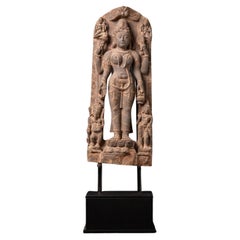
Siglo XVIII Antiguo panel de madera de templo indio procedente de la India
Explora la rica herencia del arte de los templos indios con este antiguo panel de madera de templo indio, un impresionante artefacto del siglo XVIII procedente de un antiguo carro de...
Categoría
Antiguo, siglo XVIII, Birmano, Esculturas y tallas
Materiales
Madera