Artículos similares a Kobako in nashiji lacquer imitating wood texture, lid decorated with an ikebana
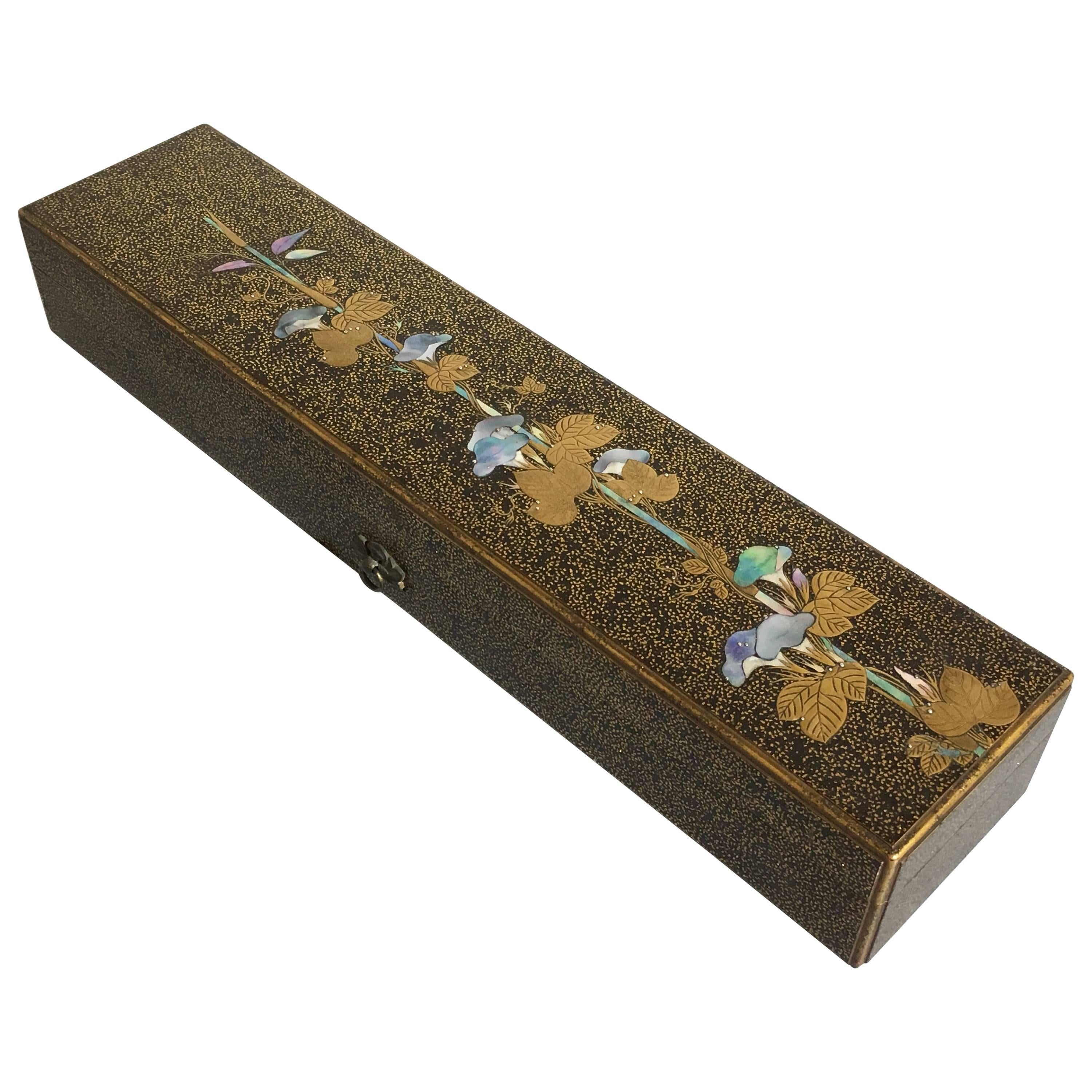
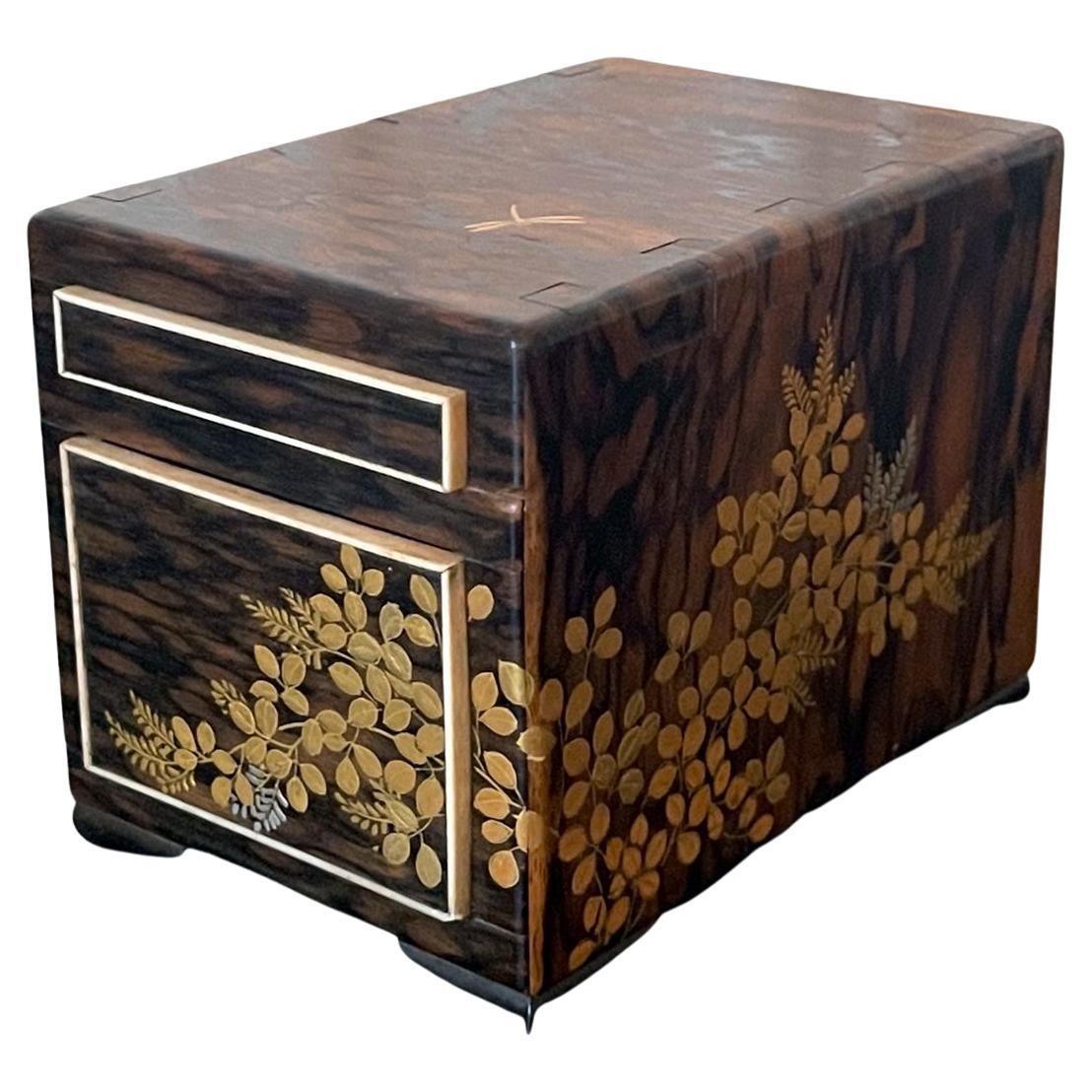
¿Quieres más imágenes o vídeos?
Solicita imágenes o vídeos adicionales al vendedor
1 de 9
Kobako in nashiji lacquer imitating wood texture, lid decorated with an ikebana
5500 €IVA incluido
Acerca del artículo
Imposing kobako in nashiji lacquer on a black ground, decorated with a motif imitating wood grain. The lid is adorned with an ikebana basket (hanakago) containing a bouquet of remarkable harmony despite its complexity. The level of detail achieved by the lacquer artist allows several plants in the floral composition to be clearly identified. The chrysanthemum (kiku), first of all, is not only the heraldic emblem of the Japanese imperial family but also a flower with a long and complex history intertwined with that of the archipelago. It was first described by Jacob Breynius in 1689, although the plant owes its name to Carolus Linnaeus: “chrys” in Greek means “golden,” referring to the flower’s original colour, and “anthemon” means “flower”—hence its designation as the “golden flower.”
To understand the symbolism behind the chrysanthemum, one must go back to the years 1500–1400 BC. Chrysanthemums were already cultivated in China as an aromatic flowering herb and were considered a noble plant endowed with unique powers—so much so that only nobles were permitted to grow them in their gardens. They appear on the finest Chinese porcelains, often painted with great refinement. In China, the chrysanthemum is generally a symbol of nobility. Introduced to Japan only in the 8th century, it was elevated by the emperor to the rank of national symbol and later inspired the imperial seal.
During the Heian period, the imperial family took particular interest in the chrysanthemum, even creating a festival in its honour, held on the 9th day of the 9th month at the Kamigamo Shrine in Kyoto: the annual Chōyō no Sekku, or Chrysanthemum Festival. After the ceremony, priests dressed as white crows perform a ritual dance with bows and arrows, followed by children from the area engaging in sumo bouts within the shrine precincts.
Although long popular throughout Japan, it was not until the 13th century that Emperor Go-Toba adopted the sixteen-petaled chrysanthemum as the formal emblem of the imperial family. Chrysanthemum heraldry represents the emperor, the imperial household, and the Japanese people. It is said that emperors’ thrones were once entirely covered with chrysanthemums, giving rise to the expression “the Chrysanthemum Throne.” Initially reserved for the aristocracy, chrysanthemum cultivation expanded greatly during the Edo period (1600–1868), beginning in Kyoto. Numerous specialists developed and exhibited new varieties in inns and temples, recording each detail—form, colour, name, and price—in dedicated registers. Although centred in Kyoto between 1688 and 1703, chrysanthemum culture eventually spread throughout the country.
The chrysanthemum is also one of the four Junzi, or “gentlemen”: the plum, the orchid, the bamboo, and the chrysanthemum together form the “Four Gentlemen,” each symbolizing a season—winter for the plum, spring for the orchid, summer for bamboo, and autumn for the chrysanthemum. They remain essential motifs in the pictorial arts across East Asia.
This rich symbolism explains the recurrence of the chrysanthemum in many contexts—on the Japanese passport, on 50-yen coins, and in the Supreme Order of the Chrysanthemum, the highest distinction a Japanese citizen can receive from the emperor. No other flower in the world is associated with such an honour.
In the Japanese language of flowers, the sunflower (himawari) represents radiance and respect. It symbolizes brilliant beauty and admiration for light and life. The sunflower is also renowned for its fidelity to the sun, turning its head to follow its path throughout the day. This characteristic has given the sunflower a deeper meaning in Japan, where it symbolizes constancy and loyalty—values highly regarded in a culture deeply attached to tradition and hierarchy. By faithfully following the sun, the sunflower becomes a powerful metaphor for these virtues.
Inside the kobako is a lacquered tray decorated with the same wood-grain motif as the exterior. The interior of the lid features a scene of a pavilion beneath an ancient pine tree on the edge of a lake, set within a karst landscape on a gold nashiji ground.
Japan – Meiji period (1868–1912)
Height: 11 cm – Length: 27.5 cm – Width: 10.5 cm
Tray: Height: 2 cm – Length: 9.5 cm – Width: 6 cm
- Dimensiones:Altura: 11 cm (4,34 in)Anchura: 10,5 cm (4,14 in)Profundidad: 27,5 cm (10,83 in)
- Estilo:Meiji (Del período)
- Materiales y técnicas:
- Lugar de origen:
- Época:
- Fecha de fabricación:1868-1912
- Estado:Desgaste acorde con la edad y el uso.
- Ubicación del vendedor:PARIS, FR
- Número de referencia:Vendedor: 2024-13981stDibs: LU8311247962872
Sobre el vendedor
Aún no hay opiniones
Vendedor profesional aprobado
Todos los vendedores superan estrictas normas de autenticidad y confiabilidad
Establecido en 2013
Vendedor de 1stDibs desde 2023
- EnvíoRecuperando presupuesto…Envío desde: PARIS, Francia
- Política de devolución
Partes de esta página se han traducido automáticamente. 1stDibs no puede garantizar la exactitud de las traducciones. El inglés es el idioma predeterminado de este sitio web.
Más de este vendedor
Ver todoNatsume japonés o caja de té adornada con hojas de arce y flores de sakure
Natsume en lacado rojo oscuro, decorado con hojas de otoño y flores de cerezo en hiramaki-e y nashiji. Interior lacado en negro.
Las hojas de arce (Momiji) son celebradas en la liter...
Categoría
principios del siglo XX, Japonés, Taisho, Laca
Materiales
Oro
Tebako japonés en laca Nashiji adornado con flores doradas de Persimon
Caja tebako con dos compartimentos en laca dorada y nashi-ji, decorada con laca dorada, roja y kirigane, hojas de caqui doradas, entre rocas. Los compartimentos son de tamaño crecien...
Categoría
Antiguo, principios del siglo XIX, Japonés, Meiji, Laca
Materiales
Oro
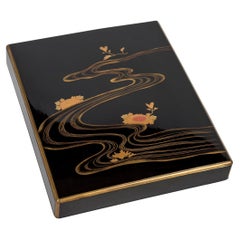
Caja lacada japonesa suzuribako río peonía
Caja Suzuribako (vacía) en laca negra. Decoración maki-e dorada de un río bordeado de peonías, una de ellas con reflejos rojos. Los bordes de la tapa son de laca dorada. Interior de ...
Categoría
Antiguo, Fines del siglo XIX, Japonés, Laca
Materiales
Oro
Caja" japonesa de tebako lacado
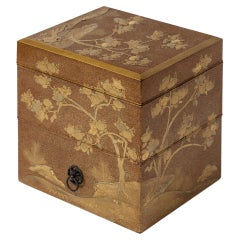
Caja tebako con tres compartimentos en laca dorada y nashi-ji, decorada con laca dorada, roja y kirigane, hojas de caqui doradas, entre rocas. Los compartimentos son de tamaño crecie...
Categoría
Antiguo, Década de 1860, Japonés, Laca
Materiales
Laca
Japanese lacquered Cherry Tree Kobako
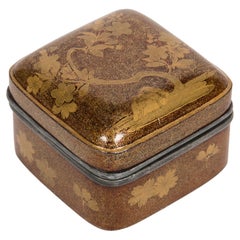
Kobako in nashiji lacquer of square shape with a hira maki-e décor of a blossoming
cherry tree. Both of the four sides are adorned with golden lacquer cherry flowers,
represented i...
Categoría
Antiguo, siglo XIX, Japonés, Laca
Materiales
Laca
Caja de té japonesa lacada Natsume
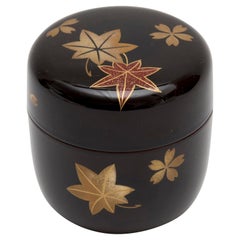
Natsume en lacado rojo oscuro, decorado con hojas de otoño y flores de cerezo en hiramaki-e y nashiji. Interior lacado en negro.
Las hojas de arce (Momiji) son celebradas en la lite...
Categoría
mediados del siglo XX, Japonés, Laca
Materiales
Laca
También te puede gustar
Antigua Caja de Incienso Japonesa Lacada Kobako de Estilo Kodaiji
Pequeña caja antigua lacada que probablemente se utilizó para contener incienso en polvo (se llama Kobako en japonés), de principios a mediados del siglo XIX del periodo Edo. La caja...
Categoría
Antiguo, siglo XIX, Japonés, Edo, Laca
Materiales
Madera, Laca
Natsume japonés lacado Maki-E en estilo Kodaiji
Una caja de té japonesa lacada (conocida como Natsume) con fina decoración Maki-e de hacia el siglo XVIII-XIX, periodo Edo a Meiji. El natsume de gran tamaño con tapa ajustada, a vec...
Categoría
Antiguo, siglo XIX, Japonés, Meiji, Laca
Materiales
Madera, Laca
Caja larga de laca japonesa del periodo Edo de la escuela Igarashi, Tanzaku-Bako
Impresionante tanzakubako japonés lacado del periodo Edo, caja para tarjetas de poemas, finales del siglo XVIII-principios del XIX, Periodo Edo, Japón.
Atribuida a la Escuela Igara...
Categoría
Antiguo, principios del siglo XIX, Japonés, Edo, Laca
Materiales
Nácar, Laca
Fino Kodansu Japonés en Miniatura con Incrustaciones de Laca
Fino kodansu japonés en miniatura construido con madera de kaki (caqui) hacia el siglo XIX, finales del periodo Meiji. Con sus expresivas vetas de madera exótica y su construcción de...
Categoría
Antiguo, Fines del siglo XIX, Japonés, Meiji, Laca
Materiales
Madera
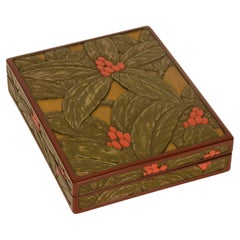
Intrincadamente Caja de laca Kamakura tallada con diseño botánico de Tamerou Ono
Un bako Tsuzuri japonés de época, caja para escribir, con un inusual relieve profundamente tallado de la sarcandra glabra japonesa, un subarbusto herbáceo leñoso originario de Asia c...
Categoría
mediados del siglo XX, Japonés, Laca
Materiales
Madera
3129 € Precio de venta
Descuento del 20 %
Envío gratuito
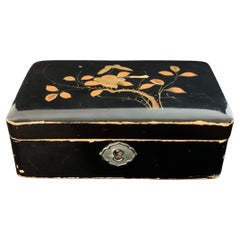
Caja Japonesa Lacada con Flor, Finales del Siglo XIX
Bonita cajita de laca negra procedente de Japón. Es de madera lacada en negro y está decorada con flores y follaje. El interior está cubierto de terciopelo rojo. Es ideal para guarda...
Categoría
Antiguo, Fines del siglo XIX, Japonés, Laca
Materiales
Laca
174 € Precio de venta
Descuento del 20 %