Artículos similares a 17th Century Italian Milano Renaissance Period Bone Ivory Ebony Tabletop Cabinet
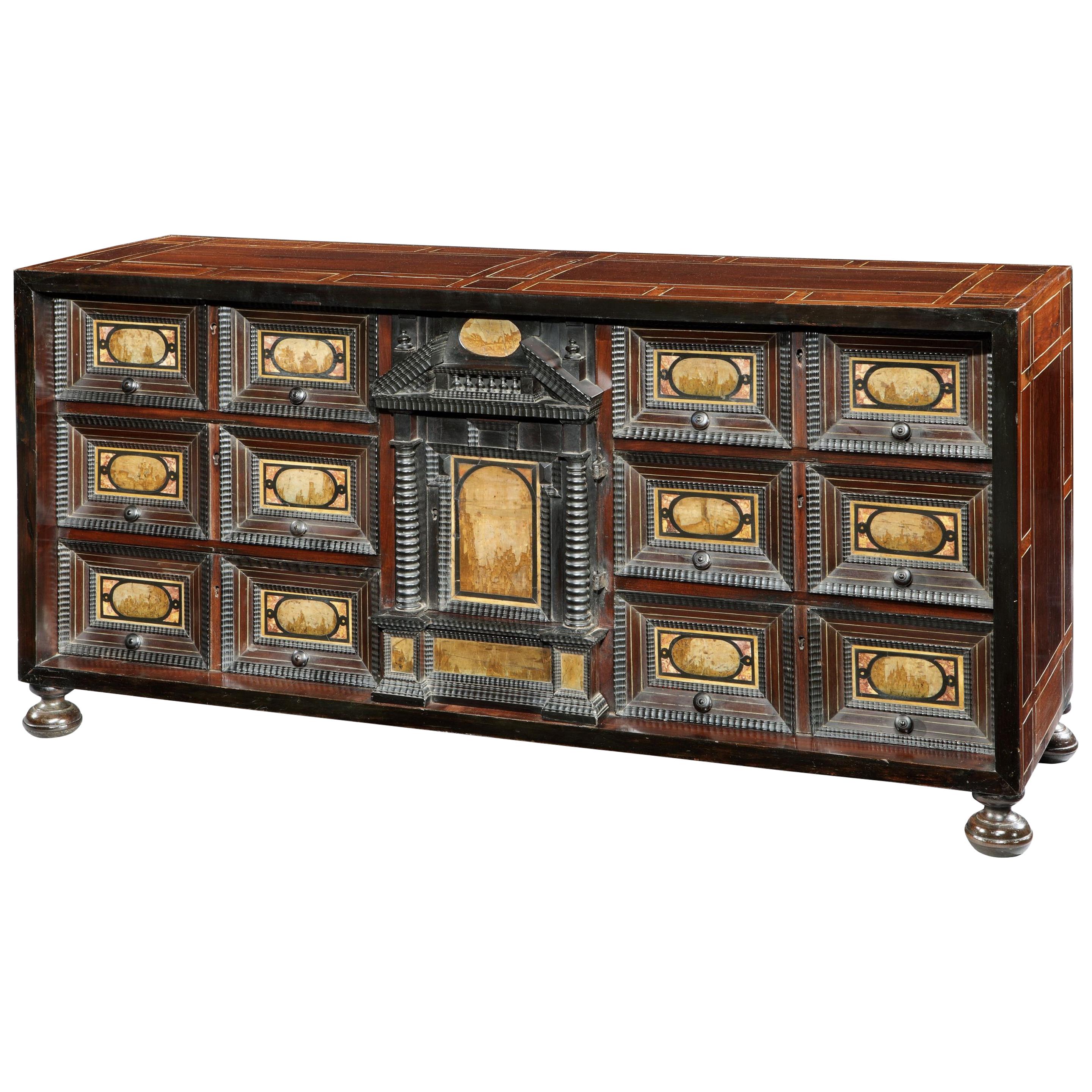
¿Quieres más imágenes o vídeos?
Solicita imágenes o vídeos adicionales al vendedor
1 de 21
17th Century Italian Milano Renaissance Period Bone Ivory Ebony Tabletop Cabinet
8229,65 €
Acerca del artículo
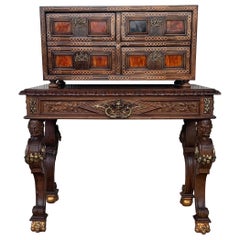
A scarce nearly 400 year old fine quality Italian Lombard ebony rosewood bone and ivory tabletop curiosity cabinet with warm rich beautifully aged patina and interesting provenance. circa 1650
Milan, Lombardy region of Northern Italy, dating to the early to mid 17th century.
Nothing evokes the Renaissance era better than these rare authentic small table cabinets with their refined decorations, extraordinary workmanship, and rare exotic luxurious materials. Precious objects, the cabinet itself has become a jewel, highly prized and shrouded in mystery, they illustrate the epitome of refinement, elegance, and sophistication, showcasing the very finest quality craftsmanship, skilled workmanship, and highly specialized artistic inlay work of the 17th century
Exceptionally executed handcrafted Milanese work, this most precious table cabinet stands out for having such detailed and elaborate engraving work, as well as the exhibition style open-chest rectangular box form, elaborately decorated, featuring visually striking contrasting hand carved and engraved natural bone and ivory filets, marquetry plaques and banding. The dovetailed walnut open-front rectangular case veneered in exotic ebony and rosewood precious woods, fitted with seven drawers including a lower row with three simulated drawer-fronts constituting a single drawer, surrounding a central door opening to reveal niche compartment topped with a pair of small drawers that thanks to an ingenious system allow access to a concealed secret drawer and hidden shelved compartment!
Extensively engraved inlays, stylized scrolling foliate rinceaux arabesque marquetry, blackened ebonized wood trim, affixed with the original ironwork and hardware, including steel ace of spade strap hinges and lock, intricate bronze pierced scrolled openwork spandel corner brackets, and ornate patinated brass lion mask drop-ring pulls, the case with visible dovetail joinery to the top, large framed diamond inlay to the flanks, unfinished verso, all raised on tall turned onion bun feet.
- PROVENANCE / ACQUISITION:
Property from the Collection of Frederick H. Schrader.
Who acquired it from:
Tom Stansbury Antiques, Newport Beach, California;
Acquired from the above owner through the highly reputable auction house Heritage Auctions, Dallas, Texas. 2025 April 17 Sophisticated Palate: Fine
Decorative Arts from the Collection of Frederick H. Schrader, Napa Valley Signature Auction catalog #8210, lot #61046
Fred Schrader is often described as one of the "bad boys" of Napa Valley, a title that reflects his adventurous spirit and unconventional approach to life. In addition to producing many of the world’s finest Cabernet Sauvignons – first with Colgin Cellars, then with Schrader Cellars – Fred Schrader has been an art dealer and collector since the 1970s, and he has traveled the world in pursuit of treasures.
- DIMENSIONS: (approx)
17.5" High, 21.125" Wide, 12" Deep;
(44.5 x 53.7 x 30.5 cm)
- HISTORY:
The cabinet was a furniture replacing the typical two bodies sculpted buffets of the 16th century. It became in the 17th century a pageantry furniture highly appreciated by the greatest sponsors of this period, such as Marie de Medici or the Cardinal Mazarin, that had a collection of more than 20 pieces.
Initially linked to the taste for medals and coins collections of the Renaissance period, the cabinet became itself a object that can be admired thanks to its panels decorated with paintings, precious woods marquetry, ivory, Boulle marquetry, pietra dura, scagliola, etc...
The history of these cabinets is complex and the manufacture was developed in many countries, notably Germany, Holland, Italy, England and France. With the creation of Oriental Indies Companies, occidental models were also built from various elements including lacquer panels and then exported in Europe.
The origin of this type of cabinet is believed to be Dutch. Some craftsmen from the Holy Roman Empire such as Theodore de Voghel and Iacobus Fiamengo were sent to the royal armory of Naples to make rifle and crossbow stocks for the service of the Spanish Habsburgs.
Given the success of this luxurious production, they decided to respond to a growing demand by producing pieces for civilians, in particular precious cabinets for wealthy merchants stopping over in the port.
To do this, they hired "intagliatore d'avoli" such as the engraver Giovanni Battista de Curtis, as well as ironworkers and goldsmiths to create the rich mounts for these travel cabinets.
Several pieces commissioned by the Court and documented are now preserved in Italian museums.
After the revolt of 1647 and the proclamation of the Neapolitan Republic, the production center followed the Spanish court and moved further north to the Duchy of Milan.
Until 1713, the kings of Spain remained Dukes of Milan and made the city one of the richest artistic centers in Europe, developing the arms trade, textiles and especially the banking sector.
In addition to the minting of gold coins, Lombardy became the European capital of finance.
Later, similarly styled cabinets spread through Europe and were enjoyed by royalty, nobility, and wealthy merchants, including the Flemish ceremonial Flemish Antwerp cabinet on stand, German Wunderkammer and Kunstkast Art Cabinet, English scientific collection and specimen cabinet, similar Austrian / South German Augsburg marquetry table cabinet intended for the storage of small rare objects such as exotic shells, geode stones, coral, medals, the very fine gilded bronze ormolu French jewelery casket, petite Indo Portuguese colonial dropfront tabletop chest of drawers, campaign slope, and the very large Morrish inspired Spanish Vargueno traveling writing box desk.
Our example is characteristic of the beginning of this rich luxurious Lombard production, its beautiful state of conservation, delicateness, fine intricacies, and the rare presence of open-case visible drawers with the lack of the typical fall-front panel make this quite the scarcity and a desired object on the market.
**Additional photos available upon request**
- CONDITION REPORT:
A superb museum quality example, in overall fine condition, especially considering its age.
Attractive appearance, with nicely aged warm rich dark patina, original antique character marks and charm throughout. Wear commensurate with age, use and handling, including minor stable splits, surface scuffs, scratches, nicks and abrasions. Some minor age related separation present and a few drawers show typical warping. The interior drawer lining has areas of minor peeling and there is evidence of possible prior repair to a drawer joint. Overall truly remarkable! Delivered lightly cleaned, waxed, ready for immediate use and multi-generational enjoyment!
Guaranteed to elevate any space, it's sure to add refined elegant sophistication, classic rustic warmth, depth, rich antique character and unique historical interest!
- Dimensiones:Altura: 44,45 cm (17,5 in)Anchura: 53,66 cm (21,125 in)Profundidad: 30,48 cm (12 in)
- Estilo:Renacimiento (Del período)
- Materiales y técnicas:Hueso,Latón,Bronce,Ébano,Marfil,Peral,Palo de rosa,Nogal,Vaciado,Ebonizado,Tallado a mano,Hecho a mano,Incrustación,Carpintería,Marquetería,Transformado,Chapado
- Lugar de origen:
- Época:
- Fecha de fabricación:circa 1650
- Estado:Desgaste acorde con la edad y el uso. Pérdidas menores. Decoloración leve. A superb museum quality example, in overall fine condition, especially considering its age. Attractive appearance w/warm rich dark patina/original antique character. Wear commensurate w/ age/use. Please see photos description for detailed report.
- Ubicación del vendedor:Forney, TX
- Número de referencia:1stDibs: LU5977245433742
Sobre el vendedor
4,8
Vendedor Platino
Vendedores premium con una calificación de +4,7 y tiempos de respuesta de 24 horas
Establecido en 2013
Vendedor de 1stDibs desde 2021
316 ventas en 1stDibs
Tiempo de respuesta usual: 1 hora
- EnvíoRecuperando presupuesto…Envío desde: Forney, TX
- Política de devolución
Partes de esta página se han traducido automáticamente. 1stDibs no puede garantizar la exactitud de las traducciones. El inglés es el idioma predeterminado de este sitio web.
Más de este vendedor
Ver todoGabinete de curiosidades de mesa de roble tallado francés del siglo XVIII
Gabinete de curiosidades rústico barroco francés tallado en roble, siglo XVIII o anterior, de forma arquitectónica con elaborada cornisa moldurada, sobre nicho central, rodeado de nu...
Categoría
Antiguo, siglo XVIII, Francés, Barroco, Gabinetes
Materiales
Latón
Aparador renacentista italiano del siglo XIX
Un raro aparador renacentista italiano continental de roble y cuero con una cálida y rica pátina.
Nacido a principios del siglo XIX, exquisitamente hecho a mano y excepcionalment...
Categoría
Antiguo, principios del siglo XIX, Europeo, Renacimiento renacentista, A...
Materiales
Cuero, Roble
Armario italiano del siglo XVIII tallado en nogal
Rara arqueta / credenza italiana de nogal del siglo XVIII, época renacentista, de influencia neoclásica, con dos columnas figuradas de elaborada talla decoradas con elementos arquite...
Categoría
Antiguo, siglo XVIII, Renacimiento, Credencias
Materiales
Ormolú
Antiguo Armario Italiano para Sacristía Arqueta Credencial Armario para Credenciales Principios del s. XVIII
Rarísimo e impresionante armario sacristía de iglesia cristiana (arca de ornamentos / armario de credenciales) auténtico del barroco italiano, hacia 1725
Siglo XVIII, Italia, elabor...
Categoría
Antiguo, principios del siglo XVIII, Italiano, Barroco, Credencias
Materiales
Hierro forjado
Armario italiano del siglo XIX de una sola puerta pintada
Raro y único mueble antiguo italiano pintado en mármol y dorado con una pátina envejecida de gran belleza. hacia 1830
Hecho a mano en Italia a mediados del siglo XIX, construcción d...
Categoría
Antiguo, Mediados del siglo XIX, Italiano, Barroco, Armarios
Materiales
Madera, Pino, Madera dorada
Armario esquinero barroco italiano de marquetería de principios del siglo XX
Armario esquinero italiano de nogal, cornisa moldurada, sobre caja triangular, puertas superior e inferior del armario con paneles de marquetería en contraste, que se abren para reve...
Categoría
principios del siglo XX, Barroco, Armarios esquineros
Materiales
Nogal

También te puede gustar
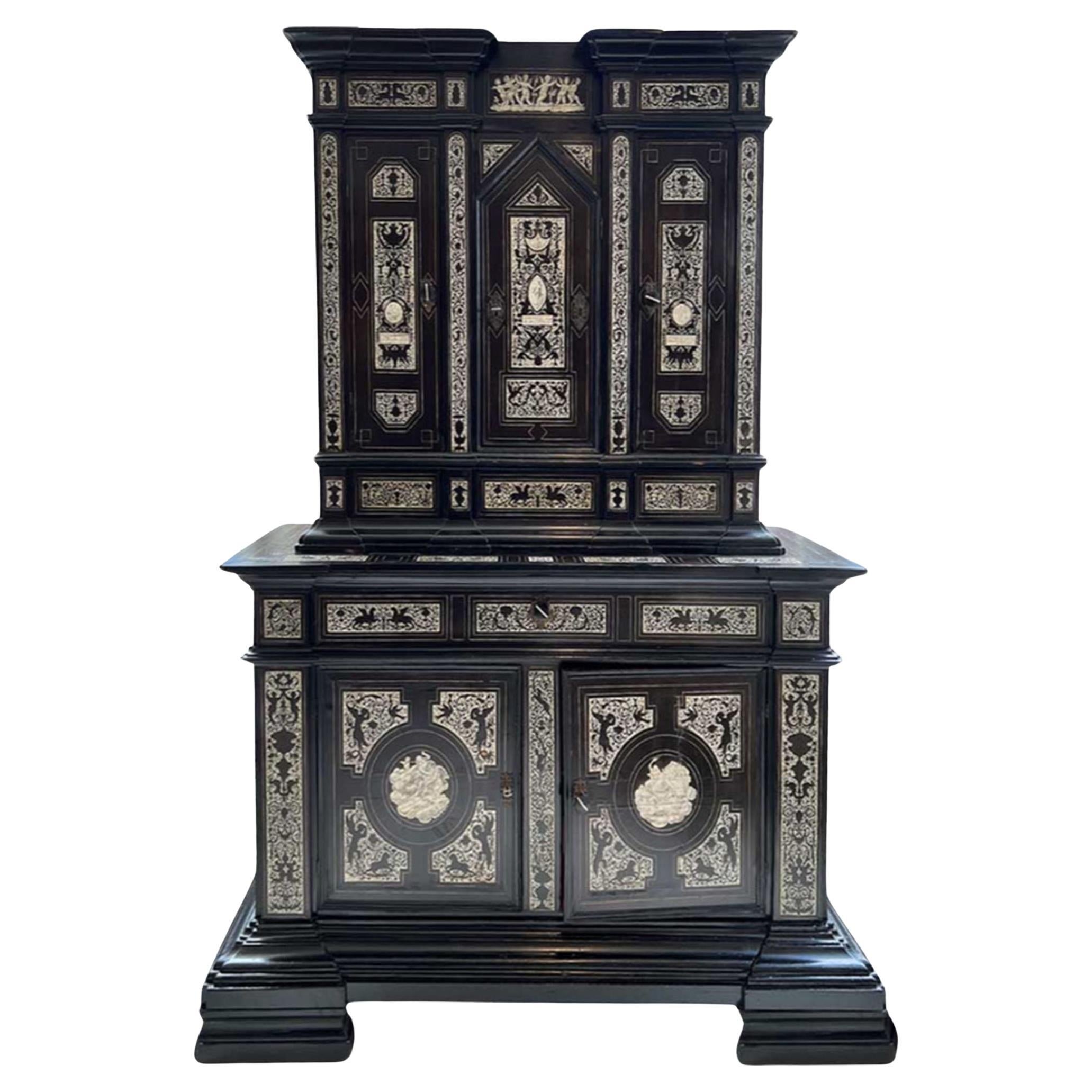
Armario italiano del siglo XVIII con incrustaciones de hueso
Contempla este extraordinario armario de Fernando Pogliani, de Milán, que es una fantasía de capas de ébano y hueso. El anverso es una intrincada marquetería que representa desde áng...
Categoría
Antiguo, siglo XVIII, Italiano, Gabinetes
Materiales
Hueso, Madera
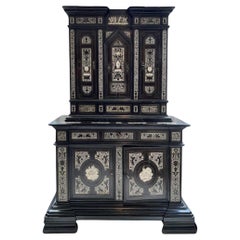
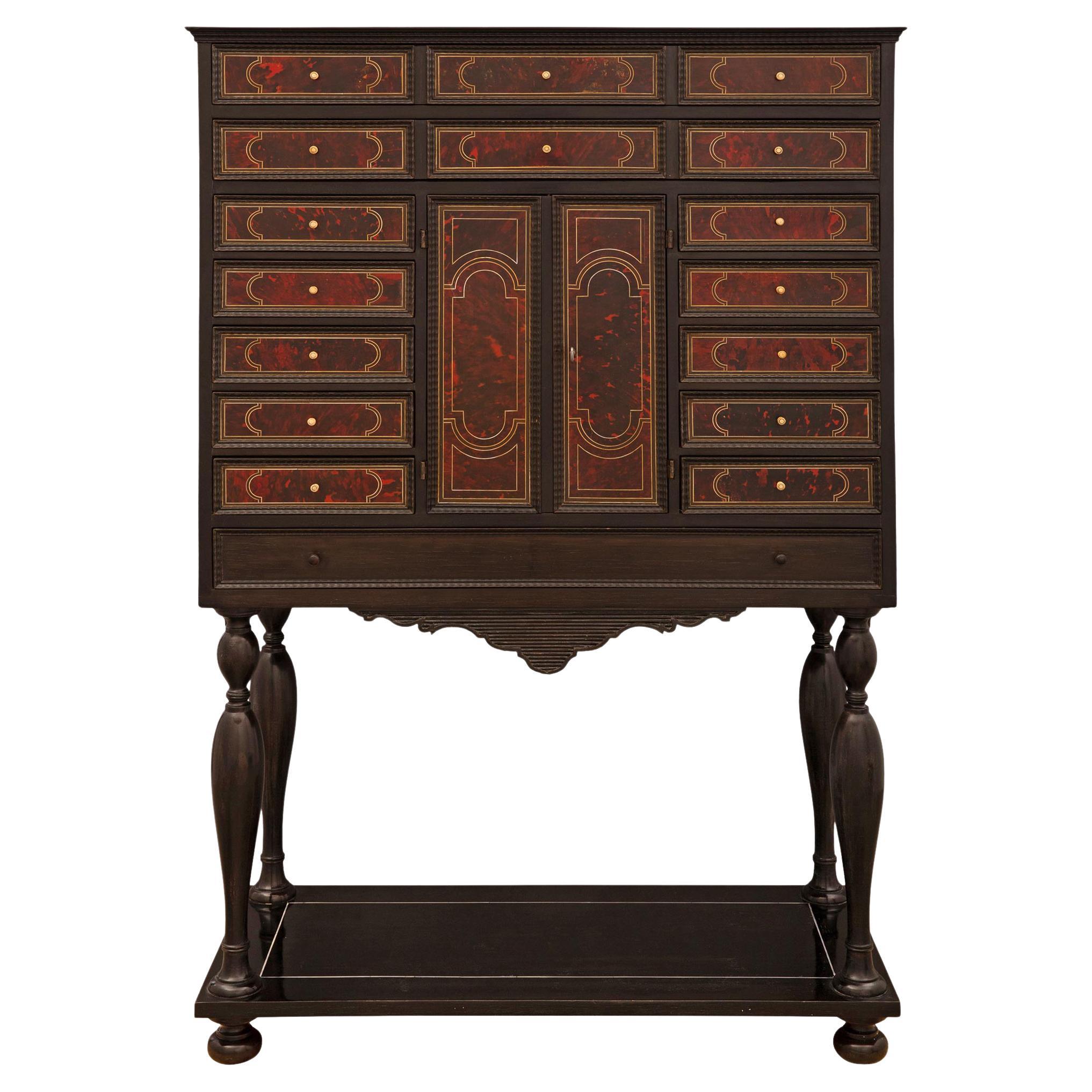
Vitrina italiana de ébano, carey y hueso de principios del siglo XIX
Espectacular vitrina italiana de principios del siglo XIX de ébano, carey y hueso. El mueble de dos puertas y veintidós cajones se eleva sobre elegantes patas de bollo bajo un nivel ...
Categoría
Antiguo, siglo XIX, Italiano, Gabinetes
Materiales
Hueso, Caparazón de tortuga, Ébano
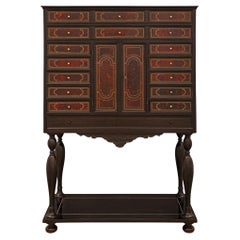
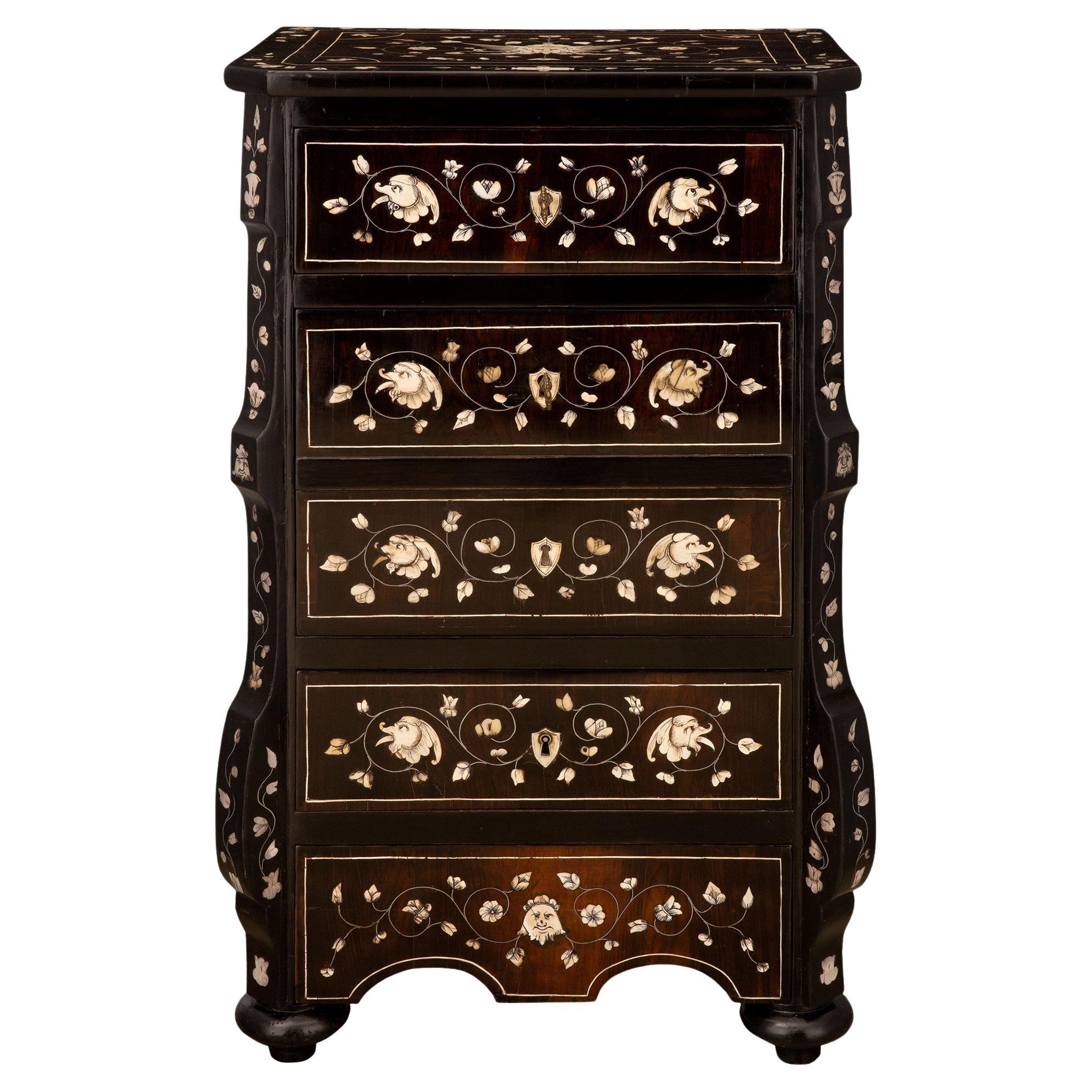
Mueble chifonier italiano del siglo XIX en madera de palisandro y frutal de Milán
Encantador mueble chifonier de madera de palisandro, madera de frutal ebonizada y hueso del siglo XIX, estampado Brevete VF París. El chiffonier de tres cajones y una puerta se eleva...
Categoría
Antiguo, siglo XIX, Italiano, Gabinetes
Materiales
Hueso, Madera frutal, Palo de rosa
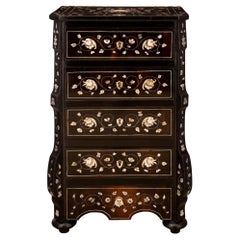
Armario de Mesa, Principios del Siglo XVII, Barroco Italiano, Pietra Paesina Montado Walnu
Este mueble pertenece a un pequeño grupo que se fabricó en la década de 1620, cuando el gusto y la moda viraron hacia el uso de una piedra paesina con su característico veteado evoca...
Categoría
Antiguo, principios del siglo XVII, Italiano, Barroco, Gabinetes
Materiales
Mármol
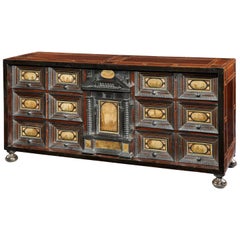
20º Gabinete italiano sobre peana, Bargueno barroco con incrustaciones y monturas
Gabinete italiano sobre mesa. Nogal y palisandro, carey, color bronce y dorado, siglo XX.
Muestra de billar de sobremesa situado sobre bola y garra con asas a los lados. El bufé o m...
Categoría
principios del siglo XX, Italiano, Barroco, Bufetes
Materiales
Bronce
5163 € Precio de venta
Descuento del 20 %
Armario sobre pie de estilo barroco español del siglo XX, Bargueno o Varqueno
Este Bargueno está adornado con una talla de Don Quijote de la Mancha bordeada de ramas de hojas. El escritorio se apoya en un pedestal unido por un puente de columnas torneadas. Las...
Categoría
principios del siglo XX, Español, Barroco, Gabinetes
Materiales
Hierro