Artículos similares a Japanese Antique Flap-Front Storage Cabinet with Kanji Markings, Late Meiji Era

Cargando vídeo
¿Quieres más imágenes o vídeos?
Solicita imágenes o vídeos adicionales al vendedor
1 de 21
Japanese Antique Flap-Front Storage Cabinet with Kanji Markings, Late Meiji Era
2427,69 €
Acerca del artículo
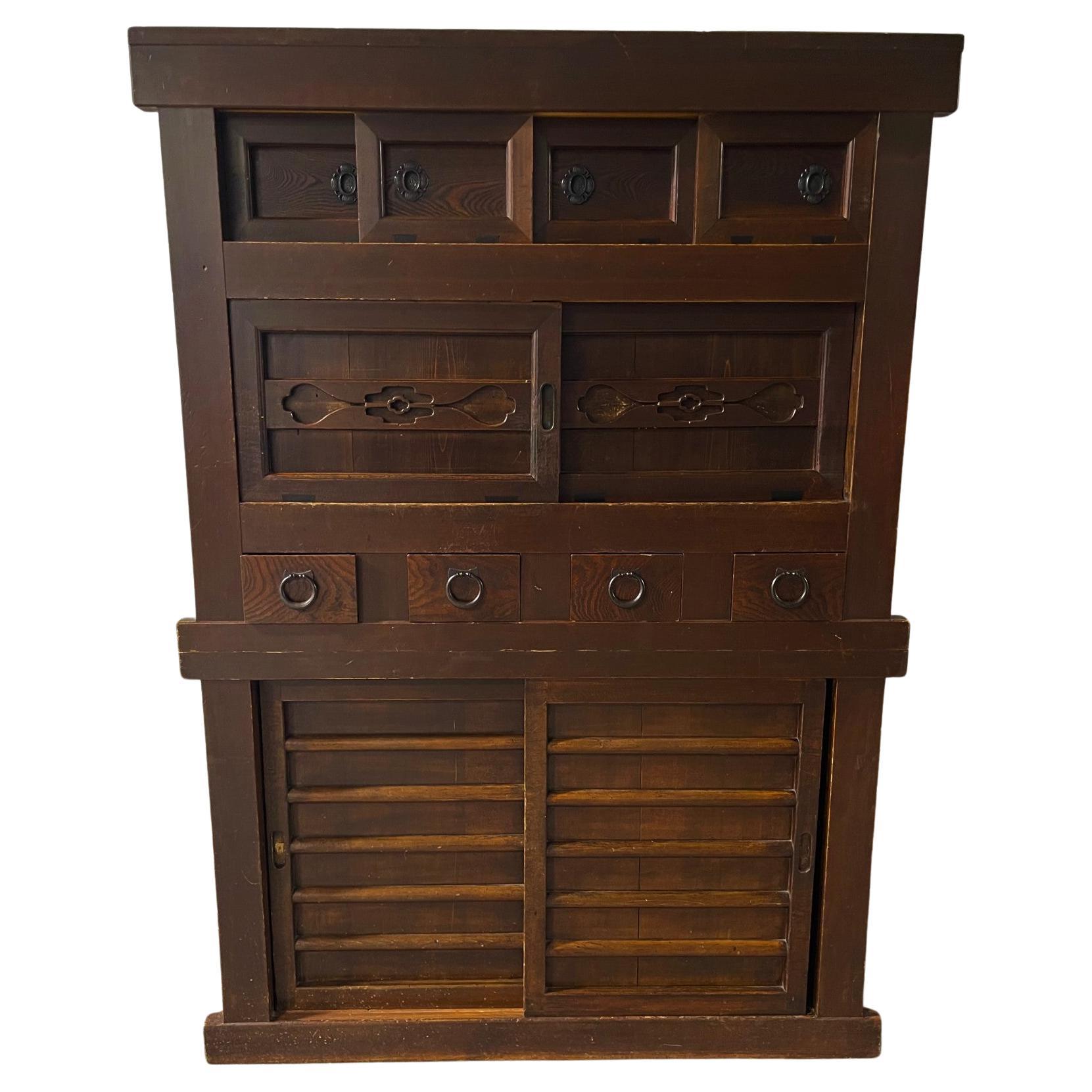
This Japanese antique storage cabinet features traditional flap-front doors, commonly known as pata-pata doors, and dates to the Meiji period (late 19th–early 20th century).
The most distinctive feature of this piece is the handwritten kanji found on the doors. They read “No. 1,” “No. 2,” “No. 3,” and so on, written in old-form kanji. Notably, the character used for “number” is a now-obsolete kanji that specifically denotes rank or grade, rather than simple numerical order. This character is no longer used in modern Japanese, and even among native Japanese speakers today, few can readily read it or immediately grasp its meaning. Its presence reflects a historical system of classification once familiar in everyday life, but now largely forgotten.
The fourth tier bears no marking. In traditional Japanese culture, the number four shares its pronunciation with the word for “death” and was therefore considered inauspicious. The deliberate omission of this number offers a subtle yet telling glimpse into the beliefs and daily sensibilities of the time—customs that are rarely observed in contemporary Japan.
At the lower section, the sliding doors are marked with the characters for “left” and “right.” While their exact purpose remains unclear, these markings suggest practical use in a workshop or production environment, where materials or components needed to be sorted and stored according to specific positions or categories.
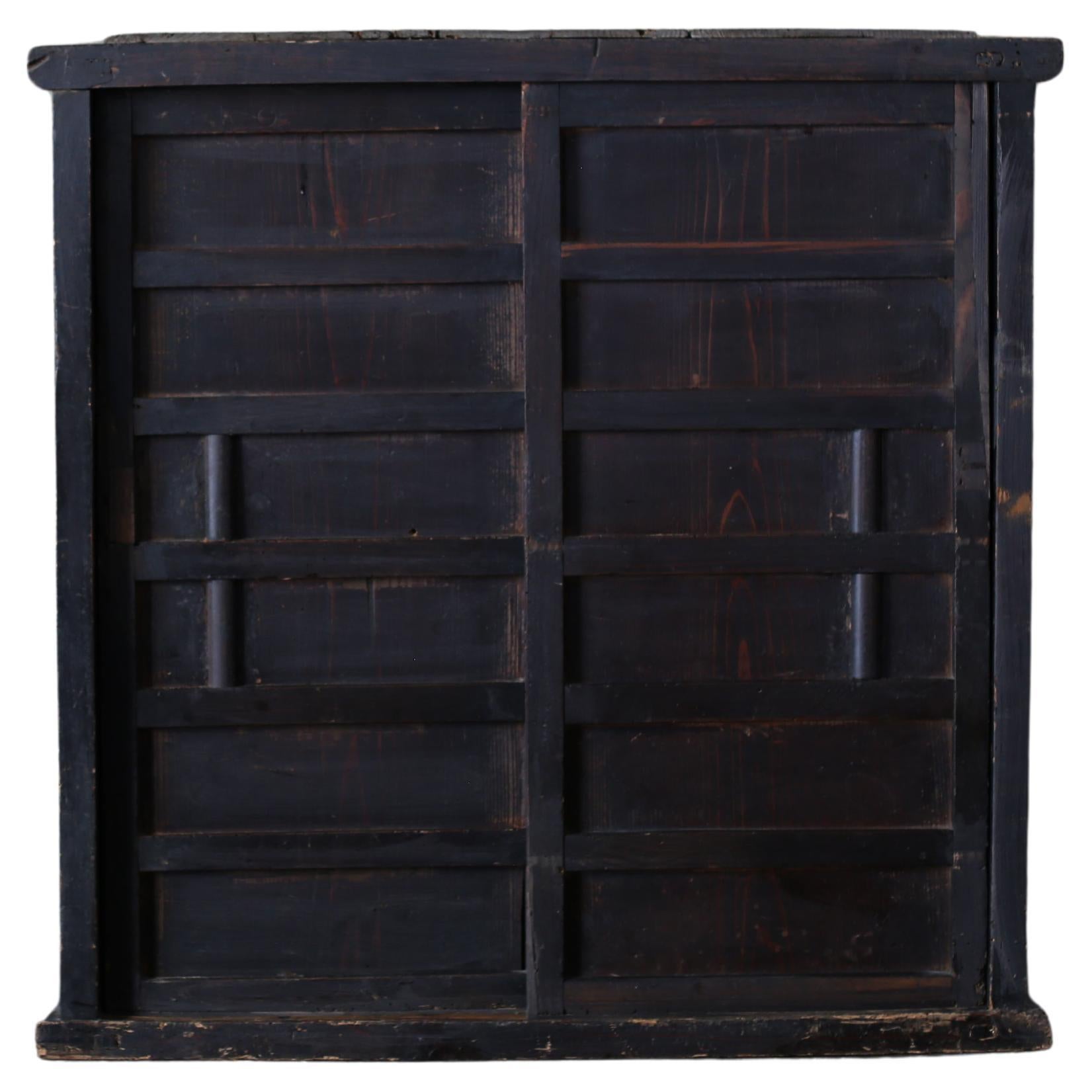
The cabinet is crafted from Japanese cedar. The door frames are finished in black urushi lacquer, now gently worn, thinned, and partially rubbed away through decades of use. Other surfaces are finished with traditional kakishibu (persimmon tannin) and pine soot. Areas with a subtle reddish tone derive from bengara (red iron oxide), later overcoated with pine soot, resulting in a deep, layered surface that has matured naturally over time. These variations are not decorative effects, but traces of use and age that give the piece its quiet depth.
The door handles are made of antimony and formed in a delicate flower-petal shape—an exceptionally rare detail for utilitarian storage furniture. Only the handle corresponding to the now-lost “No. 5” door has been replaced with a brass handle, reflecting a practical repair made during the cabinet’s long working life.
Rather than presenting a fixed or restored ideal, this cabinet retains the marks of use, belief, and adaptation accumulated over time. It stands as a material record of everyday craftsmanship, shaped by function and quietly enriched by age—an embodiment of the wabi-sabi sensibility found in authentic Japanese antiques.
Condition Notes:
- Structure is sound and stable with no structural issues
- All flap-front (pata-pata) doors and lower sliding doors operate smoothly
- A visible age-related crack is present in the panel of one sliding door, caused by natural wood movement over time; this does not affect stability or use.
- Surface shows age-related wear including scratches, rubbing, thinning lacquer, and areas of loss consistent with long-term use
- Black urushi lacquer on the door frames shows wear and fading from age and handling
- Variations in color and finish are present, including darker areas and subtle reddish undertones from traditional finishes
- Handwritten kanji markings show fading and wear consistent with age
- Most original antimony flower-shaped handles remain intact
- One handle, corresponding to the missing “No. 5” door, has been replaced with a brass handle; replacement is stable and functional
Cleaned gently with water only.
As an authentic Late Meiji–period piece, this cabinet shows natural signs of age and use consistent with Japanese antiques. Surface wear, wood movement, small marks, and past repairs are part of its history and character, not defects. Please review all photos carefully before purchasing.
Interior dimensions:
Flap-front compartments: W 29.9" × D 11.2" × H 7.1" (76.0 × 28.5 × 18.0 cm)
Sliding-door compartment: W 29.9" × D 10.0" × H 14.4" (76.0 × 25.5 × 36.5 cm)
Weight:
52.5 lbs (23.8 kg)
Shipping Information:
We ship from Japan. I will provide my own shipping quote. Please ask.
Import duties, taxes, and customs fees are the responsibility of the buyer.
Approach to Selection and Restoration:
Each piece is individually selected through our own eye, then restored to reveal its most compelling state. Movement, stability, and surface are considered as one—shaped through practice to be lived with naturally, honoring the wood’s natural patina while avoiding environmentally harsh chemical strippers or forceful abrasion.
- Dimensiones:Altura: 149 cm (58,67 in)Anchura: 81,5 cm (32,09 in)Profundidad: 31,5 cm (12,41 in)
- Estilo:Meiji (Del período)
- Materiales y técnicas:
- Lugar de origen:
- Época:
- Fecha de fabricación:Late Meiji Era (circa 1900–1912)
- Estado:Desgaste acorde con la edad y el uso. Cleaned gently with water only. Doors and sliding doors operate smoothly. The structure is sound with no structural issues. The piece has been carefully inspected, and no issues were found beyond those noted above.
- Ubicación del vendedor:Hitachiomiya-shi, JP
- Número de referencia:1stDibs: LU7430248098762
Sobre el vendedor
5,0
Vendedor Platino
Vendedores premium con una calificación de +4,7 y tiempos de respuesta de 24 horas
Establecido en 2019
Vendedor de 1stDibs desde 2022
83 ventas en 1stDibs
Tiempo de respuesta usual: 1 hora
- EnvíoRecuperando presupuesto…Envío desde: Hitachiomiya, Japón
- Política de devolución
Partes de esta página se han traducido automáticamente. 1stDibs no puede garantizar la exactitud de las traducciones. El inglés es el idioma predeterminado de este sitio web.
Más de este vendedor
Ver todoArmario Japonés Vintage con Puerta Corredera (Cha Tansu), Principios de la Era Showa, Wabi Sabi
Este armario japonés de puertas correderas (cha tansu) se fabricó a principios del Periodo Showa (1926-1945) en ciprés hinoki, una madera apreciada por sus finas vetas, su durabilida...
Categoría
mediados del siglo XX, Japonés, Showa, Gabinetes
Materiales
Ciprés, Madera
Antiguo Tansu Japonés Grande, Panel Puertas, Era Meiji 1868-1912, Wabi Sabi
Este gran Tansu Mizuya antiguo fue fabricado en la Era Meiji (1868-1912).
Sus sencillas puertas correderas y su acabado oscuro y desgastado reflejan la tranquila belleza del wabi-sa...
Categoría
Antiguo, Mediados del siglo XIX, Japonés, Meiji, Gabinetes
Materiales
Cedro
Cómoda japonesa antigua, Era Keio (Periodo Edo, 1867), Wabi Sabi
Esta cómoda antigua se fabricó en la Era Keio (1867).
Hecha de cedro japonés y acabada con laca tradicional japonesa (urushi), la superficie ha desarrollado zonas de desgaste natura...
Categoría
Antiguo, Mediados del siglo XIX, Japonés, Edo, Cómodas y cajoneras
Materiales
Cedro
Armario Japonés Antiguo con Puerta Corredera (Cha Tansu), Época Taisho (1912-1926), Wabi
Este armario japonés de puertas correderas (cha tansu) se fabricó durante el Periodo Taisho (1912-1926) utilizando una cuidada combinación de maderas: kiri (paulownia) para el armazó...
Categoría
principios del siglo XX, Japonés, Taisho, Gabinetes
Materiales
Madera, Cedro
Cajoneras Antiguas Japonesas, Era Meiji
1868-1912
Wabi Sabi
Esta cómoda antigua se fabricó a finales de la era Meiji (1868-1912).
Esta cómoda japonesa, fabricada durante la era Meiji, es una pieza atemporal que cuenta una historia de eleganc...
Categoría
Antiguo, Fines del siglo XIX, Japonés, Meiji, Cómodas y cajoneras
Materiales
Madera

1387 € Precio de venta
Descuento del 36 %
Armario Pequeño Japonés Antiguo con Puerta de Madera, Época Taisho
1912-1926
Wabi Sabi
Este pequeño armario antiguo se fabricó en la Era Taisho (1912-1926), reflejando la excepcional artesanía de la época. El panel frontal está hecho de exquisita madera de caoba, con s...
Categoría
principios del siglo XX, Japonés, Taisho, Gabinetes
Materiales
Madera
También te puede gustar
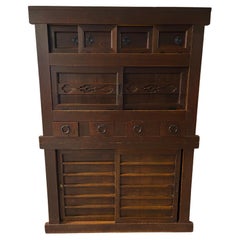
Japanese Antique Massive Tansu Chest 1860s-1900s / Cabinet Cupboard Wabi Sabi
This is a large, old black tansu chest made in Japan, dating to the Meiji period (1860s–1900s). Crafted from Japanese cedar, it is substantial in scale yet maintains a calm, restrain...
Categoría
principios del siglo XX, Japonés, Meiji, Gabinetes
Materiales
Cedro
Armario japonés Tansu con puertas correderas, Periodo Meiji, Siglo XIX
Tansu grande de cocina japonesa de dos secciones, finales del siglo XIX. La sección inferior interior se ha modificado para alojar un televisor. Se ha retirado parte de la parte infe...
Categoría
Antiguo, Fines del siglo XIX, Japonés, Meiji, Gabinetes
Materiales
Olmo
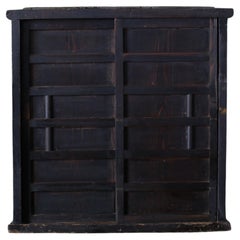
Antiguo Japonés BK Tansu 1860s-1900s ③ / Aparador Wabi Sabi
Esta cómoda forma parte de un conjunto de tres utilizadas en la misma antigua casa japonesa.
A juzgar por su estado actual, parece bastante antiguo. Está en su estado original.
Los ...
Categoría
principios del siglo XX, Japonés, Edo, Gabinetes
Materiales
Cedro
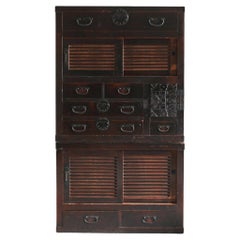
Gran Armario Tansu Japonés Wabi Sabi de Dos Secciones del Periodo Edo Tardío
Tansu japonés alto de dos secciones de mediados del siglo XIX.
Cedro patinado con múltiples cajones, puertas correderas y herrajes de hierro.
Fuerte diseño utilitario.
Categoría
Antiguo, Mediados del siglo XIX, Japonés, Gabinetes
Materiales
Hierro
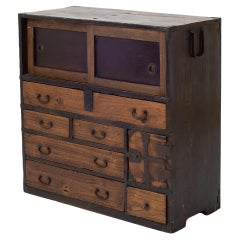
Arcón Mercante Tansu Japonés de la Era Meiji del Siglo XIX
Construido con ciprés y olmo, este cofre de mercader presenta herrajes de hierro ennegrecido con dos gruesas asas en la parte superior de la pieza para facilitar su transporte. Dispo...
Categoría
Antiguo, Fines del siglo XIX, Japonés, Meiji, Gabinetes
Materiales
Hierro
Tansu Antiguo Japonés / Cajonera / 1868-1912s / Wabi-Sabi Mingei
Se trata de un antiguo cajón japonés.
Se ha utilizado en tiendas desde el periodo Edo en la región de Tohoku, y se estima que se fabricó alrededor del periodo Meiji.
El material es...
Categoría
Antiguo, Fines del siglo XIX, Japonés, Meiji, Cómodas y cajoneras
Materiales
Hierro