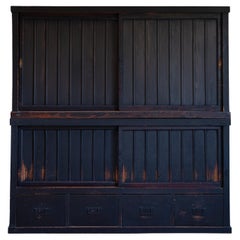
Artículos similares a Japanese Antique Wabi Sabi Black Tansu 1860s-1900s / Chests Cabinet
¿Quieres más imágenes o vídeos?
Solicita imágenes o vídeos adicionales al vendedor
1 de 19
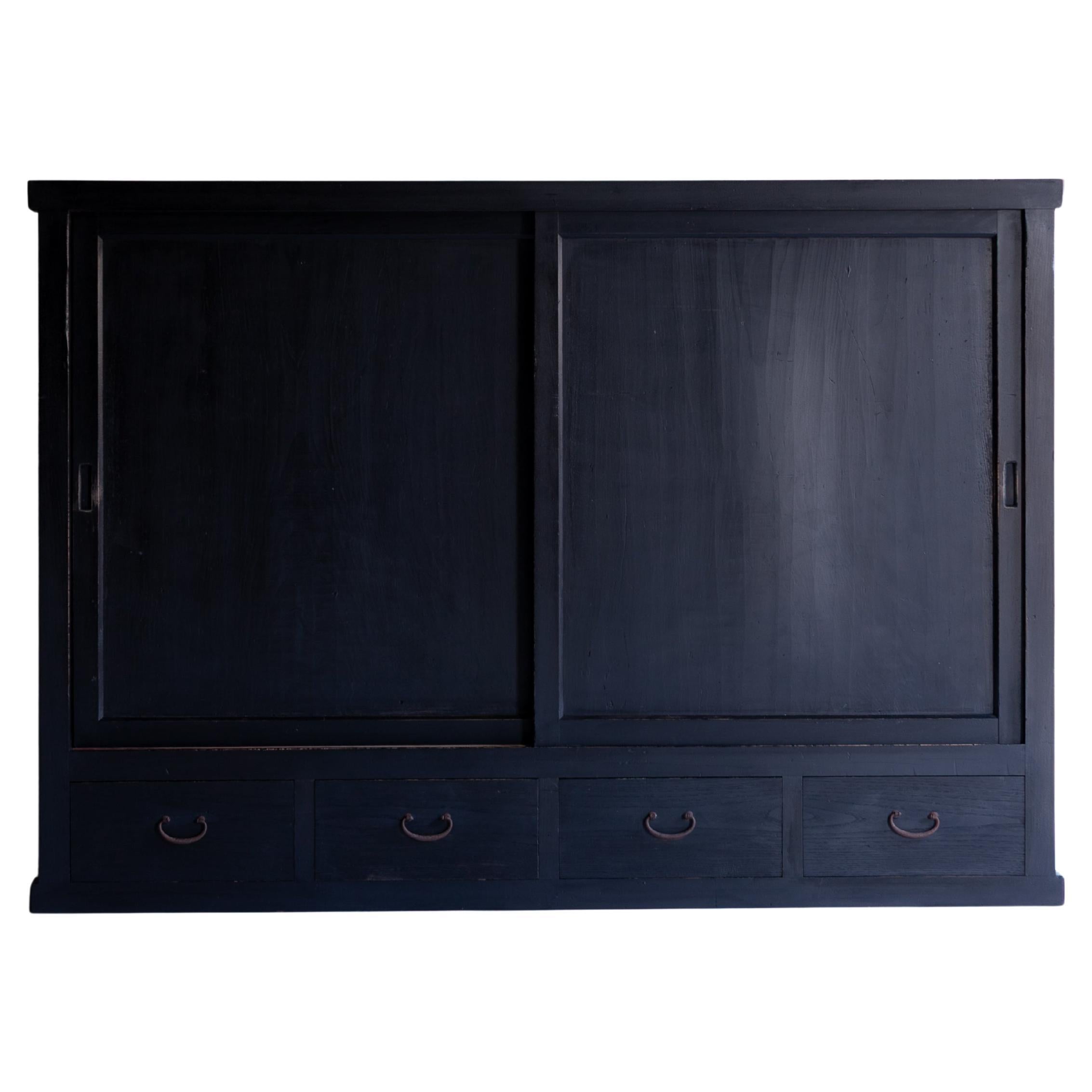
Japanese Antique Wabi Sabi Black Tansu 1860s-1900s / Chests Cabinet
1500 €
Acerca del artículo
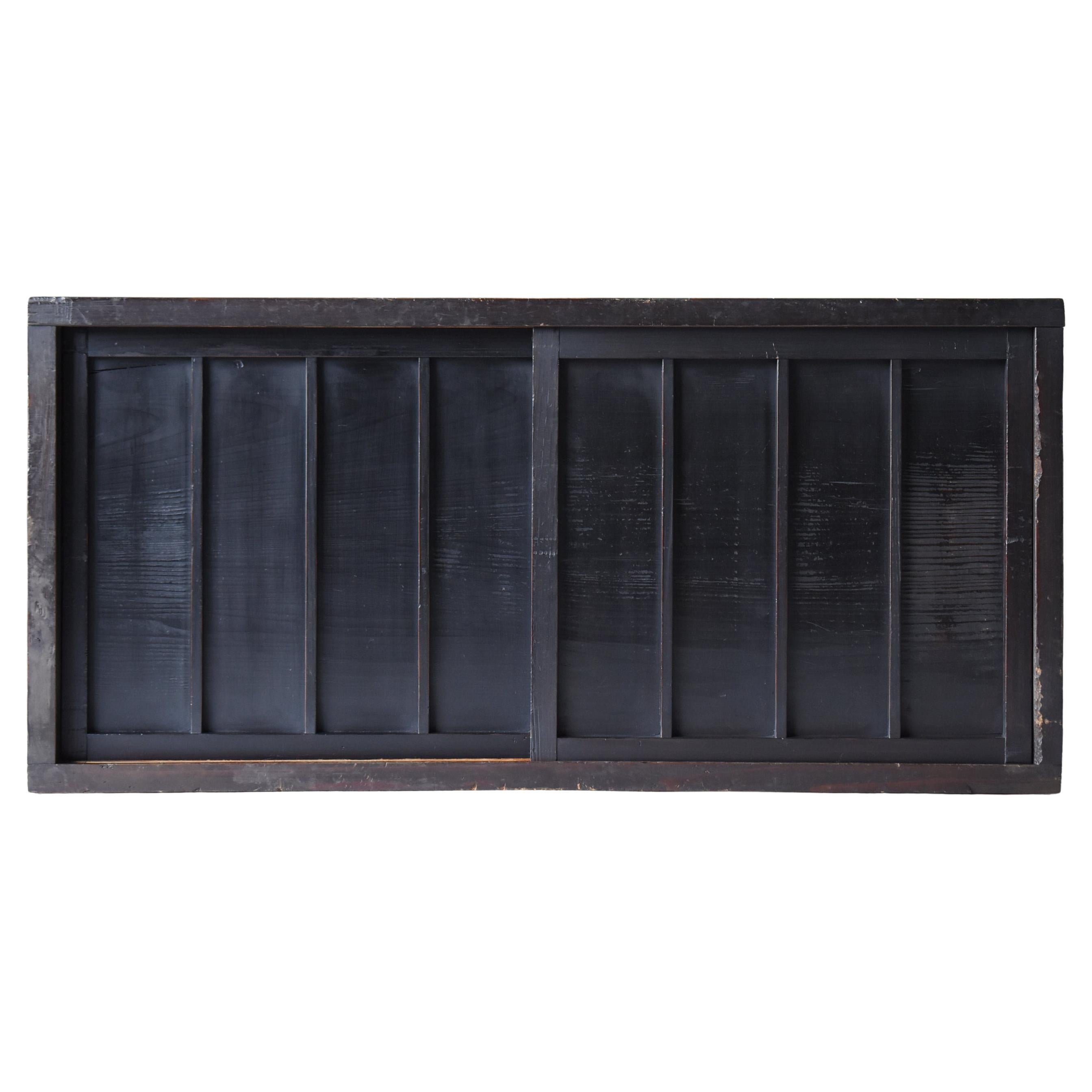
This piece is a Japanese sliding door cabinet crafted during the Meiji period to early Taisho period.
It is constructed from cedar wood, a material deeply rooted in Japanese architecture and everyday objects.
Its restrained rectangular form and low, grounded proportions bring a sense of quiet stability and composure to a space. Free from excessive ornamentation, the cabinet reflects a balance between practicality and aesthetic restraint that defined Japanese domestic culture of the time.
The exterior is finished in a deep, subdued black tone. Subtle variations on the surface, formed through long years of use and the gentle passage of time, create a quiet visual depth. As light moves across the surface, soft notes of grain and shadow emerge, revealing layers of time embedded within the cedar.
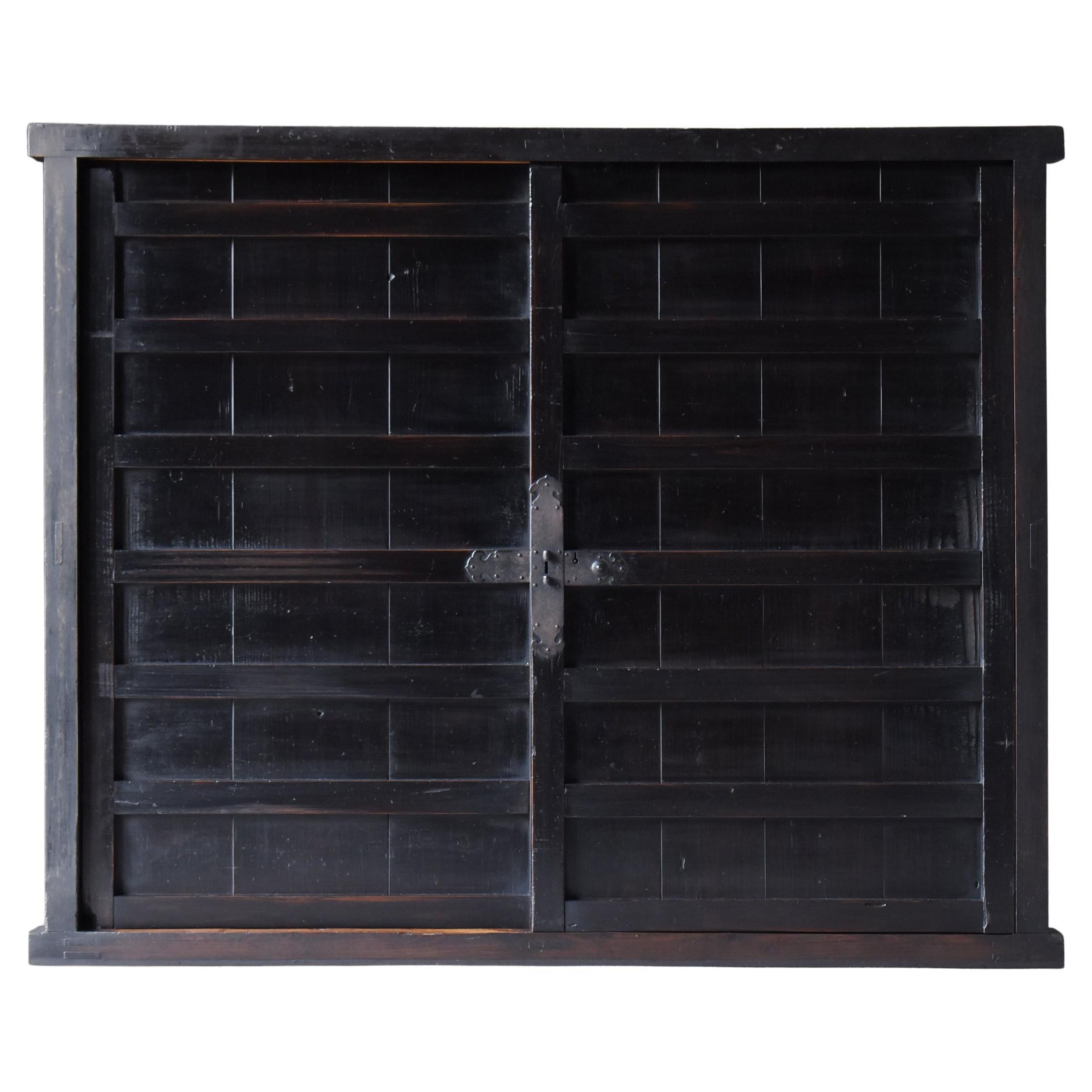
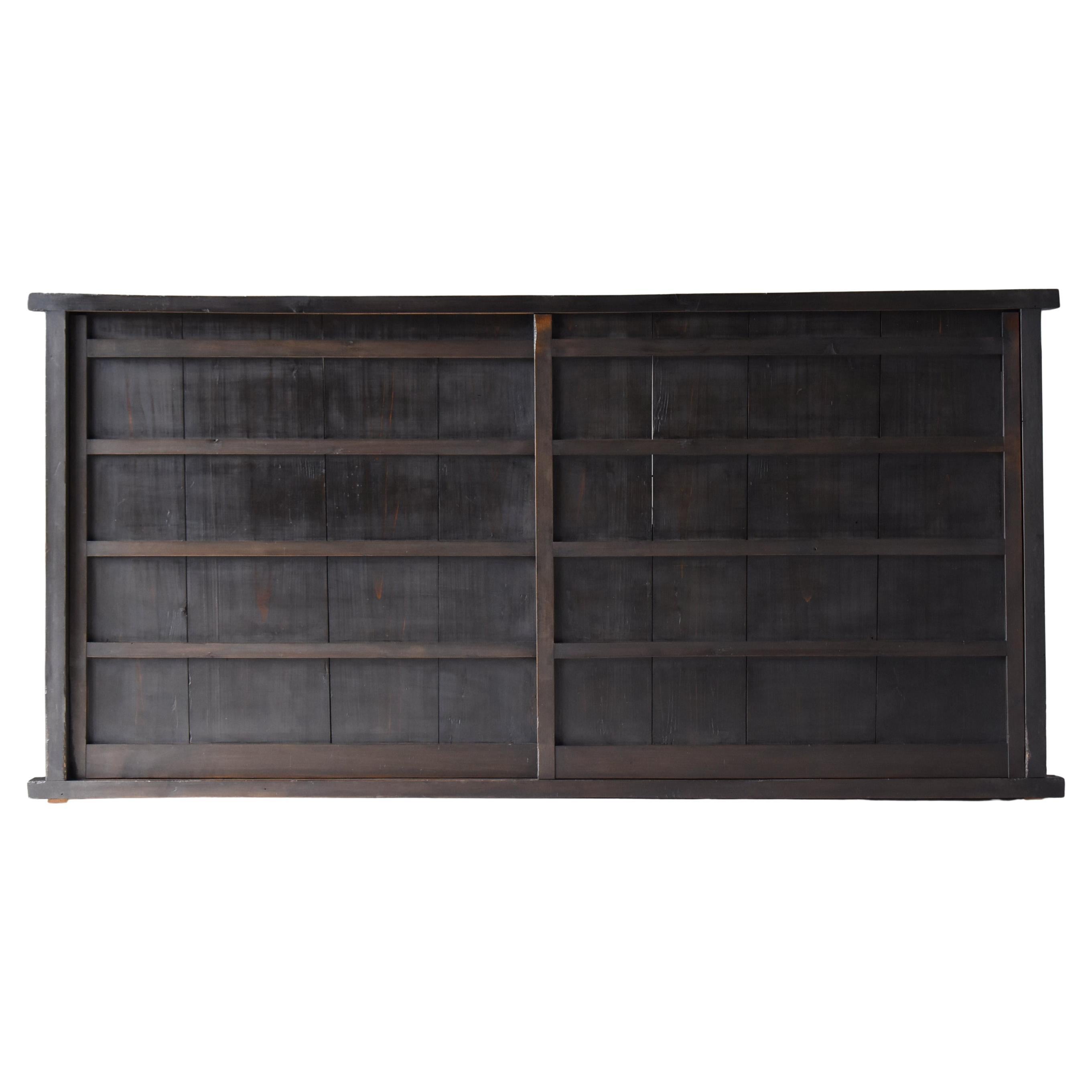
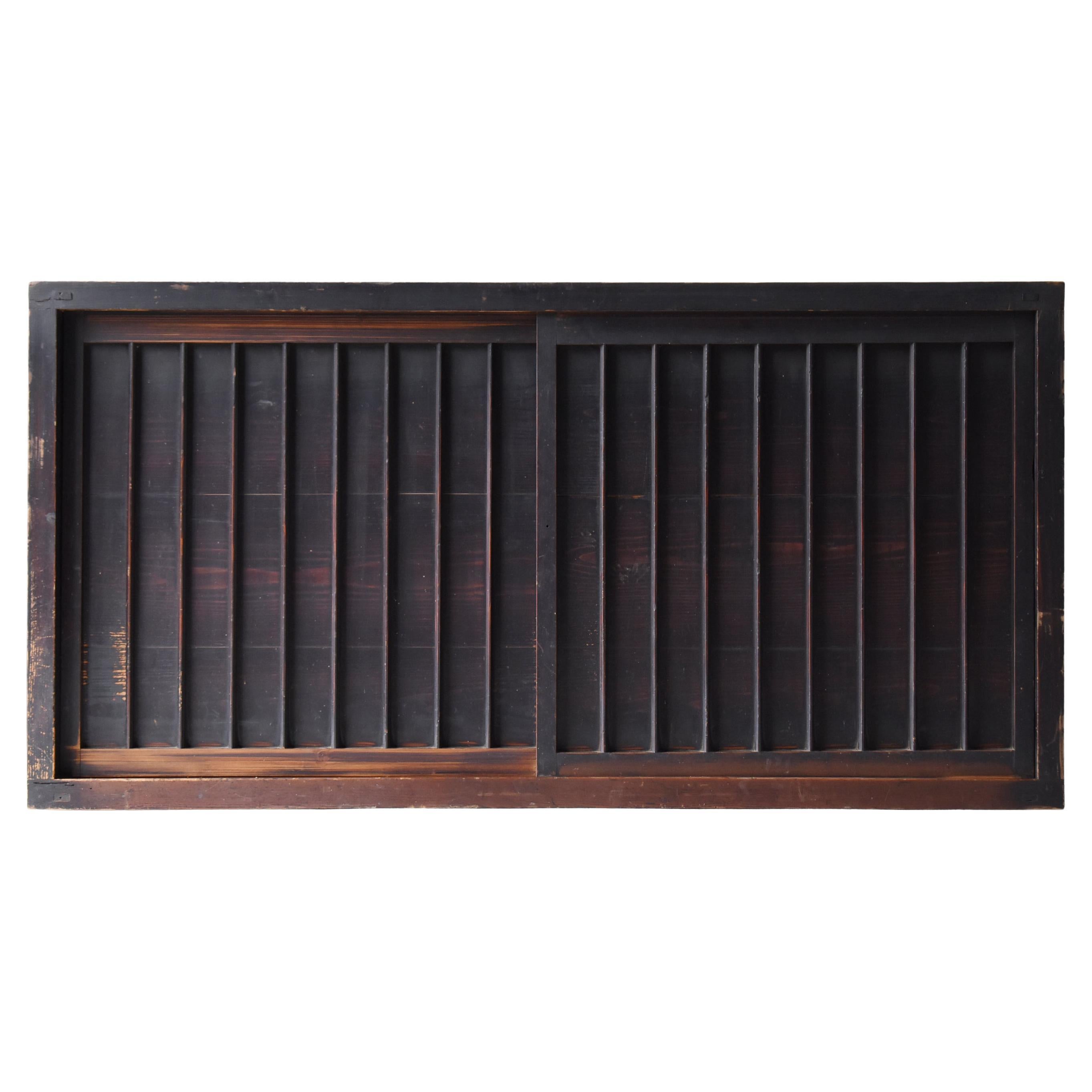
When the sliding doors are opened, the interior reveals a warmer, natural wood surface. This contrast between exterior and interior is a characteristic feature of Japanese furniture design. While the outer surface maintains a composed and reserved presence, the interior retains the natural softness of the material, experienced only by the user.
The construction is straightforward and purposeful. Shelving and framing are arranged with practical clarity, allowing the cabinet to function naturally as storage for everyday objects, vessels, or books. At the same time, its simplicity lends it a sculptural quality that extends beyond its utilitarian role.
Embedded within this work is a distinctly Japanese sensibility that finds beauty in impermanence and restraint. Rather than relying on decoration or artificial refinement, the piece emphasizes stillness, balance, and negative space, subtly elevating the atmosphere of the room it inhabits.
For centuries, Japanese culture has relied on locally available natural materials to create the tools necessary for daily life, passing them down from generation to generation in harmony with nature. Objects that have been used over long periods quietly absorb human gestures and the presence of time, reflecting the values of the land and its way of living.
In a contemporary world shaped by mass production and consumption, this cabinet invites reflection on durability, reuse, and thoughtful craftsmanship.
Within a modern interior, it functions not only as storage but also as a quiet architectural element. It can anchor a wall, support objects and artworks, or serve as a subtle focal point within a space.
Guided by these principles, we carefully curate Japanese antiques and folk objects that embody time, stillness, and an inner strength shaped by use and history.
Period
Meiji period to early Taisho period
Material
Cedar wood
- Dimensiones:Altura: 63,5 cm (25,01 in)Anchura: 54 cm (21,26 in)Profundidad: 32 cm (12,6 in)
- Estilo:Meiji (Del período)
- Materiales y técnicas:
- Lugar de origen:
- Época:
- Fecha de fabricación:1860s-1900s
- Estado:Desgaste acorde con la edad y el uso.
- Ubicación del vendedor:Sammu-shi, JP
- Número de referencia:1stDibs: LU5487248081042
Sobre el vendedor
5,0
Vendedor Platino
Vendedores premium con una calificación de +4,7 y tiempos de respuesta de 24 horas
Establecido en 2015
Vendedor de 1stDibs desde 2020
1703 ventas en 1stDibs
Tiempo de respuesta usual: 6 horas
- EnvíoRecuperando presupuesto…Envío desde: Sammushi, Japón
- Política de devolución
Partes de esta página se han traducido automáticamente. 1stDibs no puede garantizar la exactitud de las traducciones. El inglés es el idioma predeterminado de este sitio web.
Más de este vendedor
Ver todoJapanese Large Black Tansu Circa 1860
s / Cabinet Wabi-Sabi
This large Japanese tansu was crafted in the early 1900s and reflects a restrained yet powerful approach to utilitarian furniture.
Made from solid cedar wood, the piece combines stru...
Categoría
principios del siglo XX, Japonés, Meiji, Gabinetes
Materiales
Cedro
Antiguo Japonés BK Tansu 1860s-1900s ③ / Aparador Wabi Sabi
Esta cómoda forma parte de un conjunto de tres utilizadas en la misma antigua casa japonesa.
A juzgar por su estado actual, parece bastante antiguo. Está en su estado original.
Los ...
Categoría
principios del siglo XX, Japonés, Edo, Gabinetes
Materiales
Cedro
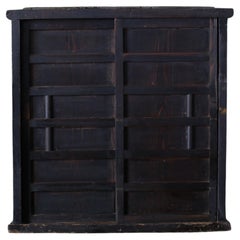
BK Tansu Japonés 1920-1940 / Periodo Showa / Aparador Wabi sabi
Se trata de un antiguo Tansu japonés.
La pátina desarrollada con el tiempo es realmente exquisita.
Se ha mantenido meticulosamente para conservar su pátina.
Las puertas funcionan co...
Categoría
principios del siglo XX, Japonés, Showa, Gabinetes
Materiales
Cedro
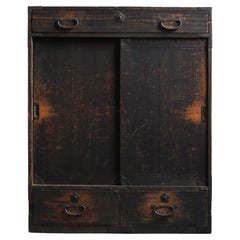
Japanese Antique Tansu Cabinet/ Wabi-sabi / Taishō–Shōwa Period 1910-40s
This cha dansu tea cabinet was crafted in Japan during the Taishō to early Shōwa period, using richly grained keyaki (zelkova) wood.
The bold, flowing grain that appears continuously...
Categoría
principios del siglo XX, Japonés, Taisho, Gabinetes
Materiales
Madera
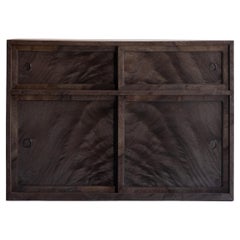
Japanese Antique Tansu Cabinet/ Wabi-sabi / Taishō–Shōwa Period 1910-40s
This cha dansu tea cabinet was crafted in Japan during the Taishō to early Shōwa period, using richly grained keyaki (zelkova) wood.
The bold, flowing grain that appears continuously...
Categoría
principios del siglo XX, Japonés, Taisho, Gabinetes
Materiales
Madera
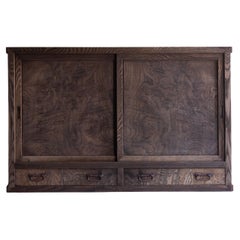
Antiguo Japonés Grande BK Tansu 1860s-1900s / Aparador Wabi Sabi
Se trata de un antiguo Tansu japonés.
A juzgar por el estado de las piezas metálicas, parece bastante antiguo, probablemente del periodo Edo.
Se ha mantenido cuidadosamente para con...
Categoría
Antiguo, Mediados del siglo XIX, Japonés, Edo, Gabinetes
Materiales
Cedro
También te puede gustar
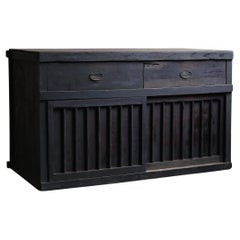
Antiguo Tansu Japonés Negro 1860s-1900s / Aparador Armario Wabisabi
Se trata de un antiguo arcón tansu negro japonés, fabricado en el periodo Meiji (1860-1900). Está hecho de madera de sugi (cedro). Su aspecto sobrio y sin adornos es precisamente lo ...
Categoría
principios del siglo XX, Japonés, Meiji, Aparadores
Materiales
Cedro
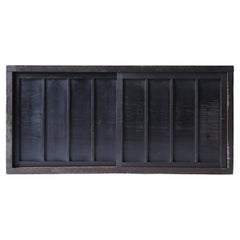
Antiguo Tansu Japonés Grande Negro 1860s-1900s / Aparador Wabi Sabi
Se trata de un antiguo Tansu grande fabricado en Japón.
Estos muebles se fabricaron durante el periodo Meiji (1860-1900).
El material utilizado es madera de cedro. Los herrajes metál...
Categoría
principios del siglo XX, Japonés, Meiji, Gabinetes
Materiales
Hierro
2770 € Precio de venta
Descuento del 28 %
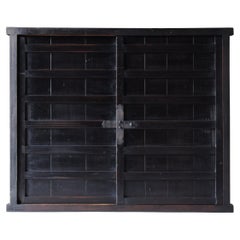
Japanese Antique Large Black Tansu / Cabinet Sideboard / 1800-1868s / Wabi-Sabi
This is an old Japanese cabinet called a tansu.
It is made of cedar and is thought to date from the Edo or Meiji period.
The doors have a simple, unified design, with vertical bars ...
Categoría
Antiguo, Mediados del siglo XIX, Japonés, Edo, Gabinetes
Materiales
Hierro
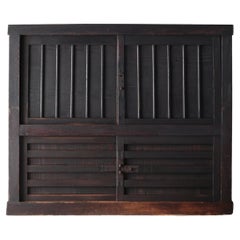
Antiguo Tansu Japonés Grande Negro 1860s-1900s / Aparador Wabi Sabi
Se trata de un antiguo cofre tansu negro grande fabricado en Japón. Fabricado durante el periodo Meiji (1860-1900), está hecho de madera de cedro, un material conocido por su ligerez...
Categoría
principios del siglo XX, Japonés, Meiji, Aparadores
Materiales
Cedro
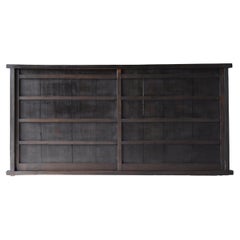
Antiguo Tansu Japonés Grande Negro 1860s-1900s / Aparador Wabisabi
Se trata de un gran cofre negro japonés antiguo (Tansu) fabricado en el periodo Meiji (1860-1900). Está fabricado con sugi (cedro japonés), un material tradicional en Japón. Con los ...
Categoría
principios del siglo XX, Japonés, Meiji, Aparadores
Materiales
Cedro
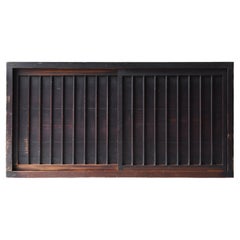
19 Cen. Edo japonés de 2 niveles grande negro Mizuya Tansu, wabi sabi cofres de cocina
Nuevos hallazgos de la Kominka (antigua casa tradicional) propiedad de una familia antigua de la prefectura de Nagano, Japón.
Este gran Mizuya tansu (arcón de cocina) de 2 niveles e...
Categoría
Antiguo, siglo XIX, Japonés, Edo, Gabinetes
Materiales
Madera, Cedro, Pino