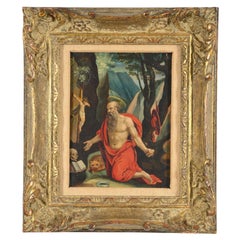
Artículos similares a 18th Century, Italian Baroque Painting St Jerome penitent by Antonio Zanchi
¿Quieres más imágenes o vídeos?
Solicita imágenes o vídeos adicionales al vendedor
1 de 17
18th Century, Italian Baroque Painting St Jerome penitent by Antonio Zanchi
35.500 €IVA incluido
Acerca del artículo
Antonio Zanchi (Este, 6 December 1631 – Venice, 12 April 1722)
St. Jerome Penitent
Dimensions: canvas W 73 × H 92 cm; frame W 96 × H 115 × D 6 cm
The painting depicts St. Jerome as a penitent, a subject widely explored in Venetian Baroque painting and particularly suited to the poetics of Antonio Zanchi (1631–1722), master of lagoon tenebrism.
The composition presents the saint in a half-length figure, bare-chested, immersed in a dense chiaroscuro atmosphere. The traditional iconography associated with St. Jerome is confirmed here through the customary symbols of his meditation: a skull, a book bound in leather, and a crucifix. The saint is shown as a hermit, semi-nude, covered with a red mantle richly draped, aged and with a long white beard. His rugged, time-worn face is turned downward, with an absorbed and meditative expression.
Several iconographies of St. Jerome relate to episodes from his life. Among these, the depiction of the saint in meditation, in penance, or intent on study is particularly widespread. The book alludes to his numerous exegetical writings and to the Vulgate. The skull is a symbol of Vanitas, the transience of human life and meditation on death. The red cardinal’s mantle refers to the widespread medieval—yet erroneous—belief, perpetuated by the Legenda Aurea (The Golden Legend), that Jerome was a cardinal because he served as secretary to Pope Damasus; thus, the cardinal’s robe entered his iconography.
Returning to the work under study, the dark background accentuates the saint’s virile physique, marked by time and penance, with intensified muscular rendering, focusing the light on his arms, head, and symbolic objects. The brushwork is swift and vigorous, dense in the more illuminated areas. Furthermore, the oblique lighting, the somber atmosphere, and the plastic anatomical treatment of the figure show clear affinities with authenticated works by Zanchi. His pictorial language, management of chiaroscuro, the intense emotional expressiveness of his figures, the compositional setup, and the iconographic typology are fully consistent with the oeuvre of the master—one of the protagonists of 17th-century Venetian painting, known especially for his dark tones and theatrical figures.
His skill in rendering flesh and his effective handling of chiaroscuro provide a significant example of Zanchi’s “tenebrism” and pathetic style. His persistent use of vehement light-and-shadow contrasts and colors of melancholic tone contributed greatly to his success among his contemporaries.
Antonio Zanchi moved to Venice at a young age and found there the ideal environment to develop a poetics grounded in strong chiaroscuro contrasts, in tune with the research of the so-called tenebrosi and the Caravaggesque influences filtered through local tradition. His rise occurred in the 1660s, when he received important public and confraternal commissions. In the following years, Zanchi became one of the most sought-after painters in Venice and the Veneto. His works also spread to Padua, Treviso, Rovigo, Verona, Vicenza, Loreto, Brescia, Milan, Bergamo, and even Bavaria, thanks to both public and private patronage that appreciated his vigorous style.
Zanchi died in Venice on 12 April 1722, leaving behind a vast and coherent corpus fundamental for understanding the evolution of 17th-century Venetian painting.
The St. Jerome examined here appears consistent with Zanchi’s mature phase, when tenebrism chiaroscuro remained central and the artist pursued strong volumetric investigation of figures, with muscular bodies and well-defined anatomy.
Of particular technical-stylistic interest is the comparison with a canvas depicting The Death of Socrates, which appeared on the art market a few years ago. In both works, the artist uses a single, assured, and fluid brushstroke to define the vein on the hand, rendered in a subtle blue-grey tone.
In conclusion, in light of the stylistic, technical, and comparative analysis conducted, the painting depicting St. Jerome can be attributed to Antonio Zanchi’s mature hand. The solidity of the light construction, the controlled drama of the scene, the quality of the painterly material, and the precise affinities with authenticated works attest to an expert and fully self-aware hand, typical of Zanchi’s production at the height of his maturity.
The painting therefore stands as a significant and coherent contribution to the artist’s catalogue, confirming the expressive hallmark and emotional depth that characterise his finest works.
The work is presented in an oval carved and gilded wooden frame of Emilian origin dating to the 17th century. The state of preservation of the pictorial surface is good; a few small scattered retouching are visible, the result of a conservative restoration. The painting has also been relined and re-stretched in modern times.
We apologize for any errors in the translation from Italian.
Please contact us to receive the expertise in Italian.
- Dimensiones:Altura: 115 cm (45,28 in)Anchura: 96 cm (37,8 in)Profundidad: 6 cm (2,37 in)
- Estilo:Barroco (Del período)
- Materiales y técnicas:
- Lugar de origen:
- Época:
- Fecha de fabricación:Early 18th Century
- Estado:Desgaste acorde con la edad y el uso. The state of preservation of the pictorial surface is good; a few small scattered retouching are visible, the result of a conservative restoration. The painting has also been relined and re-stretched in modern times.
- Ubicación del vendedor:IT
- Número de referencia:1stDibs: LU4405247699822
Sobre el vendedor
5,0
Vendedor profesional aprobado
Todos los vendedores superan estrictas normas de autenticidad y confiabilidad
Establecido en 1980
Vendedor de 1stDibs desde 2019
57 ventas en 1stDibs
Tiempo de respuesta usual: <1 hora
- EnvíoRecuperando presupuesto…Envío desde: Italia
- Política de devolución
Partes de esta página se han traducido automáticamente. 1stDibs no puede garantizar la exactitud de las traducciones. El inglés es el idioma predeterminado de este sitio web.
Más de este vendedor
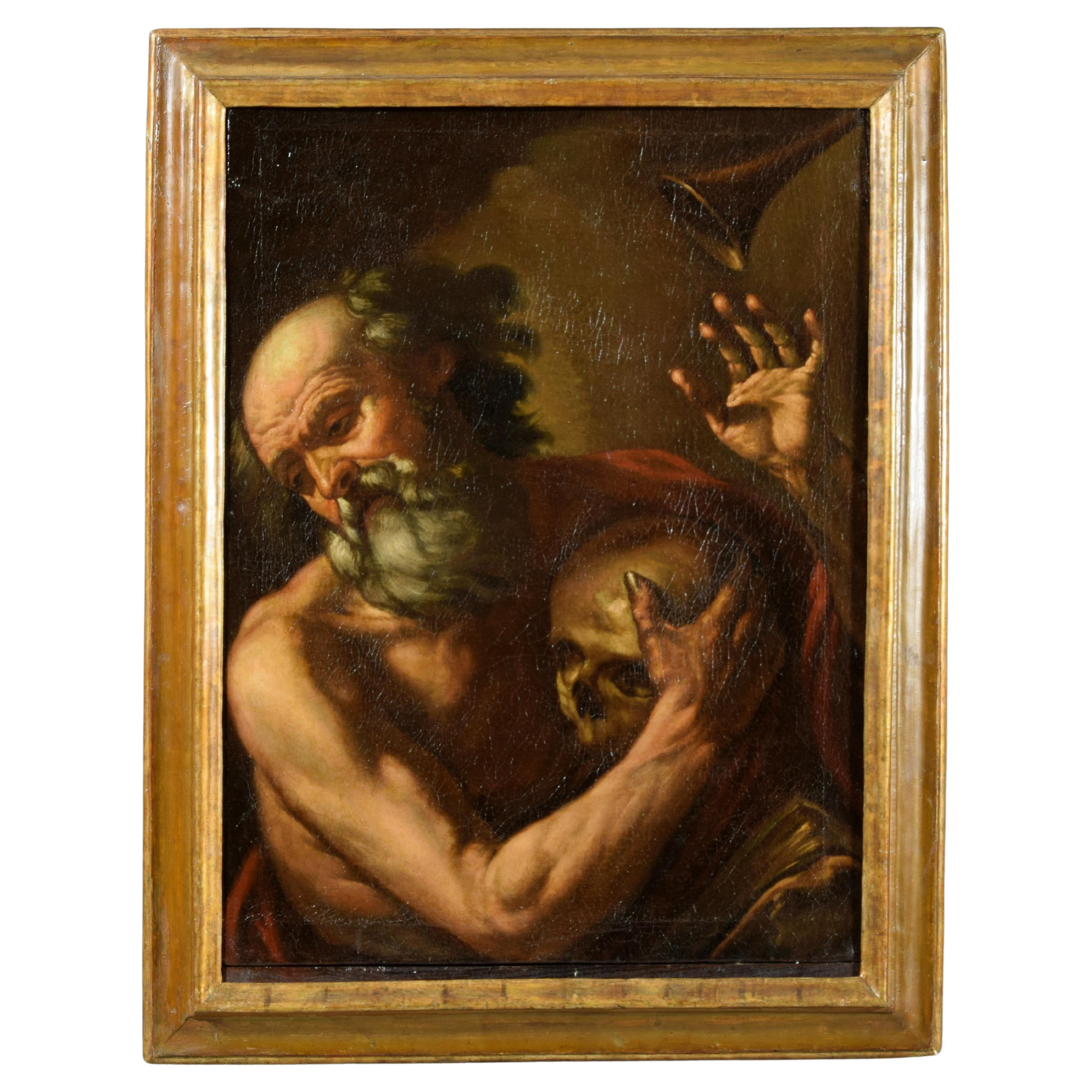
Ver todoSiglo XVII, Pintura italiana San Jerónimo oye la trompeta del Juicio Final
San Jerónimo oye la trompeta del Juicio, escuela napolitana, siglo XVII
Esta exquisita pintura al óleo sobre lienzo representa a San Jerónimo oyendo la trompeta del ángel del Juicio ...
Categoría
Antiguo, siglo XVII, Italiano, Barroco, Pinturas
Materiales
Lienzo
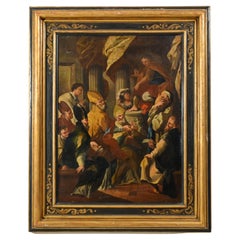
Siglo XVIII, pintura italiana con San Nicolás y el milagro del ladrillo
Siglo XVIII, pintura italiana con San Nicolás y el milagro del ladrillo
Óleo sobre lienzo; bastidor cm Al 136 x An 109 x Pr 10. Lienzo cm H 100 x A 74
El óleo sobre lienzo, con marc...
Categoría
Antiguo, siglo XVIII, Italiano, Barroco, Pinturas
Materiales
Lienzo
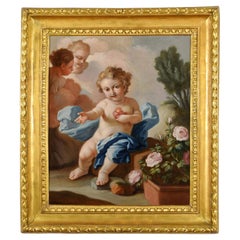
Siglo XVIII, pintura italiana con el Sagrado Corazón del Niño Jesús de Pietro Ba
Por Pietro Bardellino
Pietro Bardellino (Italia - Nápoles, 1732 - 1806), attr., Sagrado Corazón del Niño Jesús
Medidas: con bastidor, cm L 86 x A 99 x P 8; sólo el lienzo, cm L 78 x A 64
El cuadro, ...
Categoría
Antiguo, mediados del siglo XVIII, Italiano, Barroco, Pinturas
Materiales
Lienzo
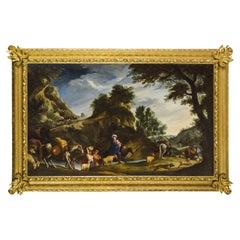
Siglo XVII, Pintura italiana de Pier Francesco Cittadini, Jacob y su familia
Pier Francesco Cittadini (Milán, 1616-Bolonia, 1681)
"Jacob y su familia van a Egipto"
Óleo sobre lienzo, cm 109 x 190 (sólo lienzo)
El valioso cuadro, realizado en óleo sobre l...
Categoría
Antiguo, mediados del siglo XVII, Europeo, Barroco, Pinturas
Materiales
Lienzo, Madera dorada
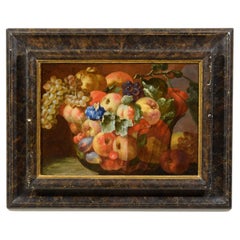
Siglo XVIII, Pintura italiana Naturaleza muerta de Giovanni Paolo Castelli Lo Spadino
Giovanni Paolo Castelli, conocido como "Lo Spadino" (Roma 1659 - hacia 1730)
Bodegón con una composición de frutas
Dimensiones: marco cm L 76,5 x A 61 x P 6,5. Lienzo cm L 55,5 x A 4...
Categoría
Antiguo, principios del siglo XVIII, Italiano, Barroco, Pinturas
Materiales
Lienzo, Madera
Siglo XVIII, Bodegón italiano Atribuido a Francesco Lavagna
Por Francesco Lavagna
Francesco Lavagna (Italia -Nápoles 1684-1724)
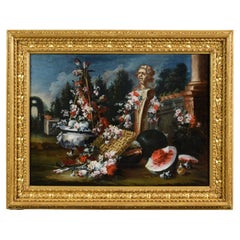
"Bodegón con flores y sandías y hermas con jardín al fondo"
El cuadro, de bella factura y en buen estado, representa una suntuosa compo...
Categoría
Antiguo, principios del siglo XVIII, Italiano, Barroco, Pinturas
Materiales
Lienzo
También te puede gustar
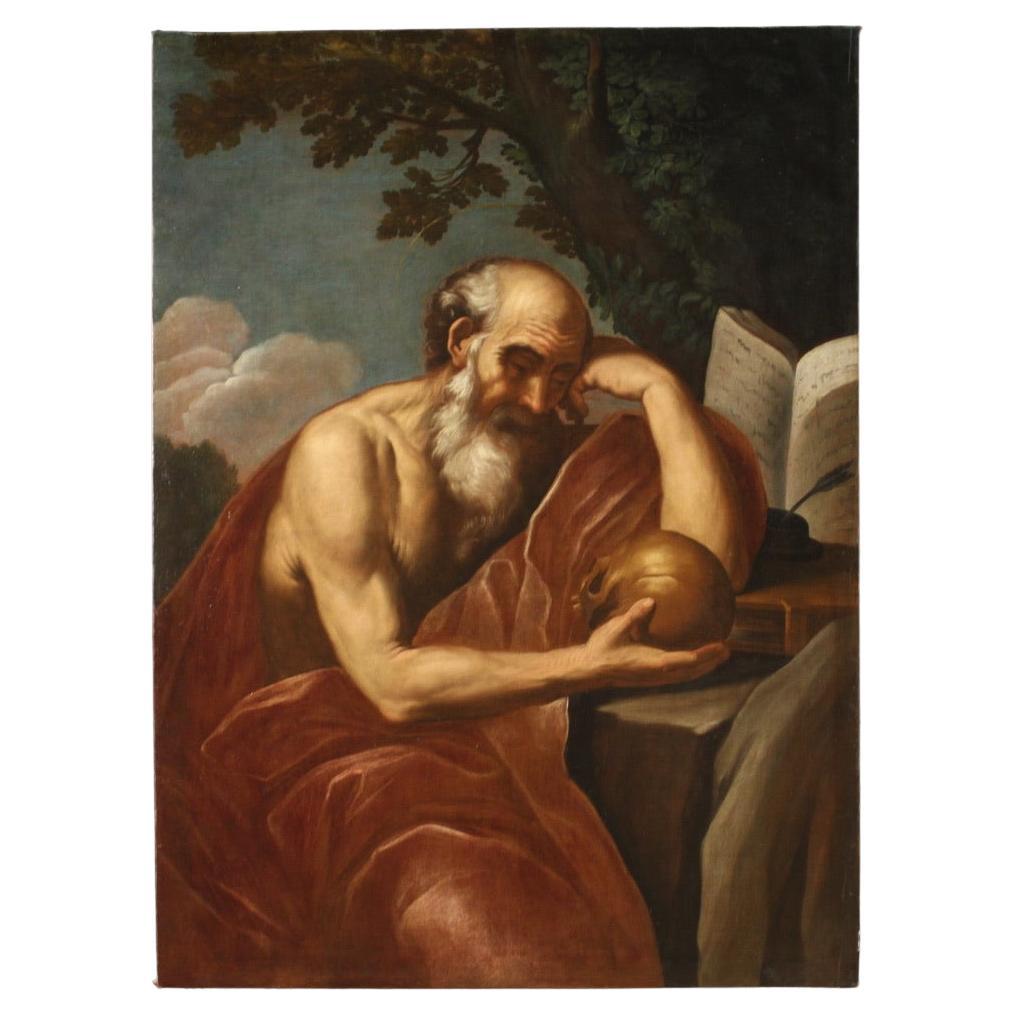
siglo XVII Óleo sobre lienzo Pintura religiosa italiana San Jerónimo en meditación
Pintura italiana de la segunda mitad del siglo XVII. El cuadro, óleo sobre lienzo, es una interesante réplica antigua de una famosísima composición de Guido Reni que representa a San...
Categoría
Antiguo, 1670s, Italian, Pinturas
Materiales
Lienzo

Asombroso Maestro Flamenco Siglo XVII "San Jerónimo"
Asombroso Maestro Flamenco Siglo XVII "San Jerónimo"
Óleo/lienzo/doble,
82 x 64 cm.
buen estado
Categoría
Antiguo, principios del siglo XVII, Holandés, Barroco, Pinturas
Materiales
Pintura

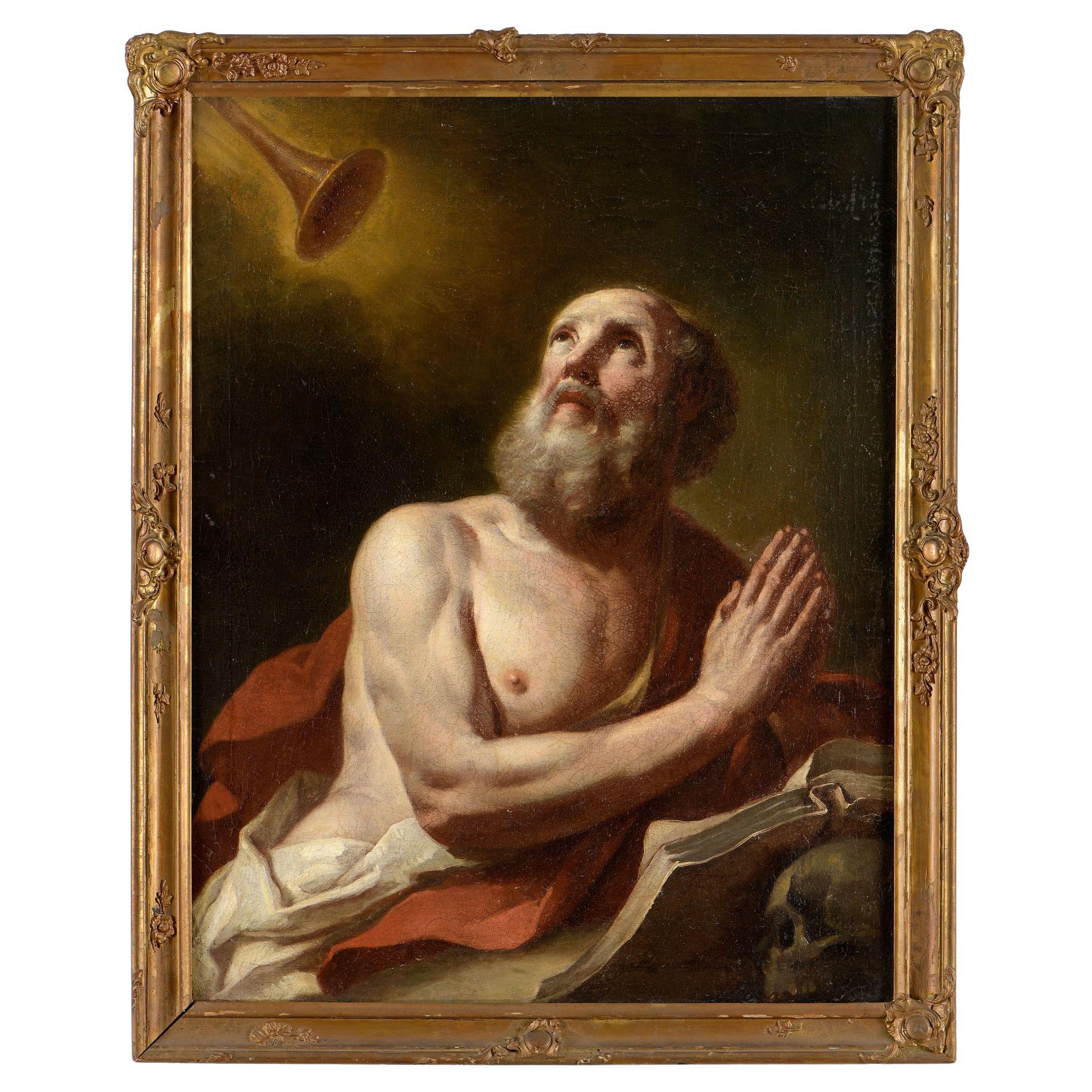
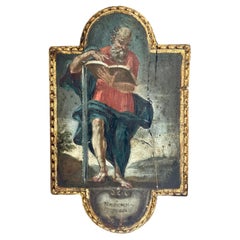
18th Century Italian School St. Jerome "Remissionem Peccatorum"
Italian Baroque religious panel painting. Style of Giovan Battista Langetti, depicting St. Jerome, the revered early Christian scholar best known for translating the Bible into Lati...
Categoría
Antiguo, siglo XVIII, Italiano, Barroco, Pinturas
Materiales
Madera dorada, Pintura
Pintura religiosa de San Jerónimo, hacia el siglo XIX
Pintura de finales del siglo XIX de San Jerónimo con aureola y calavera.
Lienzo bien pintado en bastidor dorado original, en general en buen estado.
Algunas pérdidas en el ba...
Categoría
Antiguo, siglo XIX, Británico, Gótico, Pinturas
Materiales
Lienzo

siglo XVII Óleo sobre lienzo Pintura religiosa flamenca San Jerónimo en su estudio
Pintura flamenca de la primera mitad del siglo XVII. Óleo sobre lienzo que representa un tema religioso de gran encanto, San Jerónimo en su estudio. Vivió entre los siglos IV y V d.C...
Categoría
Antiguo, 1630s, Dutch, Pinturas
Materiales
Lienzo

Pintura al óleo de San Jerónimo, antiguo maestro flamenco, siglo XVII/XVIII
Pintura antigua flamenca del siglo XVII/XVIII de San Jerónimo en un paisaje con objetos. Óleo sobre cobre. Enmarcado. Ligera inscripción en el reverso. Mira: 9 x 7 pulg. Total: 14 x ...
Categoría
Antiguo, siglo XVII, Desconocido, Pinturas
Materiales
Cobre