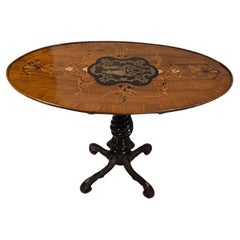
Artículos similares a Table in Wood with Saint George
Cargando vídeo
¿Quieres más imágenes o vídeos?
Solicita imágenes o vídeos adicionales al vendedor
1 de 22
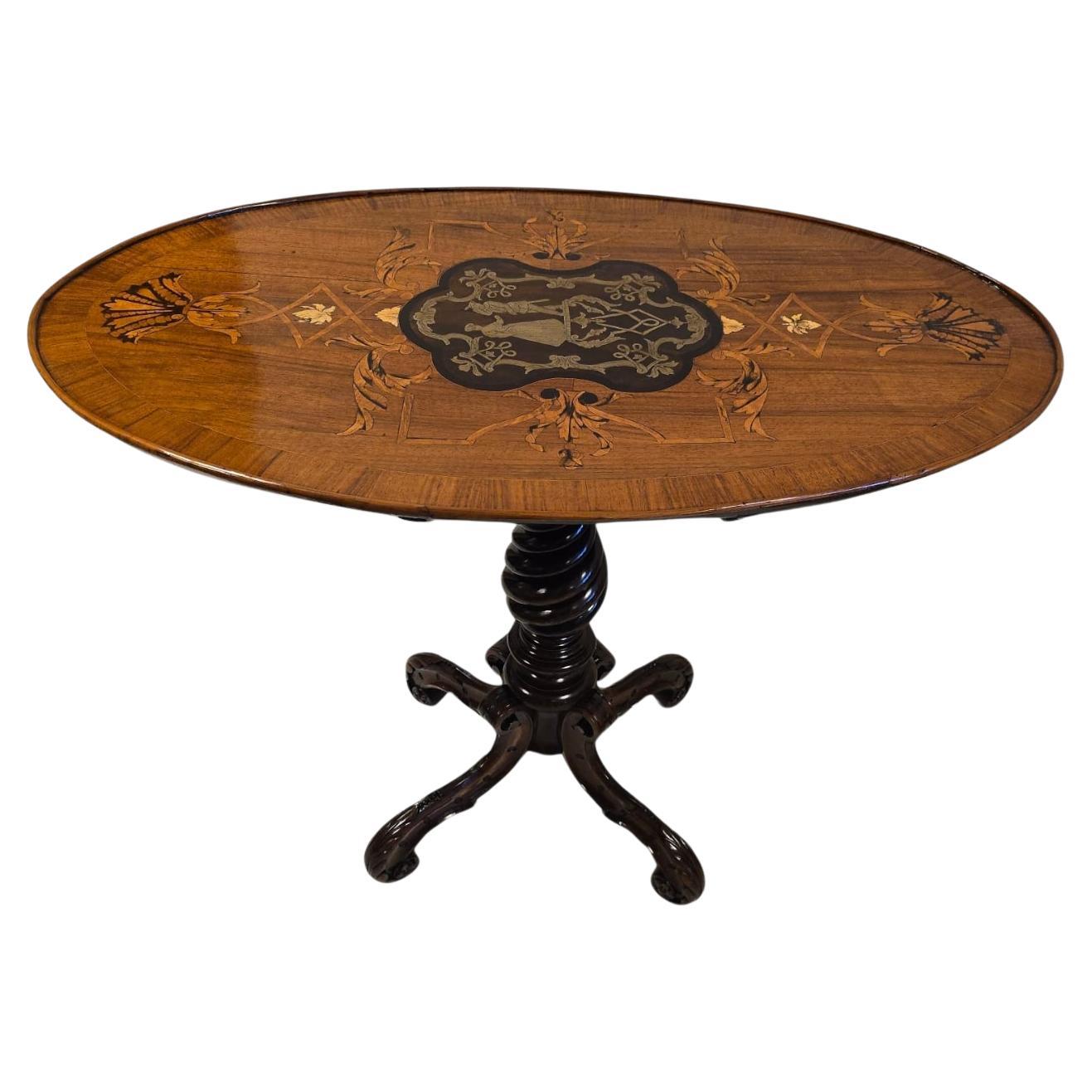
Table in Wood with Saint George
19.370,81 €
Acerca del artículo
Table
Material: Wood
France
We have specialized in the sale of Art Deco and Art Nouveau and Vintage styles since 1982. If you have any questions we are at your disposal.
Pushing the button that reads 'View All From Seller'. And you can see more objects to the style for sale.
Why are there so many antiques in Argentina?
In the 1880 – 1940 there was a grate wave of immigration encouraged by the periods of war that were taking place.
1st World War took place between 1914 and 1918
2nd World War took place between 1939 and 1945
The immigrants options were New York or Buenos Aires. Tickets were cheap and in Buenos Aires they were welcomed with open arms, as it was a country where everything was still to be done.
Argentina was the country of new opportunities, labour was needed and religious freedom was assured, in many cases the of the family travel first until they were settled and then the rest of the family members join them.
In the immigrant museum “Ellis Island Immigrant Building” in New York you can se the promotional posters of the boats that would take them to a new life.
Between the years 1895 and 1896, Argentina had the highest DGP (gross domestic product) per capita in the world according to the Maddison Historical Statistics index, this situation arose due to the large amount of food being exported to European countries, which were at war.
The Argentinean ships left the port of Buenos Aires with food, but they returned with furniture, clothes and construction elements, (it´s common to see this the old buildings of the historic neighbourhood of San Telmo, the beams with the inscription “Made in England)”, as well as many markets that were built in Buenos Aires, such us the San Telmo Market, whose structure was brought by ship and afterwards assembled in 900 Defensa Street.
With the great influence of European immigrants living in the country, the children of the upper classes travelled to study in France, resulting in the inauguration of “La Maison Argentinienne”, on 27th of June 1928, in the international city of Paris, which hosted many Argentinians that were studying in Frace.
It´s the fourth house to be built after France, Canada and Belgium, being the first Spanish-speaking one. Still in place today (17 Bd Jourdan, 75014, Paris, France). Many of the children of these wealthy families who attended international art exhibitions, museums and art courses abroad, took a keen interest in the European style. This is why Buenos Aires was at the time referred as “The Paris of South America”.
Between the years 1890 and 1920 more than a hundred Palaces were built on Alvear Avenue the most exclusive avenue in Buenos Aires. Today some of these palaces have been transformed into museums, hotels and embassies.
In the year 1936, the Kavanagh building was inaugurated, it was the tallest reinforced concrete building in South America.
During 1994 the American Society of Civil Engineers distinguished it as an “international engineering milestone”, and it´s now considered a World Heritage of Modern Architecture.
At the time was common to hire foreign architects such as Le Corbusier, who visited Buenos Aires/Argentina in 1929 and in 1948 he drew up the blueprints for a house built in La Plata City (which was declared a World Heritage Site).
In 1947, the Hungarian architect Marcelo Breuer designed “Parador Ariston” in the seaside city of Mar del Plata. After an Argentinean student at Harvard University convinced him to come to Argentina. He worked on an urban development project in the Casa Amarilla, area of La Boca.
The Ukrainian architect, Vladimiro Acosta, arrives in Argentina in 1928 and worked as an architect until que moved to Brazil.
Antonio Bonet, a Spanish architect who worked with Le Corbusier in Paris, arrives in Argentina in 1937, where he carried out several architectural works and in 1938 designs the well-known BFK chair.
Andres Kálnay, of Hungarian origin, made around 120 architectural masterpieces, among which the former Munich brewery stands out, he even made the furniture’s design.
The German architect, Walter Gropius, director of the Bauhaus, lived in Argentina, where he wrote articles for “Sur” magazine and founded in Buenos Aires, an architectural firm with Franz Möller, who was also an architect, where he built two houses.
At the same time several famous designers decided to immigrate to Argentina, among them we can find the well-known French designer, Jean-Michel Frank, who arrived in the country in 1940 and also worked for the Rockefeller family.
Special pieces were made, which were sold exclusively in the country, such as the well-known German company “WMF”, who sold their products by catalogue, which were chosen by the ladies of high society in the list of wedding gifts, as well as the pieces designed by Christofle.
The Swiss sculptor Alberto Giacometti, made special pieces for Argentinean mansions.
In 1904 the first Jansen branch outside Paris was established in Buenos Aires, as the Argentinean clientele demanded a large amount of furniture, from the end of the 19th century to the mid-20th century.
In 1970, the brand Rigolleau Argentina made pieces authorised by Lalique.
The brands Maple and Thompson also set up shop in the country.
The French plastic artist, Marcel Duchamp moved to Argentina in 1918-1919.
Glass signed Gallé, Charder, Leverre, Schneider, Muller and other French firms. They were bought in flower shops and were given to ladies with beautiful floral arrangements.
Some furniture manufacturers travelled to international fairs and bough the patterns to produce the furniture in Argentina, such as the furniture firm Englander and Bonta, who bought the patterns ins Italy.
It is worth mentioning that in Argentina we have the largest community of Italians outside of Italy, as it is estimated that 70 percent of the inhabitants have at least one Italian descendant, followed by Spanish immigrants.
The most Important furniture stores in Argentina:
Comte is founded in 1934 (under the direct management of Jean Michel Frank in 1940).
Nordiska (Swedish company established in 1934).
Churba in 1960, a company that brought foreign designers to present their furniture in the country:
Denmark: (Arne Jacobsen, Finn Juhl, Bender Madsen, Ejner Larsen, Poul Kjaerholm, Hans Wegner)
Sweden: (Hans Agne Jakobsson, Gustavsberg)
United States: (Herman Miller)
Finland: (Lisa Johansson, Folke Arstrom, Tapio Wirkkala, Alvar Aalto, Timo Sarpaneva)
Swedish Factory: (Orrefors)
Italy: (Littala, Vico Magistretti, Emma Gismondi, Gae Aulenti, Angelo Mangiarotti, Elio Martinelli, Gianna Celada, Angelo Mangiarotti, Mario Bellini, Carlo Scarpa)
Finland: (Olivia Toikka)
Plata Lappas (Lappas Silver): a goldsmith shop founded in 1887 in Argentina by Alcibiades Lappas of Greek origin.
In 2019, in Argentina took place “the Art Deco world congress”, in which we participated as hosts invited by Geo Darder, founder of the Copperbridge – Foundation, in which prominent people from all over the world attended to learn about Art Deco in Argentina.
Argentina currently has more than 100 Art Deco buildings and another 90 Art Nouveau buildings throughout the city of Buenos Aires.
Argentina is a country that has not been involved in many wars, which is why it has been a refuge for works of art and antiques from different periods of time, unlike European countries. That is way many collectors, museums and antique dealers from all over the world visit it, you should not miss the opportunity to visit this great country.
Laura Guevara Kjuder, architect.
- Dimensiones:Altura: 77,5 cm (30,52 in)Diámetro: 90 cm (35,44 in)
- Estilo:Art Decó (Del período)
- Materiales y técnicas:
- Lugar de origen:
- Época:
- Fecha de fabricación:1930
- Estado:Desgaste acorde con la edad y el uso.
- Ubicación del vendedor:Ciudad Autónoma Buenos Aires, AR
- Número de referencia:Vendedor: F-TO-6021stDibs: LU6785232713302
Sobre el vendedor
5,0
Vendedor profesional aprobado
Todos los vendedores superan estrictas normas de autenticidad y confiabilidad
Establecido en 1982
Vendedor de 1stDibs desde 2022
40 ventas en 1stDibs
Tiempo de respuesta usual: <1 hora
- EnvíoRecuperando presupuesto…Envío desde: Hollywood, FL
- Política de devolución
Partes de esta página se han traducido automáticamente. 1stDibs no puede garantizar la exactitud de las traducciones. El inglés es el idioma predeterminado de este sitio web.
Más de este vendedor
Ver todoMesa Art Decó de madera con marquetería, francesa, 1930
"Envío gratuito en florida" Se expuso en Palm beach "American International Fine Art Fair (AIFAF)"
Mesa de café Art Déco
País: Francia
Materiales : Madera
Acabado: laca poliuretánic...
Categoría
Vintage, Década de 1930, Francés, Art Decó, Mesas
Materiales
Madera
Mesa, Estilo: Art Decó,
4 Personas
, Año: 1920, Madera y Bronce
Mesa de comedor Art Déco
Año: 1920
País: Francia
Madera y bronce
Es una mesa de comedor elegante y sofisticada.
Quieres vivir en los años dorados, ésta es la mesa de comedor que nec...
Categoría
Vintage, Década de 1920, Francés, Art Decó, Mesas de comedor
Materiales
Bronce
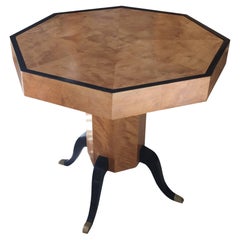
Mesa Art Déco en Madera, 1930, Francia
Material: madera
Estilo: Art Deco
País: Francia
Si quieres vivir en los años dorados, éstas son las tablas que necesita tu proyecto.
Estamos especializados en la venta de Art Decó y...
Categoría
Vintage, Década de 1930, Francés, Art Decó, Mesas
Materiales
Madera
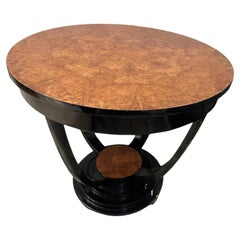
Mesa Art Decó de madera y bronce cromado, 1920, Francia
Material: madera y bronce cromado
Estilo: Art Deco
País: Francia
Si quieres vivir en los años dorados, éstas son las tablas que necesita tu proyecto.
Estamos especializados en la ven...
Categoría
Vintage, Década de 1920, Francés, Art Decó, Mesas
Materiales
Cromo
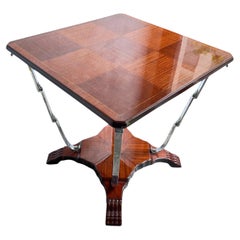
Mesa, Francia, 1920, en madera y marquetería
Tabla
Material: Madera y marquetería
Estilo: Art Deco
Francia
Estamos especializados en la venta de Art Decó y Art Nouveau y estilos Vintage desde 1982. Si tiene alguna pregunta, es...
Categoría
Vintage, Década de 1920, Francés, Art Decó, Mesas de sofá
Materiales
Madera
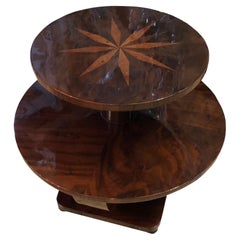
Mesa Art Decó, Francia, 1930, Material : Madera y Bronce
Tabla
Material: Madera y bronce
Estilo: Art Deco
Francia.
Estamos especializados en la venta de estilos Art Déco y Art Nouveau desde 1982.Si tienes alguna duda, estamos a tu disposi...
Categoría
Vintage, Década de 1930, Francés, Art Decó, Mesas de servicio
Materiales
Bronce
También te puede gustar
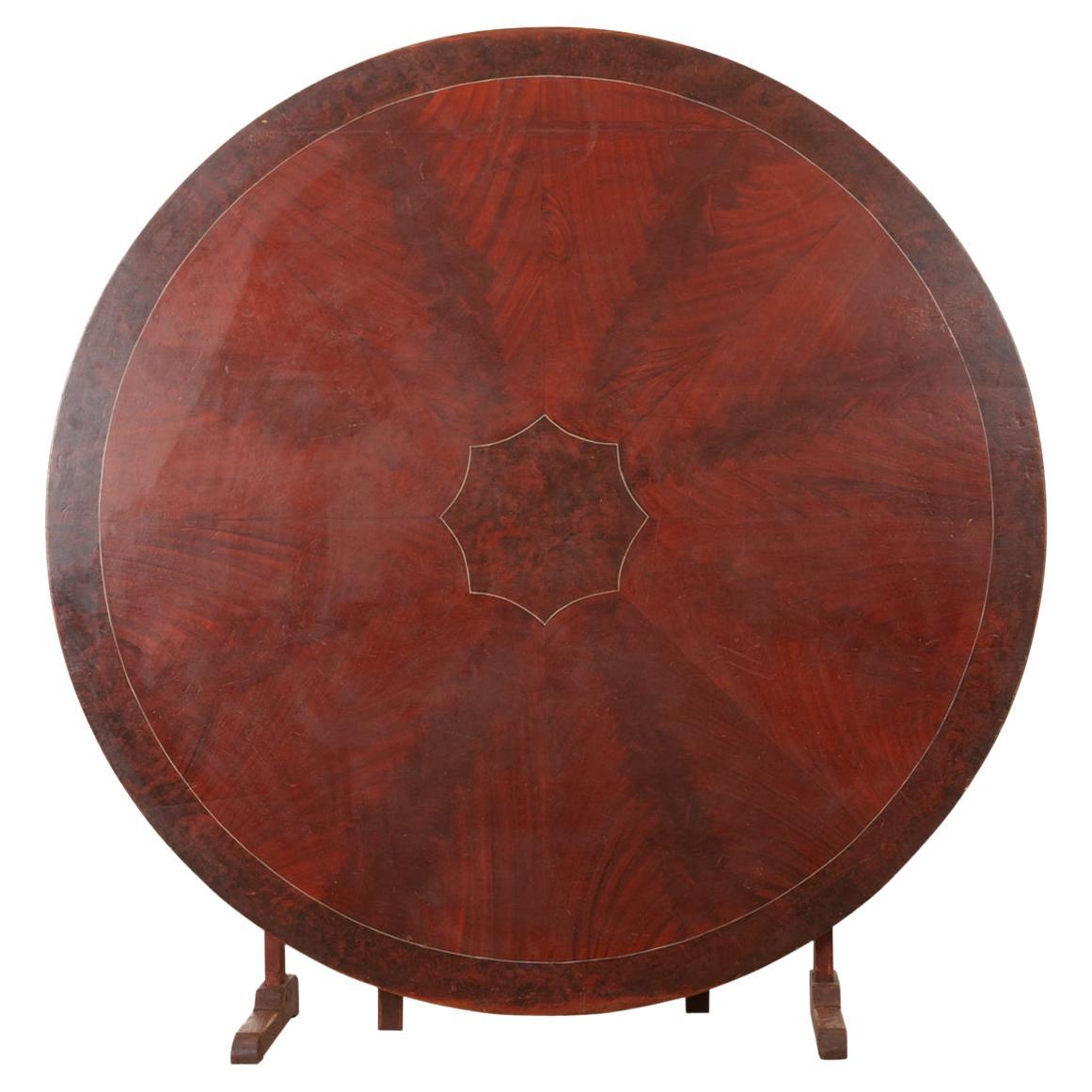
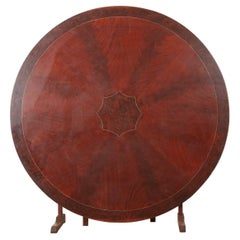
Mesa basculante sueca del siglo XIX
Impresionante mesa basculante sueca del siglo XIX. Una estrella de ocho puntas en el centro y un borde envolvente, realizados en pintura gris claro, acentúan las ligeras diferencias ...
Categoría
Antiguo, siglo XIX, Sueco, Otro, Mesas de postres y mesas basculantes
Materiales
Madera, Madera dura, Pintura
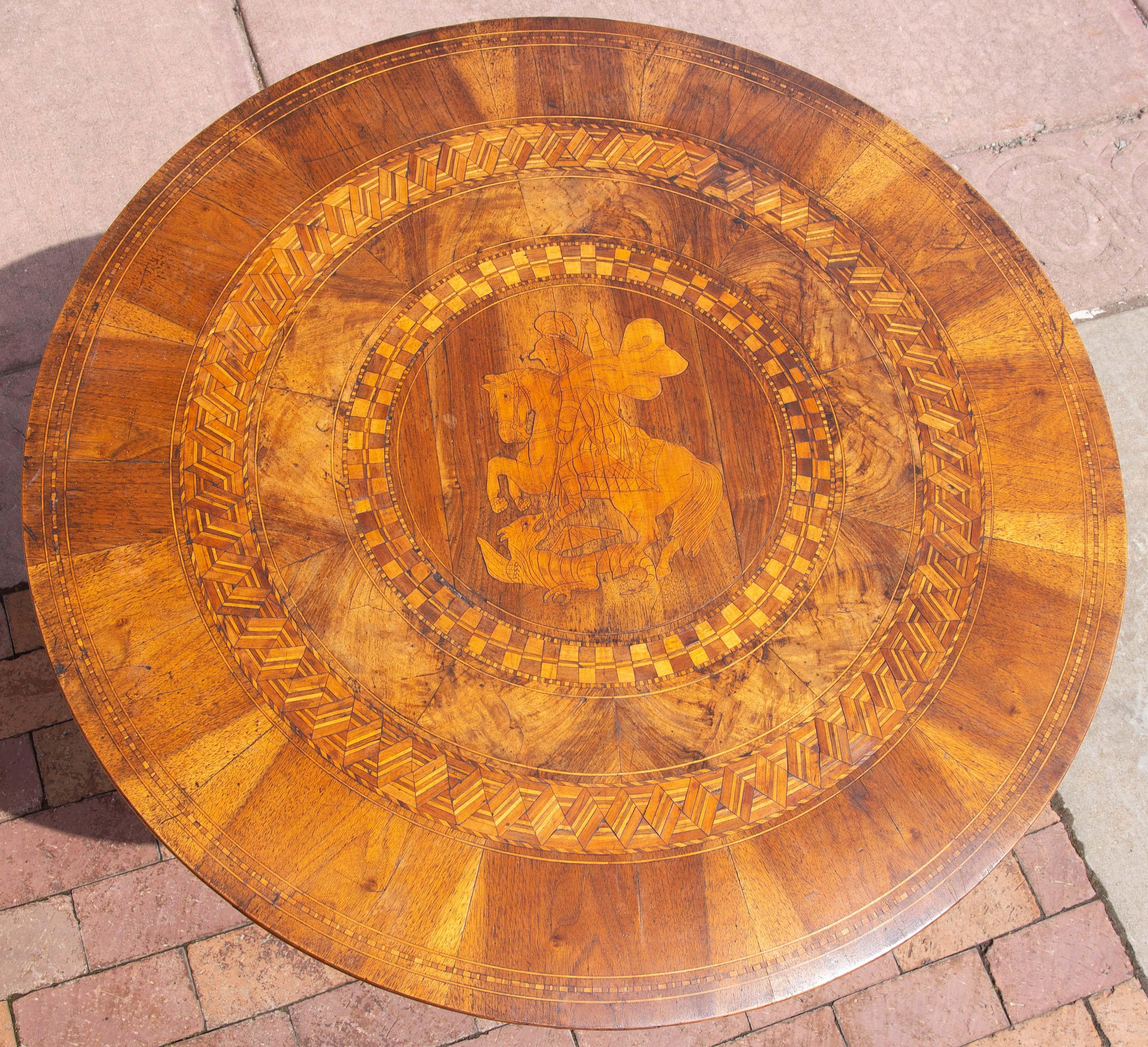
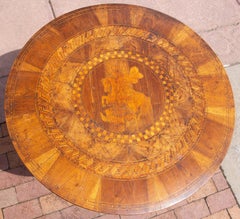
Mesa de marquetería italiana del siglo XIX San Jorge matando al dragón
Antigua mesa redonda Sorrento con profusas incrustaciones. Panel central con incrustaciones de la escena de San Jorge y el dragón. Italiano de mediados del siglo XIX. Ponte en contac...
Categoría
Antiguo, siglo XIX, Italiano, Mesas
Materiales
Madera
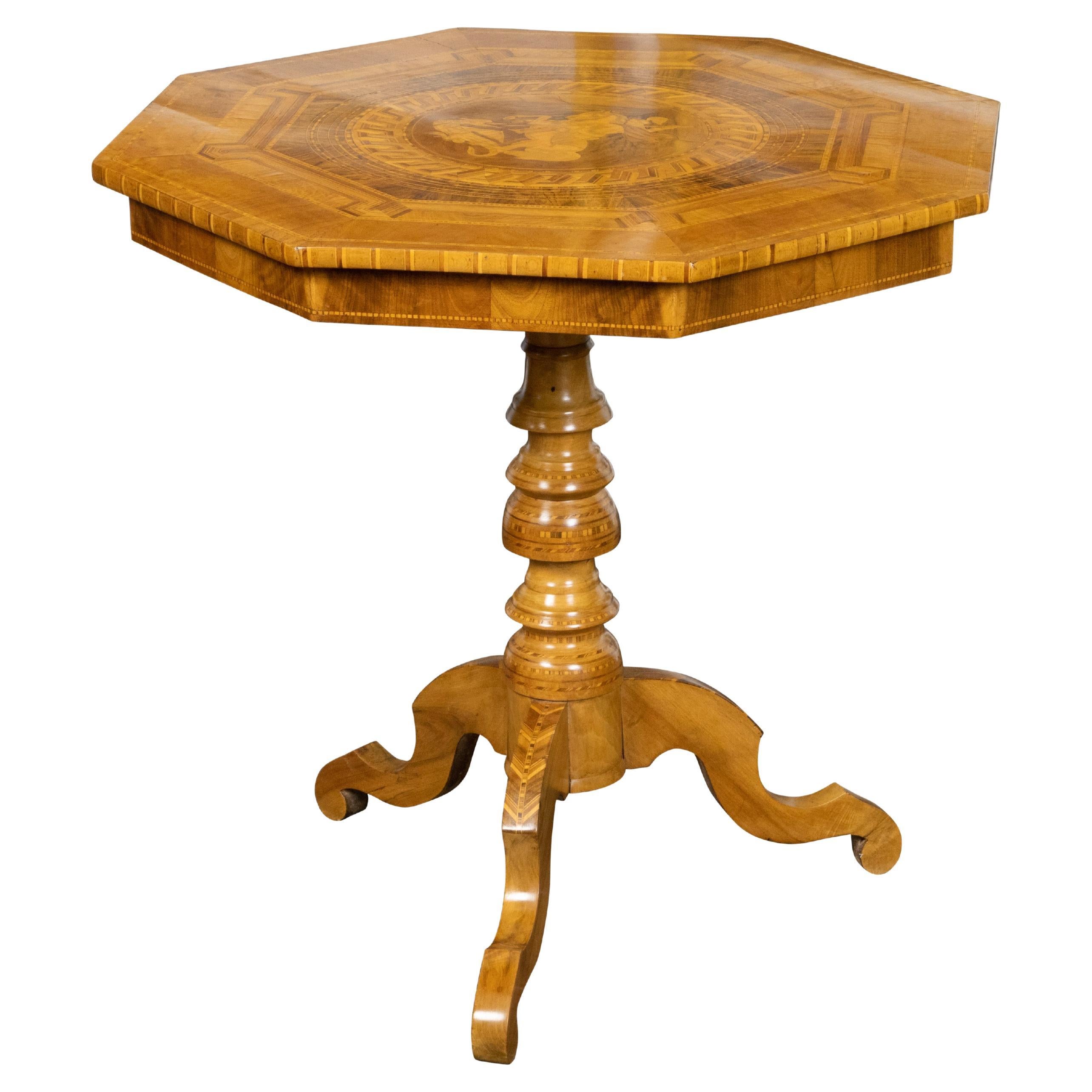
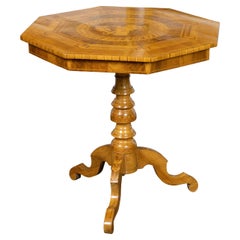
Mesa octogonal italiana del siglo XIX con marquetería de San Jorge y el Dragón
Mesa auxiliar italiana con pedestal, de madera, del siglo XIX, con tablero octogonal y decoración de marquetería que representa a Saint George y el Dragón. Creada en Italia durante e...
Categoría
Antiguo, siglo XIX, Italiano, Pedestales
Materiales
Madera
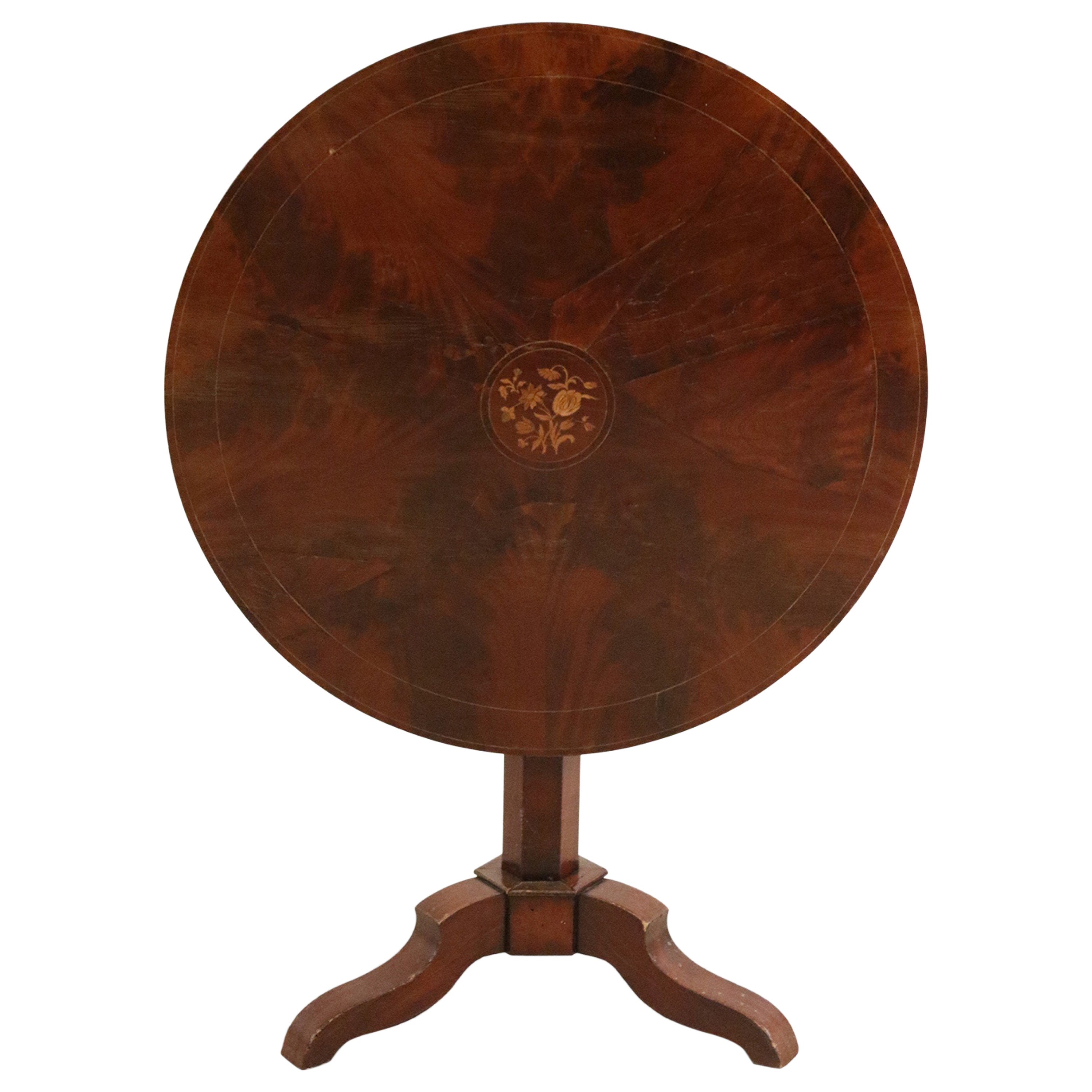
Mesa de centro basculante de caoba con incrustaciones de marquetería holandesa
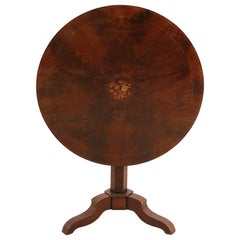
Mesa redonda basculante de chapa de caoba flameada, holandesa (s. XIX), con medallón central de marquetería floral incrustada, apoyada en una base tripartita con patas festoneadas.
...
Categoría
Antiguo, siglo XIX, Holandés, Otro, Mesas de centro
Materiales
Madera, Caoba
Mesa basculante sueca del siglo XIX con pintura original intacta
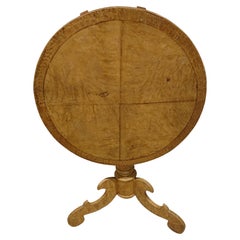
Mesa basculante sueca del siglo XIX, con hermosa pintura original intacta, procedente de Boden Norrbotten, en el norte de Suecia.
Una mesa basculante fantásticamente bella, de finas...
Categoría
Antiguo, Mediados del siglo XIX, Sueco, Renacimiento rococó, Mesas de po...
Materiales
Pino
Elegante mesa inglesa del siglo XIX con marquetería de maderas exóticas
Esta refinada mesa inglesa del siglo XIX ejemplifica el arte de la marquetería y la artesanía de la época victoriana. Elaborada con maderas exóticas e incrustaciones de estaño, prese...
Categoría
Antiguo, Década de 1850, Mesas de centro
Materiales
Madera frutal