Video Loading
Want more images or videos?
Request additional images or videos from the seller
1 of 10

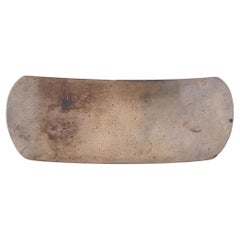
School of Line Vautrin 1960s Vintage Talosel Hair Barrette

$454.58
£330
€388.83
CA$627.89
A$672.47
CHF 361.51
MX$8,167.49
NOK 4,567.89
SEK 4,182.25
DKK 2,905.24

About the Item

This stylish hair accessory was created in the 1960s in France. It is highly reminiscent of the work of Line Vautrin. Condition Report: Excellent The Details... This hair barrette is made from the resin 'Talosel'. It features a ridged design and is detailed at either end with resin teardrops with a silver foil backing. The barrette measures 6.75cm x 2cm. A Short History... Line Vautrin was a French artist and jeweller known for working with metal and the resin Talosel, which she developed and patented in the 1950s. Her creations often featured ridges, folds and ripples and incorporated mirrors and foil. With its ridged Talosel, this barrette could very well likely be a piece by her. However, Line Vautrin also established a school with her daughter and taught students her skills between the 1960s and 1980s. Therefore, this piece could also potentially be an item by a student at the school. Renowned artist jewellers, like Henry Perichon and Irena Jaworska, were former students of Line Vautrin. Wear it With... This barrette would be a chic occasion piece. But, also a wonderful addition to the collection of a costume jewellery lover.
  • Designer:
  • Dimensions:
    Height: 0.79 in (2 cm)Length: 2.66 in (6.75 cm)
  • Style:
    Mid Century (Of the Period)
  • Place of Origin:
  • Period:
  • Condition:
  • Seller Location:
    Skelmersdale, GB
  • Reference Number:
    1stDibs: LU3689227730752

More From This Seller

View All
Late 1950s French Couture Vintage Glass and Rhinestone Fur Clip
Located in Skelmersdale, GB
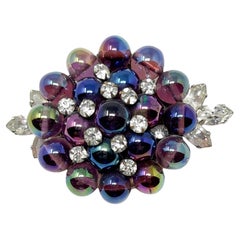
A beautifully designed and quality constructed Late 1950s fur clip. This piece is highly likely to have been created by a parurier for a French couture house. Condition Report: Exc...
Category

Vintage 1950s French Brooches

Otto Müller Late 1950s German Kaufbeuren Vintage Orchid Brooch
Located in Skelmersdale, GB
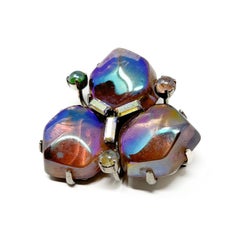
This delightful brooch was created in the late 1950s in Kaufbeuren, West Germany, by Otto Müller. Condition Report: Very Good - A tiny element of scratching to the surface of a coup...
Category

Vintage 1950s German Brooches

Piel Frères Art Deco c.1920 Vintage Paste Floral Design Buckle
By Piel Frères
Located in Skelmersdale, GB
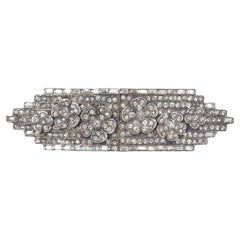
This pretty and shimmering buckle by the renowned Piel Frères company dates from c.1920. Condition Report: Very Good - A little darkening to a couple of the paste stones. This is c...
Category

1920s French Belts

Rudolph Lucke Co Late 1950s German Kaufbeuren Vintage Rhinestone Brooch
Located in Skelmersdale, GB
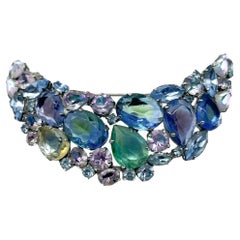
This marvellous brooch is of exceptional quality and design. It was created in the late 1950s in Kaufbeuren, West Germany by Rudolph Lucke & Co. Condition Report: Excellent The Details... This rhodium plated metal brooch features a large crescent design. It is detailed with pear cut, oval cut, marquise cut and brilliant cut rhinestones. The rhinestones are shades of blue pink, purple, green and pale yellow. A number of them have a two-tone effect, so that they appear different colours when the light hits the brooch at different angles. All of the stones are set within open back mounts and the larger stones are un-foiled to allow the light to pass through them. All of the stones are multi-faceted and claw set. They are of excellent quality and were most likely made in West Germany too. The brooch fastens with a traditional safety catch and the fastening pin is attached to the brooch with a round hinge. The brooch is stamped '53' on the reverse, which corresponds with the registration number for the Rudolph Lucke and Co factory. The brooch measures 9.75cm x 3.5cm. A Short History... Rudolph Lucke and Co was a manufacturer of high-end costume jewellery based within the Kaufbeuren-Neugablonz industrial zone in Western Germany. After the second world war, this area became a hot bed for the creation of quality fashion jewels. Important designers, such as Christian Dior and Balenciaga, looked to the Kaufbeuren jewellery producers to make their pieces. The Rudolph Lucke factory consisted of a small and highly skilled workforce. In 1969, the factory was recorded as employing 20 craftspeople. Wear it With... A rare and beautiful example of high end West German costume jewellery...
Category

Vintage 1950s German Brooches

Victorian Mid to Late 1800s French Jet Antique Wraparound Bangle
Located in Skelmersdale, GB
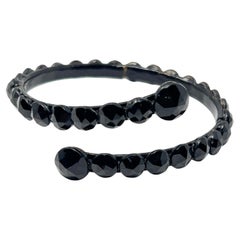
This stylish black glass bangle is an entirely original, elegant antiques. Condition Report: Excellent The Details... This bangle is constructed from sections of curved metal pai...
Category

Antique Late 19th Century Victorian Bangles
Art Deco 1930s French Marcasite Floral Design Vintage Duette Clip Brooch
Located in Skelmersdale, GB
This wonderful Duette clip brooch was most created in France in the late 1930s. Condition Report: Very Good - The push and pull mechanism on the trombone clasp is missing. However,...
Category

Vintage 1930s French Art Deco Brooches

Materials

Marcasite, Silver

You May Also Like

Oversized Victorian Paste Hair Barrette
Located in New York, NY
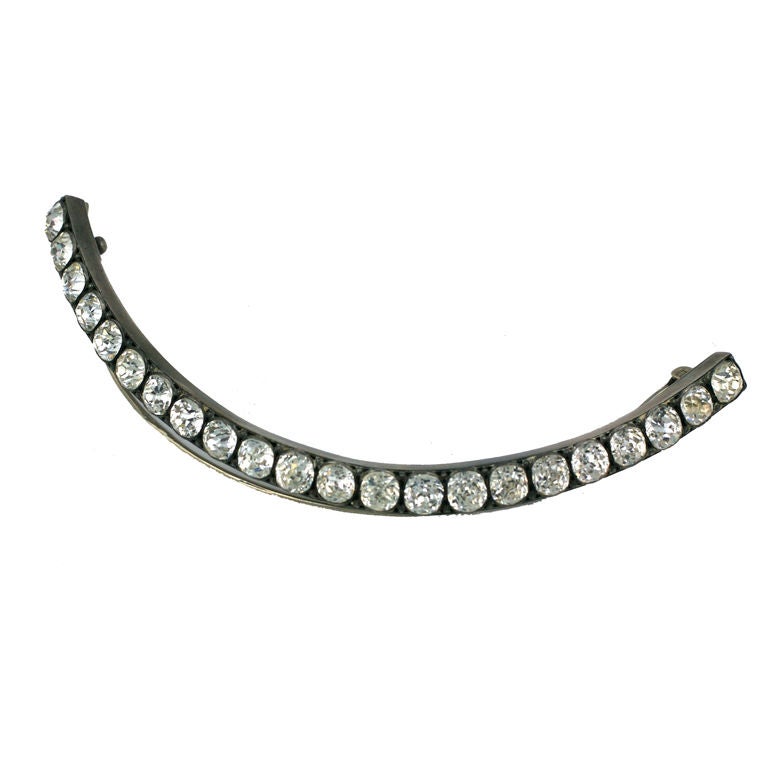
Large scaled Victorian paste hair barette set with sparkling cushion cut pastes in sterling silver circa 1880s.
Excellent condition
7" x ...
Category

Antique Late 19th Century British Victorian More Jewelry

Materials

Sterling Silver

Unusual Line Vautrin "Jonas" Clip
By Line Vautrin
Located in New York, NY
Line Vautrin modele "Jonas". Large and unusual Line Vautrin Clip of gilded bronze. A figure stands over a cascading ribbon form motif which resembles...
Category

Vintage 1940s French Brooches

Materials

Bronze, Gilt Metal

Frederick Davis Art Deco Sterling Silver Hair Barrette
By Frederick Davis
Located in Lexington, KY
This hair barrette is just what you've been looking for! Made of sterling silver by Frederick Davis, a silversmith and dealer of Mexican jewelry and art in Mexico City, this barrette...
Category

Vintage 1910s Art Deco Brooches

Materials

Silver, Sterling Silver

Rare bronze-doré belt buckle by Line Vautrin
By Line Vautrin
Located in Idar-Oberstein, DE
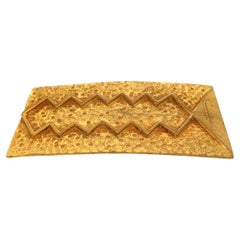
Elegant and rare 1950s bronze-doré belt buckle by Line Vautrin, with a raised geometric pattern and textured background, marked Line Vautrin, with additional, original loop for th...
Category

Mid-20th Century French Modernist Figurines and Sculptures

Materials

Bronze, Gilt Metal

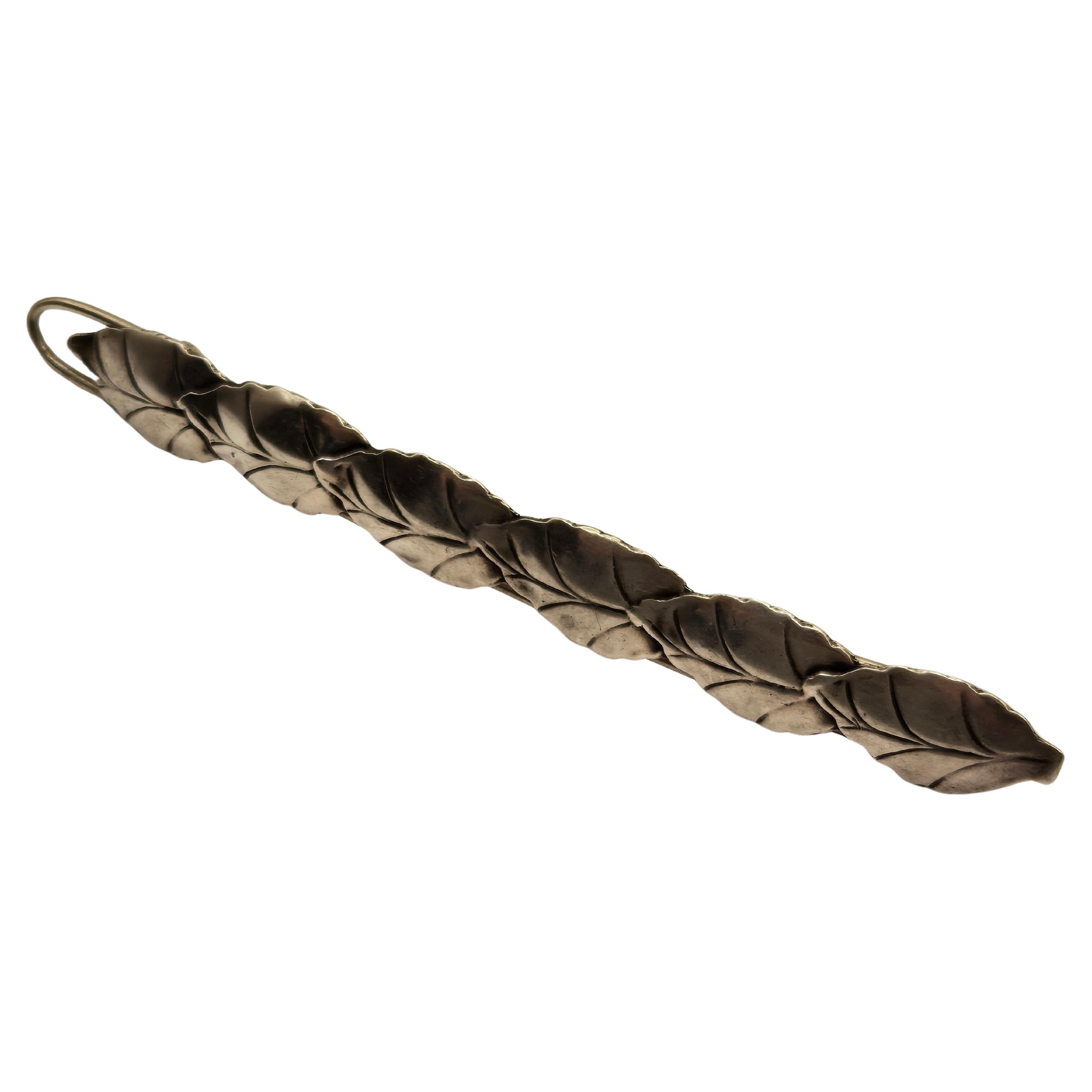
Mexican Sterling Silver Leaf Motif Hair Barrette
Located in Point Richmond, CA
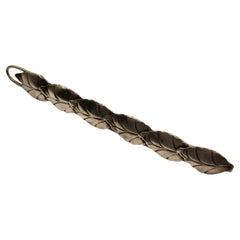
Simple and elegant sterling silver hair barrette made in Mexico. This hair piece is suitable for all occasions from formal to casual. The clasp is...
Category

Mid-20th Century Mexican Vanity Items

Materials

Sterling Silver

Rare 19th Century English Tunbridgeware Hair Pin or Slide
Located in Dallas, TX
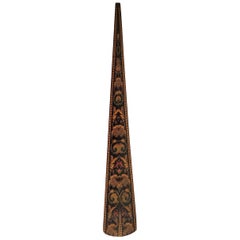
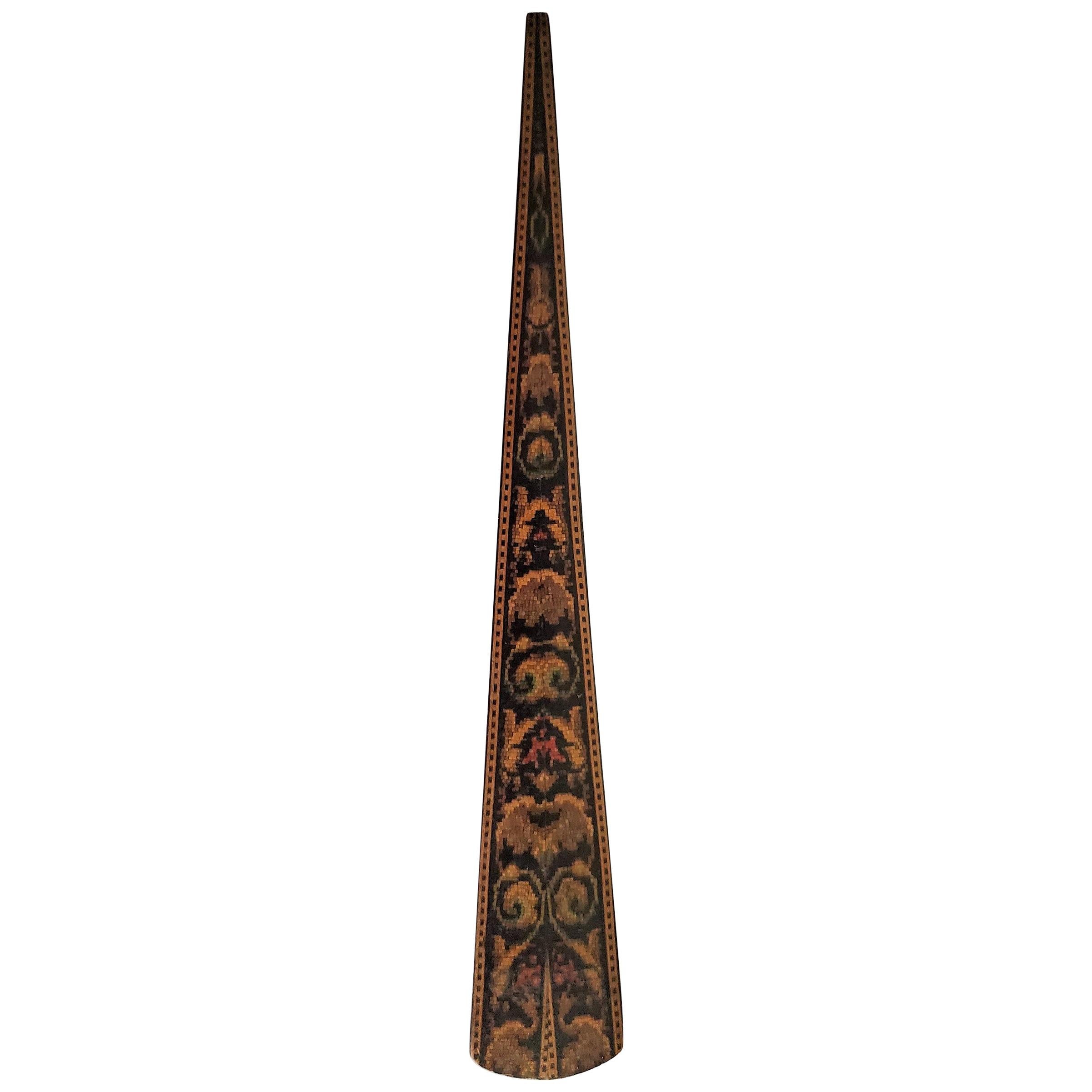
PRESENTING an EXTREMELY UNIQUE and RARE 19C British Tunbridgeware Hair Pin/Bobbin or Slide. This slide is unlike any of it’s kind we have seen before, it is a VERY RARE survivor. From circa 1860 – 80 and made in Tunbridge Wells, England. Made of walnut with gorgeous marquetry inlay on the entirety of the front with classic Tunbridgeware micro-mosaic all over the front. The rear is walnut. The marquetry inlay appears to be various different woods, namely, maple, walnut and satinwood. Would have been worn in a Lady’s hair bun with the micro-mosaic facing forward. This would have belonged to a VERY ELEGANT LADY in the mid to late 19th Century. Tunbridge ware is a form of decoratively inlaid woodwork, typically in the form of boxes, that is characteristic of Tonbridge and the spa town of Royal Tunbridge Wells in Kent in the 18th and 19th centuries. The decoration typically consists of a mosaic of many very small pieces of different coloured woods that form a pictorial vignette. Shaped rods and slivers of wood were first carefully glued together, then cut into many thin slices of identical pictorial veneer with a fine saw. Elaborately striped and feathered bandings for framing were pre-formed in a similar fashion. There is a collection of Tunbridge ware in the Tunbridge Wells Museum and Art Gallery in Tunbridge Wells. The famous makers of Tunbridge ware were in the Tunbridge Wells area of Kent; their most notable work was from circa 1830-1900. Early makers of Tunbridge ware, in Tunbridge Wells in the mid-18th century, were the Burrows family, and Fenner and Co. In the 19th century, around 1830, James Burrows invented a technique of creating mosaics from wooden tesserae. Henry Hollamby, apprenticed to the Burrows family, set up on his own in 1842 and became an important manufacturer of Tunbridge ware, employing about 40 people. Edmund Nye (1797–1863) and his father took over the Fenner company when William Fenner retired in 1840, after 30 years in partnership with him. Thomas Barton (1819–1903), previously apprenticed at the Wise factory, joined the Nyes in 1836, and worked as Nye’s designer; he took over the business in 1863 and continued there until his death. In Tonbridge (near to Tunbridge Wells), George Wise (1703–1779) is known to have had a business in 1746. It continued with his son Thomas, and Thomas’s nephew George (1779–1869), who took over in 1806. In its early years the company made articles such as workboxes and tea caddies with prints of popular views; later items had pictures created from mosaics. Their workshop in Tonbridge, Wise’s Tunbridge Ware Manufactory, was next to the Big Bridge over the Medway; the building was demolished in 1886 to widen the approach to the bridge. Tunbridge ware became popular with visitors to the spa town of Tunbridge Wells, who bought them as souvenirs and gifts. Articles included cribbage boards, paperweights, writing slopes, snuffboxes and glove boxes. At the Great Exhibition of 1851, Tunbridge ware by Edmund Nye, Robert Russell and Henry Hollamby was shown; Edmund Nye received a commendation from the judges for his work. He exhibited a table depicting a mosaic of a ship at sea; 110,800 tesserae were used in making the picture. The manufacturers of Tunbridge ware were cottage industries, and they were no more than nine in Tunbridge Wells and one in Tonbridge. The number declined in the 1880s; competent craftsmen were hard to find, and public tastes changed. After the death of Thomas Barton in 1903 the only surviving firm was Boyce, Brown and Kemp, which closed in 1927. Marquetry was an old technique which was continued by Nye and Barton to create images such as birds or butterflies. ‘Green Oak’ as caused by the fungus Chlorociboria aeruginascens. Stickware and half-square mosaic was invented by James Burrows in about 1830: a bunch of wooden sticks of different colours, each having triangular or diamond-shaped cross section, were tightly glued together; in the case of stickware, the resulting block was dried, then turned to form an article such as the base of a pincushion. For half-square mosaic, thin slices were taken from the composite block, and applied to a surface. Tesselated mosaic, was a development by James Burrows of half-square mosaic; it was adopted by George Wise and Edmund Nye. Minute tesserae were used to form a wide variety of geometric and pictorial designs. Many sorts of wood were used for the various colours; about 40 were in regular use. Only natural colors were used; green was provided by “green oak”, produced by the action of fungus on fallen oak. Designs for articles were often taken from designs of Berlin wool work.
Category

Antique Late 19th Century English High Victorian Collectible Jewelry

Materials

Satinwood, Walnut