Passer au contenu principal
Vous voulez plus d images ou de vidéos ?
Demander au vendeur plus d images ou de vidéos
1 sur 6

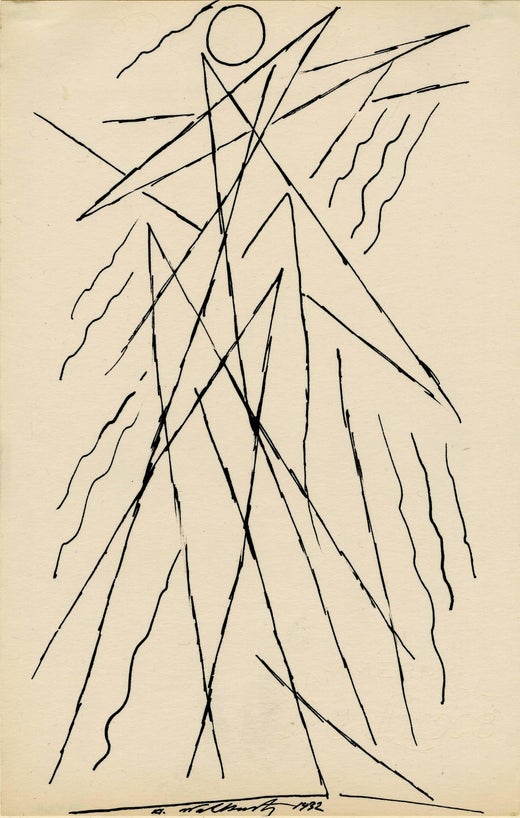
Abraham Walkowitz
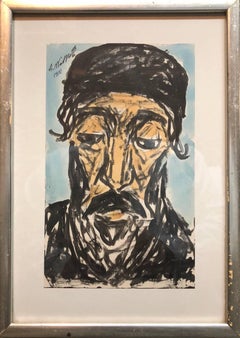
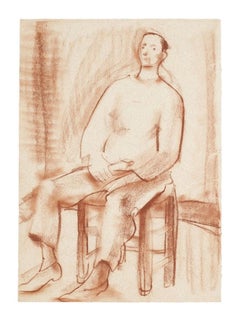
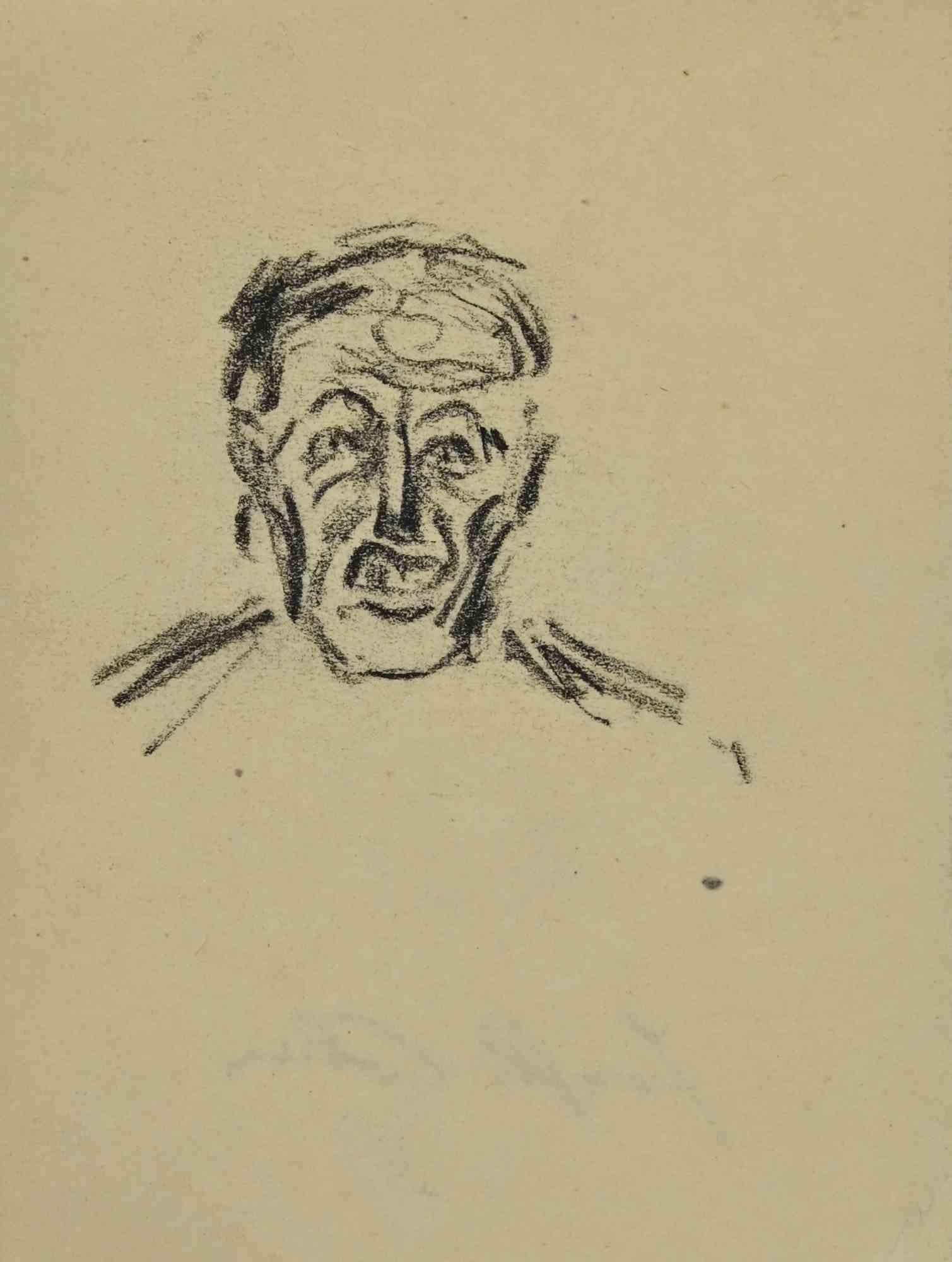
Modernist Drawing, Portrait of a Man

1900

1 308,68 €

À propos de cet article

Abraham Walkowitz (March 28, 1878 - January 27, 1965) was an American painter grouped in with early American Modernists working in the Modernist style. Walkowitz was born in Tyumen, Siberia to Jewish parents. He emigrated with his mother to the United States in his early childhood. He studied at the National Academy of Design in New York City and the Académie Julian in Paris under Jean-Paul Laurens. Walkowitz and his contemporaries later gravitated around photographer Alfred Stieglitz's 291 Gallery, originally titled the Little Galleries of the Photo-Secession, where the forerunners of modern art in America gathered and where many European artists were first exhibited in the United States. During the 291 years, Walkowitz worked closely with Stieglitz as well as Arthur Dove, Marsden Hartley, and John Marin (often referred to as "The Stieglitz Quartet"). Early Career and Training Portrait of Abraham Walkowitz - 1907 - Max Weber - Brooklyn Museum Walkowitz was drawn to art from childhood. In a 1958 oral interview with Abram Lerner, he recalled: "When I was a kid, about five years old, I used to draw with chalk, all over the floors and everything... I suppose it's in me. I remember myself as a little boy, of three or four, taking chalk and made drawings."[1] In early adulthood, he worked as a sign painter and began making sketches of immigrants in New York's Jewish ghetto where he lived with his mother. He continued to pursue his formal training, and with funds from a friend traveled to Europe in 1906 to attend the Académie Julian. Through introductions made by Max Weber, it was here that he met Isadora Duncan in Auguste Rodin's studio, the modern American dancer who had captured the attention of the avant-garde. Walkowitz went on to produce more than 5,000 drawings of Duncan. Walkowitz' approach to art during these years stemmed from European modernist ideas of abstraction, which were slowly infiltrating the American art psyche at the turn of the century. Like so many artists of the time, Walkowitz was profoundly influenced by the 1907 memorial exhibition of Cézanne's work in Paris at the Salon d'Automne. Artist Alfred Werner recalled that Walkowitz found Cézanne's pictures to be "simple and intensely human experiences."[2] Working alongside other Stieglitz-supported American modernists, Walkowitz refined his style as an artist and produced various abstract works. Walkowitz first exhibited at the 291 in 1911 after being introduced to Stieglitz through Hartley, and stayed with the gallery until 1917. During the 291 years, the climate for modern art in America was harsh. Until the pivotal Armory Show of 1913 had occurred which Walkowitz was involved with and exhibited in, modern artists importing radical ideas from Europe were received with hostile criticism and a lack of patronage. Isadora Duncan Drawings In 1927, Isadora Duncan echoed the lines of Walt Whitman in her essay I See America Dancing, writing, "When I read this poem of Whitman’s I Hear America Singing I, too, had a Vision: the Vision of America dancing a dance that would be the worthy expression of the song Walt heard when he heard America singing."[4] Duncan was the quintessence of modernism, shedding the rigid shackles of the balletic form and exploring movement through a combination of classical sculpture and her own inner sources. She described this search: "I spent long days and nights in the studio seeking that dance which might be the divine expression of the human spirit through the body’s movement." For Duncan, dance was a distinctly personal expression of beauty through movement, and she maintained that the ability to produce such movement was inherently contained within the body. Abraham Walkowitz was one of many artists captivated by this new form of movement. The Duncan drawings can be interpreted as representations of Walkowitz’s loftiest goals. Composing thousands of these drawings would prove to be one of the most effective outlets for his artistic agenda due to the similarities between the artistic ideals and preferred aesthetic shared by Walkowitz and Duncan. He was also able to draw from the same subject repeatedly and extract a different experience with each observation. Sculptors most readily recognized this trait in Duncan; there was a particular quality of her dance which appeared readily artistic, yet not static. Dance critic Walter Terry described it in 1963 as, "Although her dance inarguably sprang from her inner sources and resources of motor power and emotional drive, the overt aspects of her dance were clearly colored by Greek art and the sculptor’s concept of the body in arrested gesture promising further action. These influences may be seen clearly in photographs of her and in the art works she inspired." Isadora Duncan #29, c. 1915 In each drawing, a new observation is recorded from the same subject. In the Foreword to A Demonstration of Objective, Abstract, and Non-Objective Art, Walkowitz wrote in 1913, "I do not avoid objectivity nor seek subjectivity, but try to find an equivalent for whatever is the effect of my relation to a thing, or to a part of a thing, or to an afterthought of it. I am seeking to attune my art to what I feel to be the keynote of an experience." The relaxed fluidity of his action drawings represent Duncan as subject, but ultimately reconceive the unbound movement of her dance and translates the ideas into line and shape, ending with a completely new composition. His interest in recording the "keynote" of experience rather than producing an objective representation of a subject is central to the composition of the Duncan drawings. The fluidity of the lines function simultaneously as recognizable shapes of the human body, but also trace the pathways of the dancer’s movements. Duncan herself wrote in 1920, "...there are those who convert the body into a luminous fluidity, surrendering it to the inspiration of the soul."[4] Placed into a different context, this passage could function as a description of Walkowitz’s art; it is in fact taken from her essay The Philosopher’s Stone of Dancing wherein she discusses techniques to most effectively express the purest form of movement. Walkowitz’s dedication to Duncan as a subject extended well past her untimely death in 1927. The works reveal shared convictions toward modernism and breaking links with the past. In 1958, Walkowitz told Lerner, "She (Duncan) had no laws. She did not dance according to the rules. She created. Her body was music. It was a body electric, like Walt Whitman. His body electrics. One of our greatest men, America's greatest, is Walt Whitman. Leaves of Grass is to me the Bible." Significance in Art History While never attaining the same level of fame as his contemporaries, Walkowitz' close relationship with the 291 Gallery and Alfred Stieglitz placed him at the center of the modernist movement. His early abstract cityscapes and collection of over 5,000 drawings of Isadora Duncan also remain significant art historical records.
  • Créateur:
    Abraham Walkowitz (1878 - 1965, Américain)
  • Année de création:
    1900
  • Dimensions:
    Hauteur : 40,64 cm (16 po)Largeur : 33,02 cm (13 po)
  • Support:
  • Mouvement et style:
  • Période:
  • État:
    Measurements include frame.
  • Adresse de la galerie:
    Surfside, FL
  • Numéro de référence:
    1stDibs : LU38217436662

Plus d articles de ce vendeur

Tout afficher
Portrait expressionniste
Par Arthur Kolnik
Arthur Kolnik est né à Townes, une petite ville de Galicie, qui faisait alors partie de l'Empire austro-hongrois. Son père, originaire de Lituanie, était comptable et sa mère, origin...
Catégorie

Années 1930, Expressionniste, Estampes - Portrait

Matériaux

Papier

Aquarelle moderniste, Portrait d un homme, le Rabbin
Par Abraham Walkowitz
Abraham Januari (28 mars 1878 - 27 janvier 1965) est un peintre américain regroupé avec les premiers modernistes américains travaillant dans le style moderniste. Walkowitz est né à ...
Catégorie

Début du 20ème siècle, Moderne, Dessins et aquarelles - Figuratif

Matériaux

Papier, Aquarelle

Self Portrait, portrait moderniste de l artiste
Par David Rosen (b.1912)
Genre : Moderne Sujet : Portrait Médium : Huile Surface : Conseil d'administration Pays : États-Unis Dimensions : 16" x 12" Dimensions avec cadre : 23" x 18". Le peintre David Rose...
Catégorie

années 1980, Moderne, Peintures - Portrait

Matériaux

Huile

Aquarelle moderniste, portrait d un homme, Judaica Rabbi
Par Abraham Walkowitz
Abraham Januari (28 mars 1878 - 27 janvier 1965) est un peintre américain regroupé avec les premiers modernistes américains travaillant dans le style moderniste. Walkowitz est né à ...
Catégorie

Début du 20ème siècle, Moderne, Dessins et aquarelles - Figuratif

Matériaux

Papier, Aquarelle

Portrait d un rabbin
Par Boris Deutsch
Boris deutsch est né à krasnagorka en lituanie le 4 juin 1892 et décédé à los angeles en 1978.entré à l'école polytechnique de riga 1905.école des arts appliqués de berlin 1912. Il s...
Catégorie

20ième siècle, Moderne, Dessins et aquarelles - Figuratif

Matériaux

Pastel, Technique mixte, Tempera, Aquarelle
Portrait dessiné Homme barbu Ecole D Paris, WPA, Artiste Bezalel
Par Jacques (Jakub) Zucker
Jacques Zucker est né en 1900 à Radom, en Pologne. Il était un artiste juif américain particulièrement célèbre, surtout connu pour ses peintures de figures expressionnistes. Dans ses...
Catégorie

XXe siècle, Moderne, Peintures - Figuratif

Matériaux

Pastel

Suggestions

Portrait d un homme
Par Manfred Schwartz
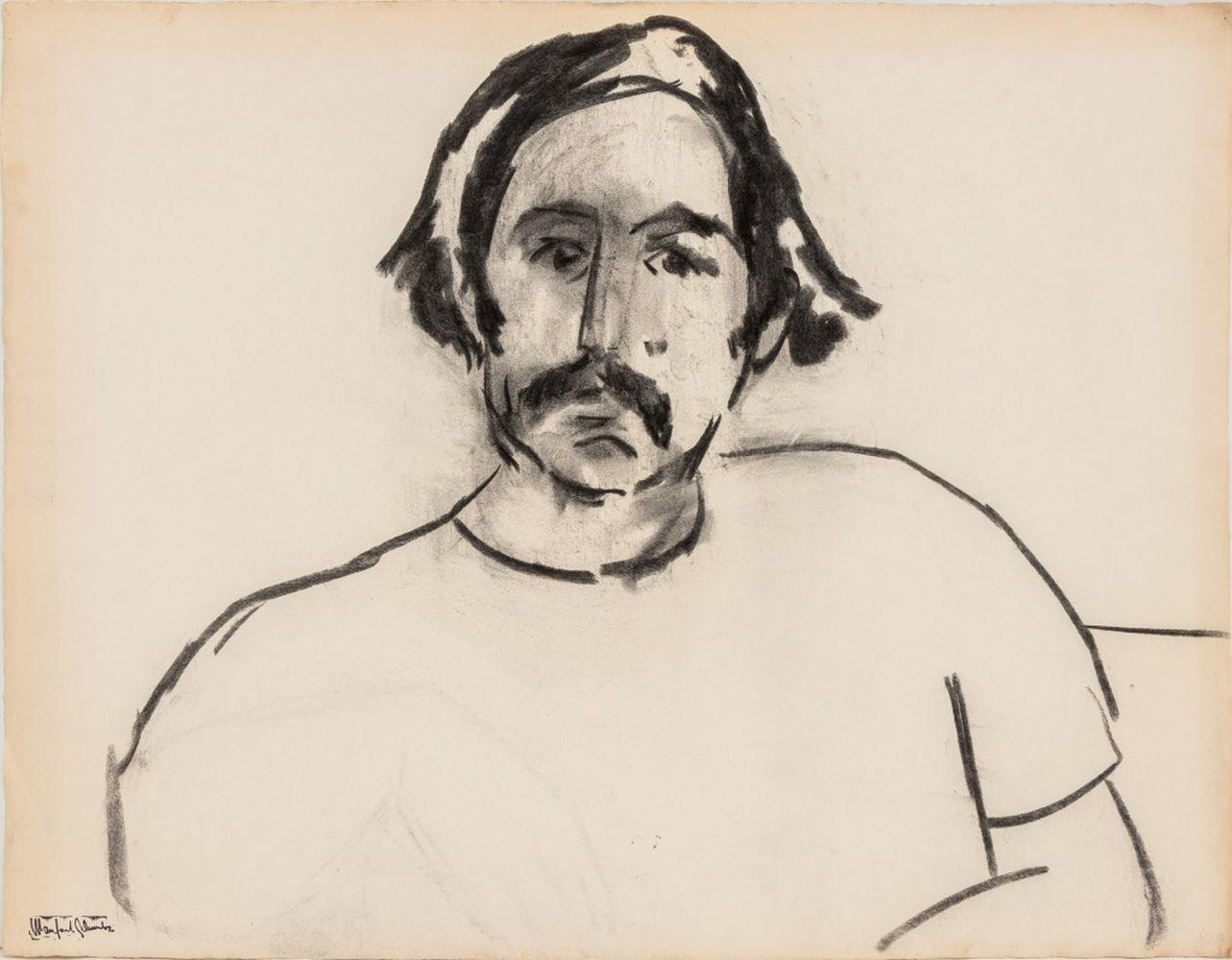
Manfred Schwartz (Américain, né en Pologne, 1909-1970), Portrait d'un homme, fusain sur papier, avec la signature de l'artiste en bas à gauche, non encadré. 20" H x 25.5" L. Provenan...
Catégorie

Milieu du XXe siècle, Moderne, Dessins et aquarelles - Portrait

Matériaux

Papier, Fusain

Portrait d un homme
Par Manfred Schwartz
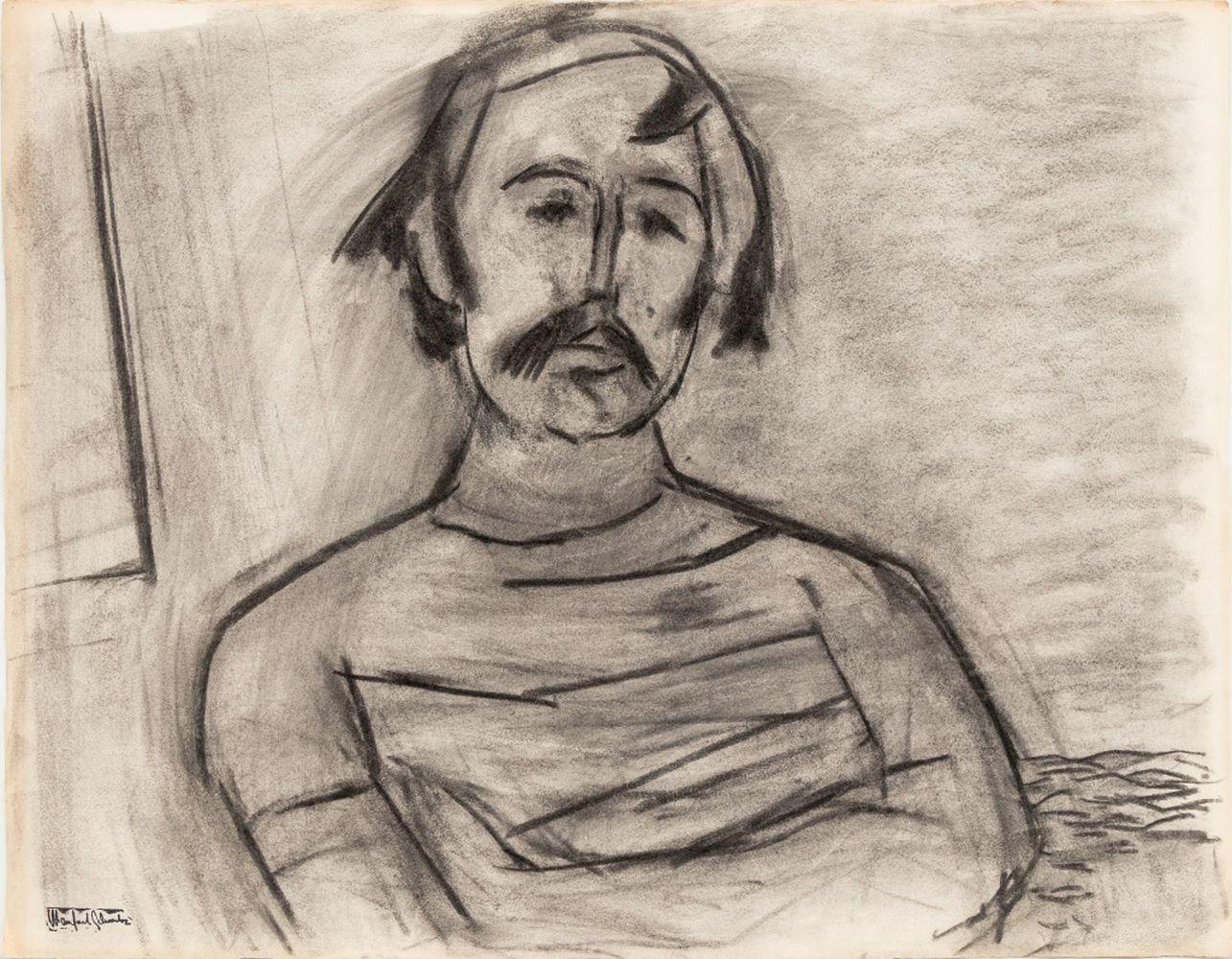
Manfred Schwartz (Américain, né en Pologne, 1909-1970), Portrait d'un homme, fusain sur papier, avec la signature de l'artiste estampillée en bas à gauche, non encadré. 20.25" H x 25...
Catégorie

Milieu du XXe siècle, Moderne, Dessins et aquarelles - Portrait

Matériaux

Papier, Lithographie

Portrait d homme - Dessin sur papier - Milieu du XXe siècle
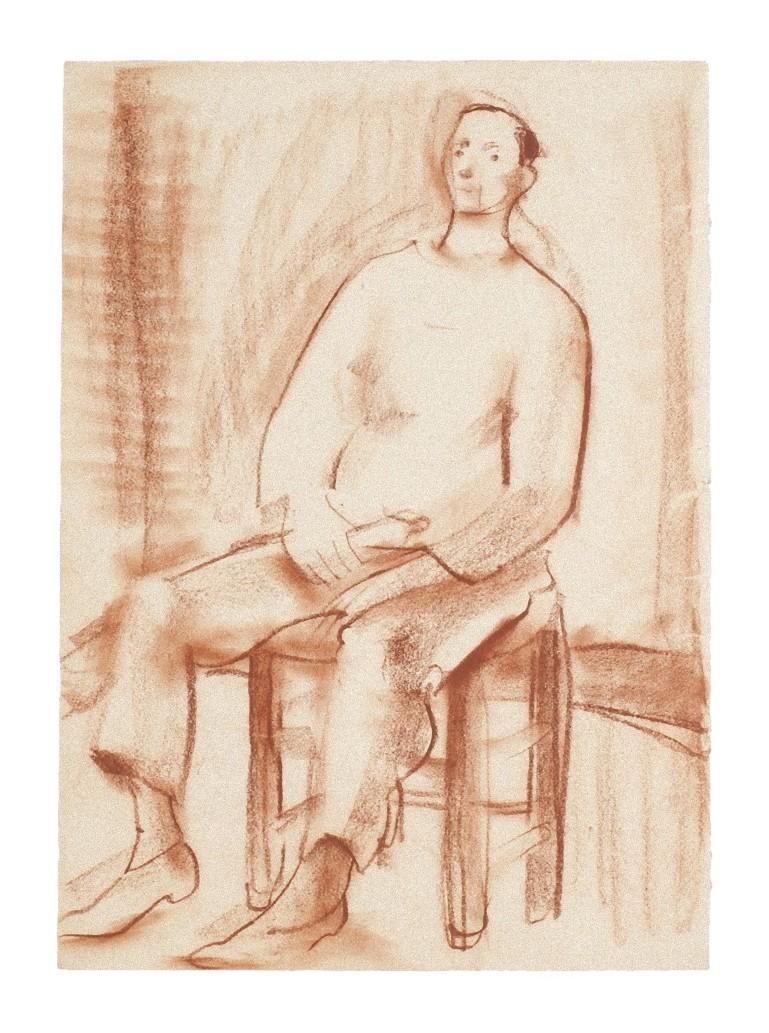
Portrait of Man est une œuvre d'art contemporaine originale réalisée dans la moitié du 20e siècle. Dessin original sur papier. Crayon rouge. Non signé. Très bon état. Portrait f...
Catégorie

années 1950, Dessins et aquarelles - Figuratif

Matériaux

Papier, Crayon de couleur

Portrait - Dessin au stylo sur papier - XXe siècle
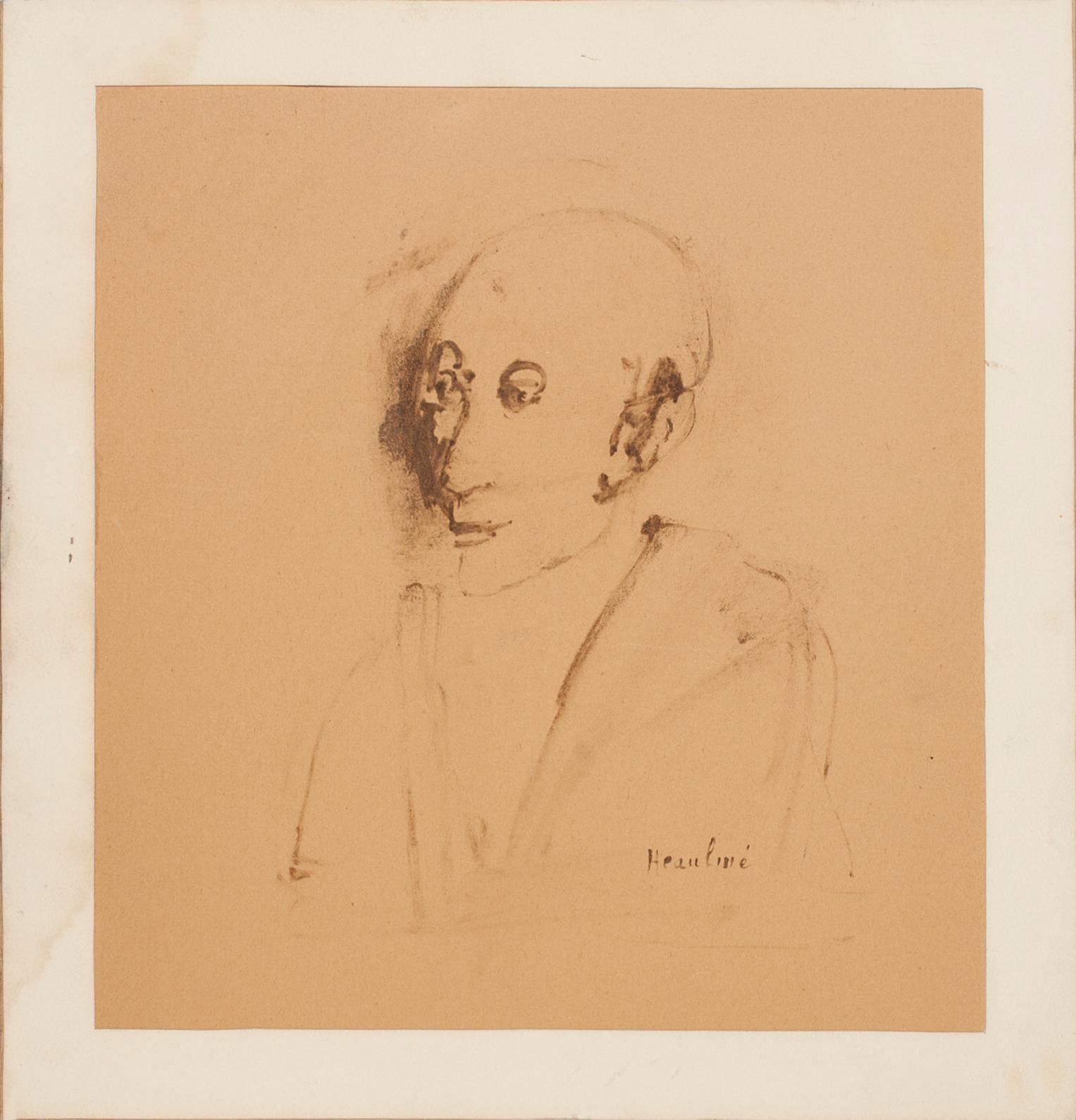
Portrait est une belle œuvre d'art réalisée par un artiste du 20ème siècle. Dessin au stylo. En parfait état. Signé à la main dans la marge inférieure droite. Monté sur un carton de...
Catégorie

20ième siècle, Dessins et aquarelles - Figuratif

Matériaux

Stylo

Portrait de Joseph Alexander Colin, milieu du 20e siècle
Portrait est un dessin réalisé par Joseph Colin au milieu du 20e siècle. Crayon sur papier ivoire Bon état avec de légères rousseurs. L'œuvre d'art est réalisée à l'aide de traits...
Catégorie

Milieu du XXe siècle, Moderne, Dessins et aquarelles - Figuratif

Matériaux

Papier, Crayon

Portrait de Joseph Alexander Colin, milieu du 20e siècle
Portrait est un dessin réalisé par Joseph Colin au milieu du 20e siècle. Crayon sur papier ivoire Bon état avec de légères rousseurs. L'œuvre d'art est réalisée à l'aide de traits...
Catégorie

Milieu du XXe siècle, Moderne, Dessins et aquarelles - Figuratif

Matériaux

Papier, Crayon