Articles similaires à Peter Halley - CORE Geometric Abstraction Silkscreen, Lithograph Signed/N Framed
Vous voulez plus d
images ou de vidéos ?
Demander au vendeur plus d
images ou de vidéos
1 sur 10
Peter HalleyPeter Halley - CORE Geometric Abstraction Silkscreen, Lithograph Signed/N Framed1991
1991
3 913,13 €
À propos de cet article
Peter Halley
Core, 1991
Limited Edition Silkscreen with lithography on Coventry Rag paper.
Pencil signed and numbered 13/50 on the front
Publisher: Edition Schellmann
Pace Editions Printer: Alexander Heinrici
The Spring Street Workshop
Frame included: floated and framed in vintage wood frame
Measurements:
Framed: held in original vintage wood frame under plexiglass
28 inches (vertical) x 40.25 (horizontal)
Artwork:
26 inches (vertical) x 38 inches (horizontal)
Publisher:
Edition Schellmann
Pace Editions
Printer:
Alexander Heinrici
The Spring Street Workshop
Peter Halley Biography
Peter Halley was born in 1953 in New York. He began his formal training at Phillips Academy in Andover, Massachusetts, from which he graduated in 1971. During that time, Halley read Josef Albers’s Interaction of Color (1981), which would influence him throughout his career. From 1973 to 1974 Halley lived in New Orleans, where he absorbed the vibrant cultural influences of the city, began using commercial materials in his art, and first became acquainted with the writings of earthwork artist Robert Smithson. In 1975 the artist graduated from Yale University, New Haven, with a degree in art history. After Yale, Halley returned to New Orleans, where he received an MFA in painting from the University of New Orleans in 1978. He had his first solo exhibition at the Contemporary Art Center, New Orleans, that same year.
In 1978 Halley spent a semester teaching art at the University of Louisiana, Lafayette. He has continued to teach throughout his career. In 1980, Halley moved back to New York and had his first solo exhibition in the city at PS122 Gallery. At this time, Halley was drawn to the pop themes and social issues addressed in New Wave music. Inspired by New York’s intense urban environment, Halley set out to use the language of geometric abstraction to describe the actual geometricized space around him. He also began his iconic use of fluorescent Day-Glo paint.
In 1984, Halley started to exhibit with the International With Monument gallery, becoming closely associated with the organization and its artists, who exhibited conceptually rigorous work in a market-savvy, coolly presented space that stood in stark contrast to the bohemian, Neo-Expressionist flair of the East Village art scene at the time. In 1986, an exhibition of four artists from International With Monument at the Sonnabend Gallery in New York heralded the group’s growing success. By the late 1980s, Halley was exhibiting with prominent galleries in the United States and Europe. In 1989, an exhibition of his paintings traveled to the Museum Haus Esters, Krefeld, Germany; Maison de la culture et de la communication de Saint-Étienne, France; and Institute of Contemporary Arts, London. From 1991 to 1992, a retrospective toured Europe, with presentations at the CAPC Musée d’art contemporain de Bordeaux, France; Musée d’art contemporain, Lausanne, Switzerland; Museo nacional centro de arte Reina Sofía, Madrid; and Stedelijk Museum, Amsterdam. In 1992, the Des Moines Art Center hosted his first solo exhibition at a U.S. museum.
While developing his visual language, Halley became interested in French post-structuralist writers, including Jean Baudrillard, Guy Debord, Michel Foucault, and Paul Virillio, all of whom shared his concern with the character of social spaces in a post-industrial society. In 1981, he published his first essay “Beat, Minimalism, New Wave, and Robert Smithson” in Arts, a New York–based magazine that would publish eight of his essays before the decade’s end. Halley’s writings became the basis for Neo-Geometric Conceptualism (also known as Neo-Geo), the offshoot of Neo-Conceptualism associated with the work of Ashley Bickerton, Halley, and Jeff Koons. In 1988, the artist’s writings were anthologized in Collected Essays, 1981–1987, and again in 1997 in a second anthology, Recent Essays, 1990–1996.
In the mid-1990s, Halley began to produce site-specific installations for museums, galleries, and public spaces. These characteristically brought together a range of imagery and mediums, including paintings, wall-size flowcharts, and digitally generated wallpaper prints. Halley has executed permanent installations at the Dallas/Fort Worth International Airport, Texas, and the Gallatin School of Individualized Study at New York University. In 2011, his installation of digital prints Judgment Day was installed in the Palazzo Bembo in Venice as a part of the exhibition Personal Structures during the Venice Biennale. Halley has taught at the School of Visual Arts, New York; the University of California, Los Angeles; and Columbia University. He subsequently served as the Director of Graduate Studies in Painting and Printmaking at the Yale University School of Art from 2002 to 2011. From 1996 to 2006 he also published index magazine. Halley lives and works in New York.
-Courtesy Guggenheim Museum
- Créateur:Peter Halley (1953, Américain)
- Année de création:1991
- Dimensions:Hauteur : 71,12 cm (28 po)Largeur : 102,24 cm (40,25 po)Profondeur : 2,54 cm (1 po)
- Support:
- Mouvement et style:
- Période:
- État:The work itself is in excellent condition; the vintage wood frame has nicks and scratches and there is scratching to the vintage plexiglass.
- Adresse de la galerie:New York, NY
- Numéro de référence:1stDibs : LU1745217369642
À propos du vendeur
5,0
Vendeur Or
Vendeurs premium dont la note est supérieure à 4,3 et le délai de réponse de 24 heures maximum
Établi en 2007
Vendeur 1stDibs depuis 2022
471 ventes sur 1stDibs
Temps de réponse habituel : 1 heure
- ExpéditionRecherche du devis...Expédition depuis : New York, NY
- Politique des retours
Certaines parties de cette page ont été traduites automatiquement. 1stDibs ne garantit pas l
exactitude des traductions. L
anglais est la langue par défaut de ce site web.
Plus d articles de ce vendeur
Tout afficherSérigraphie d
abstraction géométrique champ couleur signée par l
artiste, cadre de musée
Par Ludwig Sander
LUDWIG SANDER
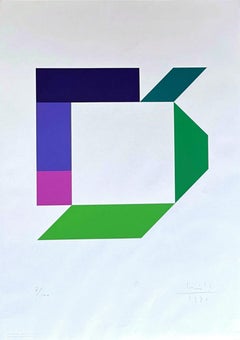
Abstraction géométrique sans titre
Artistics Proof, en plus de l'édition normale de 90
Signé et annoté à la main par AP au recto.
Elegantly matted and framed in white w...
Catégorie
années 1970, Géométrique abstrait, Estampes - Abstrait
Matériaux
Écran
Sérigraphie sans titre Abstraction géométrique moderne du milieu du siècle signée 7/100
Par Max Bill
Max Billing
Abstraction géométrique sans titre, moderne du milieu du siècle, 1970
Sérigraphie sur papier vélin
27 1/2 × 19 1/2 pouces
Signé, daté et numéroté 7/100 sur la partie infé...
Catégorie
années 1970, Géométrique abstrait, Estampes - Abstrait
Matériaux
Écran
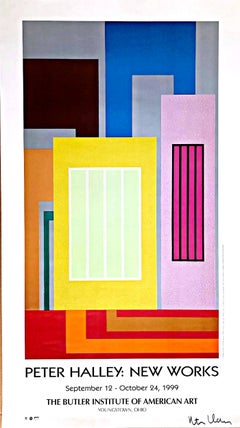
Affiche du Butler Institute of American Art (signée à la main par Peter Halley)
Par Peter Halley
Peters Halley
New Works, The Butler Institute of American Art (signé à la main), 1999
Affiche lithographique offset (signée par Peter Halley)
38 × 21 1/2 pouces
Signé au marqueur noi...
Catégorie
années 1990, Géométrique abstrait, Estampes - Abstrait
Matériaux
Offset, Lithographie
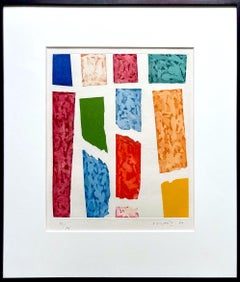
Abstraction géométrique, Ex-Bank of New York Collection Lithographie SIgned/N Encadré
Par Piero Dorazio
Piero Dorazio
Composition abstraite (Bank of New York Corporate Collection), 1971
Lithographie sur papier vélin
Signé au crayon, numéroté 73/75 et daté au recto. Le dos porte un Labe...
Catégorie
années 1970, Géométrique abstrait, Estampes - Abstrait
Matériaux
Lithographie
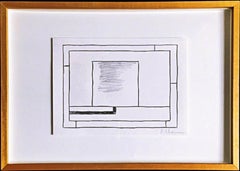
Abstraction géométrique (un dessin unique, signé au graphite, offert à un autre artiste)
Par Peter Halley
Peters Halley
Abstraction géométrique sans titre, vers 1990
Graphite et encre
Signée au crayon graphite par Peter Halley ; en bas à droite au recto
Encadrement inclus : flottant et e...
Catégorie
années 1990, Géométrique abstrait, Dessins et aquarelles - Abstrait
Matériaux
Encre, Graphite
Rare sérigraphie Op Art du milieu du siècle dernier Abstraction géométrique 1969 signée 6/9
Par John Grillo
John Grillo
Sans titre Op Art Mid Century Modern, 1969
Sérigraphie en couleur sur papier d'art avec bords lissés
Signé et daté en bas à droite ; numéroté 6/9 en bas à gauche
Édition...
Catégorie
années 1960, Expressionnisme abstrait, Estampes - Abstrait
Matériaux
Écran
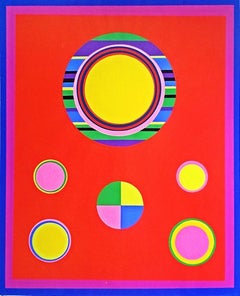
Suggestions
Sérigraphie géométrique abstraite en soie de Jimmy Ernst
Par Jimmy Ernst
Artiste : Jimmy Ernst
Titre : Sans titre
Année : 1970
Moyen : Sérigraphie, Signée et numérotée au crayon
Edition : 52/125
Taille du papier : 27,5 x 37 pouces (69,85 x 93,98 cm)
Catégorie
années 1970, Géométrique abstrait, Estampes - Abstrait
Matériaux
Écran
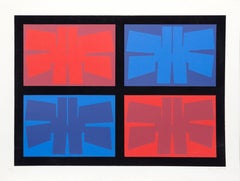
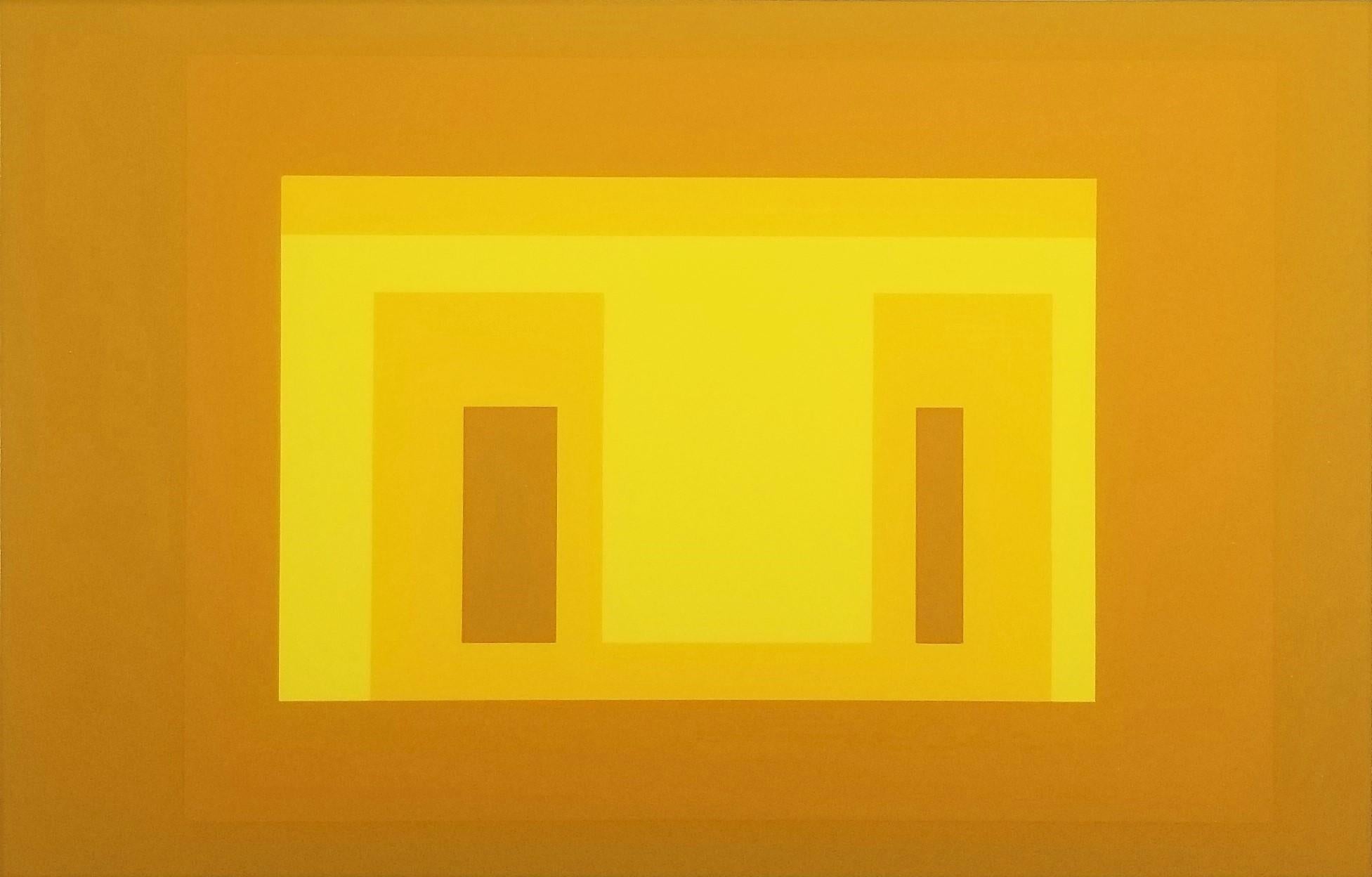
Variant II /// Josef Albers, sérigraphie géométrique abstraite, minimalisme Bauhaus
Par Josef Albers
Artistics : Josef Albers (germano-américain, 1888-1976)
Titre : "Variante II"
Portefeuille : Dix variantes
*Édition non signée
Année : 1967
Support : Sérigraphie originale sur papier...
Catégorie
années 1960, Géométrique abstrait, Estampes - Abstrait
Matériaux
Écran
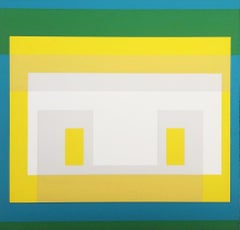
Variant I /// Josef Albers, sérigraphie géométrique abstraite, minimalisme Bauhaus Art
Par Josef Albers
Artistics : Josef Albers (germano-américain, 1888-1976)
Titre : "Variante I"
Portefeuille : Dix variantes
*Édition non signée
Année : 1967
Support : Sérigraphie originale sur papier ...
Catégorie
années 1960, Géométrique abstrait, Estampes - Abstrait
Matériaux
Écran
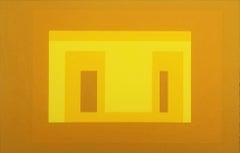
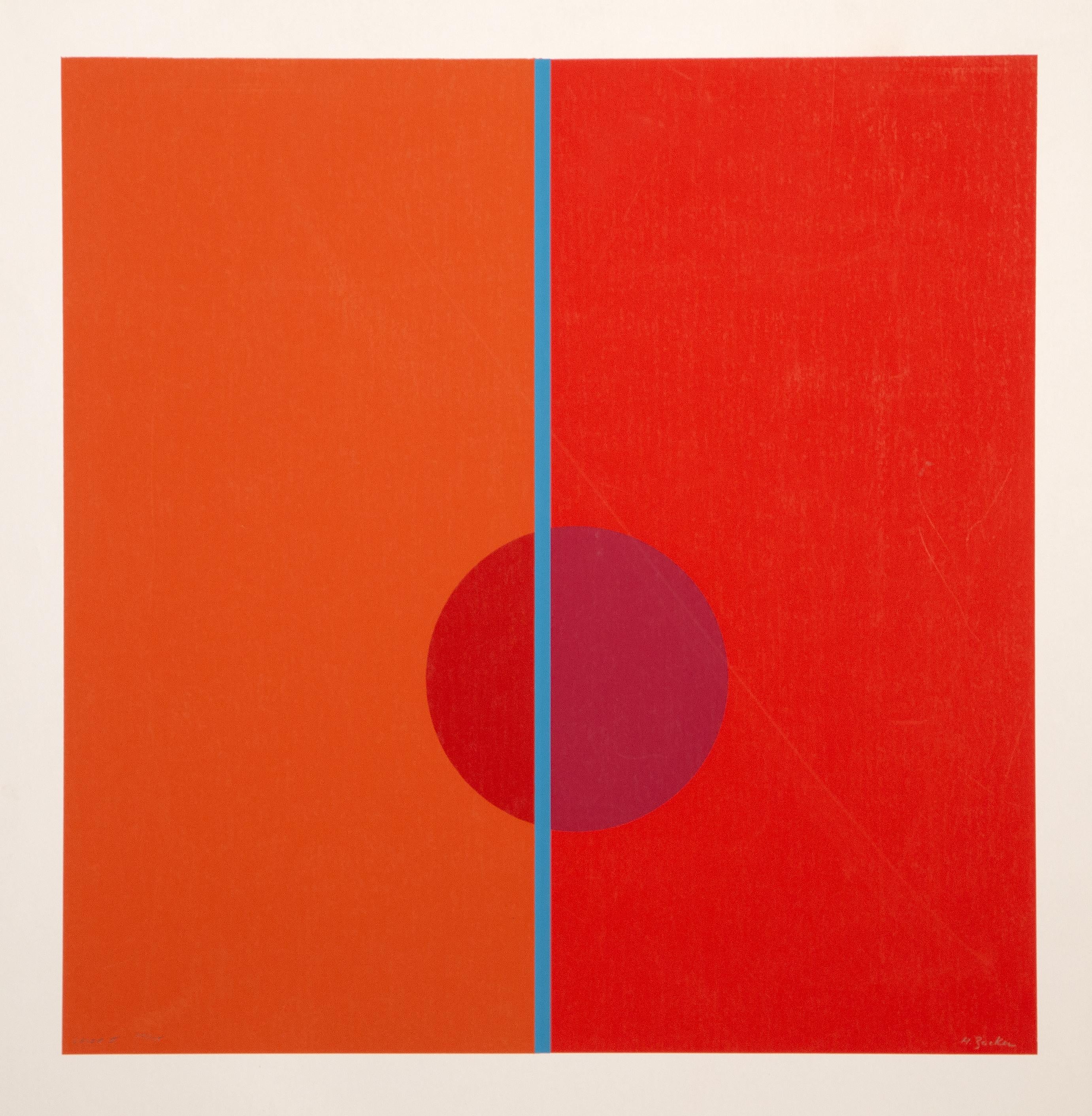
Laser II, sérigraphie abstraite géométrique de Murray Zucker
Par Murray Zucker
Artistics : Murray Zucker, Américain (1920 - )
Titre : Laser II
Année : circa 1970
Support : Sérigraphie, signée, titrée et numérotée au crayon
Édition : 30/175
Image : 24 x 23.5 po...
Catégorie
années 1970, Géométrique abstrait, Estampes - Abstrait
Matériaux
Écran
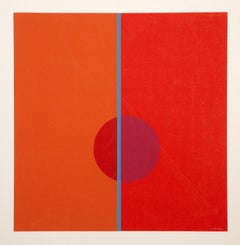
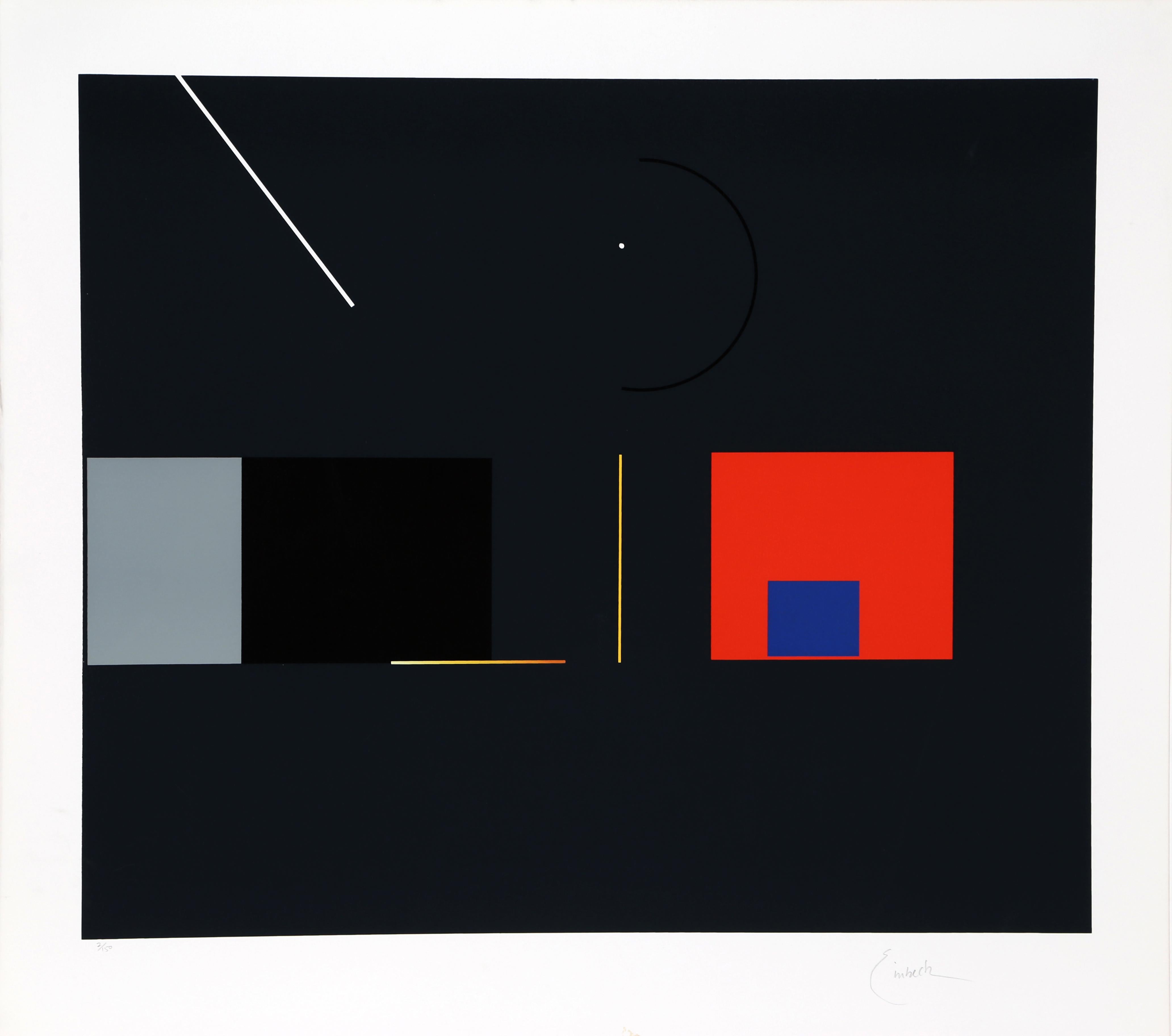
Untitled I, sérigraphie abstraite minimaliste sur arches de Robert Einbeck
Par Robert Einbeck
Artistics : Robert Einbeck, Français (1944 - )
Titre : Sans titre I
Année : vers 1975
Support : Sérigraphie sur Arches, signée et numérotée au crayon
Edition : 150
Taille de l'image ...
Catégorie
années 1970, Géométrique abstrait, Estampes - Abstrait
Matériaux
Écran
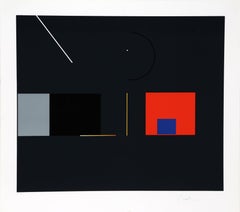
untitled 2 Minimalist Abstract Silkscreen 1969 par Michael Argov
Par Michael Argov
Artistics : Michael Argov, Autrichien/Israélien (1920 - 1982)
Titre : untitled 2
Année : 1969
Médium : Sérigraphie, signée et numérotée au crayon.
Edition : 43
Taille de l'image : 1...
Catégorie
années 1960, Géométrique abstrait, Estampes - Abstrait
Matériaux
Écran