Articles similaires à Woman kneeling on her left knee / - Birth of a new classic -
Vous voulez plus d
images ou de vidéos ?
Demander au vendeur plus d
images ou de vidéos
1 sur 7
Aristide MaillolWoman kneeling on her left knee / - Birth of a new classic -
750 €TVA incluse
À propos de cet article
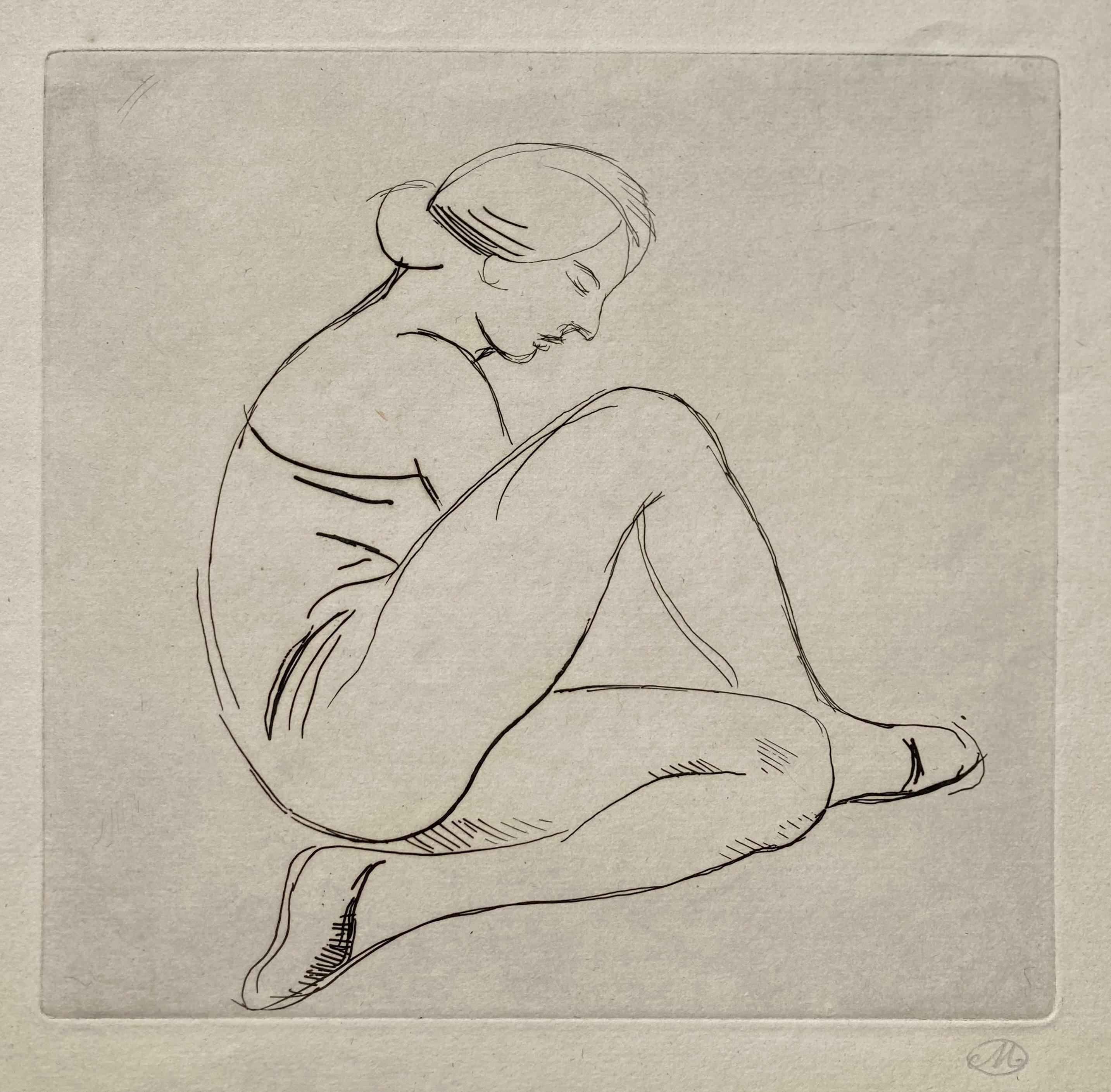
Aristide Maillol (1861 Banyuls-sur-Mer - 1944 ibid.), Woman kneeling on her left knee, with her elbow on her right knee (Femme agenouillée sur le genou gauche, le coude posé sur son genou droit), 1927. Etching, 21 x 27 cm (image), 42.5 cm x 53 cm (frame), monogram stamp on the right below the image, numbered 70/150 on the lower left, WVZ Guerin 327, framed under glass with passe-partout
- strong, clear print in excellent condition
- Birth of a new classic -
In the tradition of classicist outline engravings, Aristide Maillol shapes the female figure solely through a contour line. However, this does not result in a two-dimensional figure; rather, the figure gains a sculptural spatiality that testifies to Maillol's sculptural thinking. Precisely because no surrounding space is suggested, it unfolds its physical volume from within itself.
The posture of the figure forms a unified shape that encloses it, which is why an additional line connects the foot to the hand. This self-containedness makes the figure appear as an autonomous form and elevates it to a symbol of eternal beauty. The symbolic character is underlined by the fact that the figure has only contour lines and that the formation of a concrete individuality has been dispensed with. This gives the figure a universal validity, which was Maillol's aim with his ‘new classic’.
About the artist
Aristide Maillol, often referred to as the “Cézanne of sculpture,” is considered a pioneer of abstract sculpture. In 1895, he turned his attention to sculpture and developed his later monumental works from small wooden and terracotta figures. In 1902, he became known through an exhibition at Ambroise Vollard's gallery. The female nude became his central theme: In his harmoniously proportioned, calm, and minimalist figures, he sought a timeless, allegorical form of expression that clearly distinguished itself from Rodin's dynamic, dramatic imagery. A key work is La Méditerranée (1905), in which Maillol's Mediterranean roots and his pursuit of simple, clear forms come to the fore. Rodin himself admired Maillol's “purity, clarity, and craftsmanship” and saw him as a “genius of sculpture.”
His graphic work—drawings, etchings, lithographs, and especially woodcuts—also follows the same focus on clear lines and simple contours. His book illustrations, for example for Verlaine and ancient authors such as Virgil and Ovid, are significant. Maillol's influence on European sculpture was considerable; artists such as Lehmbruck, Kolbe, Breker, Brâncuși, and Henry Moore followed his renewal of the classical formal language. He also had a lifelong friendship with Henri Matisse.
GERMAN VERSION
Aristide Maillol (1861 Banyuls-sur-Mer - 1944 ebd.), Frau auf dem linken Knie knieend, mit dem Ellbogen auf ihrem rechten Knie (Femme agenouillée sur le genou gauche, le coude posé sur son genou droit), 1927. Radierung, 21 x 27 cm (Darstellung), 42,5 cm x 53 cm (Rahmen), Monogrammstempel rechts unter der Darstellung, links unten als Exemplar 70/150 nummeriert, WVZ Guerin 327, unter Passepartout hinter Glas gerahmt
- kräftiger, klarer Druck in ausgezeichnetem Zustand
- Geburt einer neuen Klassik -
In der Tradition der klassizistischen Umrissstiche formt Aristide Maillol die weibliche Figur einzig durch eine Konturlinie. Dabei entsteht aber keine Flächenfigur, vielmehr gewinnt die Figur eine skulpturale Räumlichkeit, die vom bildhauerischen Denken Maillols zeugt. Gerade indem keinerlei umgebende Räumlichkeit angedeutet ist, entfaltet sie ihr körperlichen Volumen aus sich selbst heraus.
Die Haltung der Figur bildet eine sie umschließende Einheitsform, weshalb eine zusätzliche Linie den Fuß mit der Hand verbindet. Das In-sich-selbst-geschlossen-Sein lässt die Figur als autonome Gestalt erscheinen und erhebt sie zum Sinnbild der ewigen Schönheit. Der sinnbildliche Charakter wird gerade dadurch unterstrichen, dass die Figur nur Konturlinien aufweist und auf die Ausformung einer konkreten Individualität verzichtet worden ist. Dadurch gewinnt die Gestalt eine Allgemeingültigkeit, auf die Maillol mit seiner ‚neuen Klassik‘ abzielte.
zum Künstler
Aristide Maillol, oft als „Cézanne der Bildhauerei“ bezeichnet, gilt als Wegbereiter der abstrakten Plastik. Ab 1895 wandte er sich der Bildhauerei zu und entwickelte aus kleinen Holz- und Terrakottafiguren seine später monumentalen Werke. 1902 wurde er mit einer Ausstellung bei Ambroise Vollard bekannt. Der weibliche Akt wurde zu seinem zentralen Thema: In seinen harmonisch proportionierten, ruhigen und detailreduzierten Figuren suchte er nach einer zeitlosen, allegorischen Ausdrucksform, die sich deutlich von Rodins bewegter, dramatischer Bildsprache abhob. Ein Schlüsselwerk ist La Méditerranée (1905), in dem Maillols mediterrane Verbundenheit und sein Streben nach schlichter, klarer Form zur Geltung kommen. Rodin selbst bewunderte Maillols „Reinheit, Klarheit und handwerkliche Weisheit“ und sah in ihm das „Genie der Skulptur“.
Auch sein grafisches Werk – Zeichnungen, Radierungen, Lithografien und besonders Holzschnitte – folgt derselben Konzentration auf klare Linien und einfache Konturen. Bedeutend sind seine Buchillustrationen, etwa zu Verlaine sowie zu antiken Autoren wie Vergil und Ovid. Maillols Einfluss auf die europäische Bildhauerei war erheblich; Künstler wie Lehmbruck, Kolbe, Breker, Brâncuși und Henry Moore knüpften an seine Erneuerung der klassischen Formensprache an. Zudem verband ihn eine lebenslange Freundschaft mit Henri Matisse.
- Créateur:Aristide Maillol (1861-1944, Français)
- Dimensions:Hauteur : 106,68 cm (42 po)Largeur : 134,62 cm (53 po)Profondeur : 10,16 cm (4 po)
- Support:
- Mouvement et style:
- Période:
- État:
- Adresse de la galerie:Berlin, DE
- Numéro de référence:1stDibs : LU2438217343542
Aristide Maillol
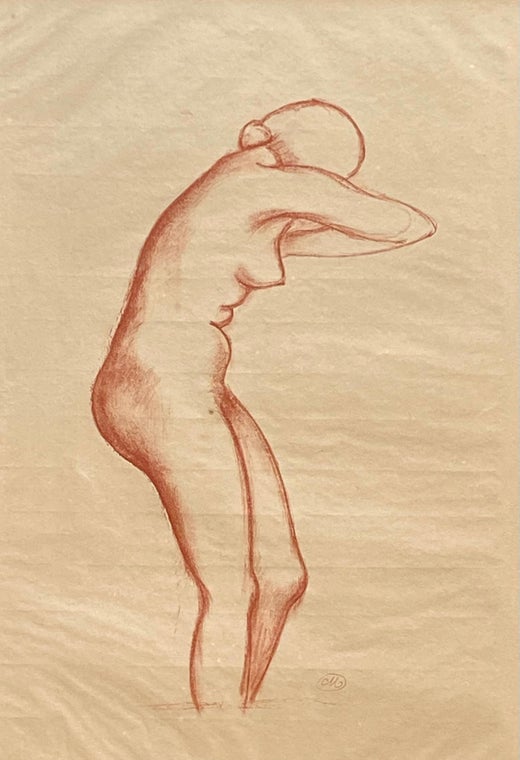
Aristide Maillol est surtout connu pour ses représentations classiques de figures féminines créées à partir de formes abstraites et simplifiées et de lignes fortes. Il est né à Banyuls-sur-Mer, en France, en 1861, et y est décédé en 1944. Maillol commence à peindre à l'âge de 14 ans et prend des cours de dessin au musée de Perpignan. Il est admis à la section peinture et sculpture de l'École des Beaux-Arts de Paris en 1885. Sa première exposition personnelle de sculptures a lieu en 1902 à la galerie Vollard à Paris, et ses premières expositions internationales en 1913 à Rotterdam, aux Pays-Bas, et à l'Armory Show aux États-Unis. Son œuvre a fait l'objet d'une rétrospective à la Kunsthalle de Bâle, en Suisse, en 1933, de son vivant, ainsi qu'à titre posthume en 1975 au Solomon R. Guggenheim Museum de New York. Ses sculptures, peintures, dessins, œuvres en terre cuite et tapisseries se trouvent au musée Maillol à Paris, en France. Ses œuvres figurent également dans les collections de l'Art Institute of Chicago à Chicago, Illinois ; du Museum of Fine Arts, Boston, à Boston, Massachusetts ; du Museum of Modern Art, à New York ; et du Musée d'Orsay à Paris, France. Trois de ses sculptures en bronze sont également exposées au Metropolitan Opera House de New York.
À propos du vendeur
5,0
Vendeur professionnel agréé
Chaque vendeur répond à des normes strictes en matière d
authenticité et de fiabilité
Établi en 2014
Vendeur 1stDibs depuis 2023
23 ventes sur 1stDibs
- ExpéditionRecherche du devis...Expédition depuis : Berlin, Allemagne
- Politique des retours
Certaines parties de cette page ont été traduites automatiquement. 1stDibs ne garantit pas l
exactitude des traductions. L
anglais est la langue par défaut de ce site web.
Plus d articles de ce vendeur
Tout afficherNu féminin au dos, vers 1900 / - Le contour de l
Art nouveau
Par Ludwig von Hofmann
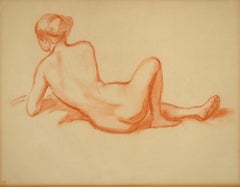
Ludwig von Hofmann (1861 Darmstadt - 1945 Pillnitz), Nu féminin de dos, vers 1900. Dessin à la craie rouge sur papier à dessin filigrané, 36 cm x 44 cm (format de la feuille). Ligatu...
Catégorie
Début des années 1900, Art nouveau, Dessins et aquarelles - Nus
Matériaux
Papier
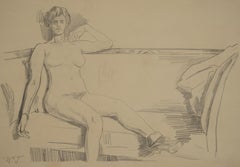
Femme nue assise sur un canapé
Wilhelm Trübner (1851 Heidelberg - 1917 Karlsruhe), Nu féminin assis sur un canapé, vers 1900. Dessin au crayon, 32,5 x 48,5 cm, monogrammé "W.T." en bas à gauche et portant une insc...
Catégorie
Début des années 1900, Réalisme, Dessins et aquarelles - Nus
Matériaux
Papier
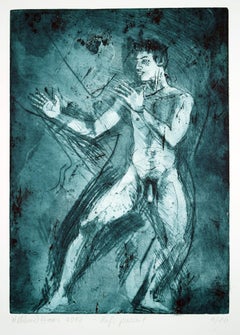
La protébration entièrement nue
Willibrord Haas (*1936 Schramberg), La prostration complètement nue, 1999. Gravure, 32,5 cm x 23,5 cm (format de la plaque), 54 cm x 37,5 cm (format de la feuille). Signée "Willibror...
Catégorie
années 1990, Réalisme, Estampes - Nus
Matériaux
Papier

Les poses de Kufi
Willibrord Haas (*1936 Schramberg), Kufi poses, 2012. Etching, 44 cm x 32 cm (plate size), 54 cm x 37.5 cm (sheet size). Signed “Willibrord Haas” in lead by the artist, dated “2012”,...
Catégorie
années 2010, Réalisme, Estampes - Nus
Matériaux
Papier
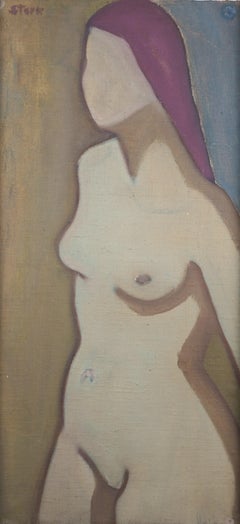
Petit nu / - Figurative abstraite
Gustl Stark (1917 Mainz - 2009 ibid.), Petit nu, 1946. Huile sur toile, marouflée, 54 x 25 cm (tableau), 30 x 60 cm (cadre), signée "Stark" en haut à gauche, signée deux fois "Gustav...
Catégorie
années 1940, Réalisme, Peintures - Nus
Matériaux
Toile
The Mother / - La maternité violée -
Par Georg Tappert
Georg Tappert (1880 Berlin - 1957 Berlin), La mère, 1918 (1964). Épreuve de succession datant de 1964. Linogravure sur Japon, 31,5 cm x 20 cm (image), 44,5 cm x 28 cm (format de la f...
Catégorie
Années 1910, Expressionniste, Estampes - Figuratif
Matériaux
Papier
Suggestions
Nu assis (version 1) du portfolio Maillol : Sculpture et lithographie
Par Aristide Maillol
Aristide Maillol
Nu assis (version 1) du portfolio Aristide Maillol : Sculpture et lithographie, 1925
Lithographie sur papier filigrané
12 1/2 × 19 1/2 pouces
Edition AP
Signé à la m...
Catégorie
années 1920, Réalisme, Estampes - Figuratif
Matériaux
Lithographie
Nu féminin debout
Par Aristide Maillol
Belle lithographie originale sur papier fait main par l'artiste français bien connu, Aristide Maillol. Monogramme de l'artiste "M" en bas à droite. L'état est bon. Début du 20e siè...
Catégorie
Début du 20ème siècle, Moderne, Estampes - Nus
Matériaux
Lithographie, Papier fait main
869 € Prix de vente
20 % de remise
Femme
Par Aristide Maillol
ARISTIDE MAILLOL (1861-1944)
FEMME ASSISE /
(FEMME ASSISE DE PROFIL, À DROITE, UNE JAMBE PLIÉE. UNE JAMBE LEVÉE), 1926 (Gueirn 321)
Gravure à l'eau-forte signée avec le monogramme "...
Catégorie
années 1920, École française, Estampes - Figuratif
Matériaux
Eau-forte
Étude pour « La Pensée » ou « La Méditerranée »
Par Aristide Maillol
ARISTIDE MAILLOL 1861-1944
1861 Banyuls sur Mer - 1944 Paris (français)
Titre : Etude pour 'la Pensée' ou 'La Méditerranée' / Study for 'The Thought' or 'The Mediterranean', circa...
Catégorie
Début des années 1900, Dessins et aquarelles - Nus
Matériaux
Pastel
La pose du nu - Dessin - Début du 20e siècle
Par Gaspard Maillol
Le Nu posant est un dessin original sur papier ivoire réalisé par Gaspard Maillol au début du 20e siècle.
Bonnes conditions.
L'œuvre d'art représente une femme nue à travers des tr...
Catégorie
Début du 20ème siècle, Moderne, Dessins et aquarelles - Figuratif
Matériaux
Crayon
Nu de dos d
Aristide Maillol, années 1920
Par Aristide Maillol
Monogrammé à la main. Edition de 50 pièces.
Provenance : Galleria Prandi.
Très bon état.
Catégorie
années 1920, Moderne, Estampes - Figuratif
Matériaux
Eau-forte