Articles similaires à Dutch Town Landscape Painting, Oil on Wood, Circa 1875-1880

Vous voulez plus d
images ou de vidéos ?
Demander au vendeur plus d
images ou de vidéos
1 sur 12
Carl SkånbergDutch Town Landscape Painting, Oil on Wood, Circa 1875-18801875-1880
1875-1880
2 800 €TVA incluse
À propos de cet article
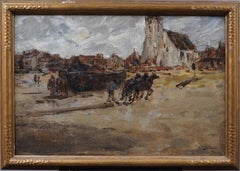
A Dutch Town is a luminous, atmospheric view of a canal-side townscape in the Netherlands, painted by the Swedish artist Carl Skånberg around 1875–1880. The composition centers on a tranquil waterway lined with brick houses and moored wooden boats. To the left, a stone bridge arches over the canal, connecting streets of typical northern European architecture, tall, narrow façades with stepped gables and red-tiled roofs. Rising prominently beyond the rooftops is a church tower that anchors the scene and proclaims the town’s historic character. Above, a dynamic sky filled with billowing clouds spreads across the small panel, capturing the transient weather and lending a sense of movement to the otherwise peaceful setting. Skånberg’s palette is bright and clear: soft morning blues and greys animate the sky, while warm ochres and earthy reds define the buildings. He pays particular attention to the effects of light and atmosphere, sunlight plays off the clouds and reflects in the calm canal, imbuing the view with a vivid impression of a breezy day in a Dutch town.
Though modest in scale, the painting conveys an expansive sense of space and light. Skånberg’s brushwork balances detail with looseness, suggesting an image likely painted en plein air or derived from on-the-spot sketches. Fine touches articulate the architecture and the rippling water, yet the handling of paint remains lively and spontaneous, especially in the rendering of the sky and water. The clouds are brushed in energetic, fluid strokes, contrasting with the more solid, structural lines of the buildings and the crisp silhouette of the church spire. This interplay of precise detail and painterly freedom creates a scene that feels both realistically observed and full of immediate, momentary life. The overall impression is one of serene realism enlivened by changing light, an early hint of Impressionist influence. Indeed, A Dutch Town reflects Skånberg’s keen interest in capturing fleeting light conditions: the gentle illumination on the facades and the dappled reflections in the canal suggest a specific time of day and shifting clouds overhead, inviting the viewer to experience the atmosphere of the place.
The Artist
Carl Skånberg was a Swedish painter celebrated for his pioneering plein-air technique and his early Impressionist tendencies. Born in Norrköping in 1850, he studied at the Royal Swedish Academy of Fine Arts in Stockholm from 1871 to 1874, where he trained in traditional drawing and painting alongside contemporaries such as Carl Larsson and Ernst Josephson. Eager to expand his artistic horizons, Skånberg joined the wave of Nordic artists who ventured to Paris in the mid-1870s. In Paris he absorbed the influence of modern French landscape painting, especially the Barbizon School and the emerging Impressionist movement, which encouraged working directly from nature and capturing transient effects of light. Skånberg and his peers led a bohemian life in the art circles of Paris, and he quickly gained a reputation for his spirited personality and talent.
During this period, Skånberg traveled and painted extensively across Europe. After leaving the Academy, he undertook journeys through France, the Low Countries, and later Italy, seeking picturesque locales to paint. In the mid-1870s he visited northern France and the Netherlands, producing coastal and town scenes that mark his shift toward a lighter palette and looser, light-infused brushwork. The influence of Dutch Golden Age art and the plein-air realism of contemporary French painters can be seen in works like A Dutch Town, with its honest depiction of everyday architecture under natural light. By the late 1870s Skånberg was counted among the first Swedish artists to embrace Impressionistic ideas, his paintings from this time show a fresh, modern approach to color and atmosphere that departed from academic convention.
Skånberg’s pursuit of light and color continued as he moved to warmer climates for his health. In the early 1880s he painted in Italy, capturing the harbors of Venice and the sunlit vistas of Sicily and Rome. Throughout his journeys he remained dedicated to painting en plein air, directly from observation, which allowed him to render the mood of a scene with remarkable immediacy. Admirers praised his ability to depict the “truth” of natural light—whether in a misty Scandinavian coastline or a bright Mediterranean port. Unfortunately, Skånberg’s promising career was cut short; plagued by lifelong health problems, he died in 1883 at just 32 years old. Despite his short life, he left an enduring legacy in Swedish art as a forerunner of Impressionism and open-air painting. His works are treasured for their atmospheric qualities and their role in bringing the light-suffused, modern landscape style into Scandinavian painting.
oil on wood panel
signed lower left
unframed 35 x 26.5 cm (13.8 x 10.4 in)
framed 52 x 43 cm (20.5 x 16.9 in)
Provenance:
Bukowskis Internationella Jubileumsauktion (International Jubilee Auction), 29 November 1995, lot 141
- Créateur:Carl Skånberg (1850 - 1883, Suédois)
- Année de création:1875-1880
- Dimensions:Hauteur : 35 cm (13,78 po)Largeur : 26,5 cm (10,44 po)
- Support:
- Mouvement et style:
- Période:
- État:The painting is in good condition, with clear colors visible beneath an older varnish. frame in fine condition, with an aged patina.
- Adresse de la galerie:Stockholm, SE
- Numéro de référence:1stDibs : LU1445217384512
À propos du vendeur
5,0
Vendeur Platine
Vendeurs premium dont la note est supérieure à 4,7 et le délai de réponse de 24 heures maximum
Établi en 2020
Vendeur 1stDibs depuis 2020
222 ventes sur 1stDibs
Temps de réponse habituel : 1 heure
Associations
International Confederation of Art and Antique Dealers
Associations
- ExpéditionRecherche du devis...Expédition depuis : Stockholm, Suède
- Politique des retours
Certaines parties de cette page ont été traduites automatiquement. 1stDibs ne garantit pas l
exactitude des traductions. L
anglais est la langue par défaut de ce site web.
Plus d articles de ce vendeur
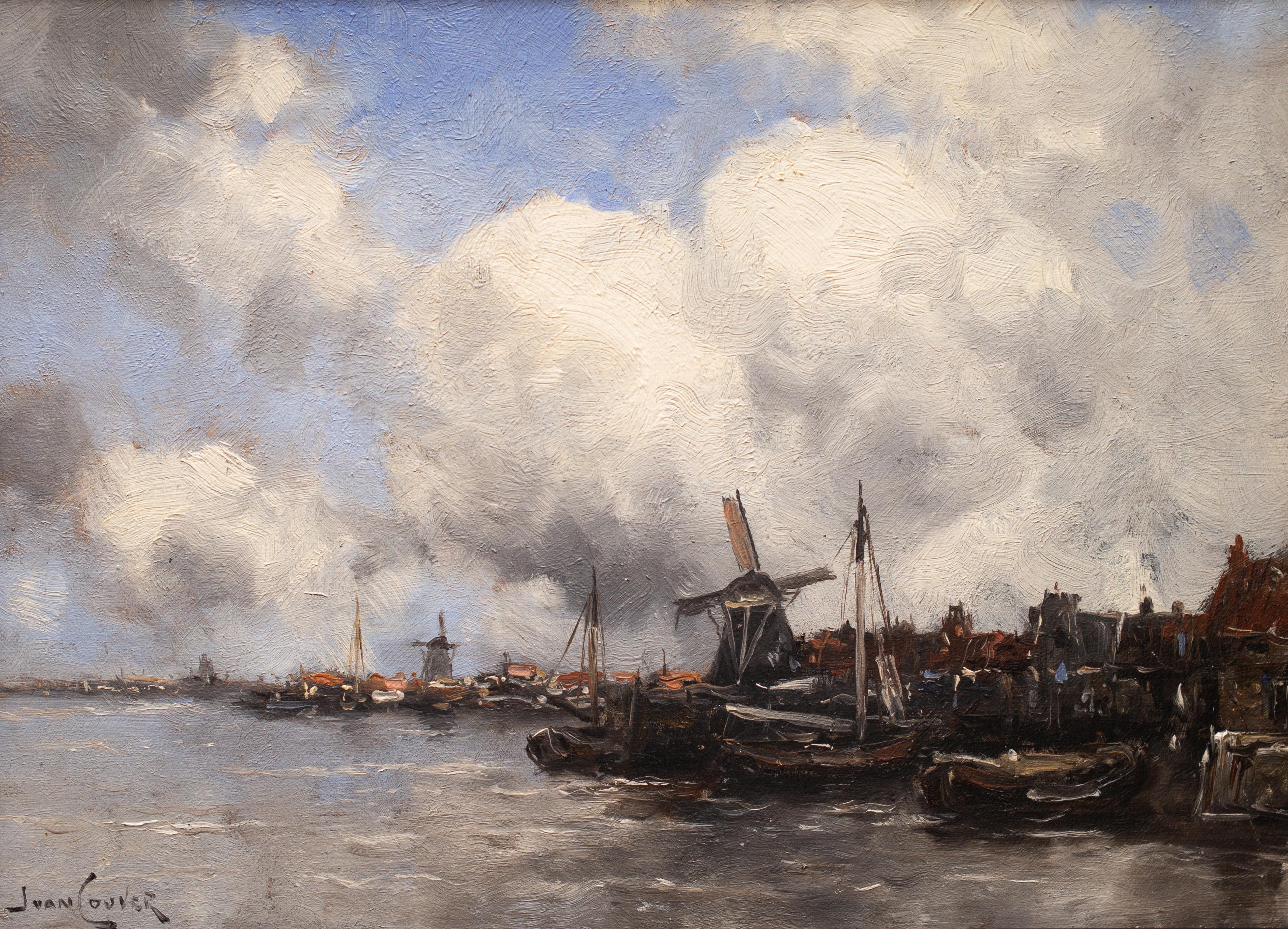
Tout afficherImpressionnisme - Vue d
une ville néerlandaise par Jan van Couver (Hermanus Koekkoek Jr.
Par Jan Van Couver
Hermanus Koekkoek le Jeune était membre de la célèbre famille d'artistes Koekkoek. Il était le petit-fils de Johannes Hermanus Koekkoek, le neveu du peintre paysagiste Barend Cornel...
Catégorie
Fin du XIXe siècle, Impressionnisme, Peintures - Paysage
Matériaux
Toile, Huile
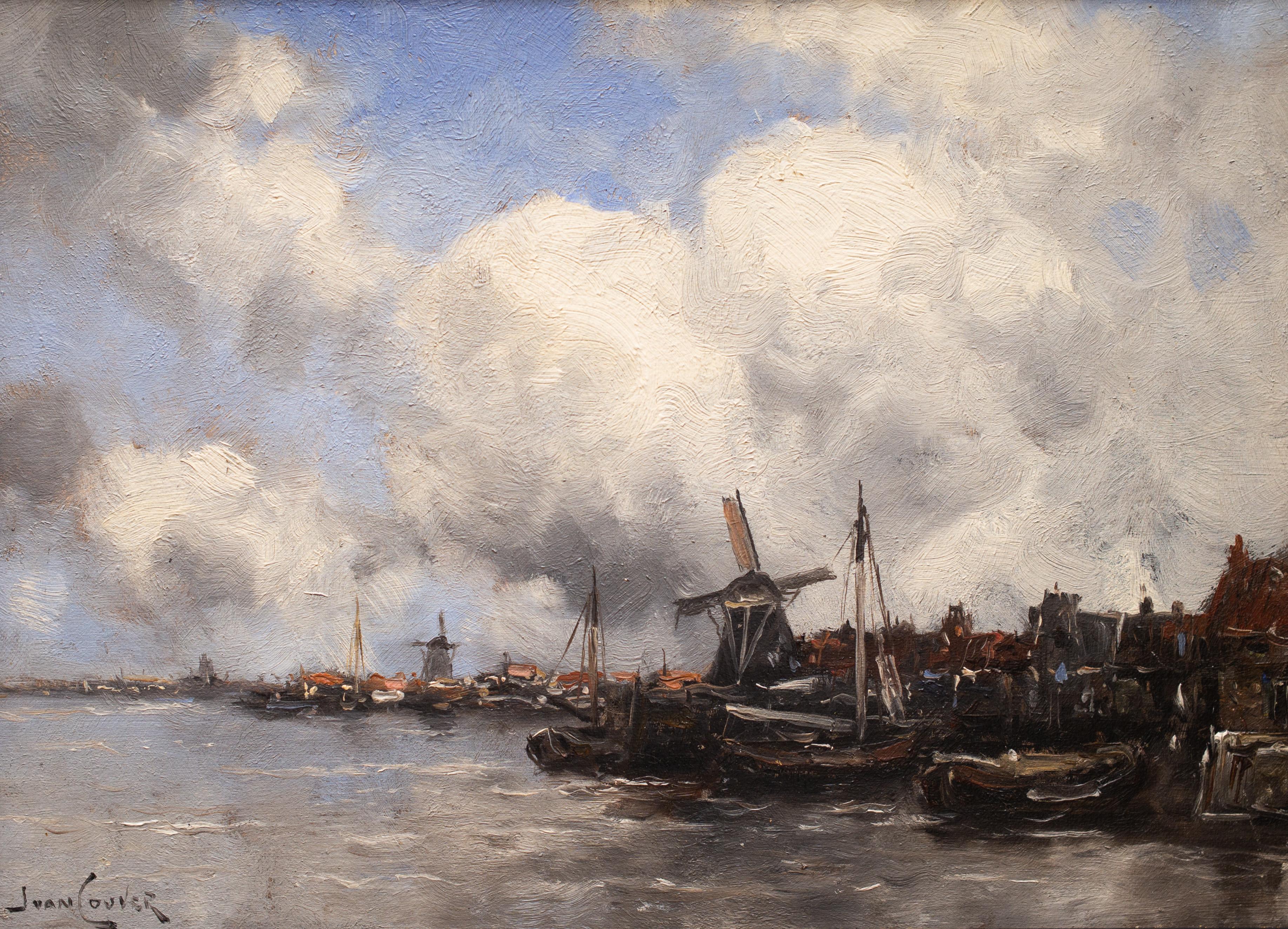
Impressionnisme - Vue d
une ville néerlandaise par Jan van Couver (Hermanus Koekkoek Jr.
Par Jan Van Couver
Hermanus Koekkoek le Jeune faisait partie de la célèbre famille d'artistes Koekkoek : petit-fils de Johannes Hermanus Koekkoek, neveu du peintre paysagiste Barend Cornelis Koekkoek e...
Catégorie
Fin du XIXe siècle, Impressionnisme, Peintures - Paysage
Matériaux
Toile, Huile
2 800 € Prix de vente
20 % de remise
Livraison gratuite
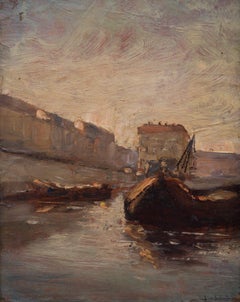
Scène de canaux, probablement Paris. Peint au début des années 1900
Nous proposons à la vente une peinture captivante de l'artiste suédois Rikard Lindström (1882-1943). Représentant un canal d'eau pittoresque, avec de charmantes maisons bordant son c...
Catégorie
Début des années 1900, Post-impressionnisme, Peintures - Paysage
Matériaux
Huile, Papier vergé
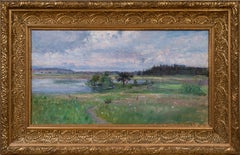
Paysage impressionniste scandinave (1894)
Cette huile sur toile d'Anton Genberg, signée et datée de 1894, représente un paysage d'été scandinave baigné d'une douce lumière. La composition comprend des prairies verdoyantes au...
Catégorie
années 1890, Impressionnisme, Peintures - Paysage
Matériaux
Toile, Huile
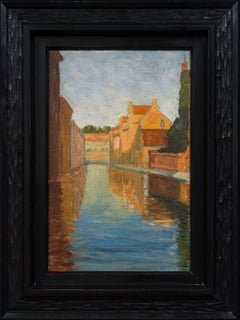
Bruges (Brügge), 1894 by Symbolist Painter Olof Sager-Nelson.
Provenance:
Ina Colliander, relative of the artist;
A private collection, Sweden;
Bukowskis, Stockholm, Important Winter Sale, 2025, lot 711.
Exhibited:
Thielska Gallery, Stockholm,...
Catégorie
années 1890, Symbolisme, Peintures - Paysage
Matériaux
Toile, Huile
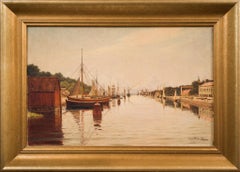
Le port de Halmstad See One depuis le nord, 1889
Le tableau "Halmstad Harbour Seen From the North" d'Oscar Ohlson est un instantané captivant de la vie quotidienne et de l'architecture historique, figé dans le temps depuis l'année ...
Catégorie
années 1880, Réalisme, Peintures - Paysage
Matériaux
Toile, Huile
Suggestions
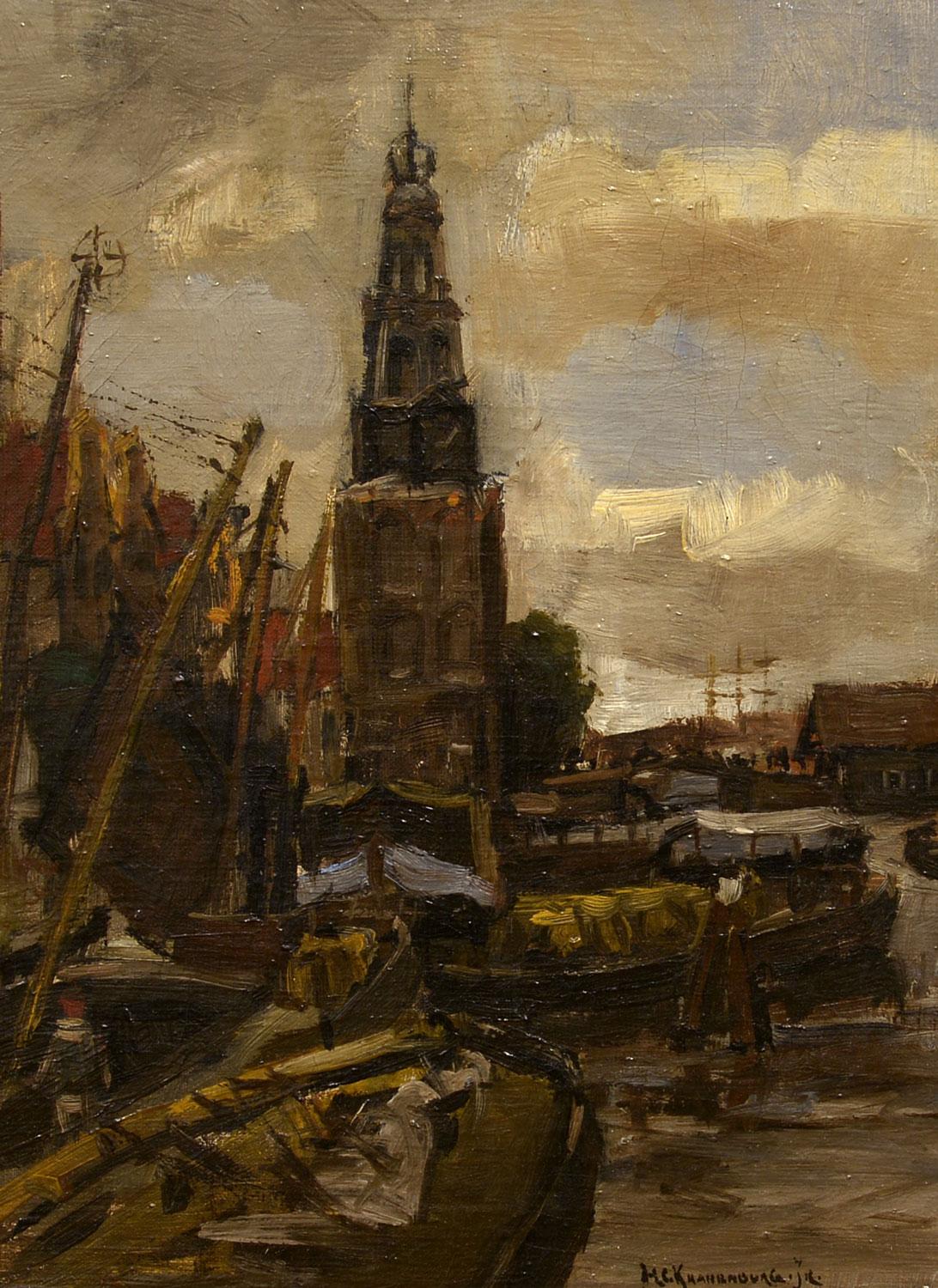
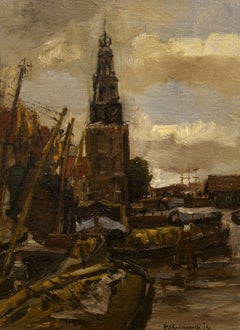
« Along the Canal, Amsterdam », Hendrik Cornelis Kranenburg, Sr., Impressionniste
Hendrik Cornelis Kranenburg, Sr. était un artiste néerlandais qui a vécu de 1871 à 1948. Il est surtout connu pour ses peintures à l'huile de villes, dont Amsterdam et Paris, ainsi q...
Catégorie
Début du XXe siècle, Impressionnisme, Peintures - Paysage
Matériaux
Toile, Huile
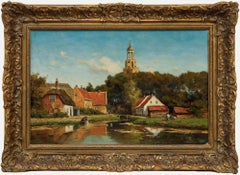
Abraham van der Wissel (1865-1926) - Fin du XIXe siècle Huile, Vue sur l
église
Des chalets rustiques parsèment les rives d'une rivière tranquille dans cette représentation sereine de la vie rurale. La rivière passe sous un petit pont en direction d'une église a...
Catégorie
Fin du XIXe siècle, Peintures - Paysage
Matériaux
Huile
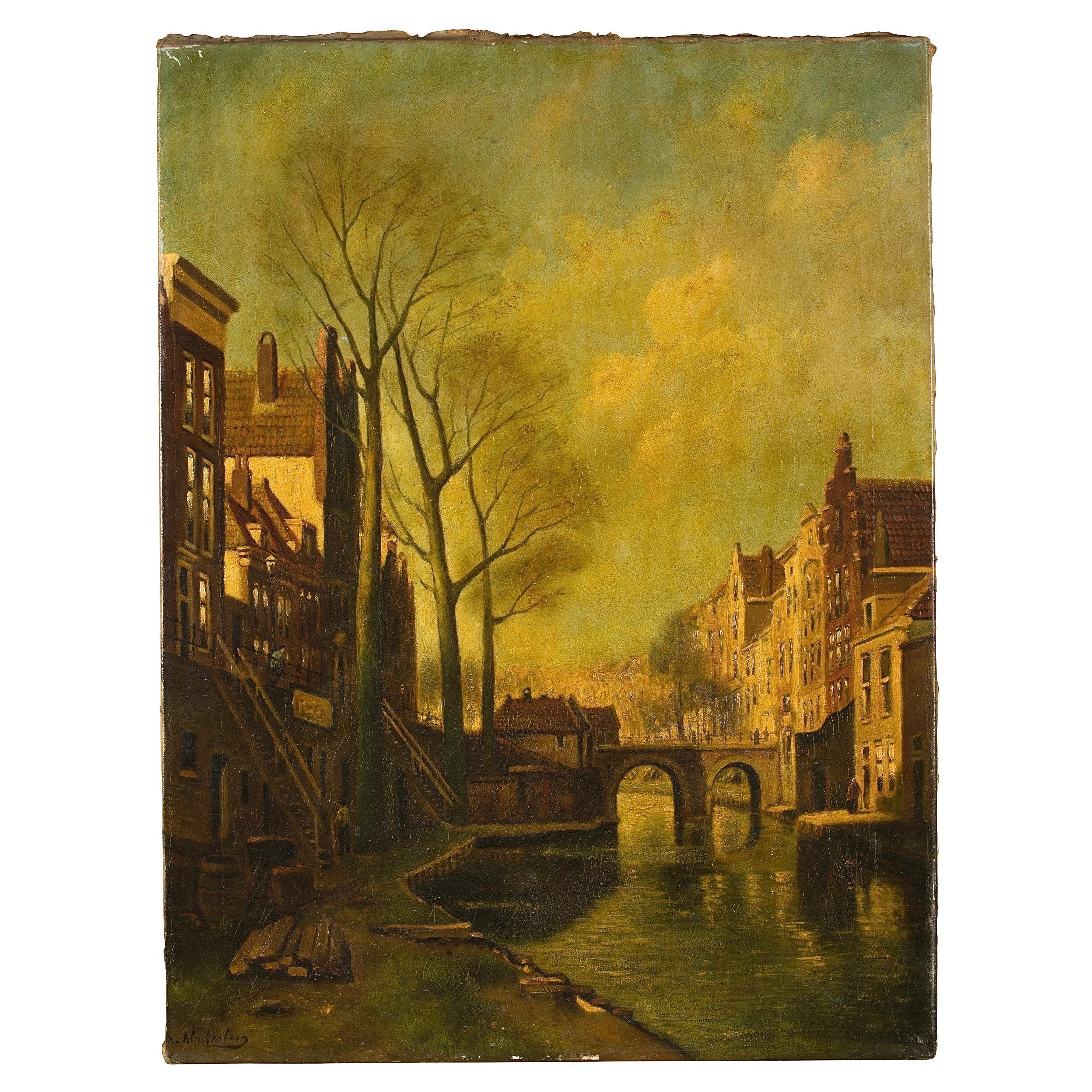
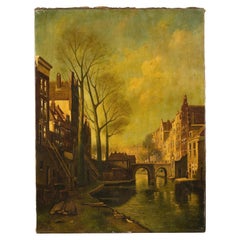
Peinture hollandaise du 19ème siècle signée Karel Klinkenberg
Par Johannes Christiaan Karel Klinkenberg
Belle et importante peinture du grand artiste néerlandais Karel Klinkenberg qui a vécu au tournant des 19e et 20e siècles.
Il s'agit d'un canal d'Utrecht, représenté avec sa précisio...
Catégorie
Fin du XIXe siècle, École hollandaise, Peintures - Paysage
Matériaux
Toile, Huile
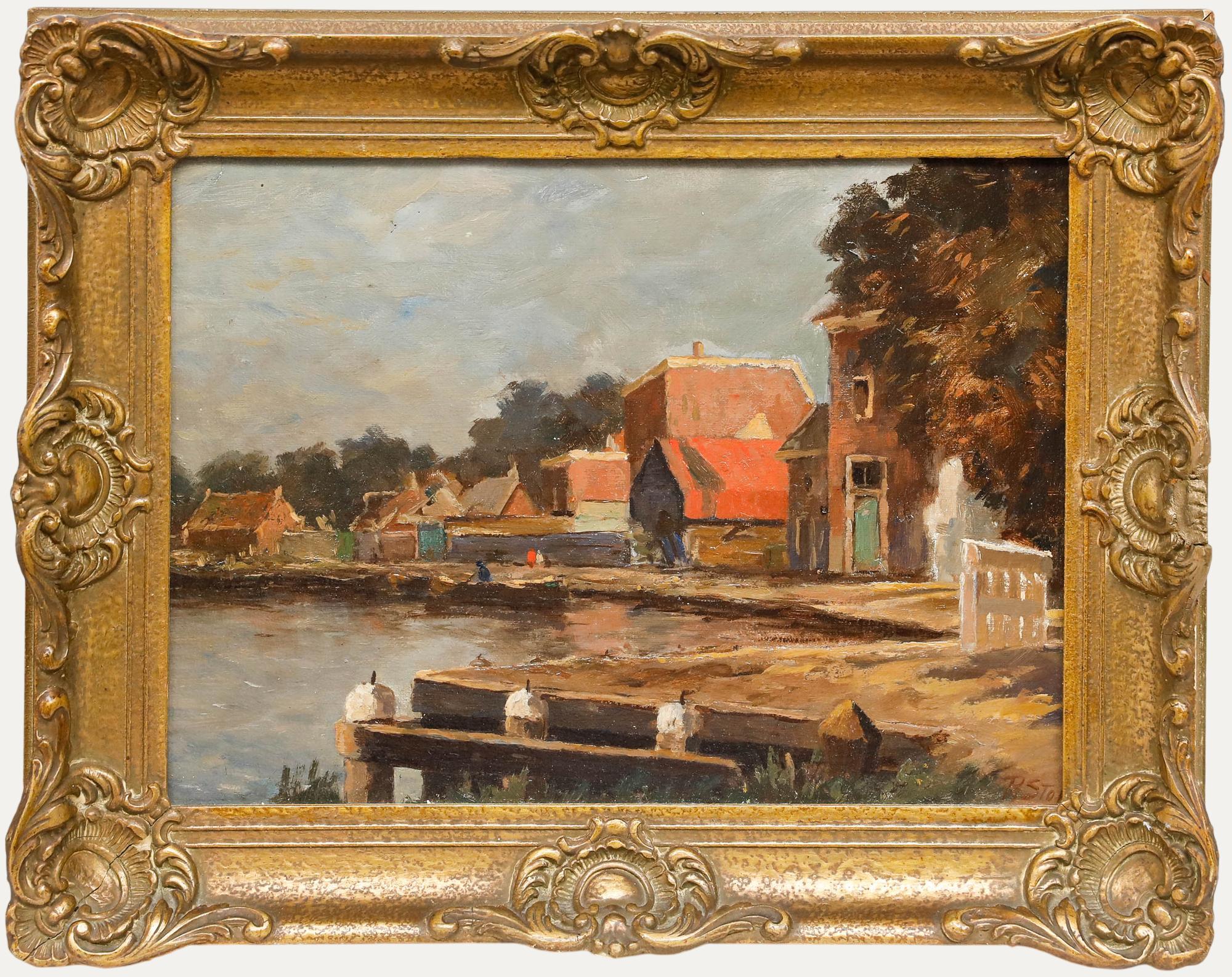
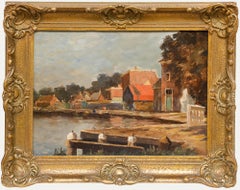
Philippus Thomas Stol (1878-1954) - Huile du début du 20e siècle, carrière à Rotterdam
Une étude charmante d'un quai tranquille de Rotterdam, aux Pays-Bas. Signé en bas à droite. Bien présenté dans un cadre doré avec une ornementation feuillue. Sur le panneau.
Catégorie
20ième siècle, Peintures - Paysage
Matériaux
Huile
Peinture impressionniste signée du 19e siècle, paysage côtier européen, joliment encadrée.
Grande et impressionnante peinture impressionniste du début de l'Europe. Il est présenté dans un superbe cadre en bois doré. Huile sur toile. Signé. Taille de l'image : 20H par 30L.
Catégorie
Début des années 1900, Impressionnisme, Peintures - Paysage
Matériaux
Toile, Huile
1 021 € Prix de vente
20 % de remise
Un paysage de polder, Gerard Delfgaauw, monstre 1882 - 1947 La Haye, Pays-Bas
Un paysage de polders
Delfgaauw Gerard
Monstre 1882 - 1947 La Haye
Peintre néerlandais
Signature : Signé en bas à droite
Médium : Huile sur toile
Dimensions : Taille de l'image 40 ...
Catégorie
Début du 20ème siècle, Impressionnisme, Peintures - Paysage
Matériaux
Toile, Huile