Articles similaires à Authentic Woodblock Print Fujimigahara in Owari Province of 36 Views of Mt. Fuji
Chargement de la vidéo
Vous voulez plus d
images ou de vidéos ?
Demander au vendeur plus d
images ou de vidéos
1 sur 25
Katsushika HokusaiAuthentic Woodblock Print Fujimigahara in Owari Province of 36 Views of Mt. Fuji1950s
1950s
553 €
À propos de cet article
This Woodblock Print is the celebrated "Fujimigahara in Owari Province" (尾州不二見原 Bishū Fujimigahara), by the master Japanese ukiyo-e artist Katsushika Hokusai. It is a work from his famous series Thirty-six Views of Mount Fuji (冨嶽三十六景 Fugaku sanjūrokkei), first produced circa 1830–1832 during the Edo period; this is a post-war re-carved block print.
Credit Line: GSY House Collection, since 2009, acquired directly from Japanese Publisher.
The print is particularly famous for its bold and unconventional composition.
Hokusai used several brilliant compositional techniques in "Fujimigahara in Owari Province". The most striking is his use of simple geometric shapes and European perspective to create a sense of depth, humour, and symbolism in a single image.
The painting depicts a lone cooper (barrel maker) is working inside the colossal, circular structure of a barrel he is building in the foreground. Through the bottomless frame of the barrel, a tiny, distant Mount Fuji is perfectly framed on the horizon.
This juxtaposition cleverly contrasts the everyday human labour and the immense scale of the barrel in the foreground with the small, distant, and unchanging natural symbol of eternity that is Mount Fuji.
Notable Collections: Several museums have this specific print in their collections, including:
The Metropolitan Museum of Art in New York, USA
The Victoria and Albert Museum (V&A) in London, UK
The British Museum in London, UK
Tokyo Fuji Art Museum in Japan
The Museum of Fine Arts, Boston, USA
The Krannert Art Museum at the University of Illinois Urbana-Champaign, USA
Exhibition History:
-Nagoya City Museum. "Hokusai: The Great Master of Arts," October 26, 1991–November 24, 1991.
-Tokyo National Museum. "Hokusai the Immortal," October 25, 2005–December 4, 2005.
-Washington, DC. Freer Gallery of Art and Arthur M. Sackler Gallery, Smithsonian Institution. "Hokusai: Thirty-Six Views of Mount Fuji," March 24, 2012–June 17, 2012.
About the Artist:
Katsushika Hokusai (1760–1849) was the most important Japanese woodblock print artist, painter, and printmaker of the Edo period, widely considered one of the greatest masters in art history.
He is best known for his ukiyo-e woodblock prints, which means "pictures of the floating world," a style that shifted its focus from courtesans and actors to landscapes, plants, and everyday life.
Hokusai's most iconic work is Under the Wave off Kanagawa (commonly known as "The Great Wave"), part of his series Thirty-six Views of Mount Fuji, produced around 1831. This series secured his fame both in Japan and internationally.
Over his seventy-year career, Hokusai produced an estimated 30,000 paintings, sketches, and woodblock prints. He continued working until his death at age 88, famously stating on his deathbed, "If only Heaven will give me just another ten years ... Just another five more years, then I could become a real painter".
That quote from his deathbed really highlights his lifelong dedication to his craft. He remained a student of art his entire life, always striving for greater perfection despite his immense talent and recognition. His humility is certainly part of his enduring legacy.
His prints, which were introduced to Europe in the late 19th century after Japan opened its borders, profoundly influenced Impressionist artists such as Vincent van Gogh and Claude Monet.
He was known for synthesising East Asian and European painting techniques, including the use of Western-style perspective to create depth in his prints, which was revolutionary for ukiyo-e art at the time.
About Hokusia's Techniques:
-Masterful Compositional Techniques
Juxtaposition of Shapes: Hokusai contrasts the large, dominant circle of the barrel being constructed in the foreground with the small, distant triangle of Mount Fuji in the background. This bold, unconventional composition was unprecedented for its time and immediately draws the viewer's eye to the deliberate framing of the mountain.
-Framing Device: The massive, bottomless barrel acts as a natural frame within the picture, perfectly encapsulating the small Mount Fuji on the horizon. This witty composition makes the grand, eternal mountain appear as just another "view" or perhaps even an incidental backdrop to everyday human labor.
-Perspective and Scale: Hokusai incorporated European mathematical perspective, where objects farther away appear smaller, which was an innovation in Japanese printmaking at the time. This technique creates a strong sense of depth in the image, emphasizing the vast distance between the cooper in the foreground and the mountain far away.
-Symbolic Dialogue: By framing the cooper and the mountain together, Hokusai
creates a visual and iconographical dialogue between the working man and the iconic symbol of Japan. The pose of the cooper's body even mirrors the triangular shape of Mount Fuji, lending a religious overtone to the dignity of honest labour.
-Use of Colour (Prussian Blue): The print heavily utilizes the newly introduced imported pigment, Prussian blue, particularly in the upper part of the sky where Hokusai uses the bokashi (gradient colouring) technique to create depth and atmosphere.
- Créateur:Katsushika Hokusai (Japonais)
- Année de création:1950s
- Dimensions:Hauteur : 26,1 cm (10,28 po)Largeur : 38,8 cm (15,28 po)Profondeur : 1 mm (0,04 po)
- Support:
- Mouvement et style:
- Période:
- Encadrement:Options d encadrement disponibles
- État:Comes with the original folio paper size 33.1 x 48.3 CM, the original washi paper size is 26.1 x 38.8 CM ( see pictures.) The back of the paper is the best way to see the authenticity of a woodblock print ( see the picture of the back of the print).
- Adresse de la galerie:London, GB
- Numéro de référence:1stDibs : LU2500217532982
À propos du vendeur
5,0
Vendeur Platine
Vendeurs premium dont la note est supérieure à 4,7 et le délai de réponse de 24 heures maximum
Établi en 2015
Vendeur 1stDibs depuis 2023
150 ventes sur 1stDibs
Temps de réponse habituel : <1 heure
- ExpéditionRecherche du devis...Expédition depuis : London, Royaume-Uni
- Politique des retours
Certaines parties de cette page ont été traduites automatiquement. 1stDibs ne garantit pas l
exactitude des traductions. L
anglais est la langue par défaut de ce site web.
Plus d articles de ce vendeur
Tout afficherAuthentique jardin de pruniers à Kamata名所江戸百景-publisher大江广木版社版Ōe Hiroki-carver-ItōSusumu
Par Utagawa Hiroshige
Issue de la série Cent vues de lieux célèbres d'Edo (Meisho Edo hyakkei 名所江戸百景), les sceaux de l'artiste, de l'éditeur ou du sculpteur ayant participé à sa création sont présentés av...
Catégorie
années 1960, Edo, Estampes - Paysage
Matériaux
Papier fait main, Encre
621 € Prix de vente
20 % de remise
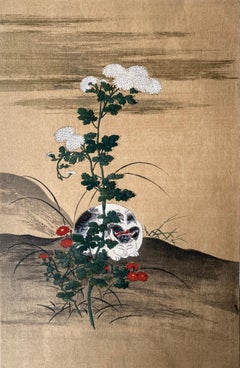
Authentique estampe japonaise sur bois - Chat blanc-Hanabusa Itchō-Edo-Réalisé dans les années 1920
Cette rare estampe originale des années 1920 est une gravure sur bois de la période Taisho publiée dans la série des chefs-d'œuvre du Nippon Mokuhan Gasui, au Japon, dans les années ...
Catégorie
années 1920, Edo, Peintures - Paysage
Matériaux
Encre, Papier fait main
364 € Prix de vente
24 % de remise
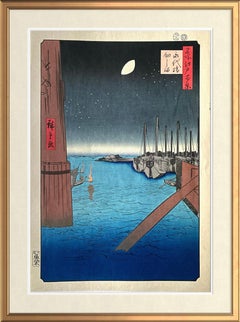
Authentique gravure sur bois japonaise - Vue de l
île de Tsukuda depuis le pont d
Eitai
Par Utagawa Hiroshige
Il s'agit d'une authentique gravure sur bois japonaise de Utagawa Hiroshige, "Vue de l'île de Tsukuda depuis le pont Eitai" (Eitaibashi Tsukudajima). Il s'agit de l'estampe n° 4 de s...
Catégorie
années 1990, Edo, Peintures - Paysage
Matériaux
Encre, Papier washi
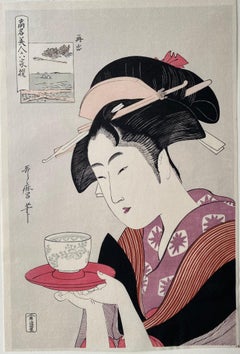
歌麿筆Utamaro Hitsu comme scellé - de six maisons de Yoshiwara - éditeur Omiya Gonkuro
-Compte tenu des nouveaux tarifs douaniers, nous avons appliqué une réduction de 20 % sur le prix de marché de cette pièce pour aider nos collectionneurs à faire face à d'éventuels c...
Catégorie
années 1990, Edo, Plus d Estampes
Matériaux
Encre, Papier washi, Gravure sur bois
388 € Prix de vente
40 % de remise
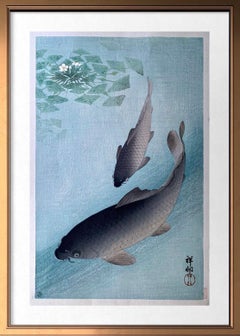
Gravure sur bois authentique - Deux carpes ou Carpe et châtaigne d
eau - Édition limitée dans le temps
Par Ohara Koson
Il s'agit d'une authentique gravure sur bois japonaise de Ohara Koson (Shoson), intitulée Deux carpes ou Carpe et châtaigne d'eau. Créée au début du XXe siècle, elle représente deux ...
Catégorie
années 1940, Edo, Estampes - Paysage
Matériaux
Encre, Papier washi, Gravure sur bois
1 204 € Prix de vente
20 % de remise
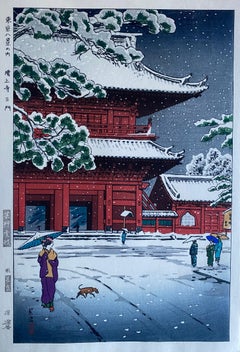
Authentique porte principale du temple Zojoji-Shiro Kasamatsu 笠松紫浪 en 1953 Gravure sur bois
Par Shiro Kasamatsu
Il s'agit d'une authentique gravure sur bois de Shiro Kasamatsu 笠松紫浪 in 1953. Elle fait partie de sa série "Eight Views of Tokyo "東京八景の内.
L'estampe, de style shin-hanga (New JP Pri...
Catégorie
années 1980, Edo, Estampes - Paysage
Matériaux
Encre, Papier fait main
Suggestions
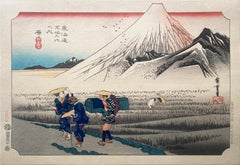
« Vue de Hara » D
après Utagawa Hiroshige 歌川廣重, Ukiyo-e Woodblock, Tokaido
Par Utagawa Hiroshige (Ando Hiroshige)
Un paysage à l'encre sur papier, gravure sur bois Nishiki-e et Yoko-e, montrant une vue du Mont Fuji chaudement illuminé par le ciel du matin. Signée en kanji au centre droit, "Hiros...
Catégorie
Milieu du XXe siècle, Estampes - Paysage
Matériaux
Encre sumi, Papier washi
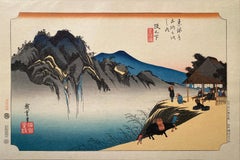
Montagne Fudesute", d
après Utagawa Hiroshige 歌川廣重, Ukiyo-e Woodblock, Tokaido
Par Utagawa Hiroshige (Ando Hiroshige)
Encre sur papier, paysage sur bois Nishiki-e et Yoko-e montrant une vue de voyageurs admirant le mont Fudesute à Sakanoshita. Signée en kanji en bas à gauche, "Hiroshige Ga" pour Uta...
Catégorie
Milieu du XXe siècle, Estampes - Paysage
Matériaux
Encre sumi, Papier washi
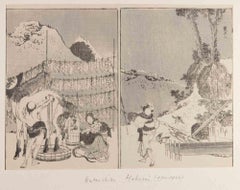
Paysage de Fugaku Hyakkei - Impression sur bois de Katsushika Hokusai-1878
Par Katsushika Hokusai
Paysage de "Fugaku Hyakkei" est une œuvre d'art moderne originale réalisée par Katsushika Hokusai (31 octobre 1760 - 10 mai 1849).
Gravure sur bois originale de la série "Fugaku hya...
Catégorie
XIXe siècle, Moderne, Estampes - Figuratif
Matériaux
Gravure sur bois
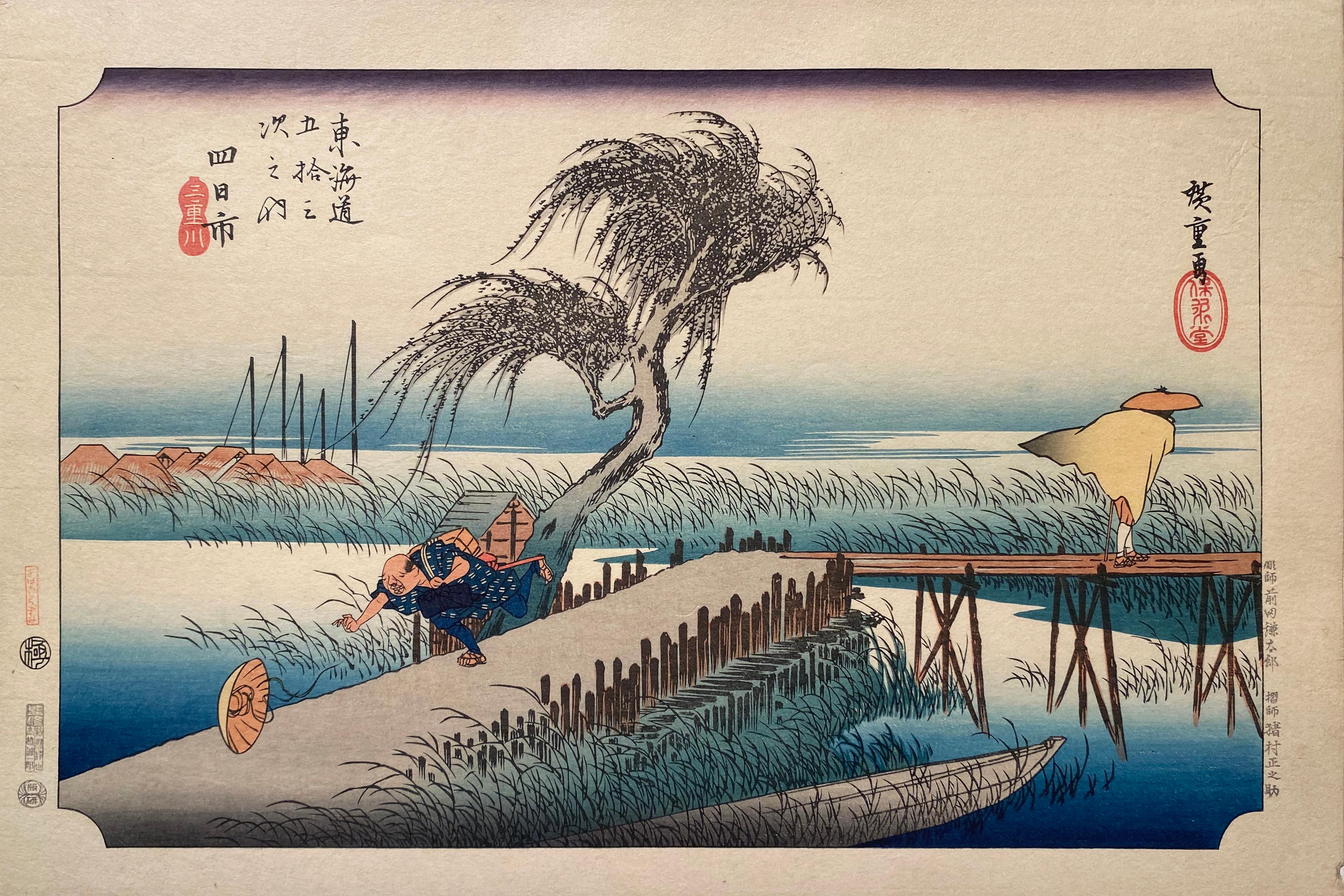
Vents à Yokkaichi", d
après Utagawa Hiroshige 歌川廣重, Ukiyo-e Woodblock, Tokaido
Par Utagawa Hiroshige (Ando Hiroshige)
Paysage à l'encre sur papier, gravure sur bois Nishiki-e et Yoko-e, représentant une vue de deux personnages luttant contre des rafales de vent le long de la rivière Mei. Signée en k...
Catégorie
Milieu du XXe siècle, Estampes - Paysage
Matériaux
Encre sumi, Papier washi
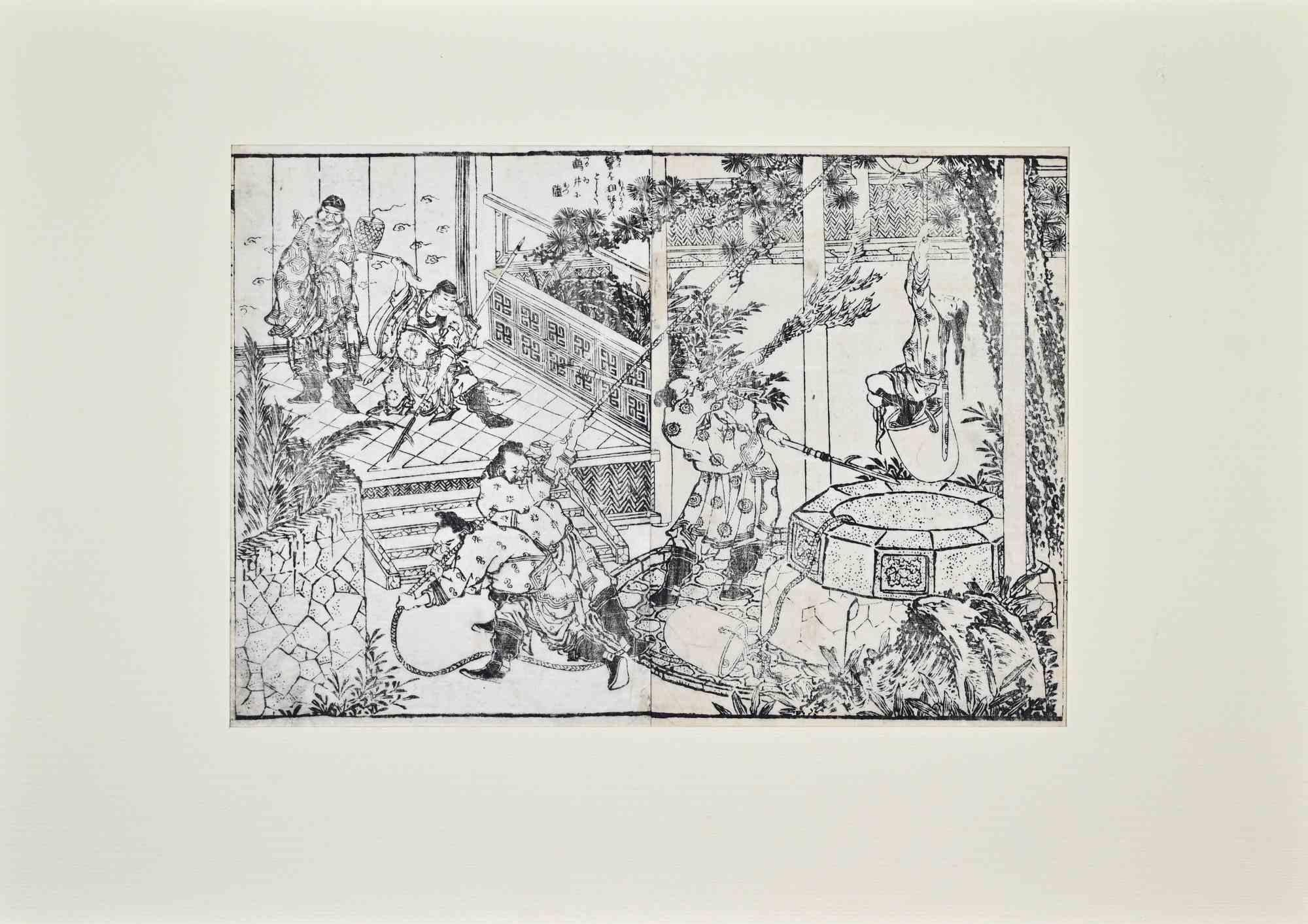
Chinsetsu Yumiharizuki (Histoires étranges de l
arc de lune) par Katsushika Hokusai-1807
Par Katsushika Hokusai
Gravure sur bois en noir (sumizuri-e) réalisée par Hokusai entre 1807 et 1811. Plaque de la série "Chinsetsu Yumiharizuki" (Histoires étranges de l'arc-en-ciel).
Une impression à vi...
Catégorie
Début des années 1800, Moderne, Estampes - Figuratif
Matériaux
Gravure sur bois
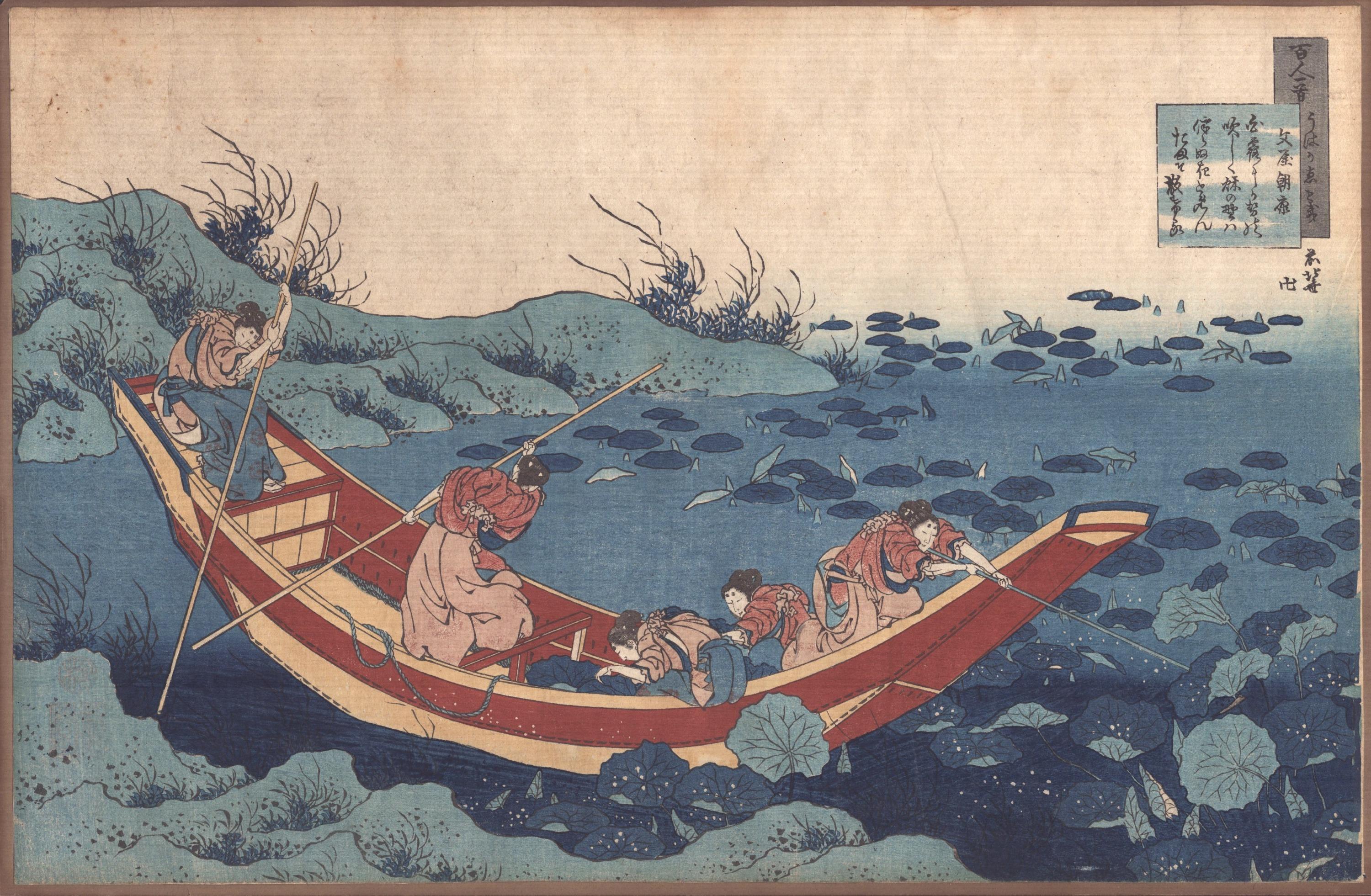
Katsushika Hokusai -- POÈME DE BUNYA NO ASAYASU (FUMIYA NO ASAYASU) 百人一首
Par Katsushika Hokusai
Katsushika Hokusai (Japanese, 1760–1849)
Poem by Bunya no Asayasu (Fumiya no Asayasu), from the series One Hundred Poems Explained by the Nurse (Hyakunin isshu uba ga etoki)
「百人一首うはか...
Catégorie
Années 1830, Estampes - Figuratif
Matériaux
Gravure sur bois