Articles similaires à American Vivid Abstract Expressionist Art Oil Painting Norman Carton, WPA Artist
Vous voulez plus d
images ou de vidéos ?
Demander au vendeur plus d
images ou de vidéos
1 sur 7
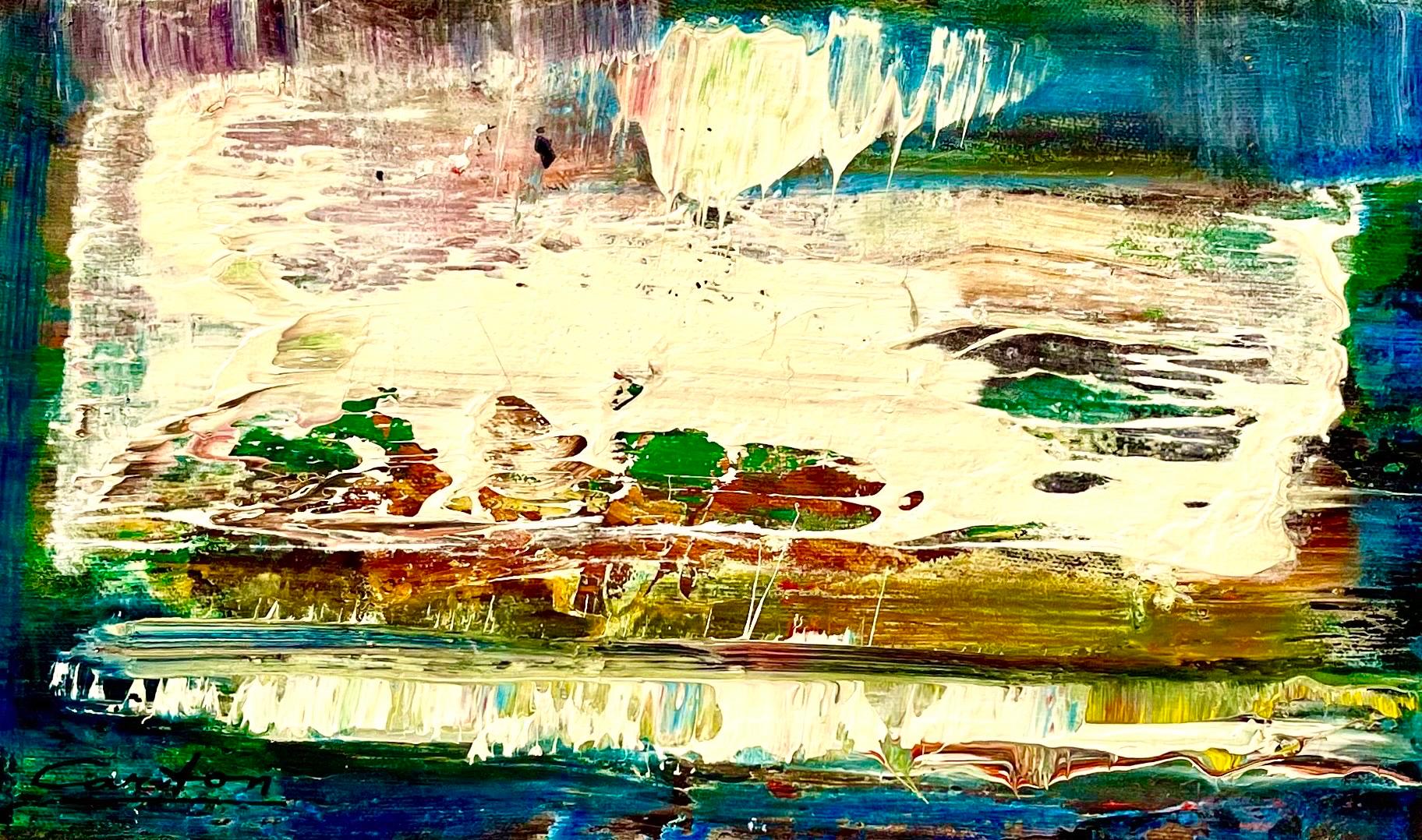
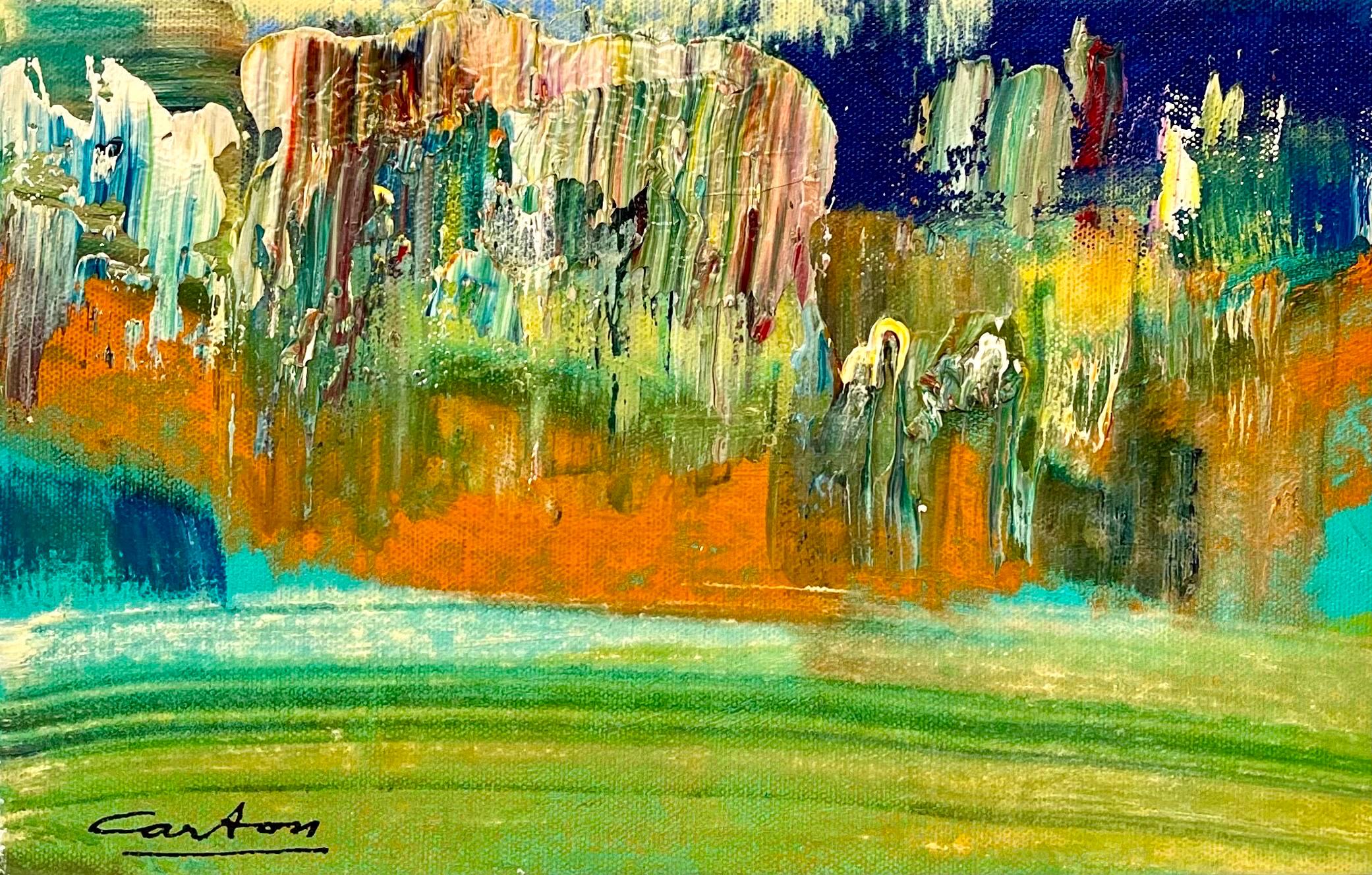
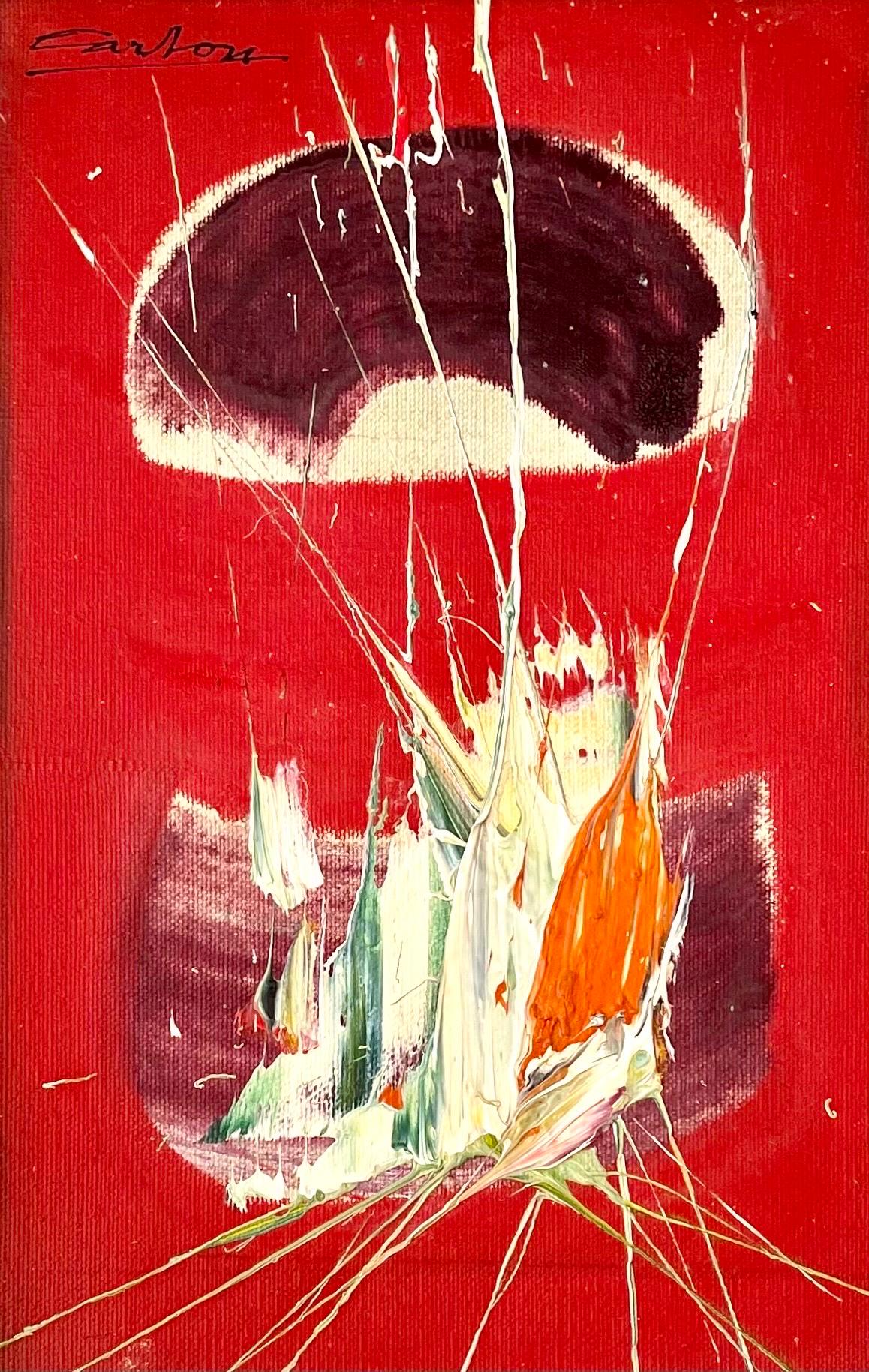
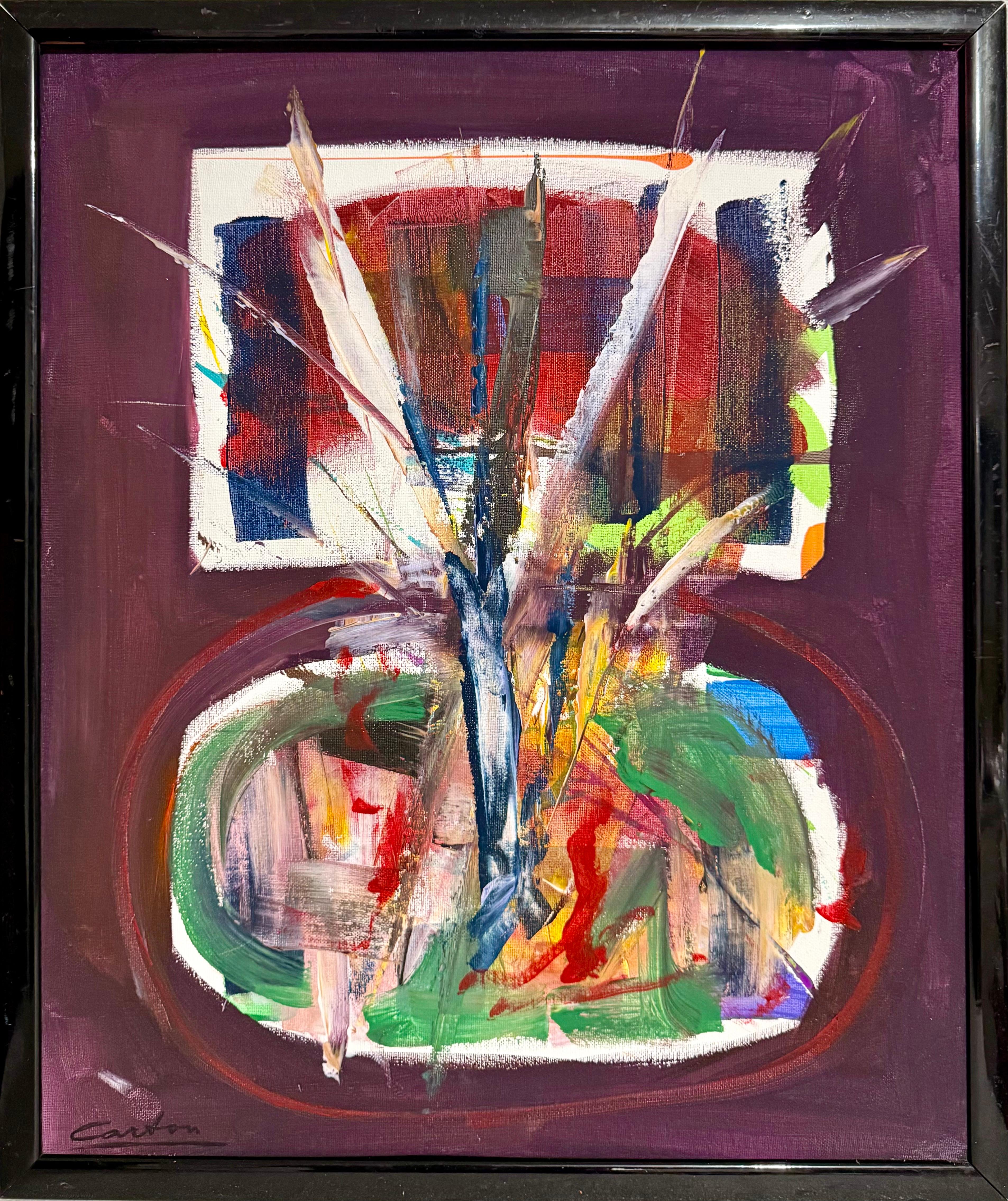
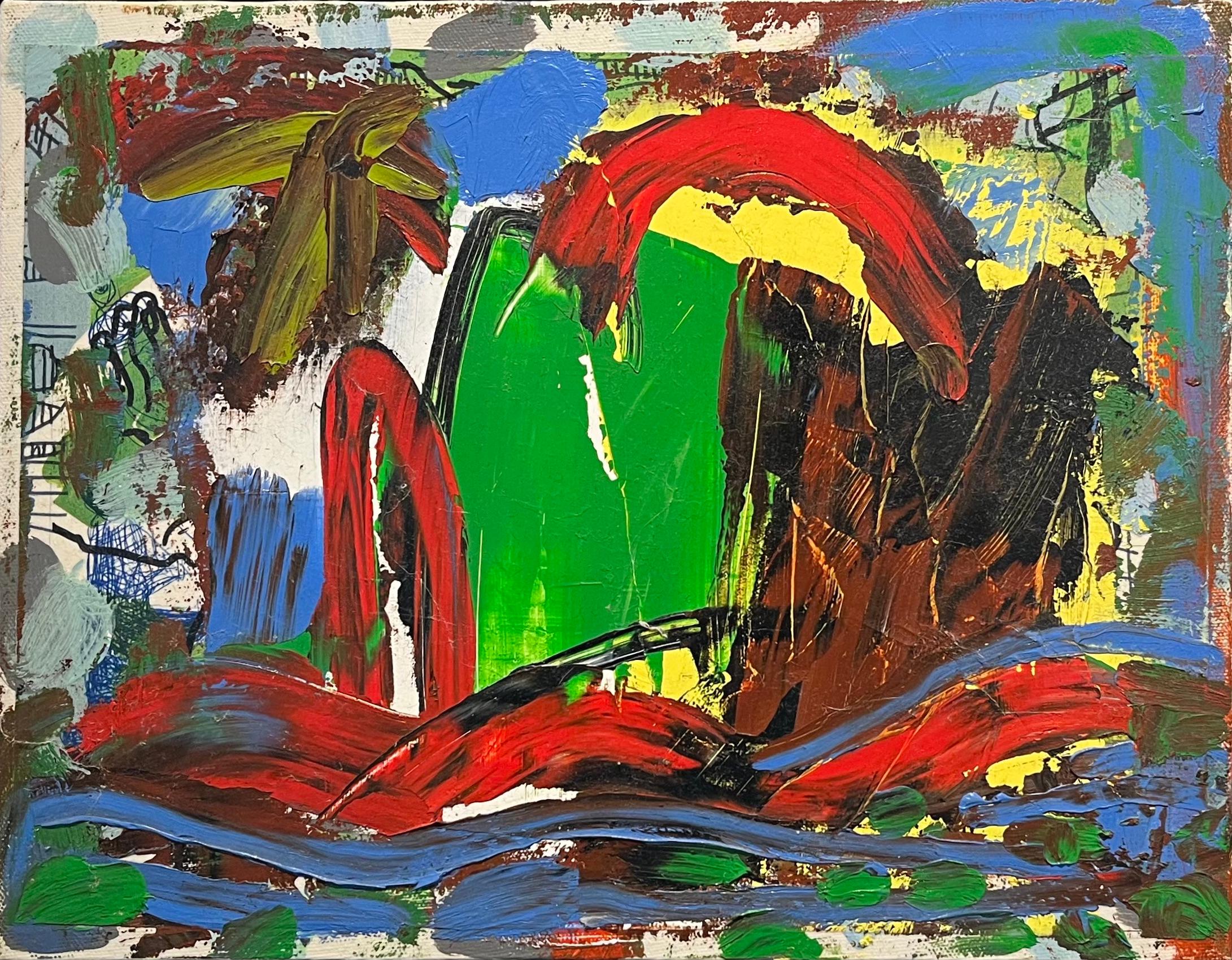
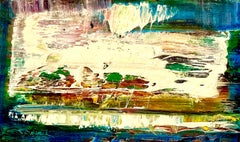
Norman CartonAmerican Vivid Abstract Expressionist Art Oil Painting Norman Carton, WPA Artist
2 414,93 €
À propos de cet article
Norman Carton (1908 – 1980) was an American artist and educator known for abstract expressionist art. He was born in the Ukraine region of Imperial Russia and moved to the United States in 1922 where he spent most of his adult life.
A classically trained portrait and landscape artist, Carton also worked as a drafter, newspaper illustrator, muralist, theater set designer, photographer, and fabric designer and spent most of his mature life as an art educator. Carton showed in and continues to be shown in many solo and group exhibitions. His work is included in numerous museums and private collections throughout the world.
Norman Carton was born in the Dnieper Ukraine territory of the Russian Empire in 1908. Escaping the turbulence of civil war massacres, he settled in Philadelphia in 1922 after years of constant flight. While attending the Pennsylvania Museum School of Industrial Art, Carton worked as a newspaper artist for the Philadelphia Record from 1928 to 1930 in the company of other illustrator/artists who had founded the Ashcan School, the beginnings of modern American art. From 1930 to 1935, he studied at the Pennsylvania Academy of Fine Arts under Henry McCarter, who was a pupil of Toulouse-Lautrec, Puvis de Chavanne, and Thomas Eakins. Arthur Carles, especially with his sense of color, and the architect John Harbison also provided tutelage and inspiration. Following his time at the Pennsylvania Academy of Fine Arts, Carton studied at the Barnes Foundation from 1935 to 1936 where he was influenced by an intellectual climate led by visiting lecturers John Dewey and Bertrand Russell as well as daily access to Albert C. Barnes and his art collection.
Carton was awarded the Cresson Traveling Scholarship in 1934 which allowed him to travel through Europe and study in Paris. There he expanded his artistic horizons with influences stemming from Henri Matisse, Pablo Picasso, Chaim Soutine, and Wassily Kandinsky. While at the Pennsylvania Academy of Fine Arts, Carton was also awarded the Toppan Prize for figure painting as well as the Thouron Composition Prize. He received numerous commissions as a portrait artist, social realist, sculptor, and theatrical stage designer as well as academic scholarships. During this time, Carton worked as a scenery designer at Sparks Scenic Studios, a drafter at the Philadelphia Enameling Works, and a fine art lithographer.
From 1939 to 1942, the Works Progress Administration (WPA) Federal Art Project employed Carton as a muralist and easel artist. He collaborated with architect George Howe. The WPA commissioned Carton to paint major murals at the Helen Fleischer Vocational School for Girls in Philadelphia, the Officers’ Club at Camp Meade Army Base in Maryland, and in the city of Hidalgo, Mexico. Throughout the 1940s, Carton exhibited and won prizes for his semi-abstract Expressionist and Surrealist paintings. He socialized with and was inspired by Émile Gauguin and Fernand Leger. During World War II, Carton was a naval structural designer and draftsman at the Cramps Shipbuilding Corporation in Camden, New Jersey. Here, he created non-objective sculpture with metal. After the war, Carton co-founded a fabric design plant in Philadelphia. He produced hand-printed fabrics for interiors and fashion that were featured in Harper’s Bazaar, Vogue and Women’s Wear Daily. Original fabric designs were commissioned by notable clients including Lord
Taylor, Gimbels, and Nina Ricci. Some of these designs are at the Metropolitan Museum of Art. Carton traded his partnership in the fabric design company in 1949 to focus full-time on painting. Carton had his first solo exhibition in 1949 at the Philadelphia Art Alliance. This show was followed closely by solo exhibitions at the Laurel Gallery (New York City) and Dubin Gallery (Philadelphia). At this time, his exhibited work was Abstract impressionism. In addition to painting, he taught classes at the Philadelphia Museum of Art and was the Founder and first President of the Philadelphia chapter of Artist’s Equity Association. The Philadelphia Museum of Art and the organization of the National Museums of France commissioned Carton to travel to Europe, mainly France, in 1950 for a color photography study of continental masterpieces. He was granted access to study the restoration of the Mona Lisa and was one of the very few to be given permission to remove the painting from its frame. During his three year stay in Paris, he had solo exhibits at La Sorbonne and Gallery Rene Breteau and was in 15 group shows in Paris salons including Les Sur Independants, Salon d’Automne, and Realities Nouvelles. He also exhibited at the Musee d’Art Juif where he won the Prix d’Art. The Cercle Paul Valery twice sponsored Carton to present lectures at the Sorbonne. He conducted seminars at the Louvre for the Cercle Esthetique Internationale and taught classes in and directed stage and costume design for the Theatre de Recherche at the Paris Opera. Among his Paris artist colleagues were Chana Orloff, Earl Kerkam, Sam Francis, Claire Falkenstein, Lawrence Calcagno, Norman Bluhm, and Al Held.
When Carton returned to the United States in 1953, he settled in New York City where he worked in the company of the leading artists of the day with whom he appeared in a number of group shows including the Whitney Museum of American Art's 1955-1956 “Exhibit of Contemporary American Painting.” This exhibition included such notable artists as Richard Diebenkorn, Joan Mitchell, James Brooks, Grace Hartigan, Franz Kline, Georgia O'Keeffe, Adolph Gottlieb, Robert De Niro Sr., and many others. The Whitney subsequently purchased a Carton.
The mid-1950s to the 1970s was a busy time for Carton during which he received a great deal of recognition. He had solo exhibitions one gallery after another: Martha Jackson, Staempfli, Granite and World House, New York City; Tirca Karlis, Provincetown; Gres, Washington D.C.; Dumbarton, Boston; and Joachim, Chicago.
Carton's large canvases traveled in major collections to such venues as the Smithsonian American Art Museum (was SNCFA) and the RISD Museum of Fine Arts with significant works of artists such as Jim Dine, Hans Hofmann, Robert Motherwell, Louise Nevelson, and Jackson Pollock. Other group exhibitions included Whitney, Corcoran, Phillips, Dallas, Dayton, Walker, and Chrysler Museums among others.
Among his NYC artist colleagues were also now Louise Nevelson and John Hultberg who he had helped welcome at the Martha Jackson Gallery. In 1962, with the aid of two other artists, he formed the Dewey Gallery, one of the first New York City galleries owned and operated by artists. He presented his work during the opening exhibition.
During his lifetime, Carton was in at least 150 group exhibits and more than 20 solo shows and continued to receive many PAFA fellowship awards. He was popularly and critically regarded as possessing a painterly style of superlative action and a unique knowledge as a colorist, Carton ground his own pigments and painted with a brilliant palette. More recently, he exhibited with Willem de Kooning and Mark Rothko among other greats of the Abstract Expressionism movement as well as Pablo Picasso and Henri Matisse.
Norman Carton was also an art educator throughout much of his life. Beginning in 1960, Carton worked on the art faculty at the New School where he would remain until his death. From 1948 to 1949, he taught painting and composition at the Philadelphia Museum of Art. From 1950 to 1953, he conducted seminars at the Louvre and the Sorbonne while living in Paris. Also while in Paris, Carton taught classes in and directed stage and costume design for the Theatre de Recherche at the Paris Opera. He also gave lectures at the Pratt Institute and the Chrysler Museum of Art as well as the Whitney Museum of American Art. Carton moderated panel discussions between prominent artists and educators and appeared in radio interviews. In 1960 and 1961, he painted at the MacDowell Colony in New Hampshire as a fellow. Carton also taught for a time at Long Island University.
Norman Carton has had more than 25 solo exhibitions and was part of over 175 group exhibitions. His work is currently in more than 20 museums and hundreds of private collections throughout the world.
Carton's works continue to be included in present day exhibitions including at Hollis Taggart Gallery entitled Wild and Brilliant: The Martha Jackson Gallery and Post-War Art, Quogue Gallery entitled 1950s and 1960s Works on Paper, the Nassau County Museum of Art entitled Blue in 2020 as well as Energy: The Power of Art in 2019 and at the Anita Shapolsky Gallery in 2019 entitled Inspiration
Exploration.
A representational portion of Carton's papers which include correspondence, writings, notes, exhibition catalogs and sketchbooks were donated to the Smithsonian Archives of American Art where they remain.
Selected museum collections
Albright–Knox Art Gallery, Buffalo, New York
Blanton Museum of Art, University of Texas at Austin
Chrysler Museum of Art, Norfolk VA
Fonds National d'Art Contemporain / Center National d'Arts Plastiques, Paris
Moscow Conservatory, Moscow, Russia
Musée d'art moderne (Saint-Étienne, France), 1954-1992
Musée d'Art et d'Histoire du Judaïsme, Paris, France
Museo Nacional de Bellas Artes de La Habana, Havana, Cuba
Museum of Fine Arts, Budapest, Hungary
National Gallery of Art, Washington, D.C.
Neuberger Museum of Art, Purchase, New York
Palmer Museum of Art, State College, Pennsylvania
Pennsylvania Academy of the Fine Arts, Philadelphia, Pennsylvania
Rhode Island School of Design Museum, Providence, Rhode Island
The New School Art Collection, New York, New York
Whitney Museum of American Art, New York, New York
Yale University Art Gallery, New Haven, Connecticut
- Créateur:Norman Carton (1908 - 1980, Américain)
- Dimensions:Hauteur : 20,32 cm (8 po)Largeur : 25,4 cm (10 po)
- Support:
- Mouvement et style:
- Période:
- État:
- Adresse de la galerie:Surfside, FL
- Numéro de référence:1stDibs : LU38217532502
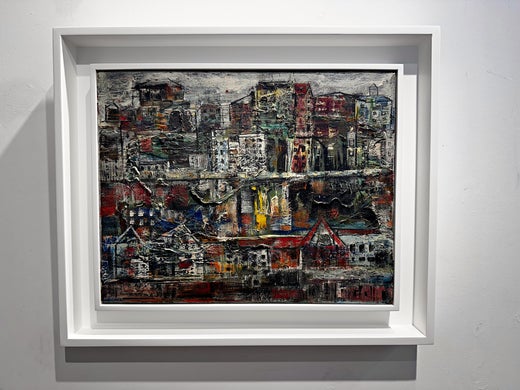
Norman Carton
Norman Carton était un artiste et éducateur américain connu pour ses œuvres expressionnistes abstraites à l'huile sur toile. Bien qu'il s'agisse de son style et de son médium les plus connus, Carton était avant tout un coloriste et a également travaillé comme muraliste, portraitiste et paysagiste de formation classique, sculpteur, concepteur de décors de théâtre et de tissus, et illustrateur, ainsi que dans une variété d'abstractions. Il possède une importante collection muséale et un passé commercial, ayant participé à plus de 20 expositions personnelles et 135 expositions collectives." Il a reçu de nombreux prix et bourses pour sa peinture. Dans les années 1930, il a participé à la réalisation de peintures murales dans le cadre du WPA. Dans les années 1940, il a fondé une entreprise de design et de production de tissus qui a été présentée dans le magazine Interiors, Vogue, Harper's Bazaar et Women's Wear Daily. Il s'agissait de tissus imprimés à la main et ses clients étaient Nina Ricci, Carnegie, Lord
Taylor, etc. En 1962, Norman Carton a ouvert sa propre Dewey Gallery à New York. Les œuvres de Carton continuent de figurer dans des expositions actuelles, notamment à la Quogue Gallery intitulée 1950s and 1960s Works on Paper,, au Nassau County Museum of Art intitulée Blue in 2020 ainsi que Energy : The Power of Art en 2019, et à la Anita Shapolsky Gallery en 2019 intitulée Inspiration
Exploration. L'exposition personnelle de Norman Carton en 2020 à la Quogue Gallery a été commentée par Charles A Riley. Une partie représentative des papiers de Carton, comprenant de la correspondance, des écrits, des notes, des catalogues d'exposition et des carnets de croquis, a été donnée aux Smithsonian Archives of American Art, où elle se trouve toujours.
À propos du vendeur
4,9
Vendeur Platine
Vendeurs premium dont la note est supérieure à 4,7 et le délai de réponse de 24 heures maximum
Établi en 1995
Vendeur 1stDibs depuis 2014
1 865 ventes sur 1stDibs
Temps de réponse habituel : <1 heure
- ExpéditionRecherche du devis...Expédition depuis : Surfside, FL
- Politique des retours
Certaines parties de cette page ont été traduites automatiquement. 1stDibs ne garantit pas l
exactitude des traductions. L
anglais est la langue par défaut de ce site web.
Plus d articles de ce vendeur
Tout afficherPeinture à l
huile d
expressionnisme abstrait américain Norman Carton, artiste du WPA
Par Norman Carton
Norman Carton (1908 - 1980) était un artiste et éducateur américain connu pour son art expressionniste abstrait. Il est né dans la région ukrainienne de la Russie impériale et s'est ...
Catégorie
Milieu du XXe siècle, Expressionnisme abstrait, Peintures - Paysage
Matériaux
Toile, Huile
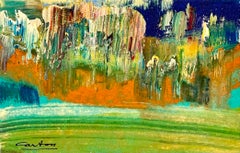
American Vivid Abstract Expressionist Art Oil Painting Norman Carton, WPA Artist
Par Norman Carton
Norman Carton (1908 – 1980) was an American artist and educator known for abstract expressionist art. He was born in the Ukraine region of Imperial Russia and moved to the United Sta...
Catégorie
Milieu du XXe siècle, Expressionnisme abstrait, Peintures - Paysage
Matériaux
Toile, Huile
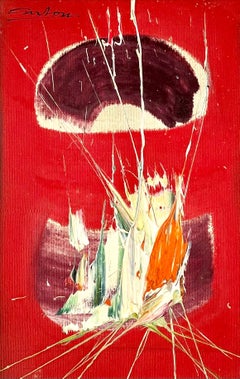
Peinture à l
huile d
expressionnisme abstrait américain Norman Carton, artiste du WPA
Par Norman Carton
Norman Carton (1908 - 1980) était un artiste et éducateur américain connu pour son art expressionniste abstrait. Il est né dans la région ukrainienne de la Russie impériale et s'est ...
Catégorie
Milieu du XXe siècle, Expressionnisme abstrait, Peintures - Paysage
Matériaux
Toile, Huile
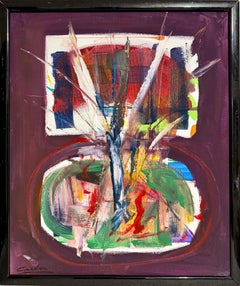
Peinture à l
huile d
expressionnisme abstrait américain Norman Carton, artiste du WPA
Par Norman Carton
Norman Carton (américain, 1908-1980),
Huile sur toile
Signé à la main en bas à gauche
Dimensions : 25,5 X 21,5 X 1,5 po : 25.5 X 21.5 X 1.5 in. Taille de l'œuvre : 24 x 20 in.
Pei...
Catégorie
Milieu du XXe siècle, Expressionnisme abstrait, Peintures - Paysage
Matériaux
Toile, Huile
Mod Abstract Expressionist Modernist Oil Painting Edward Avedisian Color Forms
Par Edward Avedisian
Edward Avedisian ( 1936-2007 )
17.5 X 8.75
Peinture à l'huile sur panneau de bois
Il n'est pas signé au recto. Il porte son nom au verso.
Provenance : Hudson, N.Y., succession du célèbre collectionneur d'art Albert Burnette Roberts (1932-2021).
Edward Avedisian (15 juin 1936, Lowell, Massachusetts - 17 août 2007, Philmont, New York) est un peintre abstrait américain qui s'est fait connaître dans les années 1960. Son travail a d'abord été associé à la peinture Color field et, à la fin des années 1960, à l'abstraction lyrique et à l'expressionnisme abstrait.
Il a étudié l'art à l'école du Musée des Beaux-Arts de Boston. À la fin des années 1950, il s'installe à New York. Entre 1958 et 1963, Avedisian a présenté six expositions personnelles à New York. En 1958, il expose d'abord à la Hansa Gallery, puis à trois reprises à la Tibor de Nagy Gallery et, en 1962 et 1963, à la Robert Elkon Gallery. Il a continué à exposer à la Robert Elkon Gallery presque chaque année jusqu'en 1975.
Au cours des années 1960, son travail a été largement visible dans le monde de l'art contemporain. Il rejoint la scène artistique dynamique de Greenwich Village, fréquente la Cedar Tavern sur la dixième rue, s'associe au critique Clement Greenberg et se joint à une nouvelle génération d'artistes abstraits, tels que Darby Bannard, Kenneth Noland, Jules Olitski et Larry Poons.
Avedisian fait partie des figures de proue qui ont émergé dans le monde de l'art new-yorkais au cours des années 1960. Cet artiste, qui a mélangé les couleurs chaudes du Pop Art avec les qualités froides et plus analytiques de la peinture Color Field, a joué un rôle déterminant dans l'exploration de nouvelles méthodes abstraites visant à examiner la primauté de l'expérience optique.
L'une de ses peintures a fait la couverture d'Artforum en 1969, ses œuvres ont été incluses dans l'exposition Op Art The Responsive Eye de 1965 au Musée d'art moderne et dans quatre expositions annuelles au Musée d'art américain Whitney. Ses peintures ont été largement recherchées par les collectionneurs et acquises par les principaux musées de New York et d'ailleurs. Il a été exposé dans des galeries de premier plan, telles que la Anita Shapolsky Gallery et la Berry Campbell Gallery à New York. Edward Avedisian était connu pour ses toiles aux couleurs vives et aux compositions audacieuses qui combinaient la rigueur du minimalisme, l'exubérance du pop art et les tons saturés de la peinture Color Field.
Roberta Smith du NYT écrit à propos d'Avedesian : "Edward Avedisian a contribué à établir la peinture abstraite aux couleurs vives, mais émotionnellement froide, qui a succédé à l'expressionnisme abstrait au début des années 1960. Cette jeune sommité a exploité des éléments du minimalisme, du pop et du color field painting pour créer des œuvres marquantes aux proportions épiques qui ont dynamisé la scène artistique new-yorkaise de l'époque." En 1996, Avedisian a exposé ses peintures des années 1960 à la Mitchell Algus Gallery, alors située à SoHO. Sa dernière exposition, dominée par des paysages récents, a eu lieu en 2003 à la galerie Algus, aujourd'hui à Chelsea.
Expositions sélectionnées :
Op Art : The Responsive Eye, au Musée d'art moderne,
Young America...
Catégorie
années 1960, Expressionnisme abstrait, Peintures - Paysage
Matériaux
Huile, Panneau en bois
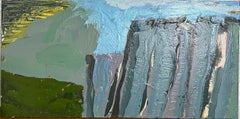
Peinture à l
huile expressionniste abstraite moderniste américaine de William Pellicone
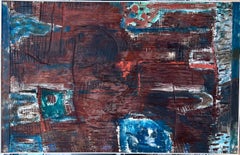
William Pellicone (américain 1915-2004)
Technique mixte, pyrographie, peinture à l'huile sur bois. Daté de 1958
Titre - Enthymème #14.
Peinture à l'huile sur panneau de bois sculp...
Catégorie
années 1950, Expressionnisme abstrait, Peintures - Abstrait
Matériaux
Bois, Huile
Suggestions
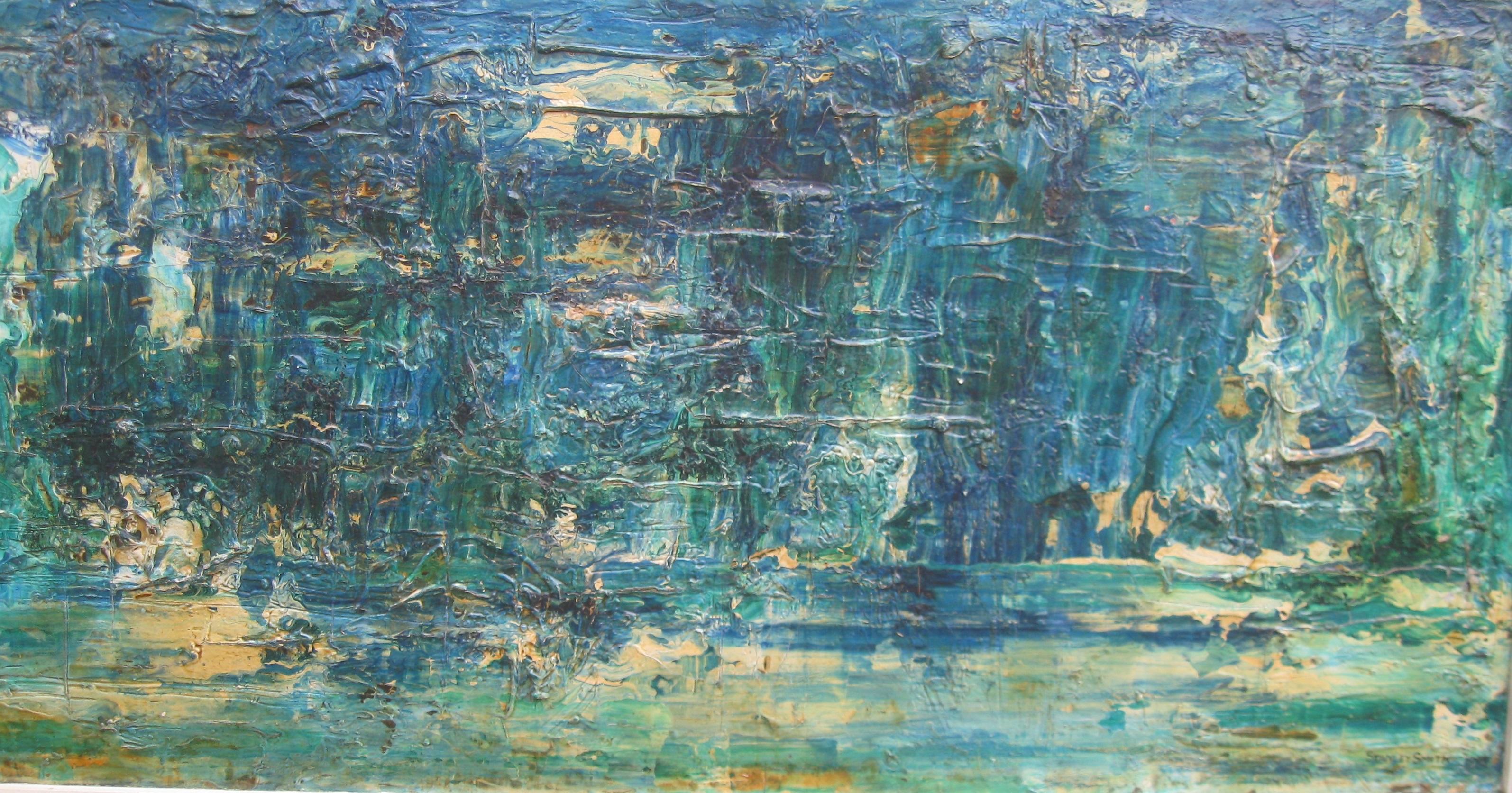
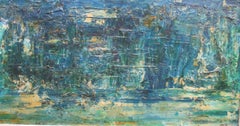
Grande huile expressionniste abstraite du XXe siècle, datant d
environ 1975
Une très bonne grande huile d'expressionniste abstrait du 20ème siècle vers 1975. Stanley Smith (né en 1923) britannique.
huile sur carton 61cmx 122cm.
Cadre de galerie 65cmx 126cm.
...
Catégorie
années 1970, Expressionnisme abstrait, Peintures - Abstrait
Matériaux
Huile
1 874 € Prix de vente
34 % de remise
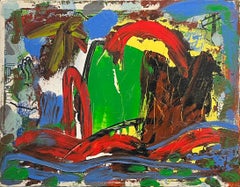
"Untitled" - FramedPeinture à l
huile abstraite, Abstraction gestuelle, Art contemporain
Par Dick Wray
Cette peinture à l'huile abstraite de Dick Wray, artiste de Houston aujourd'hui décédé, exprime une énergie cinétique saisissante. D'épaisses couches de peinture favorisent une tacti...
Catégorie
Début des années 2000, Expressionnisme abstrait, Peintures - Abstrait
Matériaux
Toile, Huile, Papier vergé
Grande peinture à l
huile d
origine de l
expressionniste français du 20ème siècle
Peinture à l'huile originale de P. Valetti (français, deuxième moitié du 20e siècle)
huile sur toile, non encadrée
taille : 19.75 x 28.75 pouces
état : très bon
provenance : de la su...
Catégorie
20ième siècle, Expressionnisme abstrait, Peintures - Abstrait
Matériaux
Toile, Huile
466 € Prix de vente
20 % de remise
« Sans titre », huile, technique mixte sur toile - peinture abstraite
Par Dick Wray
D'épaisses couches de peinture favorisent une onctuosité que l'on retrouve souvent dans l'œuvre de Dick Wray. Le traitement du support reflète une tendance à l'impulsion, à la fantai...
Catégorie
Début des années 2000, Expressionnisme abstrait, Peintures - Abstrait
Matériaux
Technique mixte, Huile, Toile
Peinture à l
huile expressionniste française originale du 20ème siècle - Peinture texturée wacky
Peinture à l'huile originale de P. Valetti (français, deuxième moitié du 20e siècle)
huile sur toile, non encadrée
taille : 18 x 25.5 pouces
état : très bon
provenance : de la succes...
Catégorie
20ième siècle, Expressionnisme abstrait, Peintures - Paysage
Matériaux
Toile, Huile
517 € Prix de vente
20 % de remise
« Sans titre », huile, technique mixte sur toile - peinture impressionniste abstraite
Par Dick Wray
Bien que cette œuvre s'éloigne de la gamme variée de couleurs et de textures qui domine habituellement les toiles de Wray, on peut voir comment le traitement rapide et émotif de la p...
Catégorie
Début des années 2000, Expressionnisme abstrait, Peintures - Abstrait
Matériaux
Technique mixte, Huile, Toile