Articles similaires à Portrait of Mary Hooper née Davie, Blue Dress, Seated in a Parkland, Provenance
Vous voulez plus d
images ou de vidéos ?
Demander au vendeur plus d
images ou de vidéos
1 sur 11
Jonathan Richardson the ElderPortrait of Mary Hooper née Davie, Blue Dress, Seated in a Parkland, Provenancecirca 1715–1725
circa 1715–1725
18 479,92 €
À propos de cet article
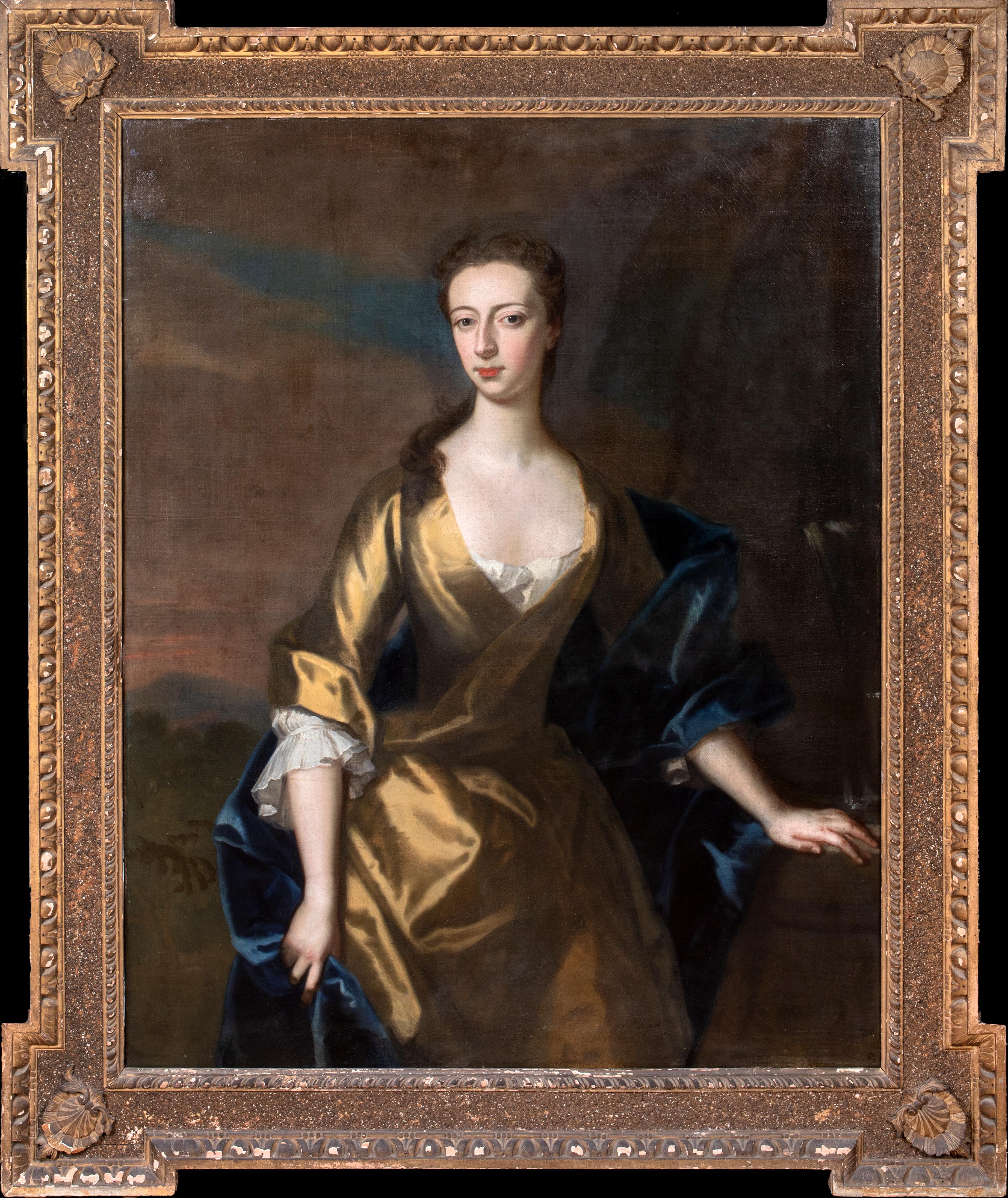
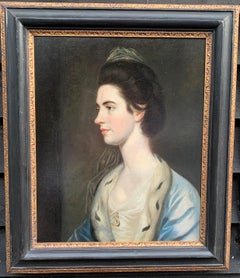
Portrait of Mary Hooper (née Davie) in a Blue Dress
Seated in a Parkland c. 1715–1725
Jonathan Richardson the Elder (1667–1745)
This portrait, presented by Titan Fine Art, is of particular historical interest as a large-scale female portrait by Jonathan Richardson the Elder with a securely identified sitter, from a known heiress family, painted by a major English intellectual artist, and an exceptionally coherent provenance with unbroken recognition of identity. It was part of a collection of family portraits and heirlooms and descended from the sitter within the family for nearly 300 years. That combination is rare. The portrait also illuminates the role of women as transmitters of property and social continuity and exemplifies the cultural values of the professional and landed elite in early eighteenth-century Britain. Its survival, condition, and documentation make it an unusually complete and compelling record of its time.
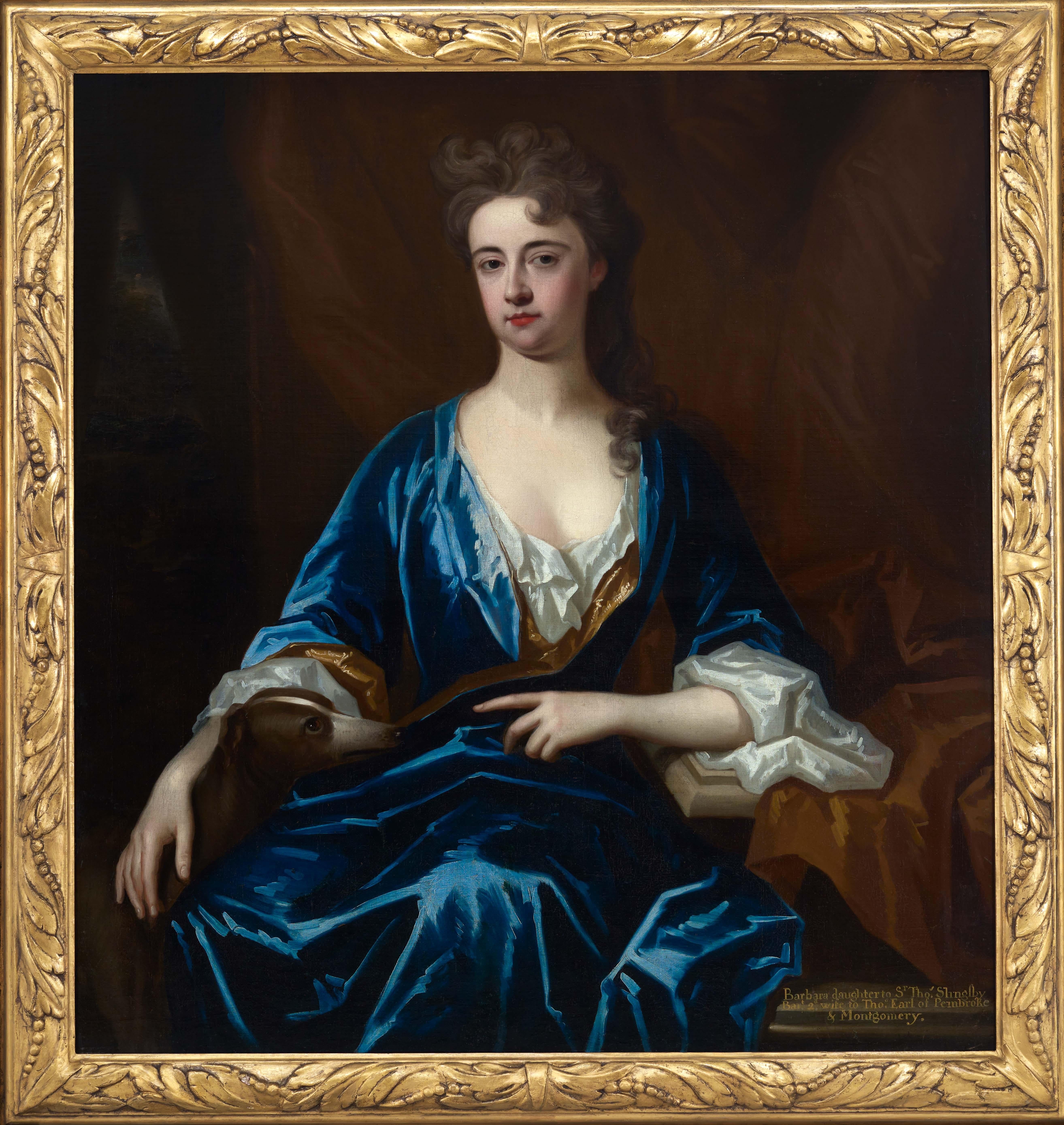
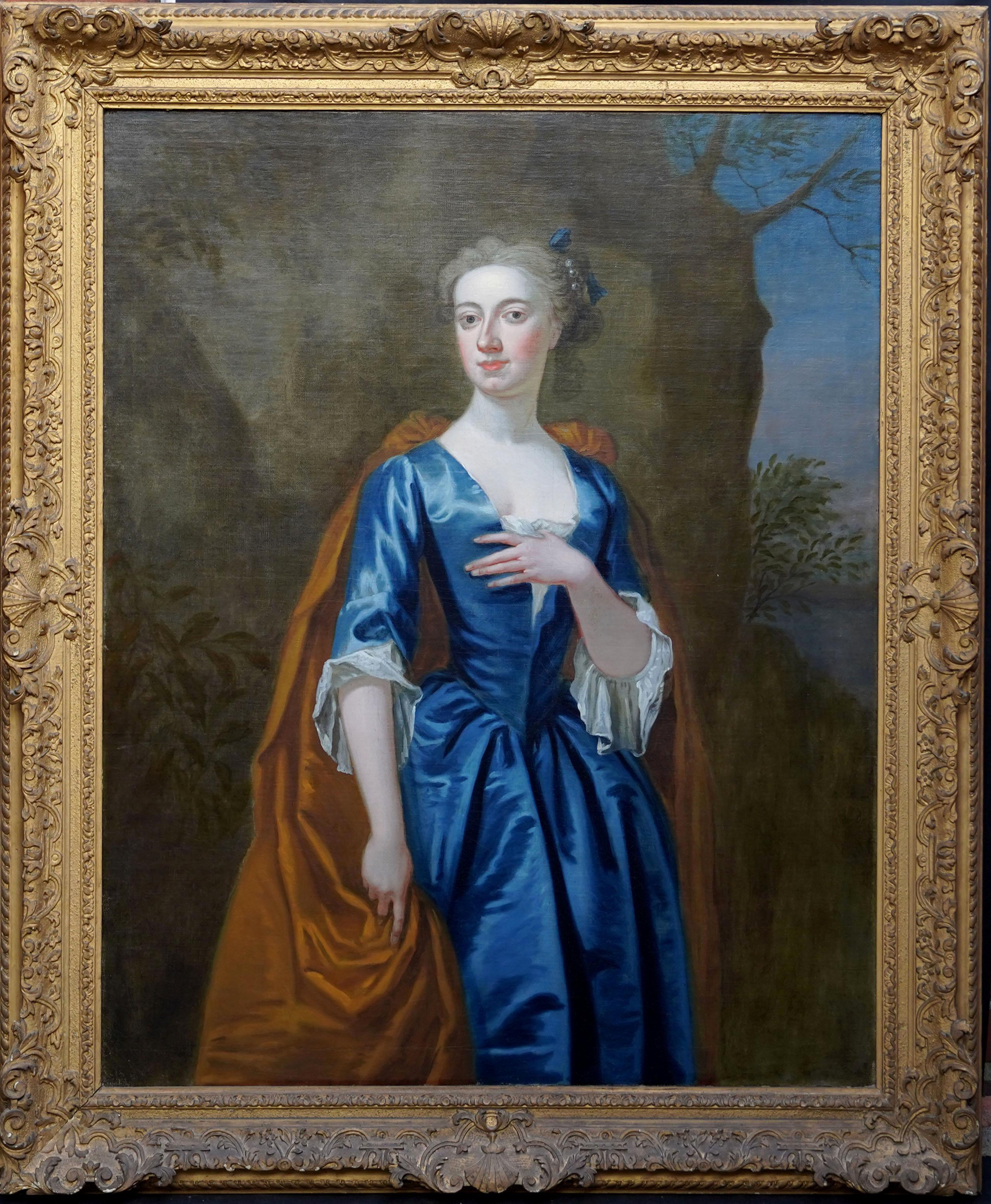
The sitter is shown seated in a three-quarter-length format, turned gently to her left and engaging the viewer with a calm, composed gaze. She wears a blue silk gown arranged in broad, fluid folds over a pale chemise, the neckline cut low across the shoulders in keeping with early Georgian fashion. The drapery is handled with confident breadth, its silvery-blue tonality offset against a warm-toned landscape background, suggesting an outdoor setting at dusk. Her hair is dressed close to the head, softly waved and drawn back without excessive ornament, reflecting contemporary taste for natural elegance over Restoration exuberance. Jewellery is notably restrained, underscoring dignity and status through composure rather than display. The costume, hairstyle, and painterly handling securely date the portrait to c. 1715–1725, a transitional period following the death of Queen Anne and the accession of the Hanoverian dynasty. The near life-size scale of the canvas signals a commission of considerable ambition and expense, intended for prominent display within a country house interior.
The painting bears an inscription identifying the sitter as Mrs Hooper and a signature reading Richardson pinx. From a technical and stylistic standpoint, the work aligns convincingly with the hand of Jonathan Richardson the Elder. The modelling of the face demonstrates Richardson’s characteristic method: thin, carefully layered paint produces a cool, luminous complexion, while the eyes are rendered with psychological attentiveness rather than theatrical brilliance. The mouth is delicately shaped, imparting a sense of restraint and inward reflection typical of Richardson’s most accomplished portraits. This sober psychological realism distinguishes his work from the more courtly idealisation favoured by Sir Godfrey Kneller and his studio. The handling of the drapery and background is broader and more fluent, suggesting possible studio participation—entirely consistent with Richardson’s documented practice on larger commissions—while the head and hands exhibit the degree of finish and sensitivity associated with his own hand. The discreet use of pinx (pinxit) accords with Richardson’s known signature conventions. Taken together, the inscription, scale, painterly technique, and intellectual gravity of the likeness support a confident attribution to Jonathan Richardson the Elder, possibly with studio assistance in subsidiary passages.
It is documented, in 1931, that the sitter is Mary Hooper, born Mary Davie (baptised on 22 April 1688). She was the eldest daughter and co-heiress of Sir William Davie, 4th Baronet of Creedy, Devon, and his first wife Mary Steadman, the sole heiress to the estate of Downside, in the parish of Midsomer Norton, Somerset.
Sir William Davie died without male issue, leaving his daughters as substantial heiresses and precipitating complex legal and estate arrangements typical of early eighteenth-century landed families. Mary’s inheritance, drawn from both paternal and maternal lines, made her a woman of considerable property and consequence.
She married Nicholas Hooper, Esq., of Raleigh, Devon, son of Sir Nicholas Hooper, a distinguished lawyer and Tory Member of Parliament for Barnstaple. The marriage united inherited land with legal and political influence, situating Mary at the intersection of wealth, law, and governance in the West Country.
This portrait was almost certainly commissioned shortly after Mary Davie’s marriage to Nicholas Hooper, or in close connection with the consolidation of her inheritance, and was most likely displayed in the Great Parlour (sometimes called the Great Room or Best Room) at Raleigh, Devon (the Hooper family seat) where portraits of mistresses of the house were commonly hung to visually reinforce who presided over the household, especially true for heiresses, whose identity carried legal and dynastic weight. Portraits of this scale functioned as visual affirmations of lineage, property, and social standing.
Mary’s life would have been centred on family estates in Devon and Somerset, with periods spent in London, where her husband’s legal and parliamentary connections were based. As a wealthy gentlewoman she likely: oversaw servants/tenants/household accounts, directed charitable giving in local parishes, managed food production, storage, and distribution, acted as informal mediator in tenant disputes, and maintained kinship networks across Devon, Somerset, and Kent. Women like Mary were often described as “retired” or “private,” yet they were the operational core of estate life. Her lifetime encompassed significant historical change, including the Union of England and Scotland (1707), the Hanoverian succession (1714), the Jacobite risings of 1715 and 1745, and Britain’s rise as a global commercial and imperial power. The portrait thus stands as a visual document of early Georgian identity at a moment when authority increasingly rested on property, law, and intellect. Mary died on 16 May 1762 at the age of seventy-four.
Mary Hooper’s life is a story of inheritance managed rather than squandered, of alliances carefully chosen, and of a woman whose identity was strong enough to endure in paint and memory for over three centuries. One of the most telling “anecdotes” is not an event, but a fact: her portrait was not discarded, overpainted, or anonymised. Instead, her name was preserved, her likeness passed through generations, her identity mattered enough to be recorded - this suggests that Mary Hooper was remembered as a founder figure within later family lines, a woman whose inheritance mattered, and someone seen as worthy of preservation, not replacement. In early modern family culture, that is no small distinction.
This portrait is an exceptional survival of early eighteenth-century English portraiture: a rare large-scale female work by Jonathan Richardson the Elder, preserving the sitter identification and an unusually complete, multi-generational provenance. Combining intellectual gravity with aristocratic scale, it captures a moment when inherited wealth, legal power, and cultural aspiration converged in the emerging Georgian elite. Few portraits of this period unite such artistic quality, historical specificity, and documentary depth.
Broome Park, Barham (Kent)—the long-time seat associated with the Oxenden family line—was notable not only for its 1630s house and historic parkland, but also for an extensive display of ancestral portraits.
Jonathan Richardson the Elder was among the most influential English portrait painters of the early eighteenth century and a central figure in London’s artistic and intellectual life. Trained under John Riley, he established a successful practice catering primarily to the professional and landed elite—lawyers, physicians, scholars, clergy, and politically engaged gentry. Beyond his work as a painter, Richardson was a theorist, writer, and collector. His Essay on the Theory of Painting (1715) was one of the earliest and most influential works of English art criticism, shaping taste and discourse for a generation. Richardson moved in literary and philosophical circles and exerted lasting influence through his teaching, notably as the father and mentor of Jonathan Richardson the Younger. His portraits are celebrated for their psychological depth, sobriety, and moral seriousness, favouring intellectual presence over courtly display. These qualities are fully realised in the present work.
Provenance:
- Probably commissioned by and originally in the possession of the sitter, Mary Hooper (née Davie) (1688–1762);
- Thence by descent to her half-sister, Frances Davie (1697–1748), who married Sir George Chudleigh, 4th Baronet;
- Thence to their daughter, Margaret Chudleigh (the sitter’s niece), who married Sir Henry Oxenden, 6th Baronet (1721–1803), of Deane Park, Wingham, Kent;
- Thence by descent to their son, Sir Henry Oxenden, 7th Baronet (1756–1838), at Deane Park and Broome Park, Kent;
- Thence by descent in the Oxenden family, Deane Park and Broome Park, Kent;
- Muriel Dixwell-Oxenden, Lady Capel Cure (1869–1968), Broome Park, Kent;
- Her sale, London, Christie’s, 20 November 1931, lot 82, bought by Mitchell (probably the London dealer John Mitchell, founder of John Mitchell Fine Paintings);
- Reputedly Isabella Robertson Christie (1861–1949), Cowden Castle, Scotland;
- Allegedly sold in her sale, Cowden Castle, Dowell’s Ltd., Edinburgh, May 1950;
- Achille Gallo (1895–1962), New Orleans, Louisiana;
- By descent through the Estate of William and Beverly (Gallo) Caulffield, New Orleans, Louisiana
Measurements:
Height 153cm, Width 126cm, Depth 10cm framed (Height 60.25”, Width 49.5”, Depth 4” framed)
- Créateur:Jonathan Richardson the Elder (1667 - 1745, Anglais)
- Année de création:circa 1715–1725
- Dimensions:Hauteur : 153 cm (60,24 po)Largeur : 126 cm (49,61 po)Profondeur : 10 cm (3,94 po)
- Support:
- Mouvement et style:
- Période:
- État:The condition is very good and can be hung and enjoyed immediately. The painting has passed a strict condition assessment by a professional conservator prior to going on sale.
- Adresse de la galerie:London, GB
- Numéro de référence:1stDibs : LU1199117387742
À propos du vendeur
5,0
Vendeur professionnel agréé
Chaque vendeur répond à des normes strictes en matière d
authenticité et de fiabilité
Établi en 1998
Vendeur 1stDibs depuis 2019
45 ventes sur 1stDibs
- ExpéditionRecherche du devis...Expédition depuis : London, Royaume-Uni
- Politique des retours
Certaines parties de cette page ont été traduites automatiquement. 1stDibs ne garantit pas l
exactitude des traductions. L
anglais est la langue par défaut de ce site web.
Plus d articles de ce vendeur
Tout afficherPortrait de Lady, Barbara Herbert, comtesse de Pembroke c.1708, grande peinture
Portrait de Barbara Herbert, comtesse de Pembroke c.1708
Charles d'Agar (1669-1723)
Ce magnifique portrait à grande échelle, présenté par Titan Fine Art, représente la noble et fon...
Catégorie
17ème siècle, Maîtres anciens, Peintures - Portrait
Matériaux
Toile de coton, Huile
Portrait d
une Lady, Mrs Wray en robe de soie et écharpe rose c.1698, Huile sur toile
Par Michael Dahl
Portrait d'une dame, Mrs Wray en robe de soie et écharpe rose c.1698
Cercle de Michael Dahl (1659-1743)
Cette œuvre délicieuse, présentée par Diptych Fine Arts, est un bel exemple d...
Catégorie
17ème siècle, Maîtres anciens, Peintures - Portrait
Matériaux
Toile de coton, Huile
c.1700 Gentleman Portrait with Wig and Blue Cloak, Thomas Murray Oil Painting
Portrait of a Gentleman with Periwig and Blue Cloak c.1695-1710
Attributed to Thomas Murray (1663–1734)
This accomplished oil-on-canvas portrait, presented by Titan Fine Art, was al...
Catégorie
17ème siècle, Maîtres anciens, Peintures - Portrait
Matériaux
Toile, Huile
Portrait de Gentleman Blue
Cloak, Portrait of Lady, cadres sculptés et dorés
Portrait d'un gentilhomme au manteau bleu et portrait d'une dame en robe rousse c.I.C.
Thomas Murray (1663-1735)
Ces portraits fascinants sont des exemples exquis de l'art du portra...
Catégorie
17ème siècle, Maîtres anciens, Peintures - Portrait
Matériaux
Huile, Toile

Portrait d
une dame, Mary Hammond, en tenue riche, bijoux et dentelle, c.1618-22 Historique
Par Cornelius Johnson
Portrait de Mary Hammond en tenue somptueuse, bijoux et dentelle c.1618-22
Cercle de Cornelius Johnson (1593-1661)
Ce portrait d'une dame, présenté par Diptych Fine Arts, est un exe...
Catégorie
17ème siècle, Maîtres anciens, Peintures - Portrait
Matériaux
Huile, Panneau
Portrait d
un gentleman, Sir Henry Hobart, cape et cravate bleues, toile à l
huile de Wissing
Par Willem Wissing
Portrait d'un gentleman, Sir Henry Hobart Manteau et cravate bleus C.1683-1684
Attribué à Willem Wissing (1656-1687)
Cet impressionnant portrait, présenté par Titan Fine Art, représ...
Catégorie
17ème siècle, Maîtres anciens, Peintures - Portrait
Matériaux
Toile de coton, Huile
Suggestions
Portrait d
une comtesse de Peterborough en robe bleue
Ce portrait exquis, nouvellement attribué à Theodore Russel, représenterait Lady Penelope O'Brien, fille de Barnabas O'Brien, sixième comte de Thomond, et épouse du comte de Peterbor...
Catégorie
17ème siècle, Maîtres anciens, Peintures - Portrait
Matériaux
Huile, Panneau en bois
Portrait de Mme James Hoste - Art britannique du 18e siècle portrait peinture à l
huile
Par John Vanderbank
Cette superbe peinture à l'huile de trois quarts de long est attribuée au cercle de John Vanderbank le Jeune. Peint vers 1738, il représente Mme James Hoste de South Wootton et Sandr...
Catégorie
XVIIIe siècle, Maîtres anciens, Peintures - Portrait
Matériaux
Huile
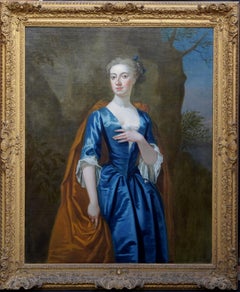
11 192 € Prix de vente
20 % de remise
Grande peinture à l
huile anglaise du 18ème siècle représentant une femme aristocrate en bleu
Portrait d'une noble dame
Artistics anglais, milieu du 18e siècle
cercle de Thomas Gainsborough (anglais 1727-1788)
huile sur toile, non encadrée
toile : 30 x 25 pouces
provenance : ...
Catégorie
Milieu du XVIIIe siècle, Maîtres anciens, Peintures - Portrait
Matériaux
Huile, Toile
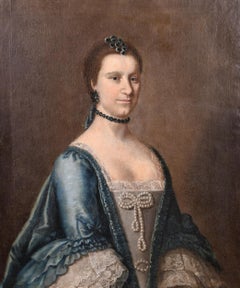
Portrait de Mlle Jones du château de Wales and Wales, vers 1730 par Enoch Seeman
Par Enoch Seeman
Portrait de Mlle Jones du château de Wales and Wales, vers 1730
par ENOCH SEEMAN (1689-1744)
Grand portrait de trois quarts de la longueur de Jones de Fonmon Castle, Pays de Galles...
Catégorie
XVIIIe siècle, Peintures - Portrait
Matériaux
Toile, Huile
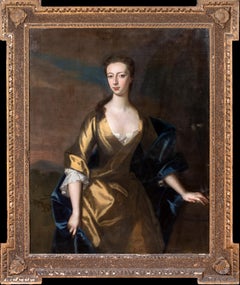
Portrait d
une jeune fille, peut-être Dorothy Bigg (née Wither) (1661-1717), c. 1674
Par Gerard Soest
Gerard I.C. (c. 1600-1681)
Portrait d'une jeune fille, peut-être Dorothy Bigg (née Wither) (1661-1717), c. 1674
Demi-longueur, portant des bijoux en perles naturelles et pierres préc...
Catégorie
1670, Maîtres anciens, Peintures - Portrait
Matériaux
Huile
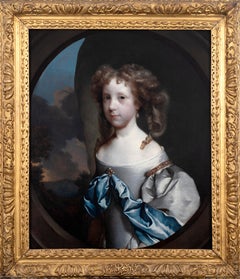
Portrait irlandais ou anglais du 8e siècle d
une femme avec une fourrure d
hermin bleue en dentelle
Merveilleux portrait irlandais ou anglais du XVIIIe siècle, attribué au peintre irlandais Nathaniel Hone.
Nathaniel Hone est né à Dublin mais s'est installé à Londres en 1748. Membr...
Catégorie
années 1780, Maîtres anciens, Peintures - Portrait
Matériaux
Huile
7 013 € Prix de vente
30 % de remise
Livraison gratuite