Articles similaires à The Clown Surrealist Oil Painting Maurice Kish WPA Artist American Modernist
Vous voulez plus d
images ou de vidéos ?
Demander au vendeur plus d
images ou de vidéos
1 sur 8
Maurice KishThe Clown Surrealist Oil Painting Maurice Kish WPA Artist American Modernistc.1940
c.1940
1 738,87 €
À propos de cet article
The imagery of Maurice Kish (1895-1987), whether factories or carousels, reliably subverts expectations. His vision hovers just around the unraveling edge of things, where what is solid and clear becomes ambiguous. He is fascinated, often delighted, by the falling apart. This unexpected, fresh perspective results in oddly affecting pictures of a now long-gone New York.
Born Moishe in a town called Dvinsk, Russia (what is now Daugavpils, Latvia), Kish came with his family to New York when he was in his teens. The family settled in Brownsville, and for the rest of Kish’s life Brooklyn remained his home, though he moved from one neighborhood to another. He was close to his parents, who recognized his talent and supported his desire to become an artist.
Kish attended the National Academy of Design as well as Cooper Union. His fellow students included many other immigrants and children of immigrants who were particularly receptive to the Modernism coming from Europe. As his career progressed, Kish himself applied different strains of Modernism to different purposes. For him, the story was held above all else.
For years, Kish used the skills he acquired in art school to earn his living at a Manhattan glass factory where he painted floral designs on vases. During the Depression, Kish became a WPA painter in the Federal Art Project (FAP). FAP artists were given a mandate to create works that celebrated labor. The artists tended to be socially progressive, as Kish certainly was. Kish's work from this period, with its dark colors and rolling clouds, reveals the influence of Social Realists like Thomas Hart Benton. Apparent, too, is Kish's interest in the urban monumentality of Charles Sheeler. Kish's structures, however, lack Sheeler's almost dehumanized precision. Rather than the soulless, sleek machines of a typical modern urban dystopia, Kish's factories are shaggy old beasts as worn out as the laborers who troop through their doors. In End of Day's Toil, now at the Smithsonian, the viewer feels some affection for that rambly grandfather of a building all the tired small workers are leaving behind.
Much of Kish's work, for the FAP and elsewhere, undermines received truths in a similar way. Some early works with themes from Yiddish culture are overtly humorous: a painting of a big jolly wedding guest, looking invitingly over her shoulder; a big fiddler on a small roof. Later, the humor becomes more ironic and reflective. In another work, the rather imposing organ grinder of the late 1930s looms above a child, yet his intermediary the cockatoo is bright and appealing, and offers the girl a fortune with his beak. This could read as an allegory for capitalism as easily as a straightforward colorful street scene. A small painting of a snowy day in Washington Square gives a bird's eye view of people bent against the wind walking alone or in pairs. The huge triumphal arch at the middle of it has no connection to their movements or their lives. Kish makes its size and centrality a quiet joke about the futility of grandiose gestures. Like the buildings in his FAP works, the arch has a personality. It is a landmark that looks a bit lost.
A favorite location for Kish was Coney Island. For the laborers of the city, this was a place of great freedom and possibility. There were no bosses! Anyone could go to ride the rides and swim in the sea. For Kish, Coney Island, and especially Luna Park, became a place richly symbolic of workers’ rights. For the dreamlike paintings he set there, Kish looked past the Social Realists to the Expressionists. His colors are brilliant and his lines are wild. These images, joyfully unrestrained, give full voice to an anarchic vision merely hinted at in other works. If the structures of the earlier pictures came further out of the background than expected, these Coney Island structures completely take over the scene.
Kish made several variations on the theme of the carousel as a site of revolution. In the moonlight, the horses have broken from their poles and spin away from the calm center. The workers have come to manic life, have released themselves from the yoke of labor and have abandoned their master, the merry-go-round. They escape to different corners of the pleasure park, dance together and ride the ferris wheel. One horse pretends to be a ticket seller. It is another allegory, one that depicts a worker's holiday paradise in carnival fashion.
A painter who embraced ambiguity, Kish was himself a man who occupied many worlds simultaneously. Even during the period when he had shows at prestigious galleries and belonged to several artists' groups, he identified most strongly as an outsider, a Yiddischer. He wrote poetry in Yiddish throughout his life. In 1968, he published a volume of fifty years of these poems, Di Velt ist Mayn Lid (The World is My Song) in Yiddish, with no English translation, for his peers. Kish also translated English-language poetry into Yiddish and acted as a guide to help other Yiddish writers. Long after the art organizations ceased to provide meaning and fulfillment, Kish was a devoted member of the Yiddish Culture Association.
In addition to painting and poetry, Kish was a dancer who taught during the summers at various Jewish resorts in the Catskills. Small but lithe, he also spent some years as an amateur boxer. Well into his eighties, Kish was proud of the quality of his handball game.
By the 1940s, Kish’s career was going well, but his descriptive style of working began to fall out of fashion, supplanted by a more formal Abstraction. Kish was never able to support himself solely through his art, yet in the midst of all of his other activities, Kish continued to create his distinctive images of an immigrant's New York. He departed far from the mainstream, and in later years, seldom showed his work, preferring to keep it for himself (although he sometimes traded paintings for rent).
Of making art, Kish said, "It is a sacred mission to enrich, to elevate and to make our lives more complete." His works, though frequently playful, encourage a second look at ordinary things. His irreverence elevates by revealing flaws where his audience, all workers and outsiders of a kind, can get a purchase. Kish's art fondly celebrates the beauty of the irregular.
- Créateur:Maurice Kish (1895-1987, Américain)
- Année de création:c.1940
- Dimensions:Hauteur : 33,66 cm (13,25 po)Largeur : 28,58 cm (11,25 po)
- Support:
- Mouvement et style:
- Période:
- État:Measurements include frame.
- Adresse de la galerie:Surfside, FL
- Numéro de référence:1stDibs : LU38217346702
À propos du vendeur
4,9
Vendeur Platine
Vendeurs premium dont la note est supérieure à 4,7 et le délai de réponse de 24 heures maximum
Établi en 1995
Vendeur 1stDibs depuis 2014
1 843 ventes sur 1stDibs
Temps de réponse habituel : 1 heure
- ExpéditionRecherche du devis...Expédition depuis : Surfside, FL
- Politique des retours
Certaines parties de cette page ont été traduites automatiquement. 1stDibs ne garantit pas l
exactitude des traductions. L
anglais est la langue par défaut de ce site web.
Plus d articles de ce vendeur
Tout afficherPortrait d
un lapin
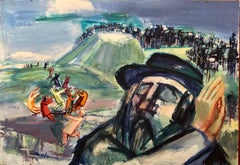
Peinture à l'huile Judaïque, Portrait d'un Rabbin.
Catégorie
XXe siècle, Moderne, Peintures - Portrait
Matériaux
Huile, Planche
739 €
Peinture judaïque américaine moderniste Gaon et ses disciples
Par Ervin B. Nussbaum
Dans ce tableau, Nussbaum représente un rabbin, ou rebbe, à l'extérieur de la synagogue. Les couleurs vives utilisées dans ce tableau semblent se superposer sans être mélangées au pr...
Catégorie
XXe siècle, Modernisme américain, Peintures - Figuratif
Matériaux
Huile, Planche
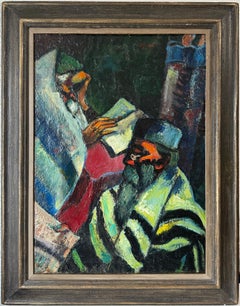
Rare Large Judaica Oil Painting Jewish 2 Rabbis Painting Abram Tromka WPA Artist
Par Abram Tromka
Abram Tromka ( Américain polonais/ russe 1896-1954 )
Signé à la main en haut au centre à droite.
Etiquette des ours de la Marbella Gallery, New York au verso
"Deux hommes en prière" ...
Catégorie
années 1930, Modernisme américain, Peintures - Figuratif
Matériaux
Huile, Planche, Toile
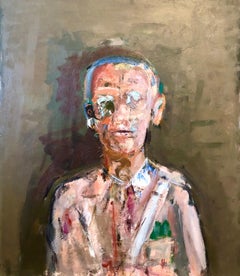
Portrait d
homme militaire Peinture à l
huile abstraite figurative Artiste moderniste américain
Par Dean Richardson
Huile sur carton, 1978. Elle représente un portrait abstrait d'un militaire en uniforme avec des médailles. Elle est signée par l'artiste au verso.
Dimensions : taille de la vue - ...
Catégorie
années 1970, Modernisme américain, Peintures - Figuratif
Matériaux
Huile, Planche
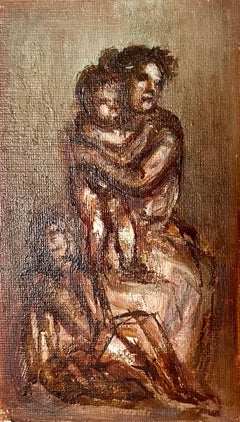
Simka Simkhovitch Artiste WPA Peinture à l
huile Famille Mère, enfants Moderniste américain
Par Simka Simkhovitch
Simka Simkhovitch (Russe/Américain 1893 - 1949)
Elle est accompagnée d'un petit groupe de la famille de l'artiste, certains étant signés à la main, d'autres non.
Il s'agissait d'étu...
Catégorie
années 1930, Modernisme américain, Peintures - Figuratif
Matériaux
Huile, Planche
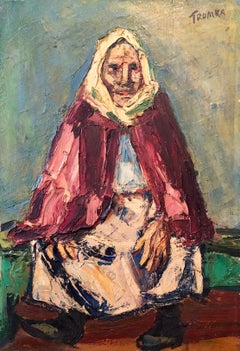
Rare peinture à l
huile américaine polonaise des années 1930, WPA Russian Babushka Jewish Art
Par Abram Tromka
Abram Tromka est né le 1er mai 1896 en Pologne. À l'âge de sept ans, il a immigré avec sa famille aux États-Unis et s'est installé à New York. C'est sur le bateau qui le menait à New...
Catégorie
Années 1930, Modernisme américain, Peintures - Figuratif
Matériaux
Huile, Planche
Suggestions
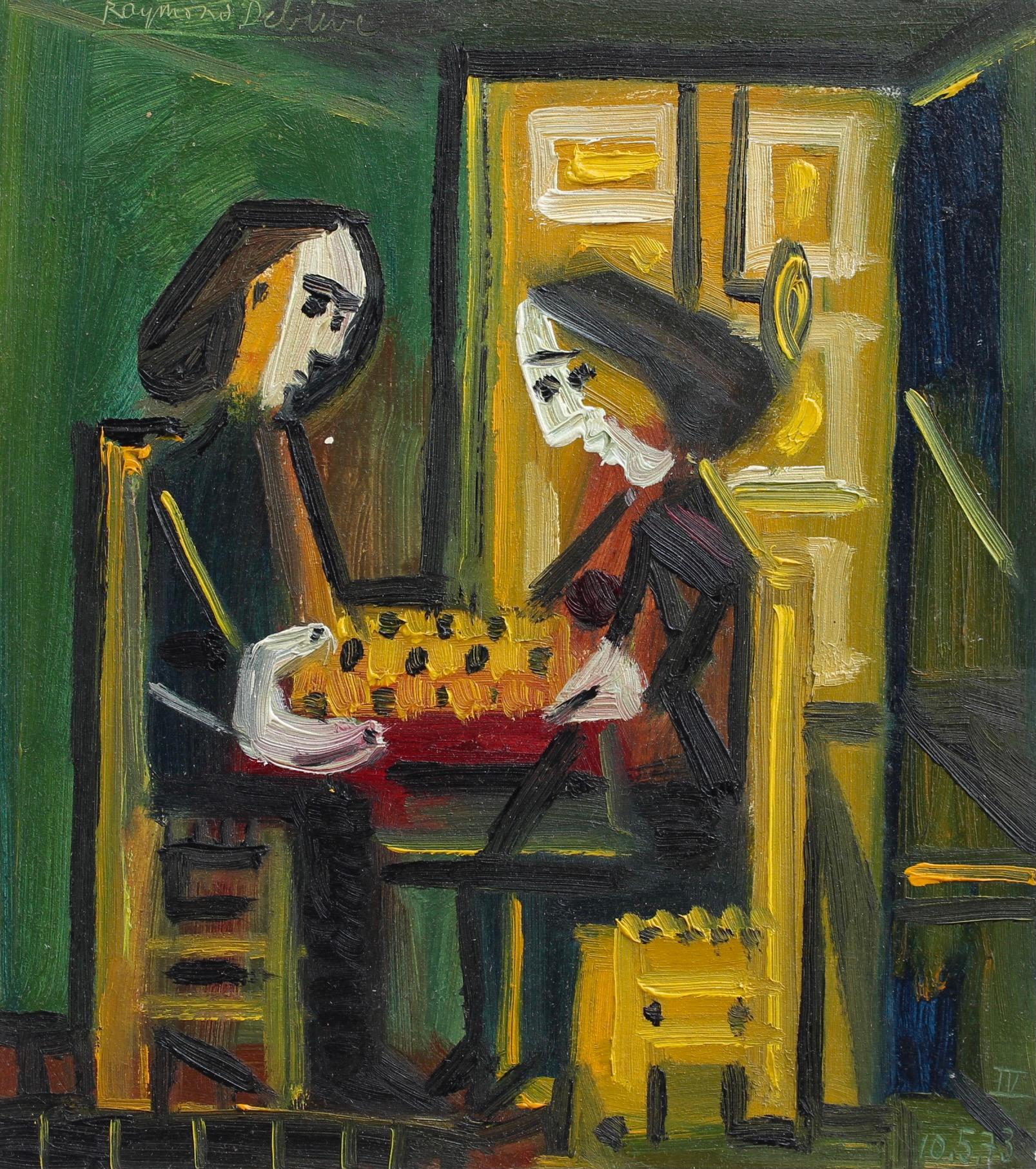
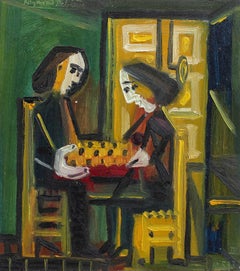
Match aux échecs
Par Raymond Debieve
Le match d'échecs", huile sur papier cartonné, par Raymond Debiève (1973). Des couleurs riches, des coups de pinceau audacieux et picturaux et un sujet inhabituel pour une œuvre d'ar...
Catégorie
années 1970, Moderne, Peintures - Portrait
Matériaux
Huile, Planche
1 140 € Prix de vente
30 % de remise
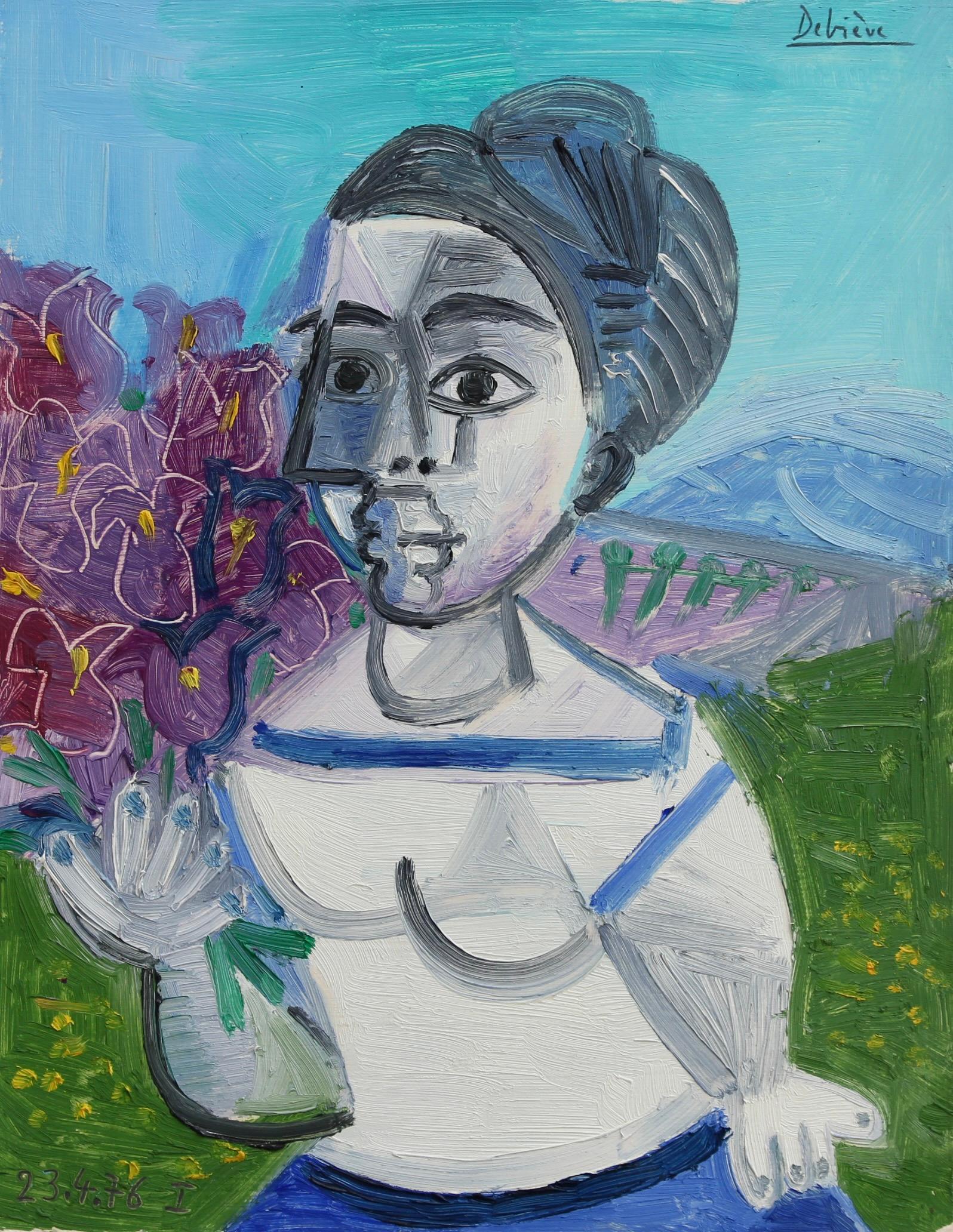
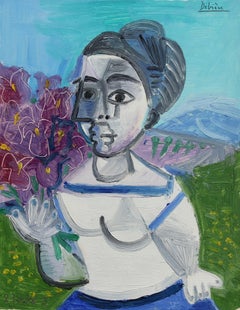
Portrait de femme avec des iris
Par Raymond Debieve
portrait de femme aux iris, huile sur papier cartonné (1976), par Raymond Debiève. L'artiste y peint une jeune femme tenant un bouquet d'iris enchanté dans son style post-cubiste. De...
Catégorie
années 1970, Moderne, Peintures - Portrait
Matériaux
Huile, Planche
1 222 € Prix de vente
30 % de remise
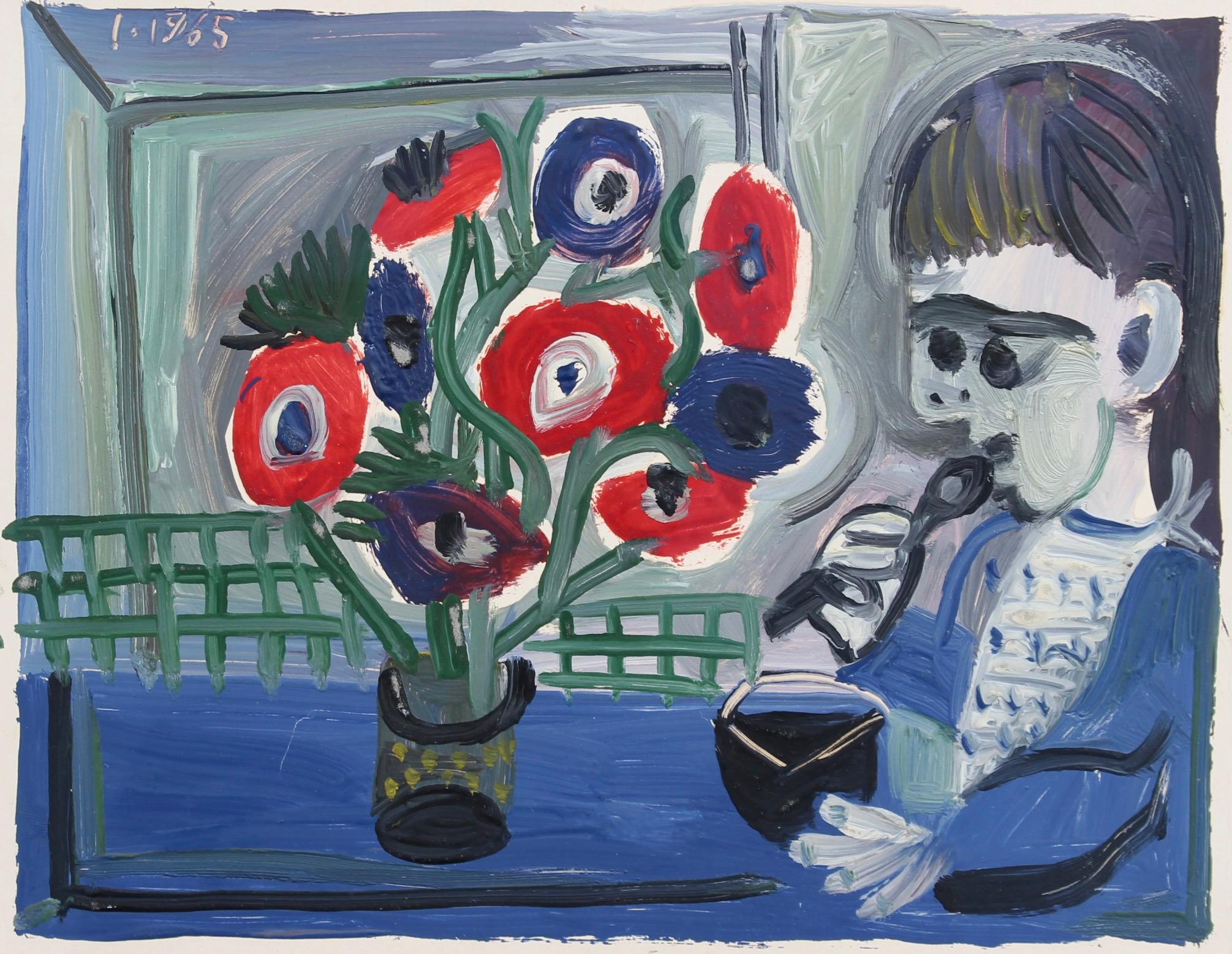
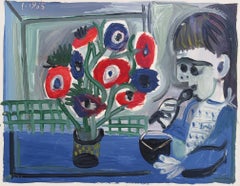
Boy with Anemones (Jeune garçon avec des amants)
Par Raymond Debieve
garçon aux anémones", huile sur papier cartonné, par Raymond Debiève (1965). L'artiste y peint un jeune garçon prenant son petit-déjeuner avec un magnifique bouquet d'anémones au cen...
Catégorie
années 1960, Moderne, Peintures - Portrait
Matériaux
Huile, Planche
1 222 € Prix de vente
30 % de remise
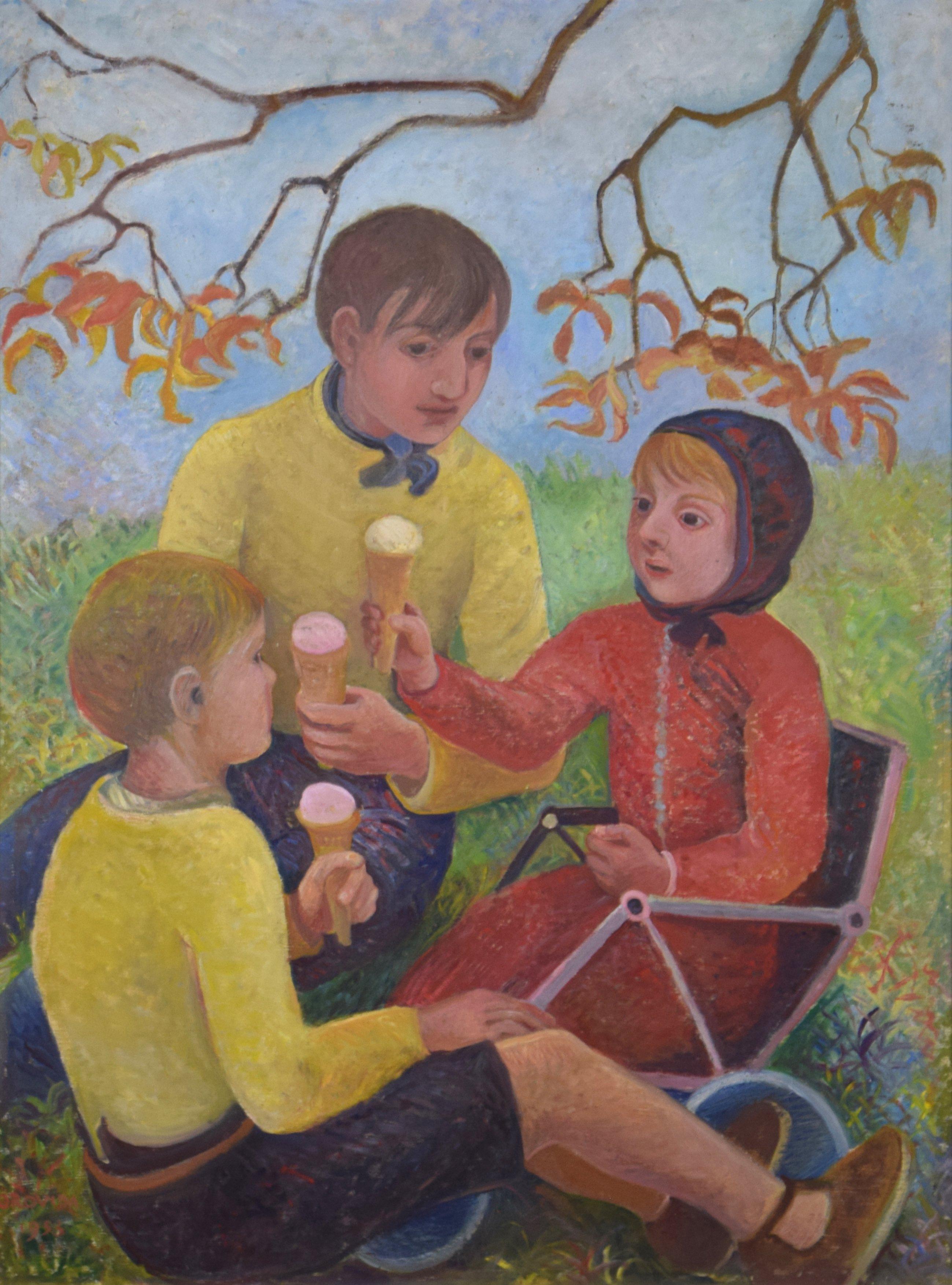
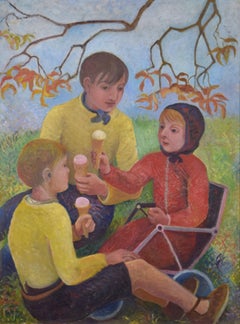
Picnic à la crème glacée d
Orovida Pissarro - peinture à l
huile
Par Orovida Pissarro
Pique-nique de la crème glacée par Orovida Pissarro (1893-1968)
Huile sur carton
101 x 76 cm (39 ¾ x 29 ⅞ pouces)
Signé et daté en bas à gauche Orovida 1953
Provenance
Richard Pissa...
Catégorie
années 1950, Moderne, Peintures - Figuratif
Matériaux
Huile, Planche
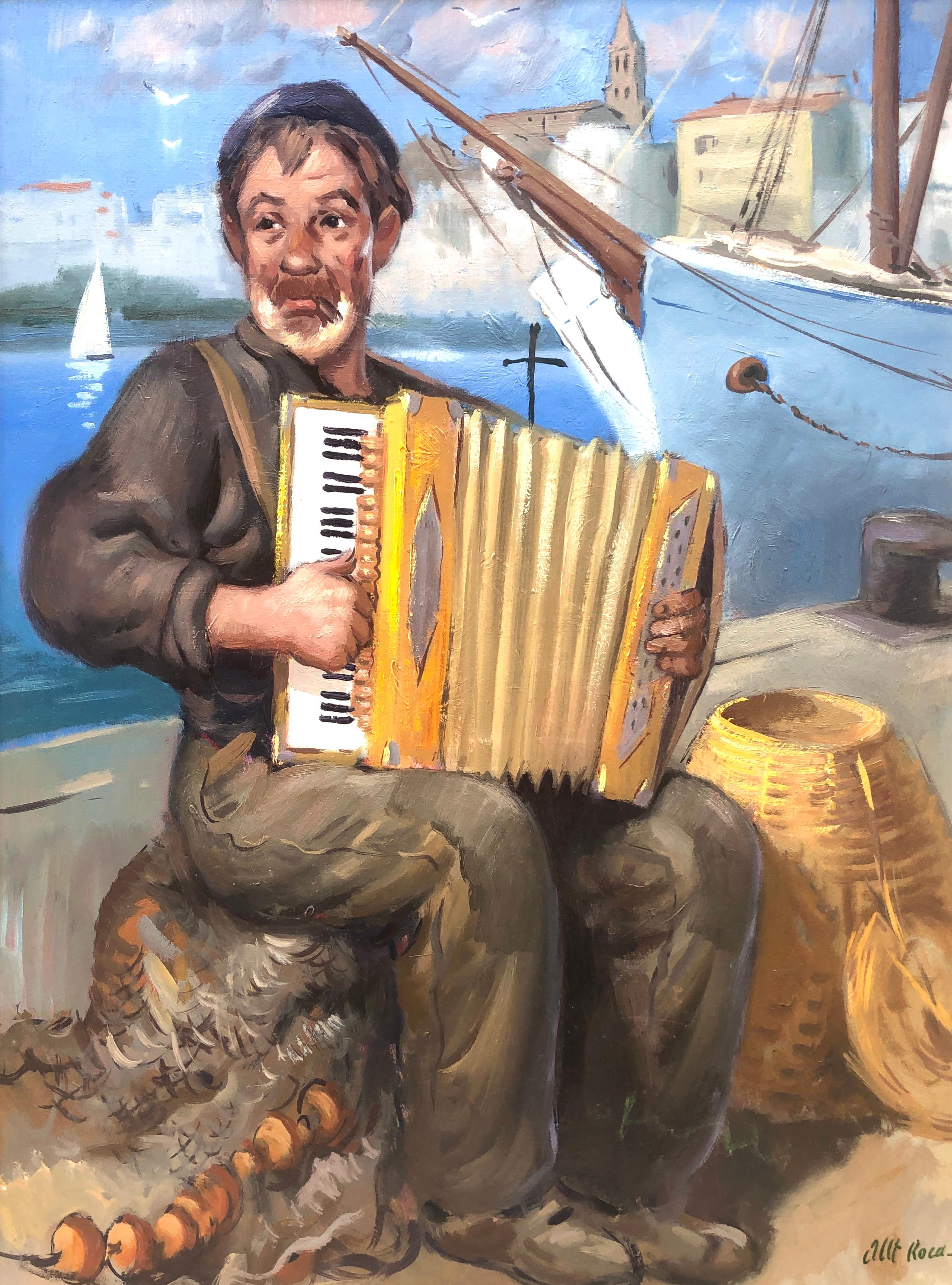
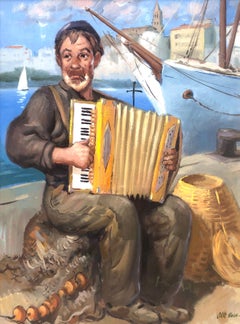
Le marin jouant de l
accordéon - Peinture à l
huile sur carton
Albert Roca (1945) - Marin jouant de l'accordéon huile sur carton
Dimensions 62x46 cm.
Medidas marco 73x57 cm.
Peintre de paysages et de personnages, dont il approfondit la caractér...
Catégorie
années 1990, Moderne, Peintures - Paysage
Matériaux
Huile, Planche
700 € Prix de vente
53 % de remise
Peinture à l
huile suédoise encadrée - Les enfants - Figuratif moderne du milieu du siècle dernier
LES ENFANTS
Taille : 36,5 x 66 cm (cadre compris)
Huile sur carton
Portrait figuratif de style moderniste du milieu du siècle, richement texturé et attachant, peint à l'huile sur ca...
Catégorie
années 1950, Moderne, Peintures - Figuratif
Matériaux
Huile, Planche