Articles similaires à Stefanie Schneider Polaroid sized unlimited Mini
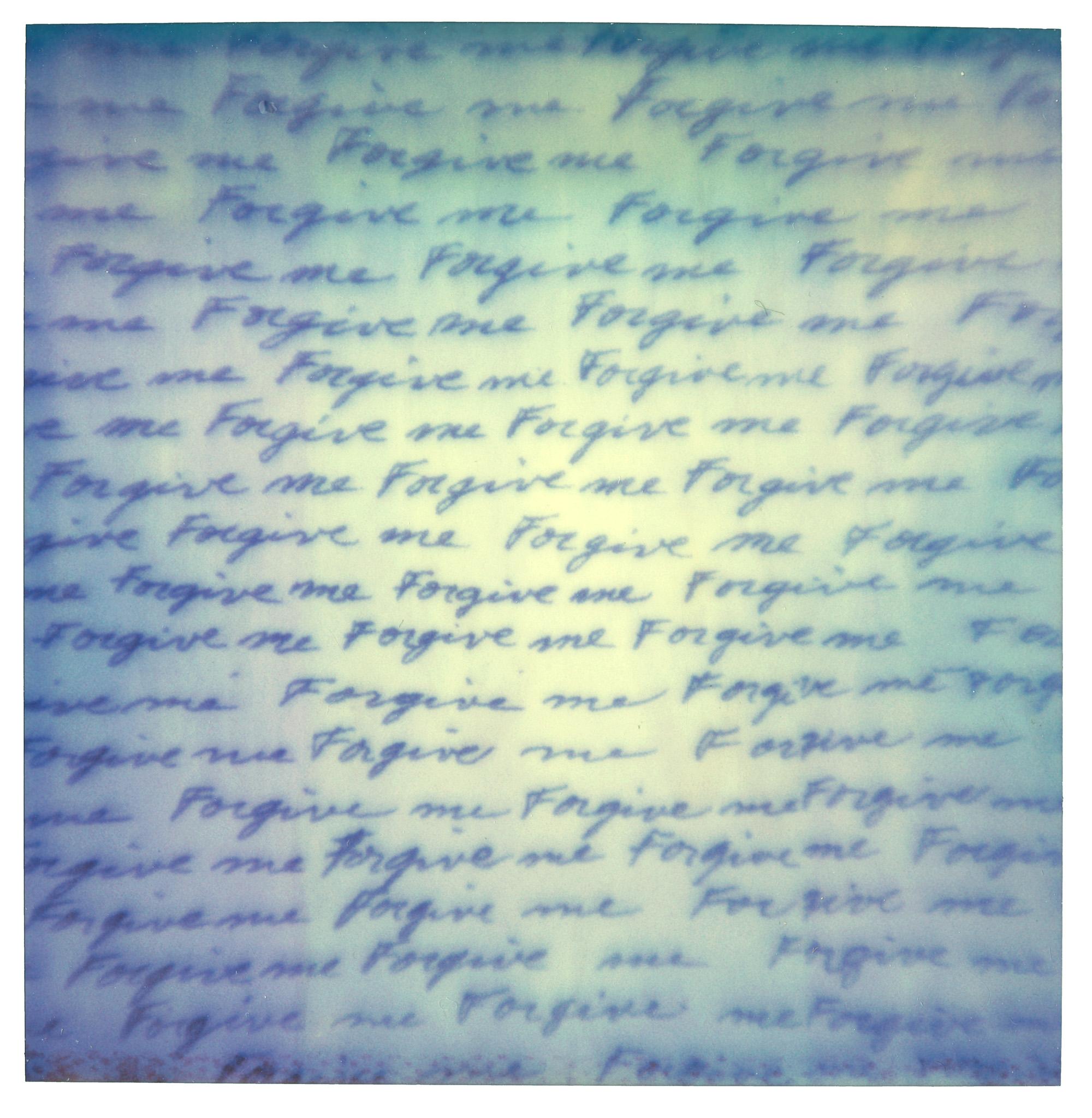
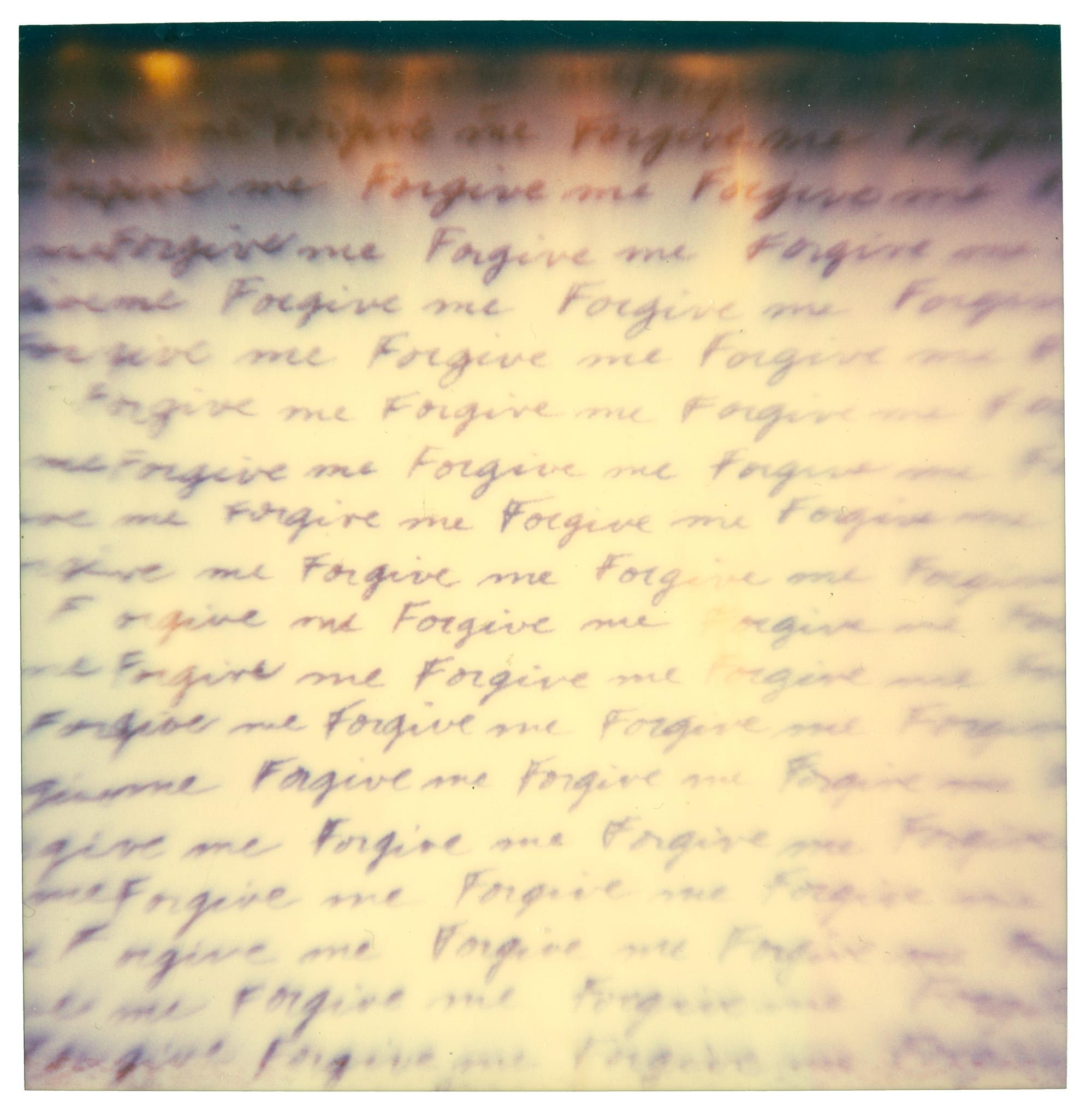
Forgive me
- signed
Vous voulez plus d
images ou de vidéos ?
Demander au vendeur plus d
images ou de vidéos
1 sur 2
Stefanie SchneiderStefanie Schneider Polaroid sized unlimited Mini
Forgive me
- signed2006
2006
77,97 €
À propos de cet article
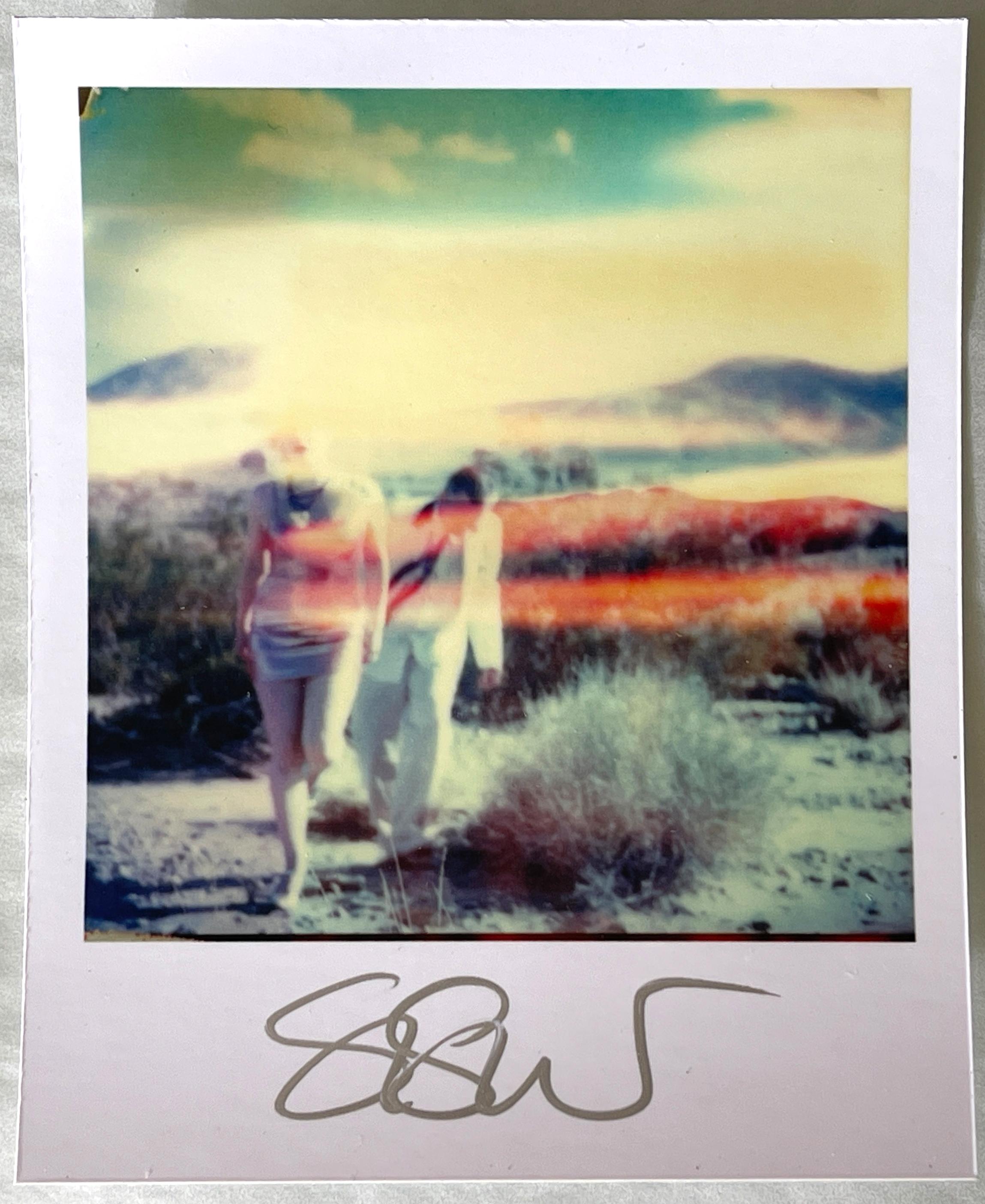
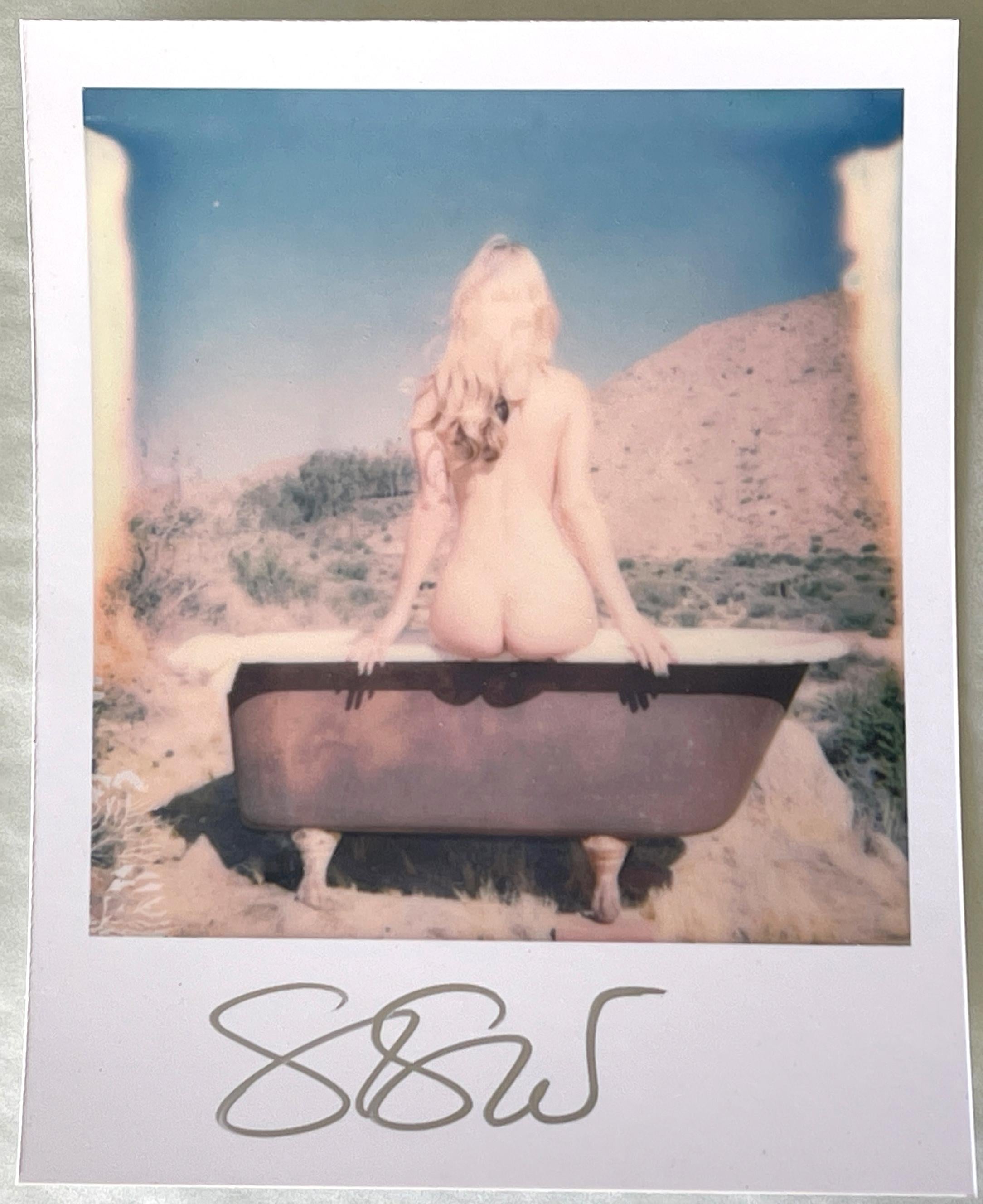
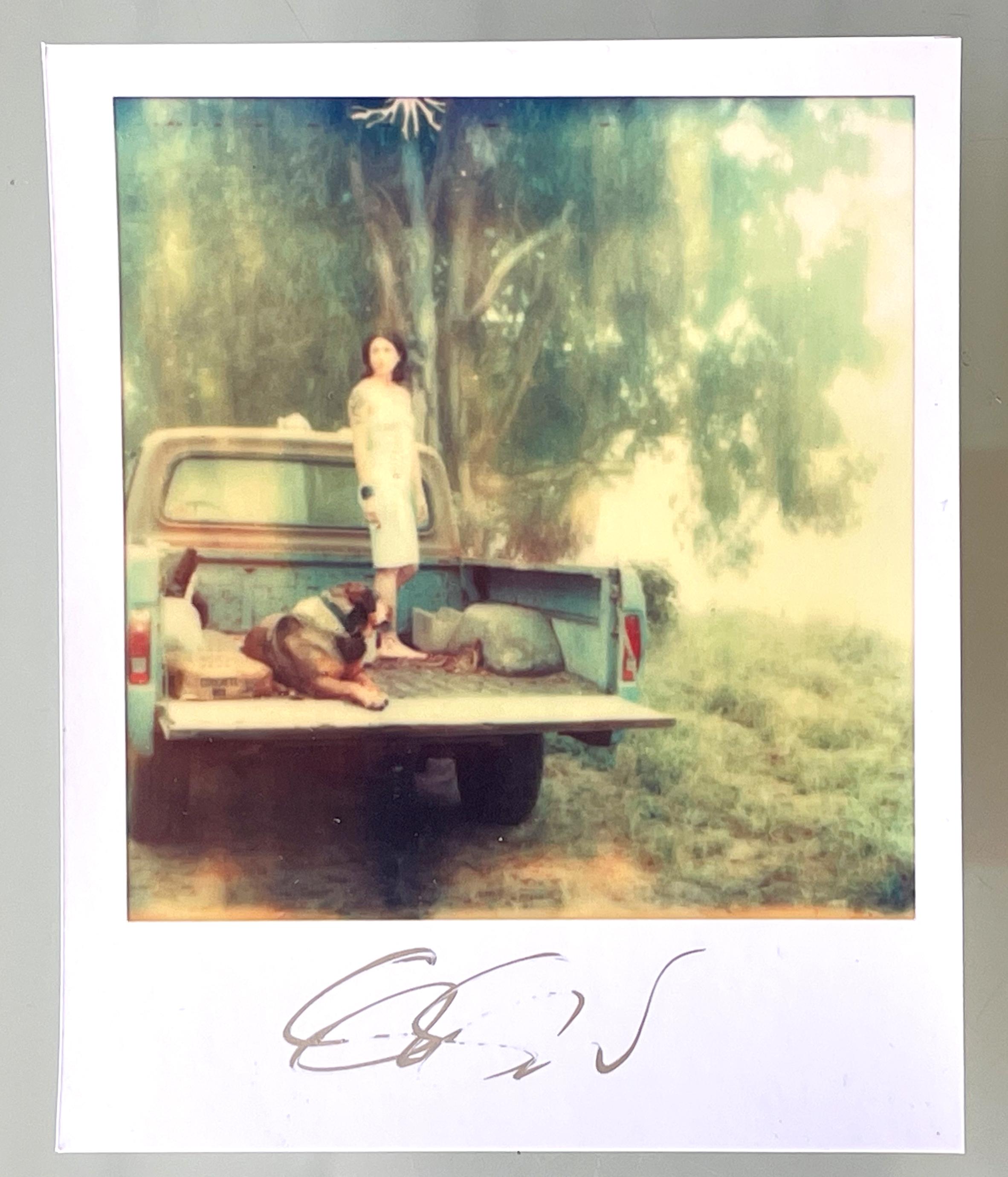
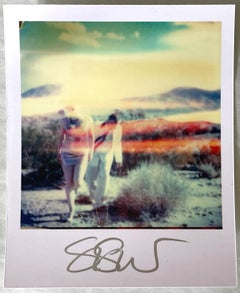
Stefanie Schneider Polaroid sized unlimited Mini 'Forgive me' - 2006 -
signed in front, not mounted.
1 Digital Color Photographs based on a Polaroid.
Polaroid sized open Editions 1999-2016
10.7 x 8.8cm (Image 7.9x7.7cm) each.
Stefanie Schneider interviewed for the Instant Dreams Documentary
When did you first decide to work with Polaroids? Why do Polaroids seem to be so well tuned to our (artistic) senses, perception and minds?
I started using expired Polaroid film in 1996. It has the most beautiful quality and encapsulates my vision perfectly. The colors on one hand, but then the magic moment of witnessing the image appear. Time seems to stand still, and the act of watching the image develop can be shared with the people around you. It captures a moment, which becomes the past so instantly that the decay of time is even more apparent; – it gives the image a certain sentimentality. The Polaroid moment is an original every time.
Why use a medium from the past?
For me, analog has always been there in the present. For the new generation, analog is interesting because it's new to them. I understand that people growing up in a digital age will wonder about its usefulness, but it's theirs to recover if they want to. When I first started working with Polaroid, it wasn't the past. It was a partially forgotten medium, but it existed nonetheless. It is mine by choice. There is no substitute for tangible beauty.
Is it imperfect?
The imperfect perfection in a “wabi-sabi” kind of way.
Wabi-sabi (侘寂) represents a comprehensive Japanese world view or aesthetic centered on the acceptance of transience and imperfection. The aesthetic is sometimes described as one of beauty that is imperfect, impermanent, and incomplete.
'If an object or expression can bring about, within us, a sense of serene melancholy and a spiritual longing, then that object could be said to be wabi-sabi'. 'Wabi-sabi nurtures all that is authentic by acknowledging three simple realities: nothing lasts, nothing is finished, and nothing is perfect.'
Is the Polaroid photograph recognizable or even sometimes cliché?
Absolutely! There's something cliché about the way I'm showing the American Dream. I live it myself, trying to find perfection in an imperfect world. Reaching for the horizon. The dream is broken; the cliché tumbles. There are different ways to involve an audience. You could make movies like Harmony Korine's 'Gummo', a masterpiece in my view, which would estrange a large part of the audience. A certain film education is a prerequisite. Or you can start with clichés, the audience then feels safe, which lures them into the depth of your world without them even knowing it or understanding where exactly they are being led to. Appealing to emotions and the sub-conscious. Normal, Change, New Normal.
You continually revisit the landscape of the American West in your work. What draws you back to this scene?
Southern California represents a dream to me. The contrast of Northern Germany, where I grew up, to the endless sunshine of Los Angeles was what first attracted me. The American West is my dream of choice. Wide, open spaces give perspectives that articulate emotions and desires. Isolation feeds feelings of freedom or sometimes the pondering of your past. The High Desert of 29 Palms has very clear and vivid light, which is vital. Expired Polaroid film produces 'imperfections' that I would argue mirrors the decline of the American dream. These so called 'imperfections' illustrate the reality of that dream turning into a nightmare. The disintegration of Western society.
Are you playing with the temporality of the material and the value of the moment itself?
The value of the moment is paramount, for it is that moment that you're trying to transform. All material is temporary, it's relative, and time is forever.
Why does analog film feel more pure and intuitive?
It's tangible and bright and represents a single moment.
The digital moment may stay in the box (the hard drive / camera / computer etc.) forever, never to be touched, put into a photo album, sent in a letter, or hung on a wall. Printing makes it an accomplishment.
The analog world is more selective, creating images of our collective memory.
The digital worldwide clicking destroys this moment. The generation without memories due to information overload and hard drive failures. Photo albums are a thing of the past.
Why does it feel this way?
That's how the human instinct works.
When I was a child, every picture been taken was a special moment. Analog photographic film as well as Super-8 material were expensive treasures. My family's memories were created by choosing certain moments in time. There was an effort behind the picture. The roll of film might wait months inside the camera before it was all used. From there, the film required developing, which took more time, and finally, when the photos were picked up from the shop, the memories were visited again together as a family. Who knew then, how fleeting these times were. Shared memories was a ritual.
What's your philosophy behind the art of Polaroid pictures?
The 'obsolete' is anything but obsolete. Things are not always as they appear, and there are hidden messages. Our memories and our dreams are under-valued. It is there that real learning and understanding begins by opening yourself to different perspectives.
What inspired you to use stop motion cinematography?
My work has always resembled movie stills. I remember the first time I brought a box of Polaroids and slid them onto Susanne Vielmetter's desk (my first gallery). Instantly, it became apparent that there was a story to tell. The stories grew. It was undeniable to me, that the emerging story was where I was destined to go. I've made four short films before my latest feature film, 'The Girl behind the White Picket Fence.' This film is 60 minutes long with over 4000 edited Polaroids. It's important to remember that our sub-conscious fills in the blanks, the parts missing from the story allow a deeper and more personal experience for the viewer. That is, if you surrender yourself and trust me as the director to lead you somewhere you might not have been before.
Why do you think it is important to own art?
'We have art in order not to die of the truth'
Nietzsche
- Créateur:Stefanie Schneider (1968, Allemand)
- Année de création:2006
- Dimensions:Hauteur : 10,7 cm (4,22 po)Largeur : 8,8 cm (3,47 po)Profondeur : 1 mm (0,04 po)
- Support:
- Mouvement et style:
- Période:
- État:
- Adresse de la galerie:Morongo Valley, CA
- Numéro de référence:1stDibs : LU652317381672
Stefanie Schneider
Stefanie Schneider a obtenu un MFA en design de communication à la Folkwang Schule Essen, en Allemagne. Son travail a été exposé au musée de la photographie de Braunschweig, au musée de la communication de Berlin, à l'Institut für Neue Medien de Francfort, au Nassauischer Kunstverein de Wiesbaden, au Kunstverein de Bielefeld, au Museum für Moderne Kunst de Passau, aux Rencontres d'Arles, à la Foto -Triennale d'Esslingen, à la Biennale de Bombay Beach en 2018 et en 2019.
À propos du vendeur
4,9
Vendeur Platine
Vendeurs premium dont la note est supérieure à 4,7 et le délai de réponse de 24 heures maximum
Établi en 1996
Vendeur 1stDibs depuis 2017
1 051 ventes sur 1stDibs
Temps de réponse habituel : 1 heure
- ExpéditionRecherche du devis...Expédition depuis : Morongo Valley, CA
- Politique des retours
Certaines parties de cette page ont été traduites automatiquement. 1stDibs ne garantit pas l
exactitude des traductions. L
anglais est la langue par défaut de ce site web.
Plus d articles de ce vendeur
Tout afficherForgive Me #02 (Stay) - Polaroid, Contemporary, 21st Century, Movie Art
Par Stefanie Schneider
Une œuvre d'art tirée du film "Stay" de Stefanie Schneider
Stefanie a créé l'art pour les deux acteurs principaux Naomi Watts et Ryan Gosling dans le film 'Stay' réalisé par Marc Fo...
Catégorie
Début des années 2000, Contemporain, Photographies - Nature morte
Matériaux
Papier d archives, Papier photo, C-Print, Couleur, Polaroïd

Pourgive Me (Stay) - le film, Polaroid analogique fabriqué à la main, expiré
Par Stefanie Schneider
Une œuvre d'art tirée du film "Stay" de Stefanie Schneider
Stefanie a créé l'art pour les deux acteurs principaux Naomi Watts et Ryan Gosling dans le film 'Stay' réalisé par Marc Fo...
Catégorie
Début des années 2000, Contemporain, Photographies - Paysage
Matériaux
Papier d archives, Papier photo, C-Print, Couleur, Polaroïd

Stefanie Schneider Polaroid sized unlimited Mini
Memory of a Dream
- signed
Par Stefanie Schneider
Stefanie Schneider Polaroid sized unlimited Mini 'Memory of a Dream (29 Palms, CA)' - 2006 -
1 Archival Color Photograph based on the original Polaroid.
Polaroid sized open Editio...
Catégorie
Début des années 2000, Contemporain, Photographie couleur
Matériaux
Papier d archives, C-Print, Couleur, Lambda, Polaroïd
Stefanie Schneider Polaroid sized unlimited Mini
Fairy
- signed
Par Stefanie Schneider
Stefanie Schneider Polaroid sized unlimited Mini 'Fairy (Heavenly Falls)' - 2016 -
signed in front, not mounted.
1 Archival Color Photograph based on the original Polaroid.
Pola...
Catégorie
Début des années 2000, Contemporain, Photographie couleur
Matériaux
C-Print, Polaroïd, Lambda, Couleur, Papier d archives

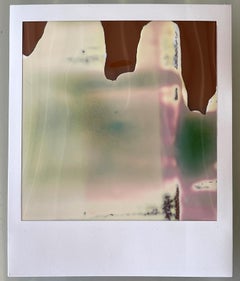
Polaroid - Pièce unique et originale abstraite
Par Stefanie Schneider
Résumé - 2020
Polaroid - Pièce unique 1/1,
7.8 x 7,7cm (zone d'image)
10.7 x 8,7 cm ( y compris le cadre blanc du Polaroid).
Inv. d'artiste #23481.
Signé au verso.
Les situation...
Catégorie
Début des années 2000, Contemporain, Photographies - Abstrait
Matériaux
Polaroïd
Stefanie Schneider Polaroid sized Minis -
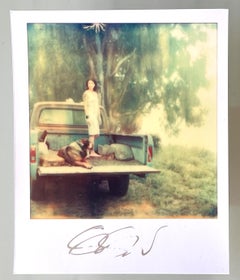
Saigon
- signé, en vrac
Par Stefanie Schneider
Le mini de Stefanie Schneider
Saigon (Stranger than Paradise) - 2003
signé au recto, non monté.
Photographies numériques en couleur basées sur un polaroïd.
Éditions ouvertes au for...
Catégorie
Début des années 2000, Contemporain, Photographie couleur
Matériaux
Papier d archives, C-Print, Couleur, Lambda, Polaroïd
Suggestions
Vintage 20X24 Format Polaroid Signé Photographie Surréaliste Eve Sonneman Photo
Par Eve Sonneman
Cette œuvre provient d'une exposition à la Sidney Janis Gallery et de la succession de Joan Sonnabend.
Eve Sonneman (née à Chicago en 1946) est une photographe et artiste américaine....
Catégorie
années 1990, Contemporain, Photographie couleur
Matériaux
Couleur, Polaroïd
Impression polaroid Stephen Frailey, 1988
Stephens
Sans titre, 1988
Impression polaroïd
Vue : 19 3/4 x 19 3/4 in.
Encadré : 24 1/4 x 24 x 1 3/4 in.
Edition 2/3
Provenance :
Lieberman & Paul, New York
Stephens a étudié au...
Catégorie
années 1980, Contemporain, Estampes - Figuratif
Matériaux
Polaroïd
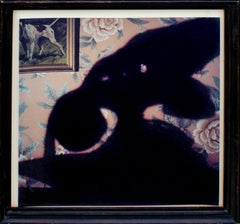
Polaroid d
Andy Warhol
Par Andy Warhol
Ce travail est unique.
Dimensions du polaroïd : 4.25 x 3.5 in
Provenance : Don de l'artiste, à la collection personnelle de Ronnie Cutrone à l'actuel propriétaire.
L'œuvre est acc...
Catégorie
années 1980, Pop Art, Photographie couleur
Matériaux
Polaroïd
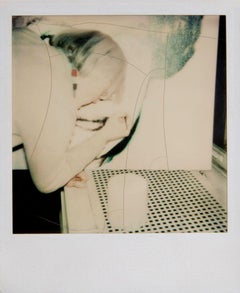
Expired_14_2020 - Photographie de Serena Zeppilli
Cette photographie Expired_14_2020 a été réalisée par le photographe italien Serena Zeppilli.
Il fait partie de la série "Je cherchais quelque chose que j'ai déjà vu". Tirage d'a...
Catégorie
XXIe siècle et contemporain, Contemporain, Photographies - Figuratif
Matériaux
Papier photo
Photographie contemporaine Gods Gift sur Collotype
Par Delilah Montoya
Photographie contemporaine sur collotype de l'artiste de Houston, TX, Delilah Montoya. La photographie montre une jeune femme aux longs cheveux noirs, le...
Catégorie
années 1990, Contemporain, Estampes - Abstrait
Matériaux
Papier photo
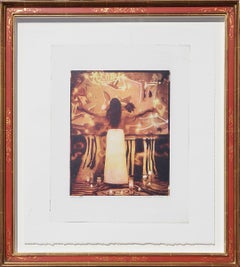
Purple Note by JJK, Photographie, Edition limitée, Musique, Polaroïd
Note violette
Edition de 25
signé et numéroté par l'artiste
Cette nature morte représentant une note de musique est composée d'une olive, d'une feuille de menthe et d'un cure-dent. ...
Catégorie
années 1980, Contemporain, Photographie couleur
Matériaux
Pellicule photographique, Pigment d archive, Polaroïd