Passer au contenu principal
Vous voulez plus d images ou de vidéos ?
Demander au vendeur plus d images ou de vidéos
1 sur 19

Albert-Ernest Carrier-Belleuse
Bust of a Young woman wearing a tiara

circa 1870

12 800 €TVA incluse

À propos de cet article

Bust of a Young woman wearing a tiara by Albert-Ernest CARRIER-BELLEUSE (1824-1887) Sculpture in bronze with a nuanced dark brown patina signed on the shoulder "A. Carrier Belleuse" cast by "Jules Graux fondeur" (with the foundry mark) reposing on an onyx base France circa 1870 height of the bronze 55 cm total height with the base 58,5 cm width 29 cm depth 18 cm Biography : Albert-Ernest Carrier de Belleuse known as Carrier-Belleuse (1824-1887) was one of the most prolific artists of the century and had the greatest successes under the Second Empire, enjoying the personal support of Napoleon III. His work was greatly influenced by the style of the Italian Renaissance and that of the 18th century, which he helped to bring up to date. In 1837, the young Carrier-Belleuse apprenticed in the workshop of the engraver Bauchery. He was admitted soon after to the goldsmith Jacques Henri Fauconnier. Through François Arago, he met the sculptor David d'Angers who facilitated his admission to the School of Fine Arts. Carrier-Belleuse entered it in 1840. Noted for his skill by the great bronze companies in Paris such as Barbedienne and Denière, he soon received numerous orders for models for candelabras, pendulums, fittings for fireplaces, etc. In 1848, probably at the initiative of François Arago, who became head of state, he received his first public order for a small statue of "Mademoiselle Rachel singing La Marseillaise". In 1851, he appeared for the first time at the Salon of French Artists, where he presented two bronze medallions. From 1851 to 1855, Carrier-Belleuse stayed in England, in Stoke-on-Trent where he served as director of the modeling and drawing school of the Minton house, a large porcelain manufacturer. Back in France, Carrier-Belleuse moved to Paris in a large workshop located 15 rue de la Tour d´Auvergne. From 1857, he made regular sendings to the Salon and became famous thanks to the success of large marbles, such as the "Bacchante" exhibited at the Salon in 1863, and acquired by Napoleon III, "Angelica" (1866) or even "Hebe asleep" (1869). At the Salon of 1867, his group entitled "Messiah" earned him the medal of honor of sculpture. It was acquired by the State to adorn the Chapel of the Virgin in the Saint-Vincent-de-Paul church. Carrier-Belleuse acquired a great reputation in parallel for his terracotta busts which, in many respects, recall those of 18th century artists. He made portraits of a large number of celebrities of his time. He produced, among others, the busts of Napoleon III, Renan, Thiers, Grévy, Arago, Marguerite Bellanger, Théophile Gautier, Honoré Daumier, Delacroix, Hortense Schneider, Réjane… He also modelled numerous busts of mythological inspiration and historical and artistic portraits like Marie Stuart, Shakespeare or even Mozart. Carrier-Belleuse used and trained in his workshop in the rue de la Tour d´Auvergne many young talented artists such as Alexandre Falguière, Jules Desbois, Eugène Delaplanche, Jules Dalou or Joseph Chéret; but he was best known for having been the master of Auguste Rodin who entered his studio as a practitioner in 1864. Carrier-Belleuse devoted himself a lot to decorative sculpture. He contributed to the decorations of many important buildings. We owe him in particular the caryatids of the Renaissance theater in Paris, the pediment of the main entrance to the Banque de France, the stucco ceilings of the Lesdiguières and La Trémoïlle pavilions at the Louvre Palace, the frieze of the Palais de la Bourse in Brussels, or the decoration of the Hôtel de la Païva on the Champs-Elysées in Paris. He also received State commissions for monuments: that of Jean-Jacques Rousseau in Montmorency, of Alexandre Dumas, in Villers-Cotterêts, of Masséna in Nice. Abroad, he produced the equestrian statue of Michael the brave in Bucharest and the tomb of José de San Martín in Buenos Aires. In 1873, Carrier-Belleuse took part in the construction of the Paris Opera house, directed by his friend Charles Garnier. He created the two monumental torchieres flanking the grand staircase in the main hall and the caryatids of the chimney of the grand foyer. In 1875, he was appointed director of works of art at the Porcelain Manufacture de Sèvres. He imprinted on it a very modern impulse which manifested itself in the creation of a complete range of vases.
  • Créateur:
    Albert-Ernest Carrier-Belleuse (1824 - 1887, Français)
  • Année de création:
    circa 1870
  • Dimensions:
    Hauteur : 58,5 cm (23,04 po)Largeur : 29 cm (11,42 po)Profondeur : 18 cm (7,09 po)
  • Support:
  • Mouvement et style:
  • Période:
  • État:
  • Adresse de la galerie:
    PARIS, FR
  • Numéro de référence:
    Vendeur : N.81201stDibs : LU2514217381272

Plus d articles de ce vendeur

Tout afficher
Presse à foin
Par Aimé-Jules Dalou
Cette presse à foin est un sujet qui figure dans la célèbre suite communément appelée "petits ouvriers" de Jules Calle (1838-1902) Bronze patiné brun foncé coulé par Susse Frères - ...
Catégorie

Fin du XIXe siècle, École française, Sculptures - Figuratif

Matériaux

Bronze

Biche couchée
Par Antoine-Louis Barye
Biche couchée par Antoine-Louis Barye (1796-1875) Sculpture en bronze à la patine brun foncé nuancée signé "Barye" sur la base moulage d'édition ancienne - probablement de l'atelier...
Catégorie

années 1860, École française, Sculptures - Figuratif

Matériaux

Bronze

La maternité
Par Baltasar Lobo
La maternité par Baltasar Lobo (1910-1993) Groupe en bronze à patine nuancée vert-brun foncé Signé au bas du dos " Lobo ". Coulée par " Susse Fondeur Paris " (avec la marque de la f...
Catégorie

Milieu du XXe siècle, École française, Sculptures - Figuratif

Matériaux

Bronze

Paire de chandeliers
Par Antoine-Louis Barye
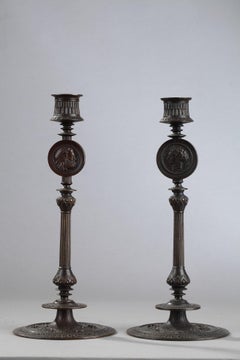
Antoine-Louis BARYE (1796-1875) Paire de chandeliers Paire de chandeliers néo-grecs Bronze à patine foncée signé en dessous "Barye" Ancienne fonte France vers 1890 hauteur 27 cm di...
Catégorie

Fin du XIXe siècle, École française, Sculptures - Figuratif

Matériaux

Bronze

Promenade du tigre et du lion
Par Antoine-Louis Barye
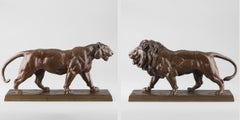
Rare paire de "Tigre et Lion marchant" par Antoine-Louis BARYE (1796-1875) Une très belle paire de sculptures en bronze à la patine brune nuancée chacun signé "Barye" sur la base co...
Catégorie

années 1870, École française, Sculptures - Figuratif

Matériaux

Bronze

Portrait Presumé d Elodie Blanchet
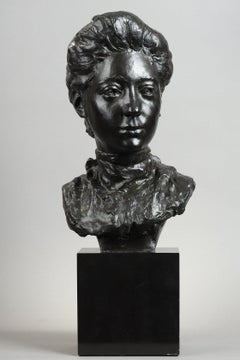
Portrait Presumé d'Elodie Blanchet par Paul LANDOWSKI (1875-1961) Sculpture en bronze à patine brun-vert foncé Une rareté des premières œuvres de Landowski Signé en bas "P. Landowsk...
Catégorie

Fin du XIXe siècle, École française, Sculptures - Figuratif

Matériaux

Bronze

Suggestions

Marie
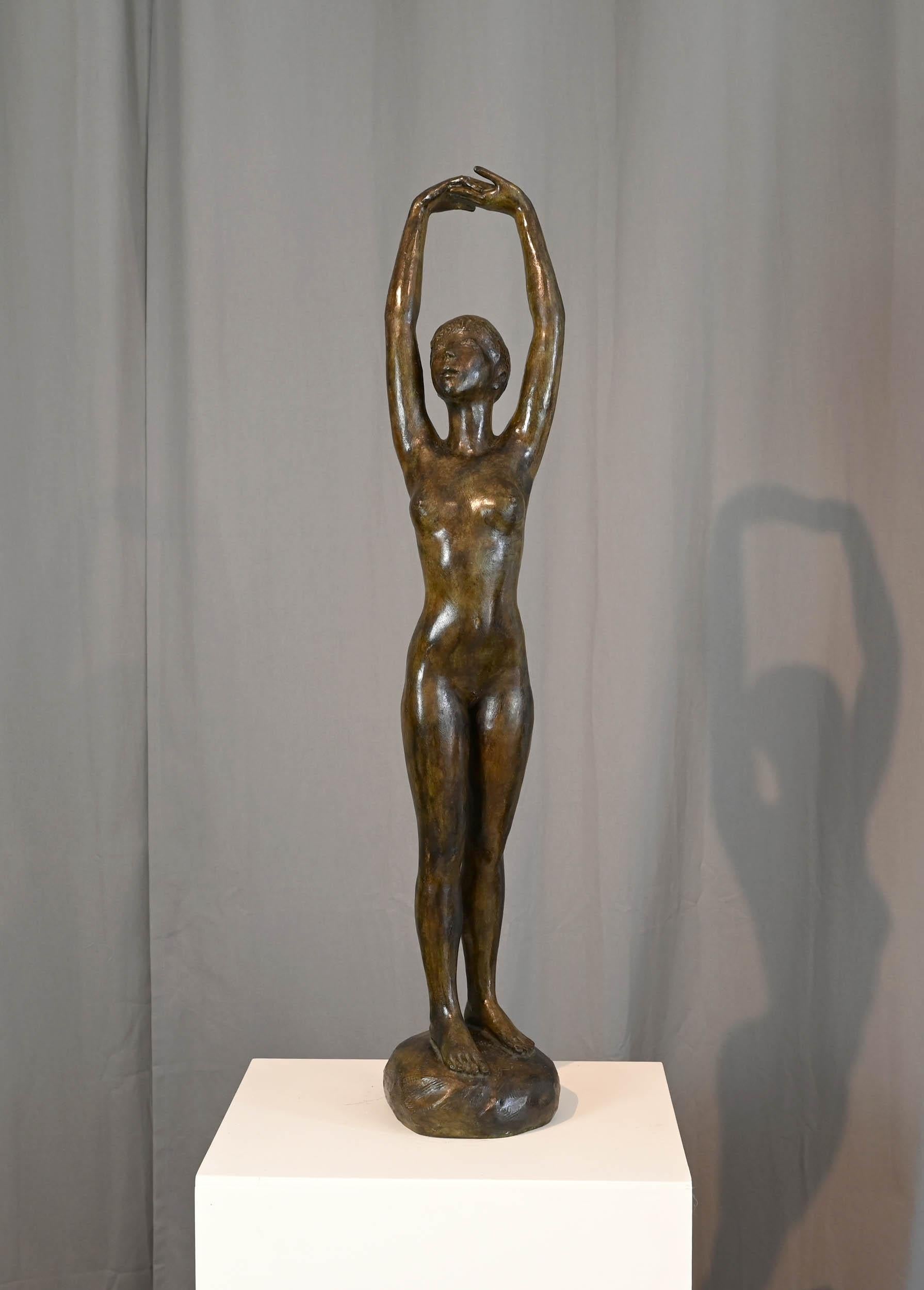
Jacques COQUILLAY (né en 1935) Marie Bronze original Taille : 56x39x17cm Exemplaire n° 4/8 Signature et numérotation sur la base. Bronze origin...
Catégorie

Début des années 2000, École française, Sculptures - Nus

Matériaux

Bronze

Victoire
Jacques COQUILLAY (né en 1935) Victoire Bronze original Taille : 105 x 22 x 20 cm Numéro d'exemplaire 1/8 Signature et numérotation sur la base...
Catégorie

Début des années 2000, École française, Sculptures - Nus

Matériaux

Bronze

Torse féminin
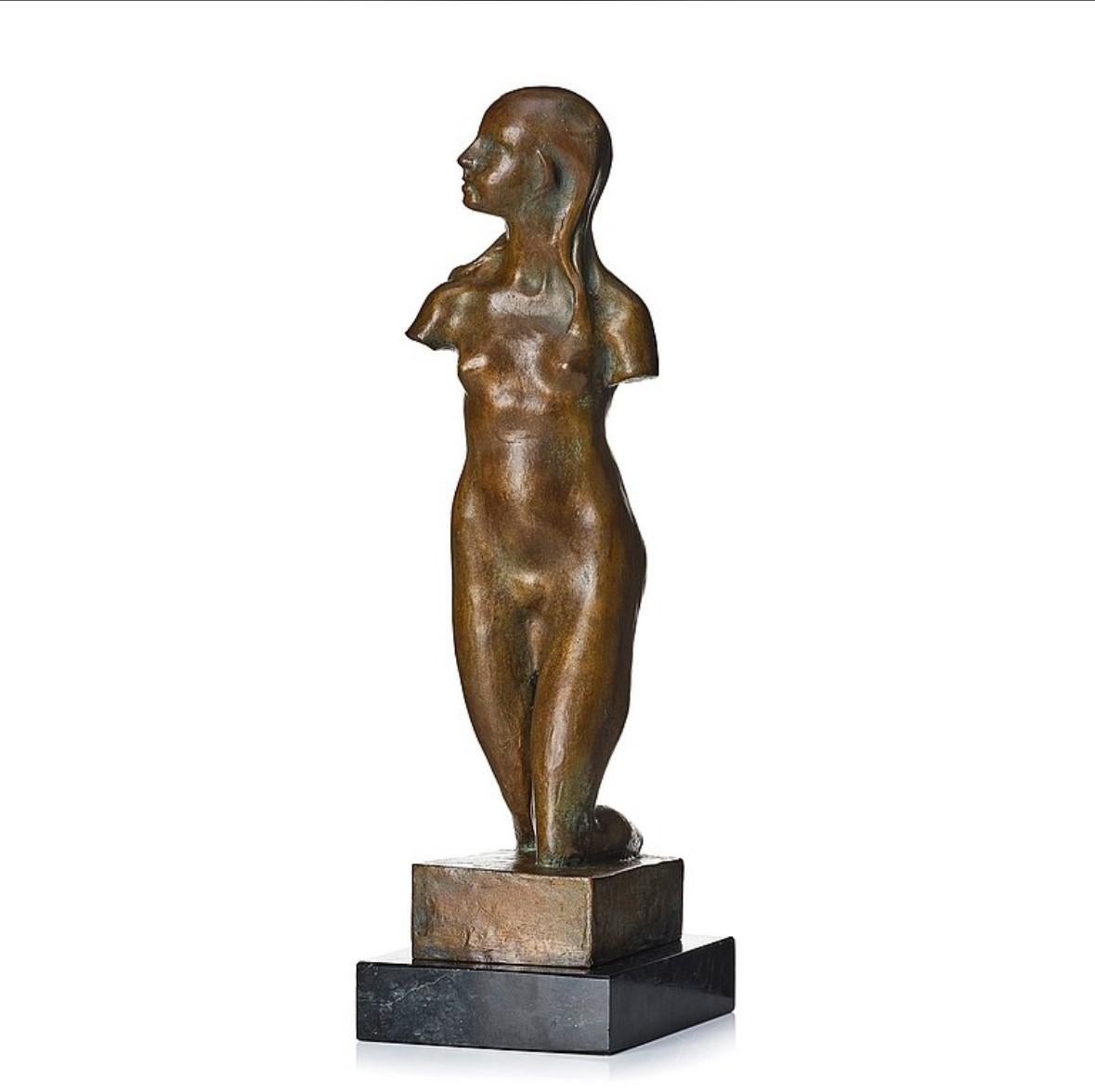
Ce torse féminin représente la force et la vulnérabilité de la jeune femme. Conçue dans les années 70, elle est signée des initiales de l'artiste sur une empreinte de pouce. Gunnar...
Catégorie

années 1950, École française, Sculptures - Nus

Matériaux

Bronze

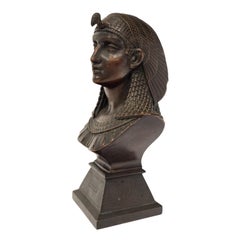
Ancienne sculpture française de buste en bronze de style néo-égyptien « Reine de Babylone »
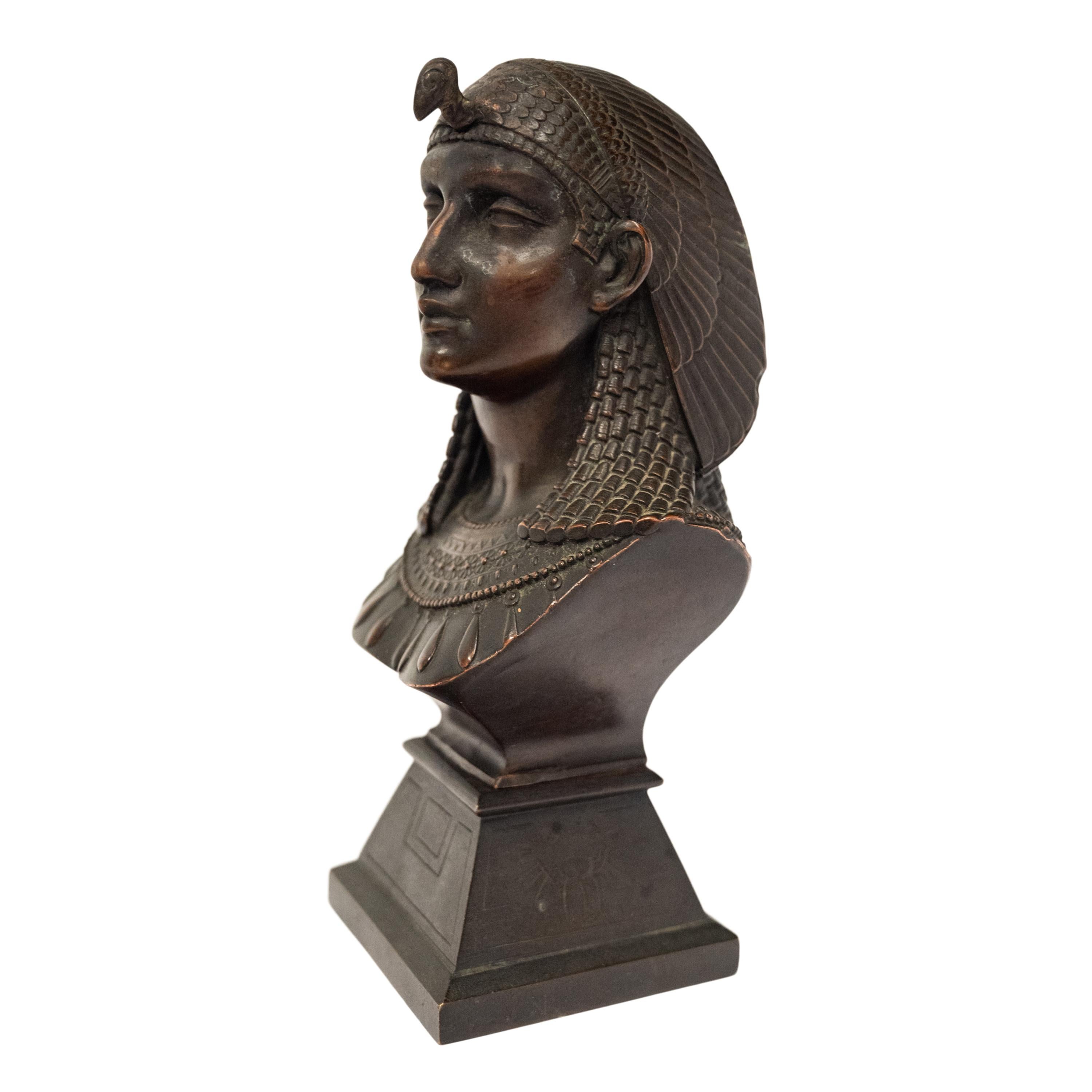
Une bonne sculpture ancienne en bronze coulé, un buste néo-égyptien "La Reine de Babylone", par le sculpteur français du 19ème siècle Paul Auguste Gagne, vers 1875. Ce buste en bronze rare et inhabituel a été coulé à la cire perdue. Paul Auguste Gagne était un sculpteur actif à Paris au début du siècle dernier. à la fin du 19e siècle, son travail se compare stylistiquement à celui d'Emile Eugène Hébert...
Catégorie

années 1870, École française, Sculptures - Figuratif

Matériaux

Bronze

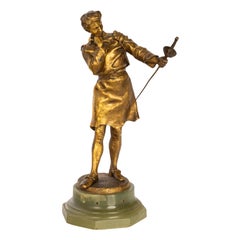
Ancienne sculpture française polonaise en bronze doré figure d un forgeron d épée, 1890
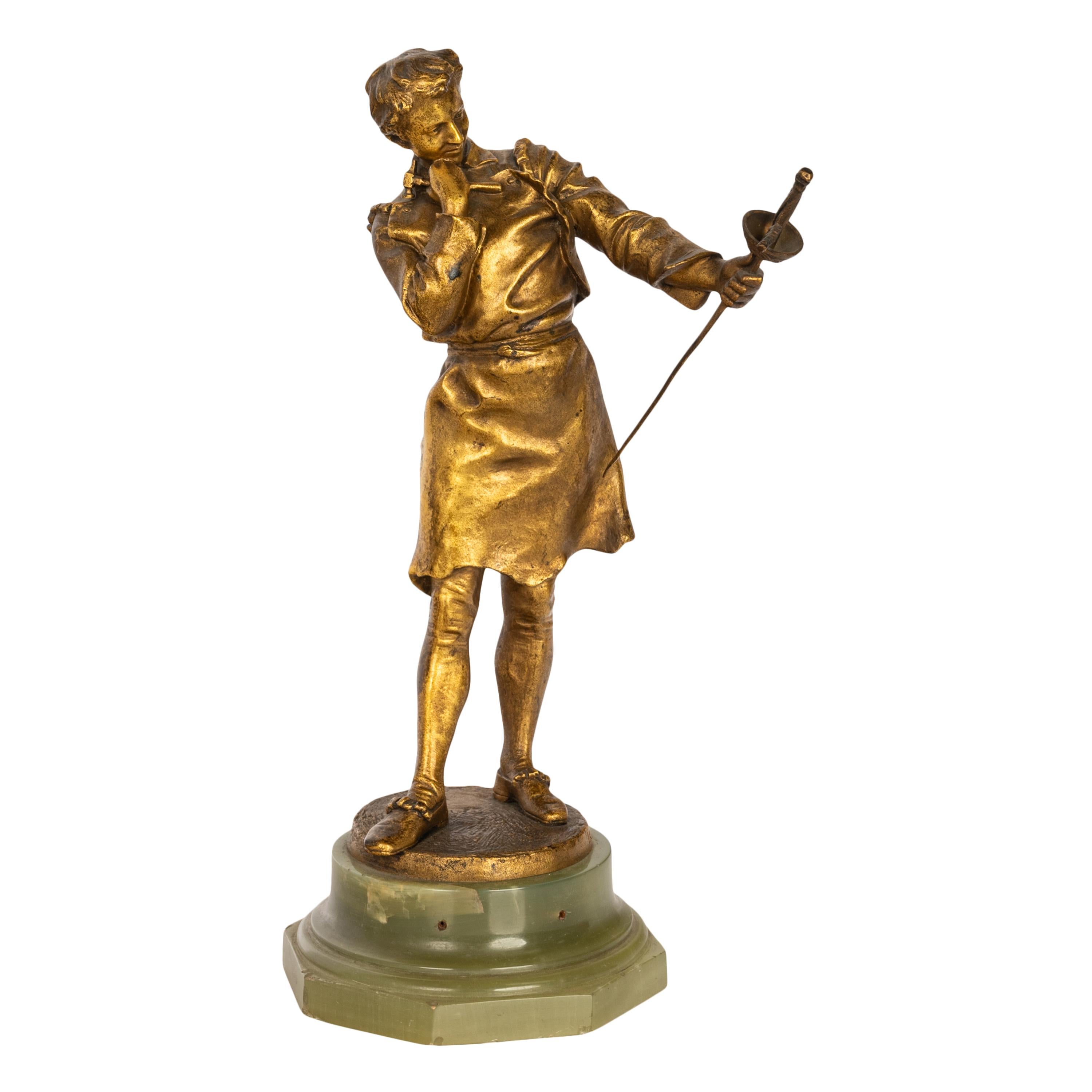
Une belle sculpture ancienne en bronze doré représentant un sabreur, par l'artiste et sculpteur franco-polonais Henryk II Kossowski (1855-1921), le bronze datant de 1890. Le bronze r...
Catégorie

années 1890, École française, Sculptures - Figuratif

Matériaux

Albâtre, Bronze

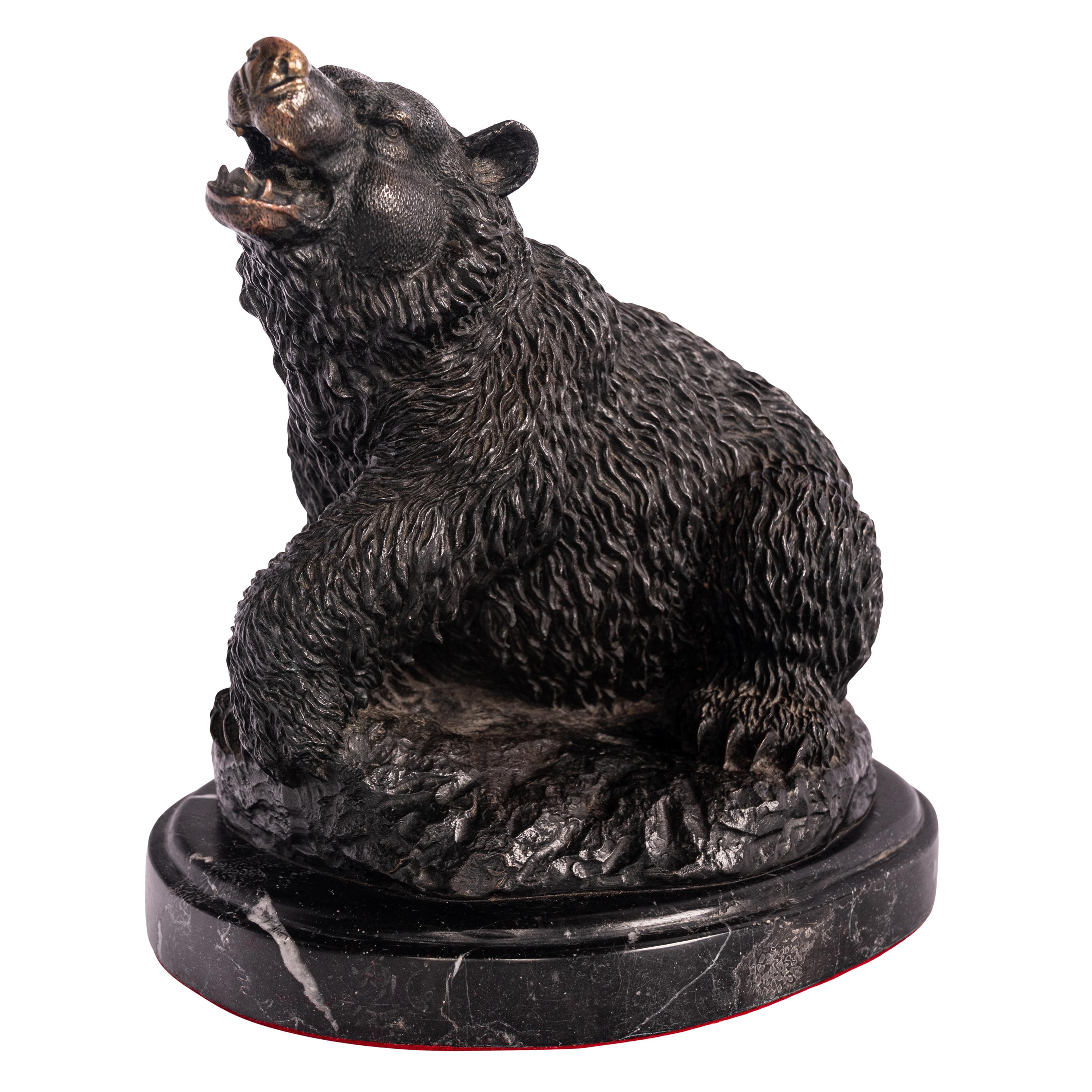
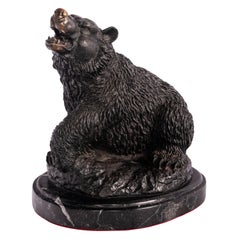
Antique 19ème siècle French Bonze Animalier Brown Bear Statue Sculpture Paris
Par Antoine-Louis Barye
Une bonne sculpture ancienne en bronze d'un ours brun par le célèbre sculpteur animalier français Antoine-Louis Barye, vers 1870. Le bronze représente un ours brun dans une pose dyna...
Catégorie

années 1860, École française, Sculptures - Figuratif

Matériaux

Marbre, Bronze