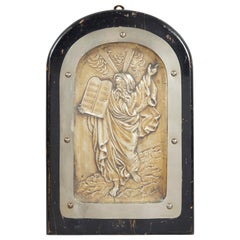
Articles similaires à Jerusalem Rabbi, Repousse Sculpture Relief Plaque Israeli Judaica
Vous voulez plus d
images ou de vidéos ?
Demander au vendeur plus d
images ou de vidéos
1 sur 5
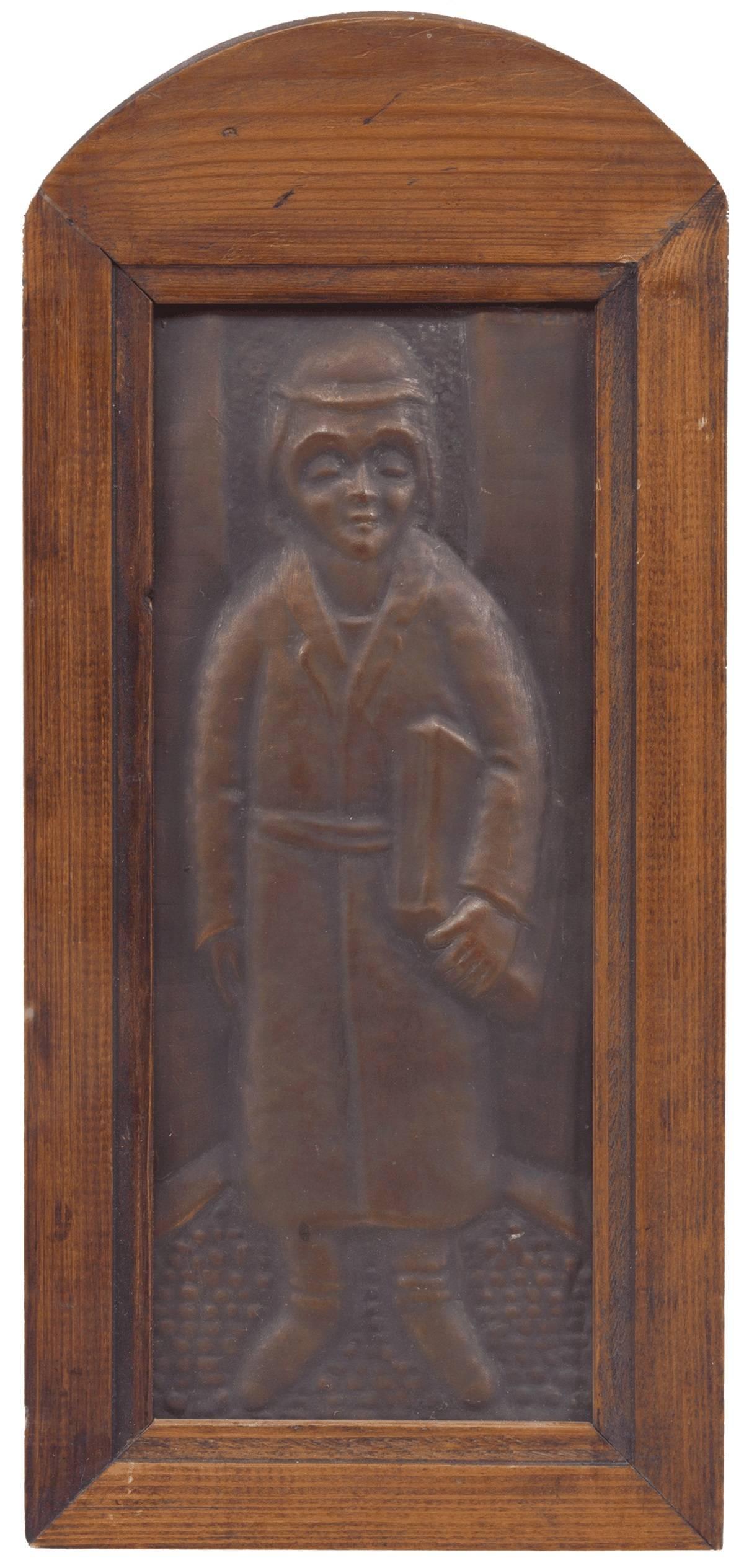
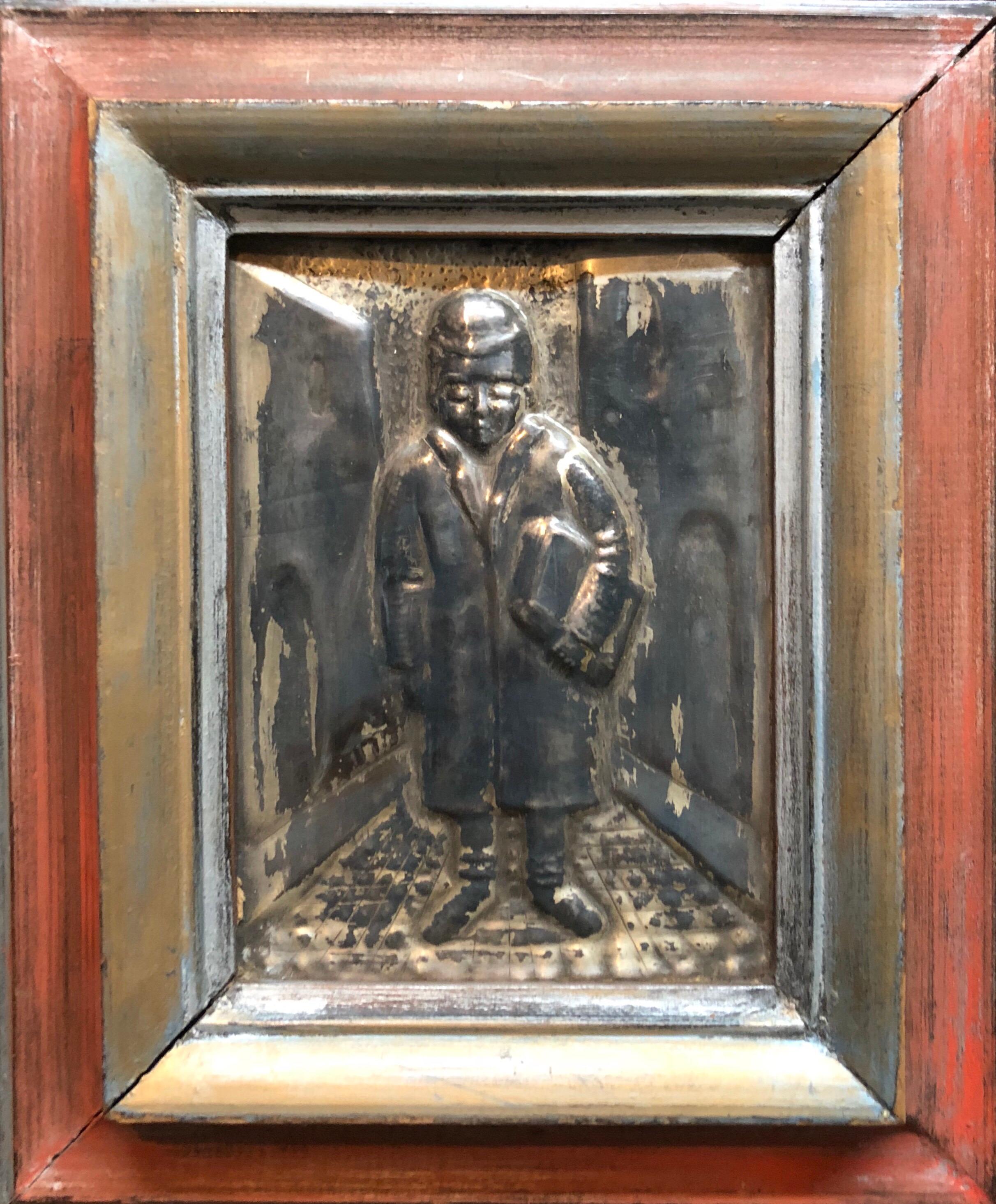
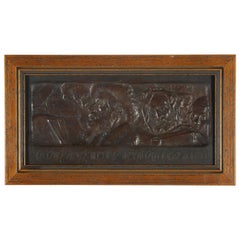
Arieh MerzerJerusalem Rabbi, Repousse Sculpture Relief Plaque Israeli Judaica
1 559,30 €
À propos de cet article
Arieh Merzer was a prominent Israeli artist and metal worker.
Arie Merzer, an artist who worked in hand-hammered copper, was born in Warsaw, Poland in 1905, the scion of a large Hassidic family. He graduated from the Academy of Arts in Warsaw, and became the pupil of Professor Adam Richtarsky. He later worked with a group of Jewish artists who wanted to resuscitate the ancient oriental-Jewish craft of hand-hammering metal (metaloplastics), which was passed on to us as a legacy by far-off generations from the time of the Bible.
In 1928 Arieh Merzer exhibited his works in Warsaw for the first time. From 1930 he lived and worked in Paris. He was one of the Jewish artists who gathered there and were known as the Jewish 'Ecole de Paris.' Merzer regularly exhibited in the well-known 'Salon d'Automne' and 'Salon des Tuileries,' as well as in solo exhibitions in Paris and throughout France.
Arieh Merzer's work was highly acclaimed well before the Holocaust, before it became a memorial to a world destroyed. He portrayed the story of the Jewish spirit on copper, on silver, and on gold: stories from the Bible, the life-styles of the Jews in their shtetls and ghettos, of Chassidim and Kabbalists of renown, of wars of liberation and revival.
A special stress was placed on the link between the new Jewish experience and its historical nucleus. His major innovation was the moulding of mystic and traditional Jewish motifs, that surrounded the Holy Ark in Europe's burning synagogues, and presenting the results before the world of modern art. As a result he became generally recognized as an international Jewish artist.
In 1943, when France was conquered by the Nazis, Arieh Merzer escaped from a concentration camp, and after a stint in the maquis, he crossed the border into Switzerland and was sent to a labor camp. Later, he arrived in Geneva, where an album of sketches of his works was put out. In 1945 he made aliyah to Israel with his family, settled in Safed, and helped to found the Artists' Quarter there.
Arieh Merzer lived and worked in Israel for twenty-one years. His exhibitions in the country include: 1946 in the Tel Aviv Museum; 1947 in the Pevsner Artists' Pavilion in Haifa; 1951 in the Artists' Pavilion in Tel Aviv; 1955 in the Museum for Modern Art in Haifa; 1955 in the Artists' Pavilion in Jerusalem; and 1957 in the Tel Aviv Museum. His works were also on permanent show in his atelier in Safed. He was awarded prizes, including: the Herman Struck prize in 1946; the Dizengoff prize in 1951 and then again in 1965; and the Mayor of Haifa's prize in 1954. His works appear in numerous museums and collections throughout the country and abroad. His heart stopped beating on the eve of Holocaust Day, 1966.
Arieh Merzer, who was brought up in a Hassidic family, was drawn to the world of art from an early age; he was influenced by the moods and new ideals of the socialist circles and prepared himself to study art in the academy. On Passover eve , after clearing out the bread, while the rest of the household was busy preparing for the Holiday, a book fell from the bookcase and from out its pages flew dozens of sketches and drawings of nudes that the young Arieh had prepared for his folio for the entrance examinations to the academy. His sisters tore up the drawings with cries of treyfe treyfe (ritually non-kosher) and many months' hard work went down the drain. As a result of this, he left his home at the age of fifteen, and later joined a group of young artists who wanted to revive the ancient art of hand-hammered copper - metaloplastics - bequeathed to them by past generations who lived in Bible times.
Thus did he part from his family - mother, father, thirteen brothers and sisters - who all perished in the Holocaust. He alone survived, and made an oath that he would commemorate in copper all who had died.
The pictures do not do justice to this magnificent item.
- Créateur:Arieh Merzer (1905 - 1966, Français)
- Dimensions:Hauteur : 24,13 cm (9,5 po)Largeur : 19,05 cm (7,5 po)Profondeur : 2,54 cm (1 po)
- Support:
- Mouvement et style:
- Période:
- État:Original frame, has wear, see photos. Measurements include frame.
- Adresse de la galerie:Surfside, FL
- Numéro de référence:1stDibs : LU38217398552
À propos du vendeur
4,9
Vendeur Platine
Vendeurs premium dont la note est supérieure à 4,7 et le délai de réponse de 24 heures maximum
Établi en 1995
Vendeur 1stDibs depuis 2014
1 848 ventes sur 1stDibs
Temps de réponse habituel : <1 heure
- ExpéditionRecherche du devis...Expédition depuis : Surfside, FL
- Politique des retours
Certaines parties de cette page ont été traduites automatiquement. 1stDibs ne garantit pas l
exactitude des traductions. L
anglais est la langue par défaut de ce site web.
Plus d articles de ce vendeur
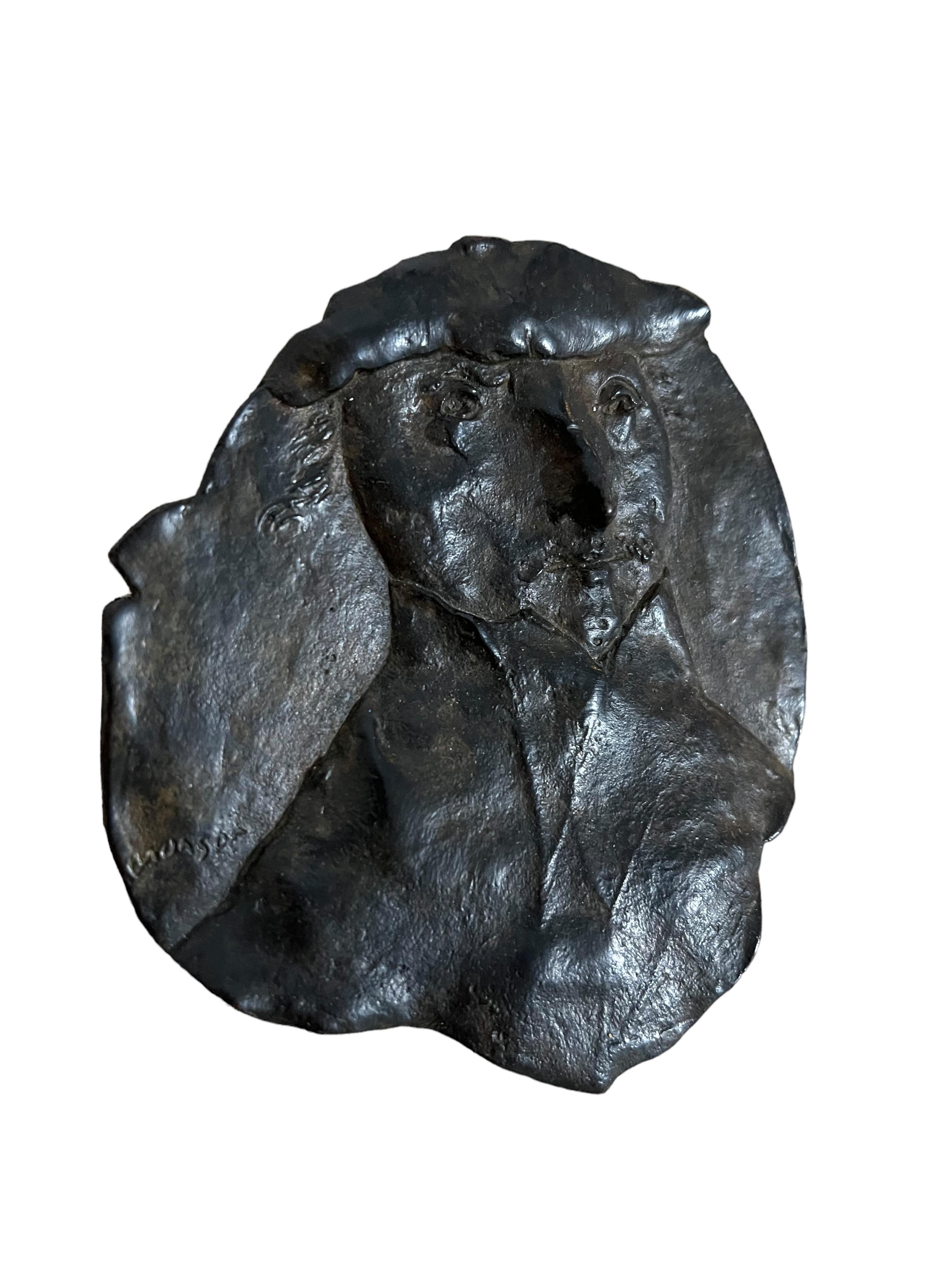
Tout afficherPlaque en bronze Sculpture Judaïque Rabbin Figure Portrait Américain Boston Moderniste
Par David Aronson
Plaque en relief petit portrait juif
Signé et numéroté en chiffres romains de l'édition limitée
Aronson, David 1923-
David AGE, fils de rabbin, est né en Lituanie en 1923 et a immigr...
Catégorie
XXe siècle, Expressionniste, Sculptures - Figuratif
Matériaux
Bronze

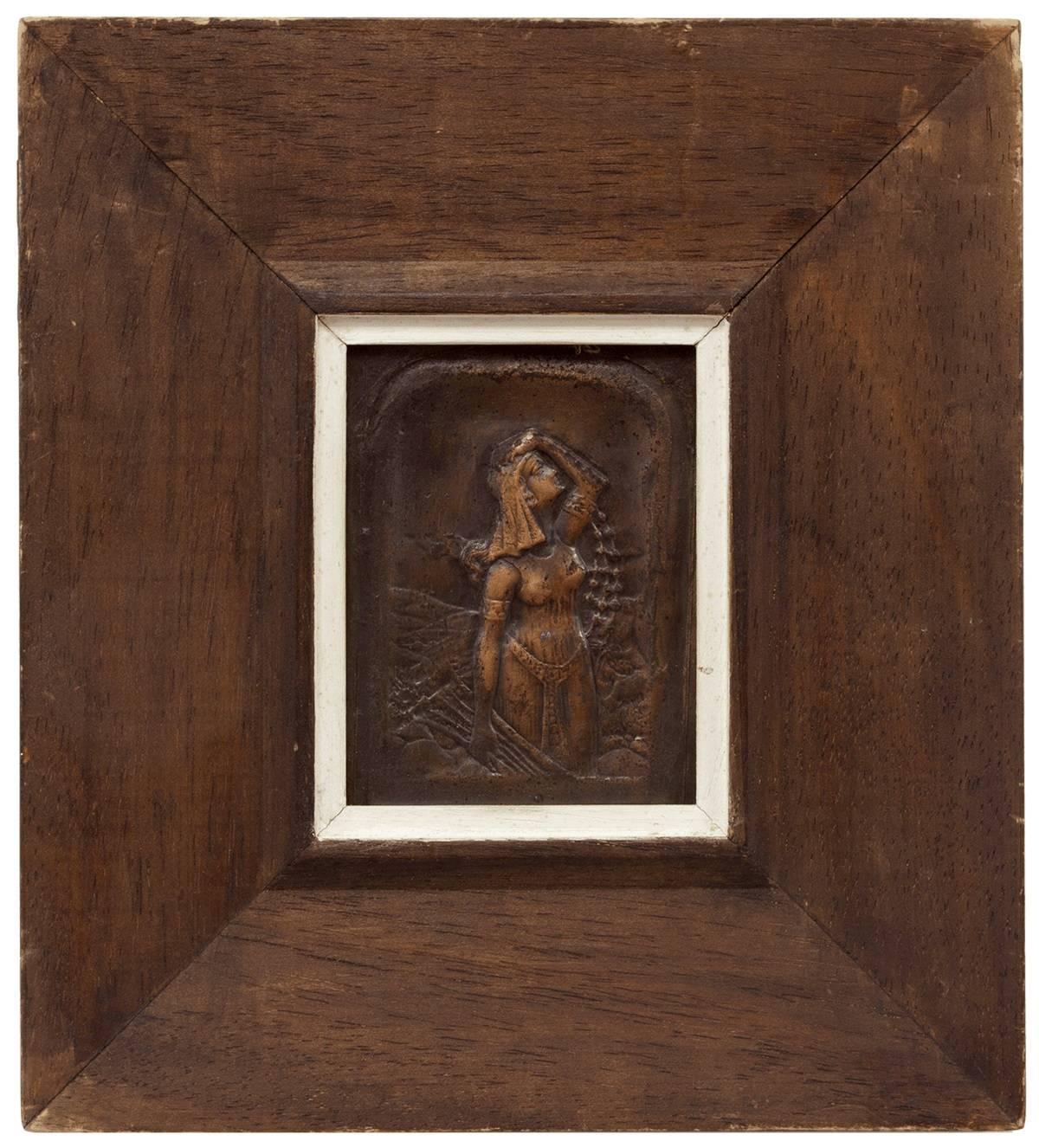
Artistics Plaque en cuivre Artiste israélien Mordechai Avniel, Palestine, Bezalel School
Par Mordechai Avniel
MORDECHAI AVNIEL
Minsk, Biélorussie, né en 1900, décédé en 1989
Mordechai Avniel est surtout connu pour son travail habile et singulier sur les paysages.
Il a parlé de ses scènes d'...
Catégorie
XXe siècle, Moderne, Plus d Art
Matériaux
Cuivre
Rare plaque judaïque « Shtetl Cheder Boy » en cuivre repoussé des années 1940
Par Arieh Merzer
Arieh Merzer était un artiste et un métallurgiste israélien de premier plan.
Aris Merzer, artiste travaillant le cuivre martelé à la main, est né à Varsovie, en Pologne, en 1905, de...
Catégorie
Années 1940, Sculptures - Figuratif
Matériaux
Cuivre
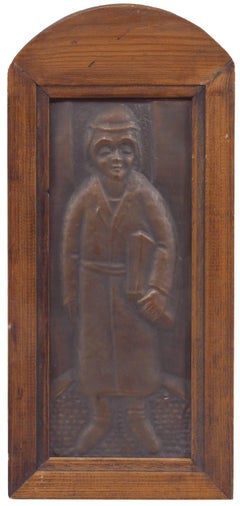
Sculpture judaïque en cuivre argenté repoussé en relief Shtetl Yeshiva Bochur
Par Arieh Merzer
Arieh Merzer était un artiste et un métallurgiste israélien de premier plan.
Aris Merzer, un artiste qui travaillait le cuivre martelé à la main, est né à Varsovie, en Pologne, en 1...
Catégorie
Milieu du XXe siècle, Sculptures - Figuratif
Matériaux
Métal
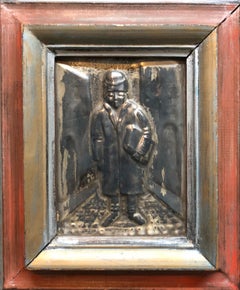
Grande sculpture judaïque en cuivre repoussé en relief de l
époque Arie Merzer Bezalel
Par Arieh Merzer
Arieh Merzer (Israélien, 1905-1966)
Panneau de sculpture en relief en cuivre dans un cadre doré
Dimensions encadrées 18 X 26.25, cuivre 14.5 X 22.5
Arieh Merzer était un artiste i...
Catégorie
Milieu du XXe siècle, Sculptures - Figuratif
Matériaux
Métal, Cuivre
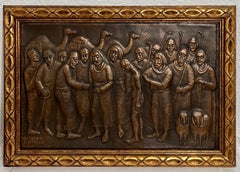
Sculpture en bronze Relief mural Judaica Matriarches juives Moderniste Leonard Baskin
Par Leonard Baskin
Leonard Baskin (1922-2000)
Matriarches juives, Sarah, Rebecca, Rachel et Léa
avec calligraphie hébraïque
Bronze, 1998
9.5 X 9 pouces
Le bronze biblique judaïque des mères juives.
L...
Catégorie
20ième siècle, Moderne, Sculptures - Figuratif
Matériaux
Bronze
Suggestions
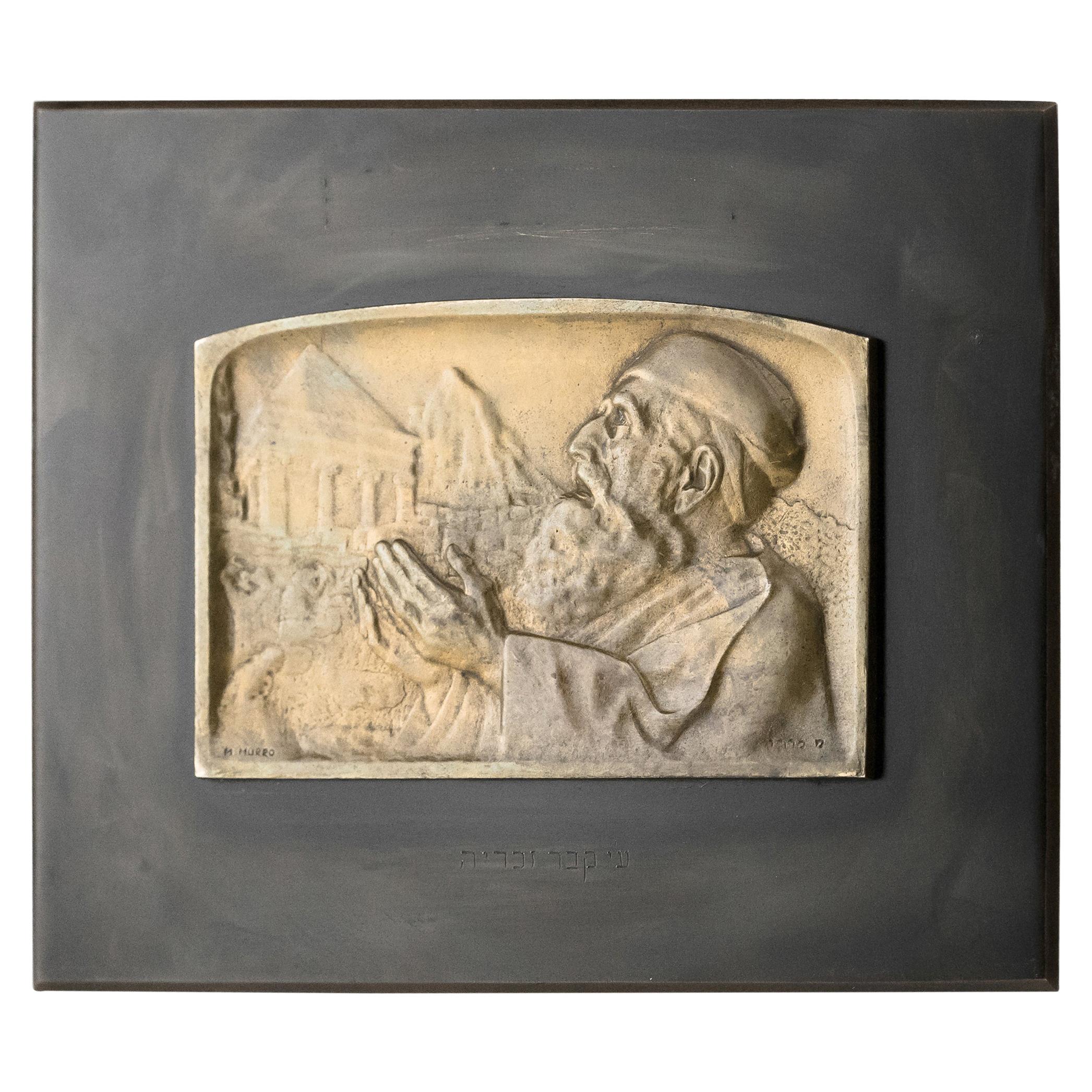
Jew at the Tomb of Zechariah-Bronze Plaque de Moshe Murro pour Bezalel, Jérusalem
Plaque en bronze représentant un Juif avec la tombe de Zacharie en arrière-plan.
Fabriqué à l'école Bezalel, Jérusalem, par Moshe Murro, vers 1915.
Signé : "Bezalel Jerusalem" en h...
Catégorie
Début du 20ème siècle, Israélien, Art décoratif
Matériaux
Bronze
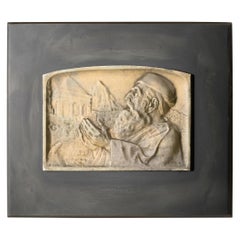
Les Juifs au Tombe de Rachel - Plaque en bronze du début du 20e siècle par Moshe Murro, Jérusalem
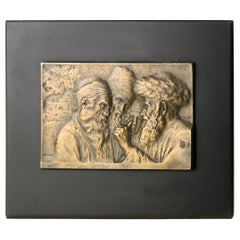
Plaque en bronze représentant les figures de trois juifs âgés et d'un jeune juif avec la Tombe de Rachel en arrière-plan.
Fabriqué à l'école de Bezalel, Jérusalem, par Moshe Murro, ...
Catégorie
Début du 20ème siècle, Israélien, Art décoratif
Matériaux
Bronze
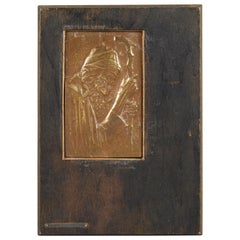
Plaque en laiton du début du 20e siècle par l
école de Bezalel Jérusalem
Plaque en laiton de Bezalel représentant un ancien juif près du Mur occidental, fabriquée à Jérusalem, vers 1920, portant une petite étiquette en métal gravée "Bezalel Jerusalem", en...
Catégorie
Début du 20ème siècle, Israélien, Art décoratif
Matériaux
Laiton
Plaque en bronze du début du 20e siècle "Netilat Lulav" par Boris Schatz, Bezalel
Plaque de bronze massive représentant l'acte de "Netilat Lulav" qui a lieu pendant la fête juive de Sukkot. La plaque a été réalisée et signée par Boris Schatz, qui faisait partie de...
Catégorie
Début du 20ème siècle, Israélien, Néoclassique, Sculptures murales
Matériaux
Bronze
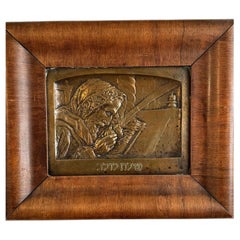
Tisha B
Av, Plaque en bronze de Boris Schatz, Bezalel School Jerusalem
Plaque en bronze Boris Schatz En haut-relief, en bronze coulé par des experts. Représentation d'hommes barbus sur le sol de la synagogue lisant des kin...
Catégorie
Début du 20ème siècle, Israélien, Art décoratif
Matériaux
Bronze
Plaque d
argenterie du début du 20e siècle de l
école de Bezalel Jérusalem
Plaque d'argent Bezalel représentant Moïse au Mont Sinaï, fabriquée à Jérusalem, vers 1925, marquée "Bezalel Jerushalem" en hébreu et "Made in Palestine", entourage en bois.
"L'Éter...
Catégorie
Début du 20ème siècle, Israélien, Art décoratif
Matériaux
Plaqué argent