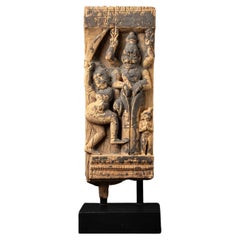
Articles similaires à Ancient Indian Pala Schist Relief of Vishnu
Vous voulez plus d
images ou de vidéos ?
Demander au vendeur plus d
images ou de vidéos
1 sur 8
Ancient Indian Pala Schist Relief of Vishnu
15 648,82 €
À propos de cet article
A classic representation of the god standing on a blooming lotus. With his four hands he holds the club (gada), the disk (cakra), the conch (sanka), and makes the gesture of giving (varada mudrâ). He is flanked by two female deities, one holding a fly whisk, the other a musical instrument. The lower register is occupied by the representations of the probable donors. The back of the composition is treated in the manner of classic throne backsplashes from the Pâla period, with superimposed elephants, vyala, makara, and flying deities. A dedicatory inscription is engraved under the lotus.
Notes
In this sculpture, the Hindu goddesses Lakshmi and Sarasvati flank the deity Vishnu, Preserver of the Universe. Along with Brahma and Shiva, he is seen as one of the three aspects of the embodiment of ultimate reality, but is also worshipped alone as the ultimate deity by some believers. When viewed as the Preserver, he operates alongside Shiva, who destroys the universe, and Brahma, who creates it. Here, Vishnu is presented in a full-frontal pose wearing the traditional adornments of a king. In his four hands, he holds his traditional primary attributes, a jewel, a conch, a flaming wheel, and a mace. The conch is a symbol of creation, the wheel symbolizes the cosmic law, and the mace symbolizes the power of the law. The jewel is a symbol of the fulfillment of the law, and this hand is extended in the wish-fulfilling gesture. Lakshmi holds a fly whisk while in her left hand, now lost, she probably held a lotus flower. Sarasvati plays a lute. This stele is Bengali in style, and would have originally been an independent element forming part of the architectural structure of a temple in eastern India. It would either have been set in a niche, or used as the main image of veneration. The iconographic features of the statue are standard for representations of Vishnu in the guise of Trivikrama, one of his twenty-four forms. The dwarf Vamana won back the universe from King Bali by transforming into Trivikrama and crossing the universe in three giant steps.
Provenance
China and India Company, Paris, 1994.
Private French Collection.
Cornette De Saint Cyr Paris, March 23, 2021.
Private Collection, Beverly Hills California.
- Dimensions:Hauteur : 55,88 cm (22 po)Largeur : 26,67 cm (10,5 po)Profondeur : 12,7 cm (5 po)
- Matériaux et techniques:
- Lieu d origine:
- Période:
- Date de fabrication:12th Century AD
- État:Usure conforme à l âge et à l utilisation. Visible accidents and losses to both the crown and face, the mace head, both lower arms, and lotus pedestal base. Large chip to proper lower right hand side of the stele border. Crisp details maintained throughout with some surface wear to background.
- Adresse du vendeur:Los Angeles, CA
- Numéro de référence:Vendeur : HQ.00581stDibs : LU10743248130892
À propos du vendeur
Nouveau sur 1stDibs
Inscrit au cours des six derniers mois.
Aucune évaluation pour le moment
Vendeur professionnel agréé
Chaque vendeur répond à des normes strictes en matière d
authenticité et de fiabilité
Établi en 2022
Vendeur 1stDibs depuis 2025
Temps de réponse habituel : 3 heures
- ExpéditionRecherche du devis...Expédition depuis : Los Angeles, CA
- Politique des retours
Certaines parties de cette page ont été traduites automatiquement. 1stDibs ne garantit pas l
exactitude des traductions. L
anglais est la langue par défaut de ce site web.
Plus d articles de ce vendeur
Tout afficherAncient Indian Red Sandstone Figure of a Salabhanjika
This superbly carved female figure stands in graceful tribhanga pose clutching the branches of the tree above with both hands. She is clad in a sheer dhoti and generously adorned wit...
Catégorie
Antiquités, 15e siècle et avant, Indien, Antiquités
Matériaux
Grès
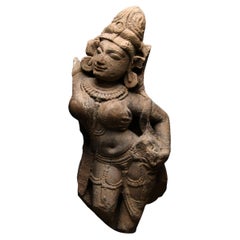
Ancient Indian Sandstone Figure of a Female Deity
This sublime and sensuous female deity figure was likely part of a divine couple composition. The pairing of God and Goddess, often represented as Vishnu and Lakshmi, could be found...
Catégorie
Antiquités, 15e siècle et avant, Indien, Antiquités
Matériaux
Grès
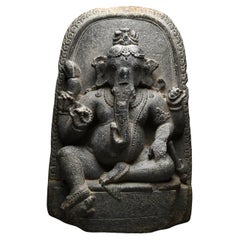
Steele de Ganesha en pierre noire de Pala
Assis en lalitasana, le pied pendant reposant sur le rat, Ganesh tient un mala, un radis et un bol de bonbons dans trois de ses mains, tandis que la quatrième repose confortablement ...
Catégorie
Antiquités, 15e siècle et avant, Indien, Antiquités
Matériaux
Pierre
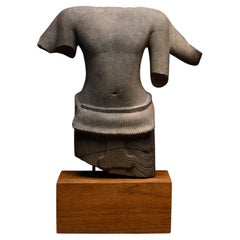
Ancien torse en grès khmer d
une divinité à quatre bras
Cet impressionnant torse khmer à la poitrine large représente probablement Lokesvara, le célèbre bodhisattva de la compassion dans le bouddhisme. Notre divinité est vêtue d'un sampo...
Catégorie
Antiquités, 15e siècle et avant, Cambodgien, Antiquités
Matériaux
Grès
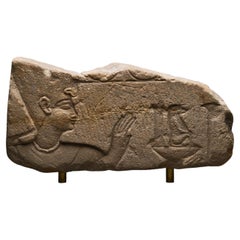
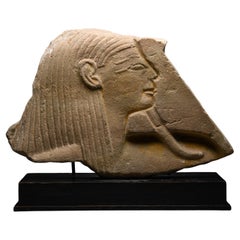
Ancien relief égyptien en pierre calcaire
Sculptée en relief, cette superbe sculpture en pierre calcaire représente un pharaon tourné vers la droite, portant un large collier et la couronne rouge ou la double couronne, précé...
Catégorie
Antiquités, 15e siècle et avant, Égyptien, Égyptien, Antiquités
Matériaux
Calcaire
Ancien relief égyptien en grès représentant une divinité barbue
Cette image frappante, sculptée en relief en creux d'une divinité masculine barbue, représente probablement Hapi, le dieu du Nil. Les traits sont proéminents, avec des lignes audaci...
Catégorie
Antiquités, 15e siècle et avant, Égyptien, Égyptien, Antiquités
Matériaux
Grès
Suggestions
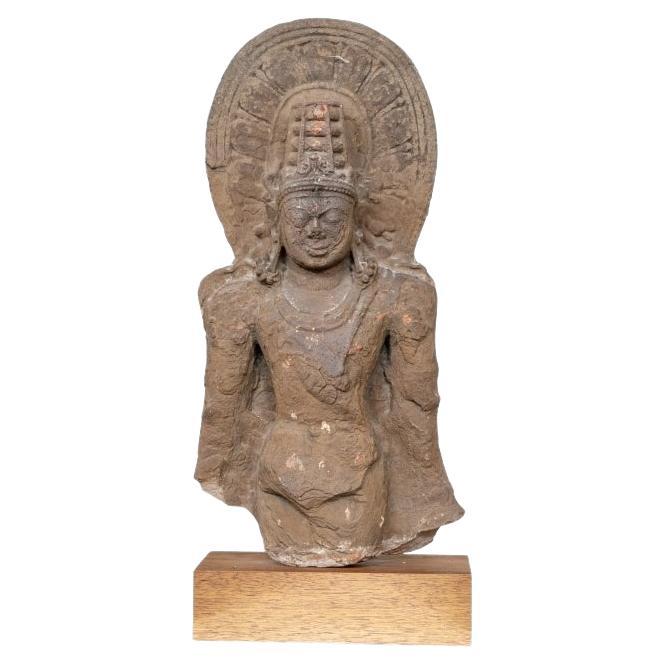
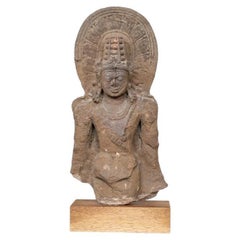
Relief indien antique du dieu hindou Vishnu
Exceptionnel Buste ancien en pierre sculptée de Vishnu Monté sur une base en bois. Ca. 7e-12e siècle ADS. Une ancienne sculpture en pierre représentant Vishnu, vêtu d'une draperie ...
Catégorie
Antiquités, 15e siècle et avant, Asiatique, Agra, Antiquités
Matériaux
Grès
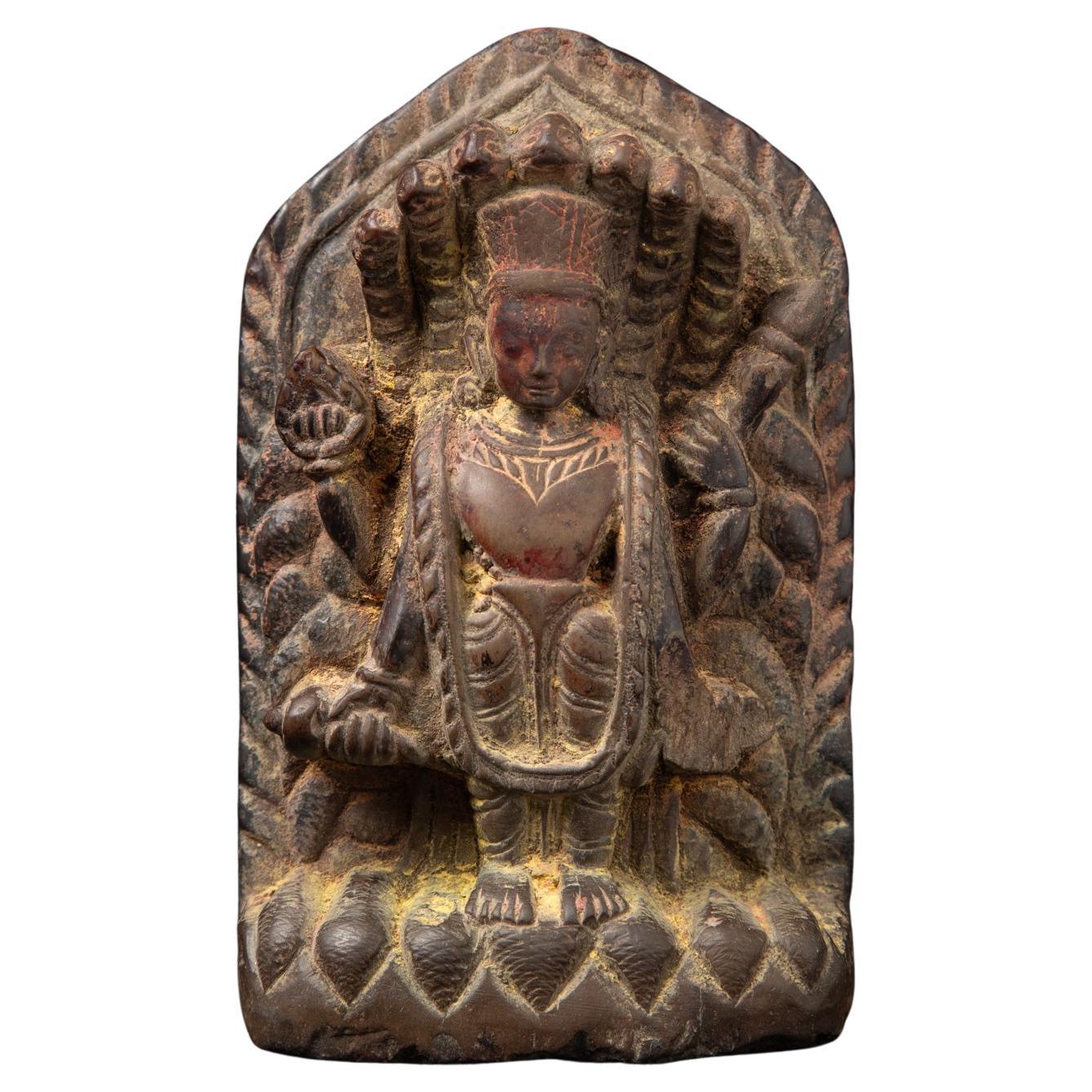
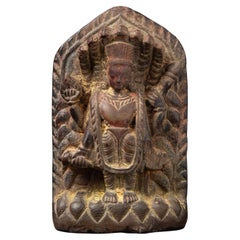
Statue de Vishnu en pierre, ancienne et spéciale, du Népal, du début du XVIIe siècle
Cette statue antique de Vishnu, originaire du Népal et dont on pense qu'elle date du XVIIe siècle ou d'une époque antérieure, est une pièce remarquable de l'art sacré et de l'héritag...
Catégorie
Antiquités, Début du XVIIe siècle, Birman, Sculptures et objets ciselés
Matériaux
Pierre
3 528 €
Livraison gratuite
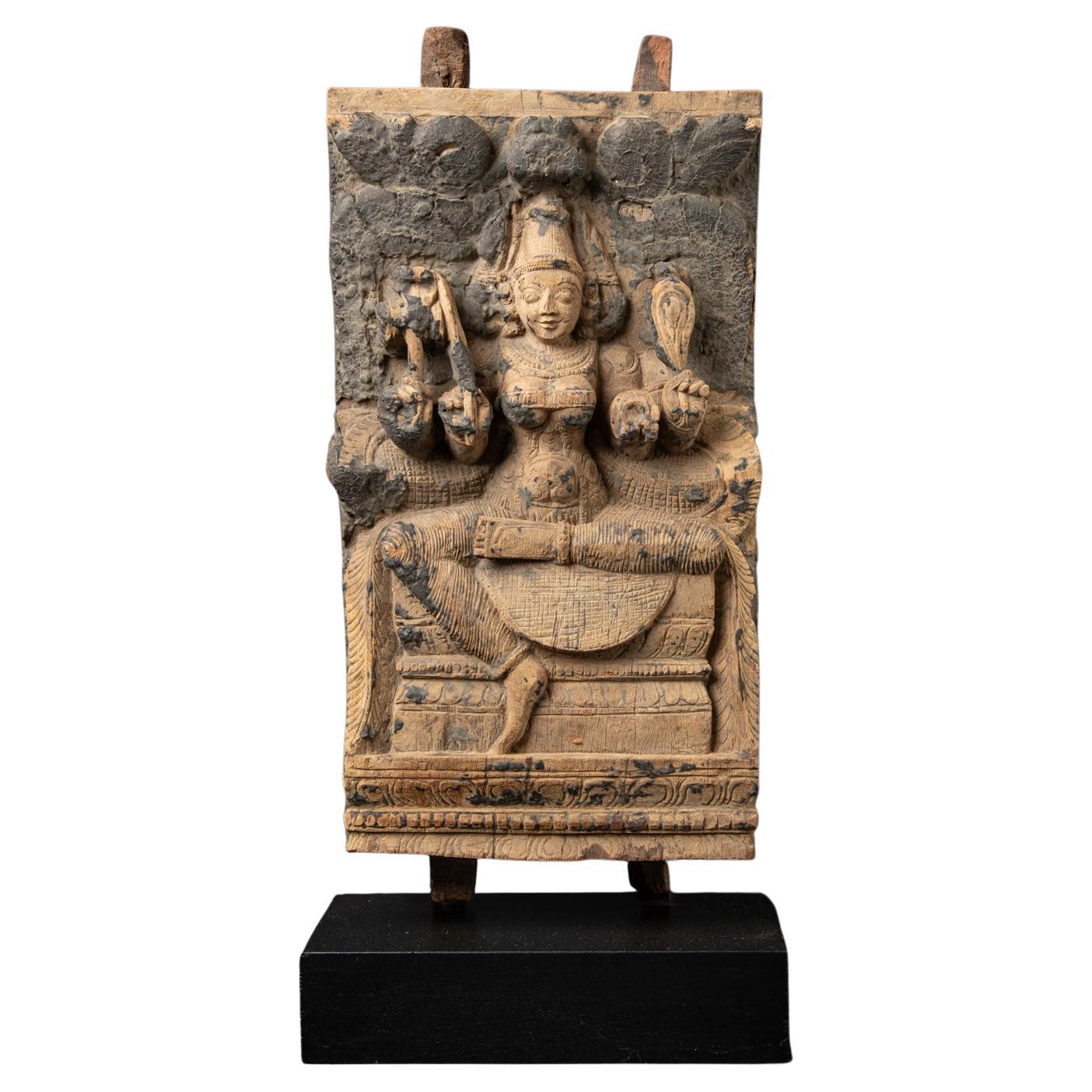
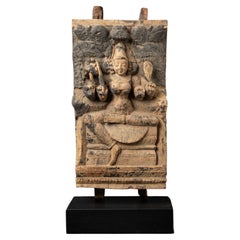
Panneau de temple indien ancien en bois du 18ème siècle
Ce panneau de temple indien antique en bois est un objet rare et exquis du XVIIIe siècle provenant d'un char de temple antique en Inde. Sculpté de manière experte dans un bois de hau...
Catégorie
Antiquités, XVIIIe siècle, Birman, Sculptures et objets ciselés
Matériaux
Bois
Panneau de temple indien ancien en bois du 19ème siècle
Ce panneau de temple indien antique en bois est un objet exceptionnel du XVIIIe siècle. Il faisait à l'origine partie d'un char de temple traditionnel utilisé lors des processions sa...
Catégorie
Antiquités, XIXe siècle, Indien, Sculptures et objets ciselés
Matériaux
Bois
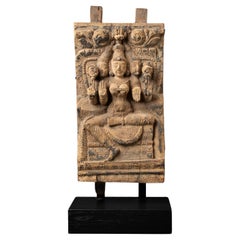
Statue en grès du XIXe siècle représentant Saraswati avec Ganesha et Kartikeya, originaire d
Inde
Cette statue en grès de Saraswati, accompagnée de Ganesha et de Kartikeya, est une pièce remarquable de l'art religieux indien. Fabriquée en grès, elle atteint une hauteur impression...
Catégorie
Antiquités, XIXe siècle, Indien, Sculptures et objets ciselés
Matériaux
Grès
20 624 €
Livraison gratuite
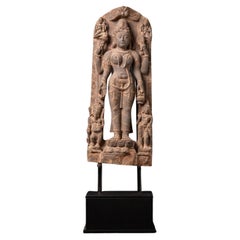
Panneau de temple indien ancien en bois du 18ème siècle
Explorez le riche patrimoine de l'art des temples indiens avec ce panneau de temple indien antique en bois, un étonnant artefact du XVIIIe siècle provenant d'un char de temple antiqu...
Catégorie
Antiquités, XVIIIe siècle, Birman, Sculptures et objets ciselés
Matériaux
Bois