Articles similaires à Tray table incorporating Chines Porcelain pattern, British East India Company
Chargement de la vidéo
Vous voulez plus d
images ou de vidéos ?
Demander au vendeur plus d
images ou de vidéos
1 sur 22
Tray table incorporating Chines Porcelain pattern, British East India Company
4 801,68 €TVA incluse
6 002,10 €20 % de remise
À propos de cet article
Technical data
Materials: Porcelain tray, wooden legs
Period: Qing Dynasty
Country of origin: China
Good condition for its age and use, with some flaws in the wooden structure
Overall dimensions: 70 x 95 x 80 cm
Porcelain dimensions: 70 x 58 cm
Exquisite Fitzhugh pattern porcelain plate or tray, inlaid in a cabinet that highlights its oval profile and raised on four slightly curved square legs.
The term "Fitzhugh" refers to a type of Chinese export porcelain produced primarily between 1780 and 1840, featuring blue and white designs. It originated with three members of two generations of the Fitzhugh family. Members of this family held important positions as ship captains and even as directors in the British East India Company. Within this company, high-ranking officials were allowed to engage in private trade. Between 1704 and the 1790s, porcelain pieces bearing this pattern were shipped to England.
The design usually includes a central medallion, although it is occasionally replaced by a coat of arms or monogram. The medallion is surrounded by four groupings of flowers representing the four seasons—peony for spring; lotus for summer; chrysanthemum for autumn; and prunus for winter—and symbols that typically represent the four virtues of the Chinese scholar: music, painting, logical thinking, and calligraphy. The design is framed with a decorative border that may be a lattice and spearhead pattern, sometimes known by the term "Nanking," or a more elaborate border featuring butterflies, honeycomb shapes, and floral ornamentation. The definition of the Fitzhugh porcelain group has evolved throughout history in both Europe and America.
In England, authentic Fitzhugh porcelain refers to porcelain that replicates designs associated with William Fitzhugh, a purser in Canton who shipped porcelain to England in 1778, 1789, and 1791. This design consists of a central medallion, four floral clusters, and a trellis-diaper lattice border with a spearhead.
A unique opportunity to acquire a museum-worthy piece!
The British East India Company (1599-1874)
The British East India Company was founded in 1599 by English entrepreneurs to trade with the East Indies, breaking the Dutch monopoly on the spice trade. In 1600, it received a Royal Charter from Queen Elizabeth I granting it a trade monopoly with that region for 15 years. Over time, it transformed into a joint-stock company dominated by wealthy merchants and aristocrats, and although the British government held no shares, it did exercise indirect control. The company eventually handled half of the world's trade, especially in goods such as cotton, tea, silk, opium, and salt.
In 1702, it merged with a rival company and became a major commercial and territorial power in India, with its own army and government functions. Its effective rule in India began in 1757 and ended in 1858, when, following a rebellion, the British Crown took direct control through the Government of India Act. Finally, due to financial problems and political changes, the company was dissolved in 1874, and its functions were absorbed by the British government.
It was primarily established to trade with the East Indies, especially India and China. It traded in products such as spices, tea, silk, cotton, salt, opium, and more. It came to control certain territories in India, acting as a kind of private government, with its own armies, laws, and administrative system, which allowed it to play a key role in the expansion of the British Empire in Asia.
Although its primary function was not artistic, the company had a significant impact on art, mainly indirectly, as it sponsored works of art, encouraged the fusion of European techniques and Eastern styles, and fostered the export of art, textiles, and exotic objects that influenced European fashion and design of the time.
A museum piece!!!
Technical data
Materials: Porcelain tray, wooden legs
Period: Qing Dynasty
Country of origin: China
Good condition for its age and use, with some flaws in the wooden structure
Overall dimensions: 70 x 95 x 80 cm
Porcelain dimensions: 70 x 58 cm
- Créateur:Margaret Fitzhugh Browne (Artiste)
- Dimensions:Hauteur : 70 cm (27,56 po)Largeur : 95 cm (37,41 po)Profondeur : 80 cm (31,5 po)
- Style:Exportation chinoise (De la période)
- Matériaux et techniques:
- Lieu d origine:
- Période:1790-1799
- Date de fabrication:1798
- État:Usure conforme à l âge et à l utilisation.
- Adresse du vendeur:Valladolid, ES
- Numéro de référence:1stDibs : LU2943345387002
À propos du vendeur
4,7
Vendeur Platine
Vendeurs premium dont la note est supérieure à 4,7 et le délai de réponse de 24 heures maximum
Établi en 1990
Vendeur 1stDibs depuis 2017
169 ventes sur 1stDibs
Temps de réponse habituel : <1 heure
- ExpéditionRecherche du devis...Expédition depuis : VALLADOLID, Espagne
- Politique des retours
Certaines parties de cette page ont été traduites automatiquement. 1stDibs ne garantit pas l
exactitude des traductions. L
anglais est la langue par défaut de ce site web.
Plus d articles de ce vendeur
Tout afficherTable démilunie Huanghuali, Yueyazhuo.
Par Chow
s Oriental Furniture Co.
Belle couleur miel avec des sculptures archaïques de dragons sur le tablier.
Étonnante table chinoise en forme de croissant, connue sous le nom de YUEYAZHUO, fabriquée en bois Huangh...
Catégorie
Antiquités, années 1790, Français, Exportation chinoise, Antiquités
Matériaux
Bois
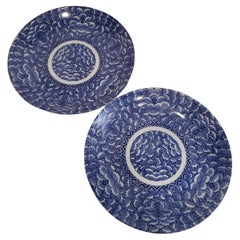
Arita Paire de plats de service en porcelaine bleue et blanche
Par Arita
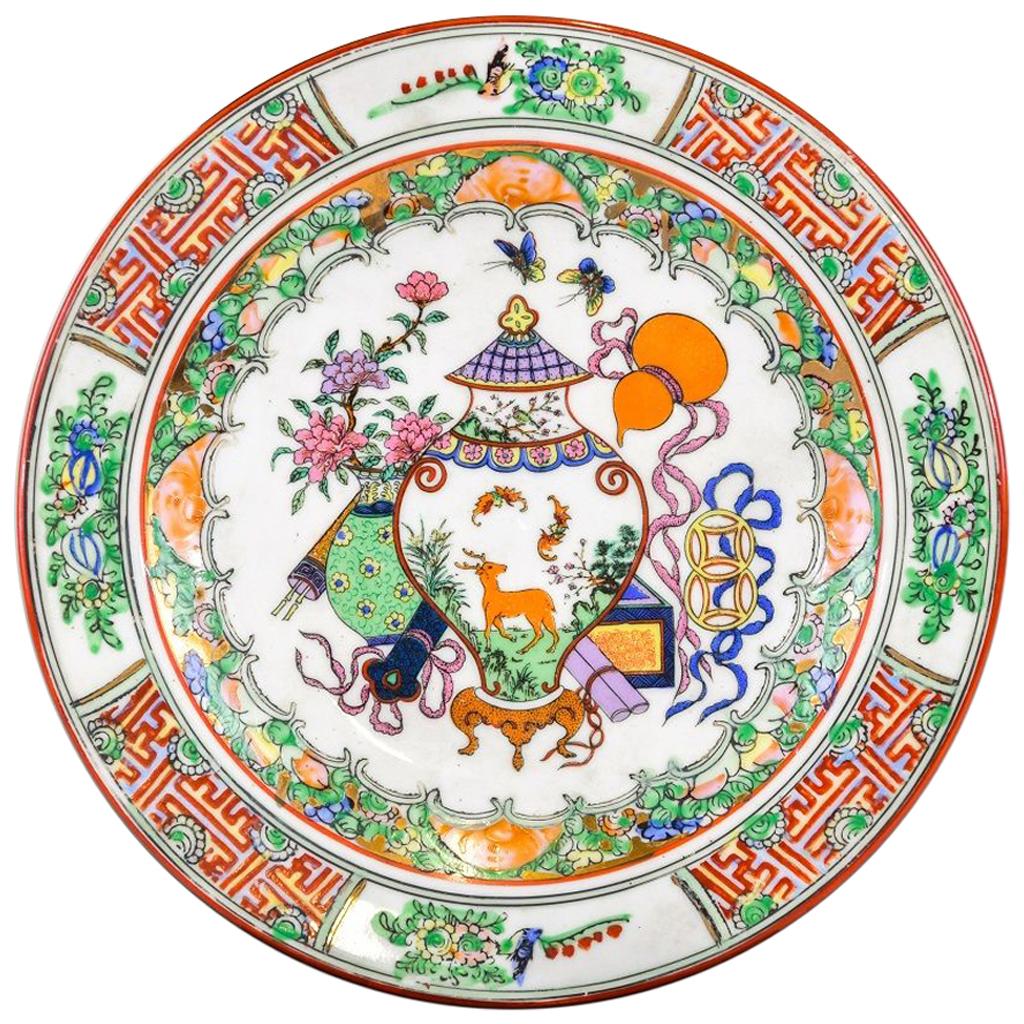
Paire de grandes assiettes ou plateaux en porcelaine d'Arita ou d'Imari. La porcelaine d'Arita ou porcelaine d'Imari est le nom occidental des produits en porcelaine fabriqués dans l...
Catégorie
Vintage, années 1920, Japonais, Japonisme, Porcelaine
Matériaux
Porcelaine
1 555 € / ensemble
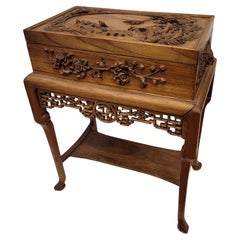
Coffre d
appoint en Indochine de la Dynasty Qing, , bois sculpté sur pieds
Par Paquement Vietnam
Magnifique coffre d'Indochine de la fin de la dynastie Qing, début du 20e siècle, avec tablier et côtés sculptés.
Alliant utilité et esthétique, cette commode de la fin de la dynasti...
Catégorie
Antiquités, Début des années 1900, Vietnamien, Qing, Meubles de rangement
Matériaux
Bois
1 496 € Prix de vente
20 % de remise
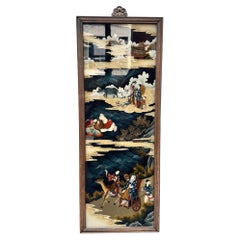
Miroir chinois de la dynastie Qing peint à l
envers
Par Chow
s Oriental Furniture Co.
Superbe miroir peint à l'envers, datant de la dynastie Qing du XIXe siècle, représentant différentes scènes dans une narration verticale.
Différentes scènes comportant des éléments s...
Catégorie
Antiquités, années 1870, Chinois, Qing, Peinture et sérigraphie
Matériaux
Cristal
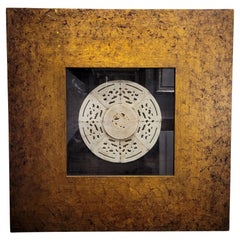
Disque Bi vert asiatique sculpté et encadré, jadéite
Par Chow
s Oriental Furniture Co.
Exquis disque bi en jadéite sculpté et encadré (璧). Un disque bi est un disque de jade circulaire (plat) avec un trou au centre, utilisé dans la Chine ancienne. En l'occurrence, il e...
Catégorie
Vintage, années 1940, Chinois, Exportation chinoise, Antiquités
Matériaux
Cristal, Jade
1 623 € Prix de vente
20 % de remise
Table de salle à manger américaine à manivelle par J
JW Meeks, New York
Par J.
J.W. Meeks
Remarquable table de salle à manger en acajou avec rallonge à manivelle, de la prestigieuse manufacture américaine J. & A&M. MEEKS de New York.
Table de style George II du début du 1...
Catégorie
Antiquités, années 1820, Américain, George II, Tables de salle à manger
Matériaux
Fer
Suggestions
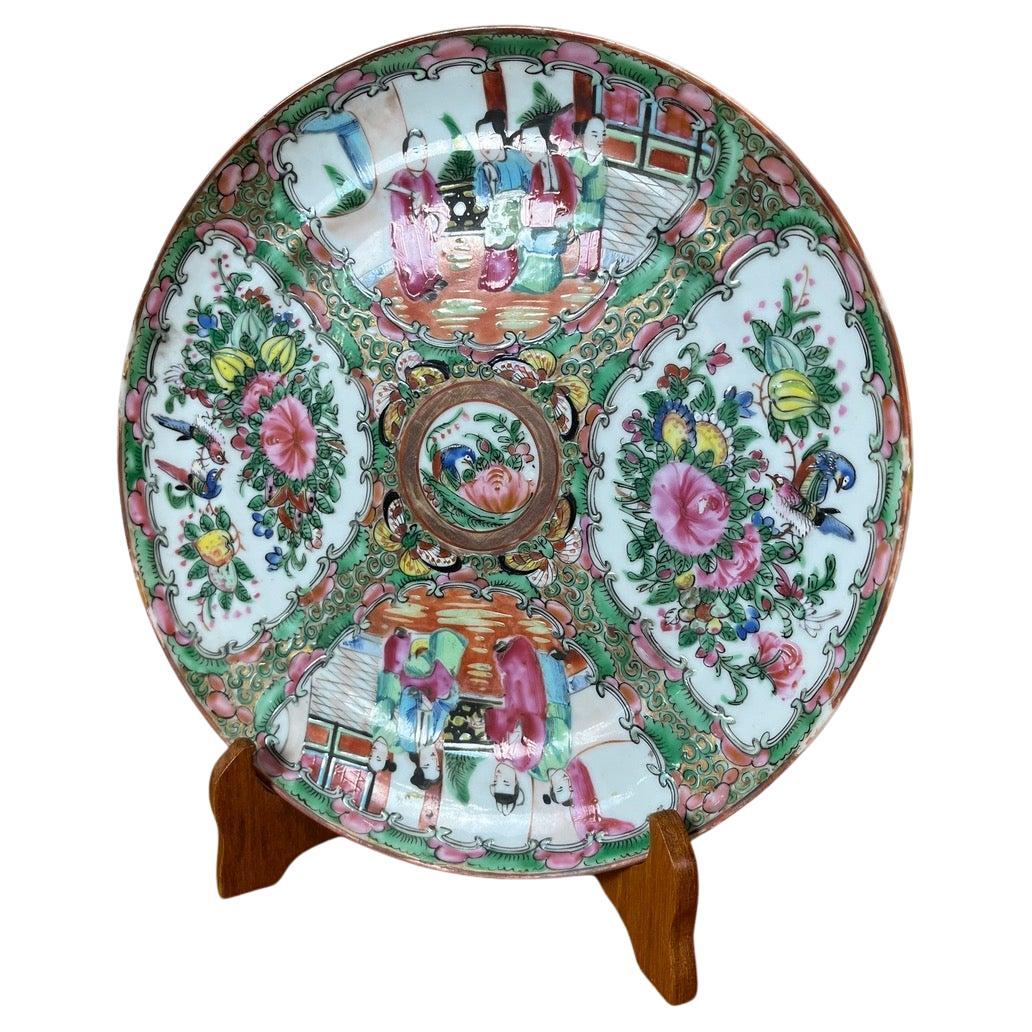
Assiette en porcelaine de Canton du 19e siècle, 1890
Belle assiette décorative en porcelaine chinoise, style Canton Rose, datant du 19ème siècle. Il est richement orné de scènes traditionnelles chinoises, de fleurs, d'oiseaux exotiques...
Catégorie
Antiquités, Fin du XIXe siècle, Chinois, Plats et pièces de service
Matériaux
Porcelaine
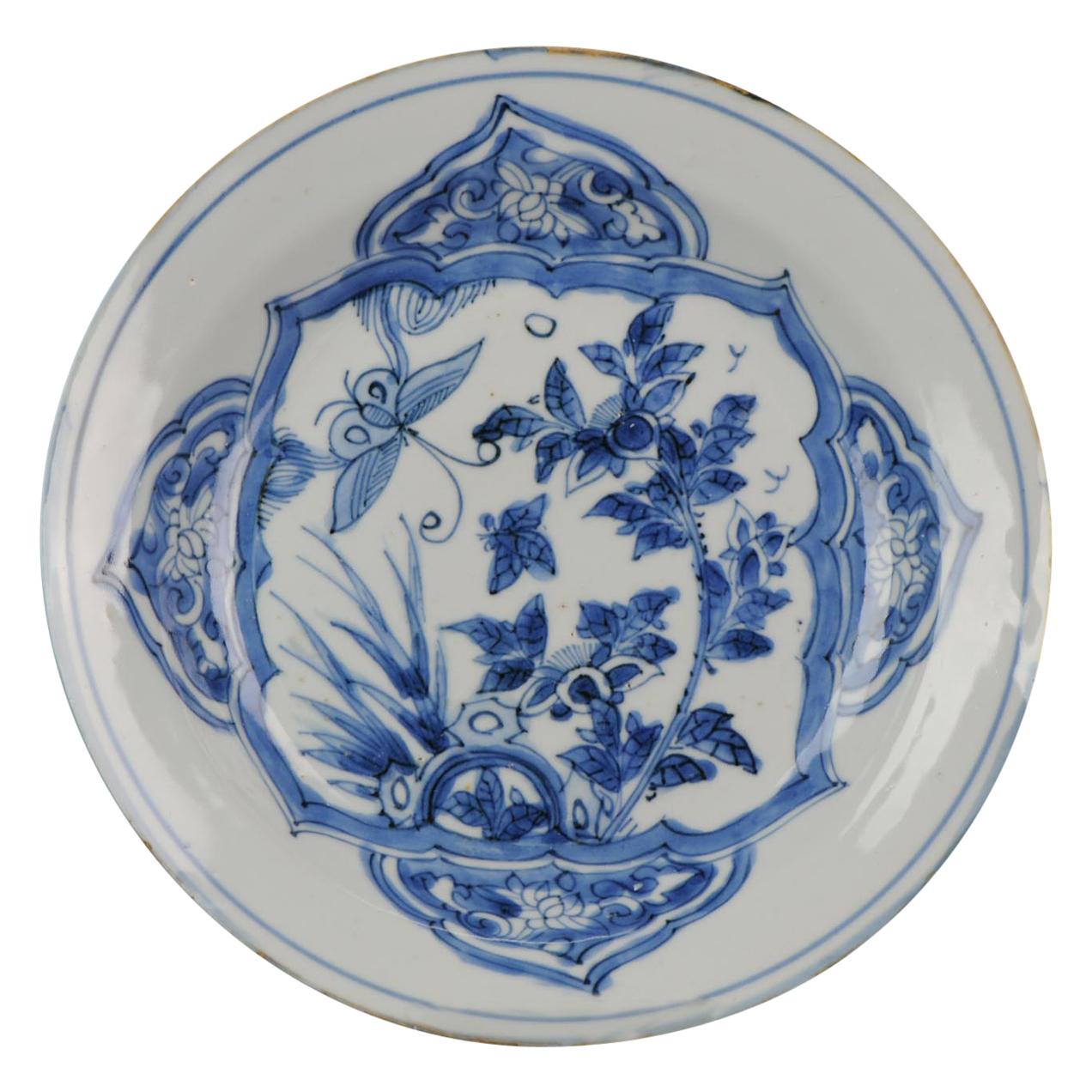
Assiette chinoise ancienne en porcelaine Ming Wanli décorée de façon rare
Une assiette très joliment décorée et d'une taille rare
14-11-18-1-1
Condit
État général a (bon) beaucoup de rimfrits comme on peut s'y attendre pour ce type de porcel...
Catégorie
Antiquités, XVIe siècle, Chinois, Ming, Céramique
Matériaux
Porcelaine
1 440 € Prix de vente
20 % de remise
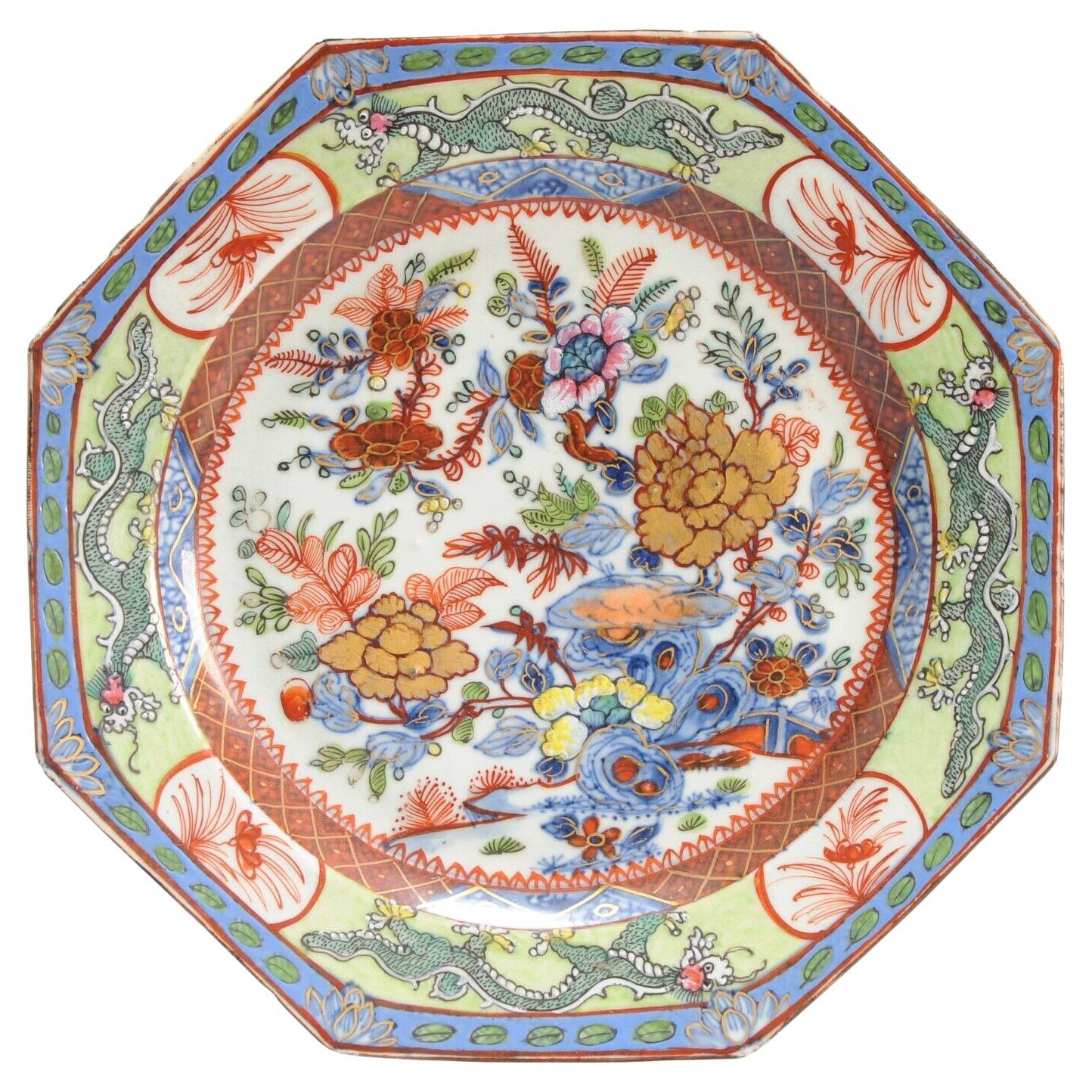
Ancienne assiette en porcelaine chinoise du 18ème siècle avec décoration de style Régence
Une très belle pièce de porcelaine du XVIIIe siècle décorée d'une belle scène. Le bleu sous glaçure et les autres émaux sous glaçure ont été réalisés plus tard en Europe.
Nous avons ...
Catégorie
Antiquités, XVIIIe siècle, Chinois, Regency, Plats décoratifs et vide-po...
Matériaux
Porcelaine
1 349 € Prix de vente
20 % de remise
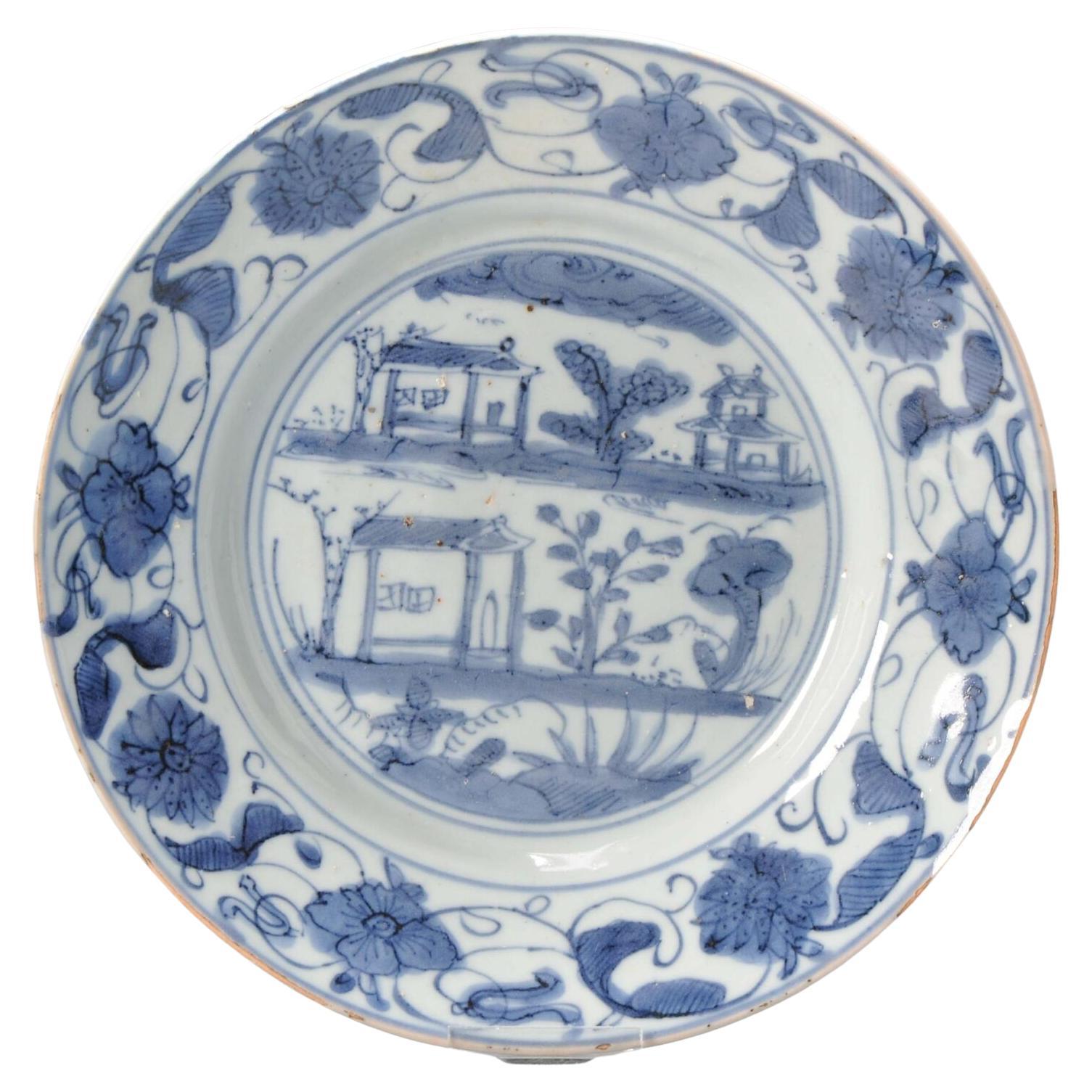
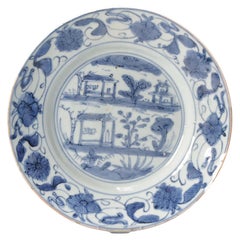
Ancienne assiette en porcelaine chinoise Ming/transitionnelle, Maison européenne, pièce rare
J'ai vraiment trouvé quelque chose d'intriguant. Cette assiette est décorée de ce qui est souvent considéré comme des maisons européennes. Un élément que l'on retrouve sur les assiet...
Catégorie
Antiquités, XVIe siècle, Chinois, Ming, Céramique
Matériaux
Porcelaine
3 998 € Prix de vente
20 % de remise
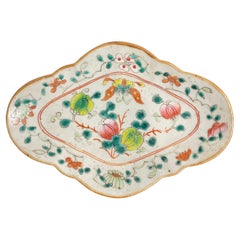
Assiette chinoise Wucai, 19ème siècle
Assiette chinoise Wucai, 19ème siècle
Décoration de la maison, design d'intérieur et objets de collection.
Provenance : Collection privée de Victoria.
Dimension :
Hauteur : 4cm
Lar...
Catégorie
Antiquités, XIXe siècle, Chinois, Qing, Céramique
Matériaux
Porcelaine
Vieille assiette en porcelaine chinoise:: fabriquée en Chine:: début du 20ème siècle
Cette assiette en porcelaine est un objet décoratif original réalisé en Chine par une manufacture chinoise, au début du 20e siècle.
Elle est décorée d'ornements géométriques et f...
Catégorie
Début du 20ème siècle, Chinois, Antiquités
Matériaux
Céramique