Articles similaires à Netsuke in Boxwood in the form of a seated rooster
Vous voulez plus d
images ou de vidéos ?
Demander au vendeur plus d
images ou de vidéos
1 sur 6
Netsuke in Boxwood in the form of a seated rooster
800 €TVA incluse
À propos de cet article
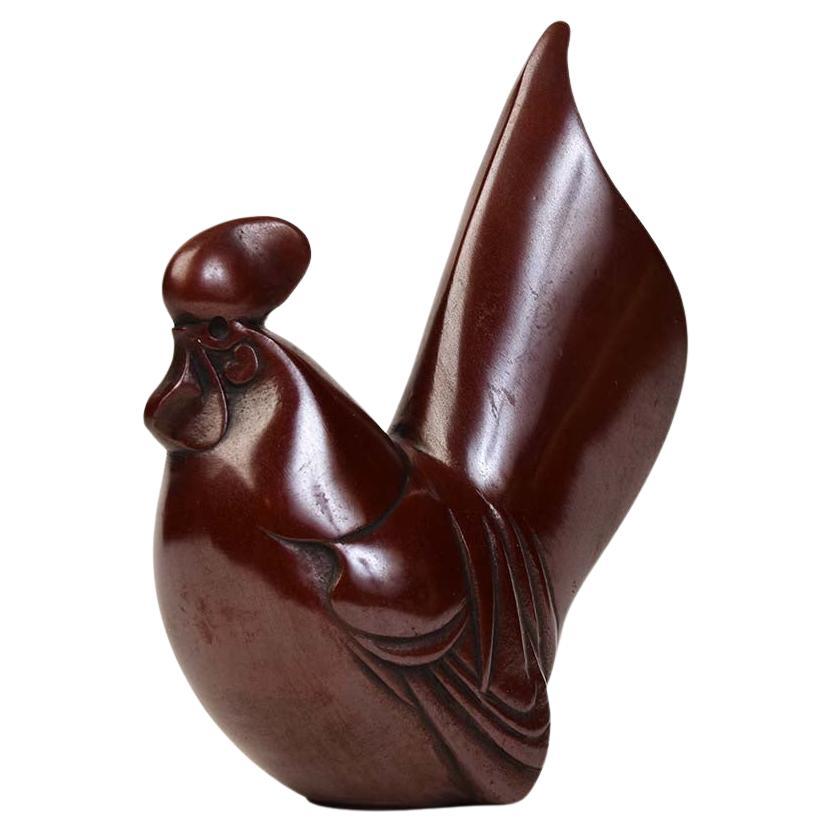
Small yet interesting netsuke in boxwood representing a seated rooster. The finish of its dishevelled feathers is neat, while the details of comb and the beak are treated with great realism. Verny nice brown patinq of use, characteristics of netsuke of the beginning of the Meiji period. Emblematic animal from the Chinese and Japanese zodiacal calendar, it is a symbol of prosperity that could grant a prolific descendance. In the Kojiki (lit. Chronicle of antique facts), a book on the mythology of Japan, the rooster can make the goddess Amaterasu out of her cave, only using its chant and a magic mirror.
The kimono being a piece of cloth mostly designed without any pocket, the small items of day-to-day life were hung on the belt almost like a chatelaine, but rather in small boxes that were part of a greater set called sagemono. In order to be kept firmly in place a netsuke was notch into the belt (obi) of the kimono, this would secure any type of sagemono and help tighten the link between social status and traditional apparel. Netsuke are small figurine made of wood, sometime ivory and are among the greatest example of the excellence of Japanese craftsmen. They are meticulously sculpted, often in precious material, and always over a long period, sometimes, up to a month. Under the Edo era, rich collectors were already fighting for the most attractive pieces, preserving these from being worn too intensively. Under the Meiji era a lot of aspects of society changed, so did fashion and with it netsuke and sagemono lost most of their utilitarian purpose only leaving the attraction one could have for any type of precious and small objects.
Japan – Meiji era (1868-1912)
Height : 5 cm – width : 3 cm – depth : 4 cm
- Dimensions:Hauteur : 5 cm (1,97 po)Largeur : 3 cm (1,19 po)Profondeur : 4 cm (1,58 po)
- Matériaux et techniques:
- Lieu d origine:
- Période:
- Date de fabrication:1868-1912
- État:Usure conforme à l âge et à l utilisation.
- Adresse du vendeur:PARIS, FR
- Numéro de référence:Vendeur : 13791stDibs : LU8311247740242
À propos du vendeur
Aucune évaluation pour le moment
Vendeur professionnel agréé
Chaque vendeur répond à des normes strictes en matière d
authenticité et de fiabilité
Établi en 2013
Vendeur 1stDibs depuis 2023
Temps de réponse habituel : <1 heure
- ExpéditionRecherche du devis...Expédition depuis : PARIS, France
- Politique des retours
Certaines parties de cette page ont été traduites automatiquement. 1stDibs ne garantit pas l
exactitude des traductions. L
anglais est la langue par défaut de ce site web.
Plus d articles de ce vendeur
Tout afficherNetsuke in persimon wood in the form of a sparrow
Netsuke in natural persimmon wood in the form of a stylized bird (probably a sparrow), it has been treated with abstraction and has a remarkable polish.
In Asia, the sparrow is seen...
Catégorie
Antiquités, XIXe siècle, Japonais, Meiji, Sculptures et objets ciselés
Matériaux
Bois
Netsuke japonais d
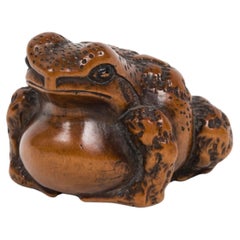
un crapaud coassant en buis
Netsuke d'un crapaud en bois à la gorge gonflée. Réalisée entièrement en buis, la peau est traitée avec minutie, la pause naturaliste suggère que le crapaud coasse, la texture lisse ...
Catégorie
Antiquités, Fin du XVIIIe siècle, Japonais, Sculptures et objets ciselés
Matériaux
Buis
Netsuke japonais Boxwoord en forme de deux châtaigniers
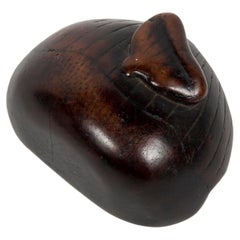
Netsuke en buis représentant deux marrons, dont le plus petit est posé sur le plus grand.
Les châtaignes sont un élément central de la culture et de la gastronomie japonaises. Casta...
Catégorie
Antiquités, Début du XIXe siècle, Japonais, Edo, Sculptures et objets ci...
Matériaux
Buis
Netsuke professionnel japonais
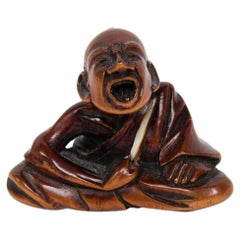
Netsuke en buis représentant un éternueur professionnel assis, représenté comme un vieil homme, la main droite levée, tenant un bâton pour se chatouiller. Sa tête est légèrement rele...
Catégorie
Antiquités, Fin du XVIIIe siècle, Japonais, Edo, Sculptures et objets ci...
Matériaux
Buis
Netsuke en forme de masque No représentant le personnage de Hyottoko
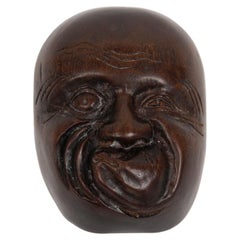
Netsuke en buis représentant le masque de Hyottoko dans le théâtre nô.
Hyottoko est un personnage légendaire de bande dessinée, considéré comme un dieu du feu dans certaines régions ...
Catégorie
Antiquités, Fin du XIXe siècle, Japonais, Edo, Sculptures et objets ciselés
Matériaux
Buis
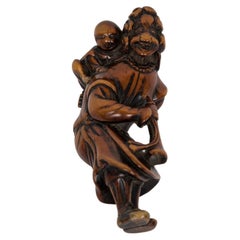
netsuke représentant un ducthman avec un enfant et un trompette
Netsuke en bois représentant un Hollandais debout, la bouche ouverte, penché vers l'avant. Il porte une longue perruque bouclée, une collerette et un long manteau noué à la taille. D...
Catégorie
Antiquités, Fin du XVIIIe siècle, Japonais, Japonisme, Sculptures et obj...
Matériaux
Buis
Suggestions
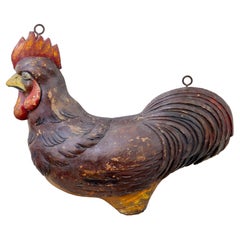
Présentoir à coq en bois massif sculpté du 19ème siècle
Présentoir de boutique en bois massif sculpté de coq, vers 1880.
Nous avons ici un objet rare qui est probablement une enseigne de magasin française, qui aurait été suspendue au-des...
Catégorie
Antiquités, Fin du XIXe siècle, Français, Rustique, Sculptures - Animaux
Matériaux
Chêne, Peinture
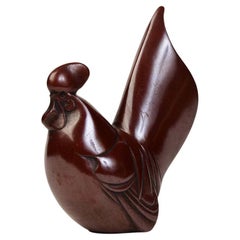
20ème siècle, Showa, coq japonais en bronze avec étiquette d
artiste
Coq en bronze japonais avec signe d'artiste.
Âge : Japon, période Showa, 20e siècle
Taille : Hauteur 17 cm / Largeur 6,3 cm / Longueur 12,5 cm
Condition : Bon état général.
Catégorie
20ième siècle, Japonais, Sculptures et objets ciselés
Matériaux
Bronze
665 € Prix de vente
20 % de remise
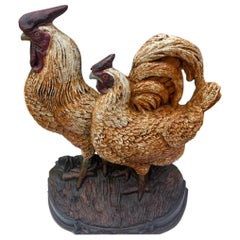
20e siècle Butée de porte originale en forme de coq peint
Ce superbe butoir de porte original en forme de double coq peint est en très bon état.
Catégorie
Vintage, années 1930, Américain, Adirondack, Sculptures - Animaux
Matériaux
Fer
612 € Prix de vente
20 % de remise
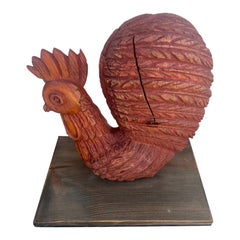
Sculpture de coq sur Stand, 18e siècle, sculptée à la main
Cette sculpture d'art populaire du 18e siècle est un coq sculpté à la main qui repose sur une planche ou un socle. Cette sculpture a une surface peinte au lavis rouge et présente plu...
Catégorie
Antiquités, Fin du XVIIIe siècle, Américain, Artisanat, Sculptures et ob...
Matériaux
Bois
1 606 € Prix de vente
20 % de remise
Sculpture suisse du 19e siècle représentant un coq
Sculpture suisse du 19e siècle représentant un coq.
Le coq a été sculpté à la main par des experts et polychromé pour plus de couleurs et de détails. Le peigne et les caroncules ...
Catégorie
Antiquités, XIXe siècle, Suisse, Sculptures - Animaux
Matériaux
Fruitiers
Sculpture moderniste italienne en terre cuite représentant un coq
Sculpture moderniste italienne des années 1950 en terre cuite formée à la main.
Catégorie
Milieu du XXe siècle, italien, Sculptures - Animaux
Matériaux
Terre cuite