Articles similaires à Two Ancient Egyptian Alabaster Canopic Jars
Vous voulez plus d
images ou de vidéos ?
Demander au vendeur plus d
images ou de vidéos
1 sur 9
Two Ancient Egyptian Alabaster Canopic Jars
195 427,28 €
À propos de cet article
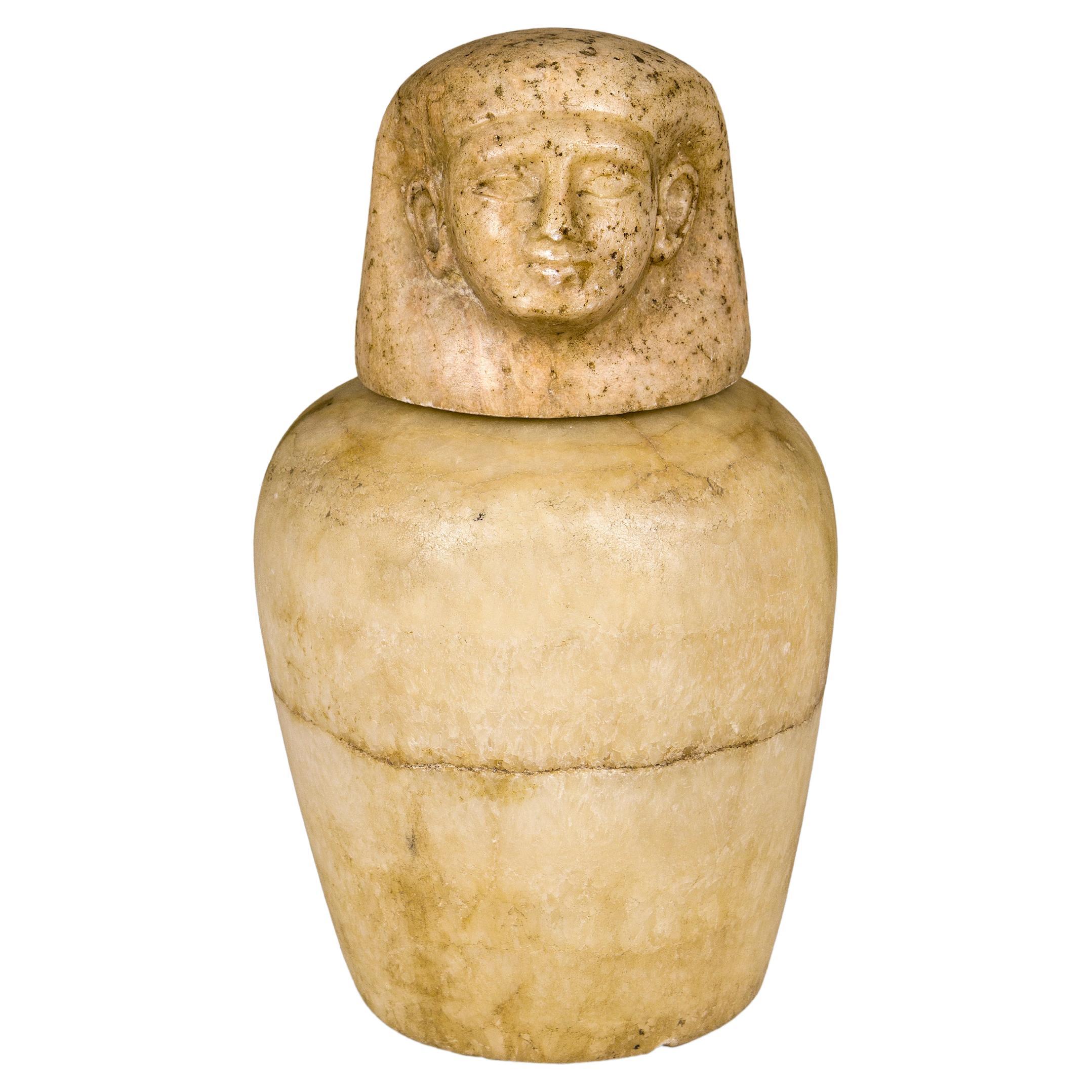
This set of two canopic jars represents unequivocal masterpieces of the type. Carved out of a beautifully rich white veined caramel alabaster, both jars are deftly executed and of robust, elegant proportion. Each with rounded shoulders tapering to a flat base, and featuring lids in the form of the human-headed Imsety, one of the four sons of Horus. Both serene oval faces executed with heavy upper eyelids, a broad nose, thick lips and prominent ears.
Notes
As early as the Fourth Dynasty of the Old Kingdom, the internal organs of the deceased were removed from the body during the process of mummification.' These organs, the most easily prone to putrefaction, were then placed in special containers, the so-called canopic jars-always a set of four-and buried beside the sarcophagus or coffin with the mummy. The procedure was motivated by the belief that only a complete body, with all of its components, could guarantee an individual's rebirth and the desired afterlife. The earliest known examples were simple stone jars with shallow disklike lids, usually uninscribed. During the First Intermediate Period (the Ninth-Tenth Dynasty, ca. 2100 B.C.), the style changed to lids with human heads, and entire sets of jars were produced from a variety of materials.
It was not until the late Eighteenth Dynasty (ca. 1300 B.C.) that the lids were carved in the characteristic form with the four Sons of Horus, each associated with one of the viscera. Four funerary goddesses, in addition to the canopic deities, protected the jars' contents. Human-headed Imsety guarded the liver (under the protection of the goddess Isis, baboon-headed Hapy guarded the lungs (under the goddess Nephthys), jackal-headed Duamutef guarded the stomach (under the goddess Neith) and falcon-headed Qebehsenuef guarded the intestines (under the goddess Serket). The form and iconography of canopic jars and the chests that contained them remained in use till Greco-Roman times, and they were an indispensable element of standard burials, both royal and private
Provenance
Said to be found in Dahshur in 1896.
Palm Beach Private Collection.
Alice Tully (1902-1993), New York.
French Furniture, European Works of Art and Porcelain from the Collection of Alice Tully; Christie’s, New York, 26-28 October 1994.
Antiquities Christie's New York, June 4, 2015.
Private Collection, Los Angeles California.
- Dimensions:Hauteur : 34,93 cm (13,75 po)Diamètre : 20,32 cm (8 po)
- Style:Égyptien (De la période)
- Matériaux et techniques:
- Lieu d origine:
- Période:
- Date de fabrication:Middle Kingdom, 12th Dynasty, 1985 BC to 1773 BC
- État:Usure conforme à l âge et à l utilisation. Each intact as preserved, with some minor cracks and areas of heavy surface wear and incrustation. With some hairline cracks and chips. A label in one reading "Foiulles de Dachour", 1896.
- Adresse du vendeur:Los Angeles, CA
- Numéro de référence:Vendeur : MS.00321stDibs : LU10743247947422
À propos du vendeur
Nouveau sur 1stDibs
Inscrit au cours des six derniers mois.
Aucune évaluation pour le moment
Vendeur professionnel agréé
Chaque vendeur répond à des normes strictes en matière d
authenticité et de fiabilité
Établi en 2022
Vendeur 1stDibs depuis 2025
- ExpéditionRecherche du devis...Expédition depuis : Los Angeles, CA
- Politique des retours
Certaines parties de cette page ont été traduites automatiquement. 1stDibs ne garantit pas l
exactitude des traductions. L
anglais est la langue par défaut de ce site web.
Plus d articles de ce vendeur
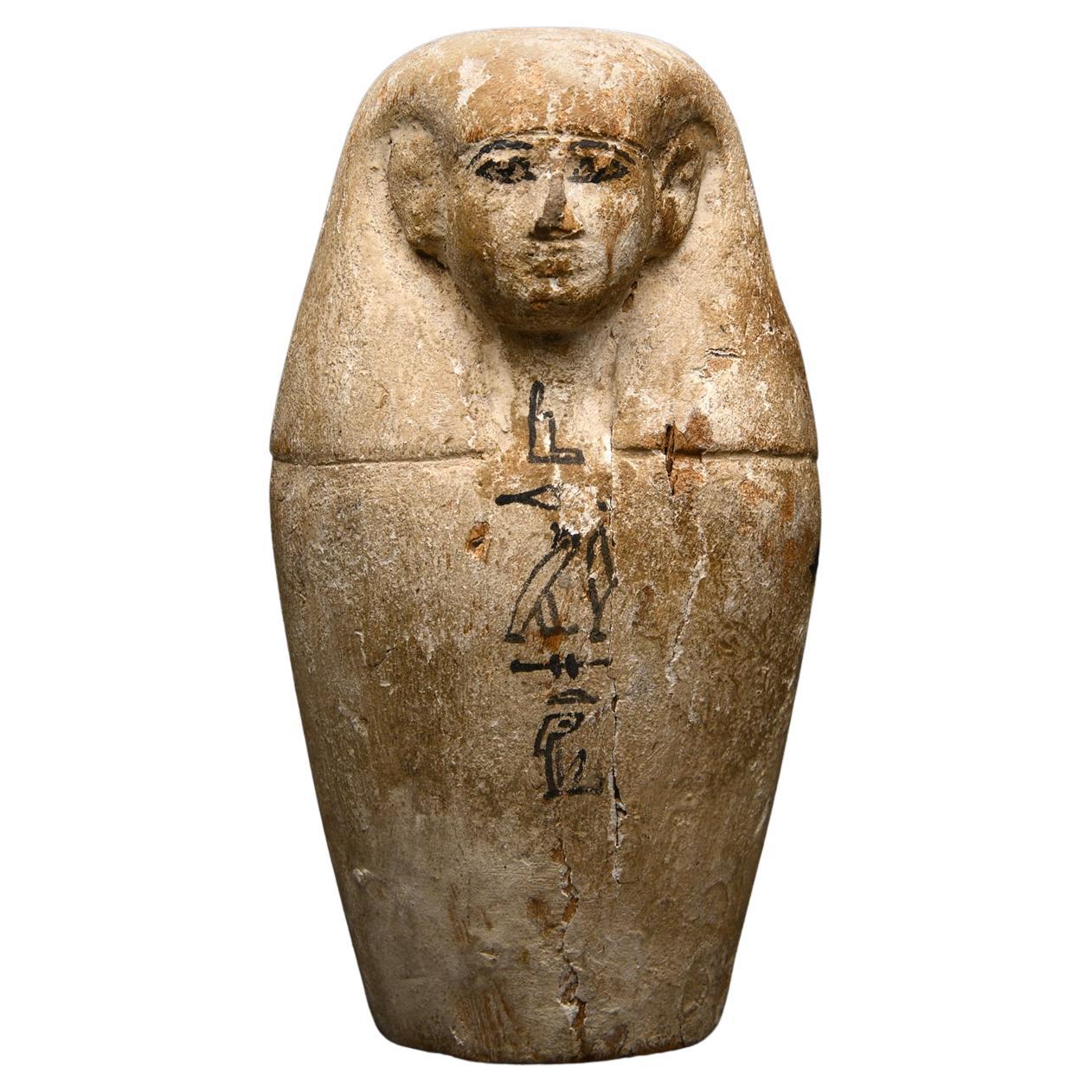
Tout afficherAncient Egyptian Wood Dummy Canopic Jar
This beautifully rendered 'dummy' canopic jar is In the form of the human-headed Son of Horus, Imsety. It features an incised line indicating the division between the jar and the lid...
Catégorie
Antiquités, 15e siècle et avant, Égyptien, Égyptien, Antiquités
Matériaux
Bois
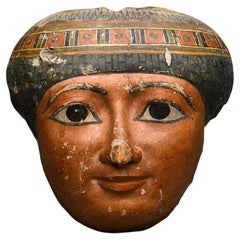
Masque de momie en cartonnage peint de l
Egypte ancienne
Les masques de cartonnage comme celui-ci étaient utilisés pour protéger et idéaliser les traits du visage du défunt lors de l'enterrement. Les yeux surdimensionnés, soulignés par des...
Catégorie
Antiquités, 15e siècle et avant, Égyptien, Égyptien, Antiquités
Matériaux
Lin, Bois
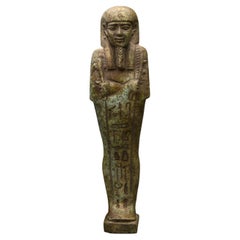
Shabti en faïence verte de l
Égypte ancienne
Pour Delin, cette figure de Shabti présente un visage serein, aux traits finement dessinés et aux proportions élégantes. Il se tient debout, en momiforme, les bras croisés, tenant d...
Catégorie
Antiquités, 15e siècle et avant, Égyptien, Égyptien, Antiquités
Matériaux
Faïence
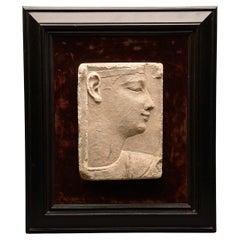
Ancient Egyptian Limestone Sculptor
s Model
This superb sculptors model is carved in raised relief with the bust of a pharaoh in profile to the right. The noble face features a prominent chin and thick lips. A delicate eye-lin...
Catégorie
Antiquités, 15e siècle et avant, Égyptien, Égyptien, Antiquités
Matériaux
Calcaire
Sphinx en marbre gris de l
Egypte ancienne
Créature mythologique composite apparue pour la première fois au cours de la IVe dynastie, le sphinx est l'une des compositions les plus emblématiques de l'art égyptien ancien. Avec ...
Catégorie
Antiquités, 15e siècle et avant, Égyptien, Égyptien, Antiquités
Matériaux
Marbre

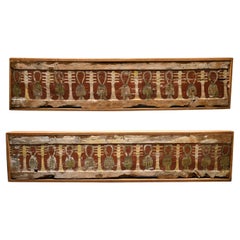
Pair of Ancient Egyptian Gesso-Painted Wood Panels
This exquisite and fascinating pair of gesso-painted wooden panels comes mounted within custom wooden frames. Both panels are of roughly similar sizes, horizontal in nature, and lik...
Catégorie
Antiquités, 15e siècle et avant, Égyptien, Égyptien, Antiquités
Matériaux
Bois
Suggestions
Jarre canope "Asmet", 1069 - 664 av. J.-C., Égypte
Bocal Canopus "Asmet",
Avec certificat d'authenticité.
1069 - 664 A.I.C., Égypte.
Bon état.
Dans la culture égyptienne, il s'agit de "jarres Canopus". Il s'agit de récipients que le...
Catégorie
Antiquités, 15e siècle et avant, Égyptien, Égyptien, Vases
Matériaux
Albâtre
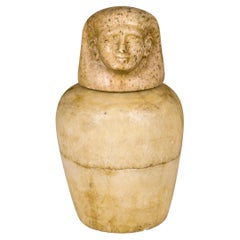
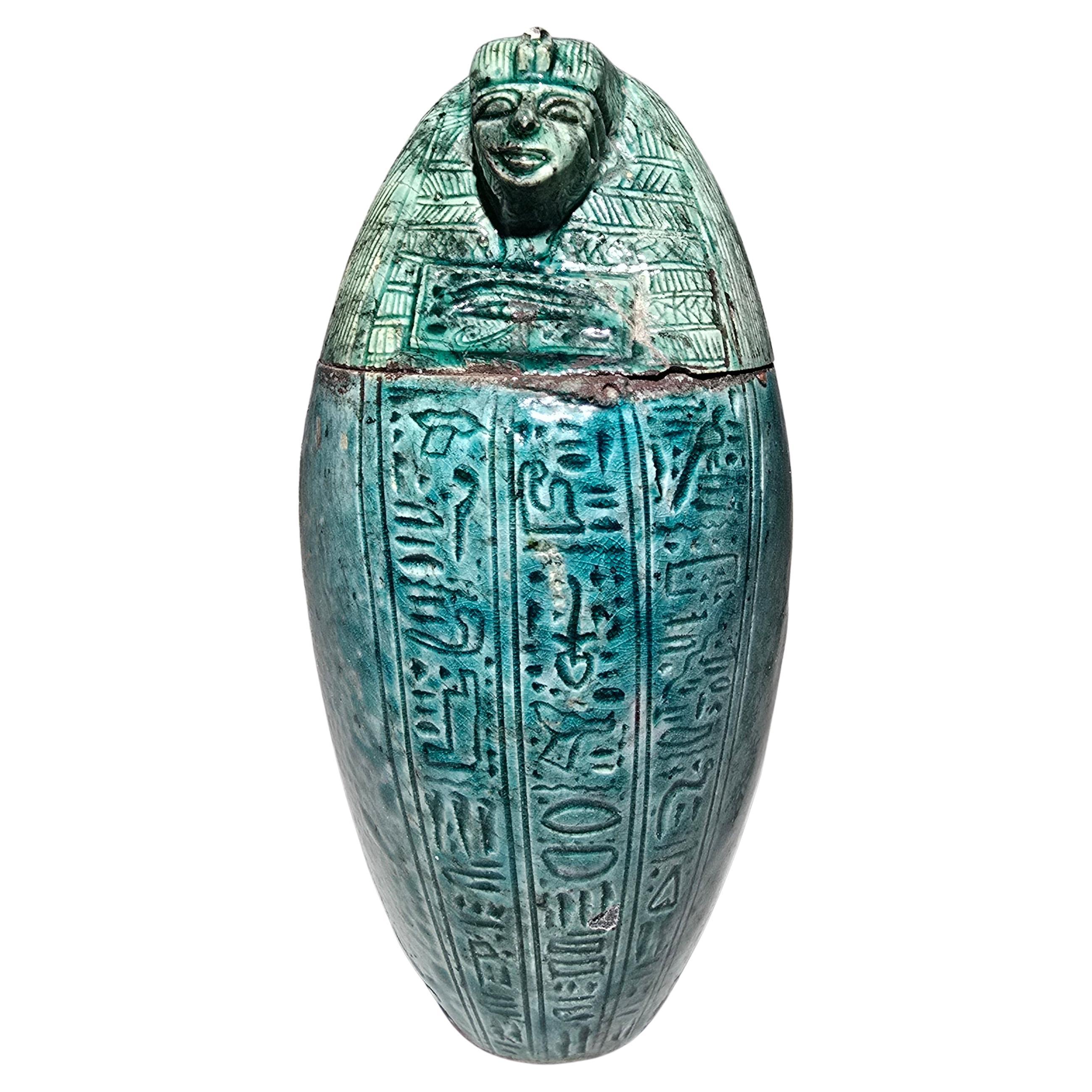
Jarre canope égyptienne du 19e siècle
Découvrez un fascinant morceau d'histoire avec cette exquise jarre canope égyptienne du XIXe siècle, fabriquée de manière experte en faïence émaillée. Cet artefact unique ne met pas ...
Catégorie
Antiquités, années 1880, Pots
Matériaux
Faïence
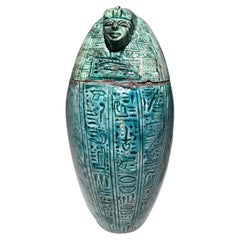
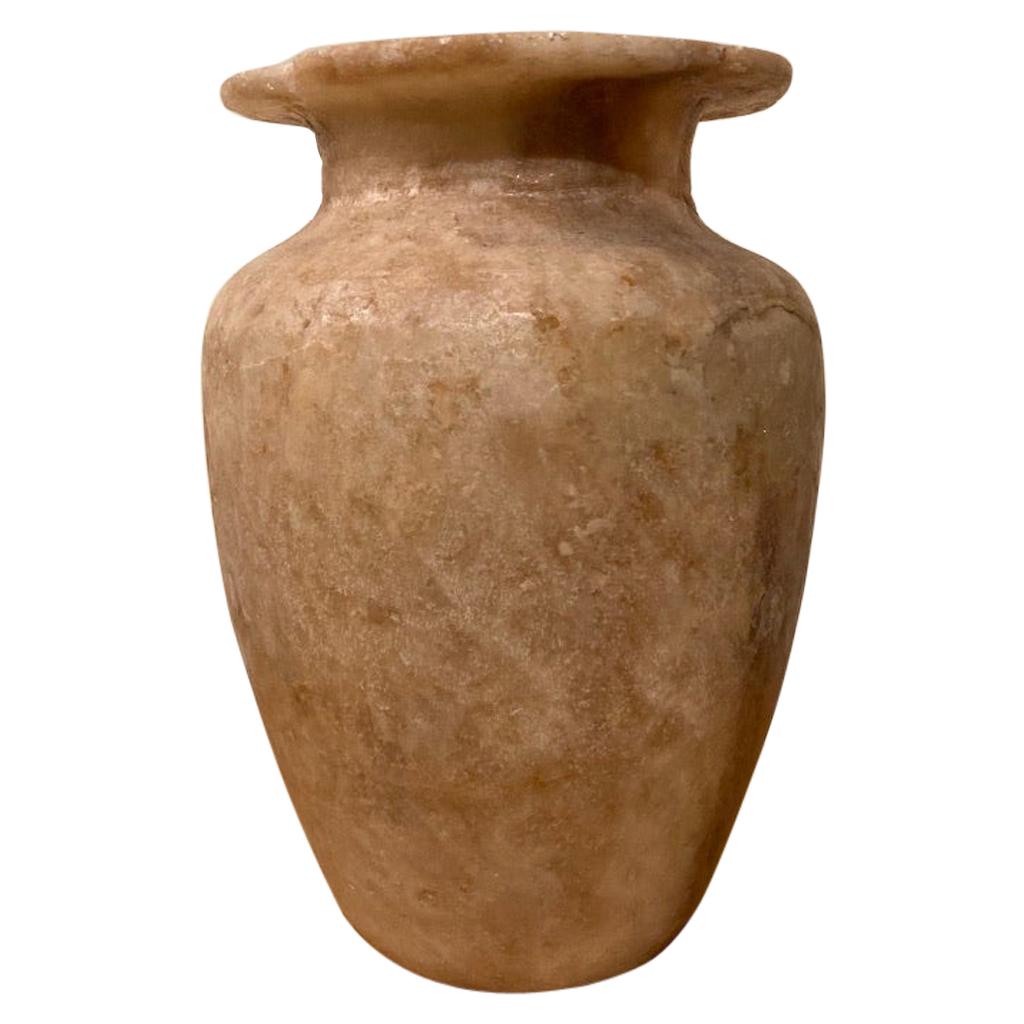
Pot en albâtre égyptien Grand Tour
Jarre en albâtre sculptée à la main à la fin du XIXe siècle, de style égyptien ancien, avec un col effilé surmonté d'un large bord évasé.
10 pouces de haut par 7,5 de diamètre.
Catégorie
Antiquités, Fin du XIXe siècle, Égyptien, Grand Tour, Pots
Matériaux
Albâtre
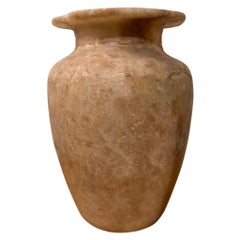
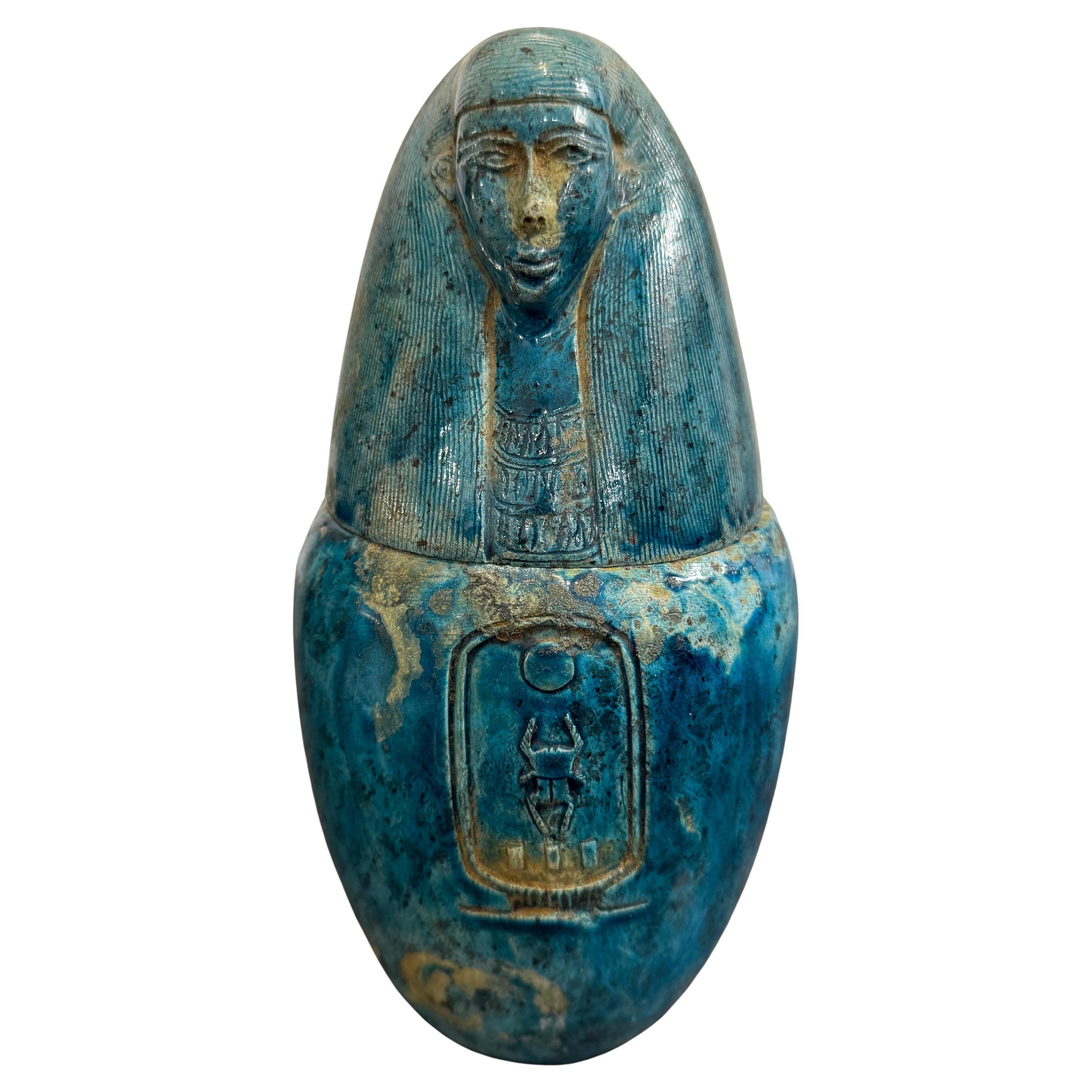
Jarre canope en céramique émaillée de faïence d
Imsety, début du 20e siècle
Jarre canope en céramique émaillée de faïence d'Imsety, début du 20e siècle
Provenance : Collection privée australienne.
Description :
Cette solide jarre ovoïde à glaçure de faïenc...
Catégorie
Début du 20ème siècle, Égyptien, Pots
Matériaux
Céramique
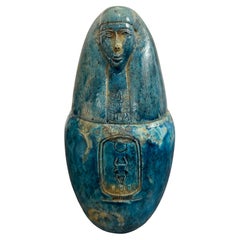
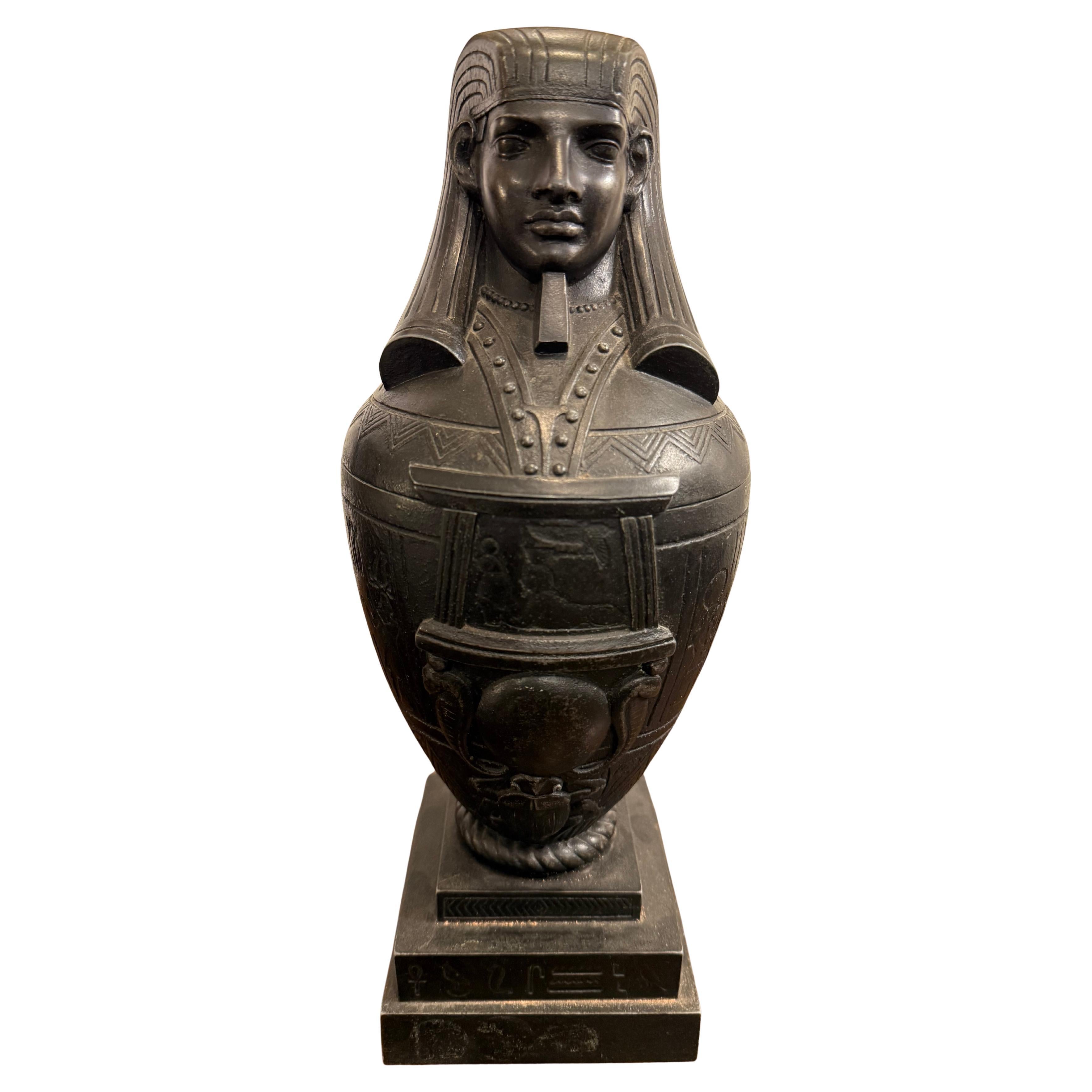
Jarre canope en métal bronzé avec base, début du 20e siècle
Jarre canope en métal bronzé avec base, début du 20e siècle
Description :
La jarre est munie d'un couvercle en forme de tête humanoïde portant la coiffe du némès pharaonique et une ...
Catégorie
Début du 20ème siècle, Égyptien, Pots
Matériaux
Métal
Paire de vases égyptiens de style Art Déco et Midcentury recouverts de marbre et d
albâtre
Une belle paire de vases couverts de marbre en albâtre miel égyptien, de style Art Déco et datant du milieu du siècle dernier. Chacune d'entre elles est magnifiquement sculptée à la ...
Catégorie
Vintage, années 1930, italien, Art déco, Vases
Matériaux
Albâtre