Articles similaires à Costume militaire de Jordan Orsini, noble romain à cheval, publié en 1845
Vous voulez plus d
images ou de vidéos ?
Demander au vendeur plus d
images ou de vidéos
1 sur 10
Costume militaire de Jordan Orsini, noble romain à cheval, publié en 1845
280 €TVA incluse
À propos de cet article
Military Costume of Jordan Orsini, Roman Nobleman on Horseback
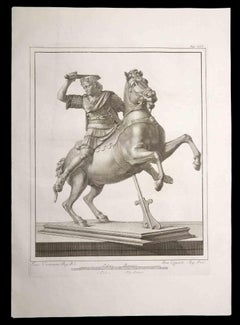
This striking 19th-century hand-colored print, marked as Plate No. 58, presents Jordan Orsini, a member of one of Rome's most powerful noble families, portrayed in late 15th-century ceremonial military dress, mounted on a stately white horse. The figure is illustrated in full armor, adorned with rich detailing and a red cap, in a highly stylized riding posture, exuding both authority and refined elegance.
The costume was reconstructed from a nearly forgotten funerary monument located in a remote church in Monte-Rotondo, in the Sabine hills. According to the accompanying historical notes, Jordan Orsini's depiction here offers valuable insight into the military attire still in use toward the end of the 15th century. The Orsini family, whose origins date back to ancient Roman nobility, were known for producing notable statesmen, cardinals, and military commanders. Jordan, likely a descendent of this illustrious lineage, is commemorated for restoring Monte-Rotondo and is believed to be the ancestor of a line renowned for its distinguished military leaders.
The plate notes that this style of armor shares strong similarities with that of Antoine Rido (referenced in plate No. 22), especially in its ornate cuirass and distinct lance support. This fashion of military dress appears to have been widespread, as evidenced by a similar bas-relief of Annibale Bentivoglio on horseback in Bologna’s Saint-Jacques-Majeur church, depicted in almost identical armor. Bentivoglio died in 1488, while Jordan Orsini is recorded to have died in 1484 in Florence, returning from a mission commissioned by Pope Sixtus IV. He was only 38 years old at the time of his death.
This costume print stands out for its historical richness, drawing connections between art, genealogy, and the ceremonial visual language of nobility in Renaissance Italy. Collectors of historical costume, equestrian portraiture, and Italian Renaissance heritage will appreciate its detailed composition and rarity.
The coloring of this costume plate is notably enriched with gilded detailing, which adds a layer of opulence and historical authenticity to the figure of Jordan Orsini. Gold is used here not merely as a decorative accent but as a symbolic indicator of status, authority, and ceremonial importance.
In this print, the gold highlights appear on several key elements:
Horse tack and harness: The bridle, reins, and saddle are adorned with gold-colored embellishments, suggesting a richly appointed ceremonial mount—typical of high-ranking military nobles.
Orsini’s armor: Gold is used to outline sections of the armor, particularly at the joints, edges, and along the decorative motifs. The epaulettes, belt, and the ornamental elements of the cuirass are enriched with golden tones, reinforcing the nobility of the character.
Boot spurs and stirrups: The golden spurs stand out as symbols of military prestige and knighthood.
Fringe and trim: Additional gold accents on the costume’s trim and sword handle suggest refinement and bespoke craftsmanship.
This application of gold—not actual gold leaf, but finely hand-applied pigment—was a common technique in 19th-century hand-colored engravings to simulate the richness of ceremonial attire. It serves both an aesthetic and interpretative function: visually elevating the subject while informing the viewer of his noble rank and elite social role. The use of gold in such prints often mirrors how these costumes would have appeared in real life, especially in pageants, public ceremonies, or equestrian portraits carved in relief or painted on frescoes.
From a collector's standpoint, the preservation of these golden highlights is important. In this particular print, they appear to be well-preserved and tastefully applied, enhancing the image without overwhelming the more subdued tones of the armor and background. Their subtle sheen would become even more pronounced when professionally framed under soft lighting.
This golden embellishment makes the print particularly appealing for display, as it bridges the gap between historical illustration and decorative art.
Condition summary:
The print is in very good condition with minimal age toning. The hand-coloring remains vivid. Minor foxing in the margins but the central image is unaffected. The impression is crisp and clear and highlighthed with gold.
Framing suggestion:
To highlight the vibrant uniform and historical value, this print would be best displayed in a gold or deep mahogany frame with a neutral off-white or cream mat. For best results, use UV-protective glass to preserve the delicate colors and fine linework.
- Dimensions:Hauteur : 30,3 cm (11,93 po)Largeur : 22,3 cm (8,78 po)Profondeur : 0,2 mm (0,01 po)
- Matériaux et techniques:Papier,Gravé
- Lieu d origine:
- Période:
- Date de fabrication:1845
- État:The print is in very good condition with minimal age toning. The hand-coloring remains vivid. Minor foxing in the margins but the central image is unaffected. The impression is crisp and clear and highlighthed with gold.
- Adresse du vendeur:Langweer, NL
- Numéro de référence:Vendeur : BG-14024-1-581stDibs : LU3054345409272
À propos du vendeur
5,0
Vendeur reconnu
Ces vendeurs prestigieux sont des leaders du secteur. Ils représentent le summum en matière de qualité et de design.
Vendeur Platine
Vendeurs premium dont la note est supérieure à 4,7 et le délai de réponse de 24 heures maximum
Établi en 2009
Vendeur 1stDibs depuis 2017
2 813 ventes sur 1stDibs
Temps de réponse habituel : 1 heure
- ExpéditionRecherche du devis...Expédition depuis : Langweer, Pays-Bas
- Politique des retours
Certaines parties de cette page ont été traduites automatiquement. 1stDibs ne garantit pas l
exactitude des traductions. L
anglais est la langue par défaut de ce site web.
Plus d articles de ce vendeur
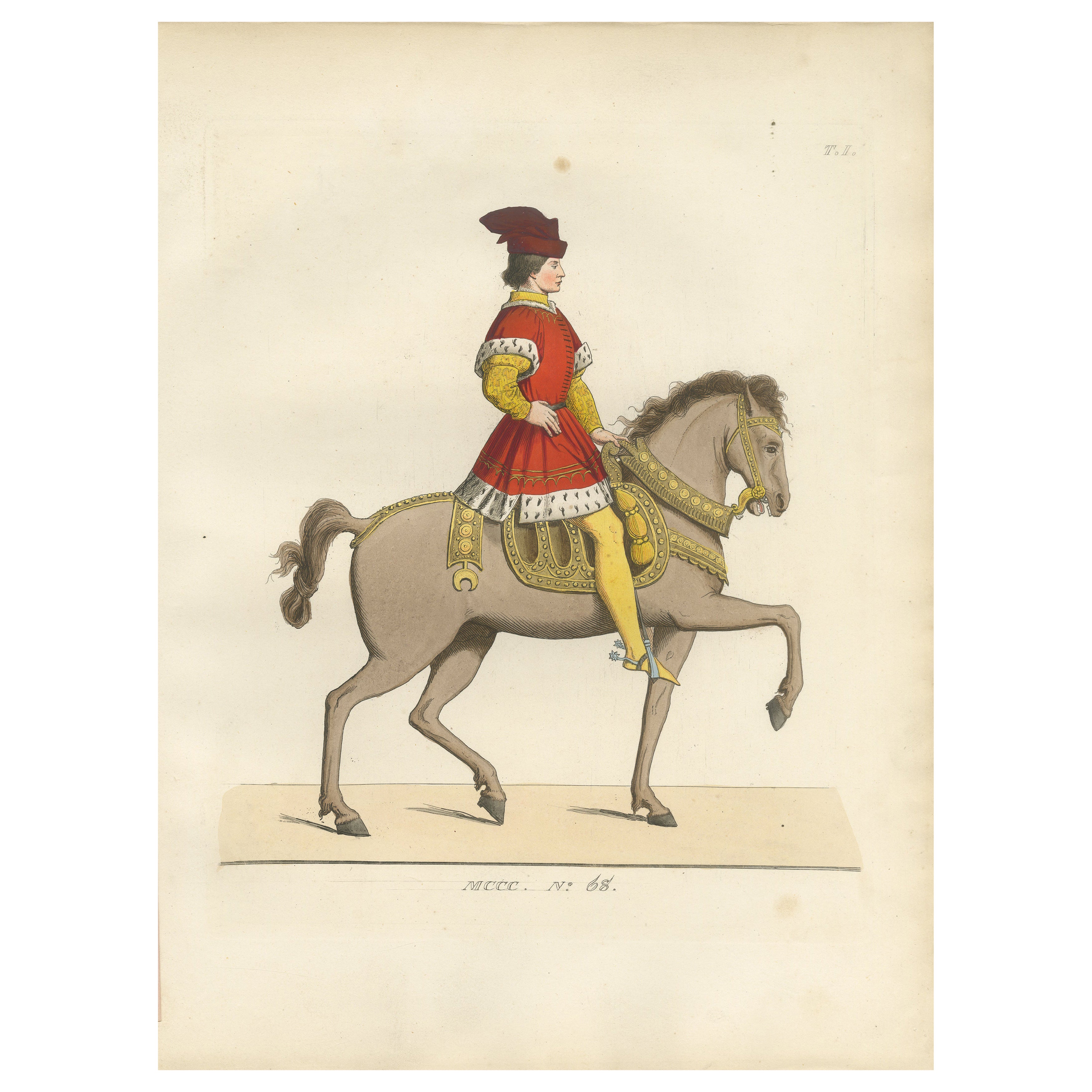
Tout afficherNoble à cheval en tenue de parade - Portrait équestre italien de la Renaissance, 1845
Noble à cheval en tenue de parade - Portrait équestre italien de la Renaissance
Cette estampe colorée à la main, portant le numéro 68, présente une image saisissante d'un noble de l...
Catégorie
Antiquités, Milieu du XIXe siècle, Français, Estampes
Matériaux
Papier
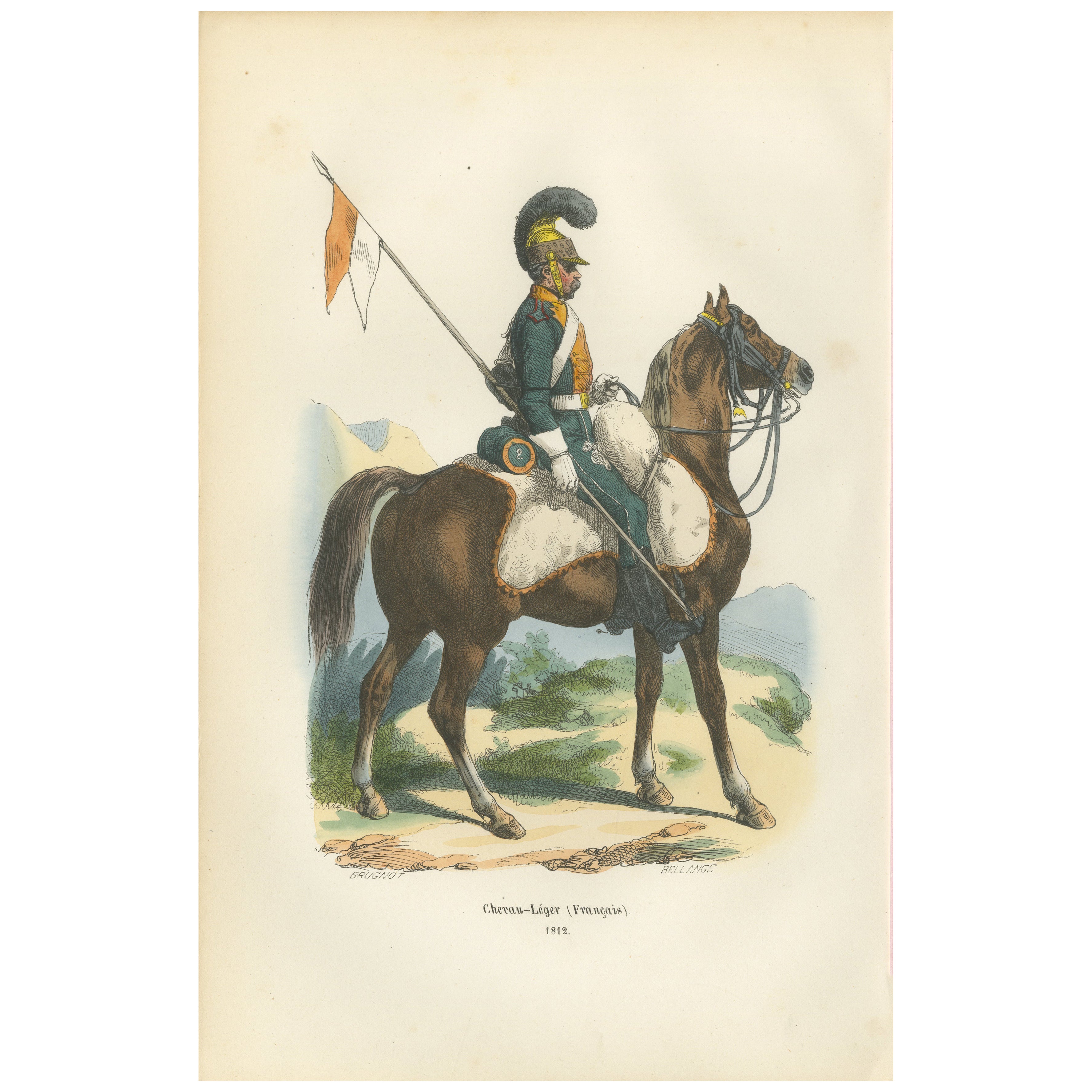
Chevau-Léger Français, officier de cavalerie de la garde napoléonienne à cheval, 1843
Chevau-Léger Français, officier de cavalerie de la garde napoléonienne à cheval, 1843
Cette estampe finement colorée à la main représente un Chevau-Léger français, un cavalier léger...
Catégorie
Antiquités, années 1840, Français, Estampes
Matériaux
Papier
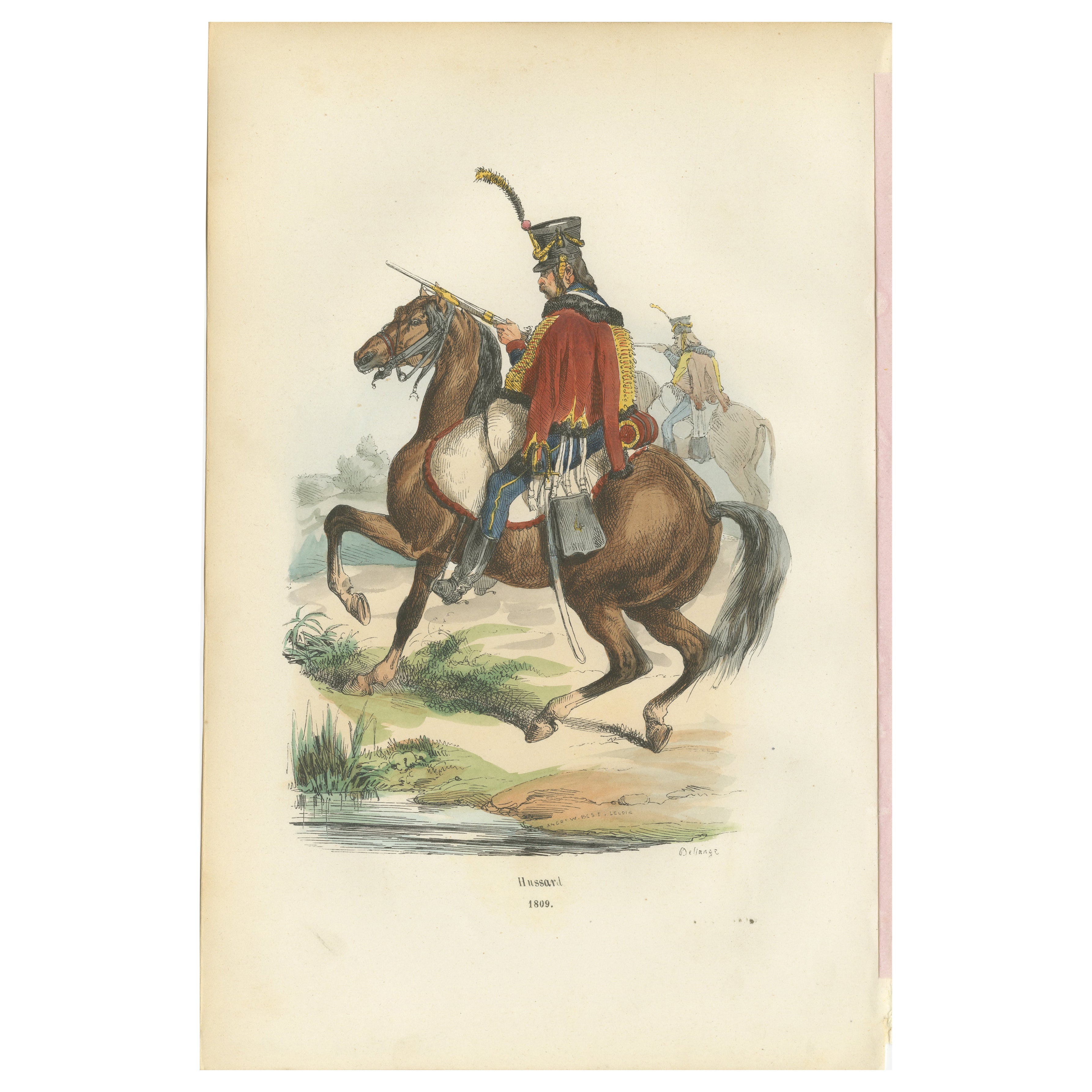
Cavalier hussard à cheval, estampe militaire napoléonienne. Publié en 1843
Cavalier hussard à cheval, estampe militaire napoléonienne, France 1809
Cette gravure militaire du XIXe siècle, coloriée à la main, représente un hussard français en pleine action à...
Catégorie
Antiquités, années 1840, Français, Estampes
Matériaux
Papier
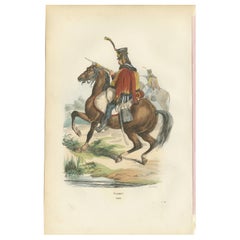
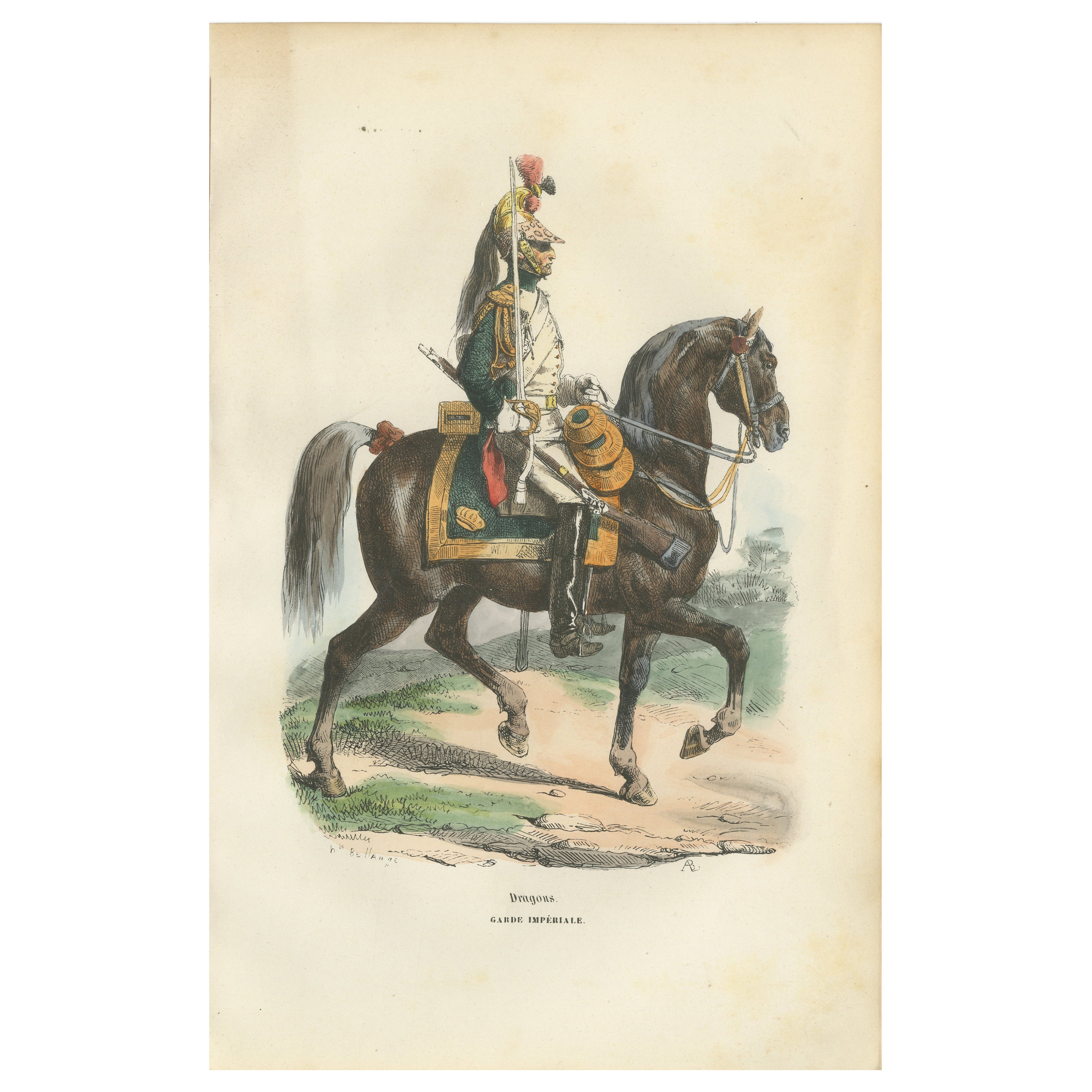
Napoléon Ier Dragoon de la Garde impériale à cheval, estampe militaire, 1843
Napoléon Ier Dragoon de la Garde impériale à cheval, estampe militaire française
Cette estampe militaire originale du XIXe siècle, coloriée à la main, représente un dragon de la Gar...
Catégorie
Antiquités, années 1840, Français, Estampes
Matériaux
Papier
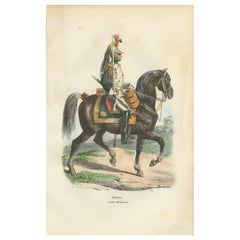
L
empereur Maximilian à cheval en costume de parade Renaissance orné. 1845
L'empereur Maximilian à cheval en armure, vêtu d'une robe de parade ornée de la Renaissance
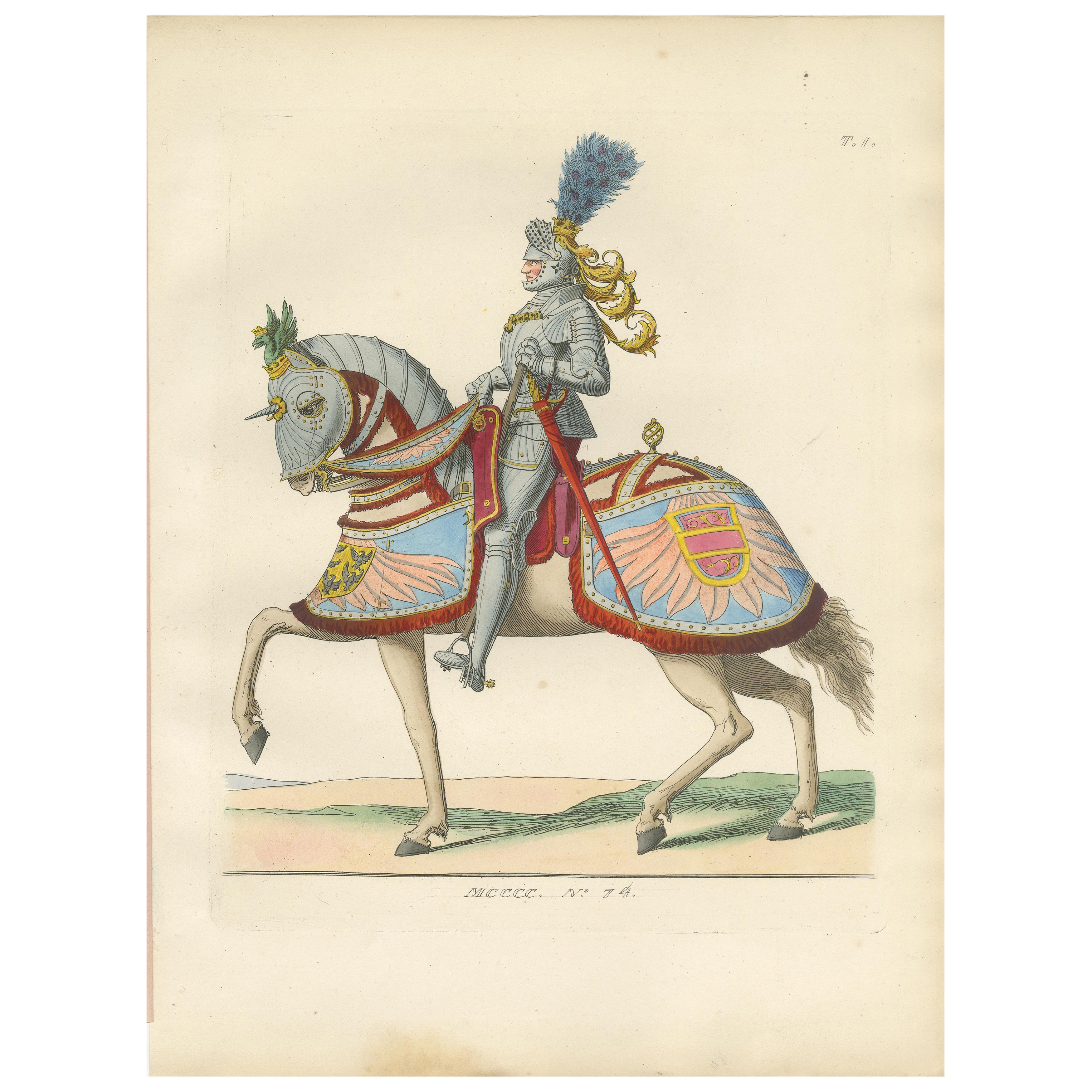
Cette estampe colorée à la main, richement détaillée et numérotée MCCCC No.74, représente...
Catégorie
Antiquités, Milieu du XIXe siècle, Français, Estampes
Matériaux
Papier

Hussard français à cheval 1795, gravure d
uniforme militaire de l
époque napoléonienne, 1843
Hussard français avec cheval 1795, impression d'uniforme militaire de l'époque napoléonienne
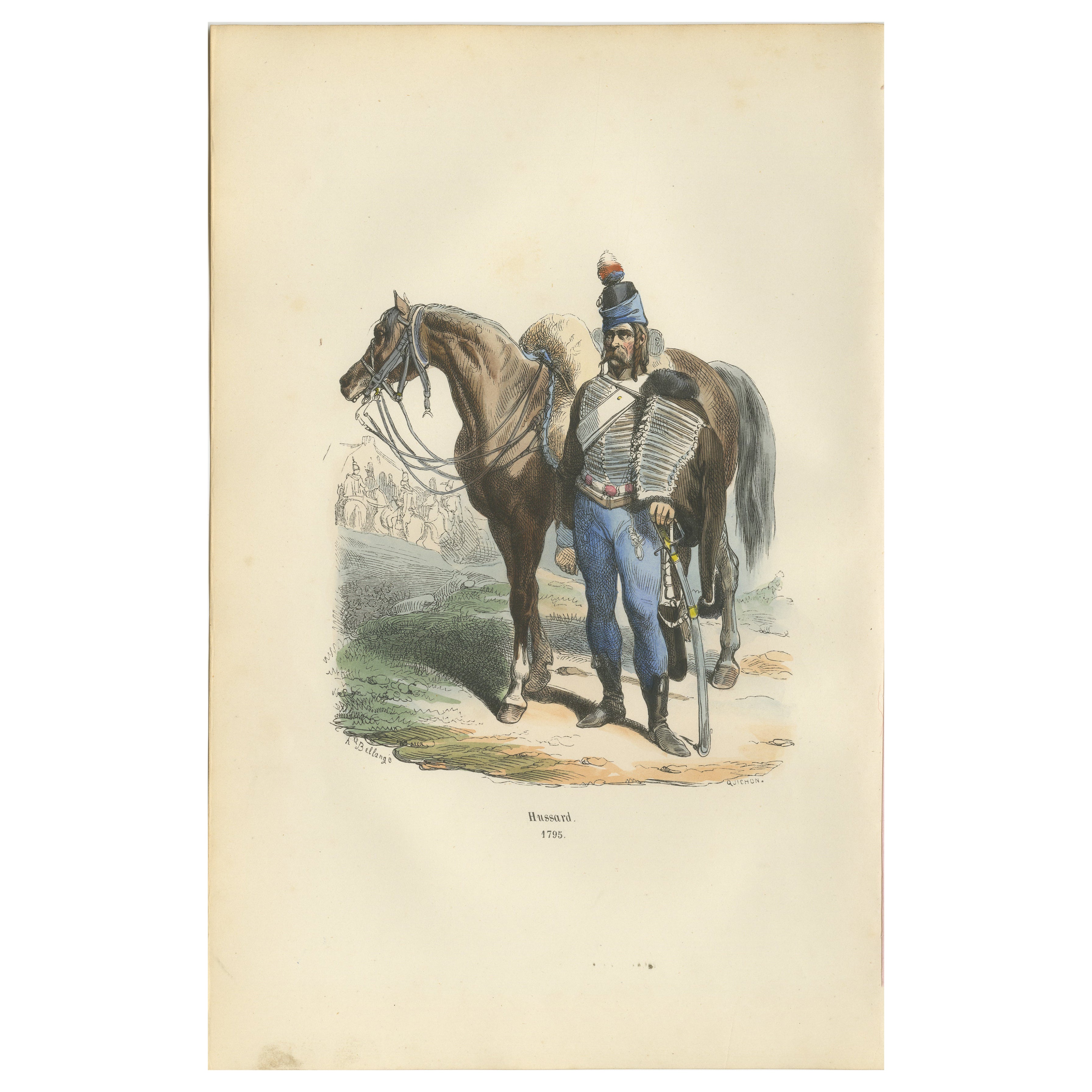
Cette gravure du XIXe siècle, finement colorée à la main, représente un hussard français...
Catégorie
Antiquités, années 1840, Français, Estampes
Matériaux
Papier
Suggestions
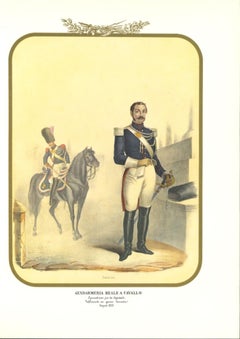
Lithographie « Royal Gendarmerie on Horseback » d
Antonio Zezon, 1853
Par Antonio Zezon
La Gendarmerie royale à cheval est une lithographie originale d'Antonio Zezon. Naples 1853.
Intéressante lithographie en couleur qui décrit la Gendarmerie royale à cheval : Un offic...
Catégorie
années 1850, Moderne, Estampes - Figuratif
Matériaux
Lithographie
Bodyguard on Horseback - Lithographie originale d
Antonio Zezon - 1851
Par Antonio Zezon
Bodyguard on Horseback est une lithographie d'Antonio Zezon. Naples 1851.
Intéressante lithographie en couleur décrivant un garde du corps à cheval marchant aux côtés d'autres garde...
Catégorie
années 1850, Moderne, Estampes - Figuratif
Matériaux
Lithographie
Portrait équestre d
un homme en costume oriental par Sébastien Prichard - années 1850
Encre et lavis sur papier, réalisé dans les années 1850.
Une composition équestre saisissante de Sébastien Prichard, représentant un cavalier en tenue orientale traditionnelle monté...
Catégorie
années 1850, Moderne, Dessins et aquarelles - Figuratif
Matériaux
Aquarelle, Encre
Lithographie « Royal Gendarmerie on Horseback » d
Antonio Zezon, 1852
Par Antonio Zezon
La Gendarmerie royale à cheval est une lithographie d'Antonio Zezon. Naples 1852.
Intéressante lithographie en couleur qui décrit un officier de la gendarmerie royale chevauchant so...
Catégorie
années 1850, Moderne, Estampes - Figuratif
Matériaux
Lithographie
Le régiment Carabinieri à cheval - Lithographie d
Antonio Zezon - 1854
Par Antonio Zezon
Régiment de carabiniers à cheval est une lithographie originale d'Antonio Zezon. Naples 1854.
Intéressante lithographie en couleur qui décrit deux membres du régiment des carabinier...
Catégorie
années 1850, Moderne, Estampes - Figuratif
Matériaux
Lithographie
Legionnaire avec le cheval - eau-forte de Francesco Cepparoli - 18ème siècle
Par Francesco Cepparoli
Légionnaire avec le cheval, Statue romaine antique, de la série "Antiquités d'Herculanum", est une gravure originale sur papier réalisée par Francesco Cepparoli au 18ème siècle.
Sig...
Catégorie
XVIIIe siècle, Moderne, Estampes - Figuratif
Matériaux
Eau-forte
517 € Prix de vente
25 % de remise