Articles similaires à 18th Century, Pair of Italian Paintigs with Still Life by Angelo Vacca
Vous voulez plus d
images ou de vidéos ?
Demander au vendeur plus d
images ou de vidéos
1 sur 20
18th Century, Pair of Italian Paintigs with Still Life by Angelo Vacca
34 500 €TVA incluse
À propos de cet article
18th Century, Pair of Italian Paintigs with Still Life attr. by Angelo Bartolomeo Vacca sr
Oil on canvas, cm W 105,5 x H 75,5 x D 7; only canvas cm W 93,5 x H 63
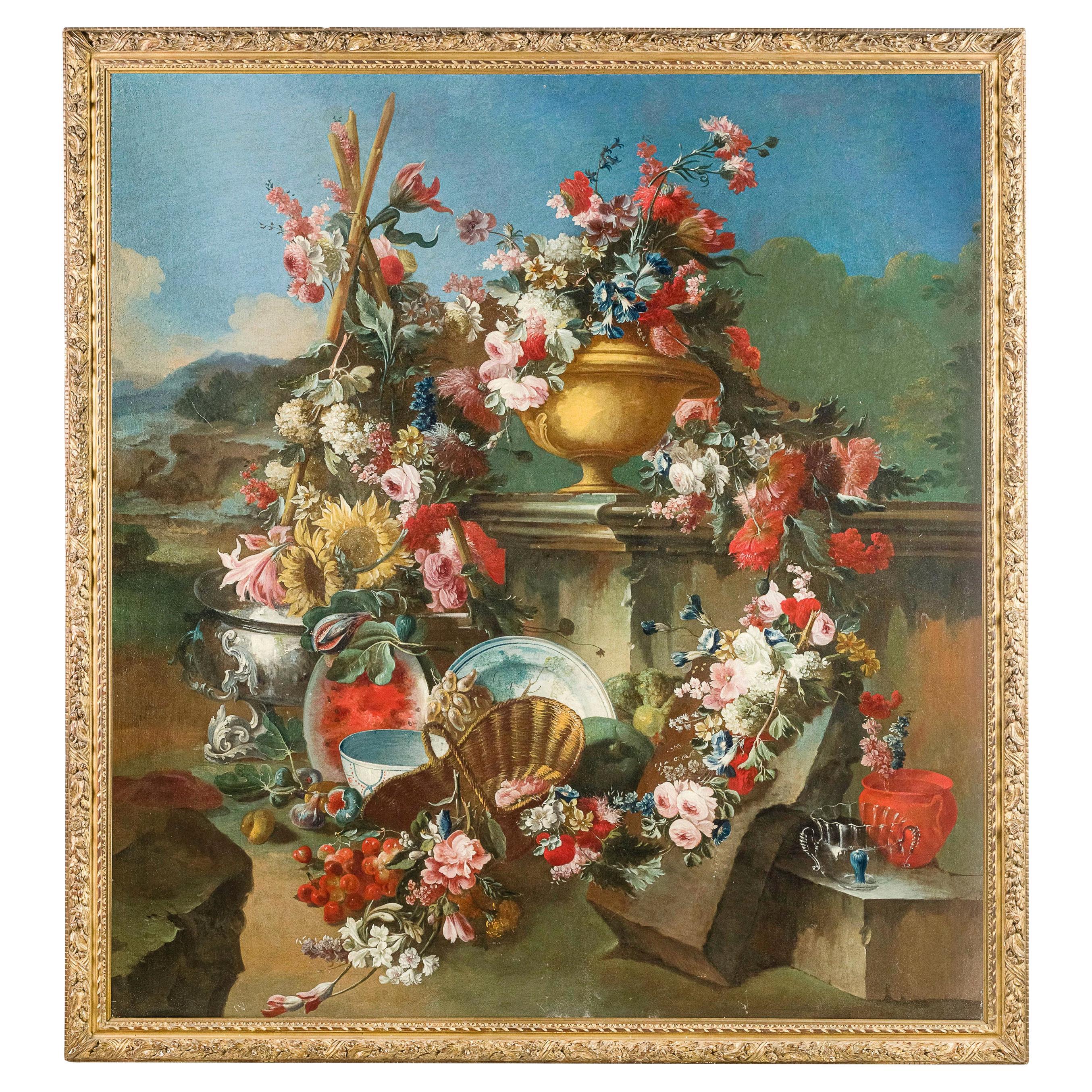
The paintings, made in oil on canvas and in good condition, depict two still lifes with compositions of flowers and fruits. Stylistically they are attributable to the painter Angelo Bartolomeo Vacca senior (Italy, Turin, 11 July 1746 - 30 December 1814) active in Turin, in Italy, in the second half of the eighteenth century.
The painting presented here on the left depicts a ceramic vase with blue decorations filled with a sumptuous composition of flowers that falls softly towards the ground. In the foreground on the right, a serving dish is placed obliquely on a low wall and on it are placed some fruits: white, black grapes, a mushroom, peaches. Above the wall other flowers chromatically balance the composition. On the left in the foreground, an architectural base surmounted by a vase emerges from the frame, on which some flowers and bluebells bring light and color. The still lifes described are inserted in a context of outdoor garden, with large trees with lush green fronds, some rocks that draw a path that is lost in the distance. The clear blue sky gives brightness to the whole.
Pendant of this painting is the still life presented here on the right. In a similar and similar landscape, a large terracotta vase decorated with acanthus leaves in bas-relief stands in the centre of the canvas. Inside the vase are collected a set of flowers of the same type and color of the painting analyzed above. On the ground lie other cut flowers, vine leaves and black grapes, some peaches. In the foreground on the right, a plant in backlight, similar to the base described above, acts as a fifth to the scene, creating vivacity and depth to the composition, played on several levels of perspective. The still life of flowers, with its bright and saturated colors, stands out against a darker background, recreated by the insertion of a large tree with lush foliage. The sky, serene and light tones, is marked by some vaporous cloud.
The two paintings are very close to some works by Angelo Vacca made for prestigious clients and royal palaces.
The figure and the work of the painter Angelo Vacca senior are still little known within the complex Turin painting of the second eighteenth century. He was born in 1746 to Giorgio Vacca, descendant of the marquises Vacca di Saluzzo and rich shopkeeper of Turin, and Margherita Navés. From his marriage (1777) to Margherita Cometto he had five children, Luigi, Felice, Giovanni, Carlo and Simplicio, all painters. In 1780 Angelo Vacca’s career as a painter was already well underway: he already appeared in the Royal Almanac, a sign that was then known and established within the artistic community of the sub-Alpine capital. His name also appears among the artists of the Academy of Painting in Turin; in 1792 he was among the Academy’s Councillors; in 1794 among the Academy’s Promoters; in 1788 he had even become Prior of the Academy; in 1797 he was again among the Councillors. On 18 October 1778 he appears on the register of the brothers of the Compagnia di San Luca. On 9 December 1787, he was registered with the Professors of the Arts of Drawing.
Vacca senior worked a lot in Turin at the service of the Savoys and noble families and also in some centers of the province. "Beloved", is remembered " virtuous Painter in every genre", capable both in the portrait as in the landscape, in the still life, in the miniature, and in the scenographic design: a versatile and eclectic artistic personality, certainly not common.
Some documented, signed and dated works by Angelo Bartolomeo Vacca senior are known, while others have been attributed to him with reasonable certainty by critics.
Among the most significant works are those paid in 1789 for the parade apartment of the Dukes of Aosta, Royal Palace of Turin, in which he paints paintings depicting allegorical cherubs of refined pictorial rendering and purely French taste that testify to his skill and mastery of the media.
Also for the Royal Palace, in the apartment of Madama Felicita (the sister of Vittorio Amedeo III of Savoy), he created a series of overlapping depicting putti and still lives. Also datable around 1789, they are of fundamental importance for the history of still life in Piedmont, because in them you can read very well the stylistic transition from the rocaille ways of Michele Rapous, with whom it has often been confused, to the still life of neoclassical taste.
Angelo Vacca developed a very vast and articulated artistic activity also for churches, theatres and Piedmontese palaces. In 1787 he painted for the Teatro Carignano, in the Royal Castle of Rivoli, in the Sala dei Falconieri (formerly the Apartment of the Dukes of Aosta) between 1783/1784; he was in Stupinigi between 1790 and 1791. We also find it active for the Church of the Madonna del Pilone and in the building in Via dell'Arsenale in Turin.
The works in question are presented inside frames in gilded wood and carved in baroque style.
We apologize for any translation errors from Italian. Please contact us to have the expertise in Italian.
- Dimensions:Hauteur : 76 cm (29,93 po)Largeur : 106 cm (41,74 po)Profondeur : 7 cm (2,76 po)
- Style:Néoclassique (De la période)
- Matériaux et techniques:
- Lieu d origine:
- Période:
- Date de fabrication:Late 18th Century
- État:Usure conforme à l âge et à l utilisation.
- Adresse du vendeur:IT
- Numéro de référence:1stDibs : LU4405233521302
À propos du vendeur
5,0
Vendeur professionnel agréé
Chaque vendeur répond à des normes strictes en matière d
authenticité et de fiabilité
Établi en 1980
Vendeur 1stDibs depuis 2019
57 ventes sur 1stDibs
Temps de réponse habituel : <1 heure
- ExpéditionRecherche du devis...Expédition depuis : Italie
- Politique des retours
Certaines parties de cette page ont été traduites automatiquement. 1stDibs ne garantit pas l
exactitude des traductions. L
anglais est la langue par défaut de ce site web.
Plus d articles de ce vendeur
Tout afficher18e siècle, paire de natures mortes italiennes, attribuée à Francesco Lavagna
Par Francesco Lavagna
Francesco Lavagna (Italie, Naples 1684-1724)
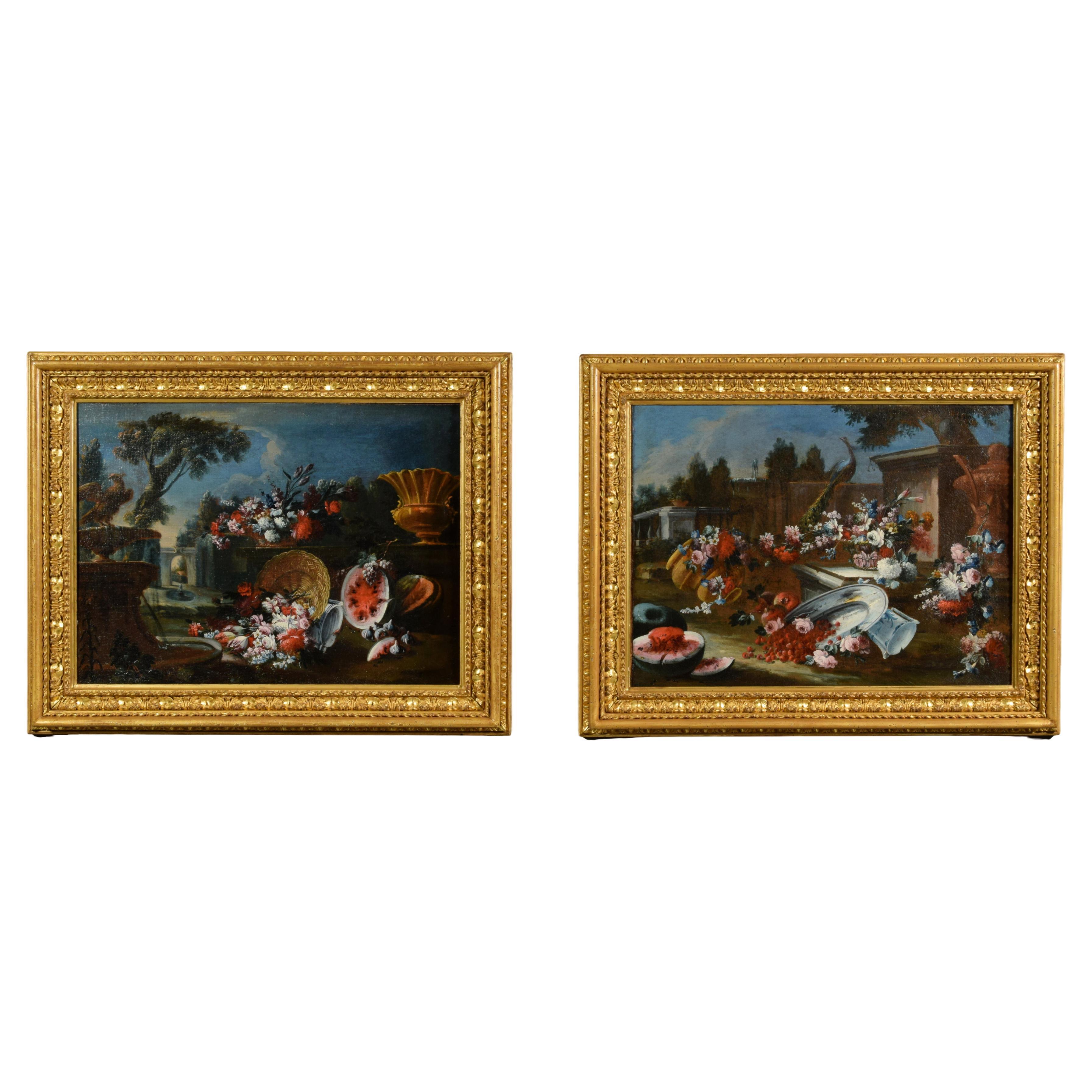
Paire de tableaux représentant des natures mortes composées de fleurs et de pastèques avec un jardin en arrière-plan
Les peintures, de ...
Catégorie
Antiquités, Début du XVIIIe siècle, italien, Baroque, Peintures
Matériaux
Toile
XVIIIe siècle, Deux natures mortes avec des fleurs et des fruits par des peintures italiennes
Peintre piémontais de la seconde moitié du XVIIIe siècle
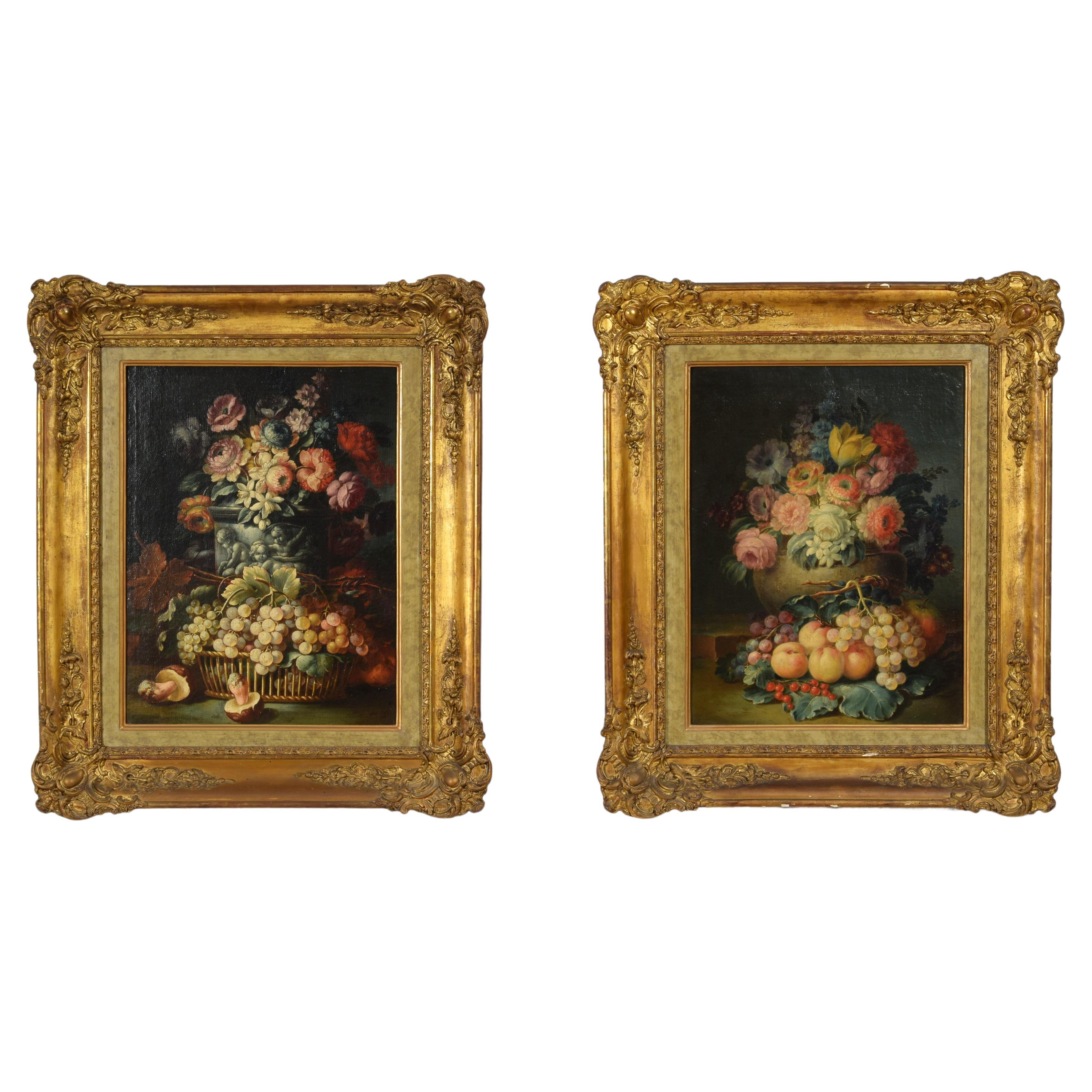
Deux "Natures mortes avec composition de fleurs, de fruits et de champignons".
Dimensions : Cadres : cm L 63 x H 74 x P 8,5...
Catégorie
Antiquités, XVIIIe siècle, Rococo, Peintures
Matériaux
Toile, Bois doré
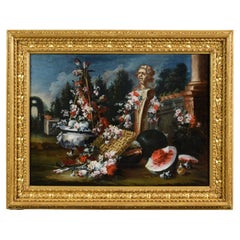
XVIIIe siècle, peinture italienne avec nature morte par Francesco Lavagna
Par Francesco Lavagna
XVIIIe siècle, peinture italienne avec nature morte par Francesco Lavagna.
Le tableau fin et imposant, accompagné d'un cadre en bois sculpté et doré, représente une somptueuse compo...
Catégorie
Antiquités, Début du XVIIIe siècle, italien, Rococo, Peintures
Matériaux
Toile
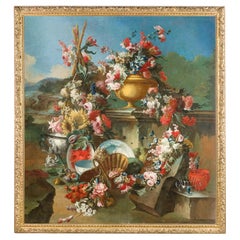
Late 18th, Italian Still Life by Michele Antonio Rapos
Par Michele Antonio Rapos
Michele Antonio Rapos (Turin, 1733–1819), Still Life with Flowers and Fruit
Oil on canvas; frame: cm W 127 x H 101 x D 7; tela cm W 106 x H 80
This fine painting, presented in an i...
Catégorie
Antiquités, Fin du XVIIIe siècle, italien, Rococo, Peintures
Matériaux
Toile
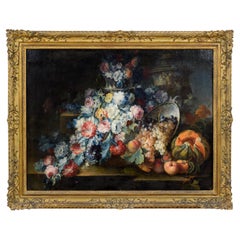
XVIIIe siècle, Nature morte italienne attribuée à Francesco Lavagna
Par Francesco Lavagna
Francesco Lavagna (Italie -Naples 1684-1724)
"Nature morte avec des fleurs, des pastèques et des hermès avec un jardin à l'arrière-plan"
Le tableau, de belle facture et en bon état,...
Catégorie
Antiquités, Début du XVIIIe siècle, italien, Baroque, Peintures
Matériaux
Toile
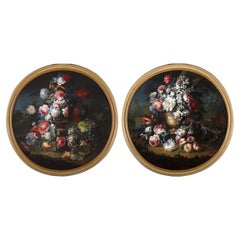
Paire de natures mortes italiennes avec fleurs de Michele Antonio Rapos, 18e siècle
Par Michele Antonio Rapos
XVIIIe siècle, paire de natures mortes italiennes avec des fleurs et des fruits par Michele Antonio Rapos
Mesures : Huile sur toile, diamètre 71 cm, avec cadre diamètre 80 cm x L 5 ...
Catégorie
Antiquités, Fin du XVIIIe siècle, italien, Rococo, Peintures
Matériaux
Toile
33 600 € Prix de vente
20 % de remise
Livraison gratuite
Suggestions
Paire de natures mortes italiennes du 17ème siècle peintes à l
huile sur bois
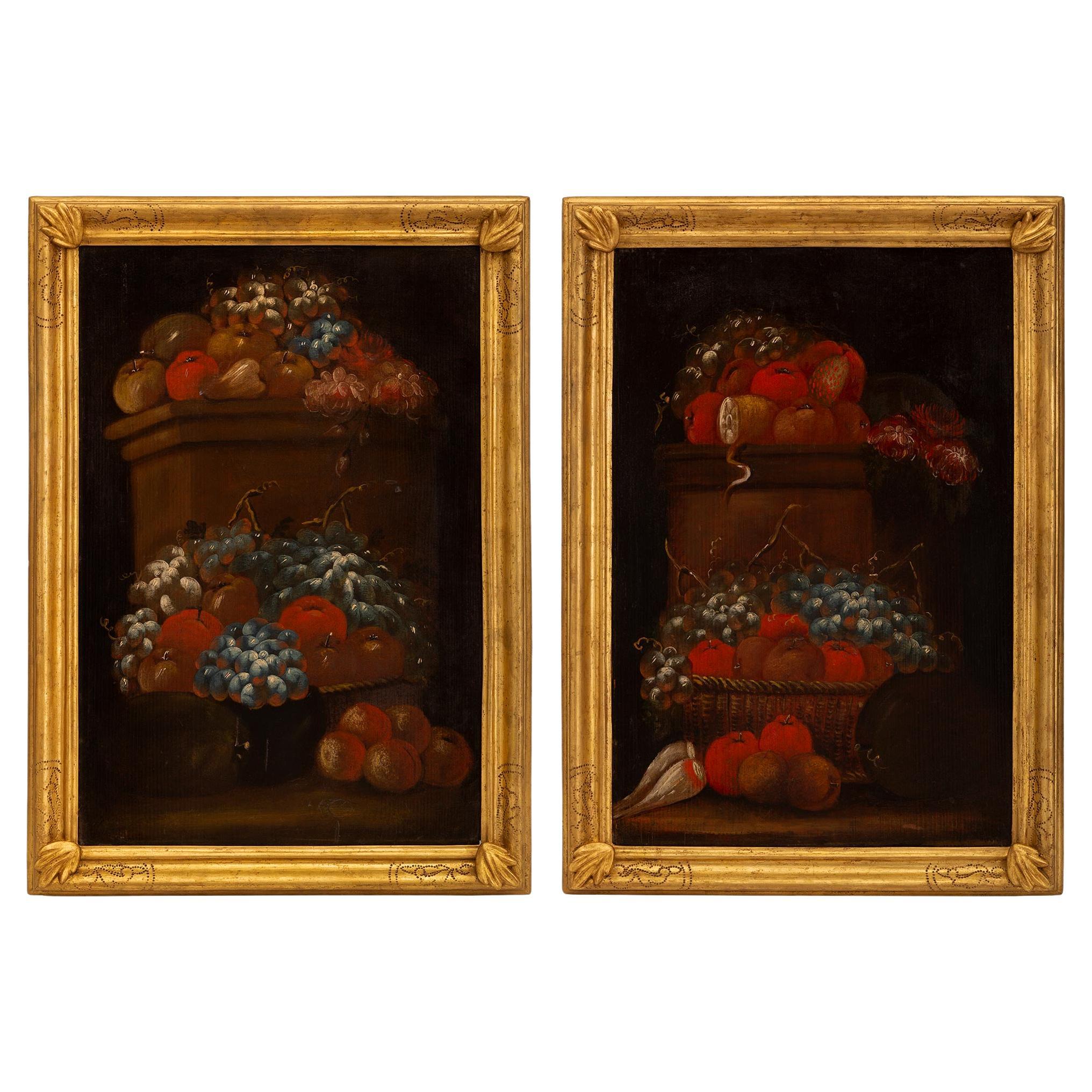
Une belle paire de natures mortes italiennes du 17ème siècle peintes à l'huile sur bois. Chaque tableau est présenté dans son cadre rectangulaire doré d'origine, avec un fin motif dé...
Catégorie
Antiquités, 17ème siècle, italien, Peintures
Matériaux
Bois
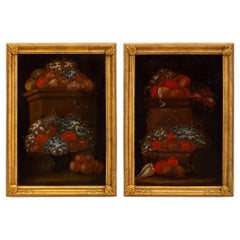
Paire de natures mortes italiennes sur toile de la fin du XVIIIe siècle
Paire de natures mortes traditionnelles peintes à l'huile sur toile, chacune représentant une urne de style néoclassique avec des motifs de figures humaines. Chaque urne est ornée de...
Catégorie
Antiquités, Fin du XVIIIe siècle, italien, Peintures
Matériaux
Toile, Bois doré, Peinture
14 196 € / ensemble
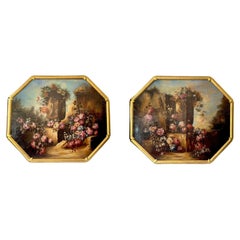
Paire d
huiles italiennes de la période rococo représentant des arrangements floraux, milieu du XVIIIe siècle.
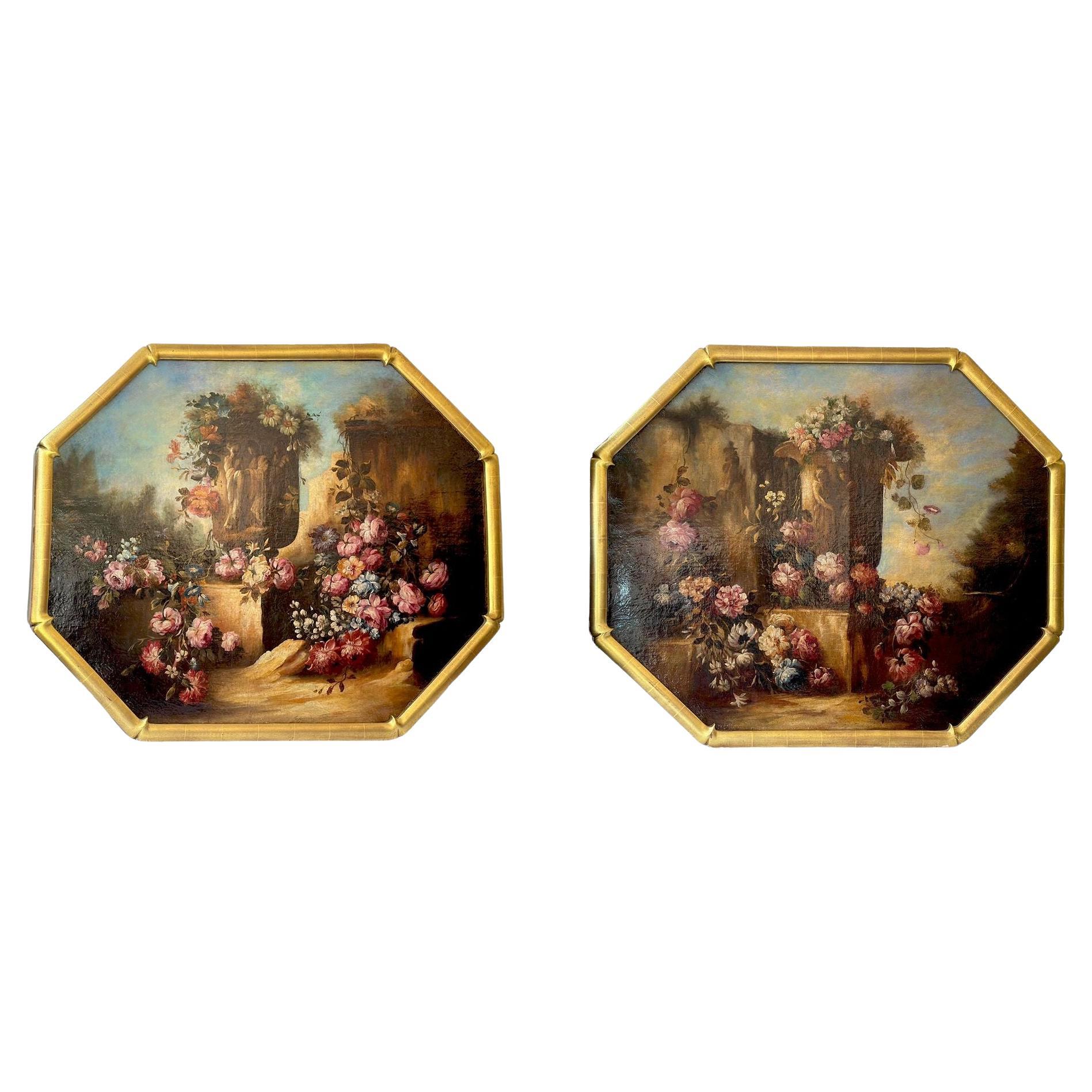
La paire d'huiles sur toile représentant des arrangements floraux, l'un dans un panier, l'autre dans un pot, tous deux sur des socles, chacun avec des habitations et des montagnes au...
Catégorie
Antiquités, Milieu du XVIIIe siècle, italien, Rococo, Peintures
Matériaux
Peinture
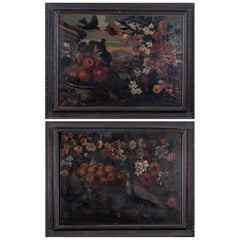
Paire de natures mortes espagnoles anonymes du 18ème siècle "Bodegón" sur toile
Paire de natures mortes anonymes espagnoles du XVIIIe siècle de type "bodegón", huile sur toile avec cadre, provenant de Majorque.
Catégorie
Antiquités, XVIIIe siècle, Espagnol, Peintures
Matériaux
Toile
Paire de peintures à l
huile sur toile et bois doré du XIXe siècle continental
Une paire élégante et de grande qualité de peintures à l'huile sur toile et bois doré du XIXe siècle continental. Chaque superbe nature morte au pastel est placée dans son cadre d'or...
Catégorie
Antiquités, XIXe siècle, Peintures
Matériaux
Bois doré, Peinture
Paire de natures mortes florales italiennes
Paire de natures mortes florales de l'école italienne du début du XIXe siècle dans des cadres Florentine.
Catégorie
Antiquités, XIXe siècle, italien, Baroque, Peintures
Matériaux
Toile
8 483 € / ensemble