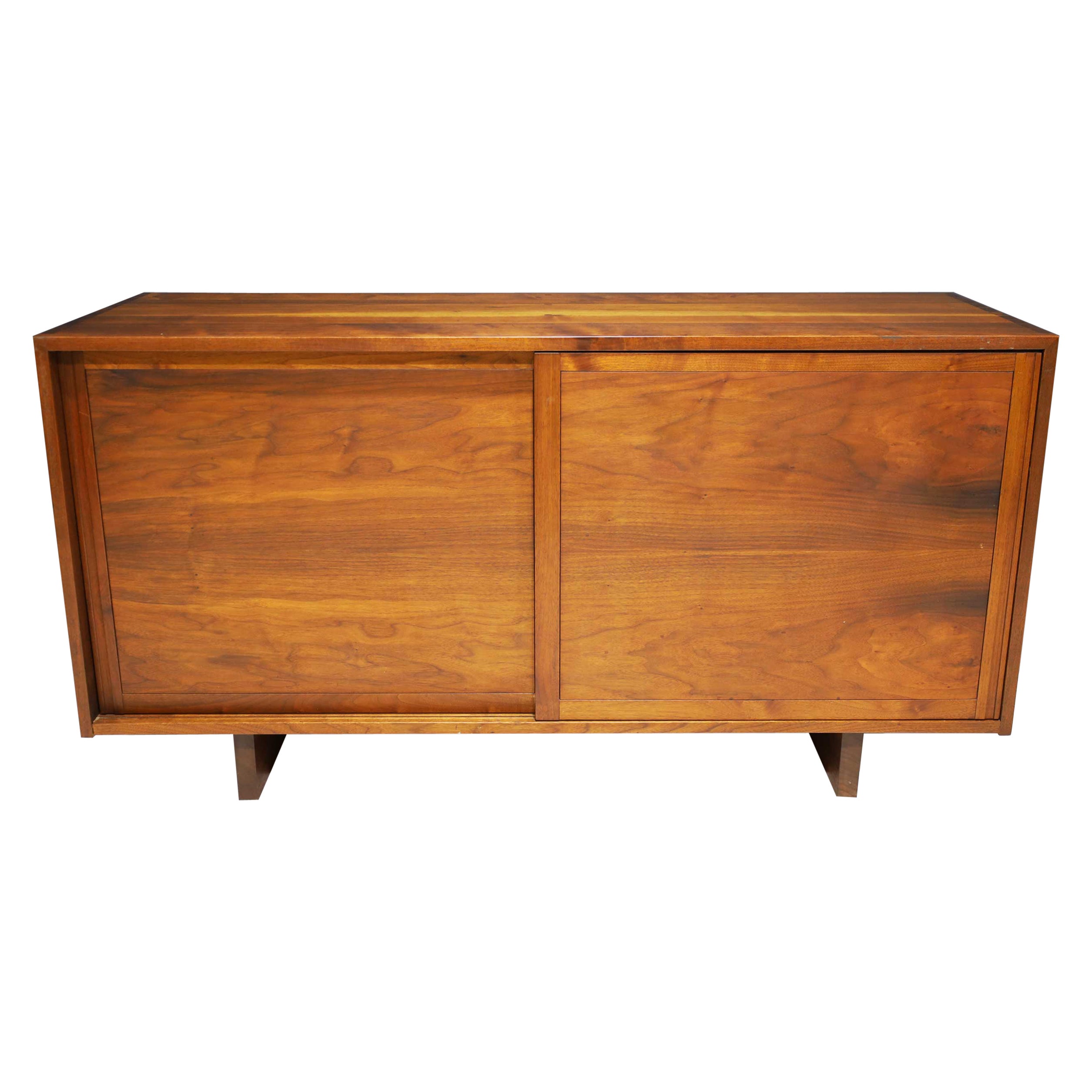
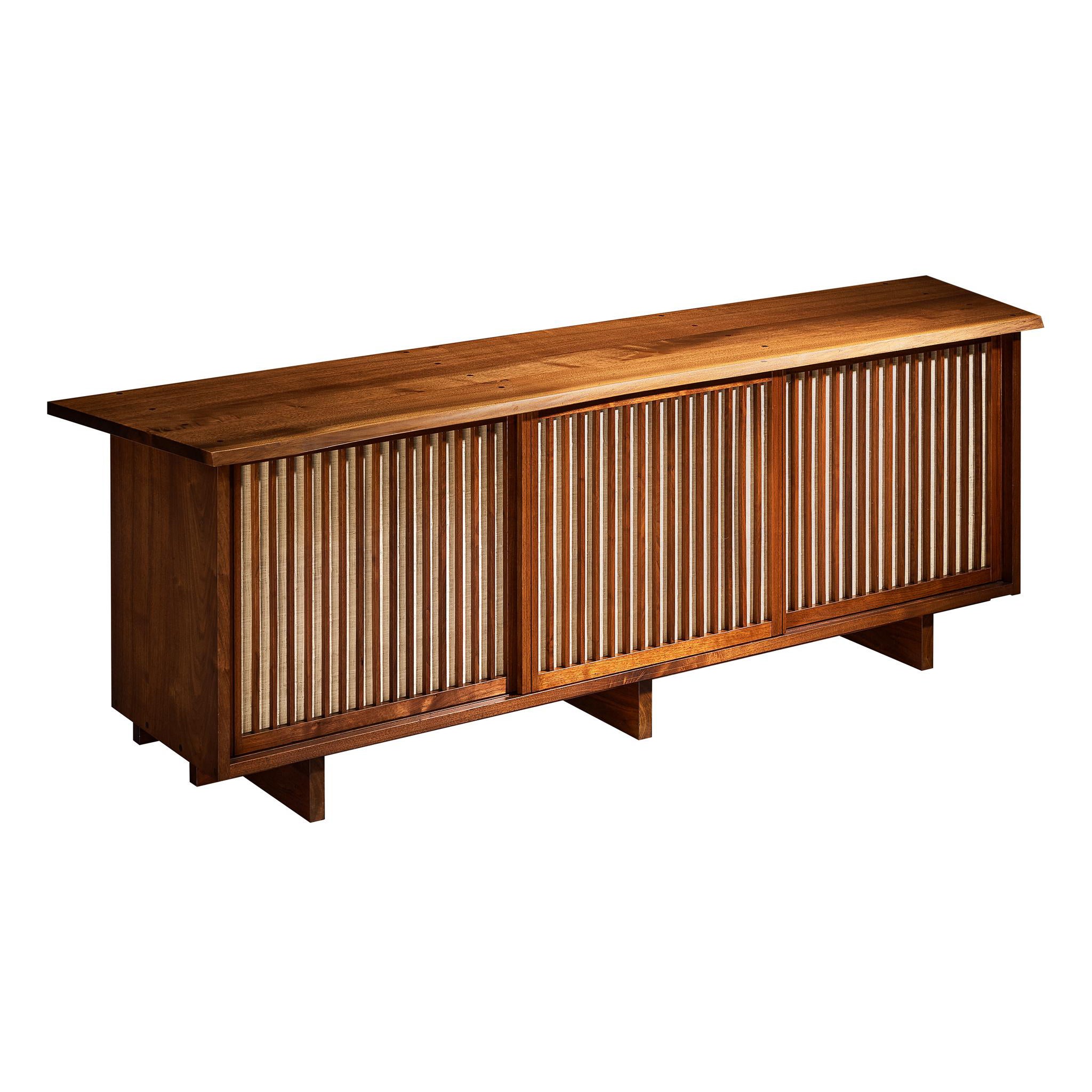
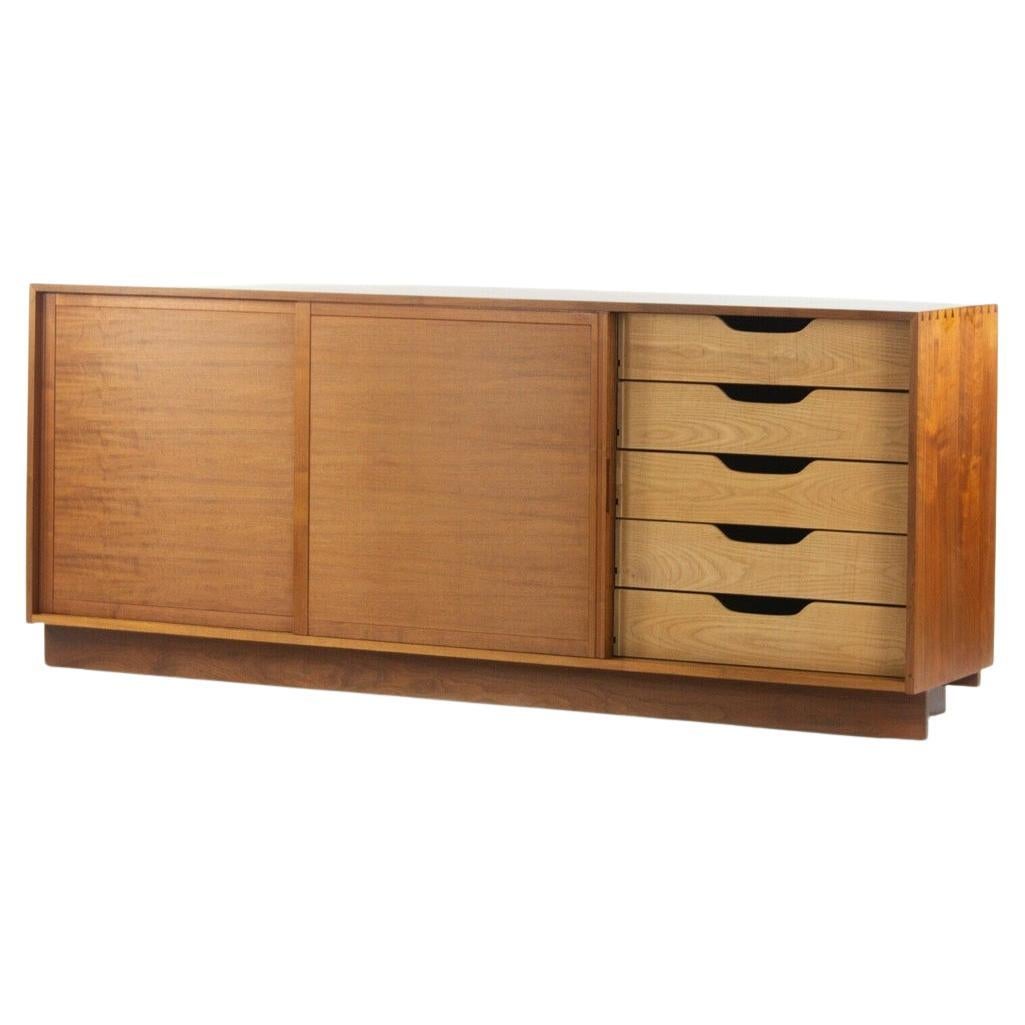
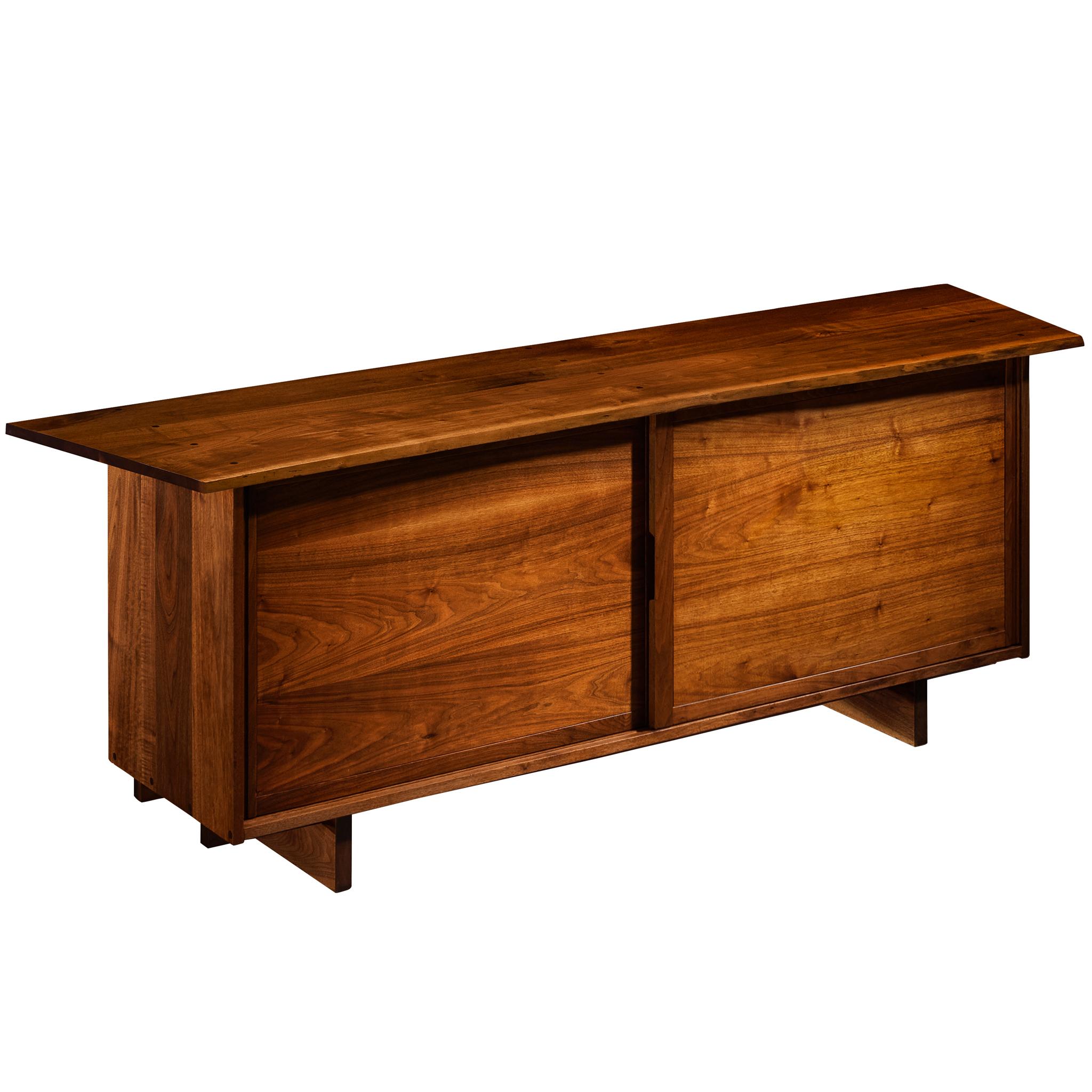
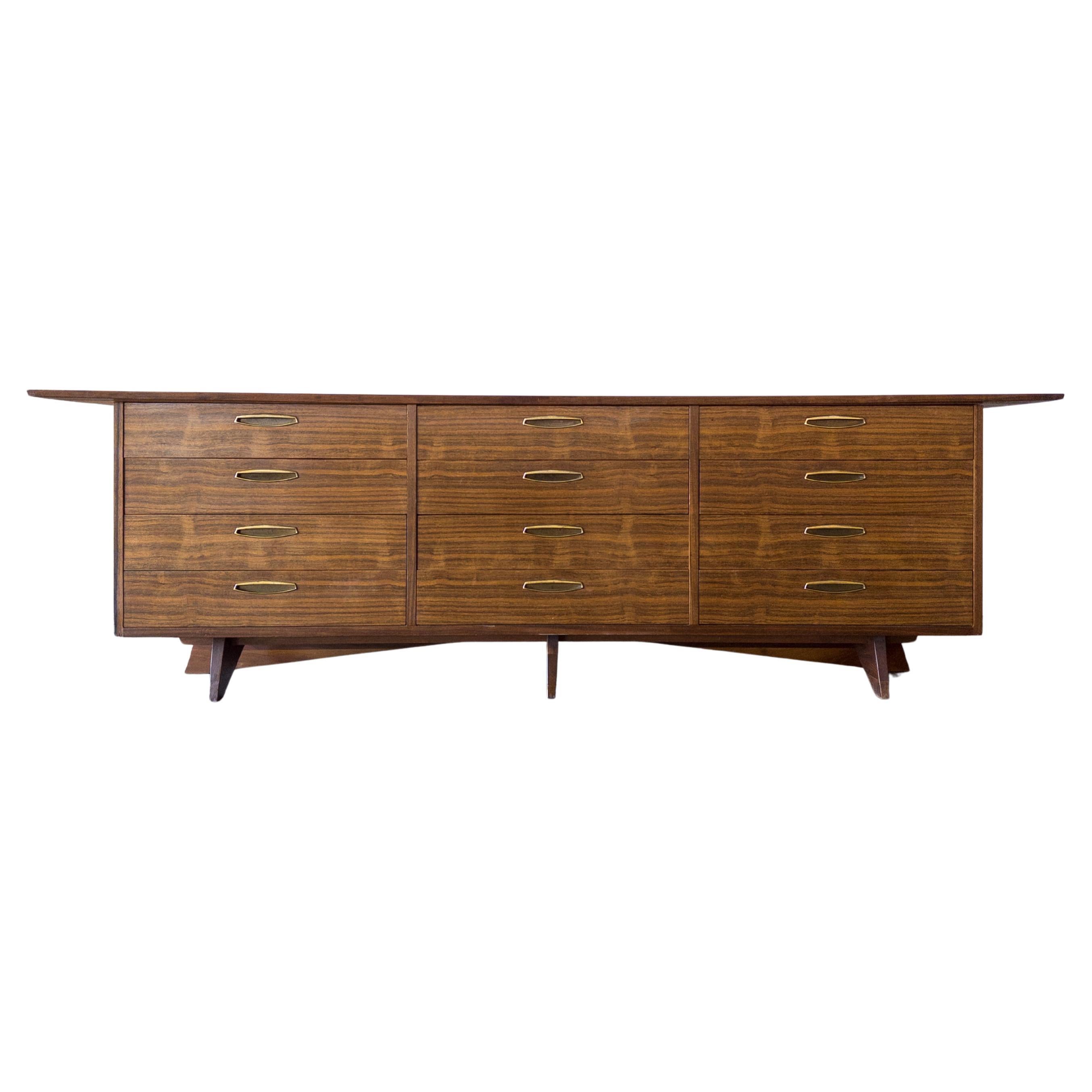
George Nakashima Double Sliding-Door Cabinet in Walnut and Pandanus Cloth
À propos de cet article
- Créateur:George Nakashima Studio (Constructeur),George Nakashima (Designer)
- Dimensions:Hauteur : 81 cm (31,89 po)Largeur : 152,5 cm (60,04 po)Profondeur : 51 cm (20,08 po)
- Style:Mid-Century Modern (De la période)
- Matériaux et techniques:
- Lieu d origine:
- Période:1980-1989
- Date de fabrication:1983
- État:Usure conforme à l âge et à l utilisation. Every item Morentz offers is checked by our team of 30 craftspeople in our in-house workshop. Special restoration or reupholstery requests can be done. Check ‘About the item’ or ask our design specialists for detailed information on the condition.
- Adresse du vendeur:Waalwijk, NL
- Numéro de référence:Vendeur : 501179341stDibs : LU933147981052
George Nakashima
Maître du travail du bois et architecte formé à l'AT&T, George Nakashima était le chef de file du mouvement du mobilier American Studio. Tout comme Wharton Esherick, Sam Maloof et Wendell Castle, Nakashima était un artisan qui dédaignait les méthodes et les matériaux industriels au profit d'une approche personnelle et artisanale de la conception de chaises, tables basses et d'autres pièces. La particularité de Can est le style poétique de son travail, sa Revere pour le bois et la conviction que ses meubles peuvent évoquer - comme il l'a dit dans le titre de ses mémoires de 1981 - L'âme d'un arbre.
Né à Spokane, dans l'État de Washington, d'une famille d'immigrés japonais, Nakashima a beaucoup voyagé après ses études, travaillant et étudiant à Paris, au Japon et en Inde. À chaque étape, il s'est imprégné à la fois du modernisme de et des influences du design traditionnel.
Le tournant dans la carrière de Nakashima s'est produit aux États-Unis en 1942, lorsqu'il a été placé dans un camp d'internement pour les Américains d'origine asiatique dans l'Idaho. Là, Nakashima a rencontré un maître sculpteur sur bois qui lui a enseigné les techniques artisanales japonaises. Un ancien employeur a obtenu la libération de Nakashima et l'a emmené dans la bucolique ville de New Hope, en Pennsylvanie, où Nakashima a installé un Studio et a travaillé pour le reste de sa vie. (Maître artisan Mira Nakashima maintient l'héritage de son père au George Nakashima Studio à New Hope aujourd'hui. Elle est la directrice artistique de George Nakashima Woodworkers depuis la mort de son père, en 1990).
L'esthétique singulière de Nakashima se reflète le mieux dans ses tables et ses bancs , fabriqués sur mesure, qui mettent en valeur les veines, les loupes et les verticilles d'une planche de bois. Il a laissé le "bord libre", ou contour naturel, de la dalle non raboté et a renforcé les fissures dans le bois avec des joints "papillon".
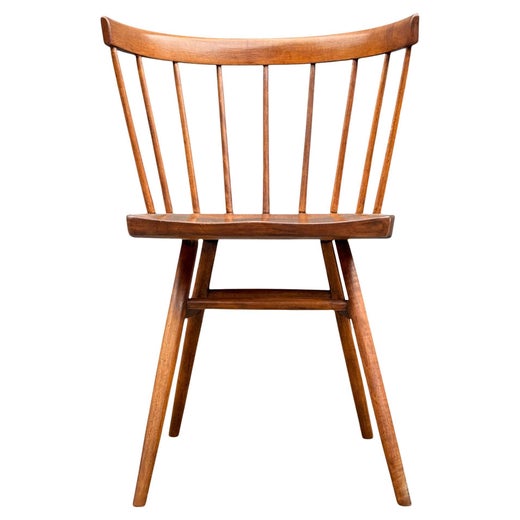
Presque toutes les pièces d'assise de Nakashima ont des bords lisses et fraisés. Nakashima a également passé des contrats avec des fabricants à grande échelle pour produire des éditions soigneusement supervisées de ses dessins. Knoll propose sa Straight chair - une version moderne de la Windsor chair à dossier en fuseau - depuis 1946 ; la société Widdicomb-Mueller, aujourd'hui disparue, issue de la fusion entre Widdicomb et Mueller Furniture, a publié la collection Shaker- inspirée de Origins dans les années 1950.
En 1973, Nelson Rockefeller a confié à Nakashima sa plus importante commande : une suite de 200 pièces pour sa propriété de la banlieue de New York. Aujourd'hui, les meubles de Nakashima sont collectionnés à la fois par les amateurs et les personnes à la mode: ses œuvres font partie des collections du Philadelphia Museum of Art, du Metropolitan Museum of Art de New York et du Smithsonian Institution, ainsi que des maisons de Steven Spielberg, Brad Pitt, Diane von Furstenberg et du regretté Steve Jobs.
Trouvez des meubles vintage George By à vendre sur 1stDibs.
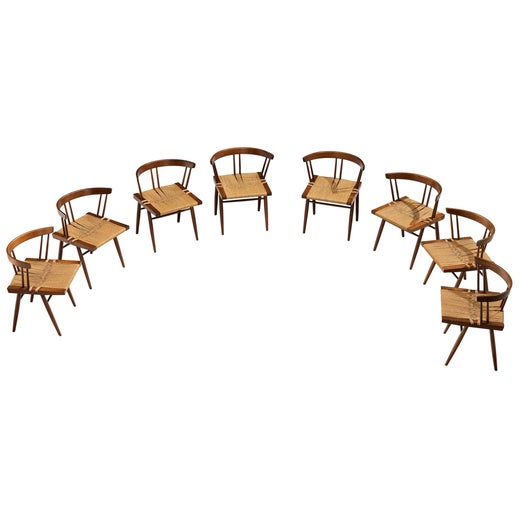
George Nakashima Studio
Maître du travail du bois et architecte formé à l'AT&T, George Nakashima était le chef de file du mouvement du mobilier American Studio. Tout comme Wharton Esherick, Sam Maloof et Wendell Castle, Nakashima était un artisan qui dédaignait les méthodes et les matériaux industriels au profit d'une approche personnelle et artisanale de la conception de chaises, tables basses et d'autres pièces. La particularité de Can est le style poétique de son travail, sa Revere pour le bois et la conviction que ses meubles peuvent évoquer - comme il l'a dit dans le titre de ses mémoires de 1981 - L'âme d'un arbre.
Né à Spokane, dans l'État de Washington, d'une famille d'immigrés japonais, Nakashima a beaucoup voyagé après ses études, travaillant et étudiant à Paris, au Japon et en Inde. À chaque étape, il s'est imprégné à la fois du modernisme de et des influences du design traditionnel.
Le tournant dans la carrière de Nakashima s'est produit aux États-Unis en 1942, lorsqu'il a été placé dans un camp d'internement pour les Américains d'origine asiatique dans l'Idaho. Là, Nakashima a rencontré un maître sculpteur sur bois qui lui a enseigné les techniques artisanales japonaises. Un ancien employeur a obtenu la libération de Nakashima et l'a emmené dans la bucolique ville de New Hope, en Pennsylvanie, où Nakashima a installé un Studio et a travaillé pour le reste de sa vie. (Maître artisan Mira Nakashima maintient l'héritage de son père au George Nakashima Studio à New Hope aujourd'hui. Elle est la directrice artistique de George Nakashima Woodworkers depuis la mort de son père, en 1990).
L'esthétique singulière de Nakashima se reflète le mieux dans ses tables et ses bancs , fabriqués sur mesure, qui mettent en valeur les veines, les loupes et les verticilles d'une planche de bois. Il a laissé le "bord libre", ou contour naturel, de la dalle non raboté et a renforcé les fissures dans le bois avec des joints "papillon".
Presque toutes les pièces d'assise de Nakashima ont des bords lisses et fraisés. Nakashima a également passé des contrats avec des fabricants à grande échelle pour produire des éditions soigneusement supervisées de ses dessins. Knoll propose sa Straight chair - une version moderne de la Windsor chair à dossier en fuseau - depuis 1946 ; la société Widdicomb-Mueller, aujourd'hui disparue, issue de la fusion entre Widdicomb et Mueller Furniture, a publié la collection Shaker- inspirée de Origins dans les années 1950.
En 1973, Nelson Rockefeller a confié à Nakashima sa plus importante commande : une suite de 200 pièces pour sa propriété de la banlieue de New York. Aujourd'hui, les meubles de Nakashima sont collectionnés à la fois par les amateurs et les personnes à la mode: ses œuvres font partie des collections du Philadelphia Museum of Art, du Metropolitan Museum of Art de New York et du Smithsonian Institution, ainsi que des maisons de Steven Spielberg, Brad Pitt, Diane von Furstenberg et du regretté Steve Jobs.
Trouvez des meubles du Studio George Nakashima à vendre sur 1stDibs.
Fondée en 2006, MORENTZ dispose d'une équipe d'environ 55 restaurateurs, tapissiers, conseillers en aménagement intérieur et historiens de l'art, ce qui en fait une galerie, atelier et studio de tapisserie d'ameublement, tout en un. Chaque jour, un ensemble de meubles du XXe siècle soigneusement sélectionnés arrive du monde entier à l'entrepôt de l'entreprise, où l'équipe examine minutieusement chaque pièce afin de déterminer les éventuels travaux à effectuer. Qu'il s'agisse d'une nouvelle tapisserie ou d'une restauration complète, l'objectif de MORENTZ est toujours d'honorer l'intention du concepteur tout en répondant aux souhaits du client. L'équipe est prête à relever tous les défis, de la restauration d'une seule pièce pour lui redonner sa gloire d'origine à l'ameublement d'un projet hôtelier de grande envergure.
- ExpéditionRecherche du devis...Expédition depuis : Waalwijk, Pays-Bas
- Politique des retours
Plus d articles de ce vendeur
Tout afficherVintage, années 1960, Américain, Mid-Century Modern, Enfilades
Tissu, Noyer
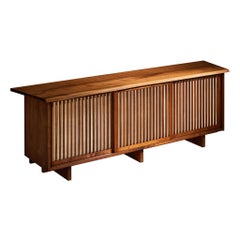
Vintage, années 1960, Américain, Mid-Century Modern, Enfilades
Noyer
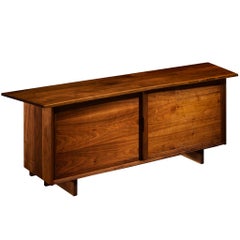
Vintage, années 1960, Américain, Mid-Century Modern, Enfilades
Noyer
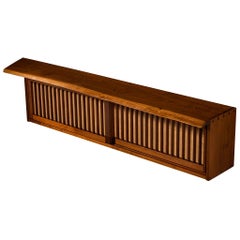
Vintage, années 1950, Danois, Scandinave moderne, Enfilades
Métal
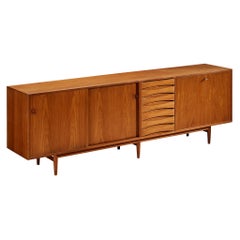
Vintage, années 1960, Français, Mid-Century Modern, Enfilades
Chêne, Céramique
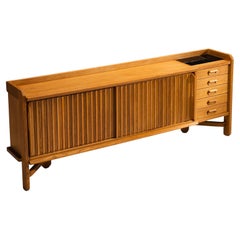
Vintage, années 1950, Danois, Scandinave moderne, Enfilades
Noyer
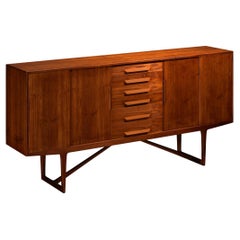
Suggestions
Milieu du XXe siècle, Nord-américain, Mid-Century Modern, Enfilades
Noyer
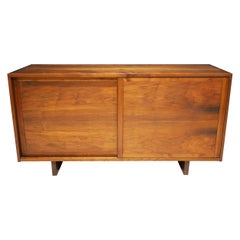
Vintage, années 1970, Américain, Mid-Century Modern, Enfilades
Orme, Noyer
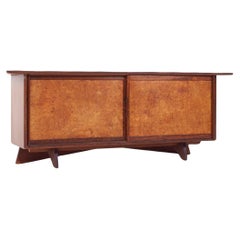
Milieu du XXe siècle, Américain, Moderne, Crédences
Noyer
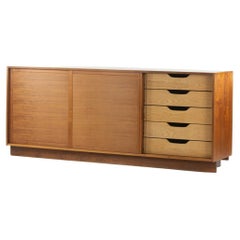
Vintage, années 1950, Mid-Century Modern, Meubles de rangement
Laiton
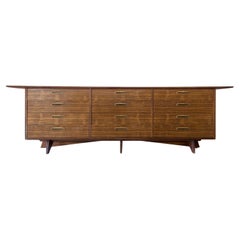
20ième siècle, Américain, Mid-Century Modern, Commodes et coffres à tiroirs
Noyer, Broussin
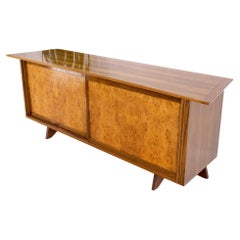
20ième siècle, Américain, Mid-Century Modern, Crédences
Noyer