Articles similaires à Antique French Bronze Sculpture of Philosopher “Zeno of Elea” by Eugene Laurent
Vous voulez plus d
images ou de vidéos ?
Demander au vendeur plus d
images ou de vidéos
1 sur 21
Antique French Bronze Sculpture of Philosopher “Zeno of Elea” by Eugene Laurent
5 975,96 €
À propos de cet article
EUGENE LAURENT
French, 1832-1898
"Zeno of Elea"
Patinated bronze raised on contemporary Nero Portero marble base
Signed to side "Laurent sculp"
6 1/2” W x 5 7/8” D x 12 1/2” H
ref. 510BLE23A
Exquisitely chiseled and detailed throughout, this fine cabinet bronze depicts philosopher Zeno of Elea, famous for his nine paradoxes. The figure is seated with robes flowing over a classical throne while his face is pensive and lost in thought. A tablet is clasped in his hand where his elbow is also prone. The sculpture is raised on a modern solid block of Nero Portero marble over a patinated bronze rim.
Born in Gray, France in April of 1832, Eugene Laurent studied under Coinchon and exhibited regularly at Salon between 1861 and 1893. He was commissioned for the monument of Jacques Callot in Nancy and the François Boucher statue in the Paris city hall.
Zeno of Elea
Greek philosopher active in the early 5th century BCE, associated with the Eleatic school founded by Parmenides. Zeno is known almost entirely through later writers, primarily Aristotle, who preserved his arguments. He wrote in prose and is regarded as the first philosopher to use systematic argumentation designed to expose contradictions in an opponent’s position.
Zeno’s intellectual project was narrow and rigorous. He defended the doctrine that reality is one, indivisible, and unchanging. Rather than assert this directly, he developed paradoxes intended to show that the common sense belief in plurality, motion, and change leads to logical contradiction. His work stands at the origin of dialectical reasoning and anticipates later developments in logic, mathematics, and the philosophy of time.
For a modern viewer, Zeno represents disciplined skepticism toward appearances. His thought is concerned less with metaphysics as abstraction and more with the limits of perception, intuition, and language. He is a figure associated with intellectual austerity, precision, and the willingness to accept unsettling conclusions if reason demands them.
The Paradoxes of Zeno
The Dichotomy: Motion is impossible because one must first traverse half a distance, then half of the remainder, and so on without end. An infinite number of steps cannot be completed.
Achilles and the Tortoise: A faster runner can never overtake a slower one if the slower has a head start, since the pursuer must always reach the point the other has already left.
The Arrow: An arrow in flight is motionless at each instant of time. If time is composed of instants, motion cannot occur.
The Stadium: Relative motion produces contradictory conclusions about time and speed, suggesting incoherence in the idea of motion itself.
Paradoxes of Plurality
5. The Argument from Divisibility: If things are many, they must be both infinitely small and infinitely large, which is impossible.
6. The Argument from Size: Objects must have size to exist, but if composed of parts without size, size cannot emerge.
7. The Argument from Number: Plurality implies an infinite regress of parts, undermining the coherence of discrete objects.
Paradoxes of Place and Perception
8. Place: If everything that exists is in a place, then place itself must be in a place, leading to infinite regress.
9. The Millet Seed: A single millet seed makes no sound when dropped, yet many seeds do. This challenges the reliability of sensory evidence.
Zeno’s paradoxes were not puzzles to be solved but tools meant to destabilize unexamined assumptions. They force a confrontation between intuition and reason and remain relevant in discussions of infinity, continuity, and the structure of time. Later mathematical solutions do not negate Zeno’s importance; they confirm the depth of the problems he identified.
As a philosophical subject, Zeno embodies intellectual restraint and tension. He is not a teacher of doctrines but a challenger of certainty. His presence suggests an engagement with fundamental questions that resist resolution, favoring clarity of reasoning over comfort of conclusion.
Literature:
Bronzes of the Nineteenth Century: Dictionary of Sculptors, Kjellberg, 1994, p. 416
E. Benezit Dictionary of Artists, vol. VIII, Grund, 2006, p. 536
Condition Report:
Light rubbing wear to patina of relief and raised areas. Cleaned and polished, in overall outstanding condition.
About silla antiques
art
Established in 2009, we have available in our 9000 square foot brick-and-mortar gallery an ever-changing selection of carefully curated and catalogued furniture, decorative arts, paintings, sculpture and estate jewelry. Our company has long specialized in sculpture circa 1860 through 1930 and as such the gallery always has a very large collection of exceptional European and American sculpture available on display.
The gallery is located at 117 W Burd Street in Shippensburg, Pennsylvania and is open by appointment only. We welcome your visit and would love to meet with you at the shop. For clients located outside of the area, we are always available to discuss items by video conferencing or by phone.
- Dimensions:Hauteur : 31,75 cm (12,5 po)Largeur : 16,51 cm (6,5 po)Profondeur : 14,94 cm (5,88 po)
- Style:Romantique (De la période)
- Matériaux et techniques:
- Lieu d origine:
- Période:
- Date de fabrication:1880
- État:Remplacements effectués: Modern marble base. Light rubbing wear to patina of relief and raised areas. Cleaned and polished, in overall outstanding condition.
- Adresse du vendeur:Shippensburg, PA
- Numéro de référence:Vendeur : 510BLE23A1stDibs : LU1059048368022
À propos du vendeur
4,9
Vendeur reconnu
Ces vendeurs prestigieux sont des leaders du secteur. Ils représentent le summum en matière de qualité et de design.
Vendeur Platine
Vendeurs premium dont la note est supérieure à 4,7 et le délai de réponse de 24 heures maximum
Établi en 2009
Vendeur 1stDibs depuis 2014
524 ventes sur 1stDibs
Temps de réponse habituel : 3 heures
- ExpéditionRecherche du devis...Expédition depuis : Shippensburg, PA
- Politique des retours
Certaines parties de cette page ont été traduites automatiquement. 1stDibs ne garantit pas l
exactitude des traductions. L
anglais est la langue par défaut de ce site web.
Plus d articles de ce vendeur
Tout afficherGrand Tour d
Italie Sculpture en bronze de Marli Mars Ares après l
Antiquité
GRAND TOUR
Italien, vers le milieu ou la fin du 19e siècle
Marli, après l'Antique
Bronze patiné sur un socle en marbre d'origine
13 1/2" H x 6 3/8" D x 4 3/4" W (total incluant l...
Catégorie
Antiquités, XIXe siècle, italien, Grand Tour, Sculptures - Figuratif
Matériaux
Marbre, Bronze
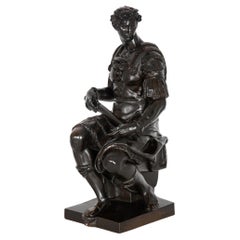
Sculpture en bronze du Grand Tour Giuliano de Medici d
après l
Antiquités, 19e siècle
D'APRÈS MICHELANGELO DE L'ANTIQUITÉ
Modèle Grand Tour de Giuliano de Medici de la Chapelle des Médicis à Florence
Bronze patiné coulé dans le sable numéroté dans le coin arrière "5...
Catégorie
Début du 20ème siècle, Européen, Grand Tour, Sculptures - Figuratif
Matériaux
Bronze
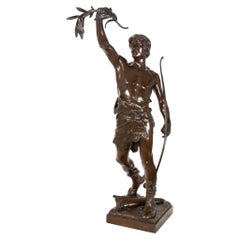
Grande sculpture française de 36 guerriers Vainqueur par Eugene Marioton
Par Eugene Marioton
EUGÈNE MARIOTON
Français, 1857-1933
"Vainqueur
Bronze patiné brun foncé signé "E. Marioton", cachet de fonderie pour Siot-Decauville, estampillé à froid D718 coulée vers 1910
ré...
Catégorie
20ième siècle, Français, Romantique, Sculptures - Figuratif
Matériaux
Bronze
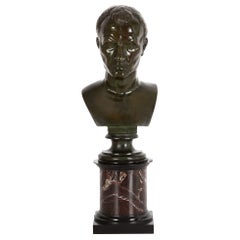
Sculpture en bronze antique du Grand Tour d
Italie, Buste de Jules César
Ce buste de Jules César, finement moulé et magnifiquement patiné, provient probablement de Rome vers le troisième quart du XIXe siècle et repo...
Catégorie
Antiquités, XIXe siècle, italien, Grand Tour, Bustes
Matériaux
Marbre, Bronze
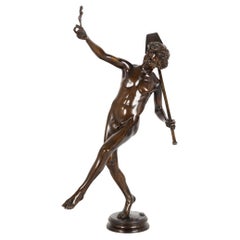
Sculpture en bronze antique française des années 1880 trouvée à Pompeii ! par Hippolyte Moulin
Par Thiebaut Freres
HIPPOLYTE ALEXANDRE JULIEN MOULIN
Français, 1832-1884
"Une Trouvaille à Pompéi
Bronze coulé au sable et patiné Signé sur la base "Moulin", scellé avec un cachet de fonderie pour T...
Catégorie
Antiquités, XIXe siècle, Français, Romantique, Sculptures - Figuratif
Matériaux
Bronze
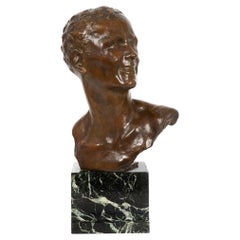
Sculpture française en bronze Art Déco moderniste, Buste de jeune homme, Alfredo Pina
Par Alfredo Pina
ALFREDO PINA
Français, 1883-1966
Buste d'un jeune homme
Bronze patiné brun moyen coulé à la cire perdue sur socle en marbre verde massif signé en fonte "A. Pina" et scellé avec ca...
Catégorie
20ième siècle, Français, Art déco, Bustes
Matériaux
Marbre, Bronze
Suggestions
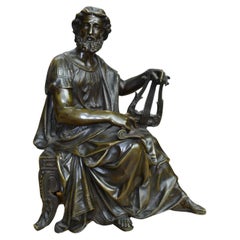
Statue en bronze patiné d
un érudit classique assis signé Doriot
Par Theodore Doriot
Une sculpture en bronze finement coulée de un classique expressif érudit grec drapé assis sur une chaise Curule tenant dans une main une lyre et dans l'autre un rouleau ouvert, t...
Catégorie
Antiquités, Fin du XIXe siècle, Français, Néo-classique, Sculptures - Fi...
Matériaux
Bronze
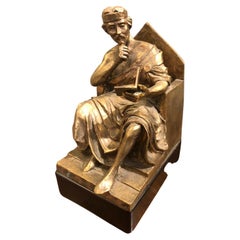
Incroyable sculpture en bronze doré du 20ème siècle d
un roi méditant, Italie, 1940
La sculpture en bronze doré de ce roi assis sur son trône, portant sa couronne, alors qu'il est absorbé dans la lecture d'un livre est très rare et particulière. La figure se tient é...
Catégorie
Vintage, années 1940, italien, Grec classique, Sculptures - Figuratif
Matériaux
Bronze
2 818 € Prix de vente
20 % de remise
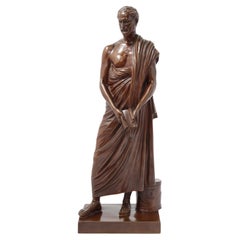
Sculpture Demosthenes en bronze de la fonderie Barbedienne du 19ème siècle
Par F. Barbedienne Foundry
Figure en bronze représentant Démosthène (384-322 av. J.-C.), homme d'État et orateur grec. La sculpture est basée sur une copie romaine d'une statue grecque originale. La patine bru...
Catégorie
Antiquités, XIXe siècle, Français, Néoclassique, Sculptures - Figuratif
Matériaux
Bronze
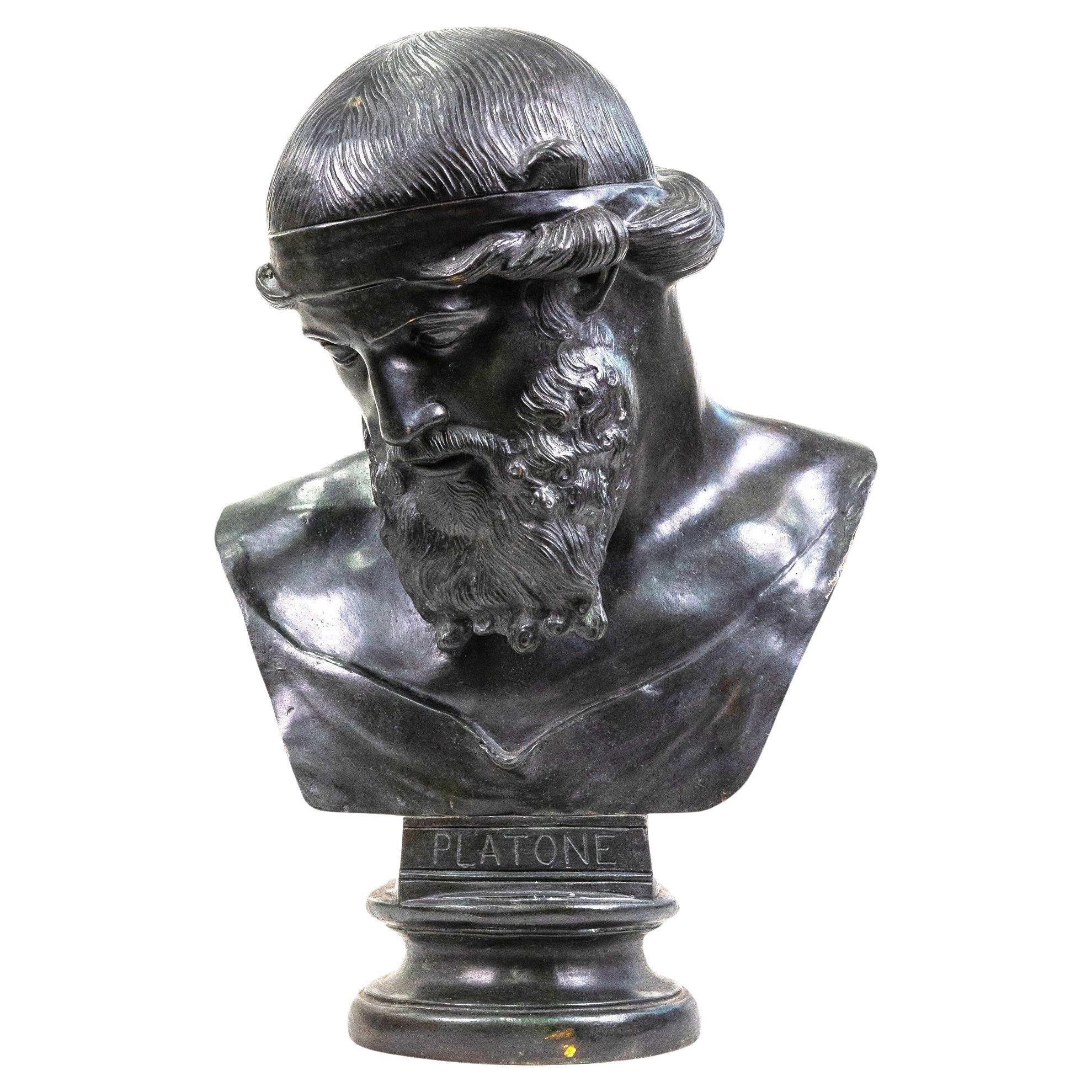
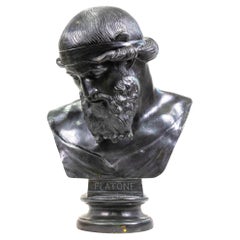
Plato en bronze, buste en bronze
Buste de Plato en bronze ciselé. DES PHOTOS SUPPLÉMENTAIRES, DES INFORMATIONS SUR LE LOT ET DES INFORMATIONS SUR L'EXPÉDITION PEUVENT ÊTRE DEMANDÉES EN ENVOYANT UN EMAIL
Tags : PLAT...
Catégorie
20ième siècle, Sculptures - Figuratif
Matériaux
Bronze
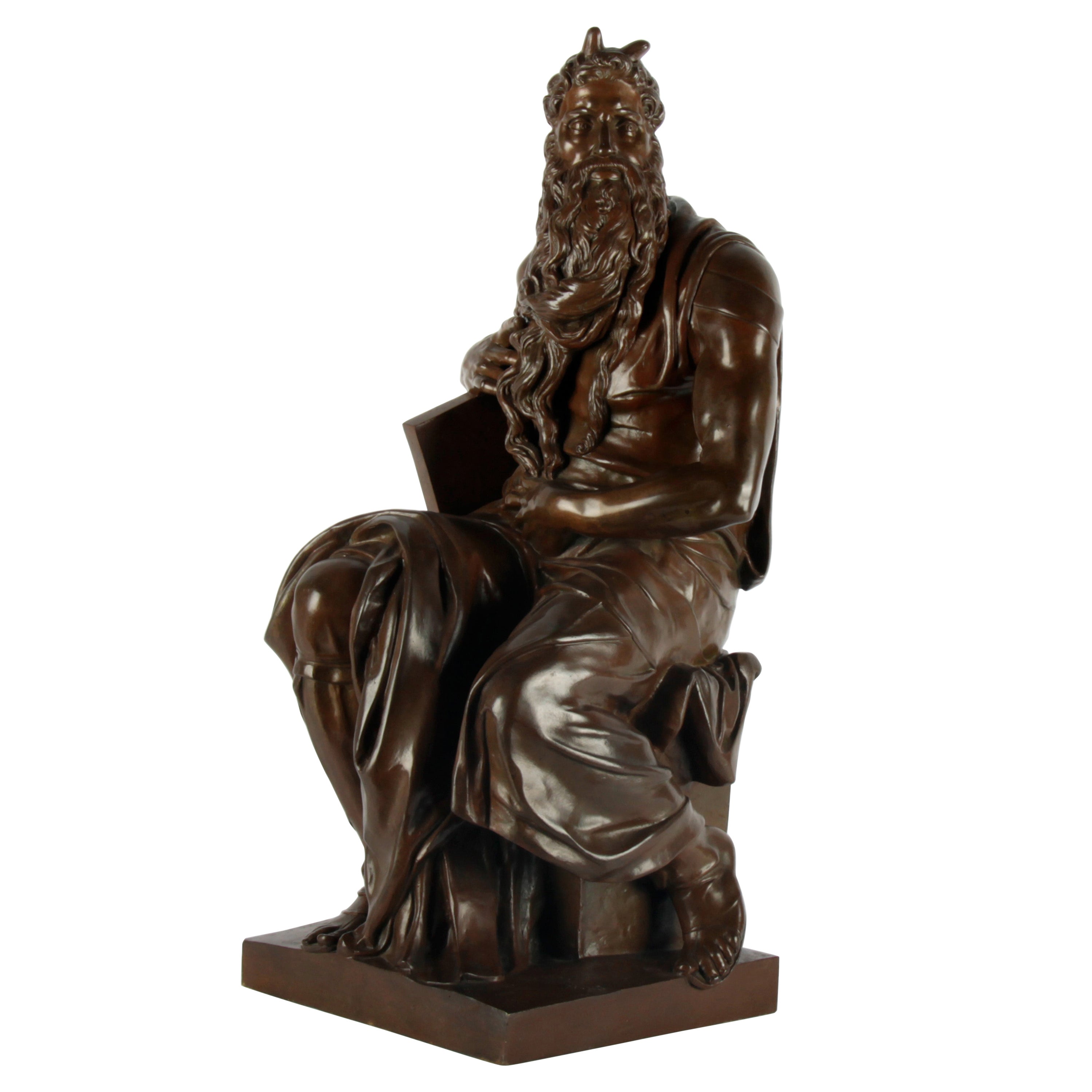
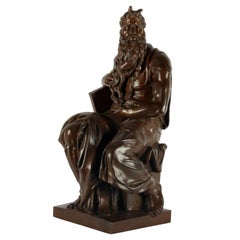
Statue en bronze du 19e siècle
Sculpture en bronze du XIXe siècle représentant des mozes (Michel-Ange).
Catégorie
Antiquités, Fin du XIXe siècle, Européen, Sculptures - Figuratif
Matériaux
Bronze
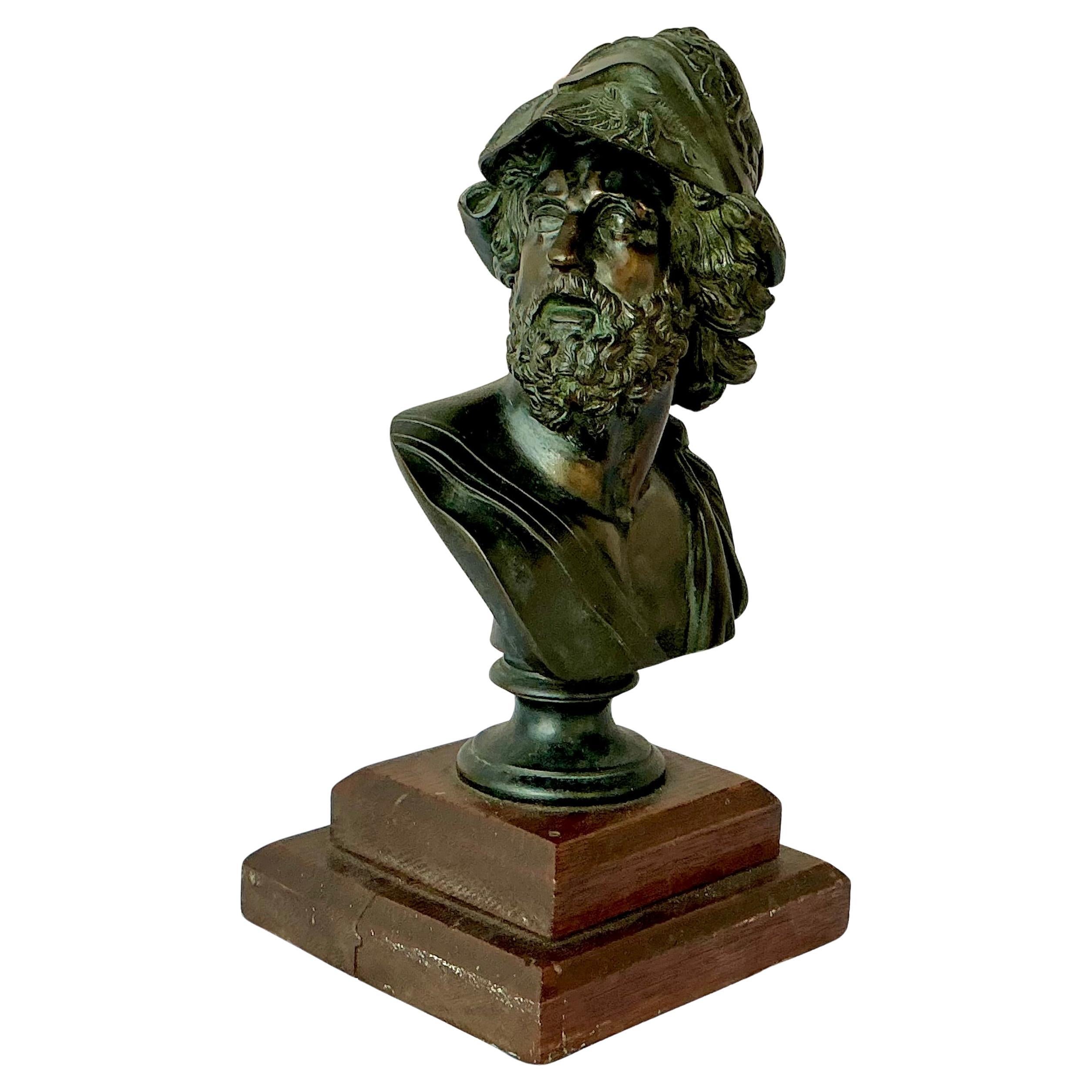
Buste en bronze de Ménélas, Grand Tour d
Italie
Italian Grand Tour Buste en bronze de Ménélas sur un socle en bois à gradins. Ménélas était le légendaire roi de Sparte dans la mythologie grecque. Cette sculpture représente le guer...
Catégorie
Antiquités, XIXe siècle, italien, Grand Tour, Bustes
Matériaux
Bronze