Articles similaires à Model 400 Arm Chair by Hartmut Lohmeyer für Wilkahn
Vous voulez plus d
images ou de vidéos ?
Demander au vendeur plus d
images ou de vidéos
1 sur 21
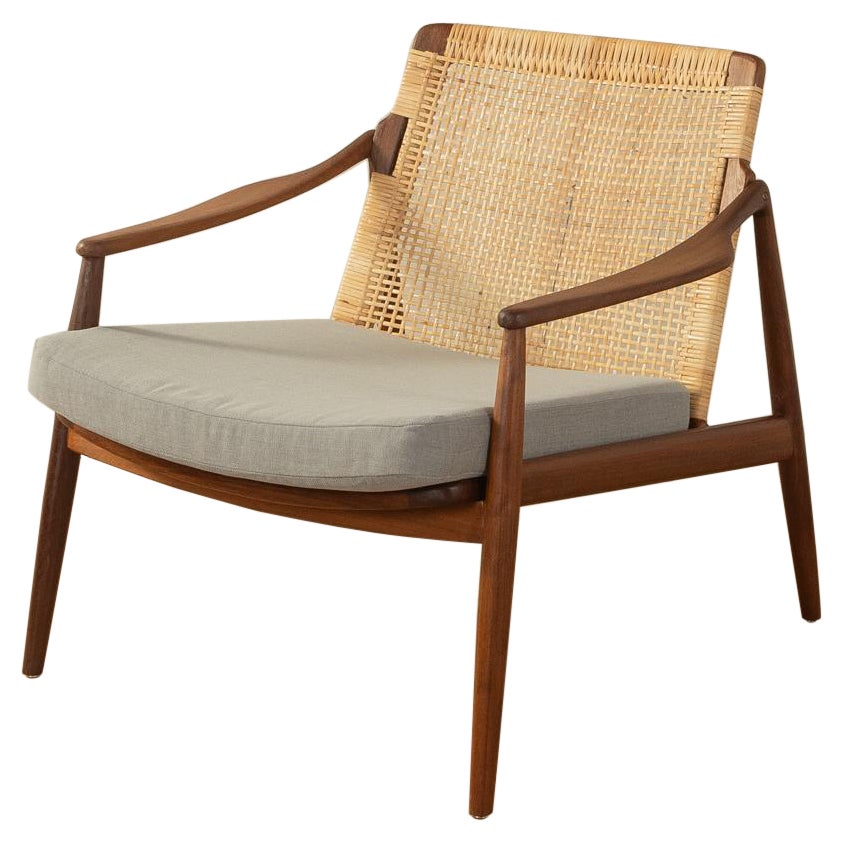
Model 400 Arm Chair by Hartmut Lohmeyer für Wilkahn
4 950 €TVA incluse
À propos de cet article
Model 400 Arm Chair by Hartmut Lohmeyer für Wilkahn
Designer Hartmut Lohmeyer (1923 - ?)
Brand Wilkahn, Allemagne
Époque 1960
MATERIAL Bois, tissu
Taille 71,5 cm x 75 cm x 77,5 cm
État restauré
Bibliographie Edition spéciale WILKHAHN 100 YEARS + SELECTED BY ARCHITONIC, p. 141
Prix sur demande
Demander plus d'informations
Designer
Né en 1923, fils d'un professeur de théologie, Hartmut Lohmeyer appartient à cette génération de designers allemands qui, après 1945, ont contribué à façonner la transition entre une formation formelle influencée par l'académie et des méthodes de production orientées vers l'industrie. Ses études d'architecture à l'université technique de Karlsruhe sous la direction d'Egon Eiermann - l'une des figures clés du modernisme fonctionnel de l'après-guerre - représentaient moins une simple formation qu'un engagement précoce dans les questions structurelles de la conception contemporaine.
Seulement deux ans plus tard, Lohmeyer accepte un poste d'enseignant à l'université d'Alexandrie au Caire, une expérience qui élargit sa perspective sur l'architecture et la conception de produits vers une modernité internationale.
Tout au long des années 1950 et 1960, Wilkhahn a travaillé en tant qu'architecte et designer de mobilier indépendant, se concentrant principalement sur le mobilier de série qu'il a développé pour Wilkhahn. Cette collaboration est exemplaire de la professionnalisation de l'industrie allemande du meuble à cette époque : elle associe la clarté conceptuelle à l'ambition de la reproductibilité industrielle - deux principes qui continuent de façonner l'identité de Wilkhahn aujourd'hui.
Le modèle 400, créé en 1960, est l'une des créations les plus célèbres de Lohmeyer. En raison de sa durée de production relativement courte (environ cinq ans), cette œuvre est devenue l'une des plus recherchées dans le monde entier.
Fabricant - Wilkhahn : Design/One avec conviction
Fondée en 1907 par Christian Wilkening et Friedrich Hahne en tant que petite fabrique de chaises à Eimbeckhausen, en Basse-Saxe, Wilkhahn a évolué sous la Direction des fils des fondateurs, Fritz Hahne et Adolf Wilkening, pour devenir une marque de design de renommée internationale.
Dans les années 1950, l'entreprise a délibérément cherché à dialoguer avec des designers influencés par les idéaux du Bauhaus et du Deutscher Werkbund, notamment Walter Heyn, Herbert Hirch et Georg Leowald. Avec eux s'est amorcée une réorientation décisive : l'abandon de l'ébénisterie traditionnelle au profit d'un design industriel moderne qui allie fonctionnalité, esthétique et durabilité.
Wilkhahn est ainsi devenu le pionnier d'une éthique du design qui reste d'actualité : "meilleure valeur utilitaire, forme durable et longévité" - non pas comme des slogans, mais comme des principes vécus.
Aujourd'hui, Wilkhahn compte parmi les principaux fabricants mondiaux de mobilier de bureau de haute qualité - synonyme de "Design made in Germany", où l'artisanat, l'innovation et la responsabilité se traduisent par des formes intemporelles.
Matériaux et Condit
Le cadre en merisier massif a été entièrement restauré par un restaurateur professionnel agréé. Les éléments en osier ne présentent que quelques imperfections mineures - documentées dans les images - qui n'affectent pas l'intégrité structurelle ou l'équilibre visuel de la chaise.
Les coussins d'assise et de dossier ont été fabriqués dans un atelier spécialisé et recouverts d'un luxueux tissu bouclé en laine de couleur "nacre rosée" de la maison textile italienne Dedar. Sa texture subtile témoigne à la fois d'une précision artisanale et d'une élégance contemporaine et discrète.
Composition du tissu : 42 % laine - 33 % viscose - 24 % coton - 1 % polyamide/nylon
Pays d'origine (tissu) : Belgique
Pour les décorateurs d'intérieur ou les clients qui souhaitent s'assurer que les coussins s'harmonisent parfaitement avec leur environnement, nous sommes heureux de fournir un échantillon de tissu sur demande.
- Créateur:Wilkhahn,Hartmut Lohmeyer (Designer)
- Dimensions:Hauteur : 77,5 cm (30,52 po)Largeur : 71,5 cm (28,15 po)Profondeur : 75 cm (29,53 po)
- Style:Mid-Century Modern (De la période)
- Matériaux et techniques:
- Lieu d origine:
- Période:
- Date de fabrication:1960s
- État:Refinished. Rembourré. Usure conforme à l âge et à l utilisation.
- Adresse du vendeur:Kelkheim (Taunus), DE
- Numéro de référence:1stDibs : LU7768247870792
À propos du vendeur
5,0
Vendeur professionnel agréé
Chaque vendeur répond à des normes strictes en matière d
authenticité et de fiabilité
Établi en 2017
Vendeur 1stDibs depuis 2022
10 ventes sur 1stDibs
Temps de réponse habituel : 8 heures
- ExpéditionRecherche du devis...Expédition depuis : Kelkheim (Taunus), Allemagne
- Politique des retours
Certaines parties de cette page ont été traduites automatiquement. 1stDibs ne garantit pas l
exactitude des traductions. L
anglais est la langue par défaut de ce site web.
Plus d articles de ce vendeur
Tout afficherChaise longue Schulz rembourrée Hermès par Otto Schultz pour Boet, années 1940
Par Otto Schulz
Chaise longue tapissée Hermès unique en son genre, créée par Otto Schulz pour Boet, Suède.
Nouvelle tapisserie avec un tissu de haute qualité de Hermes Paris/ Dedar Milano.
H infin...
Catégorie
Vintage, années 1940, Suédois, Scandinave moderne, Fauteuils de salon
Matériaux
Tissu, Bois
Fauteuil de salon modèle 31 de Florence Knoll Bassett pour Knoll International, lot de 2
Par Florence Knoll
Florence Marguerite Knoll Basset était l'un des designers et architectes américains les plus renommés du XXe siècle. En 1954, elle a conçu le fauteuil modèle 31, qui est devenu un cl...
Catégorie
Milieu du XXe siècle, Allemand, Mid-Century Modern, Fauteuils de salon
Matériaux
Métal
2 952 € Prix de vente
40 % de remise
Chaise longue avec tissu Dedar Boucle par Fritz Neth pour Correcta, années 1950
Par Fritz Neth
Magnifique et confortable chaise longue de Fritz Neth pour Correcta Sitzformbau, Allemagne, des années 1950.
Nouvelle tapisserie d'ameublement en tissu bouclé gris de haute qualit...
Catégorie
Vintage, années 1950, Allemand, Mid-Century Modern, Fauteuils de salon
Matériaux
Laiton
Fauteuil de salon Madame avec tissu bouclé Dedar de Fritz Neth pour Correcta, années 1950
Par Fritz Neth
Belle et confortable chaise longue "Madame" de Fritz Neth pour Correcta Sitzformbau, Allemagne, fin des années 1950.
Nouveau revêtement avec un tissu de haute qualité de Dedar Arte...
Catégorie
Vintage, années 1950, Allemand, Mid-Century Modern, Fauteuils de salon
Matériaux
Métal
Fauteuil scandinave moderne du milieu du siècle dernier en tissu Dedar à poils longs en velours, années 1950
Incroyable fauteuil scandinave recouvert d'un tissu de velours à poils longs datant de l'époque dorée de la Modernité du milieu du siècle dernier.
Le fauteuil provenait de la succes...
Catégorie
Milieu du XXe siècle, Finlandais, Scandinave moderne, Fauteuils
Matériaux
Velours, Bois
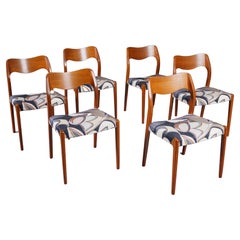
Chaises de salle à manger modèle 71 en tissu Dedar par Niels Otto Møller pour JL Møllers années 1950
Par Neils O. Möller, J. L. Möller Höjbjerg
Chaises de salle à manger modèle 71 en tissu Dedar par Niels Otto Møller pour JL Møllers 1950, ensemble de 6.
Les chaises ont été restaurées, en remettant à neuf et en huilant le boi...
Catégorie
Vintage, années 1950, Danois, Mid-Century Modern, Chaises de salle à manger
Matériaux
Tissu, Teck
Suggestions
Fauteuil exclusif Hartmut Lohmeyer
Par Hartmut Lohmeyer, Wilkhahn
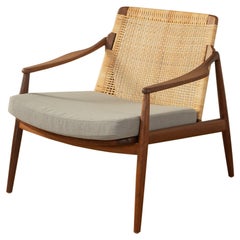
Fauteuil exclusif, Type 400, des années 1950 par Hartmut Lohmeyer pour Wilkhahn. Structure en teck de haute qualité avec un nouveau cannage contemporain. Le fauteuil a été retapissé ...
Catégorie
Vintage, années 1950, Allemand, Mid-Century Modern, Fauteuils
Matériaux
Tissu, Teck
Chaise longue "Antimott" de Walter Knoll avec coussins en bouclette Allemagne, années 1950
Par Knoll Antimott, Walter Knoll
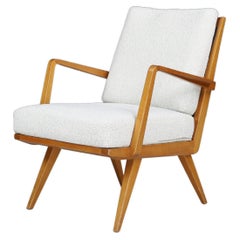
Chaise longue "Antimott" de Walter Knoll avec coussins en bouclette Allemagne, années 1950
Le fauteuil "Antimott" du milieu du siècle, conçu par Walter Design/One en Allemagne dans ...
Catégorie
Milieu du XXe siècle, Allemand, Mid-Century Modern, Fauteuils
Matériaux
Tissu, Cerise
Fauteuil, modèle 300-190, Design/One, Pologne, années 1960.
Par Henryk Lis
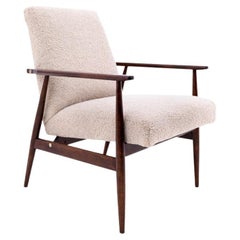
Fauteuil "Lisek", Pologne, années 1960. Modèle 300-190 conçu par Henryk Lis.
La structure du fauteuil est en bois de hêtre. Ce modèle se caractérise par ses pieds tournés et effilés...
Catégorie
Vintage, années 1960, Polonais, Mid-Century Modern, Fauteuils
Matériaux
Bouclé, Hêtre
Peter Hvidt et Orla Mølgaard Nielsen Chaise à bras
Par Peter Hvidt
Peter Hvidt et Orla Mølgaard Nielsen sont le duo danois qui a conçu cette chaise facile.
La chaise s'appelle la chaise Calle. L'exemplaire en vente est une première version. Conçue ...
Catégorie
Vintage, années 1950, Danois, Mid-Century Modern, Fauteuils de salon
Matériaux
Laiton
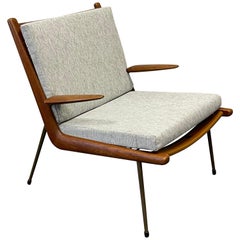
Chaise longue en frêne moderne du milieu du siècle dernier de Viko Baumritter
Par Viko Baumritter
Fauteuil de salon en frêne, de style moderne du milieu du siècle, créé par Baumritter pour sa collection Viko, avec une finition décapée personnalisée et des coussins nouvellement re...
Catégorie
Milieu du XXe siècle, Américain, Mid-Century Modern, Fauteuils de salon
Matériaux
Tissu, Frêne
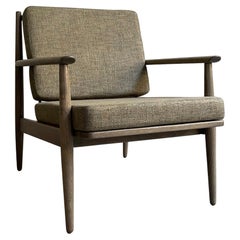
Fauteuil de salon modèle FD-109 d
Ole Wanscher pour France
Søn
Par France
Søn, Ole Wanscher
Élégante chaise longue conçue par Ole Wanscher pour France & Søn au Danemark, vers les années 1950. Ce rare modèle vintage de chaise longue FD-109 conserve la marque du fabricant et ...
Catégorie
Vintage, années 1950, Danois, Mid-Century Modern, Fauteuils de salon
Matériaux
Tissu, Mousse, Bois, Noyer