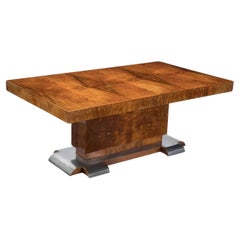
Articles similaires à Antique Art Deco Epstein Burr Walnut Dining Table Epstein 20th Century
Chargement de la vidéo
Vous voulez plus d
images ou de vidéos ?
Demander au vendeur plus d
images ou de vidéos
1 sur 14
Antique Art Deco Epstein Burr Walnut Dining Table Epstein 20th Century
3 797,14 €
À propos de cet article
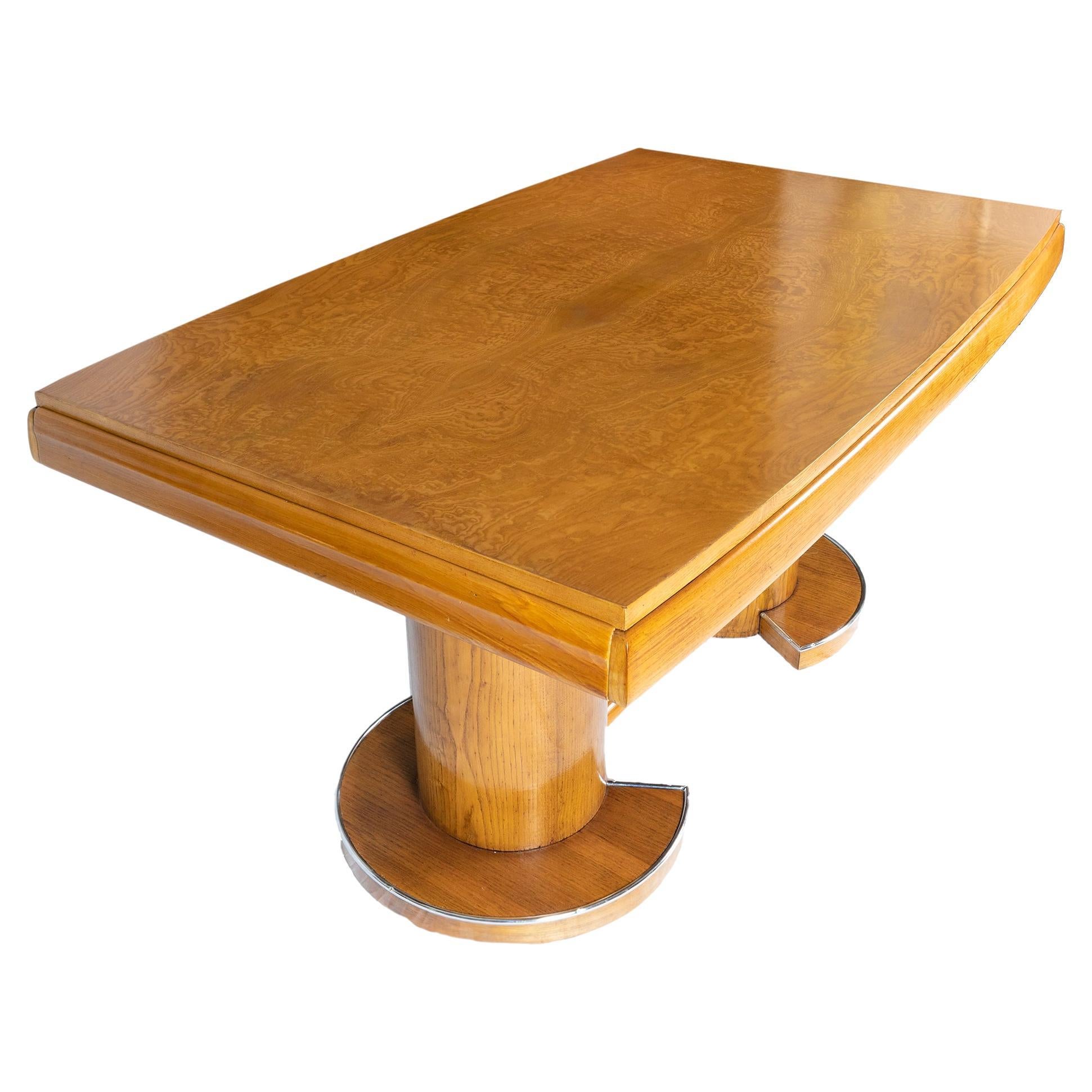
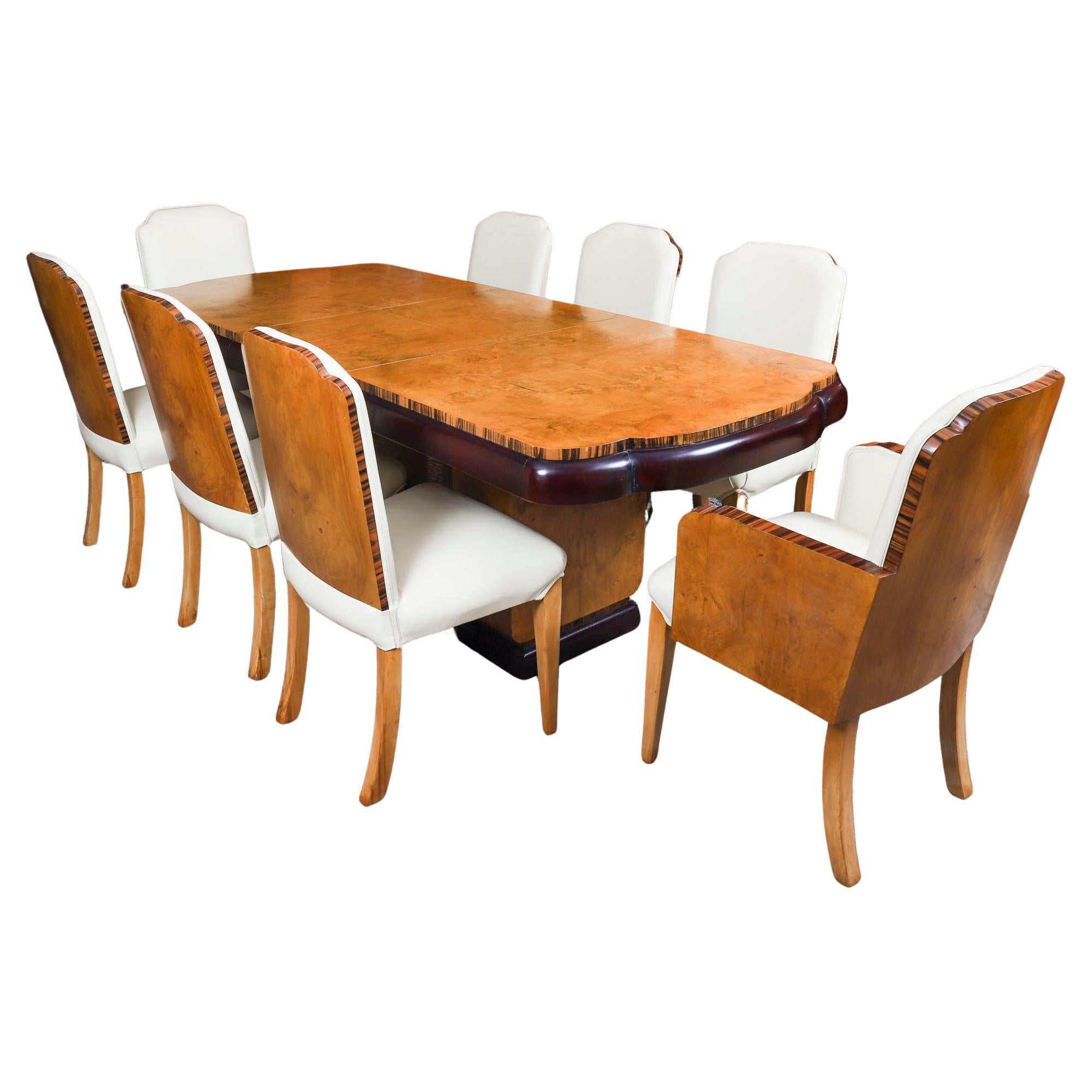
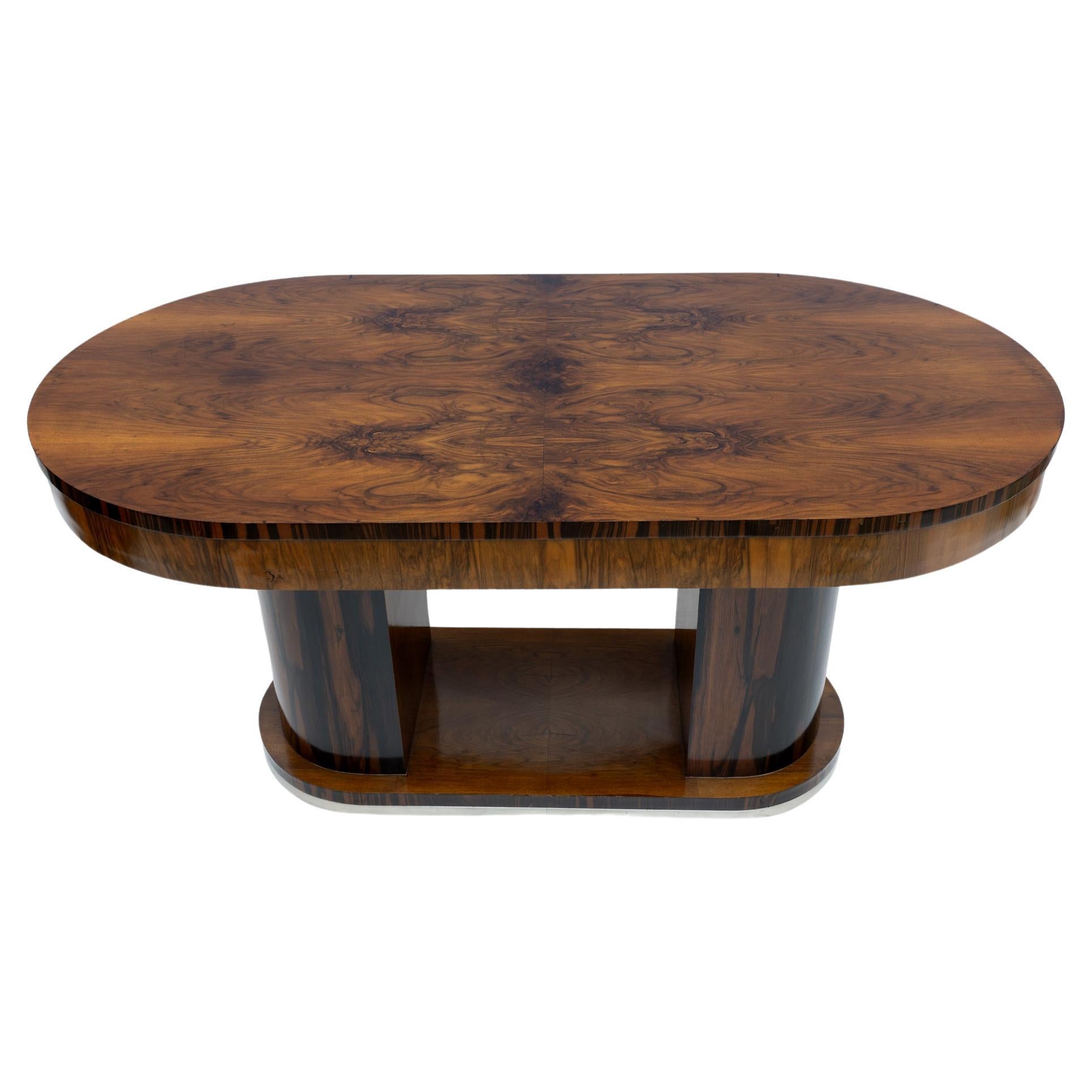
A truly stunning antique Art Deco burr walnut and Coromandel dining table,
attributed to the world renowned cabinet makers Harry
Lou Epstein, circa 1920 in date.
The rectangular shaped table features stunning burr walnut top with rounded corners and coromandel banding, and stands on a decorative a pair of plinth bases.
It has one leaf with folds into the under side of the table when not in use.
This is a fabulous example of the Art Deco period and will enhance any room in which it is placed.
Condition:
In excellent original condition having only been beautifully cleaned and waxed, in our workshops, please see photos for confirmation.
Dimensions in cm:
Height 76 cm x Width 220 cm x Depth 97 cm - Fully Opened
Height 76 cm x Width 166 cm x Depth 97 cm - Leaf Removed
Dimensions in inches:
Height 2 foot, 6 inches x Width 7 foot, 3 inches x Depth 3 foot, 2 inches - Fully Opened
Height 2 foot, 6 inches x Width 5 foot, 5 inches x Depth 3 foot, 2 inches - Leaf Removed
Epstein furniture
was originally founded in East London by Polish immigrants in the 1890s. The firm passed to brothers Harry and Lou Epstein and the pair turned their attention to the production of Art Deco forms from the 1930s until the 1950s.
Finished to high standards, most pieces were custom-made in veneers of burr maple, sycamore or walnut. The design of the famous ‘cloud’ seat furniture is credited to Epstein and the company also popularized the uniquely British taste in suite furniture.
Following World War II, Epstein had showrooms in London, Manchester and Glasgow. A conservative Art Deco style became the company`s trademark after the war and most pieces were made from bleached walnut. Art Deco pieces are not signed.
From the 1960s, some pieces were labelled ‘H.
L. Epstein’ or ‘Epstein
Goldman’.
Art Deco or Deco,
is an influential visual arts design style which first appeared in France during the 1920s, flourished internationally during the 30s and 40s.
It is an eclectic style that combines traditional craft motifs with Machine Ageimagery and materials. The style is often characterized by rich colours, bold geometric shapes, and lavish ornamentation.
Deco emerged from the Interwar period when rapid industrialization was transforming culture. One of its major attributes is an embrace of technology. This distinguishes Deco from the organic motifs favored by its predecessor Art Nouveau.
Historian Bevis Hillier defined Art Deco as "an assertively modern style...[that] ran to symmetry rather than asymmetry, and to the rectilinear rather than the curvilinear; it responded to the demands of the machine and of new material...[and] the requirements of mass production".
During its heyday Art Deco represented luxury, glamour, exuberance, and faith in social and technological progress.
Coromandel wood or Calamander wood
is a valuable wood from India, Sri Lanka and South East Asia. It is of a hazel-brown color, with black stripes (or the other way about), very heavy and hard. It is also known as Macassar Ebony or variegated ebony and is closely related to genuine ebony, but is obtained from different species in the same genus; one of these is Diospyros quaesita Thwaites, from Sri Lanka. The name Calamander comes from the local sinhalese name, 'kalu-medhiriya', which means dark chamber; referring to the characteristic ebony black wood.
Coromandel wood has been logged to extinction over the last 2 to 3 hundred years and is no longer available for new work in any quantity. Furniture in coromandel is so expensive and so well looked after that even recycling it is an unlikely source. A substitute, Macassar Ebony, has similar characteristics and to the untrained eye is nearly the same but it lacks the depth of colour seen in genuine Coromandel.
Walnut
Burr Walnut
Walnut is a hard, dense, tight- grained wood that polishes to a very smooth finish. It is a popular and attractive wood whose colour ranges from near white in the sapwood to a dark hew in the heartwood. When dried in a kiln, walnut wood tends to develop a dull brown colour, but when air-dried can become a rich purplish-brown. Because of its colour, hardness and grain, it is a prized furniture and carving wood. Walnut veneer was highly priced and the cost would reflect the ‘fanciness’ of the veneer – the more decorative, then the more expensive and desirable.
Burr walnut refers to the swirling figure present in nearly all walnut when cut and polished, and especially in the wood taken from the base of the tree where it joins the roots. However the true burr is a rare growth on the tree where hundreds of tiny branches have started to grow. Burr walnut produces some of the most complex and beautiful figuring you can find.
Our reference: A4852b
- Créateur:Harry Lou Epstein Furniture Co (Ébéniste)
- Dimensions:Hauteur : 76 cm (29,93 po)Largeur : 220 cm (86,62 po)Profondeur : 97 cm (38,19 po)
- Style:Art déco (Dans le style de)
- Matériaux et techniques:
- Lieu d origine:
- Période:
- Date de fabrication:circa 1920
- État:
- Adresse du vendeur:London, GB
- Numéro de référence:Vendeur : A4852b1stDibs : LU950648042262
À propos du vendeur
5,0
Vendeur Platine
Vendeurs premium dont la note est supérieure à 4,7 et le délai de réponse de 24 heures maximum
Établi en 1983
Vendeur 1stDibs depuis 2012
1 443 ventes sur 1stDibs
Temps de réponse habituel : <1 heure
Associations
LAPADA - The Association of Arts
Antiques Dealers
- ExpéditionRecherche du devis...Expédition depuis : London, Royaume-Uni
- Politique des retours
Certaines parties de cette page ont été traduites automatiquement. 1stDibs ne garantit pas l
exactitude des traductions. L
anglais est la langue par défaut de ce site web.
Plus d articles de ce vendeur
Tout afficherAntique Art Deco Burr Walnut Dining Table
8 Chairs Epstein 20th Century
Par Harry
Lou Epstein Furniture Co
A truly stunning antique Art Deco burr walnut and Coromandel dining suite attributed to the world renowned cabinet makers Harry
Lou Epstein, comprising a dining table with the ...
Catégorie
Début du 20ème siècle, Britannique, Art déco, Salles à manger complètes
Matériaux
Cuir, Macassar, Noyer
9 930 € / ensemble
Table basse ancienne Art Déco en ronce de noyer Circa 1920
Il s'agit d'une superbe table basse ancienne en noyer Art Déco, datant d'environ 1920.
Le plateau de la table est de forme rectangulaire avec des coins arrondis et un décor de bande...
Catégorie
Vintage, années 1920, Art déco, Tables basses
Matériaux
Noyer
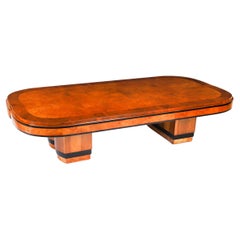
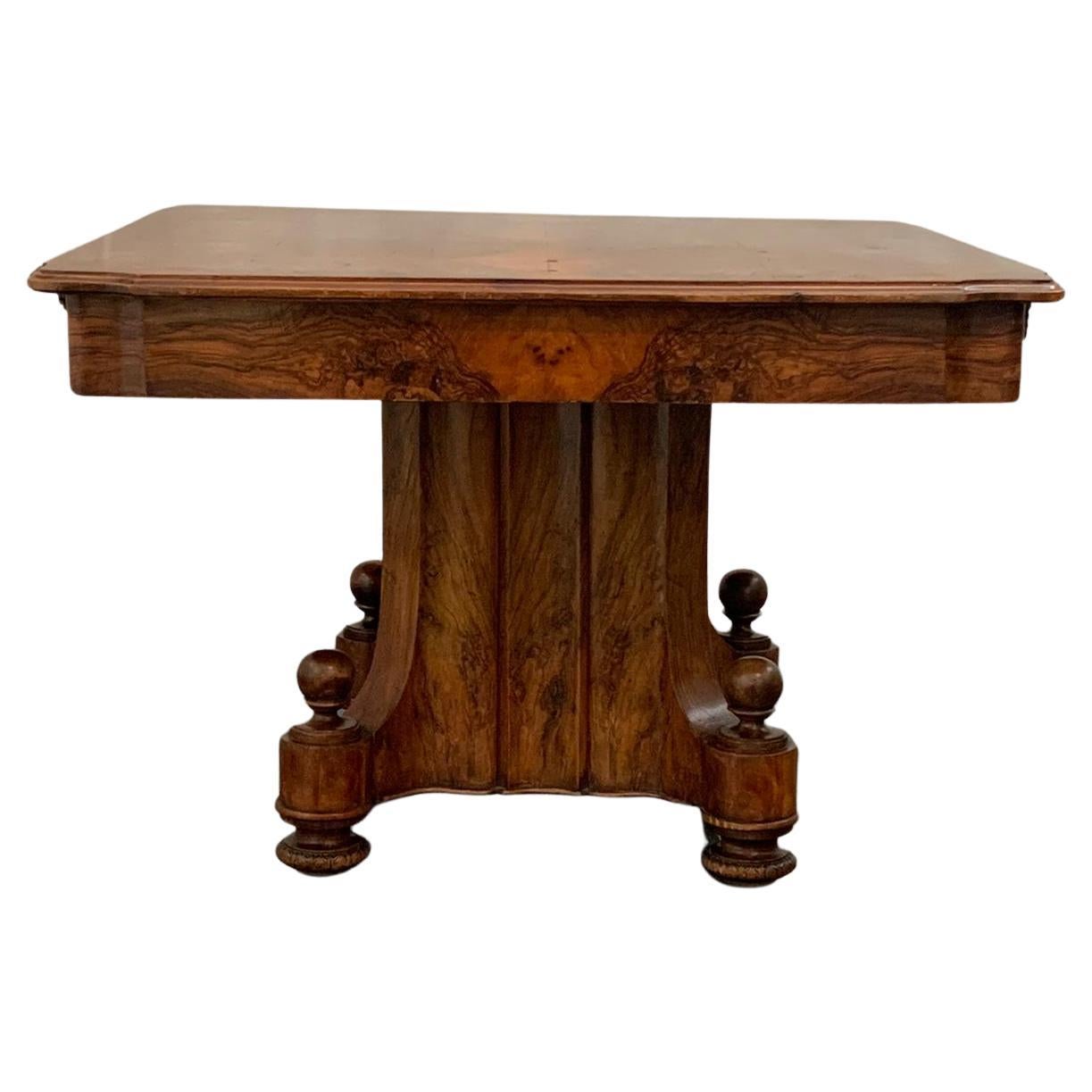
Table basse ancienne en ronce de noyer Art Deco 20ème siècle
Il s'agit d'une superbe table basse ancienne en ronce de noyer Art Déco, datant d'environ 1920.
Il possède un magnifique plateau de forme carrée avec des coins coupés et repose sur ...
Catégorie
Début du 20ème siècle, Art déco, Tables basses
Matériaux
Noyer
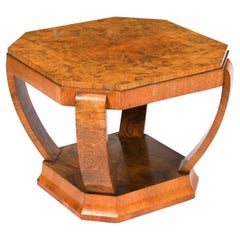
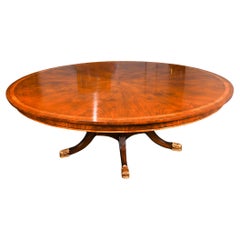
Table de salle à manger vintage en acajou flammé Regency Revival Milieu du 20e siècle
Magnifique table de salle à manger en acajou flammé de style Regency Revival datant du milieu du 20e siècle.
La table est d'une qualité fabuleuse, en excellent état, peut accueillir...
Catégorie
Milieu du XXe siècle, Anglais, Néo-Régence, Tables de salle à manger
Matériaux
Bronze doré
Ancienne table de salle à manger victorienne à deux pieds extensibles en acajou 19ème siècle
Par Wylie
Lochhead
Fantastique table de salle à manger victorienne à deux pieds en acajou et doré, portant la marque imprimée des célèbres ébénistes et détaillants Wylie & Lochhead, et datant d'environ...
Catégorie
Antiquités, années 1850, Anglais, Victorien, Tables de salle à manger
Matériaux
Acajou
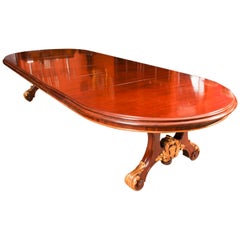
Table de salle à manger en ronce de noyer Vintage 7ft French Empire Revival 20ème siècle
Une impressionnante table de salle à manger en ronce de noyer de style Empire français, datant du milieu du 20e siècle.
Le plateau circulaire en ronce de noyer présente des bandes t...
Catégorie
Milieu du XXe siècle, Néo-empire, Tables de salle à manger
Matériaux
Noyer
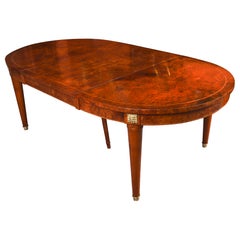
Suggestions
Table de salle à manger Art déco en noyer, années 1930
Table art déco Le piétement à 4 pieds en forme d'oignon porte une pomme de pin sur le dessus et relie la base travaillée avec des vagues sculptées dans du bois massif d'épaisseur gén...
Catégorie
Vintage, années 1930, italien, Art déco, Tables de salle à manger
Matériaux
Noyer, Broussin
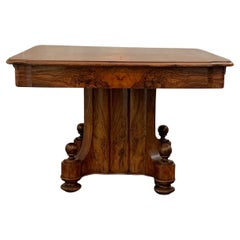
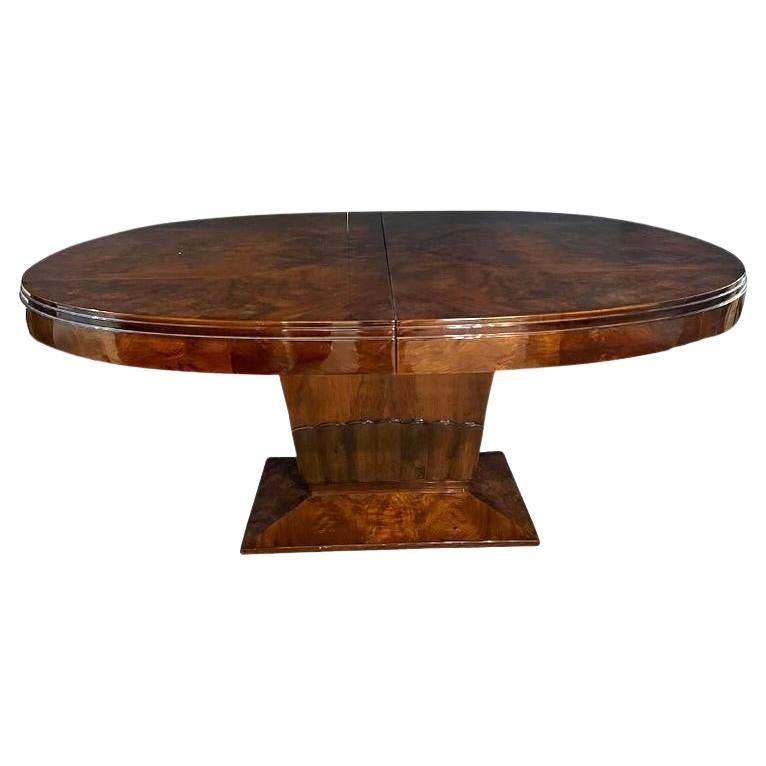
Table de salle à manger Art Déco en ronce de noyer
Le plateau ovale de la table de salle à manger met en valeur la beauté de la ronce de noyer. Il est soutenu par un pied large et proéminent, reposant sur une base rectangulaire. Le b...
Catégorie
Vintage, années 1940, Français, Art déco, Tables de salle à manger
Matériaux
Broussin
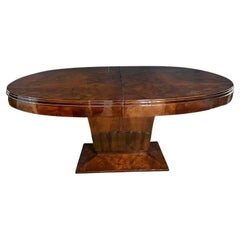
Table de salle à manger Art Déco en noyer italien, 1925
Table de salle à manger Art Déco en noyer et bruyère,
Restauré et poli à la gomme-laque, production italienne des années 1920.
La table a deux rallonges et atteint, lorsqu'elle est o...
Catégorie
Vintage, années 1920, italien, Art déco, Tables de salle à manger
Matériaux
Noyer
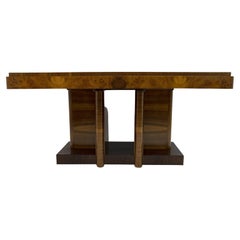
Table de salle à manger en noyer de style Art Déco Gaston Poisson
Une élégante table de salle à manger Art déco fabriquée en noyer avec une finition en placage clair avec deux extensions et des détails en fer chromé sur les pieds de la base ronde.
...
Catégorie
20ième siècle, Français, Art déco, Tables de salle à manger
Matériaux
Métal
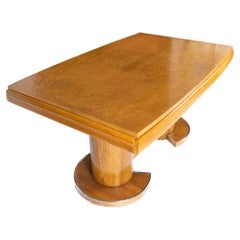
4 219 € Prix de vente
40 % de remise
Table de salle à manger Art Déco en noyer italien, 1940
Table de salle à manger Art Déco en noyer et bruyère,
Restauré et poli à la gomme-laque, production italienne des années 1940.
Catégorie
Vintage, années 1940, italien, Art déco, Tables de salle à manger
Matériaux
Noyer
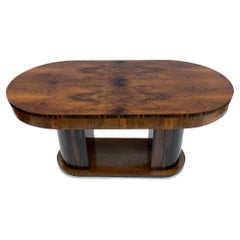
Table de salle à manger Art déco attribuée à Dominique magnifique bois de ronce et nickel
Par Dominique
Elegante table de salle à manger Art déco française, attribuée à Dominique, non signée, France, vers les années 1930. Il est fabriqué en bois magnifiquement bruni et en quincaillerie...
Catégorie
Vintage, années 1930, Français, Art déco, Tables de salle à manger
Matériaux
Métal