Furniture

to
95
332
267
582
16
11
409
47
8
3
1
1
1
1
1
581
27
398
126
1
2
130
131
35
26
29
331
245
186
104
65
568
547
8
5
4
609
604
605
432
154
15
7
5
Furniture For Sale
Search Within: Piero Fornasetti
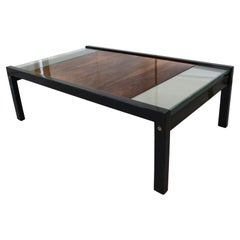
Osvaldo Borsani "T68" Coffee Table, circa 1960, Italy
Located in Girona, Spain
Osvaldo Borsani "T68" coffee table Made with rosewood and glass top with black lacquered legs. Very decorative. Circa 1963, Italy. Very good vintage condition. With his stylish...
Category

Mid-20th Century Italian Mid-Century Modern Furniture

Materials

Glass, Rosewood

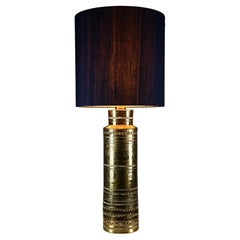
Monumental 1960s Gilded Table Lamp by Aldo Londi for Bitossi
Located in Weesp, NL
Monumental 1960s Gilded Table Lamp by Aldo Londi for Bitossi, Montelupo, Tuscany – Custom Shade An exceptional and rare large-scale ceramic table lamp designed by renowned Italian a...
Category

1960s Italian Mid-Century Modern Vintage Furniture

Materials

Ceramic, Silk

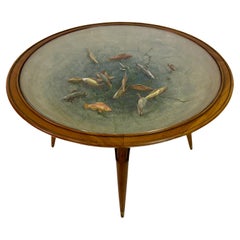
1950s Unusual Italian Coffee Table with Model Fish
Located in London, London
This table is a remarkable example of mid-century furniture design, characterized by its elegant wooden frame and the setting of model fish inside the body of the table. It features ...
Category

Mid-20th Century Italian Mid-Century Modern Furniture

Materials

Glass, Walnut

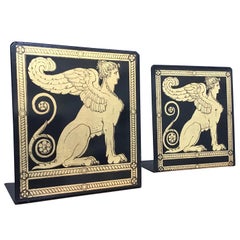
Fornasetti Fermalibri 1950 Metal, Italy
Located in Milano, IT
Fornasetti Fermalibri 1950 metal, Italy.
Category

1950s Italian Other Vintage Furniture

Materials

Metal

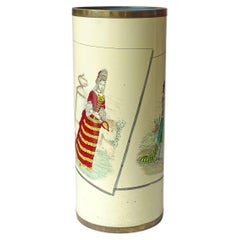
Mid Century Bucciarelli Faux Fashion Sheets Umbrella Stand
Located in Milan, IT
Mid Century Bucciarelli Faux Fashion Sheets Umbrella Stand.
Category

1950s Italian Mid-Century Modern Vintage Furniture

Materials

Metal, Brass

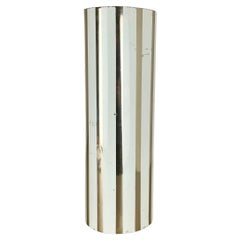
Abstract Tube Metal Umbrella Stand, Italy 1950s
Located in Kirchlengern, DE
Abstract Tube Metal Umbrella Stand, Italy 1950s This original vintage Minimalist umbrella stand was produced in the 1950s in Italy. It is made of metal with a tube form and colored ...
Category

1950s Italian Mid-Century Modern Vintage Furniture

Materials

Brass, Copper

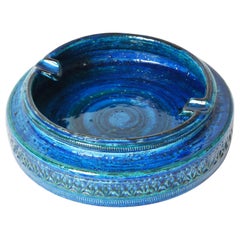
Midcentury Aldo Londi Blue Glazed "Rimini" Ceramic Ashtray, Bitossi Italy, 1960s
Located in Roma, IT
Beautiful and large round midcentury ashtray in blue glazed ceramic (Rimini Blu). This amazing piece was designed by Aldo Londi and produced by Bitossi in Italy during 1960s. Thi...
Category

1960s Italian Mid-Century Modern Vintage Furniture

Materials

Pottery, Ceramic

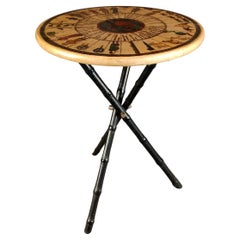
María Teresa Mendez 1970 s Mexican Goat Parchment Faux Bamboo Side Table
By Taller Maria Teresa Mendez, Piero Fornasetti
Located in Mexico City, MX
A Mexican 1970's wood and goatskin parchment side table by María Teresa Mendez. The round goatskin top is handpainted with a illustration after the "Libro del saber de astronomía", a...
Category

1970s Mexican Mid-Century Modern Vintage Furniture

Materials

Goatskin, Wood

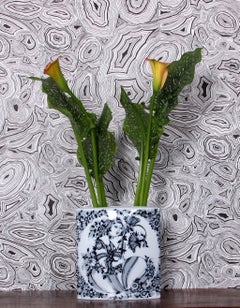
Huge Björn Wiinblad Rosenthal Studio Line Vase mint cond "Mädchen mit Blumen"
Located in Landshut, BY
A beautiful heavy porcelain Vase Björn Wiinblad Rosenthal Studio Linie Model No.: 3512/28 in mint condition ! definetely collectionable! Manufacturer Rosenthal Design Period 1970s Production Period 1972 to 1976 Country of Manufacture IWestern Germany Maße / mearurements 25,7 cm x 11,5 cm ~ H / height: 28 cm ~ Gew. / weight: 2450g Öffnung innen / inner rim : 7.2 cm x 21.8 cm Rosenthal GmbH is a German manufacturer of porcelain products and other household goods. The original firm was founded in 1879 in Selb, Bavaria. Since 2009, Rosenthal has been owned by the Italian company Sambonet Paderno Industrie (Arcturus Group). History Rosenthal was originally founded in 1879 as a family business. The founder, Philipp Rosenthal, moved his porcelain painting from Werl in North Rhine-Westphalia to Selb in Bavaria, where he industrialized in the castle Erkersreuth with his painting workshop. In 1897, Philipp Rosenthal founded the company Bauer, Rosenthal & Co. in Kronach, as well as Philipp Rosenthal & Co. AG. In 1908, Rosenthal bought the porcelain manufacturer Thomas in Marktredwitz, and the porcelain company Zeidler & Co. in 1917. In 1921, the company took over the Krister Porzellanmanufaktur in Wałbrzych, Silesia. The factory was closed in 1945, but the brand was revived in 1951 and used until 1971. In the period of national socialism, Philipp Rosenthal, while Catholic, had to withdraw from the enterprise in 1934 because of his Jewish origin. The Board of Management and the supervisory board turned against Rosenthal and implemented various measures to prevent Philipp Rosenthal from using his voting shares in order to change the composition of the management board and the supervisory board. The government was asked for support and sold the voting shares to persons who were not well-disposed towards Rosenthal. However, the Nazi regime did not go directly against Philipp Rosenthal in order not to jeopardize the foreign business of the company. The reasonably covertly concealed Aryans took advantage of the family, and urged Rosenthal's successor to step out of the company. Philipp Rosenthal's death in 1937 finally paved the way for his grandchildren. In 1936, Rosenthal bought the porcelain manufacturers Waldershof and Thomas in Weidenberg-Sophienthal. Rosenthal Isolatoren GmbH (RIG) was established in 1939 with branches in Erkersreuth (Selb) and Hennigsdorf near Berlin. In 1939 the company changed to Rosenthal Porzellan AG. When the Decree on Companies of Deprived Commercial Enterprises (RGBI 1941, p. 177), adopted on 27 March 1941, forced the discontinuation of the Jewish company and brand name Rosenthal, the "Aryan" management intervened through Joseph Goebbels to continue the use of the Rosenthal brand name. With the return of Philipp Rosenthal's son Philip Rosenthal from exile and his entry into the enterprise in 1950, he won a pioneering role in the modern product design. In 1960, the Rosenthal Studiohaus was opened in Nuremberg, from which the world's first design chain was built. In 1965 the uniform name Rosenthal Glas & Porzellan AG was elected and shortened to Rosenthal AG in 1969. In 1972, Philip Rosenthal founded the furniture factory Rosenthal Einrichtung in Espelkamp. The furniture factory was renamed in 2009 Philip Möbelmanufaktur GmbH and in 2013 rebranded the Fröscher GmbH & CO. KG. Rosenthal, In collaboration with industrial designers such as Raymond Loewy, Tapio Wirkkala, Elsa Fischer-Treyden, Timo Sarpaneva, Verner Panton and Luigi Colani, created an impressive series of products. Walter Gropius design for Rosenthal the tea service TAC. In 1967, Rosenthal built the so-called "Glassmaker's Cathedral," a factory for the Thomas-Glassworks in Amberg. The Thomas-Glassworks was renamed the Amberg crystal glass factory. In 1997, Rosenthal AG was 90% owned by the British-Irish Waterford Wedgwood Group. Rosenthal was the market leader for high-quality porcelain and glassware in Germany and was the world market leader in conjunction with Waterford Wedgwood. In the year 2000, the company took over the Hutschenreuther brand and Hutschenreuther-Werk B in Selb. In June 2008, the Waterford Wedgwood Group wanted to divest the Rosenthal share package due to liquidity difficulties. At this time, around 1,100 employees were employed worldwide. The company, faced with insolvency by the subsequent collapse of Waterford Wedgwood, filed for insolvency on 9 January 2009. The subsequent insolvency proceedings of Rosenthal AG were opened on 1 April 2009 by the District Court.On 20 July 2009, a sale was announced to an Italian company, Sambonet Paderno Industrie (Arcturus Group). Founded on 1 August 2009, Rosenthal GmbH is an independent part of Sambonet Paderno Industrie (Arcturus Group). The Rosenthal company headquarters remain in Selb under the managing director Pierluigi Coppo. The Rosenthal Archive, a collection of around 15,000 exhibits from 130 years of company history, were purchased by the Oberfranken Foundation on 12 August 2009 and is provided as a permanent loan to the Porzellanikon, the State Museum of Porcelain in Hohenberg an der Eger, Selb. These include nearly all product designs, from the company's foundation to today, as well as originals designed by artists such as Salvador Dalí, Andy Warhol, Wilhelm Wagenfeld and Walter Gropius. Designers Otmar Alt Joannis Avramidis Bele Bachem...
Category

1970s German Mid-Century Modern Vintage Furniture

Materials

Porcelain

Shop Unique Furniture on 1stDibs

When it comes to shopping for vintage, new and antique furniture — whether you’re finally moving into that long-coveted loft apartment, ranch-style home, townhouse or furnishing your weekend house on the lake — you should think of your home as a stage for the seating, tables, lighting, storage cabinets and other pieces that best match your personality.

Coziness, comfort and creating a welcoming space are among the important things to consider when buying furniture, whether that means seeking strict cohesion or rooms characterized by a mix-and-match assembly of varying shapes, colors and materials. And for those who now work from home, exercise, eat and relax within the same four walls every day, they’ll also want to think about flexibility and an innovative approach.

Have you built your dream kitchen?

Is your current living-room furniture all that it could be?

Does your toast-worthy bar or vintage bar cart exude equal parts class and cheeriness?

And importantly, is your home officebackyard or otherwise — a happy one, regardless of the design style you happen to gravitate toward?

Although mid-century modern, rustic, minimalist, Art Deco and contemporary looks remain popular, they aren’t the only styles available to design connoisseurs.

Furniture styles are nothing if not fluid, meaning what’s popular one year may not be the next. That’s why it’s crucial to not only pay attention to interior-design trends but also focus on the styles that speak to you. That way, you (and your interior designer, if that is in the plans) can work to create a home that’s entirely your own, complete with impressively modern decor as well as an array of history’s universally renowned iconic designs.

It’s difficult to single out well-recognized designs from what is a crowded pantheon of celebrated and seminal furnishings. Certain outstanding designs have such stellar quality they’ve endured for decades as bona fide cultural treasures, still being manufactured, in many cases, by the same venerable companies that shepherded them into being (think Herman Miller, Knoll and Fritz Hansen). Some works come immediately to mind as contenders for any short list. When you’re discussing the most popular mid-century modern chairs, for example, no tally would be complete without citing designs by Arne Jacobsen, Charlotte Perriand, Charles and Ray Eames and Hans Wegner.

Good furniture, be it authentic vintage furniture or new custom furniture, allows you to comfortably sit and tell your favorite stories. Great furniture tells a story of its own.

On 1stDibs, find everything from sofas to serveware to credenzas to coffee tables, and every other type of antique, vintage and new furniture you need to create a singular space that you’ll be proud to call home.

Still Thinking About These?

All Recently Viewed