Furniture

to
22
76
62
112
27
2
19
12
8
7
6
4
3
3
3
2
1
4
28
80
29
31
30
14
6
3
4
5
4
8
3
3
1
68
43
31
27
26
87
24
24
23
18
141
122
127
5
4
4
3
3
Furniture For Sale
Search Within: Bon Bon
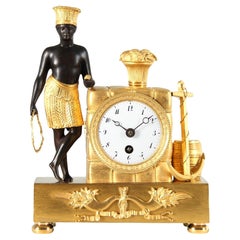
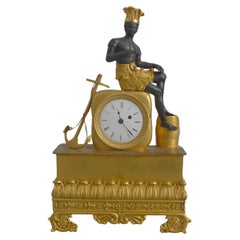
French Empire ormolu and bronze Pendule au Bon Sauvage clock signed Alibert
Located in London, GB
French Empire pendule au bon sauvage mantel clock in ormolu and bronze. The clock is in extremely good condition. Entirely original gilding. A particularly fine convex white enamel dial with Roman numerals. The figure with original white enamel eyes, sits on the case of the clock, foot resting on a barrel, and pipe in hand. To the other side of the clock rests a ships anchor. The back of the ormolu case is signed Alibert a Paris, for the maker. Tardy has Francois Alibert working in Paris, Rue J.J. Rouseau from 1812 -30 The clock driven by 30 hour chain fusee watch...
Category

1810s French Antique Furniture

Materials

Bronze, Ormolu

Early 19th Century Empire Clock, Miniature Matelot "Au Bon Sauvage", circa 1815
Located in Greven, DE
Miniature Empire Bronze Clock - Matelot Paris fire-gilded and patinated bronze early 19th century Dimensions: H x W x D: 18 x 14 x 9 cm Description: Very rare miniature of the famous Pendule Matelot "Au Bon Sauvage". The depiction deals with an important topic of the time, trade with the colonies. The rectangular base stands on pressed ball feet. Attached to the front, we see two cornucopias filled with exotic fruits and held by a bow. A young sailor, dressed in a raffia skirt and feather jewellery...
Category

1810s French Empire Antique Furniture

Materials

Bronze

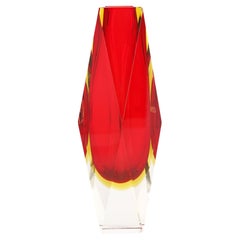
Pagnin Bon Italian Murano Red and Yellow Sommerso Facet Cut Glass Vase
Located in Bishop s Stortford, Hertfordshire
A stunning large vintage Italian Murano facet cut sommerso art glass vase by Pagnin & Bon dating from around 1960. This exceptional and heavily made clear glass vase has a bright red centre with a yellow halo. The square glass vase...
Category

1960s Italian Mid-Century Modern Vintage Furniture

Materials

Blown Glass

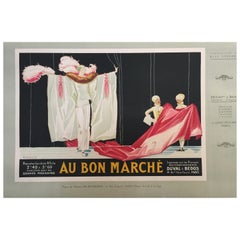
Original Vintage French Lithograph Poster, Au Bon Marche by Rene Vincent, 1920
Located in Melbourne, Victoria
Original vintage French lithograph poster, 'Au Bon Marche' by Rene Vincent, 1920 René Vincent was a French illustrator who was active in the 1920s-193...
Category

1920s French Art Deco Vintage Furniture

Materials

Paper

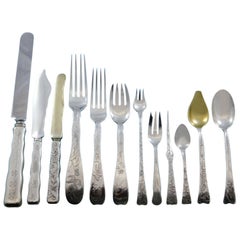
Lap Over Edge by Tiffany Co Sterling Silver Flatware Set Service Acid Etched
Located in Big Bend, WI
Incredible museum quality Lap Over Edge by Tiffany & Co., circa 1880, acid etched and engraved sterling silver flatware set, 128 pieces. This set features varying Japanesque aestheti...
Category

20th Century Furniture

Materials

Sterling Silver

Sea-Bon Decorative Bowl in Stoneware with Matte White Glaze by Kallia Panopoulou
Located in Geneve, CH
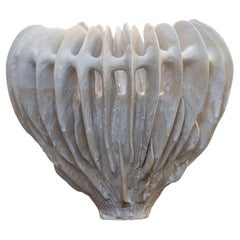
Sea-Bon Decorative Bowl in Stoneware with Matte White Glaze by Kallia Panopoulou Dimensions: Ø 33 x H 31 cm. Materials: Stoneware. Available in different finish options: Black clay...
Category

2010s Greek Modern Furniture

Materials

Stoneware

Philippe le Bon or The Good, Duke of Burgundy: The Duke s Prestige, 1847
Located in Langweer, NL
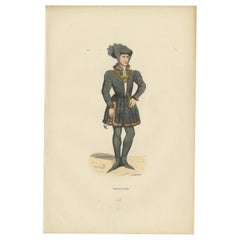
Title: "Philippe le Bon: The Duke's Prestige" Description: The print showcases Philippe le Bon, also known as Philip the Good, Duke of Burgundy, standing in a dignified pose that conveys authority and nobility. He was known for his patronage of the arts and the opulence of his court, and this is reflected in the intricate detail of his attire. Philippe is dressed in a doublet with a patterned design, possibly embroidered with gold thread, which would have been a symbol of wealth and status during his time. The garment fits snugly to his form, a style that was fashionable among the nobility in the 15th century. The lower part of the doublet extends into a skirt, which is edged with fur, adding to the luxuriousness of his ensemble. He wears hose that fit tightly to his legs, a common fashion of the time, which are practical for riding and daily activities of a nobleman. His shoes are pointed, following the style of the Burgundian court. On his head, Philippe sports a chaperon, a type of headgear that was popular among men of rank. The chaperon features a rolled brim and an extended tail, known as a 'liripipe', which adds a distinctive flair to his profile. Around his neck, he has a chain, from which hangs a badge or medallion, denoting his high rank and perhaps an order of chivalry. His right hand rests on the hilt of a dagger, hinting at the martial aspect of his role as a duke and the necessity for self...
Category

1840s Antique Furniture

Materials

Paper

Le Bon Genre, Planche No. 100: "Mounito" by Louis-Marie Lanté 19th C. Watercolor
Located in Atlanta, GA
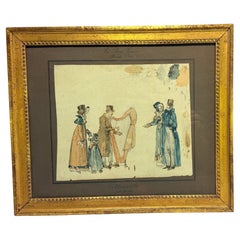
A charming and character-rich original watercolor illustration from the celebrated *Le Bon Genre* series, this early 19th-century drawing, titled *Mounito*, captures the whimsical el...
Category

19th Century French Art Deco Antique Furniture

Materials

Giltwood, Paper

Antique Print of an Aiguière of Mr. le Bon Gustave Rothschild by Delange 1869
Located in Langweer, NL
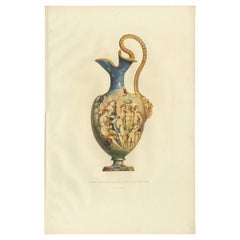
Antique print titled 'Aiguière - Collection de Mr. le Bon Gustave de Rothschild a Paris'. Large format, color lithographed plate of an aiguière of the collection of Mr. le Bon Gustav...
Category

Mid-19th Century Antique Furniture

Materials

Paper

Art Deco “La Gazette du Bon Ton” Framed Plate by Vogue Artist Eduardo Benito
Located in Palm Springs, CA
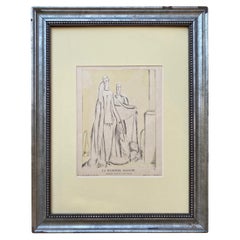
“The White Fur” a rare 1922 image from the French Art Book “La Gazette du Bon Ton”. A simple but striking black and white image on a creme butter ground. The image has been matted in a matching color. It has its original decades old antique silver...
Category

1920s French Art Deco Vintage Furniture

Materials

Paper

Lee Rosen Design Technics Incised Slip Decorated Abstract Design Vase ca 1950s
Located in Cathedral City, CA
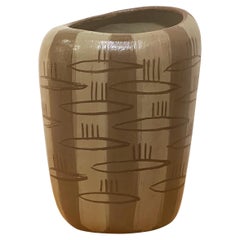
Lee Rosen for Design Technics Incised and Slip Decorated Abstract Design Vase, ca 1950s This is a gorgeous and unique Design Technics vase by Lee Rosen that features a biomorphic sh...
Category

Mid-20th Century American Mid-Century Modern Furniture

Materials

Ceramic, Pottery

Design Technics Brown Tone Ceramic Lamp with Original Fiberglass Shade, ca 1950s
Located in Cathedral City, CA
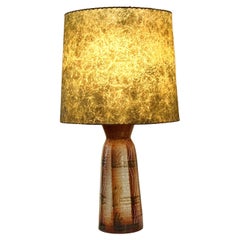
Design Technics Brown Tone Ceramic Lamp with Original Fiberglass Shade, ca 1950s This lamp was purchased in New Jersey around 2013 at the Estate of one of the cousins of the Design ...
Category

Mid-20th Century American Mid-Century Modern Furniture

Materials

Metal

Antique Print of a Majolica Plate of Mr. le Bon A. de Parpart by Delange 1869
Located in Langweer, NL
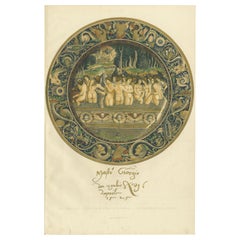
Antique print titled 'Plat (Majolica) Collection de Mr. le Bon A. de Parpart (..)'. Large format, color lithographed plate of a Majolica plate of the collection of Mr. le Bon A. de P...
Category

Mid-19th Century Antique Furniture

Materials

Paper

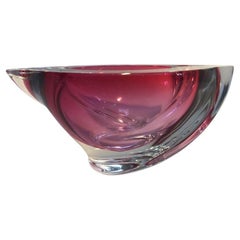
Crystal Pink Ashtray for Val Saint Lambert, Paper Weight Signed
By Guido Bon, Val Saint Lambert
Located in Moreno Valley, CA
Free-blown pink and clear crystal ashtray by Val Saint Lambert. Could be used as a vide poche or decorative desk accessories. Hand blown beautif...
Category

Mid-20th Century Belgian Modern Furniture

Materials

Crystal

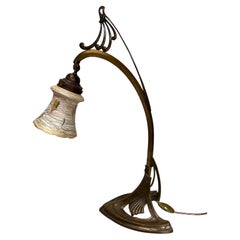
Art Nouveau Lamp by Quezal
Located in NANTES, FR
Art Nouveau desk lamp, circa 1905. Brass and copper frame. Rare iridescent glass shade signed Quezal. Electrified and in very good condition. Height: 60.5 cm Width: 21 cm Depth: 35 cm Weight: 2.6 kg Quezal Art Glass Quezal Art Glass – The Journal of Antiques and Collectibles – April 2003 By Malcolm Mac Neil Some of the most beautiful and alluring art glass made in America during the early part of the 20th Century was made by the Quezal Art Glass and Decorating Company. Often in the shape of blossoming lilies with brilliant gold interiors and colorfully decorated with floral and other motifs inspired by nature, Quezal art glass ranks right alongside the iridescent glass of Louis Comfort Tiffany and Frederick Carder. Quezal artisans created an extensive range of decorative and useful items, including vases, compotes, finger bowls, open salts, candle holders, and shades for lighting fixtures, which are equivalent in terms of beauty and quality of craftsmanship to Tiffany’s Favrile and Carder’s Aurene glass. In recent years, glass collectors have discovered anew the special charms and appeal of Quezal art glass, and collector desirability for this lovely glassware has increased dramatically. The Quezal Art Glass and Decorating Company was incorporated a century ago, on March 27, 1902. It was founded by Martin Bach, Sr., Thomas Johnson, Nicholas Bach, Lena Scholtz, and Adolph Demuth. The factory was located on the corner of Fresh Pond Road and Metropolitan Avenue in Maspeth, Queens, New York. In October 1902, the trademark “Quezal” was successfully registered. By 1904, roughly fifty glassworkers were employed at the works. Martin Bach, Sr. was the president, proprietor, and guiding force behind this successful company. Born in 1862 in Alsace-Lorraine to German parents, he emigrated to the United States in 1891. Before his emigration, Bach worked in Saint-Louis, France, at the Saint-Louis Glass Factory. After Bach arrived in this country, he was hired by Louis C. Tiffany as the latter’s first batch-mixer or chemist at the newly established Tiffany Glass and Decorating Company, in Corona, Queens. After a period of about eight years, Bach left Tiffany and established his own glassworks. By this time, Bach had already started his small family. He and his German-born wife, Anne-Marie Geisser, whom he married in the fall of 1889, in Paris, France, had three children. Two daughters, Jennie and Louise, were born in France and a son, Martin, Jr., was born in Corona. Bach was assisted by Thomas Johnson, an English immigrant, and Maurice Kelly, a native of Corona, both of whom were gaffers or master glassblowers. Johnson and Kelly helped pave the way for Quezal’s early accomplishments and later recognition. Thomas Johnson, like Bach, was a founding member and also previously employed by Louis C. Tiffany. Johnson’s association with Quezal, however, was relatively short lived. Around 1907, Johnson left for Somerville, Massachusetts, where he became involved in making Kew Blas...
Category

Early 1900s American Art Nouveau Antique Furniture

Materials

Brass, Copper

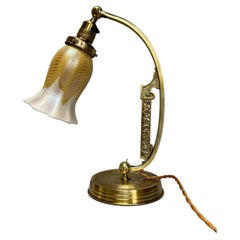
Quezal Art Nouveau Lamp
Located in NANTES, FR
Art nouveau lamp circa 1910. Brass and copper base. Iridescent glass tulip signed Quezal. In perfect condition and electrified. Total height: 38.5 cm Base diameter: 15.5 cm Width: 30 cm Quezal Art Glass Quezal Art Glass – The Journal of Antiques and Collectibles – April 2003 By Malcolm Mac Neil Some of the most beautiful and alluring art glass made in America during the early part of the 20th Century was made by the Quezal Art Glass and Decorating Company. Often in the shape of blossoming lilies with brilliant gold interiors and colorfully decorated with floral and other motifs inspired by nature, Quezal art glass ranks right alongside the iridescent glass of Louis Comfort Tiffany and Frederick Carder. Quezal artisans created an extensive range of decorative and useful items, including vases, compotes, finger bowls, open salts, candle holders, and shades for lighting fixtures, which are equivalent in terms of beauty and quality of craftsmanship to Tiffany’s Favrile and Carder’s Aurene glass. In recent years, glass collectors have discovered anew the special charms and appeal of Quezal art glass, and collector desirability for this lovely glassware has increased dramatically. The Quezal Art Glass and Decorating Company was incorporated a century ago, on March 27, 1902. It was founded by Martin Bach, Sr., Thomas Johnson, Nicholas Bach, Lena Scholtz, and Adolph Demuth. The factory was located on the corner of Fresh Pond Road and Metropolitan Avenue in Maspeth, Queens, New York. In October 1902, the trademark “Quezal” was successfully registered. By 1904, roughly fifty glassworkers were employed at the works. Martin Bach, Sr. was the president, proprietor, and guiding force behind this successful company. Born in 1862 in Alsace-Lorraine to German parents, he emigrated to the United States in 1891. Before his emigration, Bach worked in Saint-Louis, France, at the Saint-Louis Glass Factory. After Bach arrived in this country, he was hired by Louis C. Tiffany as the latter’s first batch-mixer or chemist at the newly established Tiffany Glass and Decorating Company, in Corona, Queens. After a period of about eight years, Bach left Tiffany and established his own glassworks. By this time, Bach had already started his small family. He and his German-born wife, Anne-Marie Geisser, whom he married in the fall of 1889, in Paris, France, had three children. Two daughters, Jennie and Louise, were born in France and a son, Martin, Jr., was born in Corona. Bach was assisted by Thomas Johnson, an English immigrant, and Maurice Kelly, a native of Corona, both of whom were gaffers or master glassblowers. Johnson and Kelly helped pave the way for Quezal’s early accomplishments and later recognition. Thomas Johnson, like Bach, was a founding member and also previously employed by Louis C. Tiffany. Johnson’s association with Quezal, however, was relatively short lived. Around 1907, Johnson left for Somerville, Massachusetts, where he became involved in making Kew Blas glass, under William S. Blake at the Union Glass Company. Maurice Kelly’s tenure with Quezal was also brief. Kelly worked at Quezal from January 1902 until July 1904, but by November 1904, he was making Favrile glass at Tiffany Furnaces, where he would happily remain until 1918. To this day, the belief still exists that there once existed a man named Quezal, who worked for Louis C. Tiffany, and it is after him that Quezal glass is named. In truth, however, the founders of the Quezal Art Glass and Decorating Company named the company and its products after one of the world’s most beautiful birds, the elusive and rare quetzal, which dwells in the treetops of the remote tropical forests of Central America. A rare company promotional brochure provides a vivid description of the quetzal: Of all the birds of the America’s, it is the most gorgeous. No more splendid sight is to be seen in all the world than a quezal, flying like a darting flame through the depths of a Central American forest. Its back is of a brilliant metallic green, so vivid it shines even in the twilight of the woods like a great emerald and its breast is a crimson so deep and bright that every motion of the wonderful creature is a flashing of rubies among the trees and giant creepers. It bears a true golden crown upon its head – a helmet of bright yellow and green, shaped just as the helmet of old Aztec kings were shaped. Its tail is composed of lacelike plumes, extending more than two and one-half feet beyond its body. The quezal was certainly an appropriate designation for the company’s resplendent glassware. One of the most prized characteristics of Quezal art glass is the shimmering and dazzling brilliance reflected in the iridescent surfaces on the interior as well as exterior of the glass. The radiant rainbow colors in metallic hues, including gold, purple, blue, green, and pink, to name only a few, were certainly inspired by the quetzal and its feathers. Not surprisingly, lustrous feathers, in shades of opal, gold, emerald, and blue, are among the most common decorative motifs encountered on Quezal glass. The enduring hallmark of Quezal art glass is its unique expression of the Art Nouveau style, based on organic shapes and naturalistic motifs coupled with technical perfection in the execution. Vases, compotes, drinking vessels, and shades for lighting fixtures were often fashioned to resemble flowers such as crocuses, tulips, calla lilies, casablanca lilies, and jack-in-the-pulpits. Variously colored inlaid threads of glass, pulled and twisted by hooks, simulate naturalistic floral and leaf patterns, lily pads, clover leafs, and vines. Opal, gold, and green colors prevail and the glass is generally opaque. Red is the rarest color of all. Compared with Tiffany’s Favrile glass, the crisp, vivid, and colorful decoration of Quezal art glass is distinctively precise, symmetrical, and restrained. Other Quezal wares recall shapes and styles favored in ancient Egypt, Persia, Greece, and Rome, as well as the Italian Renaissance and the Georgian period in England. This is especially true of classic-shaped vases and bowls of translucent amber glass, which have a single surface color such as iridescent gold or blue. Still, others were inspired by traditional Chinese and Japanese forms. The Gorham Manufacturing Company in Providence, Rhode Island, and the Alvin Silver Manufacturing Company in Sag Harbor, Long Island, purchased Quezal art glass, which they in turn embellished in their shops with silver overlay decoration in the fashionable Art Nouveau style and later resold. Gorham’s silver overlay designs mostly include stylized floral motifs. Alvin’s silver designs are wonderfully organic. One sumptuous design is of a group of sinuous iris blossoms with carefully articulated petals surrounded by attenuated meandering vines. Collectors should note that not all silver-deposit pieces are marked with a maker’s mark since the silversmith had to be quite careful not to damage the glass underneath. A rare 1907 retail catalog survives from Bailey, Banks, and Biddle Company, a luxury goods retailer in Philadelphia, which reveals original retail prices of Quezal art glass. A surprising revelation provided by this catalog is that Quezal art glass was nearly twice as expensive as comparable French imported glass made by such renowned firms as Gallé and Daum. Hock glasses, a stemmed glass used primarily for drinking German white wine, were sold by the dozen and retailed between $50 and $75. Fingerbowls were also sold by the dozen and retailed between $50 and $100. These high retail prices were nearly the same as those charged for Tiffany’s Favrile glass, and suggest Quezal art glass was also marketed towards the high-end or luxury market. Electricity was a brand new invention in the late 1800s and American glass manufacturers developed novel approaches for concealing the electric light bulb, which was rather harsh to the eye and perhaps unflattering to the domestic interior. Tiffany, Steuben, and Quezal responded to this need with the most extraordinary and beautiful art-glass shades, all of which were  hand-made and exquisitely fashioned. Many other companies also made art glass shades for table and floor lamps, electroliers, hallway fixtures, and wall sconces, but it was Quezal that excelled in this area and was the most prolific. Quezal art glass shades were available in an infinite variety of shapes, sizes, colors, and decorations. Some shades are formed and decorated as lilies while others are bell-shaped and have ribbed or textured decoration. Rims are usually plain but sometimes are notched or ruffled. Common motifs include feather or hooked feather, leaf and vine, applied flowers, drape, fishnet, King Tut, and spider webbing. The workmanship shown on most Quezal shades...
Category

1910s French Art Nouveau Vintage Furniture

Materials

Brass, Copper

Suite de 6 chaises Baumann Essor vintage en bois de hêtre et skai des années 60
Located in BESANÇON, FR
6 chaises vintage de la manufacture française Baumann, en bois de hêtre et skai noir, modèle Essor produit dans les années 60, très bon état général, très bon état général avec quelq...
Category

1960s French Mid-Century Modern Vintage Furniture

Materials

Wood

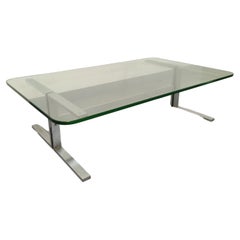
Table basse vintage en verre transparent et fonte d’aluminium des années 70
Located in BESANÇON, FR
Grande table basse vintage des années 70 style Roche Bobois, plateau rectangulaire aux angles arrondis en verre épais transparent, pied en fonte d’aluminium...
Category

1970s French Mid-Century Modern Vintage Furniture

Materials

Metal

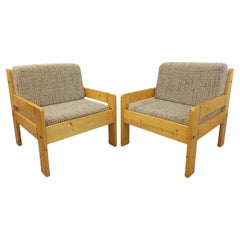
Suite de 2 fauteuils chauffeuses vintage en pin et tissu des années 70
Located in BESANÇON, FR
2 fauteuils chauffeuses vintage des années 70, en bois de pin, dossiers et assises constitués de coussins amovibles en tissu de laine blanc et beige...
Category

1970s French Mid-Century Modern Vintage Furniture

Materials

Pine

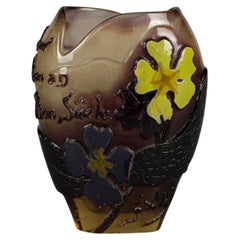
Galle Wheel Carved and Acid Etched Vase Parlant, circa 1899
Located in New York, NY
Cameo glass with marqueterie-sur-verre primroses. Signed and inscribed in cameo Gallé and 'Bonheur, Bon An, Bon Siècle' which translates to "Good Luck, Good Year, Good Century." Ano...
Category

Early 1900s Antique Furniture

Materials

Art Glass

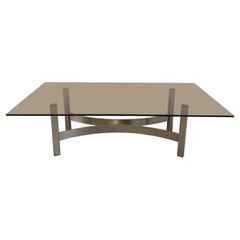
Table basse vintage en verre fumé et fonte d’aluminium brossée des années 70
Located in BESANÇON, FR
Grande table basse vintage des années 70, dans le goût des designers Vittorio Introini, Paul Legeard ou Boris Tabacoff pour Roche-Bobois, plateau rectangulaire en verre fumé, pied en...
Category

1970s French Space Age Vintage Furniture

Materials

Metal

Shop Unique Furniture on 1stDibs

When it comes to shopping for vintage, new and antique furniture — whether you’re finally moving into that long-coveted loft apartment, ranch-style home, townhouse or furnishing your weekend house on the lake — you should think of your home as a stage for the seating, tables, lighting, storage cabinets and other pieces that best match your personality.

Coziness, comfort and creating a welcoming space are among the important things to consider when buying furniture, whether that means seeking strict cohesion or rooms characterized by a mix-and-match assembly of varying shapes, colors and materials. And for those who now work from home, exercise, eat and relax within the same four walls every day, they’ll also want to think about flexibility and an innovative approach.

Have you built your dream kitchen?

Is your current living-room furniture all that it could be?

Does your toast-worthy bar or vintage bar cart exude equal parts class and cheeriness?

And importantly, is your home officebackyard or otherwise — a happy one, regardless of the design style you happen to gravitate toward?

Although mid-century modern, rustic, minimalist, Art Deco and contemporary looks remain popular, they aren’t the only styles available to design connoisseurs.

Furniture styles are nothing if not fluid, meaning what’s popular one year may not be the next. That’s why it’s crucial to not only pay attention to interior-design trends but also focus on the styles that speak to you. That way, you (and your interior designer, if that is in the plans) can work to create a home that’s entirely your own, complete with impressively modern decor as well as an array of history’s universally renowned iconic designs.

It’s difficult to single out well-recognized designs from what is a crowded pantheon of celebrated and seminal furnishings. Certain outstanding designs have such stellar quality they’ve endured for decades as bona fide cultural treasures, still being manufactured, in many cases, by the same venerable companies that shepherded them into being (think Herman Miller, Knoll and Fritz Hansen). Some works come immediately to mind as contenders for any short list. When you’re discussing the most popular mid-century modern chairs, for example, no tally would be complete without citing designs by Arne Jacobsen, Charlotte Perriand, Charles and Ray Eames and Hans Wegner.

Good furniture, be it authentic vintage furniture or new custom furniture, allows you to comfortably sit and tell your favorite stories. Great furniture tells a story of its own.

On 1stDibs, find everything from sofas to serveware to credenzas to coffee tables, and every other type of antique, vintage and new furniture you need to create a singular space that you’ll be proud to call home.