Furniture

to
171
1,446
1,074
2,126
514
43
780
190
82
59
24
23
22
18
16
13
13
7
7
6
5
3
3
3
34
156
324
2,169
68
145
66
13
7
18
20
26
23
19
14
14
6
961
558
544
490
285
1,666
543
475
390
329
2,683
1,012
2,109
301
291
201
89
85
Furniture For Sale
Search Within: Wallpaper
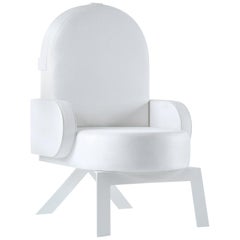
The Cure Armchair by Richard Yasmine
Located in Geneve, CH
The Cure armchair by Richard Yasmine Materials: structure in powder coated Aluminum, Fabric Upholstery Dimensions: H.100 x W.62.5 x D.71.5 cm The word “cure” means restore, so f...
Category

2010s Lebanese Modern Furniture

Materials

Aluminum

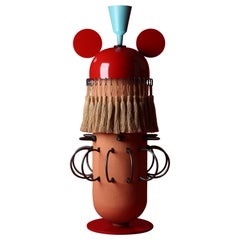
Ô-CULT TOTEM by Richard Yasmine
Located in Geneve, CH
Ô-CULT TOTEM by Richard Yasmine Materials: Powder coated st.steel, blackened brass, neo cement on st.steel & raffia tassels Dimensions: Height 120 x diameter 40 cm. Ô-CULT our latest commissioned design piece for the Ministry of Foreign Affairs of Italy curated by La Triennale di Milano design Museum, a social design project related to the use of water for the exhibition titled “The shapes of Water”. Water, one of the elements that make up everything in this world. The symbolism of water has a universal trace of purity and fertility, it is the source of life since the ancient cultures and considered an aspect of wisdom that takes the form in which it is held. It does not resist, it flows, but always goes where it wants to go to fill empty spaces. As water is becoming rare yet more and more precious due to the environmental problems such as global warming, pollution, climate changes etc… our concept, to create a fantastic water safe taking the shape of a mascot /Genie imitating the authentic type of liquid containers descending since the Neolithic period till the ancient Roman era passing by our heritage but definitely in a contemporary Silhouette using multiple materials. In addition to the shape, providing a faucet, using the whole component as a useful water dispenser...
Category

2010s Lebanese Modern Furniture

Materials

Cement, Brass, Steel

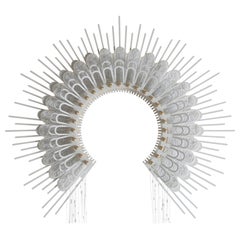
Cure Light by Richard Yasmine
Located in Geneve, CH
The cure light by Richard Yasmine Materials: Powder-coated aluminum, brushed brass and handmade embroidery with beads, pearls and silk Dimensions: H 52 x W 60.5 x D 13 cm The wo...
Category

2010s Lebanese Modern Furniture

Materials

Aluminum, Brass

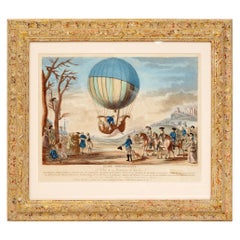
"Globe Aerostatique" a Hand-Colored Engraving, after Claude Louis Desrais
Located in valatie, NY
"Globe Aerostatique" a gilt framed hand-colored Engraving, French circa 1787, after Claude Louis Desrais, (1746-1816.) A pastoral scene featuring a tricolored balloon at the center. ...
Category

1780s French Antique Furniture

Materials

Wood, Paper

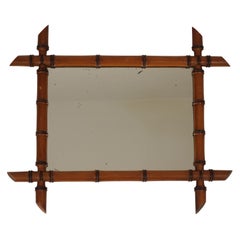
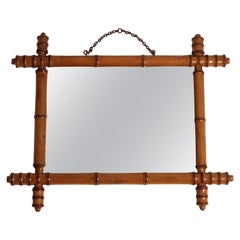
Boho Chic Style Faux Bamboo Walnut Framed Mirror Made in France in mid 1800’s
Located in London, GB
A faux bamboo walnut mirror of beautiful warm tones, together with it’s original hanging chain in the Chinoiserie/Aesthetic Movement style. Refreshed and revived by professional rest...
Category

1860s French Chinoiserie Antique Furniture

Materials

Glass, Walnut, Mirror

Circa 1930 German Side Table
Located in New York, NY
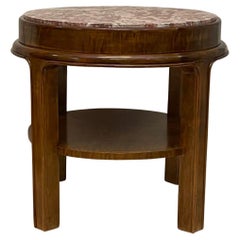
Our table was made of birch, solid and veneered, stained a rich brown, and topped off with a slab of Bohemian breccia marble. We date it to around 1928, and attribute the design to Fritz August Breuhaus de Groot, who coined the term Kultivierte Sachlichkeit (Cultured Objectivity) to describe his work, and distinguish it from the Neue Sachlichkeit (New Objectivity) practiced by his contemporaries Walter Gropius, Mies van der Rohe, and Lily Reich. The table bears a passing resemblance to a considerably simplified, marble-topped ovoid one that he designed for his 1934 Berlin living room. Breuhaus was a man on the make. The first of his three marriages was to the daughter of an industrialist, who financed the building of luxury villas and workers’ housing designed by his son-in-law. In 1929, Breuhaus, the son of a dentist, added “de Groot” to his name, falsely linking himself to a distinguished family of painters. By then, he’d been fudging his academic record for years. That didn’t prevent a teaching appointment at the State University of Bavaria, which allowed him to add the prestigious “Herr Professor” prefix to his name. Yet he never followed through on the teaching — he was far too busy designing more luxury villas (commissions he accepted only if he could furnish them as well), and products for his own company, which included furniture, textiles, wallpapers, lighting, and fine silver. In addition to designing aircraft interiors for Lufthansa, and pullman railroad...
Category

1920s German Modern Vintage Furniture

Materials

Marble

Glory Holes Side Table by Richard Yasmine
Located in Geneve, CH
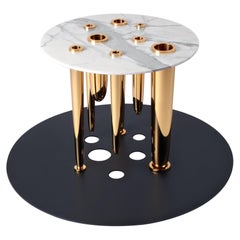
Glory holes side table by Richard Yasmine Materials: Statuario marble, polished brass and powder coated metal Dimensions: Diameter 70 x 45 height cm. For him and her talking about “revenge”, sometimes it can be sweet so “sweet” ….therefore my concept was to create a sensational product more like a jewellery piece …I worked on the softness side of the revenge to prove it more sensual then aggressive combining reality and fantasy in a provocative yet glamorous way while preserving the eternal aspect of the design. Made of statuario marble top, solid brass handmade turned and polished, and a metal sheet in gun metal finishing. The brass with its golden color is the material that reflects the oriental feel through an extravagant aspect specially in a polished finishing, the marriage between “statuario” marble and brass emphasizes the required image which here is a “desirable jewel”. Adding that a white and black background accentuate the contrast for these shiny brass elements to show their splendor. “Glory holes” is more than just an ordinary table, well for the first impression “glory holes” is a glamorous object conceived as a piece of jewelry projecting a new dimension in the world of home accessory, it’s a multifunctional object the main function of it is a “soliflore groupage” or a group of small vases from which came the word “glory”, when gathered on the perforated marble...
Category

2010s Lebanese Modern Furniture

Materials

Marble, Metal, Brass

1958, Kho Liang Ie, Rare Easy Chair from 020 Series by Artifort
Located in Amsterdam IJMuiden, NL
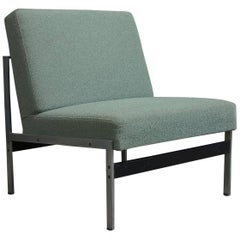
This item is part of the private collection of Casey Godrie and is situated in his private house. Ask him for competitive shipping quotes. His incredible Dune Villa, Amsterdam Beach,check last five pictures, find more details on his family name plus eu, is for sale soon too. :-) Rare Mid-Century Kho Liang Ie easy chair from the 020 series designed for Artifort in 1958. These lounge chairs are very different from the chairs Artifort made before 1958. Striking is the clear structure of the 020 series. The logical structure and the manner in which the elements of the chassis are connected to each other, are clearly visible. Beautiful in its simplicity; four metal legs connected by two black metal beams. This model has been completely restored with new foam and new light green fabric. That's why this chair is in excellent condition. Book Kho Liang Ie publisher 010, pages 45 and 58. Marked: Artifort Kho...
Category

1950s Dutch Mid-Century Modern Vintage Furniture

Materials

Metal

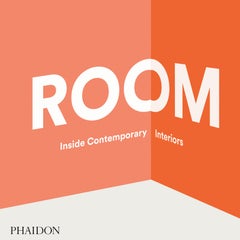
Room Inside Contemporary Interiors Book
Located in New York, NY
Room is a comprehensive overview of contemporary world interior design and designers. A lavishly illustrated volume, room presents 100 exceptional emerging designers, selected by ten international leaders in the interior design world; featuring curators from a broad range of disciplines, including groundbreaking design publications, world-renowned academics and tutors on design, influential interior design practices, cross-genre innovators and industry leaders. This international panel have each chosen ten of their favourite interior design projects that have broken new ground in the last five years. Arranged alphabetically by designer, the book features more than 700 photographs, renders and drawings. The result is an up-to-the-minute collection representing the best of both global and regional interior design around the world. The variety in curators ensures a uniquely broad remit of interior design is covered, from retail concept stores, ephemeral dining experiences, stage design, art installations, hotels and home living. Each critic has written exclusively for this publication on each of the designs they have nominated - projects that they believe to have made a profound impact on the course of contemporary interior design. The book also includes biographies of all interior designers and curators. Specifications: Format: Hardback Pages: 416 pp Illustrations: 750 illustrations ISBN: 9780714867441 About the curators: Nacho Alegre is a cofounder of Apartamento Magazine. Apartamento is a biannual, English-language publication read in 45 countries; it has been called the world's hippest interiors magazine. Michael Boodro is Editor-in-Chief of ELLE DECOR Magazine. He has also held editorial positions at HG Magazine, Harper's Bazaar and GQ. He is the author of Stephen Sills and James Huniford...
Category

21st Century and Contemporary Chinese Furniture

Materials

Paper

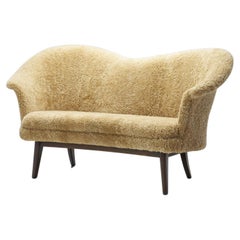
Olof Ottelin "Duetto" Sofa for Kervo Snickerifabrik Stockmann, Finland, 1950s
Located in Utrecht, NL
This lovely “Duetto” loveseat was designed back in the 1950s to bring the sitters closer together. This intention is clearly traceable in Ottelin’s drawings, where the back was drawn as hands embracing the users. A loveseat derives its name from holding two people close to one another. First invented in the 17th century, this two-person chair was originally intended for women wearing large dresses with hoops to sit comfortably. In the Nordic countries, loveseats, such as this model, were typically made of quality woods with fully upholstered bodies to enhance the cosiness. This rare “Duetto” is unquestionably Ottelin’s most distinctive sofa model. This is primarily due to the peculiar back that has a heart shape and envelopes towards the front to form the arms as well. At the top, the edge curves outward creating a welcoming and open look. The homely curviness and precision clearly show the influence of Werner West, Ottelin’s teacher. The body, upholstered in honey-coloured sheepskin, is paired with tapered, lacquered wood legs. This combination is a true Nordic characteristic, keeping the tradition of using organic materials at its core. As this “Duetto” sofa shows, the shapes and forms of Nordic minimalism of the mid-century are infinitely interesting. Additionally, the stylish look is always paired with the highest quality craftsmanship, here provided by the Finnish furniture company, Kervo Snickerifabrik, Oy Stockmann. The Kerava cabinetmaking company was founded on February 1, 1862 and Ottelin served as director of the company's furniture department from 1953 to 1954 and as artistic director of interior design from 1955 until his death in 1971. Condition: In good vintage condition. Wear consistent with age and use. This sofa has been reupholstered recently in premium sheepskin. Each of our items can be re-upholstered by our in-house atelier in a fabric of choice. Please reach out for more information. Dimensions: 60.23 in W x 29.52 in D x 34.25 in H; Seat height 17.32 in 153 cm W x 75 cm D x 87 cm H; Seat height 44 cm About the designer: Karl Olof Ottelin (Helsinki, 3 May 1917 - Helsinki, 9 February 1971) was a Finnish interior designer and furniture designer who, in the 1950s, was the director and chief designer of Stockmann's furniture department. Ottelin began his studies at the Central School of Art and Design in 1939, but had to suspend his studies for 1941–1944 due to conscription. He graduated as an interior designer in 1946 and started at Stockmann's drawing office in 1948. He served as director of the company's furniture department from 1953 to 1954 and as artistic director of interior design from 1955 until his death in 1971. Ottelin's best-known products are modern wooden chairs, but he also designed cabinet and shelving systems and extensive interior design for a variety of properties. In 1952, Olof Ottelin designed the furniture for the Swedish School of Economics in Helsinki together with Lisa Johansson-Pape (lamps), Yki Nummi (coloring) and Dora Jung...
Category

1950s Finnish Scandinavian Modern Vintage Furniture

Materials

Sheepskin, Wood

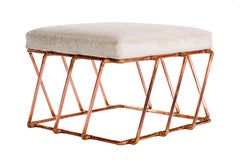
Aperture: Ottoman in Copper by TJ Volonis
Located in Brooklyn, NY
Title: Aperture Year: 2013 Ottoman / footstool executed in 1/2" copper tubing with upholstered seat, inspired by the iconic arc of a camera aperture. The solid squares of the ba...
Category

21st Century and Contemporary American Industrial Furniture

Materials

Copper

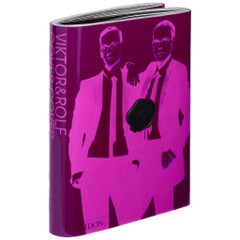
Viktor&Rolf Cover Cover
Located in New York, NY
A celebration of the quirky, surprising, and often spectacular work of Dutch fashion designers Viktor & Rolf Conceived and designed by acclaimed graphic designer Irma Boom...
Category

21st Century and Contemporary Furniture

Materials

Paper

Faux Bamboo Walnut Framed Mirror Made in England 1800’s in Boho Chic Style
Located in London, GB
A Faux Bamboo Walnut mirror of beautiful warm tones, together with it’s original hanging chain in the Chinoiserie/Aesthetic Movement style. Refreshed and revived by professional rest...
Category

1860s English Chinoiserie Antique Furniture

Materials

Walnut, Glass

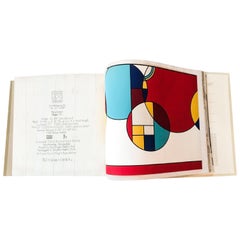
Frank Lloyd Wright Schumacher Wallcovering Catalogue Reference, 1986 1999
Located in Brooklyn, NY
Frank Lloyd Wright Schumacher wallcovering books catalogue reference 1986-1999 - ‘Prints inspired by nature’ Anyone with an ounce of interest i...
Category

Late 20th Century American Mission Furniture

Materials

Paper

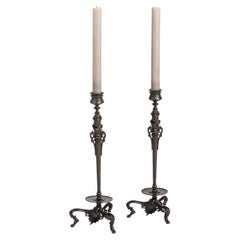
Pair of French Napoleon III Bronze Candlesticks by Foundry F. Barbedienne 1860s
Located in Salzburg, AT
Pair of very elegant classicist candlesticks in fine patinated bronze, signed BARBEDIENNE. The execution of the casting is extremely finely worked with delicate leaves on the outer wall of the candlestick, with a head of antiquity on the upper part of the stem which flows into the lower part with fluting and side volutes. The 3 curved legs stand on raised feet with delicate strappy sandals. Measures: The diameter at the top is 3.5cm and at the bottom 13.5cm Ferdinand Barbedienne (* August 6, 1810 in Saint-Martin-de-Fresnay, Calvados department, France; † March 21, 1892 in Paris) was a French sculptor, bronze ware manufacturer, and gallery owner. One of the most important and popular Éditeurs d'art, or publishers of art articles, he had most of the French sculptors of his time under contract. Life and work Ferdinand Barbedienne was the son of a farmer. At the age of 13, he learned the Craft of saddlery. In 1822 he moved to Paris, where he first worked as a clerk in a wallpaper shop. He received start-up capital from his employer to open his own store, which he set up on Rue Notre-Dame-de-Lorette in 1834. He pursued the idea of exhibiting bronze statues in addition to his core business and mass producing them in small format. In 1838, he joined forces with the mechanic Achille Collas, who had developed the machine á reduction (réducteur for short); a device based on the principles of the pantograph that could reproduce three-dimensional objects in any size - reduced or enlarged. On November 29, 1838, both signed the founding contract for the company Société Ferdinand Barbedienne et Achille Collas, which aimed to commercially exploit the mechanized production of sculptural works for an initial 20 years. Barbedienne took care of the commercial management of the company, while Collas contributed the patent on his invention and seven existing machines, and with his profound knowledge of machinery was responsible for the production processes. Together they decided on the subject matter of the objects, the selling prices, and all other financial matters. In 1841, they produced casts of the Apollo of Belvedere, the Spinario, and 21 pieces with the motif of a bas-relief of the Parthenon. These were followed by versions of the Laocoon group, the Venus of Arles, and the Borghese Fencer, among others. Special interest was initially shown in works from antiquity, for which casts from the Atelier de Moulage in the Louvre served as models. The company continued to produce works by representatives of the Renaissance such as Michelangelo, Donatello, Giovanni Bologna or by French sculptors such as Jean Goujon, Jean-François Flamand, Pierre Puget, François Girardon, Antoine Coysevox...
Category

1860s French Napoleon III Antique Furniture

Materials

Bronze

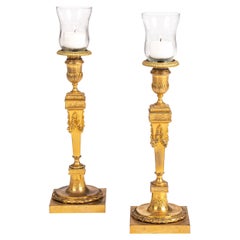
Pair of Louis Seize Fire Gilded Candlesticks France 1800 by F. Barbedienne
Located in Salzburg, AT
Pair of strict classicistical fire gilded candlesticks France 1840, signed Barbedienne. Strict classicist design with square base, flowers and leaf ornaments in different finish. Decorated and smooth elements in alternation create otically balanced object. The widest part of the stem is 4.0cm Ferdinand Barbedienne (* August 6, 1810 in Saint-Martin-de-Fresnay, Calvados department, France; † March 21, 1892 in Paris) was a French sculptor, bronze ware manufacturer, and gallery owner. One of the most important and popular Éditeurs d'art, or publishers of art articles, he had most of the French sculptors of his time under contract. Life and work Ferdinand Barbedienne was the son of a farmer. At the age of 13, he learned the Craft of saddlery. In 1822 he moved to Paris, where he first worked as a clerk in a wallpaper shop. He received start-up capital from his employer to open his own store, which he set up on Rue Notre-Dame-de-Lorette in 1834. He pursued the idea of exhibiting bronze statues in addition to his core business and mass producing them in small format. In 1838, he joined forces with the mechanic Achille Collas, who had developed the machine á reduction (réducteur for short); a device based on the principles of the pantograph that could reproduce three-dimensional objects in any size - reduced or enlarged. On November 29, 1838, both signed the founding contract for the company Société Ferdinand Barbedienne et Achille Collas, which aimed to commercially exploit the mechanized production of sculptural works for an initial 20 years. Barbedienne took care of the commercial management of the company, while Collas contributed the patent on his invention and seven existing machines, and with his profound knowledge of machinery was responsible for the production processes. Together they decided on the subject matter of the objects, the selling prices, and all other financial matters. In 1841, they produced casts of the Apollo of Belvedere, the Spinario, and 21 pieces with the motif of a bas-relief of the Parthenon. These were followed by versions of the Laocoon group, the Venus of Arles, and the Borghese Fencer, among others. Special interest was initially shown in works from antiquity, for which casts from the Atelier de Moulage in the Louvre served as models. The company continued to produce works by representatives of the Renaissance such as Michelangelo, Donatello, Giovanni Bologna or by French sculptors such as Jean Goujon, Jean-François Flamand, Pierre Puget, François Girardon, Antoine Coysevox...
Category

Late 18th Century French Louis XVI Antique Furniture

Materials

Bronze

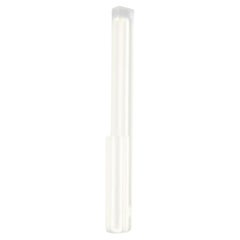
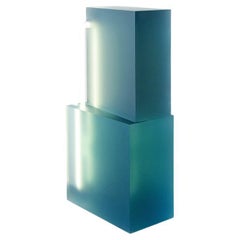
Contemporary Floor Lamp Model "TOTEM 170" by Sabine Marcelis, White Resin, Neon
Located in Barcelona, ES
Floor lamp model “Totem” Manufactured by Sabine Marcelis Produced in exclusive for SIDE GALLERY Rotterdam, The Netherlands 2021 Resin, Neon (+transformer) Measurements 18 cm x 17 cm x 170h cm 7,08 in x 6,69 in x 66,92h in Edition Limited edition of 12 + 2AP Since graduating, she has been operating Studio Sabine Marcelis, working within the fields of product, installation and spatial design with a strong focus on materiality. Her work is characterized by pure forms and natural elements such as the reflections of light and water, which she believes highlight material properties. Growing up in New Zealand Sabine was surrounded by dramatic landscapes, always sensitive to the light of the sky, the ocean and the snow on the mountains, the artist was inspired by the communication of the natural elements. Her work captures these beautiful moments in nature on a smaller scale, as objects or installations. Over the last decade, the award-winning designer has become known for her work with resin and glass. Her receptiveness for these two materials is due to their manipulability; sharp angular shapes as well as spineless curves can be protracted giving the artist endless scope for form. Moreover, the translucency of the both materials can be adjusted from sheer transparency to milky or solid opaque finishes. Working in collaboration with industry specialists, Marcelis intervenes in the manufacturing processes using material research and experimentation to achieve new and surprising visual effects, applying a strong aesthetic point of you to the material development processes. The series Candy Cubes is an example of the designer’s complex material investigation; a polyester resin mold is used to cast the piece, followed by an intensive polishing process. The cast resin is light sensitive, as sun rays shine down onto the solid blocks, the light illuminates the edges, sugar coating the sides, making the aptly named “marshmallow” colored candy cube appear edible. As well as playing with natural light, Marcelis also experiments with artificial lighting in her work. The introduction of neon light to her material combinations expresses the relationship between light, color and transparency in a more constant context. In 2015 Marcelis produced the series Dawn Light whereby the introduction of a white neon tube to a series of different geometric resin objects was used to reflect a unique moment in nature; when the sun, clouds and sky all join together, creating a momentary riot of hues. The series was on show at the Museum Boijmans Van Beuningen in Holland. Since then Marcelis has continued to work with neon and resin developing complex colour recipes and finishes, resulting in her Totem Series commissioned and sold exclusively by Side Gallery in 2019. The collection is composed of four different sized lighting elements, two table and two standing lamps. The Totems are built with several stacked translucent resin volumes which are slightly rotated on a central axis. The carved-out void where the neon light is inserted allows for a multifaceted play between the twisted planes of polished resin and light reflections. Every angle of the lights is a unique visual experience. As well as designing object pieces, the Dutch designer has a series of impressive installation projects associated with her profile including, the Aesop Vedovelle Fountain, the Dutch Pavilion at Cannes Film festival 2017, a Light installation at Biennale Interieur 2018, The Solo Sun Dial project 2018, Burberry x OC in 2018 and De/Coding ‘Alcantara in the tapestry Rooms’ in 2019. Perhaps her most famous installation was her Shapes of Water or Fendi Fountains installation, first exhibited at Design Miami 2018. The ten water sculptures designed from cast resin were a continuation of Marcelis experience and experimentation in material practices, projecting her own vision her elegant avant-garde creativity corresponded directly with the Fendi philosophy. The designers most prestigious exhibition yet, was her museum show “NO FEAR OF GLASS” in December 2019. The intervention commissioned by Side Gallery in collaboration with the Mies Van de Rohe Foundation, consisted of five original works by the Dutch designer, meticulously placed within the Pavilion. The five pieces were designed to extrude from the architecture itself; two large chaise lounges...
Category

21st Century and Contemporary Dutch Furniture

Materials

Resin

Aubusson Tapestry Depicting a Pastoral Scene, French, circa 1900
Located in Brighton, West Sussex
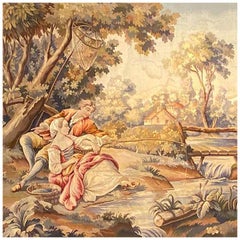
An Aubusson tapestry depicting a pastoral scene. The tapestry depicts a pastoral scene of a young couple fishing by the side of a stream with a bridge and rural buildings in the m...
Category

Early 20th Century French Louis XV Furniture

Materials

Tapestry

Stump Speech, #8: Wall-Mounted Sculpture in Copper by TJ Volonis
Located in Brooklyn, NY
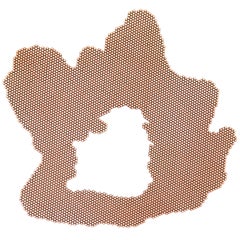
Title: Stump Speech, #8 Year: 2015 A to-scale rendering of the cross section of a tree discovered in Prospect Park, Brooklyn, this work is the newest ...
Category

21st Century and Contemporary American Industrial Furniture

Materials

Copper

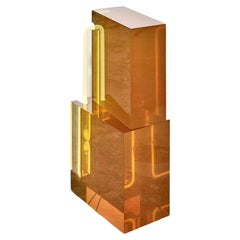
Contemporary Floor Lamp Model "TOTEM 60" by Sabine Marcelis, Yellow Resin, Neon
Located in Barcelona, ES
Table lamp model “Totem” Manufactured by Sabine Marcelis Produced in exclusive for SIDE GALLERY Rotterdam, The Netherlands 2018 Resin, Neon (+transformer) Measurements 30 cm ...
Category

21st Century and Contemporary Dutch Furniture

Materials

Resin

Contemporary Floor Lamp Model "TOTEM 60" by Sabine Marcelis, Blue Resin and Neon
Located in Barcelona, ES
Table lamp model “Totem” Manufactured by Sabine Marcelis Produced in exclusive for SIDE GALLERY Rotterdam, The Netherlands 2021 Resin, Neon (+transformer) Measurements 30 cm x 17 cm x 60 H cm 11,81 in x 6,69 in x 23,62 H in Edition Limited edition of 12 + 2AP Sabine Marcelis (b.1985 New Zealand) is a designer living and working in Rotterdam, The Netherlands. Raised in New Zealand, she was recognized from a young age for her design abilities, being awarded the New Zealand Young Designer of the Year. Marcelis studied industrial design for two years at Victoria University in Wellington, and continued her studies at the Design Academy Eindhoven, where she graduated in 2011. When graduating the designer was nominated for a fleet of prestigious design grants, such as the ‘Unge Talenter Designpriser’ by the Norsk Designråd, the René Smeets Award, and the Keep an Eye Grant. Since graduating, she has been operating Studio Sabine Marcelis, working within the fields of product, installation and spatial design with a strong focus on materiality. Her work is characterized by pure forms and natural elements such as the reflections of light and water, which she believes highlight material properties. Growing up in New Zealand Sabine was surrounded by dramatic landscapes, always sensitive to the light of the sky, the ocean and the snow on the mountains, the artist was inspired by the communication of the natural elements. Her work captures these beautiful moments in nature on a smaller scale, as objects or installations. Over the last decade, the award-winning designer has become known for her work with resin and glass. Her receptiveness for these two materials is due to their manipulability; sharp angular shapes as well as spineless curves can be protracted giving the artist endless scope for form. Moreover, the translucency of the both materials can be adjusted from sheer transparency to milky or solid opaque finishes. Working in collaboration with industry specialists, Marcelis intervenes in the manufacturing processes using material research and experimentation to achieve new and surprising visual effects, applying a strong aesthetic point of you to the material development processes. The series Candy Cubes is an example of the designer’s complex material investigation; a polyester resin mold is used to cast the piece, followed by an intensive polishing process. The cast resin is light sensitive, as sun rays shine down onto the solid blocks, the light illuminates the edges, sugar coating the sides, making the aptly named “marshmallow” colored candy cube appear edible. As well as playing with natural light, Marcelis also experiments with artificial lighting in her work. The introduction of neon light to her material combinations expresses the relationship between light, color and transparency in a more constant context. In 2015 Marcelis produced the series Dawn Light whereby the introduction of a white neon tube to a series of different geometric resin objects was used to reflect a unique moment in nature; when the sun, clouds and sky all join together, creating a momentary riot of hues. The series was on show at the Museum Boijmans Van Beuningen in Holland. Since then Marcelis has continued to work with neon and resin developing complex colour recipes and finishes, resulting in her Totem Series commissioned and sold exclusively by Side Gallery in 2019. The collection is composed of four different sized lighting elements, two table and two standing lamps. The Totems are built with several stacked translucent resin volumes which are slightly rotated on a central axis. The carved-out void where the neon light is inserted allows for a multifaceted play between the twisted planes of polished resin and light reflections. Every angle of the lights is a unique visual experience. As well as designing object pieces, the Dutch designer has a series of impressive installation projects associated with her profile including, the Aesop Vedovelle Fountain, the Dutch Pavilion at Cannes Film festival 2017, a Light installation at Biennale Interieur 2018, The Solo Sun Dial project 2018, Burberry x OC in 2018 and De/Coding ‘Alcantara in the tapestry Rooms’ in 2019. Perhaps her most famous installation was her Shapes of Water or Fendi Fountains installation, first exhibited at Design Miami 2018. The ten water sculptures designed from cast resin were a continuation of Marcelis experience and experimentation in material practices, projecting her own vision her elegant avant-garde creativity corresponded directly with the Fendi philosophy. The designers most prestigious exhibition yet, was her museum show “NO FEAR OF GLASS” in December 2019. The intervention commissioned by Side Gallery in collaboration with the Mies Van de Rohe Foundation, consisted of five original works by the Dutch designer, meticulously placed within the Pavilion. The five pieces were designed to extrude from the architecture itself; two large chaise lounges...
Category

21st Century and Contemporary Dutch Furniture

Materials

Resin

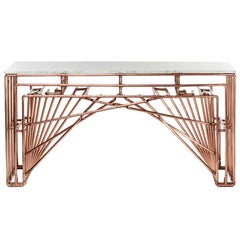
Brooklyn-Barcelona Table by TJ Volonis
Located in Brooklyn, NY
Title: Brooklyn-Barcelona Table Year: 2013 The Brooklyn-Barcelona console table is a graceful merger of styles and continents. The under-arch is d...
Category

21st Century and Contemporary American Industrial Furniture

Materials

Marble, Copper

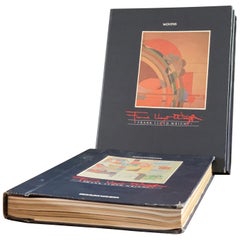
Frank Lloyd Wright Schumacher Wallcoverings Woven Catalogue Reference Set 1986
Located in Brooklyn, NY
Frank Lloyd Wright interior design book set, published by Schumacher, "Wovens", "Wallcoverings." Measures: Books 12" H x 9" W x 1.5" D, box 12.5" H x 9.25" W x 4.75" D. These two vol...
Category

Late 20th Century American Mission Furniture

Materials

Paper

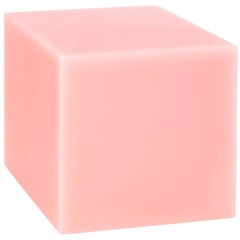
Sabine Marcelis Pink Resin Candy Cube Contemporary Square Side Table, Rotterdam
Located in Barcelona, ES
Sabine Marcelis Candy Cubes series Manufactured by Studio Sabine Marcelis Rotterdam, 2017 High polished single cast resin Measurements 50 cm x 50 cm x ...
Category

2010s Dutch Modern Furniture

Materials

Resin

Bruce Talbert for Gillow. A Walnut, Amboyna, Ebonized and Gilt Bedroom Suite.
Located in London, GB
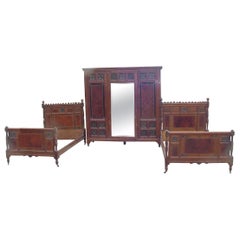
Bruce Talbert (1838-1881) for Gillow and co., a rare and important walnut, amboyna, ebonized, and gilt bedroom suite, each with differing carved rosettes, comprising: a triple mirror door wardrobe, 208cm high, 208cm wide, 58cm deep; a pair of bedside lockers, 85cm high, 38cm wide; and a pair of single bedsteads, 124cm wide Provenance: The famous Argentinian writer and suffragette Victoria Ocampo (1890-1979), bought from her estate and shipped back from Argentina. Bruce James Talbert originally trained as a carver and then an architect, and he became an influential and very successful furniture designer. He served an apprenticeship in Dundee and had his own carving business for two years where he learned the skills to apply carved details to furniture and then joined the architectural offices of Charles Edward. In 1856 he moved to Glasgow and worked for the architects W. N. Tait and Campbell Douglas. He moved to Manchester in the early 1860s, where he gained employment with the cabinetmakers Doveston, Bird, and Hull, which was short-lived, then moved to Coventry gaining work with Skidmore's Art Manufactures. In 1863 he won the competition to design the masthead for 'The Building News and in the mid-1860s moved to London, where he started designing furniture for Holland and Sons. His 'Pericles' Gothic sideboard was displayed on their stand at the Paris Exposition Universelle of 1867 where it was the Grand Prix winner. It was at this point that his most prolific period began and also when he started designing furniture for Gillows of Lancaster in 1868. in the same year, he published his very influential first book 'Gothic Forms Applied to Furniture, Metal Work and Decoration for Domestic Purposes', which he dedicated to George Edmund Street. This was followed in 1876 by 'Examples of Ancient and Modern Furniture, Metalwork, Tapestries and Modern Furniture' and in 1881 by 'Fashionable Furniture. Other companies he designed for were Marsh, Jones and Cribb, Jackson and Graham, and for a short time, was a partner with Daniel Cottier. He designed textiles for Templeton's, Warner's, Cowlishaw, and Barbour and Miller; carpet designs for Templeton's and Brinton and Co.; and his wallpaper designs were printed by Jeffrey and Co. He also designed church metalwork and furniture for Cox and Sons...
Category

1880s English Aesthetic Movement Antique Furniture

Materials

Walnut

Reproducing Scholten and Baijings
Located in New York, NY
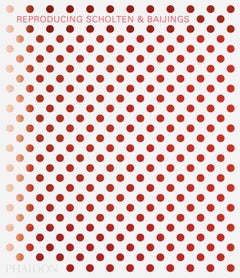
Stefan Scholten and Carole Baijings established their Amsterdam-based studio Scholten & Baijings in 2000, and are now widely regarded as one of the most exciting, innovative and dynamic design duos in Europe. Renowned for their sensitive and subtle yet functional products, their striking and often unexpected use of colour and their exquisitely crafted objects, they have applied their distinctive style to everything from ceramics and silverware to textiles and even a concept car.

This, their first ever book, documents their design process – from the initial intricate drawings and sketches, through a multitude of models, prototypes, colour swatches and samples, to the finished product. Featuring a wealth of previously unpublished images from the designers’ personal archives, it takes the reader behind the scenes of this contemporary product design studio and allows intimate access to their working methods.

A beautiful and comprehensive monograph, the book focuses on their relationships with different manufacturers and includes the stories behind collaborations with Maharam, MINI, Georg Jensen, 1616?/ Arita Japan, Karimoku New Standard and Thomas Eyck, as well as including a complete list of works featuring all the projects they have designed to date. Opening with a foreword by Michael Maharam, with supporting text from design critic Louise Schouwenberg, the book’s stunning design by Joost Grootens includes a unique die-cut jacket, individually-crafted tip-ins and fluorescent book block...
Category

21st Century and Contemporary Chinese Furniture

Materials

Paper

Vintage Nursery Designer’s Guild English Fabric Pillow Toys Irish Linen Cushion
Located in Belfast, Northern Ireland
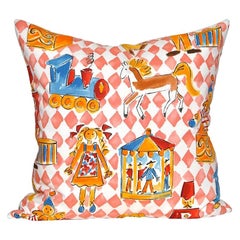
A fabulous vintage nursery designer’s guild English fabric pillow toys with Irish linen cushion large this is a one-of-a-kind item and part of a sustainability project. It has been created from a repurposed, up-cycled, recycled fabric, used with the intentions on promoting a more eco-friendly environment. We both celebrate and cherish the past and take care with rare and precious vintage and antique materials. (This cushion frame can also be reversed back into a scarf and presented in a frame on request) Description: Custom made one-of-a-kind large oversized luxury ‘floor’ pillow (cushion to our European customers) handcrafted from an exquisite and rare piece of vintage Designer’s Guild fabric...
Category

Late 20th Century English Furniture

Materials

Textile

Early 18th Century Meissen Oval Wall Beveled Mirror Pair of Cherubs, Germany
Located in Hamilton, Ontario
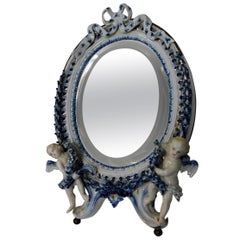
Fine German Meissen porcelain beveled wall mirror with a pair of figural cherubs. Finely modelled as an elegant 18th century piece of art, hand painted white porcelain china with cob...
Category

Early 18th Century German Rococo Antique Furniture

Materials

Porcelain

After Georges Braque, Mosaïque, "Pelias Et Nelee"
Located in Geneve, CH
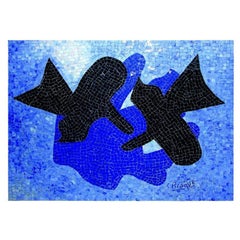
Beautiful Mosaic after Georges Braque. Signed and numbered. Edition of IV. Dimensions: 120 x 160 cm. Mosaic executed by Heidi Melano (one of the most important French Mosaist, she collaborated with Chagall, Braque, Modigliani). This Mosaic has been exhibited in: Art Museum of the Imperial Palace, China, 2012. Nanjing museum, 2012. Muse´e Georges Braque, Saint-Die´-des-Vosges, 2013. From the gouache "Pelias et Ne´le´e,' dated 1962. Bibliography: "Les Me´tamorphoses de Braque" of Heger de Loewenfeld and Raphae¨l de Cuttoli, Editions FAC, Paris, 1989. In 1961 Georges Braque decided with his laidary friend Heger de Loewenfeld to pick up certain of his works to in order to create artworks, this beautiful mosaic is one of them. The father of Cubism. Three Cubist that distinguishes art historian periods were initiated and developed by Georges Braque: The Cubist Ce´zanne (1907-1909), Executive (1909-1912) and synthetic (1912-1922). Post-Impressionist and fawn, Braque no longer adheres to the contingency of a decorative way or the other. Ce´zanne’s paintings exhibited at the Grand Palais during the retrospective of 1907 are a Revelation: Ce´zanne sought and invented a pictorial language. In his footsteps, Braque went to the South with the reasons of the Master. He returned with Estaque landscapes and surprising Ciotat it keeps Cezanne geometric model and retains the “passages” continuity from one surface to another to create the sensation of “turning around” of the object represented. But he wants to go after the consequences of the vision of Cezanne. In his paintings Houses in L’Estaque (1908) it simplifies the volumes of houses, neglects detail by removing doors and windows: the plastic rhythm that builds the table. Large nude, a masterpiece of the period, can be considered the first work of Ce´zanne cubism. Systematizing and deepening Braque discoveries open the door analytical cubism. In 1909, his painting became more cerebral than sensual. The pattern is recreated in the two-dimensionality of the canvas, leaving aside any illusionistic perspective. In still life with violin, objects are analyzed facets according to their characteristic elements, each facet referring to a particular view of the object. There are so many facets of points selected view: Table reflects the knowledge of the object and the ubiquity of the eye. Moreover, Braque is looking for the essence of the objects in the world rather than their contingency, which explains the absence of light source and use of muted colors (gray, ocher), contingent aspects of the object. But formal logic has stepped facets, erased any anecdote to the object and ultimately led to his painting a hermetic more marked on the edge of abstraction (see the series of Castle Roche-Guyon). Braque, anxious to keep the concrete and refusing at all costs that the logic of Cubism takes the paintings to abstract, reintroduced signs of reality in his paintings in 1912 marks the beginning of Synthetic Cubism. Historians speak of “signs of real” rather than reality because what interests Braque, this is not to put reality into a table, but to create a painting which, by its language, refers to the real. To do this, he invented two major techniques 20th century inclusions and contributions. The inclusions consist of painting objects that have no real depth, materials (wallpaper in Nature morte aux playing cards faux wood...
Category

Early 2000s French Modern Furniture

Materials

Ceramic

Mocha Set Dagobert Peche Circle Gmunden Ceramics Made, circa 1919
Located in Vienna, AT
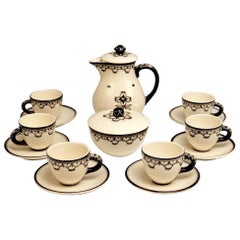
Most elegant mocha set for six persons made of cream white ceramics / glazed and partially black painted / very interesting stylized monochrome pattern: It is strongly influenced by designs created by Dagobert Peche ! We're presenting here: Lidded mocha pot...
Category

1910s Austrian Art Nouveau Vintage Furniture

Materials

Ceramic

Prototype for Upon Unikat-Wandgarderobe by Stefan Diez
Located in NYC, NY
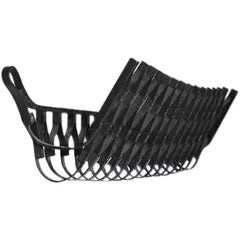
Stefan Diez's prototype for the Upon series wall luggage / coat rack is a remarkable sculpture in itself. This prototype is made of wood, but the production example developed for a German manufacturer is made in metal making this example very unique. An excellent example of new German craft, innovation and design. Pictures included show the fascinatingly unique and innovative process by which this was made. Stefan Diez was born 1971 and studied at the Academy of Fine Arts in Stuttgart. He worked shortly for Richard Sapper and later on two years for Konstantin Grcic before he opened his Munich office in 2003. (text by Andrej Kupetz and Stephan Ott) Awards 2008 „Designpreis der Bundesrepublik Deutschland” for „SHUTTLE” by Rosenthal-Thomas „Designpreis der Bundesrepublik Deutschland” for „KUVERT” by Authentics 2007 „Interior innovation award imm Cologne”, winner of the „best of the best award” for the product „UPON bench” by Schönbuch „design plus” Frankfurt for the product „KUVERT” by Authentics „Materialica Design & Technology award” for „SHUTTLE” by Rosenthal-Thomas 2006 „interior innovation” award imm cologne for „UPON floor” by Schönbuch „Designpreis der Bundesrepublik Deutschland” for the product „Genio” by Rosenthal-Thomas „focus” in silver for the product „SHUTTLE” by Rosenthal-Thomas 2005 „Elle Decoration-Germany”, selected as „newcomer of the year 2005” „if” design award for „GENIO” and „TEMA”, both by Rosenthal-Thomas „Wallpaper Magazine” Jan/Feb 2005, Judges awards, „best new furniture design” for the product „FRIDAY CHAIR...
Category

21st Century and Contemporary German Industrial Furniture

Materials

Wood

Rare Important 16th Century Italian Bronze Jacopo Lodovico del Duca Table Box
Located in Forney, TX
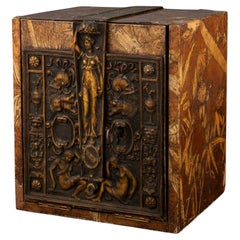
A magnificent antique fall-front box with scarce Medieval period bronze lockplate and hasp attributed to Jacopo and Lodovico del Duca. Featuring an important Lockplate and Hasp designed circa 1570, exact date of manufacture unknown, attributed to the late 16th century Roman foundry of Jacopo 1520-1604) and Ludovico (1551-1601) del Duca, with no apparent signatures or hallmarks which is typical of the era, but we did not remove it and inspect the back. Boxes such as this hand various uses but were frequently used by merchants as a writing box - slope during travel and trade, as a small coffer - strong box for storing important documents, money and valuables, as well as a jewelry casket. This hand-crafted European drop-front box dates to the late 19th century, signed L'PUPLET, adorned with a significantly older Italian fine quality cast bronze lockplate with intricate Renaissance era reliefs, including figures, coat-of-arms, and elongated hasp, mounted on a chest of drawers form solid wooden case, wrapped in exotic Japanesque embossed and gilded metallic paper, having a locking fall-front panel with original key included, opening to reveal three interior drawers, all lined in red velvet. circa 1875 The visually striking textured wallpaper covering the box's exterior displays bamboo, birds, and flowers in the oriental Japanesque taste popular in Europe in the 1860s and 1870s following the forced reopening of foreign trade with Japan in 1858 and the ensuing Japonisme craze. To the interior of the fall front panel is a gilt circular stamp with the somewhat obscured name of the workshop or store (likely) "L'PUPLET" and the city "Burxelles" which is in Brussels, indicating the box was likely made or retailed there. Marks to box: L'PUPLET, BRUXELLES Inscription: 13, 14, 15 (Interior drawers inscribed on the verso of their backboards in script from top to bottom, respectively) Provenance / Acquisition: The origin of the elaborate lockplate with hasp on the front of the piece is more intriguing. At least 76 lockplates of this design have been recorded in major museums, private collections, and in the antiques trade across the Western World. For example, lockplates of this pattern are in the collections of the Rijksmuseum in Amsterdam, the State Museum of Prussian Cultural Heritage in Berlin, the Museum Cicico in Bologna, The Museum of Fine Arts in Boston, the Dallas Museum of Art in Texas, the Victoria & Albert Museum in London, the Museo di Palazzo Venezia in Rome, the State Hermitage Museum in St. Petersburg, and the National Gallery of Art in Washington, DC.[1] Specialists in Renaissance bronzes, especially Charles Avery...
Category

16th Century Italian Japonisme Antique Furniture

Materials

Bronze, Metal

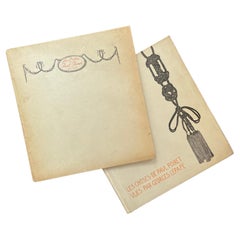
Paul Poiret s Two Editions de Luxe
Located in New York, NY
Paul Poiret's career began in the Belle Epoque, when fashion was defined by imprisoning corsets, restrictive tailoring, and ethereal colors. Opening his own fashion house in 1904, he...
Category

Early 1900s French Art Deco Antique Furniture

Materials

Paper

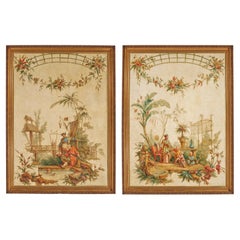
Pair French 18th-19th Century Chinoiserie Circle of Jean B. Pillement
By Jean-Baptiste Pillement
Located in Los Angeles, CA
A fine pair of French 18th-19th century whimsical rococo style chinoiserie oil on canvas, circle of Jean-Baptiste Pillement. (French, 1728-1808). One oil painting depicting an outdoor patio scene of a standing young mother, holding a fan, with her three young children playing with a horse-toy, a parrot and a cat, all surrounded by flowers, plants, trees, planters and flanked by a dragon fountain...
Category

Late 18th Century French Chinoiserie Antique Furniture

Materials

Canvas, Giltwood

A Chintz Garden Trellis: Vintage Chinese Aubusson Masterpiece of Floral Grandeur
Located in Dallas, TX
77205 Vintage Chinese Needlepoint Rug, 0911 x 1309. Bathed in the romance of Mario Buatta’s “Prince of Chintz” aesthetic, this vintage Chinese Aubusson needlepoint rug captures the a...
Category

Late 20th Century Chinese Aubusson Furniture

Materials

Wool

Sabine Marcelis, TOTEM Floor light foxia /red translucent resin contemporary
Located in Barcelona, ES
Sabine Marcelis Floor lamp model “Totem” Manufactured by Sabine Marcelis Produced in exclusive for SIDE GALLERY Rotterdam, The Netherlands 2018 Resin, Neon (+transformer) Measurements: 18 cm x 17 cm x 170 H cm 7.08 in x 6.69 in x 66.92 H in Edition Limited edition of 12 + 2AP Sabine Marcelis (b.1985 New Zealand) is a designer living and working in Rotterdam, The Netherlands. Raised in New Zealand, she was recognized from a young age for her design abilities, being awarded the New Zealand Young Designer of the Year. Marcelis studied industrial design for two years at Victoria University in Wellington, and continued her studies at the Design Academy Eindhoven, where she graduated in 2011. When graduating the designer was nominated for a fleet of prestigious design grants, such as the ‘Unge Talenter Designpriser’ by the Norsk Designråd, the René Smeets Award, and the Keep an Eye Grant. Since graduating, she has been operating Studio Sabine Marcelis, working within the fields of product, installation and spatial design with a strong focus on materiality. Her work is characterized by pure forms and natural elements such as the reflections of light and water, which she believes highlight material properties. Growing up in New Zealand Sabine was surrounded by dramatic landscapes, always sensitive to the light of the sky, the ocean and the snow on the mountains, the artist was inspired by the communication of the natural elements. Her work captures these beautiful moments in nature on a smaller scale, as objects or installations. Over the last decade, the award-winning designer has become known for her work with resin and glass. Her receptiveness for these two materials is due to their manipulability; sharp angular shapes as well as spineless curves can be protracted giving the artist endless scope for form. Moreover, the translucency of the both materials can be adjusted from sheer transparency to milky or solid opaque finishes. Working in collaboration with industry specialists, Marcelis intervenes in the manufacturing processes using material research and experimentation to achieve new and surprising visual effects, applying a strong aesthetic point of you to the material development processes. The series Candy Cubes is an example of the designer’s complex material investigation; a polyester resin mold is used to cast the piece, followed by an intensive polishing process. The cast resin is light sensitive, as sun rays shine down onto the solid blocks, the light illuminates the edges, sugar coating the sides, making the aptly named “marshmallow” colored candy cube appear edible. As well as playing with natural light, Marcelis also experiments with artificial lighting in her work. The introduction of neon light to her material combinations expresses the relationship between light, color and transparency in a more constant context. In 2015 Marcelis produced the series Dawn Light whereby the introduction of a white neon tube to a series of different geometric resin objects was used to reflect a unique moment in nature; when the sun, clouds and sky all join together, creating a momentary riot of hues. The series was on show at the Museum Boijmans Van Beuningen in Holland. Since then Marcelis has continued to work with neon and resin developing complex colour recipes and finishes, resulting in her Totem Series commissioned and sold exclusively by Side Gallery in 2019. The collection is composed of four different sized lighting elements, two table and two standing lamps. The Totems are built with several stacked translucent resin...
Category

2010s Dutch Furniture

Materials

Resin

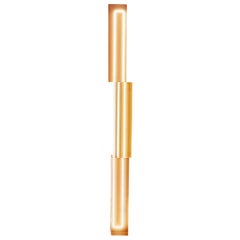
Sabine Marcelis, TOTEM 190 Light, Yellow Resin and Neon Light Contemporary Lamp
Located in Barcelona, ES
Sabine Marcelis Floor lamps model “Totem” Manufactured by Sabine Marcelis Produced in exclusive for Side Gallery Rotterdam, The Netherlands, 2018 Resin, Neon (+transformer) Measure...
Category

2010s Dutch Furniture

Materials

Resin

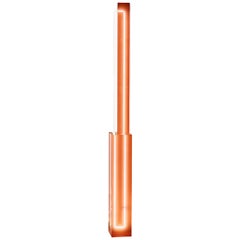
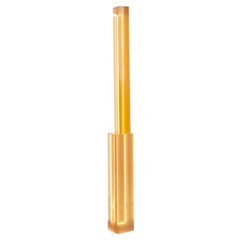
Sabine Marcelis Ochre Yellow TOTEM 170 Floor Light Transparent Resin Neon
Located in Barcelona, ES
Sabine Marcelis Floor lamp model “TOTEM” Manufactured by Sabine Marcelis Produced in exclusive for Side Gallery Rotterdam, The Netherlands 2018 Resin, Neon (+transformer). Measurem...
Category

2010s Dutch Modern Furniture

Materials

Resin

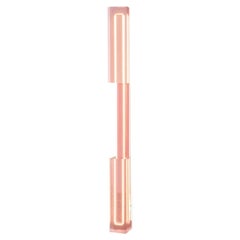
Sabine Marcelis Lavender Pink TOTEM 190 Floor Light translucent resin and neon
Located in Barcelona, ES
Sabine Marcelis Floor lamp model “TOTEM” Manufactured by Sabine Marcelis Produced in exclusive for Side Gallary Rotterdam, The Netherlands 2018 Resin, Neon (+transformer). Contemporary design Meassurements 18 cm x 17 cm x 190 H cm 7.08 in x 6.69 in x 74 H in Edition Limited edition of 12 + 2AP. Sabine Marcelis (b.1985 New Zealand) is a designer living and working in Rotterdam, The Netherlands. Raised in New Zealand, she was recognized from a young age for her design abilities, being awarded the New Zealand Young Designer of the Year. Marcelis studied industrial design for two years at Victoria University in Wellington, and continued her studies at the Design Academy Eindhoven, where she graduated in 2011. When graduating the designer was nominated for a fleet of prestigious design grants, such as the ‘Unge Talenter Designpriser’ by the Norsk Designråd, the René Smeets Award, and the Keep an Eye Grant. Since graduating, she has been operating Studio Sabine Marcelis, working within the fields of product, installation and spatial design with a strong focus on materiality. Her work is characterized by pure forms and natural elements such as the reflections of light and water, which she believes highlight material properties. Growing up in New Zealand Sabine was surrounded by dramatic landscapes, always sensitive to the light of the sky, the ocean and the snow on the mountains, the artist was inspired by the communication of the natural elements. Her work captures these beautiful moments in nature on a smaller scale, as objects or installations. Over the last decade, the award-winning designer has become known for her work with resin and glass. Her receptiveness for these two materials is due to their manipulability; sharp angular shapes as well as spineless curves can be protracted giving the artist endless scope for form. Moreover, the translucency of the both materials can be adjusted from sheer transparency to milky or solid opaque finishes. Working in collaboration with industry specialists, Marcelis intervenes in the manufacturing processes using material research and experimentation to achieve new and surprising visual effects, applying a strong aesthetic point of you to the material development processes. The series Candy Cubes is an example of the designer’s complex material investigation; a polyester resin mold is used to cast the piece, followed by an intensive polishing process. The cast resin is light sensitive, as sun rays shine down onto the solid blocks, the light illuminates the edges, sugar coating the sides, making the aptly named “marshmallow” colored candy cube appear edible. As well as playing with natural light, Marcelis also experiments with artificial lighting in her work. The introduction of neon light to her material combinations expresses the relationship between light, color and transparency in a more constant context. In 2015 Marcelis produced the series Dawn Light whereby the introduction of a white neon tube to a series of different geometric resin objects was used to reflect a unique moment in nature; when the sun, clouds and sky all join together, creating a momentary riot of hues. The series was on show at the Museum Boijmans Van Beuningen in Holland. Since then Marcelis has continued to work with neon and resin developing complex colour recipes and finishes, resulting in her Totem Series commissioned and sold exclusively by Side Gallery in 2019. The collection is composed of four different sized lighting elements, two table and two standing lamps. The Totems are built with several stacked translucent resin...
Category

2010s Dutch Modern Furniture

Materials

Resin

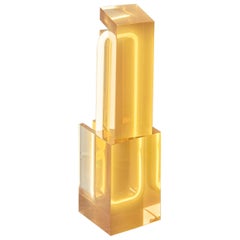
Sabine Marcelis contemporay yellow resin and neon Table Lamp Model TOTEM
Located in Barcelona, ES
Sabine Marcelis (1984-) Table lamp model “TOTEM” Manufactured by Sabine Marcelis Produced in exclusive for Side Gallery Rotterdam, The Netherlands 2019 Resin, Neon (+transformer) Me...
Category

2010s Dutch Furniture

Materials

Resin

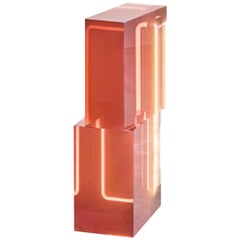
Sabine Marcelis Totem 60 Floor Light Crimson Pink Translucent Resin and Neon
Located in Barcelona, ES
Sabien Marcelis Floor lamp model “TOTEM” Manufactured by Sabine Marcelis Produced in exclusive for Side Gallery Rotterdam, The Netherlands 2018 Resin, Neon (+transformer) Contemporary Lighting Measurements: 30 cm x 17 cm x 60 H cm 11.81 in x 6.69 in x 23.62 H in Edition Limited edition of 12. Sabine Marcelis (b.1985 New Zealand) is a designer living and working in Rotterdam, The Netherlands. Raised in New Zealand, she was recognized from a young age for her design abilities, being awarded the New Zealand Young Designer of the Year. Marcelis studied industrial design for two years at Victoria University in Wellington, and continued her studies at the Design Academy Eindhoven, where she graduated in 2011. When graduating the designer was nominated for a fleet of prestigious design grants, such as the ‘Unge Talenter Designpriser’ by the Norsk Designråd, the René Smeets Award, and the Keep an Eye Grant. Since graduating, she has been operating Studio Sabine Marcelis, working within the fields of product, installation and spatial design with a strong focus on materiality. Her work is characterized by pure forms and natural elements such as the reflections of light and water, which she believes highlight material properties. Growing up in New Zealand Sabine was surrounded by dramatic landscapes, always sensitive to the light of the sky, the ocean and the snow on the mountains, the artist was inspired by the communication of the natural elements. Her work captures these beautiful moments in nature on a smaller scale, as objects or installations. Over the last decade, the award-winning designer has become known for her work with resin and glass. Her receptiveness for these two materials is due to their manipulability; sharp angular shapes as well as spineless curves can be protracted giving the artist endless scope for form. Moreover, the translucency of the both materials can be adjusted from sheer transparency to milky or solid opaque finishes. Working in collaboration with industry specialists, Marcelis intervenes in the manufacturing processes using material research and experimentation to achieve new and surprising visual effects, applying a strong aesthetic point of you to the material development processes. The series Candy Cubes is an example of the designer’s complex material investigation; a polyester resin mold is used to cast the piece, followed by an intensive polishing process. The cast resin is light sensitive, as sun rays shine down onto the solid blocks, the light illuminates the edges, sugar coating the sides, making the aptly named “marshmallow” colored candy cube appear edible. As well as playing with natural light, Marcelis also experiments with artificial lighting in her work. The introduction of neon light to her material combinations expresses the relationship between light, color and transparency in a more constant context. In 2015 Marcelis produced the series Dawn Light whereby the introduction of a white neon tube to a series of different geometric resin objects was used to reflect a unique moment in nature; when the sun, clouds and sky all join together, creating a momentary riot of hues. The series was on show at the Museum Boijmans Van Beuningen in Holland. Since then Marcelis has continued to work with neon and resin developing complex colour recipes and finishes, resulting in her Totem Series commissioned and sold exclusively by Side Gallery in 2019. The collection is composed of four different sized lighting elements, two table and two standing lamps. The Totems are built with several stacked translucent resin...
Category

2010s Dutch Furniture

Materials

Resin

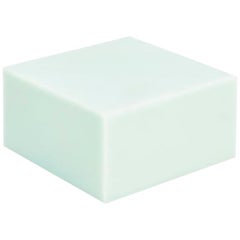
Sabine Marcelis Mint Candy Cube Contemporary Side Table or Bed Stand Gloss Resin
Located in Barcelona, ES
Mint Candy cube From the series “Candy Cubes” Manufactured by Sabine Marcelis Produced for Side Gallery Rotterdam, The Netherlands 2017 High polished single cast resin. Measurements...
Category

2010s Dutch Modern Furniture

Materials

Resin

Arthur Heygate Mackmurdo for the Century Guild. An Important Art Nouveau Chair
Located in London, GB
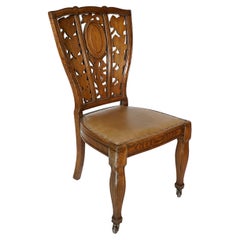
Arthur Heygate Mackmurdo (1851-1942), a highly important oak chair, with an Art Nouveau floral back. Mackmurdo's influence in Europe is recognized as having produced the earliest examples of Art Nouveau, particularly in the styling of a chair-back designed in 1882 and the title page for Wren's City Churches a year later. The present chair was designed for the head of Rainhill hospital St Helen's south Lancashire/Merseyside (now demolished), an institute for the mentally ill, as part of an interior scheme for his study. It was almost certainly designed and made only for this interior, unlike the earlier chair which was designed in 1882 and made and sold until 1888. It was originally thought this interior was designed by the Liverpool architect Edmund Rathbone whose brother, Harold Rathbone, founded the Della Robbia Pottery factory in 1894. A picture is shown in Jeremy Cooper's Victorian and Edwardian Furniture and Interiors, p. 199, illus. 516, from the Bedford Lemere archive at the National Monuments Record, apparently credited as 'Rainhill, Edmund Rathbone'. But Edmund Rathbone was actually the Century Guild...
Category

1880s English Art Nouveau Antique Furniture

Materials

Oak

Shop Unique Furniture on 1stDibs

When it comes to shopping for vintage, new and antique furniture — whether you’re finally moving into that long-coveted loft apartment, ranch-style home, townhouse or furnishing your weekend house on the lake — you should think of your home as a stage for the seating, tables, lighting, storage cabinets and other pieces that best match your personality.

Coziness, comfort and creating a welcoming space are among the important things to consider when buying furniture, whether that means seeking strict cohesion or rooms characterized by a mix-and-match assembly of varying shapes, colors and materials. And for those who now work from home, exercise, eat and relax within the same four walls every day, they’ll also want to think about flexibility and an innovative approach.

Have you built your dream kitchen?

Is your current living-room furniture all that it could be?

Does your toast-worthy bar or vintage bar cart exude equal parts class and cheeriness?

And importantly, is your home officebackyard or otherwise — a happy one, regardless of the design style you happen to gravitate toward?

Although mid-century modern, rustic, minimalist, Art Deco and contemporary looks remain popular, they aren’t the only styles available to design connoisseurs.

Furniture styles are nothing if not fluid, meaning what’s popular one year may not be the next. That’s why it’s crucial to not only pay attention to interior-design trends but also focus on the styles that speak to you. That way, you (and your interior designer, if that is in the plans) can work to create a home that’s entirely your own, complete with impressively modern decor as well as an array of history’s universally renowned iconic designs.

It’s difficult to single out well-recognized designs from what is a crowded pantheon of celebrated and seminal furnishings. Certain outstanding designs have such stellar quality they’ve endured for decades as bona fide cultural treasures, still being manufactured, in many cases, by the same venerable companies that shepherded them into being (think Herman Miller, Knoll and Fritz Hansen). Some works come immediately to mind as contenders for any short list. When you’re discussing the most popular mid-century modern chairs, for example, no tally would be complete without citing designs by Arne Jacobsen, Charlotte Perriand, Charles and Ray Eames and Hans Wegner.

Good furniture, be it authentic vintage furniture or new custom furniture, allows you to comfortably sit and tell your favorite stories. Great furniture tells a story of its own.

On 1stDibs, find everything from sofas to serveware to credenzas to coffee tables, and every other type of antique, vintage and new furniture you need to create a singular space that you’ll be proud to call home.