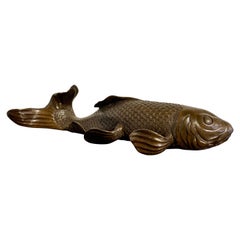
Items Similar to 18th Century Qing Dynasty Fish Shaped Cricket Holder
Want more images or videos?
Request additional images or videos from the seller
1 of 7
18th Century Qing Dynasty Fish Shaped Cricket Holder
$650
£493.84
€567.53
CA$913
A$993.78
CHF 526.57
MX$11,951.74
NOK 6,695.20
SEK 6,135.41
DKK 4,239.38
About the Item
Uniquely fabulous and highly unusual item for those seeking something different; this 18th century "cricket holder" from the Qing Dynasty is in the shape of a fish and is made of hand wrought metal, with nice detail and an open woven body which provided air to the cricket. A sophisticated clasp locking mechanism on the underneath of the fish kept the pet cricket contained in the caged holder. Obviously this was intact when someone at some point in time tried to remove whatever was inside by making a hole at the base of the tail to get it out (see image). This hand held cricket cage holder is in very nice and all original condition, save for the small hole; not fragile in any way; sturdy in structure with no repairs.
For over 1000 years the Chinese have used crickets to keep as pets; typically for their "song", and also for good luck. Sometimes they were used for fighting other crickets for sport, especially in the Imperial court.
There are currently many souvenir and modern day "knock-off" cricket holders.
This is, in fact, an authentic, original, period example.
Dimensions: 4 3/4" long x 1 1/2" wide X 2" high.
- Dimensions:Height: 2 in (5.08 cm)Width: 1.5 in (3.81 cm)Depth: 4.75 in (12.07 cm)
- Style:Qing (Of the Period)
- Materials and Techniques:
- Place of Origin:
- Period:1790-1799
- Date of Manufacture:circa 1795
- Condition:Wear consistent with age and use. Hole in the back by the tail where someone had probably tried to open while locking mechanism was in tact.
- Seller Location:Incline Village, NV
- Reference Number:1stDibs: LU973232795862
About the Seller
5.0
Recognized Seller
These prestigious sellers are industry leaders and represent the highest echelon for item quality and design.
Platinum Seller
Premium sellers with a 4.7+ rating and 24-hour response times
Established in 1976
1stDibs seller since 2013
306 sales on 1stDibs
Typical response time: 1 hour
Associations
Art Dealers Association of America
- ShippingRetrieving quote...Shipping from: Incline Village, NV
- Return Policy
More From This Seller
View AllFine Quality Early 20thC Qing Dynasty Large, Irregular,
Free Form Chinese Bowl
Located in Incline Village, NV
This is one of the most attractive and appealing pieces of pottery that I have ever owned; simply a wonderful work of art for those seeking an unusually designed beautiful bowl. This...
Category
Vintage 1910s Chinese Qing Ceramics
Materials
Ceramic
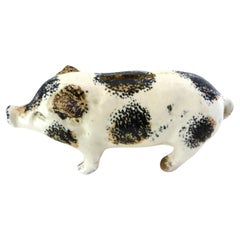
19th C. Stoneware Children
s Savings Pig Bank. England, Circa 1880
Located in Incline Village, NV
In the late 19th century the concept of thrift became a principle by which parents encouraged their children to safe money by putting their pennies into a "piggy bank", thus the proliferation of these items by pottery manufacturers, this particular example marked "SS" on the underneath indicating "A Smith Ltd.", Longton, England whose ceramic, china, and pottery business began in 1846 by Sampson Smith.
Nicely molded and in excellent condition, this proverbial pig themed penny bank is painted overall white with a multiplicity of green "spatter" spots, the pig standing on all fours has a twisted tail in back. The original finish is beautifully glazed resulting in a lovely patina to this completely original bank with no restoration or touch up paint of any kind and all of it's original hand paint intact.
Since these type of antique banks typically were made without a coin removal trap, the only way to extract the coins would have been the old "knife in the slot" method and retrieving the pennies one by one; or the more simpler method of smashing and breaking the bank, which is why locating these banks is very difficult, rendering a fine example particularly rare.
This example is a wonderful addition to a collection of authentic still banks, folk art, or for those who accumulate pig items. This recently came from an estate collection of pig still banks. A similar example is referenced as #633 "Two Toned Pig" in Andy Moore's "The Penny Bank Book" written in 1984 when collecting pottery banks...
Category
Antique 1880s English Folk Art Toys
Materials
Stoneware
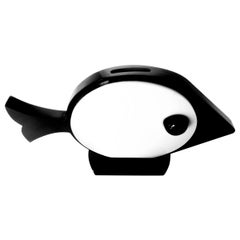
Art Deco Bakelite "Fish Themed" Still Bank, American, circa 1930
Located in Incline Village, NV
This very unique still bank is a "must have" for the discerning still bank collector, in that it is made of bakelite, in addition to it having a fish theme; only a couple of other banks depict a fish. American and probably manufactured around circa 1930, (making it an Art Deco piece), this pre-war bank, though unmarked, is undoubtedly a bakelite product; that company having been formed in 1922, utilizing the discovery and patent of bakelite in 1907 and 1909 respectively. Art Deco collectors would find this piece highly decorative and "period" compatible.
This fish bank is in excellent and all original condition. The bank is rare in and of itself, but another element that makes it particularly scarce is the fact that, other than the old "knife in the slot" there was no way to remove the coins once the bank was filled without smashing it apart and destroying it. Great gift for that February/March pisces birthday.
Dimensions: 8 1/4" long x 5" high x 2 1/8" wide
Note:I am a leading specialist in the field of vintage coin banks...
Category
Vintage 1930s American Art Deco Toys and Dolls
Materials
Bakelite
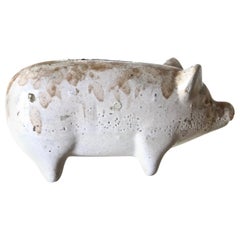
American Pottery Pig Bank, Circa 1880
s
Located in Incline Village, NV
American pottery still bank in the shape of a pig, used for saving coins (usually pennies) to encourage children the importance of thrift. Pottery still banks are somewhat scarce since the typical way to remove coins was to smash the bank open, albeit, with this particular example, perhaps a knife was used for coin removal (note the wear to the coin slot---see images) or perhaps the additional wear is also from many coins having been deposited.
The bank is in good all original condition , from an unknown potter (unmarked) circa 1880's, and probably a variant of #633 "Two Toned Pig" in Andy Moore's "The Penny Bank Book" written in 1984 when collecting pottery banks...
Category
Antique 1880s American Folk Art Toys
Materials
Pottery
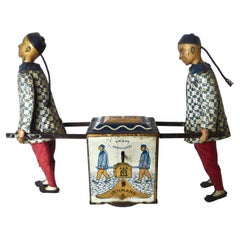
"Kadi" Pre-war Wind-Up Toy by Lehman Company. Germany Circa 1905
By E.P. Lehman Co.
Located in Incline Village, NV
"Kadi" is the name of this rare Chinese themed vintage German made mechanical toy; depicting two turn of the century Chinese men with pigtails walking along, while carrying a large t...
Category
Antique Early 1900s German Folk Art Toys and Dolls
Materials
Tin
19th Century Chinese Export Table Top Black Lacquer Jewelry/Valuables Cabinet
Located in Incline Village, NV
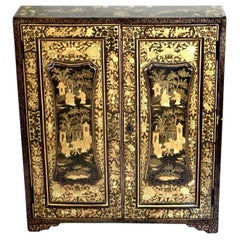
Chinoiserie hand painted 19th century Chinese export jewelry cabinet circa 1880; is fronted by a pair of raised panel double doors; decorated in gilt with scenes of Chinese figures, ...
Category
Antique 1880s Chinese Qing Lacquer
Materials
Wood
You May Also Like
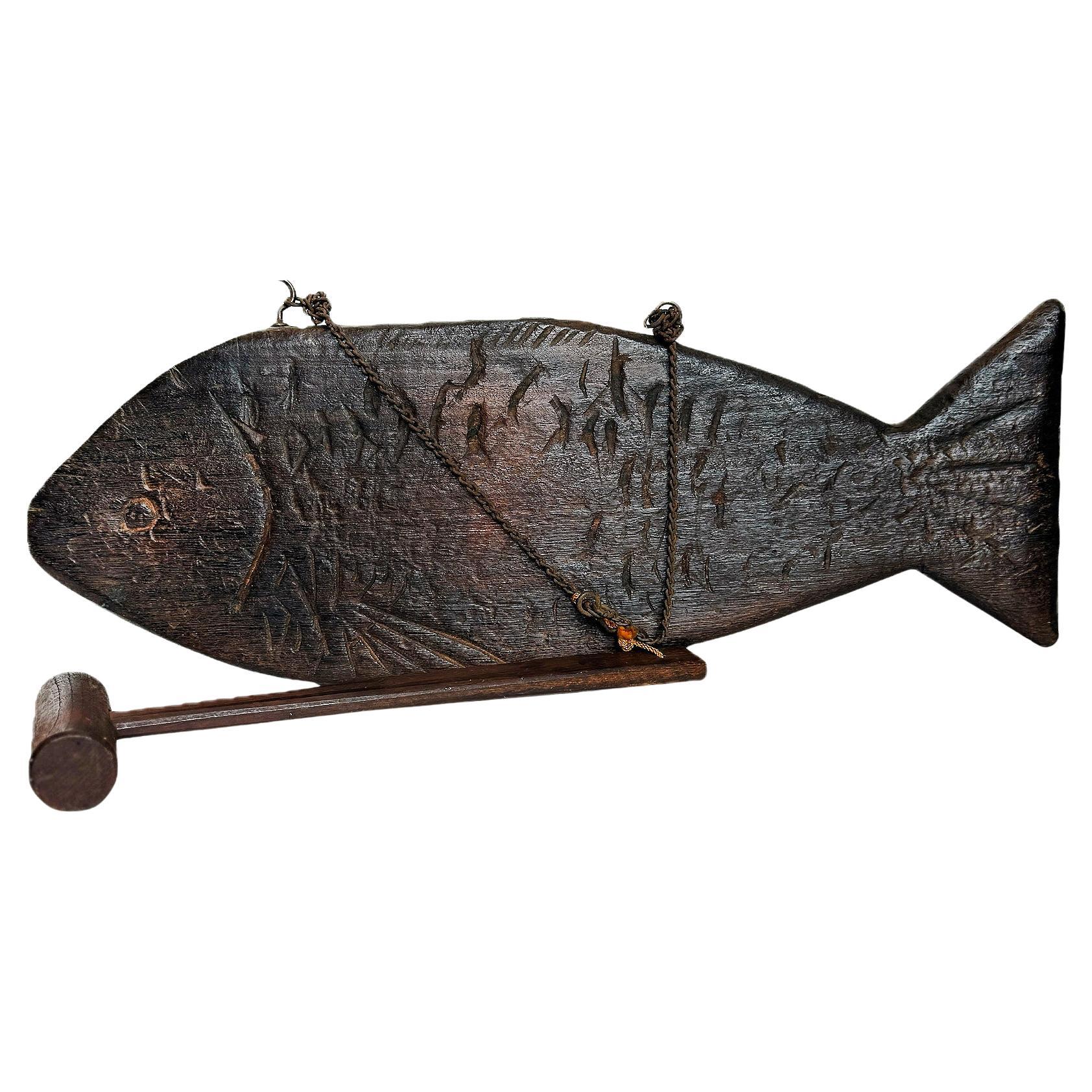
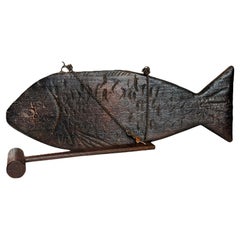
Japanese Meditation Drum (Gyoban), Fish Shape with Striker, Wood, Meiji Period
Located in Point Richmond, CA
Japanese Meditation Drum (Gyoban), Fish Shape with Striker, Wood, Meiji Period
In the Zen Buddhist temples of Japan, suspended in front of the entrance to the refectory, you will no...
Category
Early 20th Century Japanese Meiji Sculptures and Carvings
Materials
Wood
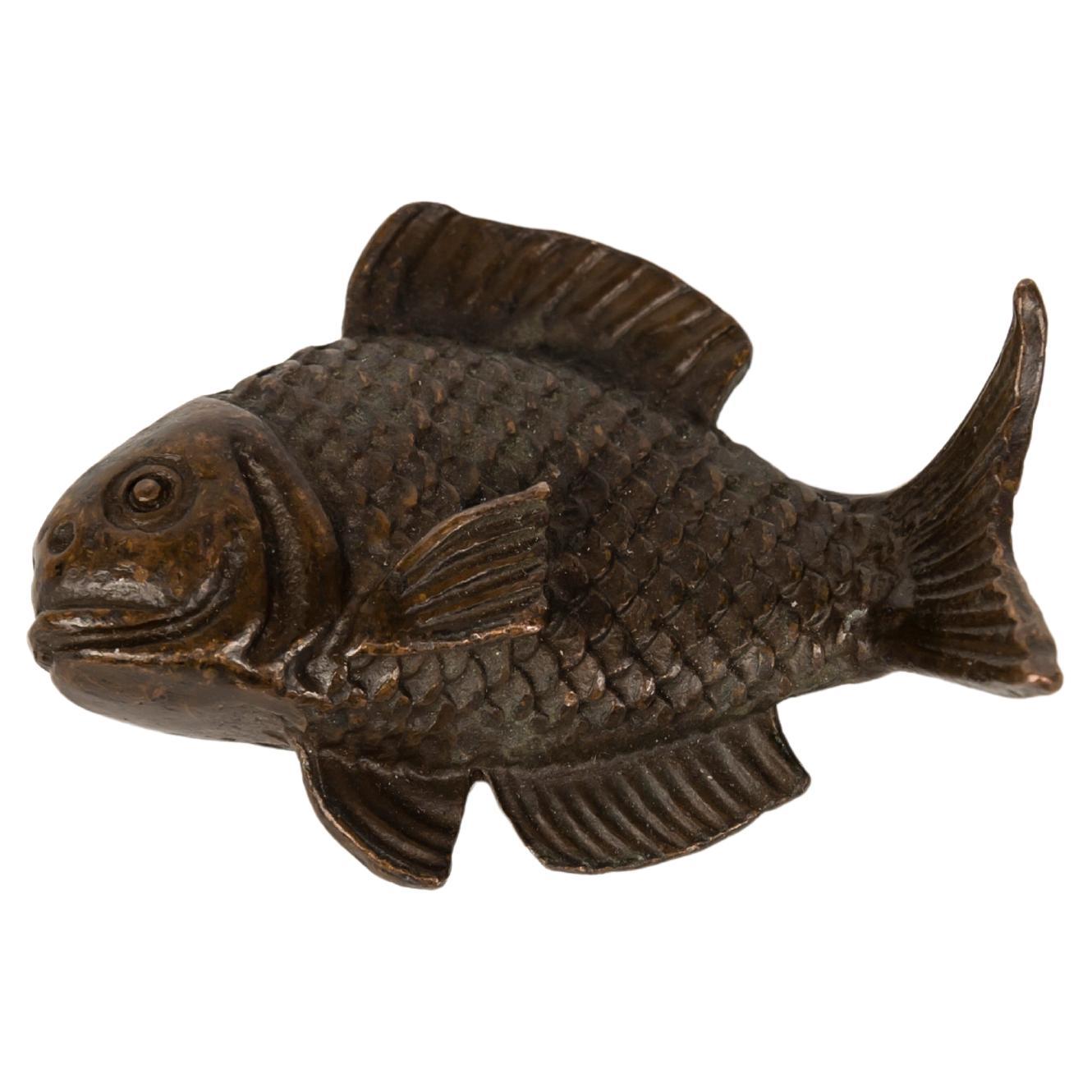
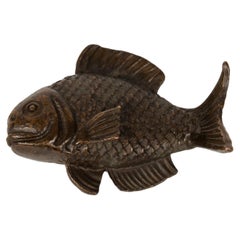
Japanese Bronze Bunchin or papper holder in the form of a fish
Located in PARIS, FR
A small but interesting bronze in the form of a fish, with a chocolate-colored patina, probably intended to serve as a calligrapher's weight (bunchin). The treatment of the scales is...
Category
Antique Late 19th Century Japanese Meiji Metalwork
Materials
Bronze
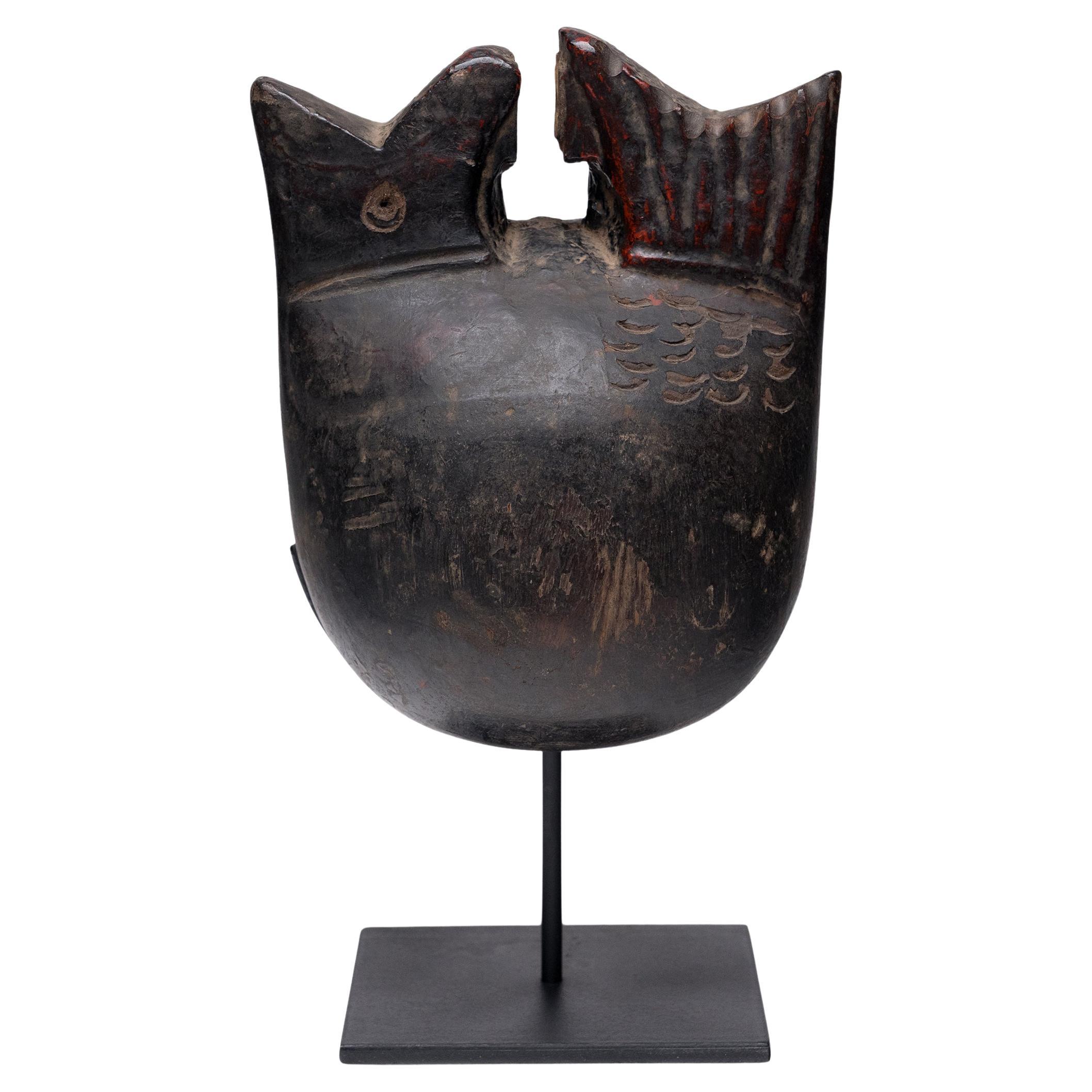
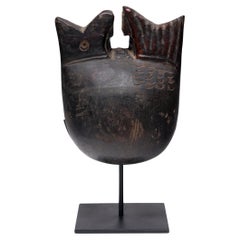
Chinese Lacquered Buddhist Fish Bell, c. 1800
Located in Chicago, IL
Sculptural and abstract, this curious wooden fish is a 19th-century Buddhist woodblock from western China. Known simply as "wooden fish" (mùyú), these temple bells were used by Buddh...
Category
Antique Early 19th Century Chinese Primitive Sculptures and Carvings
Materials
Wood
Chinese Polychrome Harmony Fish, c. 1900
Located in Chicago, IL
Hand-crafted from reclaimed wood, this large koi sculpture is a traditional symbol of harmony and luck. For Buddhists, such a fish represents a freedom from all restraints. Much of t...
Category
20th Century Chinese Chinese Export Sculptures and Carvings
Materials
Wood, Pine
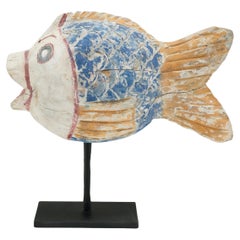
Chinese Polychrome Lucky Fish
Located in Chicago, IL
Hand-crafted from reclaimed wood, this artisanal koi sculpture is a traditional symbol of harmony and luck. For Buddhists, such a fish represents a freedom from all restraints. And b...
Category
20th Century Chinese Chinese Export Sculptures and Carvings
Materials
Wood, Pine
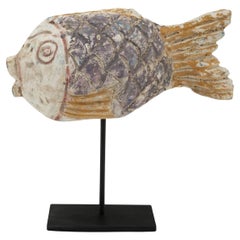
Japanese Bronze Okimono of a Carp, Taisho Period, Early 20th Century, Japan
Located in Austin, TX
An elegant Japanese cast bronze okimono of a swimming carp, Taisho Period (1912 - 1926), early 20th century, Japan.
The graceful fish portrayed realistically in motion, as if swimmi...
Category
Vintage 1920s Japanese Taisho Sculptures and Carvings
Materials
Bronze