Want more images or videos?
Request additional images or videos from the seller
1 of 12
Bactrian Alabaster Cup
$947.09List Price
About the Item
- Dimensions:Height: 2.37 in (6 cm)Diameter: 4.73 in (12 cm)
- Materials and Techniques:
- Place of Origin:
- Period:
- Date of Manufacture:2000 BC
- Condition:Wear consistent with age and use.
- Seller Location:Vosselaar, BE
- Reference Number:1stDibs: LU2023316426381
About the Seller
5.0
Gold Seller
Premium sellers maintaining a 4.3+ rating and 24-hour response times
Established in 1972
1stDibs seller since 2016
287 sales on 1stDibs
Typical response time: 19 hours
Authenticity Guarantee
In the unlikely event there’s an issue with an item’s authenticity, contact us within 1 year for a full refund. DetailsMoney-Back Guarantee
If your item is not as described, is damaged in transit, or does not arrive, contact us within 7 days for a full refund. Details24-Hour Cancellation
You have a 24-hour grace period in which to reconsider your purchase, with no questions asked.Vetted Professional Sellers
Our world-class sellers must adhere to strict standards for service and quality, maintaining the integrity of our listings.Price-Match Guarantee
If you find that a seller listed the same item for a lower price elsewhere, we’ll match it.Trusted Global Delivery
Our best-in-class carrier network provides specialized shipping options worldwide, including custom delivery.You May Also Like
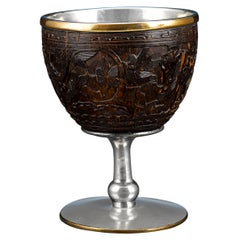
Chinese Coconut Cup
Located in New Orleans, LA
Carved from the shell of a coconut, this enchanting Chinese cup exhibits exceptional artistry. An elegant floral design encircles the entire cup, while the interior is fully lined with silver. In addition to the poison detecting powers attributed to coconuts, the Chinese believed that silver would tarnish when in contact with poison. In fact, many wealthy Chinese used silver lined cups and chopsticks tipped with silver fittings as an assurance against poisoning. To find a silver-lined coconut cup...
Category
Antique Early 19th Century Chinese Other Sculptures and Carvings
Materials
Coconut
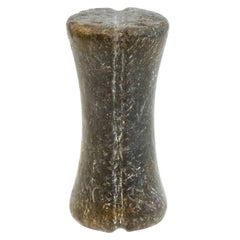
Bactrian Ritual Object
Located in Coral Gables, FL
Bactrian ritual object, Bactrian culture, Quetta, Afghanistan 3rd or early 2nd Millennium B.C.
Category
Antique 15th Century and Earlier Afghan Other Antiquities
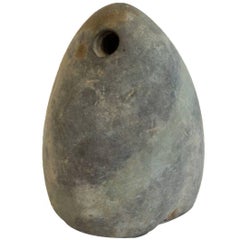
Bactrian Ritual Object
Located in Coral Gables, FL
Bactrian culture, Afghanistan. 3rd or early 2nd Millennium B.C.
Category
Antique 15th Century and Earlier Afghan Other Antiquities
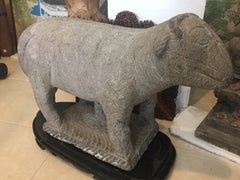
Ancient China Monumental Stone Ram Han Dynasty, 206BC-220AD
Located in South Burlington, VT
China, a large votive model of a stone ram, Han dynasty (206BC-220AD)
Dimensions: 45cm, 18 inches high and 65cm, 26 inches length and 25cm, 10 inches wi...
Category
Antique 15th Century and Earlier Chinese Han Sculptures and Carvings
Materials
Limestone
$17,600 Sale Price
54% Off
H 18 in W 26 in D 10 in
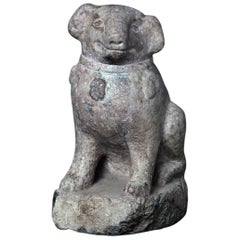
Important Ancient Chinese Effigy Pug Dog, Ming Dynasty 1368-1644
Located in South Burlington, VT
China, a carving of a canine “Pug”, Ming Dynasty, 1368-1644 CE
Dimensions: 38 cm, 15” High
Photographs taken indoors and out of doors for your viewing pleasure.
The hand carved limestone beast shown on its haunches with naturalistic joyful expression and a well defined compact head, ears, noes, eyes, feet, and tail parted to one side on reverse with distinctive collar ornament seated four square on a thick base all-over showing a weathered surface from significant age.
Formerly exhibited “Asia Week” New York City, Fuller Building, Hutton Gallery 2006.
Provenance: ex collection luoyang, Henan Province, China.
Includes custom display base as shown
Catalog reference: 35 years collecting 35 treasures, Number 35, p.76 (photo)
In ancient China, it is a well-known fact that several types of small dogs were bred and were favored pet gifts between emperors and kings including Lion Dogs, Pekingese and Lo-sze breeds. Some Lo-sze are pictured wearing collars with bells a frequent combination fancied by European royalty of the seventeenth and eighteenth centuries. Lo-sze or pugs were prized for their compact body, good bones, flat face, square jaw, short coat, curled tail, side set back ears, and temperate disposition.
History:
Placing stone animals in important tombs can be traced back at least to the Qin Dynasty (221-206 BCE), some two thousand years ago. In ancient times, stone animals and human figures placed before imperial tombs symbolized royal power and privilege in addition to decorative functions.
The first Ming tomb...
Category
Antique 15th Century and Earlier Chinese Ming Sculptures and Carvings
Materials
Limestone
$6,650 Sale Price
21% Off
H 15 in W 7 in D 8 in
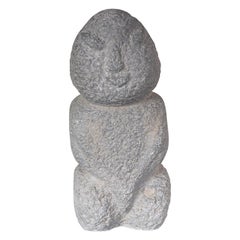
Chinese Stone Fertility Sculpture, 4700-2900 BC
Located in South Burlington, VT
China, a fine archaic male effigy hand carved from a granular medium to dark gray stone. Neolithic period, Hongshan culture (circa 4700-2900 BC)
Likely a fertility fetish. Note the pecked surfaces and the stone carved hair line top knot.
Quality: Fine original condition, no repairs, as collected. Dark varied patina from appropriate age.
Dimensions: 13.5 inches tall and 6 inches width.
About Hongshan Culture:
The Hongshan culture was a Neolithic culture in northeastern China. Hongshan sites have been found in an area stretching from Inner Mongolia to Liaoning, and dated from about 4700-2900 BC. The culture is named after Hongshanhou, a site in Hongshan District, Chifeng. The Hongshanhou site was discovered by the Japanese archaeologist Torii Ryuzo in 1908 and extensively excavated in 1935 by Kosaku Hamada and Mizuno Seiichi.
Provenance:
Our private collection and accompanied by our Lifetime Guarantee of Authenticity. Originally collected in the area of Chifeng City, Inner Mongolia.
In addition, our Hongshan stone effigy...
Category
Antique 15th Century and Earlier Chinese Antiquities
Materials
Stone
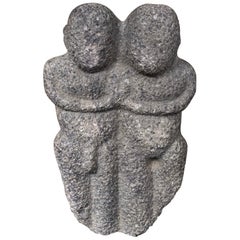
Chinese Ancient Hongshan Culture Pregnant Female Fertility Sculpture 4700-2900BC
Located in South Burlington, VT
China, a fine archaic conjoined bust sculpture of a male and female hand carved from a granular medium to dark gray stone. Neolithic period, Hongshan culture (circa 4700-2900 BC)
Likely a fertility - progeny sculpture. Please note the pecked surfaces and the stone carved hair line particularly on the back head area.
Quality: Fine original condition, no repairs, as collected. Dark varied patina from appropriate age.
This is likely a unique carving.
Dimensions: 12.25 inches tall and 4.25 inches width.
About Hongshan Culture:
The Hongshan culture was a Neolithic culture in northeastern China. Hongshan sites have been found in an area stretching from Inner Mongolia to Liaoning, and dated from about 4700-2900 BC. The culture is named after Hongshanhou, a site in Hongshan District, Chifeng. The Hongshanhou site was discovered by the Japanese archaeologist Torii Ryuzo in 1908 and extensively excavated in 1935 by Kosaku Hamada and Mizuno Seiichi.
Provenance:
Our private collection and accompanied by our Lifetime Guarantee of Authenticity. Originally collected in the area of Chifeng City, Inner Mongolia.
In addition, our Hongshan stone effigy...
Category
Antique 15th Century and Earlier Chinese Antiquities
Materials
Stone
$500,000
H 12.25 in W 4.25 in D 3 in
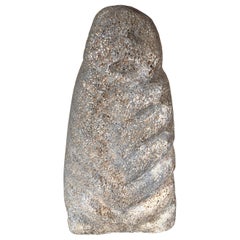
Chinese Ancient Hongshan Culture Stone Sculpture, 4700-2900 BC
Located in South Burlington, VT
China, a fine archaic human effigy hand-carved from a granular medium to dark gray volcanic stone with six (6) "V" sections carved front. Neolithic period, Hongshan culture...
Category
Antique 15th Century and Earlier Chinese Antiquities
Materials
Stone
$6,800 Sale Price
54% Off
H 14 in W 7 in D 5 in
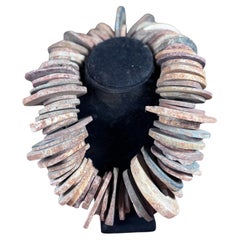
Chinese Cache Ancient Heavenly Green Jade Bi , 94 pieces
Located in South Burlington, VT
This is a guaranteed authentic ancient Chinese jade bi cache of ninety four (94) discs from the Qijia culture, Northwestern China, circa 3000-2000 BCE.
Including Our Certificate of ...
Category
Antique 15th Century and Earlier Chinese Antiquities
Materials
Jade
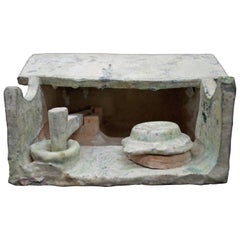
Eastern Han Dynasty Terracotta Barn Workshop, China
206BC - 220AD
Ex-Museum
Located in San Pedro Garza Garcia, Nuevo Leon
Slab pottery constructed barn workshop having a peaked roof – open walled form with a mechanical pounder and a large round covered storage container. Light blue-green mottled glazed surface with some iridescence patina to the glaze.
Condition: Intact, excellent condition, an unusual example.
Provenance: The Living Torah Museum, Brooklyn; ex. Sands of Time, 2002.
Sculptural effigies of domesticated animals were often interred in the tombs of nobility and elite members of the social hierarchy. Models like this one were made to represent everything from simple goat or pig pens to the most elaborate towers and palaces. Because very few ancient Chinese buildings have survived intact, these models, along with descriptions from ancient texts, give a good representation of what the buildings might have looked like.
This fantastic piece is accompanied by a Certificate of Authenticity.
Burial figurines of graceful dancers, mystical beasts, and everyday objects reveal both how people in early China approached death and how they lived. Since people viewed the afterlife as an extension of worldly life, these figurines, called mingqi, sometimes referred as “spirit utensils” or “vessels of ghosts” disclose details of routine existence and provide insights into belief systems over a thousand-year period. For the first time in Chinese history, we have images of rural and daily life during the Han in the form of contemporary...
Category
Antique 15th Century and Earlier Chinese Han Antiquities
Materials
Terracotta
$4,375
H 5 in W 9 in D 7.5 in
More From This Seller
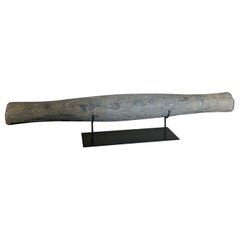
View AllBiconvex Bronze Age Bactrian stone Idol
Located in Vosselaar, BE
A Bactrian biconvex stone idol. Alongside column and figurative idols these intriguing objects belong to the Bactria-Margana culture. An ancient civilization dating between the 3th a...
Category
Antique 15th Century and Earlier Afghan Antiquities
Materials
Slate
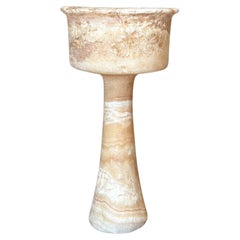
Large Bactrian Bronze Age Alabaster Chalice
Located in Vosselaar, BE
Bactrian alabaster chalice, circa 3000-2000 BC. It has an elegant tapering formed base with a undeep rimmed cup. The alabaster is strikingly vained. ...
Category
Antique 15th Century and Earlier Afghan Archaistic Antiquities
Materials
Alabaster
Bactrian Marble Column Idol
Located in Vosselaar, BE
Bactrian marble column idol, circa 3000-2000 Bc. It has a elegant tapering form with a undeep groove running on the top and bottom. The marble is a breccia type with striking vains i...
Category
Antique 15th Century and Earlier Afghan Archaistic Antiquities
Materials
Marble
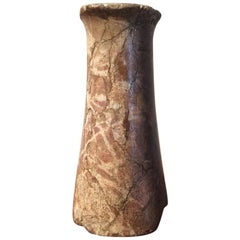
Prehistoric Stargazer Marble Head
Located in Vosselaar, BE
A small, Prehistoric Anatolian marble head of the kiliya type. Of highly stylized geometric form, the marble head is elliptical, with a faintly defined nos...
Category
Antique 15th Century and Earlier Turkish Prehistoric Antiquities
Materials
Marble
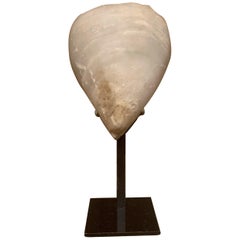
Ancient Bactrian Marble Idol Staff Sceptor
Located in Vosselaar, BE
A large Bactrian marble staff circa late 3rd-2nd millennium BCE. The Bactrian culture was discovered by Soviet archeologists in the 1970s in Afghanistan. Also called the Oxus culture...
Category
Antique 15th Century and Earlier Afghan Antiquities
Materials
Marble
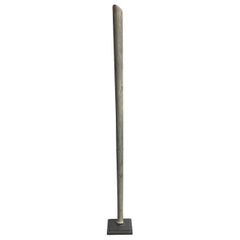
Bactrian Bronze Age Marble Column Idol
Located in Vosselaar, BE
Bactrian marble column idol, circa 3000-2000 BC. It has an elegant tapering form with a undeep groove running on the top. The colomn has incrustation on the side where it laid on the...
Category
Antique 15th Century and Earlier Afghan Archaistic Antiquities
Materials
Marble

Still Thinking About These?
All Recently ViewedMore Ways To Browse
Ship Tansu
Mamluk Box
Asian Silver Belt
Ancient Roman Artefact
Black Female Buddha Sculpture
Bronze Bracelet Cambodia
Chinese Inlaid Trays
Chinese Lotus Shoes
Chinese Pewter Plate
Dinosaur Statue
Han Dynasty Pig
Indian Stone Head
Japanese Reed Screens
Kimekomi Dolls
Leather Rice Paddy Shoes
Luristan Dagger
Old Pottery Dog
Reuge Bird Box