Items Similar to Chimera (Pixiu) Terracotta Mythological Being - Tang Dynasty, China
618-907 AD
Want more images or videos?
Request additional images or videos from the seller
1 of 10
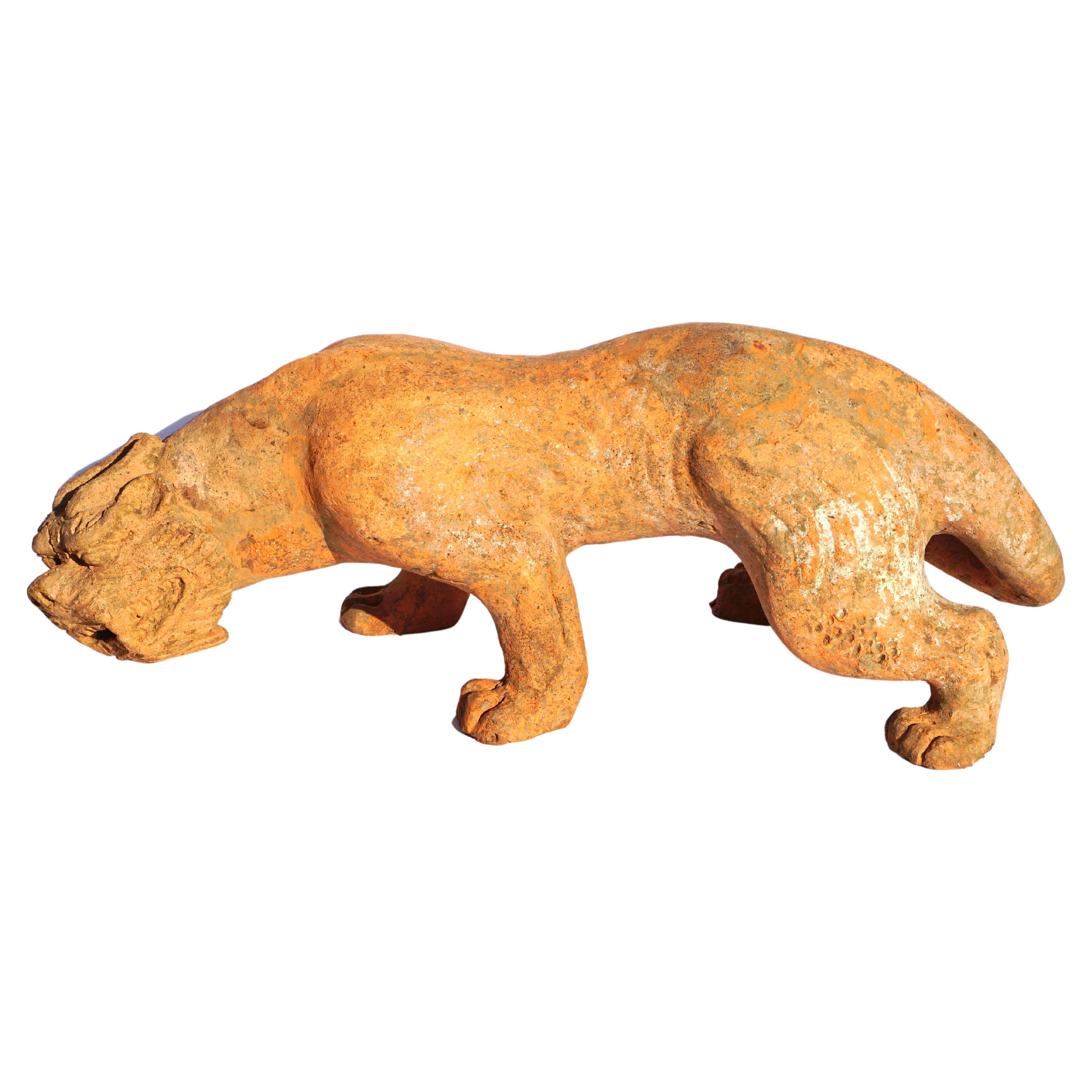
Chimera (Pixiu) Terracotta Mythological Being - Tang Dynasty, China
618-907 AD
$10,200
£7,770.71
€8,868.21
CA$14,333.41
A$15,620.90
CHF 8,271.94
MX$187,623.45
NOK 104,724.58
SEK 96,283.95
DKK 66,235.72
About the Item
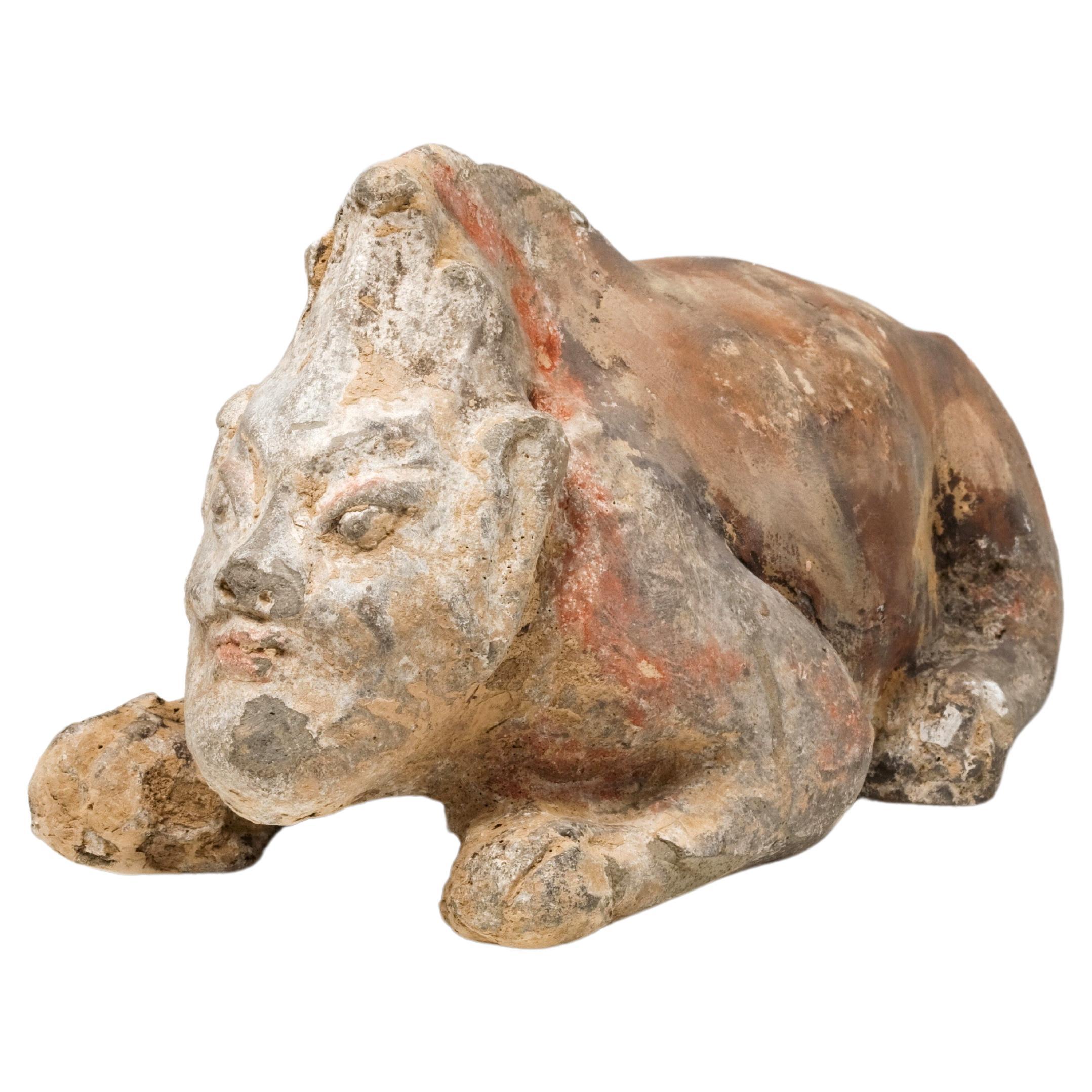
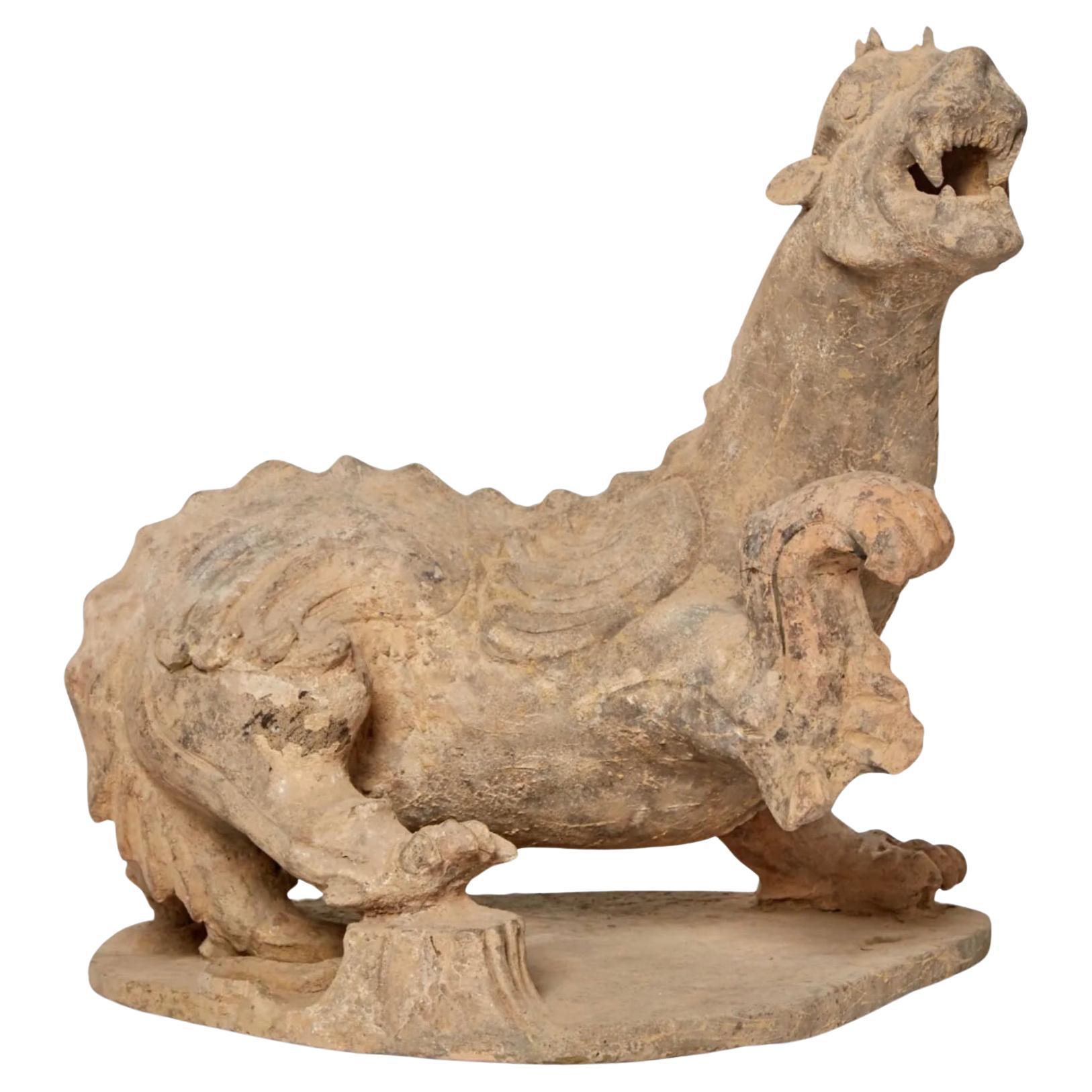
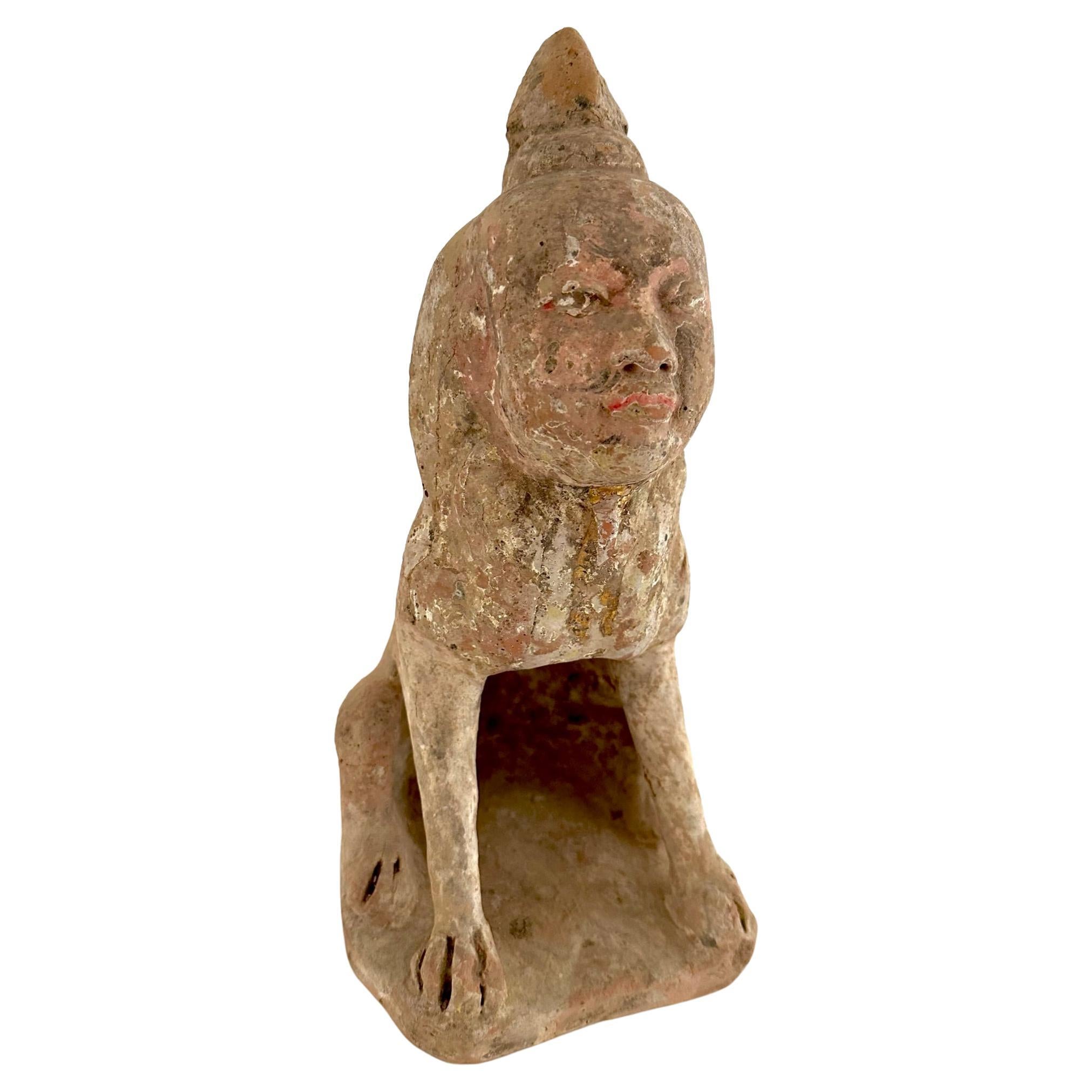
Magnificent Mythological Being "Chimera" with Human Face and Flaming Rays Halo. Orange Terracotta with Traces of Stucco and Painting.
This creature is commonly known as Pixiu. Fierce looking and covered with whitish-grey fur, Pixiu, are a type of auspicious, winged animal, written about in ancient Chinese history and heralded through the millennia by fantastic stories of powerful and grandiose feats of victory in battle. Their fantastic legend has been passed down through two-thousand years of Chinese lore. They have the powerful head of a Chinese dragon, the bold body of a lion and, historically, depending on whether it is a male or female, sports on its head either one antler (male) or two antlers (female).
It was believed that the ferociously devoted Pixiu would always and constantly guard its Master, even after he passed from this life into the next world. It was also believed that Pixiu would help their Masters ascend to heaven by flying them up to Heaven while they rode on their strong backs.
This gorgeous piece is accompanied by the following documents:
- European Passport
- Certificate of Expertise by Jean-Yves Nathan - a leading authority specialized in Far East Archaeology from the CEDEA (The European Confederation of Art Experts).
- Certificate of Authenticity
Burial figurines of graceful dancers, mystical beasts, and everyday objects reveal both how people in early China approached death and how they lived. Since people viewed the afterlife as an extension of worldly life, these figurines, called mingqi, sometimes referred as “spirit utensils” or “vessels of ghosts” disclose details of routine existence and provide insights into belief systems over a thousand-year period.
When China was unified again, first briefly under the Sui and then under the long and prosperous Tang, mingqi truly resurged as a part of elaborate tombs. Tang mingqi integrated the guardian figures and pack animals of the Northern and Southern Dynasties, but also incorporated the many international influences that were popular during this time of stability and expansion. Following Han dynasty traditions, Tang mingqi frequently take the form of musicians, dancers, and servants in clay, but are ornamented with sancai (three-color) glaze, an artistic influence that was transmitted from Central Asia along the Silk Road. Foreigners were also frequently depicted, reflecting a cosmopolitan society that embraced exchanges with other groups and cultures.
- Dimensions:Height: 13.78 in (35 cm)Width: 11.82 in (30 cm)Depth: 3.94 in (10 cm)
- Style:Tang (Of the Period)
- Materials and Techniques:
- Place of Origin:
- Period:
- Date of Manufacture:618-907 AD
- Condition:Wear consistent with age and use.
- Seller Location:San Pedro Garza Garcia, MX
- Reference Number:Seller: CH-0721stDibs: LU3172310959781
About the Seller
3.7
Vetted Professional Seller
Every seller passes strict standards for authenticity and reliability
1stDibs seller since 2017
24 sales on 1stDibs
- ShippingRetrieving quote...Shipping from: Laredo, TX
- Return Policy
More From This Seller
View AllTang Dynasty Imposing Terracota Lokapala Standing in Menacing Pose - TL Tested
Located in San Pedro Garza Garcia, Nuevo Leon
Imposing Lokapala figure standing in menacing pose. Terracotta with traces of old color pigments. China, Tang dynasty (618-907 AD.) Museum piece.
Lokapalas according to the Buddhist...
Category
Antique 15th Century and Earlier Tang Antiquities
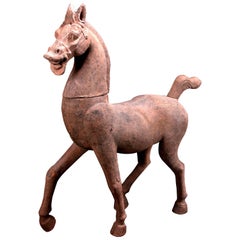
Monumental Han Dynasty Terracotta Horse - TL Tested - China,
206 BC–220 AD
Located in San Pedro Garza Garcia, Nuevo Leon
A massive pottery horse with separately made head and tail, standing on all fours and striding with its right hoof forward. Extended snout ends in parted lips showing teeth beneath i...
Category
Antique 15th Century and Earlier Chinese Han Antiquities
Materials
Terracotta
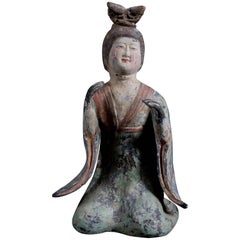
Tang Dynasty Expressive Imperial Court Singer - TL Tested
Located in San Pedro Garza Garcia, Nuevo Leon
Very expressive Imperial Court singer dressed in elegant ceremonial robes with long sleeves and hands in motion. Gray terracotta. Thermoluminescense Test by Ralph Kotalla Lab NE: 05K091003 (Worldwide oldest private laboratory specialized in TL testing...
Category
Antique 15th Century and Earlier Tang Antiquities
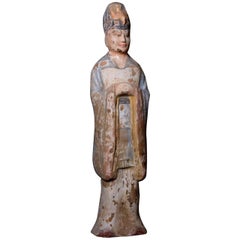
Very Elegant Tang Dynasty Dignitary in Orange Terracotta, China
618-907 AD
Located in San Pedro Garza Garcia, Nuevo Leon
Very elegant terracotta dignitary in blue and red robes standing with the hands joined at the chest. He wears a blue headdress with a bird at its center. Orange Terracotta
This gorg...
Category
Antique 15th Century and Earlier Chinese Tang Antiquities
Materials
Terracotta
Elegant Han Dynasty Terracotta Warrior - China
206 BC - 220 AD
Located in San Pedro Garza Garcia, Nuevo Leon
Impressive terracotta warrior representing a banner bearer gripping a wooden staff with his hands (dematerialized through the ages); his gaze is ser...
Category
Antique 15th Century and Earlier Chinese Han Antiquities
Materials
Terracotta
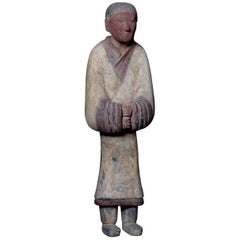
Han Dynasty Standing Horse Trainer “Palafrenieri”
Located in San Pedro Garza Garcia, Nuevo Leon
Huge hollow molded terracotta, standing male figure wearing a hip-length multi-layered robe with a collared neck. Implements suspended from his waist, holding a staff in his right ha...
Category
Antique 15th Century and Earlier Han Antiquities
Materials
Terracotta
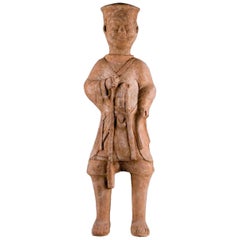
You May Also Like
Guardian(Half human half beast) Pottery Figure, Northern Wei-Tang Dynasty
Located in seoul, KR
This guardian figure represents a fusion of human and beast, a common motif symbolizing protection in Chinese lore. Crafted from pottery, the figure is a testament to the era's sculp...
Category
Antique 15th Century and Earlier Hong Kong Han Antiquities
Materials
Pottery
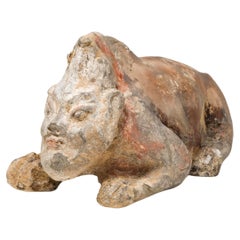
Han Dynasty Pottery Mythical Bixie Beast TL Tested
Located in Dallas, TX
A Large Chinese Pottery Mythical Creature Figure from the Han Dynasty
China. Western Han Dynasty Circa 25 - 220
TL tested estimated age 1800 years old (+/- 200) by Artemis Testing ...
Category
Antique 15th Century and Earlier Chinese Han Animal Sculptures
Materials
Pottery
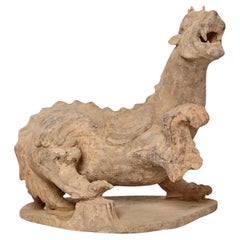
Chinese Tang Dynasty Earth Spirit
Located in Atlanta, GA
This beautiful Tang dynasty earth spirit with human face and animal body is crafted with terracotta and paint.
This semi-human spirit figure is seated on its haunches with cloven hoo...
Category
Antique 15th Century and Earlier Chinese Ceramics
Materials
Ceramic, Paint
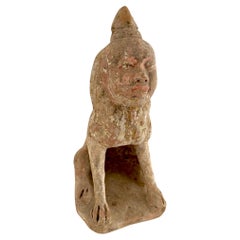
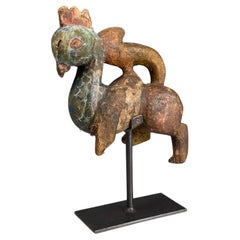
19th Century Chinese Mythical Animal Carving – Rooster Horse with Dragon Tail
Located in Lincoln, GB
19th Century Chinese Mythical Animal Carving – Rooster Horse with Dragon Tail
This rare and captivating 19th-century Chinese carved wooden figure depicts a mythical animal – a unique...
Category
Antique 19th Century Antiquities
Materials
Silk, Wood
$431 Sale Price
20% Off
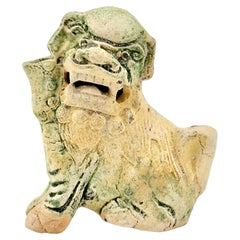
Haitai Figurine from Ca Mau Ship circa 1725, Qing Dynasty, Yongzheng Era
Located in seoul, KR
The green-glazed beasts seated on their haunches, a short spout beside their turned heads, their mane and tail splashed with yellow or brown glaze
Period : Qing Dynasty, Yongzheng P...
Category
Antique 1720s Vietnamese Chinoiserie Antiquities
Materials
Pottery
Han Dynasty Pottery Sculpture of a Winged Lion Bixie Mythical Beast TL Tested
Located in Dallas, TX
A Large Han Dynasty Terracotta sculpture of a Mythical Beast. TL Tested
I cant emphasize how rare this item is and predict it will not last long. The condition is extraordinary with...
Category
Antique 15th Century and Earlier Chinese Han Animal Sculptures
Materials
Pottery