Want more images or videos?
Request additional images or videos from the seller
1 of 17
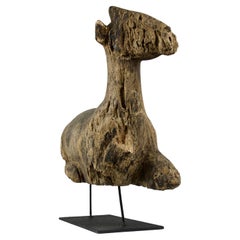
Chinese Han Dynasty 202 BC-200 AD Mingqi Camel with Original Orange Paint
$3,500List Price
About the Item
- Dimensions:Height: 14 in (35.56 cm)Width: 11 in (27.94 cm)Depth: 5 in (12.7 cm)
- Style:Han (Of the Period)
- Materials and Techniques:
- Place of Origin:
- Period:
- Date of Manufacture:circa 202 BC-200 AD
- Condition:Wear consistent with age and use. Age appropriate wear. Please look at the various photos available.
- Seller Location:Yonkers, NY
- Reference Number:Seller: YN3074 / FEA Home1stDibs: LU863919771872
About the Seller
5.0
Platinum Seller
Premium sellers with a 4.7+ rating and 24-hour response times
Established in 1964
1stDibs seller since 2009
1,250 sales on 1stDibs
Typical response time: 1 hour
Authenticity Guarantee
In the unlikely event there’s an issue with an item’s authenticity, contact us within 1 year for a full refund. DetailsMoney-Back Guarantee
If your item is not as described, is damaged in transit, or does not arrive, contact us within 7 days for a full refund. Details24-Hour Cancellation
You have a 24-hour grace period in which to reconsider your purchase, with no questions asked.Vetted Professional Sellers
Our world-class sellers must adhere to strict standards for service and quality, maintaining the integrity of our listings.Price-Match Guarantee
If you find that a seller listed the same item for a lower price elsewhere, we’ll match it.Trusted Global Delivery
Our best-in-class carrier network provides specialized shipping options worldwide, including custom delivery.You May Also Like
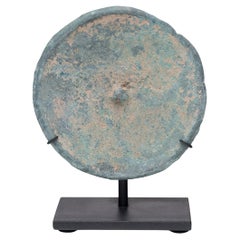
Chinese Han Dynasty Bronze Mirror, c. 200 BC
Located in Chicago, IL
Cloaked in allover verdigris oxidization, this Chinese bronze mirror has the simple beauty and undeniable texture of an ancient object. Though an exact date is unknown, the mirror's ...
Category
Antique 15th Century and Earlier Chinese Han Metalwork
Materials
Bronze
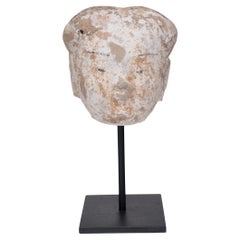
Chinese Mingqi Attendant Head, Han Dynasty
Located in Chicago, IL
This petite ceramic bust is the head of a Han dynasty (206 B.C. to 220 A.D.) figure of a personal attendant. A type of burial figurine known as míngqì, the attendant would have been ...
Category
Antique 15th Century and Earlier Chinese Han Sculptures and Carvings
Materials
Ceramic
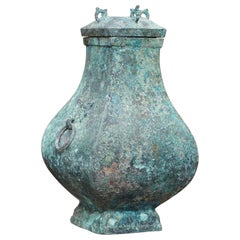
Fanghu Han Dynasty 206BC-220AD Chinese Bronze Ritual Wine Vessel Jug
Cover
Located in West Sussex, Pulborough
We are delighted to offer for sale this exceptionally important and highly collectable museum quality original Chinese bronze ritual wine vessel and...
Category
Antique 15th Century and Earlier Chinese Han Antiquities
Materials
Bronze
$40,988
H 13.78 in W 7.29 in D 7.68 in
Petite Han Dynasty Bronze Mirror, c. 200 BC
Located in Chicago, IL
This petite Chinese bronze mirror has the simple beauty and undeniable texture of an ancient object. Though an exact date is unknown, the mirror's round form and relief decoration s...
Category
Antique 15th Century and Earlier Chinese Han Metalwork
Materials
Bronze
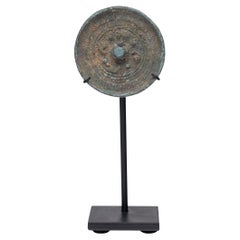
Petite Han Dynasty Bronze Mirror, c. 200 BC
Located in Chicago, IL
Cloaked in allover verdigris oxidization, this petite Chinese bronze mirror has the simple beauty and undeniable texture of an ancient object. Though an exact date is unknown, the mi...
Category
Antique 15th Century and Earlier Chinese Han Metalwork
Materials
Bronze
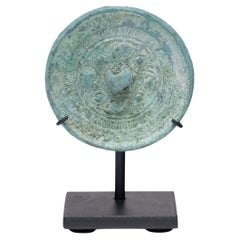
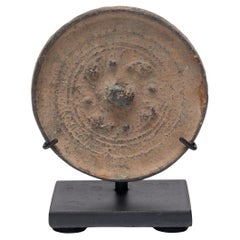
Petite Han Dynasty Bronze Mirror, c. 200 BC
Located in Chicago, IL
This petite Chinese bronze mirror has the simple beauty and undeniable texture of an ancient object. Though an exact date is unknown, the mirror's round form and relief decoration su...
Category
Antique 15th Century and Earlier Chinese Han Metalwork
Materials
Bronze
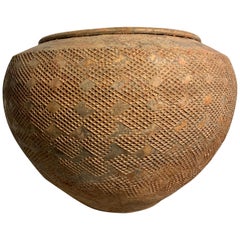
Massive Chinese Eastern Han Dynasty Impressed Pottery Jar
25-220 AD
Located in Austin, TX
A stunning and massive Chinese high fired gray pottery jar of remarkable size and girth, with impressed geometric design, Eastern Han Dynasty (25-220 AD), ...
Category
Antique 15th Century and Earlier Chinese Han Antiquities
Materials
Pottery
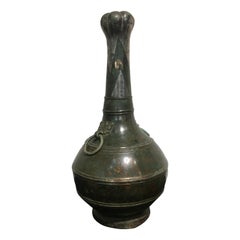
Chinese Han Dynasty Silver-Decorated Garlic Head Bronze Hu Vase, 3rd Century BC
Located in Austin, TX
A gorgeous and striking late Warring States (475 to 221 BC) or early Han Dynasty (221 to 206 BC) cast bronze and silver-decorated garlic head hu vessel.
Of elegant bottle form, w...
Category
Antique 15th Century and Earlier Chinese Han Antiquities
Materials
Bronze
$15,000
H 16.5 in W 8 in D 8 in
Han Dynasty, Laying Doe Wood Sculpture, China 100AD
Located in PARIS, FR
Superb sculpture of a laying doe from the Chinese Han Dynasty (206BC-220AD). Remainders of polychromic paint, namely red, symbol of good fortune and joy as well as the season of summer, and green, symbol of vigor and vitality and the season of spring. Mounted on base.
A similar sculpture in bronze is kept at the Met Museum with the following description " A low bed, small table, and screen were often the only furnishings in a Han-dynasty room. The floors were generally covered with mats kept in place with weights in the shape of single animals, fighting beasts, or entertainers."
Condition seen in pictures.
Dimensions in cm ( H x L x l ) :
- Sculpture : 35 x 40 x 10
- With base : 45.5 x 44 x 15
The Han Dynasty ruled China from 206 B.C. to 220 A.D. and was the second imperial dynasty of China. It is known for its promotion of Confucianism as the state religion and opening the Silk Road trade route to Europe, permanently altering the course of Chinese history. Han Dynasty art and inventions like paper still influence the world today.
From the Han Dynasty to the present, deer can be found in many materials and media—rock crystal, nephrite, ink on paper, porcelain, cloisonné enamel, jade, bamboo root, textile, bronze, etc.—alone or in groups, among trees and rocks and in various positions. They appear on everyday objects, from boxes to incense burners, incense holders, lamps, mirror holders and the droppers scholars used when they wrote. A symbol of longevity and grace in Chinese mythology, the word deer is pronounced lu, a homonym for emoluments—favors granted to officials. They therefore represent wealth, nobility and success in imperial examinations (civil service exams for selecting candidates for the state bureaucracy in Imperial China).
Deer were the faithful companions of Shu Lao, the god of longevity, and the goddess Magu. They were reputed to live long and to be the only creature able to find the mushroom of immortality, linghzhi. Although its spots are different, deer are sometimes confused or associated with stags, a Manchu hunting trophy whose antlers served to make prestigious furniture. (La Gazette Drouot, Claire Papon)
For the colours found on this piece, in Chinese culture, red symbolizes good fortune and joy. Green, symbolizes the spring when everything is brimming over with vigor and vitality.
The Han Dynasty (206 B.C. to 220 A.D.) continued the Qin Dynasty’s use of dark colours, but incorporated red. During the earlier years, or Western Han Dynasty, ordinary people wore red while court dress was black. Shoes were red in color. The clothing worn for sacrificial rites was black edged with red. In the later Eastern Han Dynasty, red symbolized the dynasty’s “fire Virtue” and became predominant. Court dress was red. Sacrificial rites called for a red-edged white layer under robes with red socks...
Category
Antique 15th Century and Earlier Chinese Han Mounted Objects
Materials
Wood
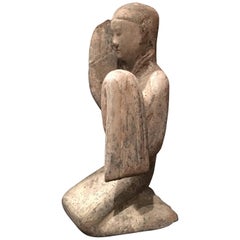
Han Dynasty Gray Pottery Figure of a Female Kneeling Long Sleeve Dancer
Located in Austin, TX
A stunningly quiet and elegant Western Han dynasty (206 BCE - 9 CE) high fired gray pottery figure of a female long sleeved dancer.
The young dancer is portrayed in a moment of quie...
Category
Antique 15th Century and Earlier Chinese Han Antiquities
Materials
Earthenware
$26,000
H 13.75 in W 7 in D 5.5 in
More From This Seller
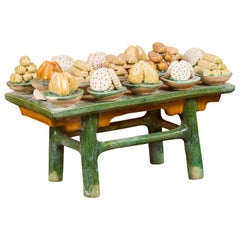
View AllMing Dynasty Glazed Terracotta Funeral Table Mingqi with Miniature Food Offering
Located in Yonkers, NY
A Ming dynasty period glazed terracotta funeral table mingqi from 15th-16th century with food in dishes. This rare Ming dynasty period glazed terracotta funeral table, dating from the 15th to 16th century, beautifully embodies the traditional Chinese practice of creating Mingqi—terracotta models meant to assist the deceased in the afterlife. This piece depicts a typical Chinese altar, adorned with green tempera glaze and meticulously crafted miniature foods, such as cakes and breads, representing offerings. The modeled and painted details give a glimpse into the customs of wealthy Chinese burials...
Category
Antique 16th Century Chinese Ming Antiquities
Materials
Terracotta
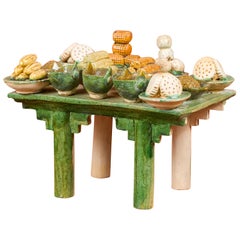
Ming Dynasty 15th-16th Century Glazed Terracotta Funeral Table with Food Mingqi
Located in Yonkers, NY
A Ming dynasty period glazed terracotta funeral table mingqi from 15th-16th century with food and drinks. Created during the Ming Dynasty, this glazed terracotta funeral table, known...
Category
Antique 16th Century Chinese Ming Antiquities
Materials
Terracotta
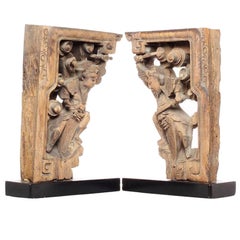
Pair of 19th Century Chinese Hand-Carved Temple Corbels with Characters
Located in Yonkers, NY
A pair of 19th century Chinese hand-carved temple corbels featuring stylized characters. Each corbel showcases a great wood openwork carving featuring a...
Category
Antique 19th Century Chinese Antiquities
Materials
Wood
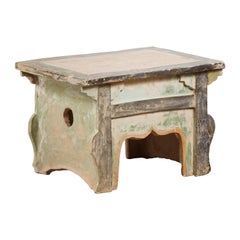
Petite Chinese Ming Dynasty Period Glazed Pedestal with Polychrome Finish
Located in Yonkers, NY
A petite Chinese Ming Dynasty glazed pedestal from the 15th or 16th century with polychrome finish. Crafted in China during the prestigious Ming Dynasty, this petite pedestal table...
Category
Antique 16th Century Chinese Ming Antiquities
Materials
Ceramic
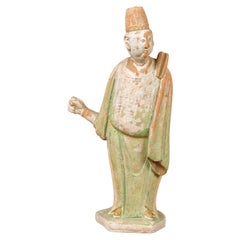
Chinese Ming Dynasty Terracotta Courtsman Statuette with Original Polychromy
Located in Yonkers, NY
A Chinese Ming Dynasty painted terracotta courtsman figure with original polychromy. Attracting our eye with its weathered appearance and subtle polychromy, this Ming Dynasty terracotta courtsman figure exudes historical charm and elegance. This exquisite statuette, dating from the Chinese Ming Dynasty, features a courtsman resting on a hexagonal base, providing a stable and aesthetically pleasing foundation. Topped with a simple headdress and clothed in a long, flowing robe, the figure showcases a slight movement of the hips, creating a sense of liveliness and grace.
His right arm is extended in a gesture, while his left arm remains hidden under his clothes, adding an element of mystery and sophistication. The original polychromy, though weathered, adds a touch of vibrant color that enhances the figure's visual appeal and historical authenticity.
This Chinese courtsman figure will make for an exquisite decorative addition to any home. Its refined elegance and rich cultural heritage make it a versatile piece, perfect for placing on a commode, side table, or shelf. Whether in a living room, study, or entryway, this Ming Dynasty figure will bring a touch of ancient Chinese artistry and timeless beauty to any interior space.
With its harmonious blend of form and function, this painted terracotta courtsman figure celebrates the enduring appeal of Ming Dynasty art...
Category
Antique 17th Century Chinese Ming Sculptures and Carvings
Materials
Terracotta
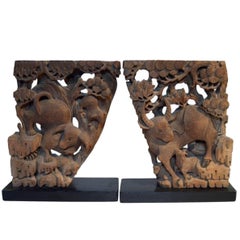
Pair of Antique Hand-Carved Wood Temple Corbels from 18th Century, China
Located in Yonkers, NY
A pair of Chinese 18th century hand-carved wooden temple corbels. Each corbel features detailed animals, shells, and other adornments among openwork fol...
Category
Antique 18th Century Chinese Antiquities
Materials
Wood
Still Thinking About These?
All Recently ViewedMore Ways To Browse
Ship Tansu
Mamluk Box
Asian Silver Belt
Dragon Rope
Black Female Buddha Sculpture
Bronze Bracelet Cambodia
Chinese Inlaid Trays
Chinese Lotus Shoes
Chinese Pewter Plate
Dinosaur Statue
Han Dynasty Pig
Indian Stone Head
Japanese Reed Screens
Kimekomi Dolls
Leather Rice Paddy Shoes
Luristan Dagger
Old Pottery Dog
Reuge Bird Box