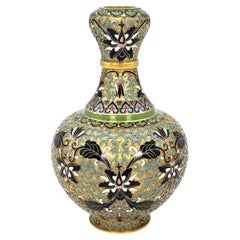
Items Similar to Cloisonné Enamel Ewer, Ming-Qing Period
Want more images or videos?
Request additional images or videos from the seller
1 of 10
Cloisonné Enamel Ewer, Ming-Qing Period
$5,000
£3,798.77
€4,365.58
CA$7,023.11
A$7,644.48
CHF 4,050.54
MX$91,936.46
NOK 51,501.55
SEK 47,195.47
DKK 32,610.61
About the Item
This cloisonné ewer features a brass body covered with turquoise-toned enamel and densely arranged lotus and floral motifs. The spout and handle are shaped in the form of a phoenix or crane, and the wide pedestal base and domed lid create a balanced and decorative silhouette. The coloration and sheen of the enamel, together with the oxidation of the metal wires and the aged surface patina, all indicate that the piece has considerable age.
The base bears the inscription “Da Ming Jingtai Nianzhi”, which may refer either to the Ming Jingtai period or to a later use of a Ming-style mark. Both possibilities should remain open. In overall style, color, and technique, the piece aligns with cloisonné traditions that continued from the Ming into the Qing dynasty, and its precise dating requires consideration of both potential contexts.
Period: Ming-Qing Dynasty
Type: Vase
Medium: Cloisonné Enamel
Height: 34 cm (Diameter 7.5cm)
Provenance: The piece was acquired in Japanese Gallery in the year mid-2000.
Condition: Excellent, with slight staining
Reference : Liveauctioneer - LOUIS J. DIANNI, LLC Auction - May 23, 2016 - Ming Dynasty Cloisonne Tea Pot, 15th century
(Price realised : 3,500 USD / Type : Closely related)
* Cloisonné Enamel
Cloisonné enamel is created by forming compartments on a metal body and filling them with colored enamels that are fired to produce a glossy, durable surface. In assessing such pieces, key factors include the thickness and consistency of the metal wires, the depth and clarity of the enamel colors, the texture and sheen of the surface, and signs of natural oxidation or aging on the metal. These features help determine both the period of manufacture and the level of craftsmanship.
In addition, the arrangement of motifs, overall proportion, base finishing, and color composition are essential for identifying the production region and stylistic lineage. Northern cloisonné typically shows deeper tones and more balanced, formal layouts, while southern cloisonné tends to favor brighter palettes and more decorative designs. Evaluating these elements collectively is central to determining authenticity, quality, and dating in cloisonné enamel works.
- Dimensions:Height: 13.19 in (33.5 cm)Diameter: 2.96 in (7.5 cm)
- Materials and Techniques:
- Place of Origin:
- Period:
- Date of Manufacture:Ming-Qing Dynasty
- Condition:Minor fading.
- Seller Location:seoul, KR
- Reference Number:1stDibs: LU9577247660872
About the Seller
4.8
Vetted Professional Seller
Every seller passes strict standards for authenticity and reliability
Established in 1999
1stDibs seller since 2023
46 sales on 1stDibs
Typical response time: 1 hour
- ShippingRetrieving quote...Shipping from: seoul, Korea South
- Return Policy
More From This Seller
View AllCloisonné Vase, Qing Period, 19th Century
Located in seoul, KR
Cloisonné enamel vase of baluster form and lobed sides decorated with foliage and flowers on a black background, gilt copper neck and base. Around 1900
Period: Qing Dynasty
Type: Va...
Category
Antique 19th Century Hong Kong Qing Antiquities
Materials
Enamel
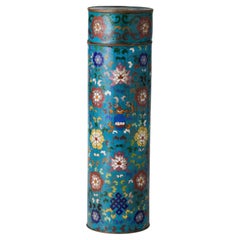
Cloisonné Enamel Vase, Ming-Qing Dynasty
Located in seoul, KR
This cylindrical cloisonné vessel is made with a brass body filled with turquoise-toned enamels that are fired to create a vivid, multi-colored surface. The exterior is densely decor...
Category
Antique 15th Century and Earlier East Asian Ming Antiquities
Materials
Bronze, Enamel
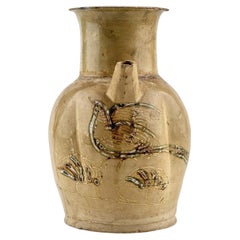
Changsha ewer, Tang Dynasty(618-907)
Located in seoul, KR
Changsha Ware has distinct and recognizable designs and motifs. Painted designs often depict flowers, vines, clouds and mountain landscapes. Some painting is simply splotches of colo...
Category
Antique 15th Century and Earlier Hong Kong Tang Antiquities
Materials
Stoneware
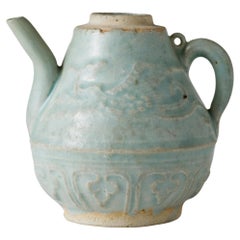
Qingbai ewer with slip decoration of two phoenix and lotus leaves, Yuan Dynasty
Located in seoul, KR
This small ewer is an exquisite example of Qingbai ware, known for its pale blue-tinged glaze. The vessel showcases the advanced ceramic techniques and artistic sophistication of the...
Category
Antique 15th Century and Earlier Hong Kong Antiquities
Materials
Ceramic, Porcelain
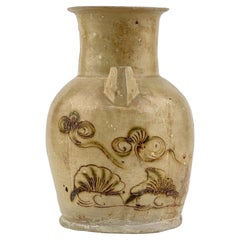
Changsha ewer, Tang Dynasty(618-907)
Located in seoul, KR
Changsha Ware has distinct and recognizable designs and motifs. Painted designs often depict flowers, vines, clouds and mountain landscapes. Some painting is simply splotches of colo...
Category
Antique 15th Century and Earlier Hong Kong Tang Antiquities
Materials
Stoneware
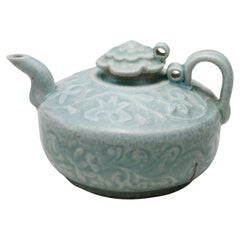
Rare Qingbai Carved Ewer, Song-Yuan Dynasty
Located in seoul, KR
This Qingbai ewer features a rounded body with smooth curves, a short spout, and a looped handle, presenting a harmonious and balanced form. The lid is adorned with a flower-shaped f...
Category
Antique 15th Century and Earlier Hong Kong Antiquities
Materials
Ceramic
You May Also Like
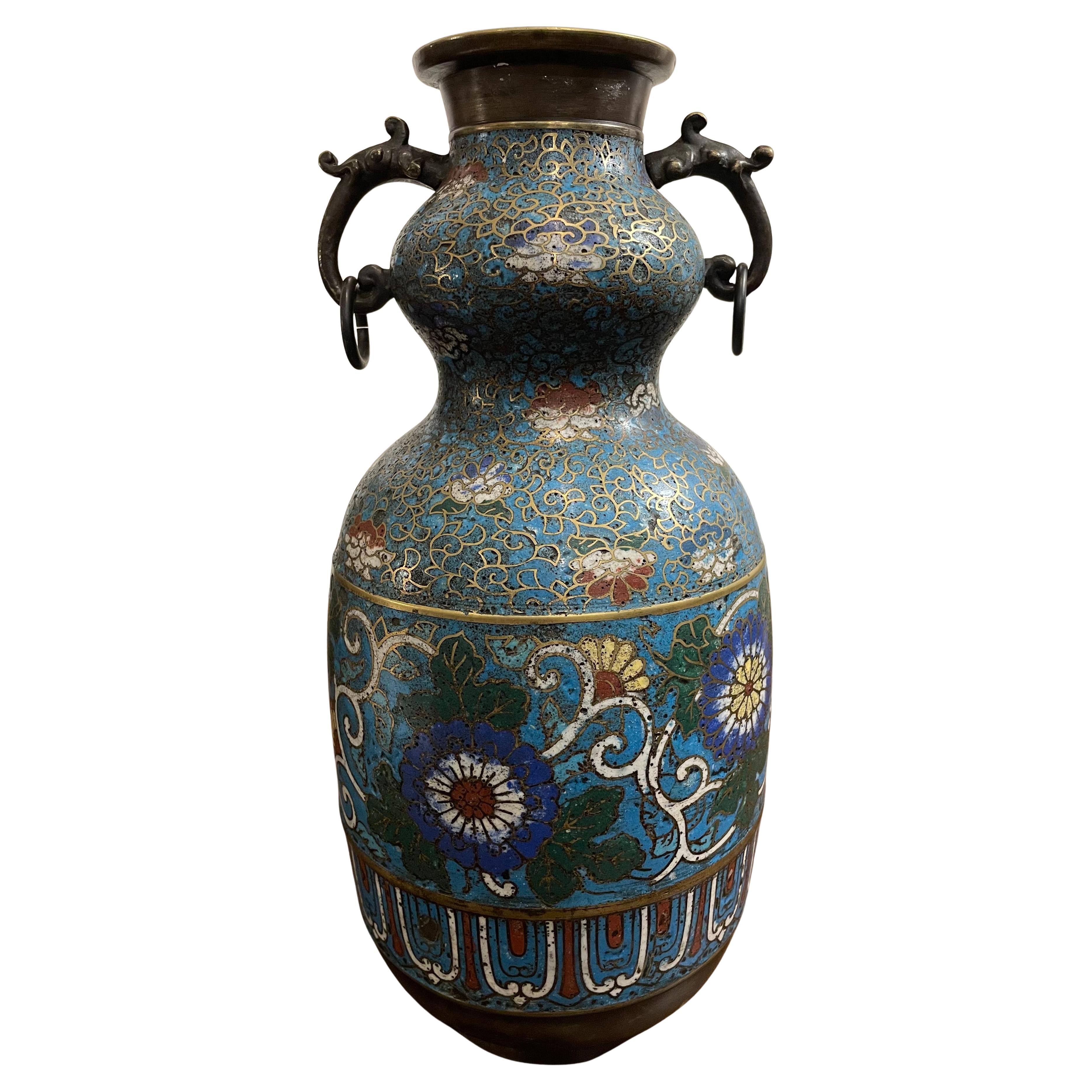
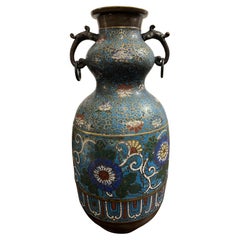
An Unusual Chinese Cloisonne Vase with Elephant Shaped Handles, 19th Century
Located in ARMADALE, VIC
An Unusual Chinese Cloisonne Vase with Elephant Shaped Handles, 19th Century
Home decor, Interior design and collectibles.
Provenance: Private Perth Collection.
Dimension:
Height: ...
Category
Antique 19th Century Chinese Qing Metalwork
Materials
Bronze
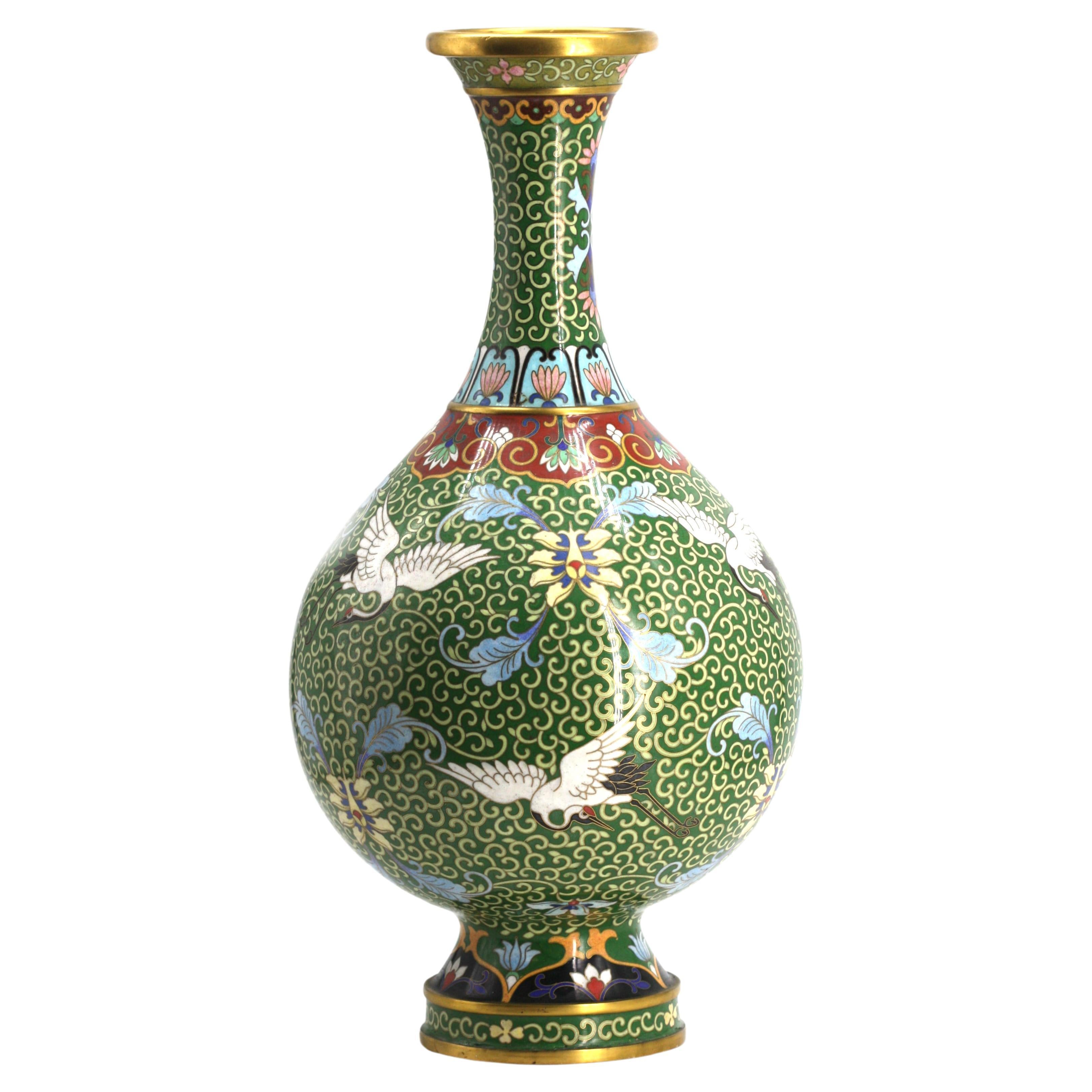
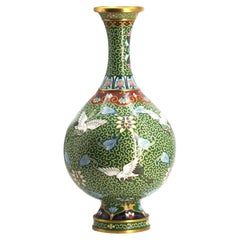
Chinese Cloisonne Enamel Vase
Located in West Palm Beach, FL
Chinese Cloisonne Enamel Vase
The spherical body with a long cylindrical neck, on a raised circular foot, decorated with cranes and foliage on a green ground.
Height 15.5 in. Diamet...
Category
20th Century Antiquities
Materials
Enamel
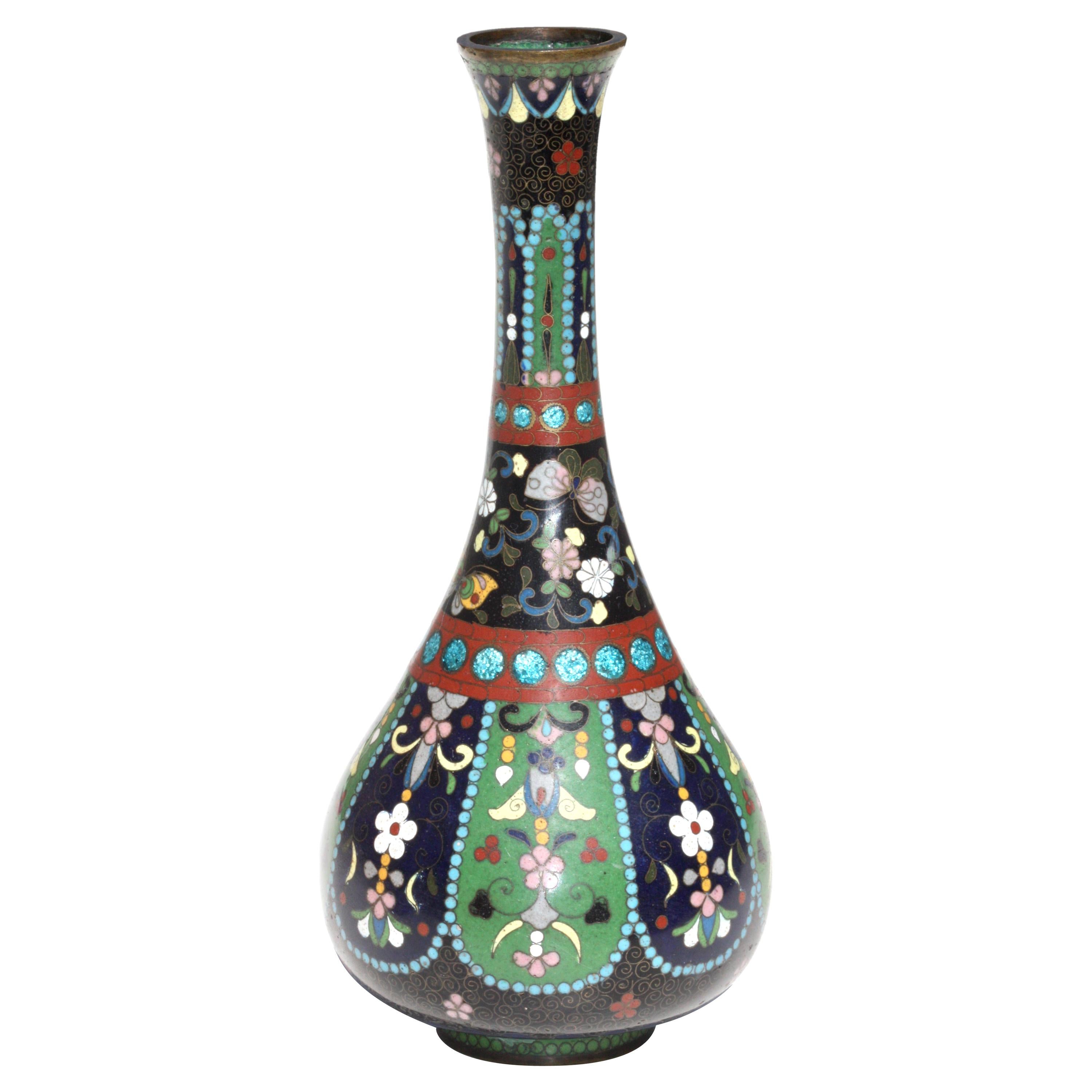
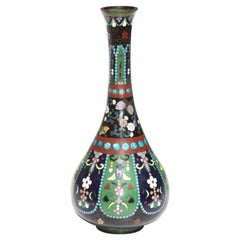
Japanese Cloisonne Enamel Vase 19th Century
Located in West Palm Beach, FL
A Japanese Cloisonne enamel vase
19th century
Measures: Height 8.5 in. (21.59 cm.),
Width 3.62 in. (9.20 cm.).
Category
Antique 19th Century Ceramics
Materials
Ceramic
Chinese Cloisonne Incense Tool Vase, Qing Dynasty, 18th/19th Century, China
Located in Austin, TX
A small and elegant Chinese cloisonné vase for incense tools, Qing Dynasty, 18th/19th century, China.
Made for the scholar's studio, this small refined vase, was used to hold incense tools, including a small pair of tongs or chopsticks and spoon. The tools no longer present.
Of miniature baluster vase form, the vase beautify proportioned and decorated in the cloisonné enamel technique, with gilt wires forming the cloisons, or partitions. Within the cloisons, colorful enamels have been expertly laid.
The small incense tool vase...
Category
Antique Early 1800s Chinese Qing Scholar s Objects
Materials
Copper, Enamel
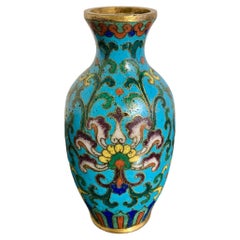
Antique Chinese Cloisonné Enamel Gu Form Vase, 17th/18th Century, Kangxi Period
Located in New York, NY
A Fantastic, rare, and antique Chinese Cloisonné Enamel Gu Form vase, 17th/18th century, Kangxi Period. This cloisonne vase is extremely rare to find in this quality, condition, age,...
Category
Antique Late 17th Century Chinese Qing Metalwork
Materials
Bronze
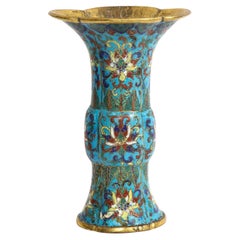
A Chinese cloisonné and gilt metal vase circa 1930
Located in Central England, GB
This very fine example of Chinese cloisonné art is beautifully hand decorated onto a gilt metal body, which has been intricately worked with fine wire, which is soldered onto the bod...
Category
Mid-20th Century Chinese Chinese Export Metalwork
Materials
Metal