Items Similar to Five Green Glazed Pottery Attendant Figures, Ming Dynasty(1368-1644)
Want more images or videos?
Request additional images or videos from the seller
1 of 15
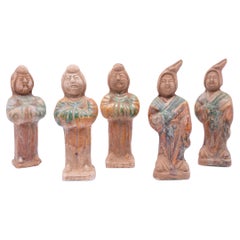
Five Green Glazed Pottery Attendant Figures, Ming Dynasty(1368-1644)
$4,850per set
£3,675.74per set
€4,215.76per set
CA$6,776.37per set
A$7,392.65per set
CHF 3,920.91per set
MX$89,064.80per set
NOK 49,764per set
SEK 45,560.29per set
DKK 31,485.45per set
About the Item
The three figurines in the back exhibit the typical form of attendants, wearing conical red hats and adopting poses where their right hands are either held in front of their chests or holding an object. They stand on tall pedestals, with natural folds in their garments and traces of pale green glaze remaining. While the finer details of their facial features have been somewhat worn over time, their overall form remains well-preserved.
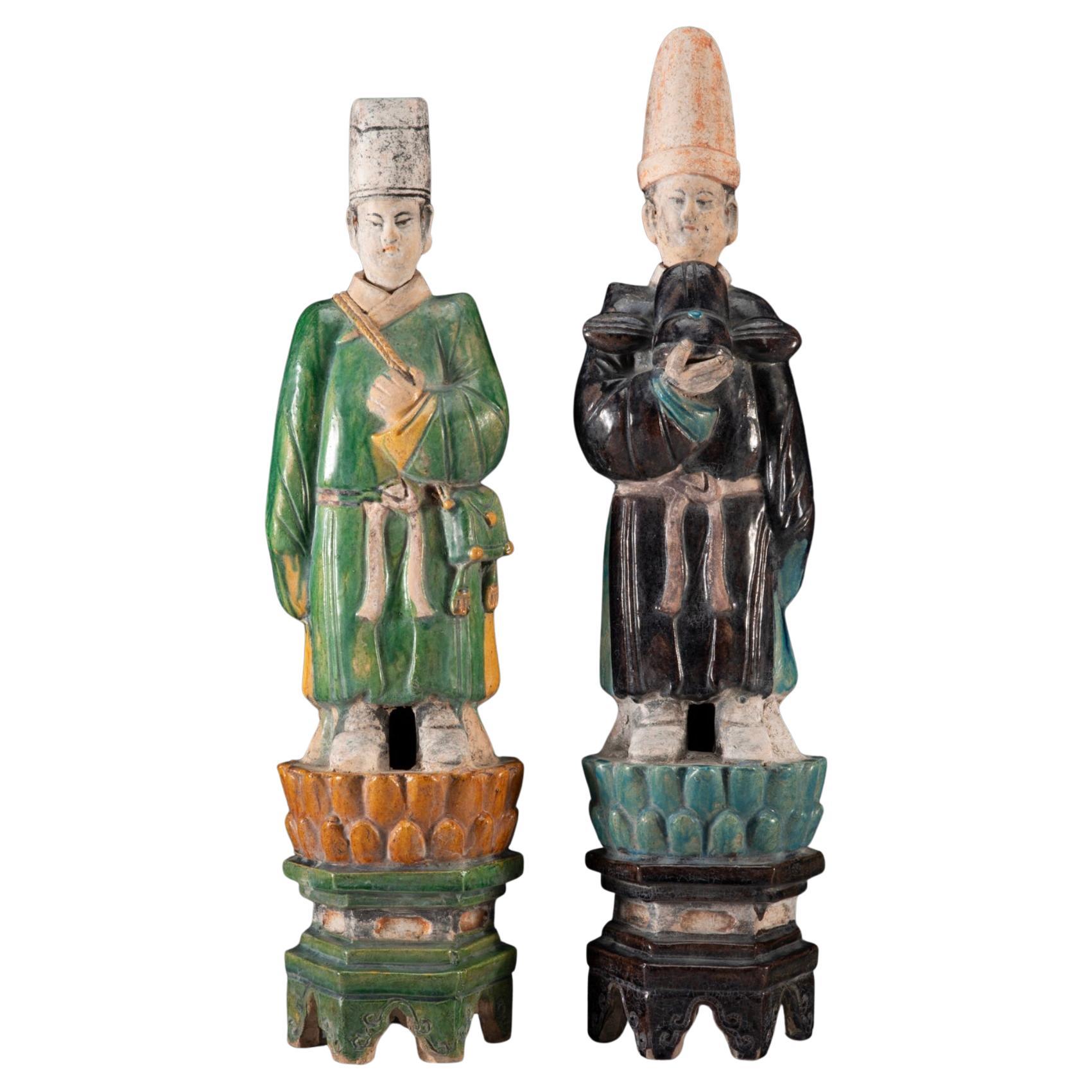
The two figurines in the front display more distinct characteristics, suggesting they may have represented officials or messengers. The left figurine wears a black wusha mao (烏紗帽), a hat traditionally worn by Ming dynasty officials, and is fully coated in green glaze, which has developed a subtle crackle and sheen over time. The right figurine adopts a unique pose with one hand resting on its shoulder, and a small hole in the shoulder suggests it was originally designed to hold an additional object.
Period: Ming Dynasty
Medium: Green-glazed Pottery
Type: Figure
Size : 8cm(Diameter) x 27cm(Height) / 6cm(Diameter) x 23cm(Height)
Provenance : Acquired in late 1990s from Hongkong
* Ming Dynasty Green-glazed pottery figure
Ming Dynasty green-glazed pottery figures are renowned for their vibrant green glaze, achieved by adding copper oxide to the clay, which develops its color when fired at high temperatures. These figures, often depicting humans, animals, and mythical beings, were used in tombs as offerings, in temples, or as decorations in affluent homes. Characterized by intricate designs and a glossy finish, they hold significant cultural and religious importance, symbolizing protection and companionship in the afterlife. These pieces are highly valued for their artistic merit and historical significance in the realm of Chinese ceramics.
About the Seller
4.8
Platinum Seller
Premium sellers with a 4.7+ rating and 24-hour response times
Established in 1999
1stDibs seller since 2023
46 sales on 1stDibs
Typical response time: 1 hour
- ShippingRetrieving quote...Shipping from: seoul, Korea South
- Return Policy
More From This Seller
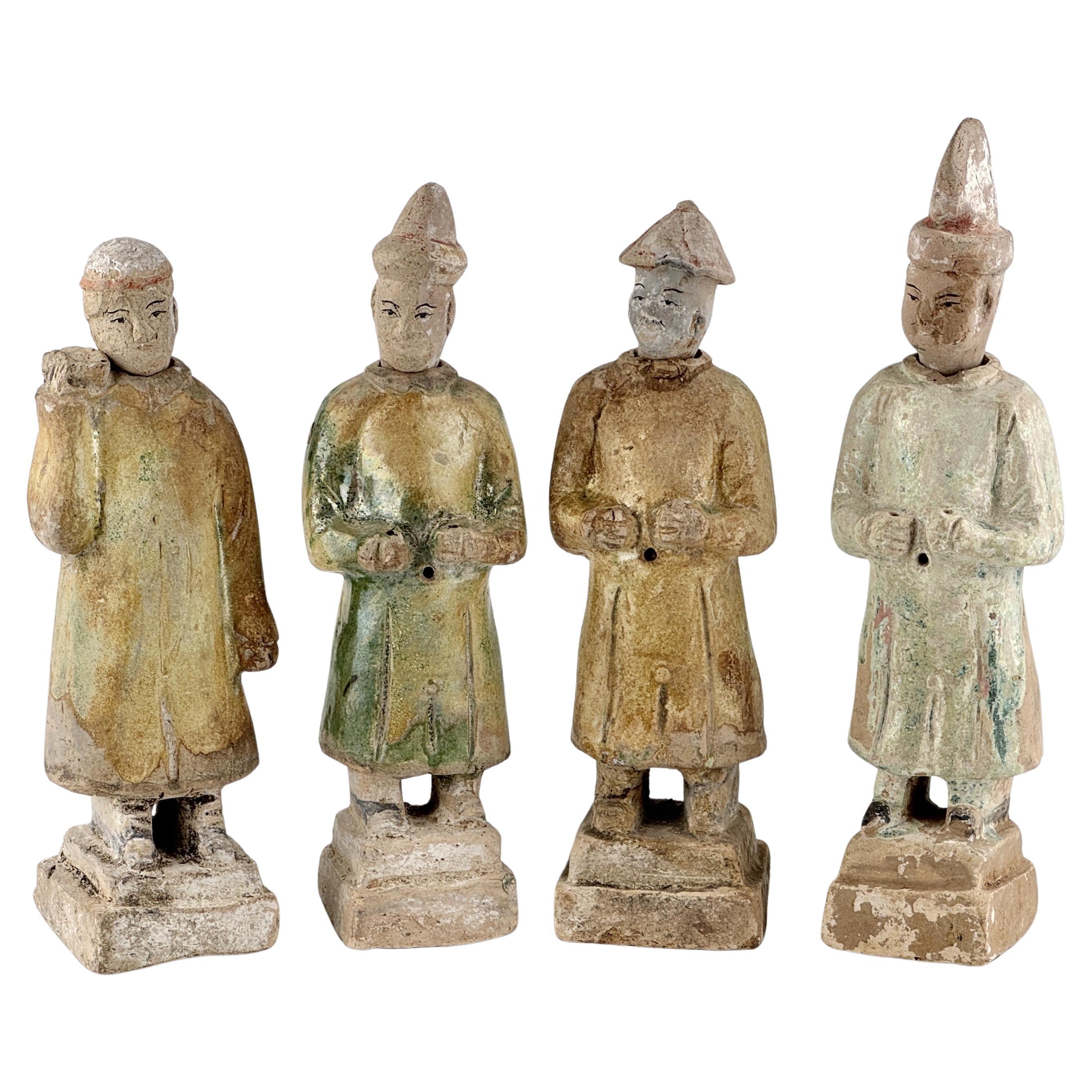
View AllFour Green Glazed Pottery Attendant Figures, Ming Dynasty(1368-1644)
Located in seoul, KR
The first figure wears a short cap and takes a posture as if carrying something on the shoulder, possibly symbolizing a servant or a messenger.
The second figure wears a tall hat and...
Category
Antique 15th Century and Earlier Hong Kong Ming Antiquities
Materials
Pottery
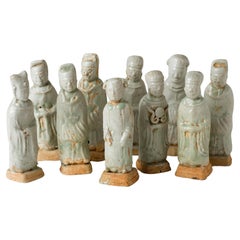
Ten Qingbai Figures of Courtiers, Five Dynasties-Song Dynasty
Located in seoul, KR
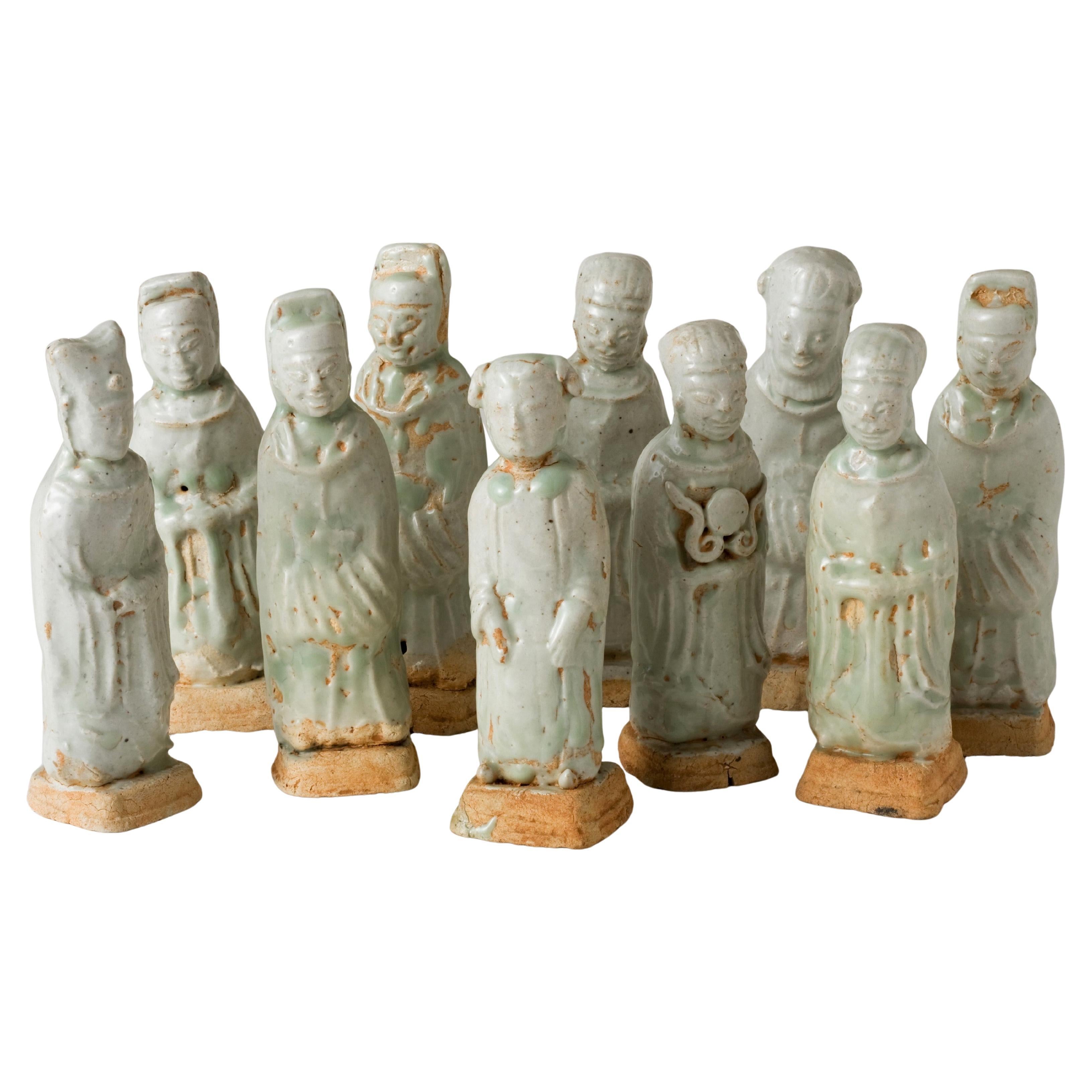
This work is a group of Qingbai (青白磁) porcelain figurines produced during the Five Dynasties to the Northern or Southern Song period (10th–13th century). A transparent glaze is appli...
Category
Antique 15th Century and Earlier East Asian Antiquities
Materials
Porcelain
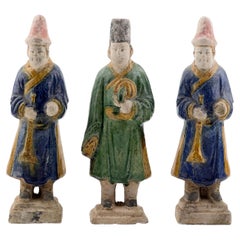
Three Glazed Figures of Musicians, Ming Period (1368-1644)
Located in seoul, KR
Statues of Chinese musicians crafted from terracotta, featuring glazes in green, blue with nice condition. Set on rectangular bases. Compared to other figures, musician figures are relatively rare, two figures with distinctive instrument from that era.
Period: Ming Dynasty
Medium: Green and Blue glazed Pottery
Type: Figure
Provenance : Acquired in early 2000s from Hongkong
Reference :
1) V&A Museum - Accession number C.1501913
(Type : Closely related)
* Ming Dynasty Glazed Pottery Figures
Ming Dynasty glazed pottery figures are renowned for their bold color palette, intricate detailing, and lifelike forms, distinguishing them from earlier traditions. These figures, which depict officials, warriors, animals, and mythical creatures, are characterized by high-gloss lead-based glazes in green, amber, ochre, and sancai (three-color) combinations. The thickly applied glaze pools in recesses, creating depth and enhancing sculptural details. With dynamic postures, expressive facial features, and meticulously rendered drapery, these figures reflect the period’s advancement in ceramic craftsmanship, offering a greater sense of movement and realism compared to the rigid and stylized forms of earlier dynasties.
A defining characteristic of Ming glazed pottery is its elaborate surface detailing, often achieved through raised relief elements and contrasting glazes. Equestrian figures, for example, feature carefully sculpted saddles, harnesses, and decorative embellishments, while human figures are adorned with intricate robes and headdresses. The large scale of these tomb figures, often more imposing than those from previous periods, underscores the increasing importance of funerary art during the Ming era. Unlike later Qing Dynasty figures...
Category
Antique 15th Century and Earlier Hong Kong Ming Antiquities
Materials
Pottery
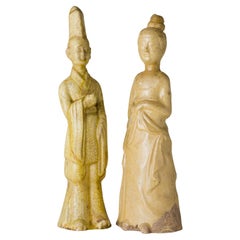
Two Straw-Glazed Pottery Figures of Court Male and Female
Located in seoul, KR
This pair of straw-glazed pottery figures represents a male and female court attendant, both elegantly attired in period fashion. The female figure wears a flowing robe with draped f...
Category
Antique 15th Century and Earlier Hong Kong Tang Antiquities
Materials
Pottery, Straw
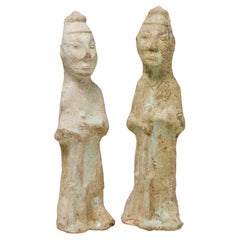
Two Green glazed Figures Holding Pitchpork
Located in seoul, KR
Han dynasty pottery tomb figure, modelled standing holding a Pitchpork in front of his body, covered in a turquoise-green glaze. These two pieces are believed to have been produced i...
Category
Antique 15th Century and Earlier Hong Kong Han Antiquities
Materials
Pottery
$2,970 / set
Longquan Celadon Figurine, Ming Dynasty (1368-1644)
Located in seoul, KR
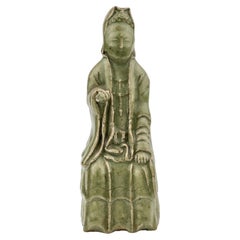
This sculpture is a Longquan celadon from the Ming Dynasty, renowned for its rich and jade-like green glaze. The figurine is likely a representation of a Buddhist deity or a revered scholar, showcasing the calm aesthetic expressions and graceful contours prevalent during the era. The spectrum of celadon glaze ranges from a dense grey stoneware to a nearly white porcelain texture, with unglazed parts revealing a terracotta brown upon firing. Such pieces were often part of household altars, reflecting the era's spiritual devotion. This artifact would be a treasured exhibit in any museum's Asian art collection, symbolizing both religious reverence and artistic excellence.
Period: Ming Dynasty (1368-1644)
Region: Longquan, China
Medium: Stoneware - Celadon glazed, with a range from heavy grey to almost white porcelain-like material
Type: Sculpture
Height : 24.5 cm
Provenance : Acquired in 1999, Hongkong
* Ming Dynasty Longquan Celadon
Longquan celadon from the Ming Dynasty typically exhibits a more robust and heavier stoneware body compared to its Song Dynasty predecessors. The Ming era saw an evolution in celadon glaze, achieving a wider spectrum of green hues, from olive to bluish-greens. Ming celadons...
Category
Antique 15th Century and Earlier Hong Kong Ming Antiquities
Materials
Celadon
You May Also Like
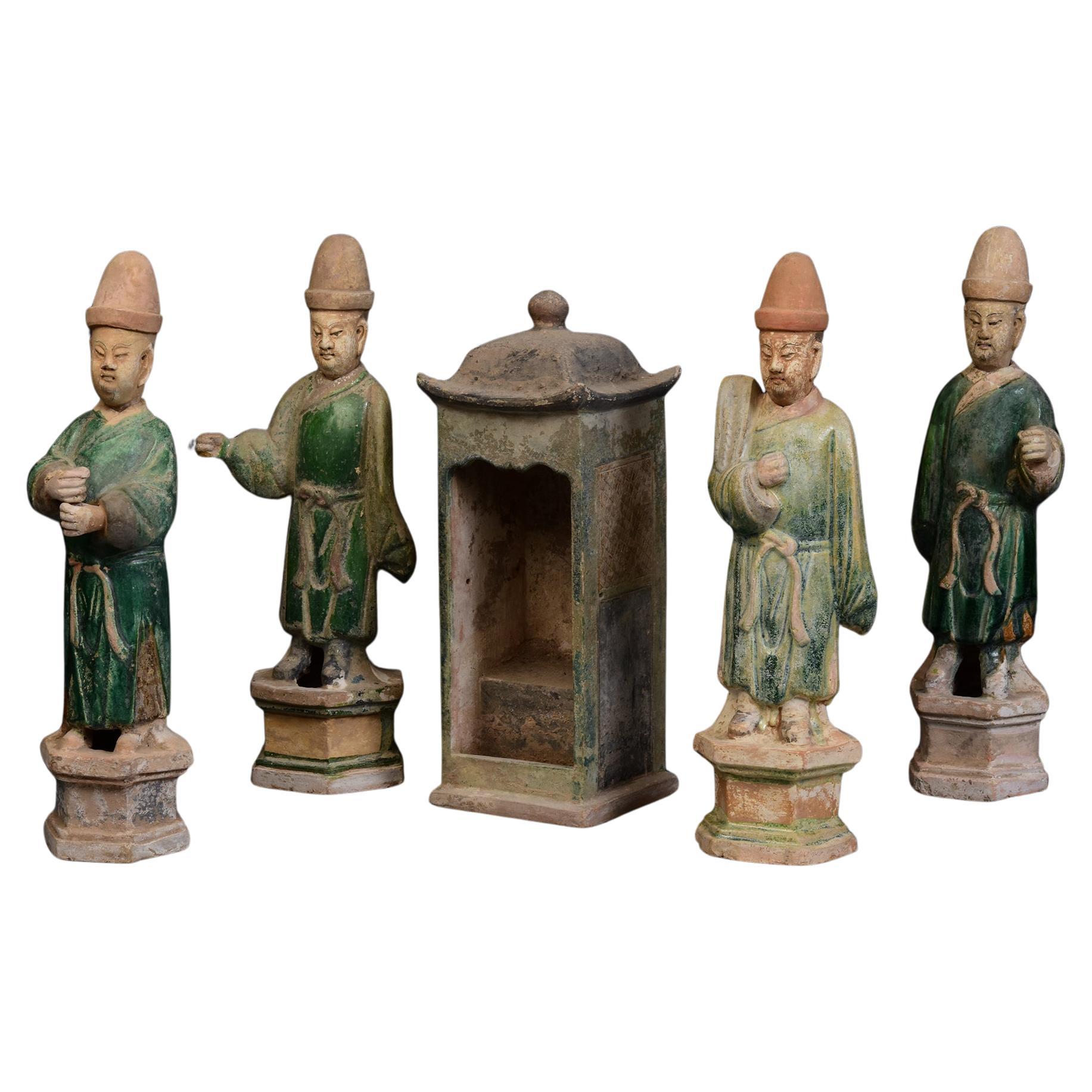
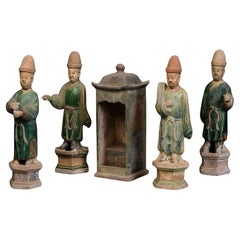
Ming Dynasty, A Set of Antique Chinese Glazed Pottery Attendants and Palanquin
Located in Sampantawong, TH
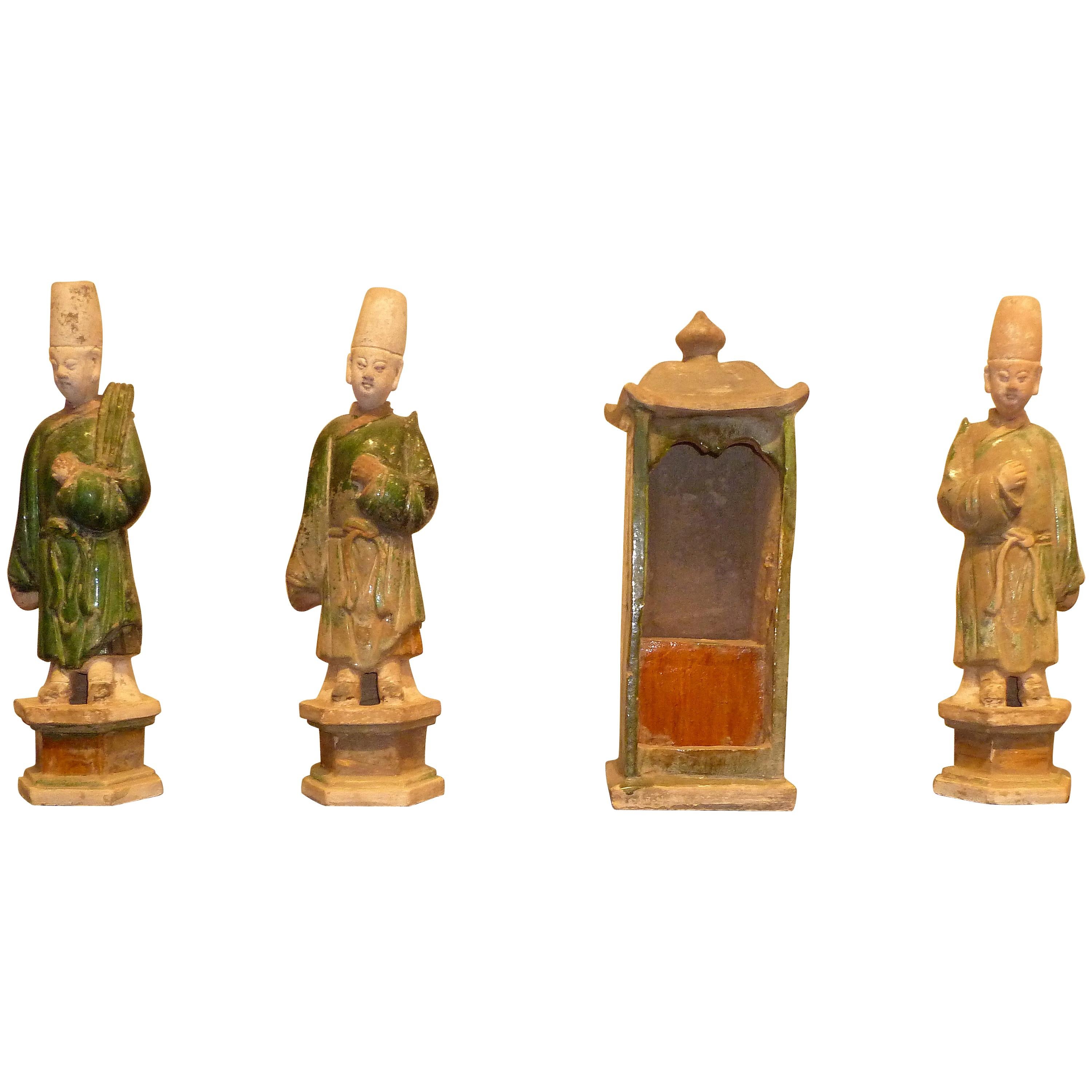
A set of antique Chinese green glazed pottery attendants and palanquin.
Age: China, Ming Dynasty, A.D. 1368 - 1644
Size of figures: Height 39.5 - 40.8 C.M. / Width 11 - 13 C.M. / De...
Category
Antique 15th Century and Earlier Chinese Antiquities
Materials
Pottery
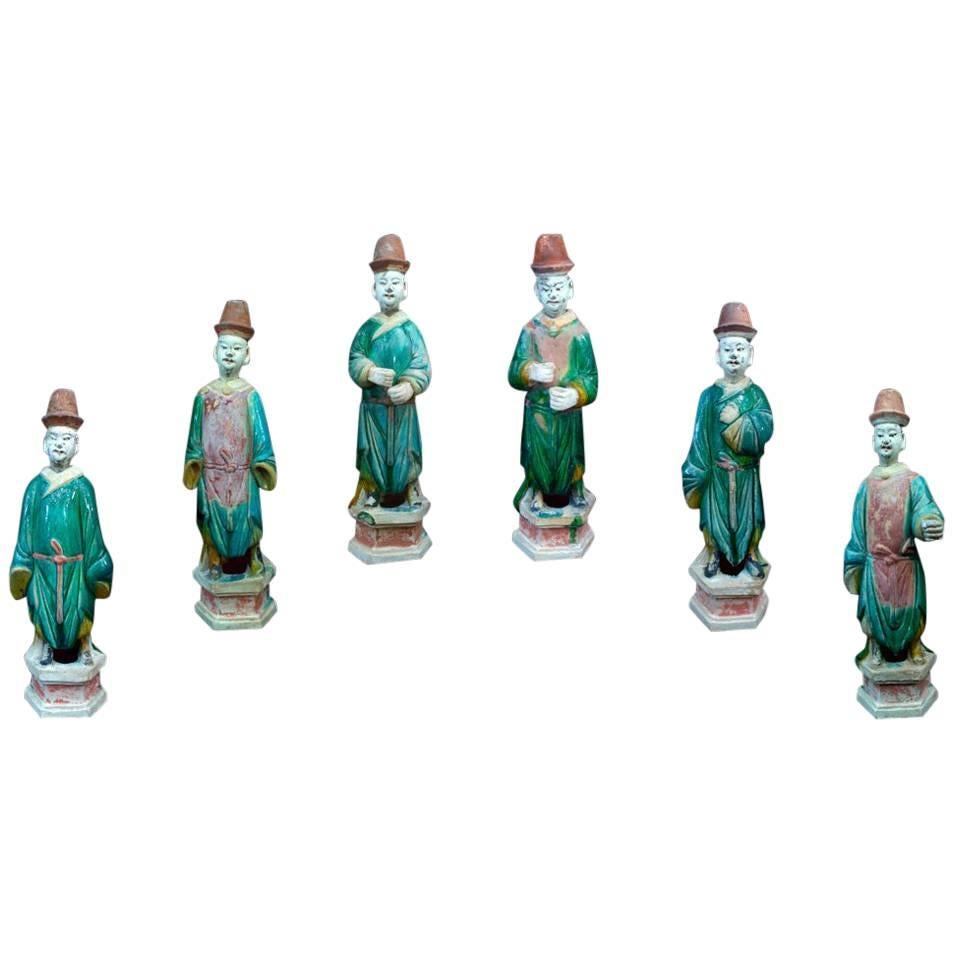
6 Elegant Ming Dynasty Court Attendants in Glazed Terracotta, China 1368-1644 AD
Located in San Pedro Garza Garcia, Nuevo Leon
A fine set of a six court attendants as in the Forbidden City of Beijing, elegantly dressed in a Green & Red Daopao – a traditional men’s formal attire from the Ming Dynasty dated 1368-1643 A.D. – with glazed robes and Red Pigment remains in their hat and belts. They stand in an honorary posture atop a red plinth, some with orifices in their hands, where spirit objects were placed to comfort or satisfy the deceased. The heads are detachable, as often seen on the larger figures from this period.
They are accompanied by a Certificate of Authenticity, and Certificate of Expertise by Jean-Yves Nathan - a leading authority specialized in Far East Archaeology from the CEDEA (The European Confederation of Art Experts).
Burial figurines of graceful dancers, mystical beasts, and everyday objects reveal both how people in early China approached death and how they lived. Since people viewed the afterlife as an extension of worldly life, these figurines, called mingqi, sometimes referred as “spirit utensils” or “vessels of ghosts” disclose details of routine existence and provide insights into belief systems over a thousand-year period.
The Ming dynasty was the ruling dynasty of China – then known as the Empire of the Great Ming – for 276 years (1368–1644 AD). Founded by Chu Yuan-chang, the rebel leader that was successful in removing the mongols from the throne. Chinese control was re-asserted in China and eastern Asia. Literature became more important, schools were created, and the justice system was reformed. The Ming dynasty is described by some as "one of the greatest eras of orderly government and social stability in human history,” was the last imperial dynasty in China ruled by ethnic Han Chinese.
The practice of burying ceramic objects with the deceased went into decline from the 10th to the 14th Century AD. There was a revival in placing miniature representations of glazed terracotta objects such a furniture, food offerings, horses, miniature statues...
Category
Antique 15th Century and Earlier Chinese Ming Antiquities
Materials
Terracotta

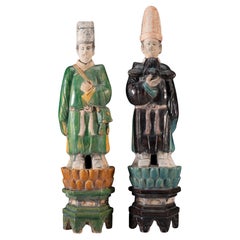
Tall Ming Dynasty Sancai Glazed Dignitary Tomb Figures
Located in Dallas, TX
A Pair of Chinese Enameled Sancai Glazed Pottery Attendant Figures Representing Dignitaries.
Ming Dynasty Period. Circa 1600AD
Dimensions; 23 x 5.5 x 5.25 inches (58.4 x 13.7 x 13.3 ...
Category
Antique 16th Century Chinese Ming Figurative Sculptures
Materials
Pottery
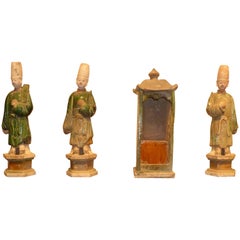
Set of Refine Ming Dynasty Green Glazed Attendants and a Sedan Chair
Located in Greenwich, CT
A set of very refined green glazed attendants and one sedan chair, each with benevolent facial expression, beautiful colors and lines, Ming dynasty 1368-1644. Three glazed attendants...
Category
Antique 15th Century and Earlier Chinese Ming Sculptures and Carvings
Materials
Pottery
$3,500 Sale Price / set
27% Off
Set of Five Chinese Sancai Female Attendant Figures
Located in Chicago, IL
Molded of earthenware, this set of five petite sculptures are a type of centuries-old burial figurine known as míngqì. Such model figures were placed in tombs of individuals with high status to ensure a safe journey to the afterlife. Meant to depict the pleasures of daily life, common burial figures...
Category
Antique 15th Century and Earlier Chinese Antiquities
Materials
Ceramic
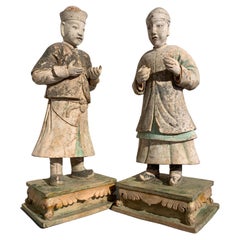
Pair Large Chinese Ming Dynasty Glazed and Painted Pottery Figures, 16th Century
Located in Austin, TX
A striking pair of large Chinese glazed and painted pottery figures, Ming Dynasty (1368 to 1644), circa 16th century, China.
The impressive and realistically modeled figures each portrayed standing upright upon a sancai (three color) glazed pedestal of kang table form.
The man is dressed in a short black surcoat over a long robe and pants, a smart cap upon his head. His face is warm and welcoming, with wide eyes and a slight smile on his lips. He holds his hands out in front of him, palms up, almost as if shrugging, though presumably originally holding an object or offering, now lost.
The woman of slightly smaller stature, and dressed in a longer surcoat over a long robe and skirt. She wears a fitted cap upon her head. Her hands also held out in front, grasping long lost objects. Her face is slightly more severe, with a somewhat pinched look, and slight frown upon her lips.
The size of these figures is remarkable, as is the realism and attention to detail, almost as if they were modeled after real people, as opposed to the more common and generic Ming Dynasty pottery...
Category
Antique 16th Century Chinese Ming Sculptures and Carvings
Materials
Pottery