1 of 8
Greek kylix
$1,441.20List Price
About the Item
- Dimensions:Height: 2.21 in (5.6 cm)Width: 6.5 in (16.5 cm)Depth: 4.53 in (11.5 cm)
- Style:Classical Greek (Of the Period)
- Materials and Techniques:
- Place of Origin:Greece
- Period:
- Date of Manufacture:4th Century B.C
- Condition:Wear consistent with age and use.
- Seller Location:EL CAMPELLO, ES
- Reference Number:1stDibs: LU7382238701812
Authenticity Guarantee
In the unlikely event there’s an issue with an item’s authenticity, contact us within 1 year for a full refund. DetailsMoney-Back Guarantee
If your item is not as described, is damaged in transit, or does not arrive, contact us within 7 days for a full refund. Details24-Hour Cancellation
You have a 24-hour grace period in which to reconsider your purchase, with no questions asked.Vetted Professional Sellers
Our world-class sellers must adhere to strict standards for service and quality, maintaining the integrity of our listings.Price-Match Guarantee
If you find that a seller listed the same item for a lower price elsewhere, we’ll match it.Trusted Global Delivery
Our best-in-class carrier network provides specialized shipping options worldwide, including custom delivery.You May Also Like
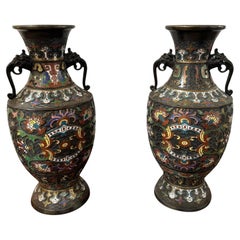
Japan - Meiji Era (1868-1912) Pair of Flared Neck Baluster Vases
Located in Nice, FR
JAPON - Epoque MEIJI (1868-1912) Paire de vases balustres à col évasé et deux anses en forme de têtes de chimères, en bronze et émaux cloisonnés à décor dans leur feuillage sur fond ...
Category
Antique Mid-19th Century Antiquities
Materials
Bronze
$1,201
H 20.48 in W 9.45 in D 9.45 in
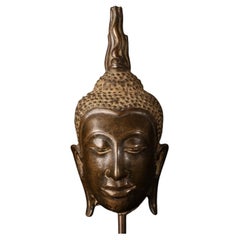
Buddha Head, Bronze with Gilt – Uthong Kingdom, Thailand (14th–15th Century)
Located in Fukuoka, JP
A finely cast bronze Buddha head from the Uthong Kingdom, dating to the 14th–15th century. This elegant piece reflects the early stylistic transition toward Ayutthaya aesthetics, cha...
Category
Antique 15th Century and Earlier Thai Antiquities
Materials
Bronze
$1,560
Free Shipping
H 5.91 in W 2.76 in D 2.76 in
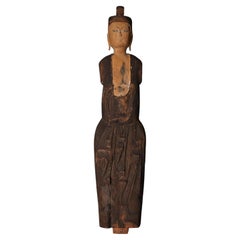
Mingei Japanese Folk Art — Statue of Kannon Bosatsu, 18th Century
Located in Fukuoka, JP
A serene Mingei (folk art) wooden statue of Kannon Bosatsu, dating to the 18th century.
Carved with simplicity and spiritual warmth, the figure embodies the humble, unadorned aesthet...
Category
Antique 18th Century Japanese Edo Antiquities
Materials
Wood
$770
Free Shipping
H 17.72 in W 1.58 in D 3.55 in
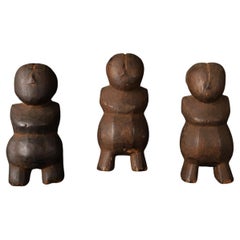
Set of 3 Wooden Tribal Figures — Papier-Mâché Molds, Myanmar, 19th Century
Located in Fukuoka, JP
This set of hand-carved wooden tribal figures once served as traditional molds for creating papier-mâché effigies used in ceremonial practices in Myanmar. Each mold is shaped with ex...
Category
Antique 19th Century Burmese Antiquities
Materials
Wood
$680 / set
Free Shipping
H 5.91 in W 2.37 in D 1.97 in
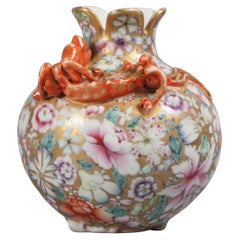
Chinese porcelain water pot, 19th c.
Located in New York, NY
scalloped rim; floral motif on gold ground; decorated with a dragon and a stylized wooden branch in relief
Category
Early 20th Century Chinese Antiquities
Materials
Porcelain
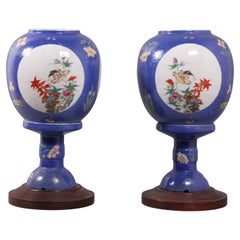
pair of Chinese lantern form porcelain vases, 19th c.
Located in New York, NY
6in(W) x 6in(D) x 13in(H) are the overall dimensions of each vase including its fitted wooden base; each vase is decorated with circular panels enclosing floral scenes
Category
Early 20th Century Chinese Antiquities
Materials
Porcelain
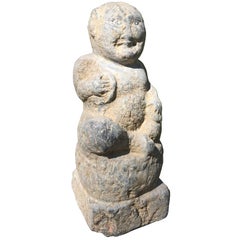
China Ancient Stone Entertainer, Han Dynasty 200 AD
Located in South Burlington, VT
China an ancient limestone figure of an Entertainer replete with hands holding tambourines and a top a drum, -for the afterlife- , Han dynasty 206 BC...
Category
Antique 15th Century and Earlier Chinese Han Sculptures and Carvings
Materials
Limestone
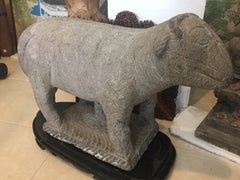
Ancient China Monumental Stone Ram Han Dynasty, 206BC-220AD
Located in South Burlington, VT
China, a large votive model of a stone ram, Han dynasty (206BC-220AD)
Dimensions: 45cm, 18 inches high and 65cm, 26 inches length and 25cm, 10 inches wi...
Category
Antique 15th Century and Earlier Chinese Han Sculptures and Carvings
Materials
Limestone
$17,600 Sale Price
54% Off
H 18 in W 26 in D 10 in
Important Chinese Ancient Bronze Money Tree, 25BC-220AD
Located in South Burlington, VT
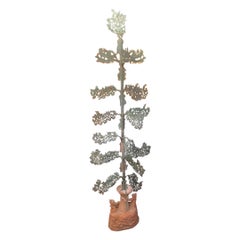
China, Ancient Bronze “Money Tree” Yaoqian Shu with original pottery base, Han dynasty (25 BCE – 220 CE)
Dimensions: 155cm, 62 inches high
A sculpted terracotta pottery base in the form of a tortoise with attendants and inserted with five individual bronze pole segments with twenty four individual hanging bronze open work money “branches” attached in tiers, four per tier and topped with a figure of a bronze phoenix as apex most bearing varying degrees of malachite and azurite encrustation from ancient burial.
Important Description Details:
Pottery "tortoise" base: 14.5" high and 11" wide
Bronze sections:
7pcs pole bronze sections approximately 8" length each
1pc top "phoenix" bronze section approximately 7" high and 6" wide
20 pcs long bronze hanging wings approximately 10" long and 5" wide each
4 pcs short bronze hanging wings (near top) approximately 7" long and 4" wide each
Total 32 pcs with ancient green and blue azurite patina.
Catalog reference: Schneible Fine arts catalog - 35 Years Collecting Treasures- Number 11p. 28 (see photos)
Provenance: Provenance: Private family collection formerly exhibited “Asia Week” New York City, Fuller Building, Zabriskie Gallery, 2008.
History of money trees:
In the late Han Dynasty tombs...
Category
Antique 15th Century and Earlier Chinese Han Antiquities
Materials
Bronze
$100,000 Sale Price
33% Off
H 62 in W 26 in D 26 in
Important Ancient Chinese Effigy Pug Dog, Ming Dynasty 1368-1644
Located in South Burlington, VT
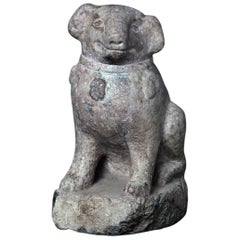
China, a carving of a canine “Pug”, Ming Dynasty, 1368-1644 CE
Dimensions: 38 cm, 15” High
Photographs taken indoors and out of doors for your viewing pleasure.
The hand carved limestone beast shown on its haunches with naturalistic joyful expression and a well defined compact head, ears, noes, eyes, feet, and tail parted to one side on reverse with distinctive collar ornament seated four square on a thick base all-over showing a weathered surface from significant age.
Formerly exhibited “Asia Week” New York City, Fuller Building, Hutton Gallery 2006.
Provenance: ex collection luoyang, Henan Province, China.
Includes custom display base as shown
Catalog reference: 35 years collecting 35 treasures, Number 35, p.76 (photo)
In ancient China, it is a well-known fact that several types of small dogs were bred and were favored pet gifts between emperors and kings including Lion Dogs, Pekingese and Lo-sze breeds. Some Lo-sze are pictured wearing collars with bells a frequent combination fancied by European royalty of the seventeenth and eighteenth centuries. Lo-sze or pugs were prized for their compact body, good bones, flat face, square jaw, short coat, curled tail, side set back ears, and temperate disposition.
History:
Placing stone animals in important tombs can be traced back at least to the Qin Dynasty (221-206 BCE), some two thousand years ago. In ancient times, stone animals and human figures placed before imperial tombs symbolized royal power and privilege in addition to decorative functions.
The first Ming tomb...
Category
Antique 15th Century and Earlier Chinese Ming Sculptures and Carvings
Materials
Limestone
$6,650 Sale Price
21% Off
H 15 in W 7 in D 8 in