1 of 8
Han dynasty stick woman
$2,907.06List Price
About the Item
- Dimensions:Height: 23.63 in (60 cm)
- Materials and Techniques:
- Place of Origin:
- Period:
- Date of Manufacture:Han dynasty (206 BC – 220 AD)
- Condition:Wear consistent with age and use.
- Seller Location:Schilde, BE
- Reference Number:Seller: 26491stDibs: LU108101351892
Authenticity Guarantee
In the unlikely event there’s an issue with an item’s authenticity, contact us within 1 year for a full refund. DetailsMoney-Back Guarantee
If your item is not as described, is damaged in transit, or does not arrive, contact us within 7 days for a full refund. Details24-Hour Cancellation
You have a 24-hour grace period in which to reconsider your purchase, with no questions asked.Vetted Professional Sellers
Our world-class sellers must adhere to strict standards for service and quality, maintaining the integrity of our listings.Price-Match Guarantee
If you find that a seller listed the same item for a lower price elsewhere, we’ll match it.Trusted Global Delivery
Our best-in-class carrier network provides specialized shipping options worldwide, including custom delivery.You May Also Like
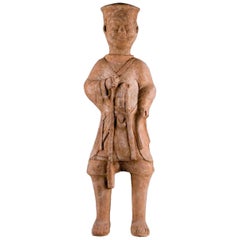
Han Dynasty Standing Horse Trainer “Palafrenieri”
Located in San Pedro Garza Garcia, Nuevo Leon
Huge hollow molded terracotta, standing male figure wearing a hip-length multi-layered robe with a collared neck. Implements suspended from his waist, holding a staff in his right ha...
Category
Antique 15th Century and Earlier Han Antiquities
Materials
Terracotta
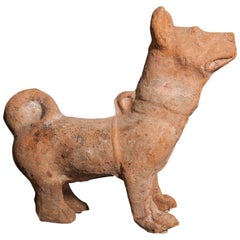
Chinese Han Dynasty Terracotta Fighting Dog
Located in Hudson, NY
Chinese Han Dynasty Terracotta Fighting Dog. During the Han Dynasty (206 BC to 220 AD), terracotta dogs were placed at a grave site in order to protec...
Category
Antique 15th Century and Earlier Chinese Han Ceramics
Materials
Terracotta
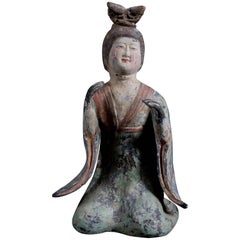
Tang Dynasty Expressive Imperial Court Singer - TL Tested
Located in San Pedro Garza Garcia, Nuevo Leon
Very expressive Imperial Court singer dressed in elegant ceremonial robes with long sleeves and hands in motion. Gray terracotta. Thermoluminescense Test by Ralph Kotalla Lab NE: 05K091003 (Worldwide oldest private laboratory specialized in TL testing...
Category
Antique 15th Century and Earlier Tang Antiquities
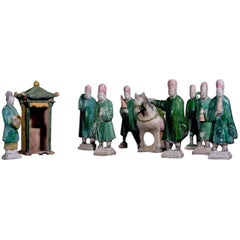
Impressive Terracotta Funerary Procession - Ming Dynasty, China
1368-1644 AD
Located in San Pedro Garza Garcia, Nuevo Leon
Impressive Funeral Ensamble of 10 Terracotta Glazed Figures in green and caramel colors depicting a votive procession with a palanquin, his four carriers, a horse, a stableman, two musicians, and an offering carrier.
This ensemble is accompanied by a Certificate of Authenticity, and Certificate of Expertise by Jean-Yves Nathan - Specialist in Asian Arts for the CEDEA (The European Confederation of Art Experts).
Burial figurines of graceful dancers, mystical beasts, and everyday objects reveal both how people in early China approached death and how they lived. Since people viewed the afterlife as an extension of worldly life, these figurines, called mingqi, sometimes referred as “spirit utensils” or “vessels of ghosts” disclose details of routine existence and provide insights into belief systems over a thousand-year period.
The Ming dynasty was the ruling dynasty of China – then known as the Empire of the Great Ming – for 276 years (1368–1644 AD). Founded by Chu Yuan-chang, the rebel leader that was successful in removing the mongols from the throne. Chinese control was re-asserted in China and eastern Asia. Literature became more important, schools were created, and the justice system was reformed. The Ming dynasty is described by some as "one of the greatest eras of orderly government and social stability in human history,” was the last imperial dynasty in China ruled by ethnic Han Chinese.
The practice of burying ceramic objects with the deceased went into decline from the 10th to the 14th Century AD. There was a revival in placing miniature representations of glazed terracotta objects such a furniture, food offerings, horses, miniature statues...
Category
Antique 15th Century and Earlier Chinese Ming Antiquities
Materials
Terracotta
$15,625
H 8.5 in W 4 in D 4 in
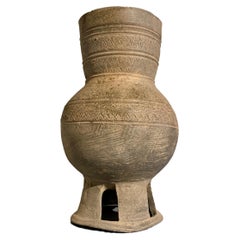
Korean Silla Dynasty Footed Jar, circa 6th Century, Korea
Located in Austin, TX
A charming Korean high fired gray pottery stoneware footed vessel, Three Kingdoms Period, Silla Kingdom, circa 6th century.
The vessel of traditiona...
Category
Antique 15th Century and Earlier Korean Antiquities
Materials
Pottery, Stoneware
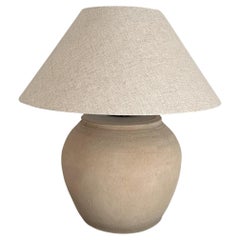
Han Style Sandcolor Vase Table Lamp
Located in Vosselaar, BE
A Chinese Han style vase turned in to a tablelamp. Made from unglazed grey earthenware in a pot shape with subtle sandgrain patina. This vase has a grea...
Category
Antique 19th Century Chinese Han Ceramics
Materials
Earthenware
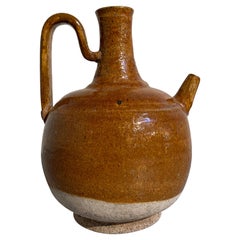
Chinese Liao Dynasty Amber Glazed Stoneware Strap Handle Ewer, 11th Century
Located in Austin, TX
A lovely Chinese amber glazed pottery pouring vessel, Liao Dynasty (907 to 1125 AD).
The vessel featuring a globular body with an elongated neck sligh...
Category
Antique 15th Century and Earlier Chinese Tang Ceramics
Materials
Stoneware
$1,500
H 8 in W 6.25 in D 5.5 in
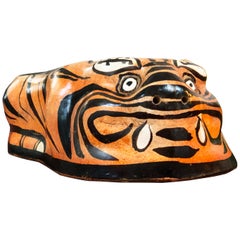
Jin Dynasty Cizhou Ware Crouching Tiger Pottery Pillow, 12th-century, China
Located in Brooklyn, NY
Chinese Jin Dynasty 12th Century Cizhou Ware Crouching Tiger Pottery Pillow .Tiger pillow, Jin dynasty, 12th century (circa 1150)
The pillow is assembled ...
Category
Antique 15th Century and Earlier Chinese Ming Antiquities
Materials
Ceramic
$18,400
H 7 in W 13 in D 4 in
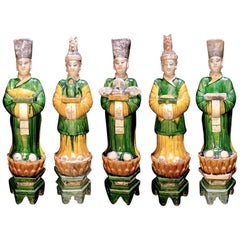
Superb Set of 5 Elegant Court Attendants, Ming Dynasty, 1368-1644 AD TL Tested
Located in San Pedro Garza Garcia, Nuevo Leon
A stunning set of 5 graceful terracotta figurines from the Ming Dynasty '1368-1644' AD. These elegant attendants are standing on a yellow glazed lotus flower over a high hexagonal green plinth and wear fine robes in matching green and yellow glazes. The unglazed areas have pigmented colors in red, black and white. Each is carrying essential offerings for the royal family. The head is detachable as often seen on the larger figures from this period. Meticulously detailed facial expressions have been hand-painted.
Condition: Mint, finely preserved glaze and pigment, undamaged and no repairs.
Provenance: Ex. Danish Collection.
This set is guaranteed authentic and comes with a Certificate of Authenticity and TL Test from Laboratory Kotalla in Germany (The Oldest Thermoluminescence Testing Laboratory in the World).
Dimensions: Average 54 H cms
Burial figurines of graceful dancers, mystical beasts, and everyday objects reveal both how people in early China approached death and how they lived. Since people viewed the afterlife as an extension of worldly life, these figurines, called mingqi, sometimes referred as “spirit utensils” or “vessels of ghosts” disclose details of routine existence and provide insights into belief systems over a thousand-year period.
The Ming dynasty was the ruling dynasty of China – then known as the Empire of the Great Ming – for 276 years (1368–1644 AD). Founded by Chu Yuan-chang, the rebel leader that was successful in removing the mongols from the throne. Chinese control was re-asserted in China and eastern Asia. Literature became more important, schools were created, and the justice system was reformed. The Ming dynasty is described by some as "one of the greatest eras of orderly government and social stability in human history,” was the last imperial dynasty in China ruled by ethnic Han Chinese.
The practice of burying ceramic objects with the deceased went into decline from the 10th to the 14th Century AD. There was a revival in placing miniature representations of glazed terracotta objects such a furniture, food offerings, horses, miniature statues...
Category
Antique 15th Century and Earlier Chinese Ming Antiquities
Materials
Terracotta
$34,000
H 21.25 in W 5.5 in D 5.5 in
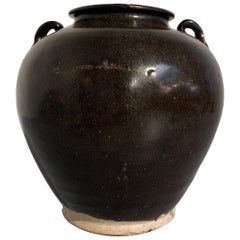
Chinese Tang Dynasty Brown Glazed Jar with Lug Handles, 9th-10th Century
Located in Austin, TX
A fine Tang dynasty (618 to 906 AD) brown glazed jar with applied lug handles, circa late 9th or early 10th century, China.
The jar of somewhat st...
Category
Antique 15th Century and Earlier Chinese Tang Ceramics
Materials
Stoneware