Want more images or videos?
Request additional images or videos from the seller
1 of 11
Han Dynasty terra cotta horse
$18,000List Price
About the Item
- Dimensions:Height: 22 in (55.88 cm)Width: 22 in (55.88 cm)Depth: 6 in (15.24 cm)
- Materials and Techniques:
- Place of Origin:
- Period:
- Date of Manufacture:Han Dynasty 206 BC--220 AD
- Condition:please contact dealer for detailed condition report.
- Seller Location:Chicago, IL
- Reference Number:Seller: 00C040951stDibs: U100626886476
About the Seller
4.9
Gold Seller
Premium sellers maintaining a 4.3+ rating and 24-hour response times
Established in 1989
1stDibs seller since 2010
442 sales on 1stDibs
Authenticity Guarantee
In the unlikely event there’s an issue with an item’s authenticity, contact us within 1 year for a full refund. DetailsMoney-Back Guarantee
If your item is not as described, is damaged in transit, or does not arrive, contact us within 7 days for a full refund. Details24-Hour Cancellation
You have a 24-hour grace period in which to reconsider your purchase, with no questions asked.Vetted Professional Sellers
Our world-class sellers must adhere to strict standards for service and quality, maintaining the integrity of our listings.Price-Match Guarantee
If you find that a seller listed the same item for a lower price elsewhere, we’ll match it.Trusted Global Delivery
Our best-in-class carrier network provides specialized shipping options worldwide, including custom delivery.You May Also Like
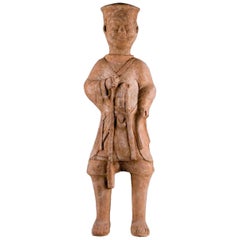
Han Dynasty Standing Horse Trainer “Palafrenieri”
Located in San Pedro Garza Garcia, Nuevo Leon
Huge hollow molded terracotta, standing male figure wearing a hip-length multi-layered robe with a collared neck. Implements suspended from his waist, holding a staff in his right ha...
Category
Antique 15th Century and Earlier Han Antiquities
Materials
Terracotta
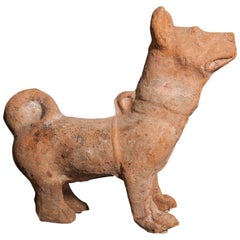
Chinese Han Dynasty Terracotta Fighting Dog
Located in Hudson, NY
Chinese Han Dynasty Terracotta Fighting Dog. During the Han Dynasty (206 BC to 220 AD), terracotta dogs were placed at a grave site in order to protec...
Category
Antique 15th Century and Earlier Chinese Han Ceramics
Materials
Terracotta
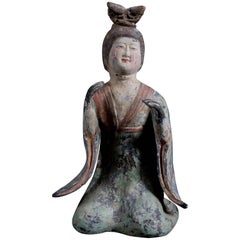
Tang Dynasty Expressive Imperial Court Singer - TL Tested
Located in San Pedro Garza Garcia, Nuevo Leon
Very expressive Imperial Court singer dressed in elegant ceremonial robes with long sleeves and hands in motion. Gray terracotta. Thermoluminescense Test by Ralph Kotalla Lab NE: 05K091003 (Worldwide oldest private laboratory specialized in TL testing...
Category
Antique 15th Century and Earlier Tang Antiquities
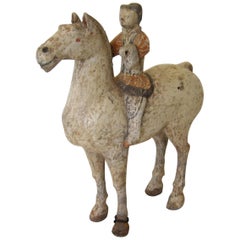
Han Dynasty Horse and Rider TL Tested
Located in Atlanta, GA
Tombs of the Han dynasty (206 BC-220 AD) were typically furnished with model figures and other objects believed to be necessary for a safe journey to the afterlife. Historical records indicate that when important military officials died, the imperial Han court would give them elaborate funerals, including a full military cortege. It is likely that this figure of a horse and rider was originally part of a model funerary retinue comprised of soldiers and cavalrymen that would have been placed in such a tomb.
Beautifully proportioned Han dynasty polychrome painted terracotta horse and rider. The warrior is decorated with a painted orange and black tunic. A quiver is visible attached to his back. He would have originally held a wooden bow in between his hands that has rotted away over the centuries. He is riding a beautifully sculpted white horse.
TL tested...
Category
Antique 15th Century and Earlier Chinese Antiquities
Materials
Earthenware, Pottery
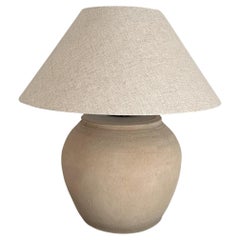
Han Style Sandcolor Vase Table Lamp
Located in Vosselaar, BE
A Chinese Han style vase turned in to a tablelamp. Made from unglazed grey earthenware in a pot shape with subtle sandgrain patina. This vase has a grea...
Category
Antique 19th Century Chinese Han Ceramics
Materials
Earthenware
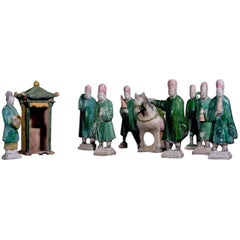
Impressive Terracotta Funerary Procession - Ming Dynasty, China
1368-1644 AD
Located in San Pedro Garza Garcia, Nuevo Leon
Impressive Funeral Ensamble of 10 Terracotta Glazed Figures in green and caramel colors depicting a votive procession with a palanquin, his four carriers, a horse, a stableman, two musicians, and an offering carrier.
This ensemble is accompanied by a Certificate of Authenticity, and Certificate of Expertise by Jean-Yves Nathan - Specialist in Asian Arts for the CEDEA (The European Confederation of Art Experts).
Burial figurines of graceful dancers, mystical beasts, and everyday objects reveal both how people in early China approached death and how they lived. Since people viewed the afterlife as an extension of worldly life, these figurines, called mingqi, sometimes referred as “spirit utensils” or “vessels of ghosts” disclose details of routine existence and provide insights into belief systems over a thousand-year period.
The Ming dynasty was the ruling dynasty of China – then known as the Empire of the Great Ming – for 276 years (1368–1644 AD). Founded by Chu Yuan-chang, the rebel leader that was successful in removing the mongols from the throne. Chinese control was re-asserted in China and eastern Asia. Literature became more important, schools were created, and the justice system was reformed. The Ming dynasty is described by some as "one of the greatest eras of orderly government and social stability in human history,” was the last imperial dynasty in China ruled by ethnic Han Chinese.
The practice of burying ceramic objects with the deceased went into decline from the 10th to the 14th Century AD. There was a revival in placing miniature representations of glazed terracotta objects such a furniture, food offerings, horses, miniature statues...
Category
Antique 15th Century and Earlier Chinese Ming Antiquities
Materials
Terracotta
$15,625
H 8.5 in W 4 in D 4 in
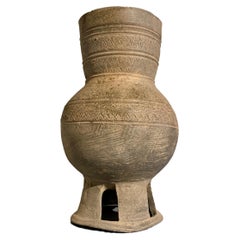
Korean Silla Dynasty Footed Jar, circa 6th Century, Korea
Located in Austin, TX
A charming Korean high fired gray pottery stoneware footed vessel, Three Kingdoms Period, Silla Kingdom, circa 6th century.
The vessel of traditiona...
Category
Antique 15th Century and Earlier Korean Antiquities
Materials
Pottery, Stoneware
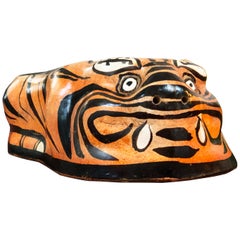
Jin Dynasty Cizhou Ware Crouching Tiger Pottery Pillow, 12th-century, China
Located in Brooklyn, NY
Chinese Jin Dynasty 12th Century Cizhou Ware Crouching Tiger Pottery Pillow .Tiger pillow, Jin dynasty, 12th century (circa 1150)
The pillow is assembled ...
Category
Antique 15th Century and Earlier Chinese Ming Antiquities
Materials
Ceramic
$18,400
H 7 in W 13 in D 4 in
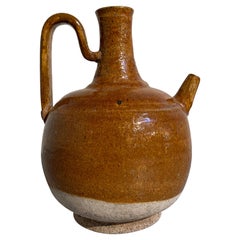
Chinese Liao Dynasty Amber Glazed Stoneware Strap Handle Ewer, 11th Century
Located in Austin, TX
A lovely Chinese amber glazed pottery pouring vessel, Liao Dynasty (907 to 1125 AD).
The vessel featuring a globular body with an elongated neck sligh...
Category
Antique 15th Century and Earlier Chinese Tang Ceramics
Materials
Stoneware
$1,500
H 8 in W 6.25 in D 5.5 in
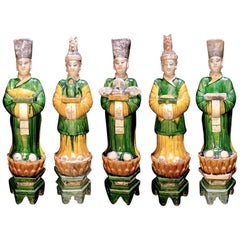
Superb Set of 5 Elegant Court Attendants, Ming Dynasty, 1368-1644 AD TL Tested
Located in San Pedro Garza Garcia, Nuevo Leon
A stunning set of 5 graceful terracotta figurines from the Ming Dynasty '1368-1644' AD. These elegant attendants are standing on a yellow glazed lotus flower over a high hexagonal green plinth and wear fine robes in matching green and yellow glazes. The unglazed areas have pigmented colors in red, black and white. Each is carrying essential offerings for the royal family. The head is detachable as often seen on the larger figures from this period. Meticulously detailed facial expressions have been hand-painted.
Condition: Mint, finely preserved glaze and pigment, undamaged and no repairs.
Provenance: Ex. Danish Collection.
This set is guaranteed authentic and comes with a Certificate of Authenticity and TL Test from Laboratory Kotalla in Germany (The Oldest Thermoluminescence Testing Laboratory in the World).
Dimensions: Average 54 H cms
Burial figurines of graceful dancers, mystical beasts, and everyday objects reveal both how people in early China approached death and how they lived. Since people viewed the afterlife as an extension of worldly life, these figurines, called mingqi, sometimes referred as “spirit utensils” or “vessels of ghosts” disclose details of routine existence and provide insights into belief systems over a thousand-year period.
The Ming dynasty was the ruling dynasty of China – then known as the Empire of the Great Ming – for 276 years (1368–1644 AD). Founded by Chu Yuan-chang, the rebel leader that was successful in removing the mongols from the throne. Chinese control was re-asserted in China and eastern Asia. Literature became more important, schools were created, and the justice system was reformed. The Ming dynasty is described by some as "one of the greatest eras of orderly government and social stability in human history,” was the last imperial dynasty in China ruled by ethnic Han Chinese.
The practice of burying ceramic objects with the deceased went into decline from the 10th to the 14th Century AD. There was a revival in placing miniature representations of glazed terracotta objects such a furniture, food offerings, horses, miniature statues...
Category
Antique 15th Century and Earlier Chinese Ming Antiquities
Materials
Terracotta
$34,000
H 21.25 in W 5.5 in D 5.5 in
More From This Seller
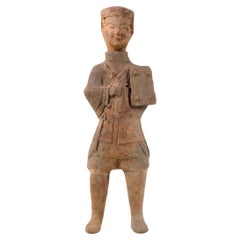
View AllA Han Dynasty Terracotta Figure
Located in Chicago, IL
A large Chinese terracotta tomb figure (Ni Yong) from the Eastern Han Dynasty (25-220 AD), likely from the area of modern-day Sichuan. It appears to depict a groom in full costume an...
Category
Antique 15th Century and Earlier Chinese Antiquities
Materials
Terracotta
$12,600 Sale Price
30% Off
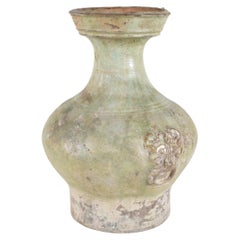
A Han (206BC -220AD) Glazed Hu Vessel
Located in Chicago, IL
This is a fine, heavily patinated example of a Han hu wine storage vessel, buried for the afterlife. The compressed globular body narrows to a slender waisted neck, covered with a da...
Category
Antique 15th Century and Earlier Chinese Han Antiquities
Materials
Terracotta
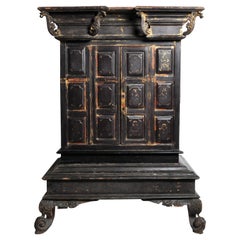
Burmese Temple Manuscript Cabinet with Original Patina
Located in Chicago, IL
This monumental manuscript cabinet is from Rangoon, Burma and made from teak wood, lacquer, and gold leaf. This manuscript cabinet features its orig...
Category
Antique Mid-19th Century Burmese Cabinets
Materials
Gold Leaf
$2,500 Sale Price
79% Off
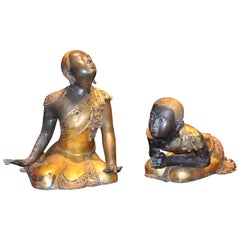
Pair of Patinated Gilt Bronze Buddhist Apostles
Located in Chicago, IL
These marvelously fluid and artistic figures were cast from bronze in the style of Northern Thailand and Burma. According to Buddhist tradition, the Buddha had two first Chief Disciples, Sāriputta and Moggallāna. They were wealthy young men seeking after higher knowledge and enlightenment and always depicted in elegant robes and often with unshaven heads. Depictions of these greatly -revered apostles are often found along side Buddha statues and holy angels...
Category
21st Century and Contemporary Thai Figurative Sculptures
Materials
Bronze
$9,800 Sale Price / set
69% Off
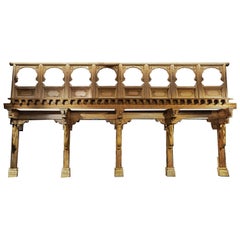
Monumental 19th Century Indian Building Facade
Located in Chicago, IL
This magnificent building facade was once part of a grand mansion in Gujarat, India. It is entirely made from Teakwood, which is highly resistant to in...
Category
Antique 19th Century Indian Anglo Raj Architectural Elements
Materials
Teak
$84,000 Sale Price
30% Off
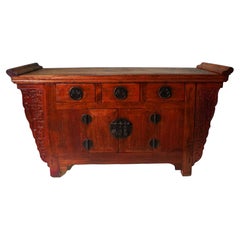
A C. 1900 Beijing Sideboard with Carved Spandrels and Original Lacquer
Located in Chicago, IL
This is a classic example of a “Beijing” or Tianjin” sideboard, so-called because of their origin in this region of northeastern China. This compact chest has three drawers with two ...
Category
Early 20th Century Chinese Sideboards
Materials
Elm
Still Thinking About These?
All Recently ViewedMore Ways To Browse
Antique Terracotta Horse
Han Horse
Chinese Horse Terracotta
Han Dynasty Horse
Terra Cotta Horse
Chinese Terra Cotta Horse
Han Dynasty Terracotta Horse
Burma Shan Period 16th Century
Han Dog
Northern Qi
Tibetan Conch Shell
Ancient Sword
Antique Buddha House
Antique Slingshot
Mandarin Hat
Neolithic Amphora
Northern Qi Dynasty
Persian Antiquities