Want more images or videos?
Request additional images or videos from the seller
1 of 9
Japanese Antique Samurai Handcuffs, Meiji Period
Price:$750
$795List Price
About the Item
- Dimensions:Height: 3.5 in (8.89 cm)Width: 9 in (22.86 cm)Depth: 0.75 in (1.91 cm)
- Style:Edo (Of the Period)
- Materials and Techniques:
- Place of Origin:
- Period:
- Date of Manufacture:19th Century
- Condition:Wear consistent with age and use.
- Seller Location:South Burlington, VT
- Reference Number:1stDibs: LU128929427803
About the Seller
5.0
Platinum Seller
Premium sellers with a 4.7+ rating and 24-hour response times
Established in 1990
1stDibs seller since 2015
2,425 sales on 1stDibs
Typical response time: 1 hour
Authenticity Guarantee
In the unlikely event there’s an issue with an item’s authenticity, contact us within 1 year for a full refund. DetailsMoney-Back Guarantee
If your item is not as described, is damaged in transit, or does not arrive, contact us within 7 days for a full refund. Details24-Hour Cancellation
You have a 24-hour grace period in which to reconsider your purchase, with no questions asked.Vetted Professional Sellers
Our world-class sellers must adhere to strict standards for service and quality, maintaining the integrity of our listings.Price-Match Guarantee
If you find that a seller listed the same item for a lower price elsewhere, we’ll match it.Trusted Global Delivery
Our best-in-class carrier network provides specialized shipping options worldwide, including custom delivery.You May Also Like
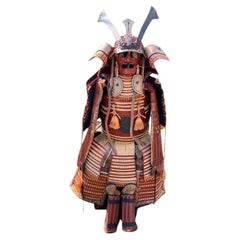
Japanese Red Samurai Armour Beginning of Meiji period 1900s
Located in Paris, FR
This is an armour of samurai. It was made around 1900s in Meiji era. This armour was not used in actual war so it was made as decoration, because of that, it is in good condition as its age.
There are some scratches and missing parts, if you need some more information, please let us know, we will respond you as soon as possible and send more photos.
This armour can be folded in a box. The box is getting damaged so it is not in good condition. We might send this armour in other box.
Dimensions: 50 x 50 x H170 cm
Scholars agree that Japanese armour first appeared in the 4th century, with the discovery of the cuirass and basic helmets in graves. During the Heian period, the unique Japanese samurai...
Category
Antique Early 1900s Japanese Meiji Antiquities
Materials
Metal, Iron
Japanese Samurai Figure Hinaningyo, Edo Period
Located in Munich, Bavaria
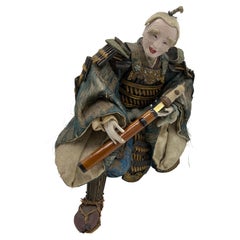
Antique samurai doll called Hinaningyo; Japan, late EDO period
Praised at the Tang-no-sekku boys' festival on May 5th as a sign of bravery, embodying the...
Category
Antique Mid-18th Century Japanese Antiquities
Materials
Textile, Wood
Rare Antique Original high Ranking Edo period Samurai armor Yoroi Japan Daimyō
Located in Ijzendijke, NL
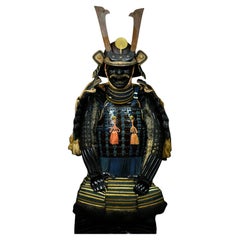
This complete Edo-period samurai armor is an exceptional example of the refined martial elegance and ceremonial grandeur associated with Japan’s warrior aristocracy. Every component reflects a precise harmony of functionality, symbolism, and prestige.
At the heart of the set is a superb suji-bachi kabuto, constructed from multiple riveted iron plates arranged with flawless symmetry and enriched by a beautifully aged patina. It is crowned with a gilt tehen no kanamono, and the imposing maedate presents a pair of antler-like blades framing a gilded sun disc an emblem of celestial authority and divine lineage.
The Fukigaeshi feature extraordinary gilt dragon ornaments, carved in high relief. Dragons, ancient symbols of protection and power, were reserved for armor of the highest rank, strongly indicating that this set belonged to a Daimyō or high-ranking retainer.
The menpō, lacquered in deep black, includes a natural-hair moustache and an articulated jaw (resseibō), lending the face a vivid sense of character. Below it, the shikoro is composed of finely lacquered blue-and-gold plates, meticulously laced with silk.
The okegawa ni-mai dō cuirass is finished in a dark brown lacquer and laced in deep indigo silk, complemented by elegant orange ceremonial tassels a hallmark of formal presentation armor. The sode (shoulder guards) retain their rare bear-fur trimming, an expensive and status-laden material symbolizing courage and noble rank.
Completing the ensemble are beautifully made kote, haidate, and suneate, each executed with rich fabrics and refined lacquer work. A butterfly mon (chō-mon) appears on the leg guards an elegant symbol of transformation, adding a poetic contrast to the armor’s martial presence.
The extensive use of gilding, the rare bear-fur details, and the prominent dragon motifs confirm this as a piece created for the highest echelons of samurai society. It is a masterpiece where ceremonial artistry, symbolism, and authority converge.
Artistic and Historical Significance
This armor epitomizes the Edo-period ideal, when arms and armor transcended their battlefield origins and became expressions of identity, dignity, and cultural refinement. The interplay of dark lacquer, golden ornamentation, and natural materials embodies the spirit of bushidō discipline, inner strength, and beauty through restraint.
Whether displayed in a private collection, gallery, office, or interior setting, this armor commands attention. Its presence transforms any space, making it a truly museum-worthy centerpiece for collectors of Japanese, military, or historical art.
The set includes its traditional stand and storage box. As with all antique armor...
Category
Antique 17th Century Japanese Japonisme Antiquities
Materials
Metal
$41,886
Free Shipping
H 63 in W 23.63 in D 19.69 in
Pair of Japanese Edo Period 18th/19th century Iron Samurai Abumi Stirrups
Located in New York, NY
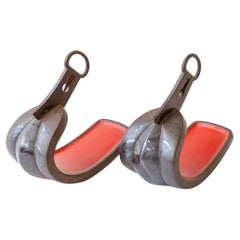
A pair of antique Japanese samurai Abumi (horse riding stirrups) from the Edo period (1615-1868)
Abumi often have a distinctive shape, curving up and backward at the front to achiev...
Category
Antique Mid-19th Century Japanese Edo Antiquities
Materials
Silver, Iron
$3,200 / set
H 10 in W 11 in D 5.5 in
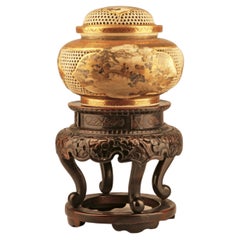
Japanese Edo-Meiji Period Satsuma Incense Burner (Koro) and Wooden Support Table
Located in North Miami, FL
Japanese 19th century Edo-Meiji Period Satsuma stoneware incense burner (Koro) with small wooden support table
By: unknown
Material: ceramic, stoneware, wood, enamel, paint
Techniqu...
Category
Antique 19th Century Japanese Edo Antiquities
Materials
Enamel
$2,700 / set
H 11.5 in Dm 7 in
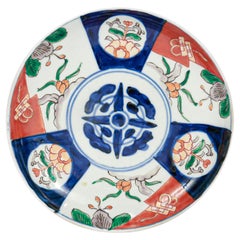
Antique Meiji Japanese Imari Plate
Located in Philadelphia, PA
A fine antique Japanese Imari plate.
With a white ground and decorated with geometric and floral devices in blues, reds, oranges, and oranges. The blue cross device to the middle is reminiscent of a shimazu mon.
The exterior of the rim has blue underglaze devices and accent lines to the footrim.
Simply a wonderful Meiji porcelain plate...
Category
Early 20th Century Japanese Meiji Antiquities
Materials
Porcelain
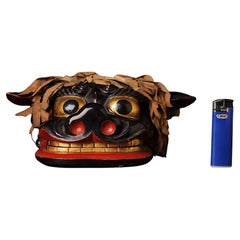
Antique Japanese Lacquered Shishi-gashira Lion Mask – Edo to Meiji Period
Located in Fukuoka, JP
A finely crafted traditional Japanese Shishi-gashira (lion head), historically used in ceremonial Shishimai lion dances—a performing art believed to wa...
Category
Antique 19th Century Japanese Antiquities
Materials
Wood, Lacquer
$960
H 3.94 in W 5.91 in D 9.45 in
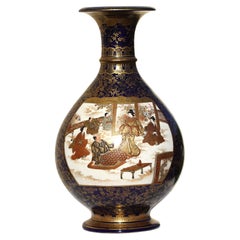
Japanese Satsuma Earthenware Vase by Kinkozan, Meiji Period
By Kinkozan
Located in West Palm Beach, FL
A Japanese Satsuma Earthenware Vase by Kinkozan, Meiji period (1868-1912)
The body inset with two panels, one depicting figures seated around a table, the other painted with a joyful scene in a shrine, all reserved on a blue ground decorated with a gilt flower pattern, signed Nihon Kyoto Kinkozan zo...
Category
20th Century Antiquities
Materials
Ceramic
Satsuma Earthenware Vase and Cover, Japanese, Meiji Period
By Satsuma
Located in West Palm Beach, FL
A Satsuma Earthenware vase and cover,
Japanese, Meiji period, (1868-1912)
decorated in polychrome enamels and gilt over a clear, crackled glaze, delicately painted with samurai on ...
Category
Antique 1890s Antiquities
Materials
Ceramic
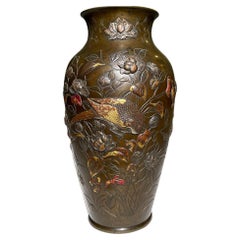
Japanese Antique Bronz Gilt Vase with Flower and Bird Design, Meiji Period
Located in Chuo-ku, Tokyo
This work is produced by Egawa, a master craftsman from the Meiji era.
It can be said to be a representative of brilliant metalworking technology.
"Kaga zougan", an excellent met...
Category
Antique Late 19th Century Japanese Antiquities
Materials
Bronze
$6,000
H 11.82 in Dm 10.04 in
More From This Seller
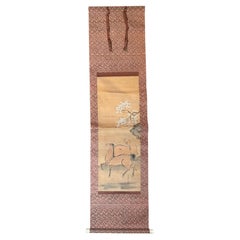
View AllJapanese Antique Bold Hand-Painted "Two Horses" Silk Scroll, Meiji Period
Located in South Burlington, VT
A fine and bold Japanese hand-brushed, hand-painted silk scroll of two horses below plumb tree mountain- worthy of your favorite room
Hand painting on silk in simple soft pleasing co...
Category
Antique Late 19th Century Japanese Meiji Paintings and Screens
Materials
Silk
$150 Sale Price
33% Off
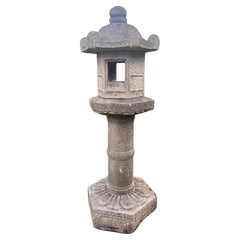
Japan Tall Antique Classic Edo Period Kasuga Stone Lantern
Located in South Burlington, VT
An early antique beauty with all original pieces.
Please view our video.
Japan, a tall and stone lantern with fence like engraved designs on its firebox , carefully crafted in six ...
Category
Antique 19th Century Japanese Edo Planters and Jardinieres
Materials
Stone
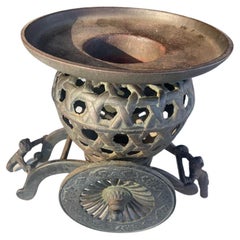
Japan Early Ikebana Planter Garden Cart with Children, Meiji Period
Located in South Burlington, VT
A rare 19th century hard to find Japanese Usubata Flower Planter Cart "Norimono",
Late Meiji Period.
Japan, this handsome quality old style "garden cart" ikebana planter is an exceptionally rare find and an authentic old work of Japanese art.
Brilliantly designed and a handsome plant presentation with removable ikebana vase inserted into an openwork wicker basket set on a wheeled cart...
Category
Antique Late 19th Century Japanese Meiji Lanterns
Materials
Iron
$180 Sale Price
69% Off
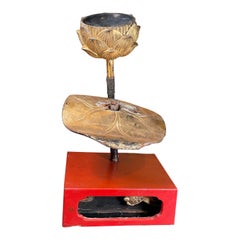
Japanese Fine Antique Gilt and Red Lacquer Lotus Bud Flower, Edo Period 19th C
Located in South Burlington, VT
From our recent Japanese acquisitions, a rare find
Antique Original Japanese temple "blossoming lotus" flower bud stem including its original red lacquer display base. This finely hand carved wood and lacquered gold flower stem was made for a Buddhist 19th century temple altar. Its flower blossoms and leaves symbolize the stages of the path toward enlightenment. The individual parts of each lotus is carved separately then joined in an arrangement and inserted in altar vessels.
Also called "Jyôka" , it is placed on or next to an altar in a Buddhist temple. Made with meticulous techniques. In Buddhism, the lotus is an important symbol of divine enlightenment because it blooms into beautiful flowers while growing in mud. Tsunehana means "a flower that continues to bloom forever" and "a flower that does not wither." For this reason, the flowers represented are in different stages of their life, unfolded lotus leaves, buds and full flowers, thus symbolizing the journey towards Buddhist enlightenment.
This lovely Japanese antique gilt Lotus flower is an early survivor, circa 1840, and a hard to find treasure that was originally placed on or around a temple altar.
This ensemble consists of a single stem, the top most flower, and the bottom leaf- all mounted in the original square red lacquer display base. A gold gilt 3.5 inch long tortoise "minogame" is affixed to the base as seen in the photo.
Its attractive original old patina coupled with much of the original gilding remaining present is just the way we like to find them.
Dimensions: With original red lacquer display stand Height, 17 inches height and 9 inches in width. The lotus flower stem alone measures 16 inches in height.
Provenance: acquired from a Kyoto Japanse monk and collector
History of the Japanese turtle "minogame"
One of the most famous is the mythological giant turtle...
Category
Antique 1840s Japanese Edo Sculptures and Carvings
Materials
Wood, Pine
$300 Sale Price
68% Off
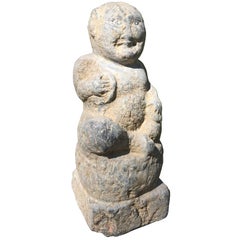
China Ancient Stone Entertainer, Han Dynasty 200 AD
Located in South Burlington, VT
China an ancient limestone figure of an Entertainer replete with hands holding tambourines and a top a drum, -for the afterlife- , Han dynasty 206 BC...
Category
Antique 15th Century and Earlier Chinese Han Sculptures and Carvings
Materials
Limestone
$12,000 Sale Price
20% Off
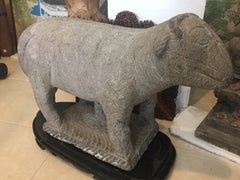
Ancient China Monumental Stone Ram Han Dynasty, 206BC-220AD
Located in South Burlington, VT
China, a large votive model of a stone ram, Han dynasty (206BC-220AD)
Dimensions: 45cm, 18 inches high and 65cm, 26 inches length and 25cm, 10 inches wi...
Category
Antique 15th Century and Earlier Chinese Han Sculptures and Carvings
Materials
Limestone
$17,600 Sale Price
54% Off
Still Thinking About These?
All Recently ViewedMore Ways To Browse
Antique Samurai
Meiji Samurai
Edo Samurai
Japanese Shell Art
Han Dynasty Court Lady
Han Dynasty Pottery Heads
Hongshan Sculpture
Life Size Soldier Statue
Ming Dynasty Scroll
Ming Horse And Rider
Schist Buddha
Tibetan Prayer Wheel
Vung Tau Vase
Walking Buddha
Wei Horse
Afghanistan Buddha
Ancient Luristan Bronze
Antique Wood Foot Warmer