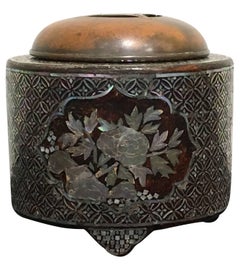
Items Similar to Japanese Inlaid Paulownia Tabako-Bon, c. 1930

Want more images or videos?
Request additional images or videos from the seller
1 of 7
Japanese Inlaid Paulownia Tabako-Bon, c. 1930
$680
£517.81
€596.24
CA$963.62
A$1,036.51
CHF 553.94
MX$12,217.51
NOK 6,983.91
SEK 6,384.62
DKK 4,454.92
About the Item
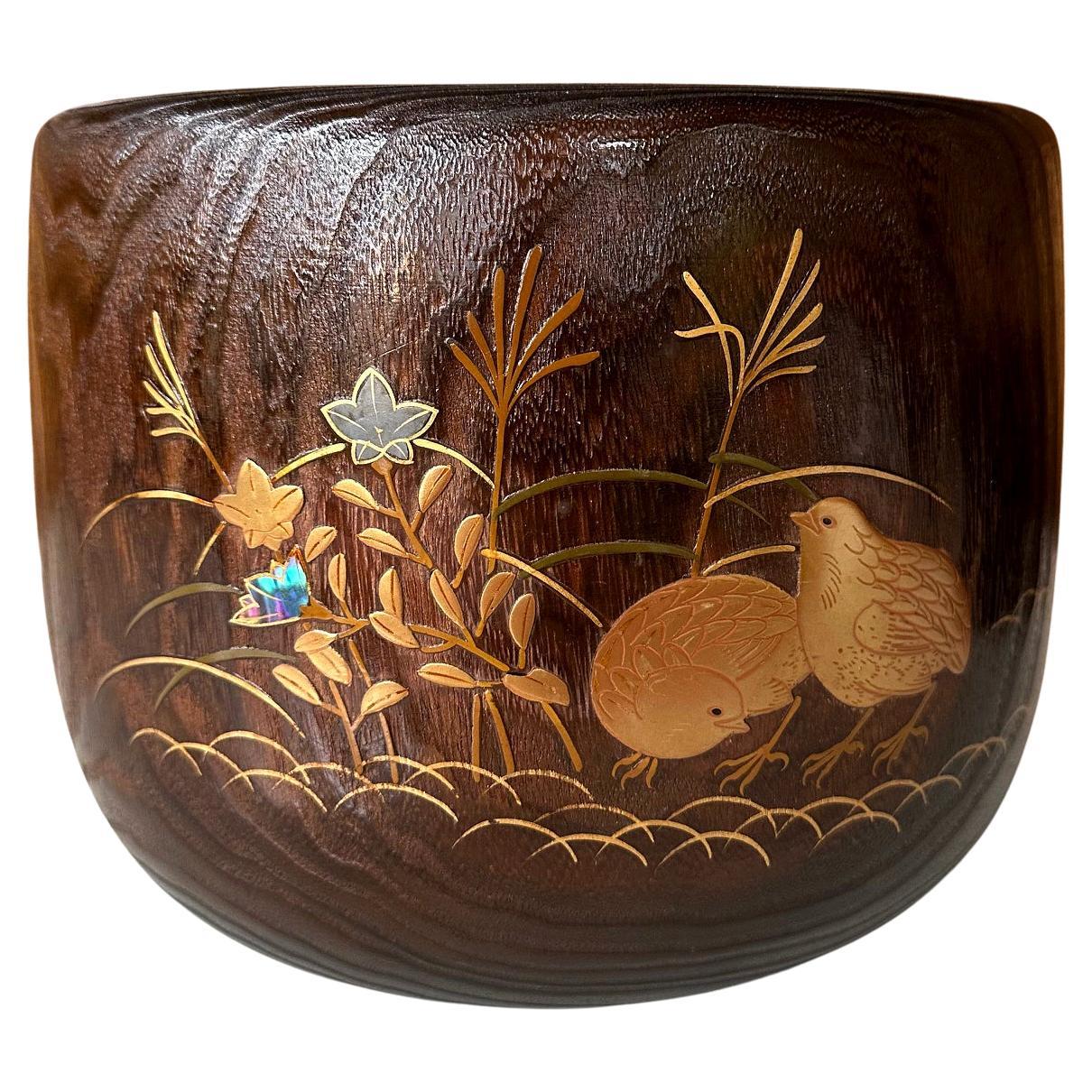
This wooden vessel is a Japanese tabako-bon, or 'tobacco tray,' used in tandem with a smoking pipe. Believed to have evolved from the traditional accessories of Japanese incense ceremony, tabako-bons first came into use in the 17th century and were often beautifully decorated to display one's wealth and status.
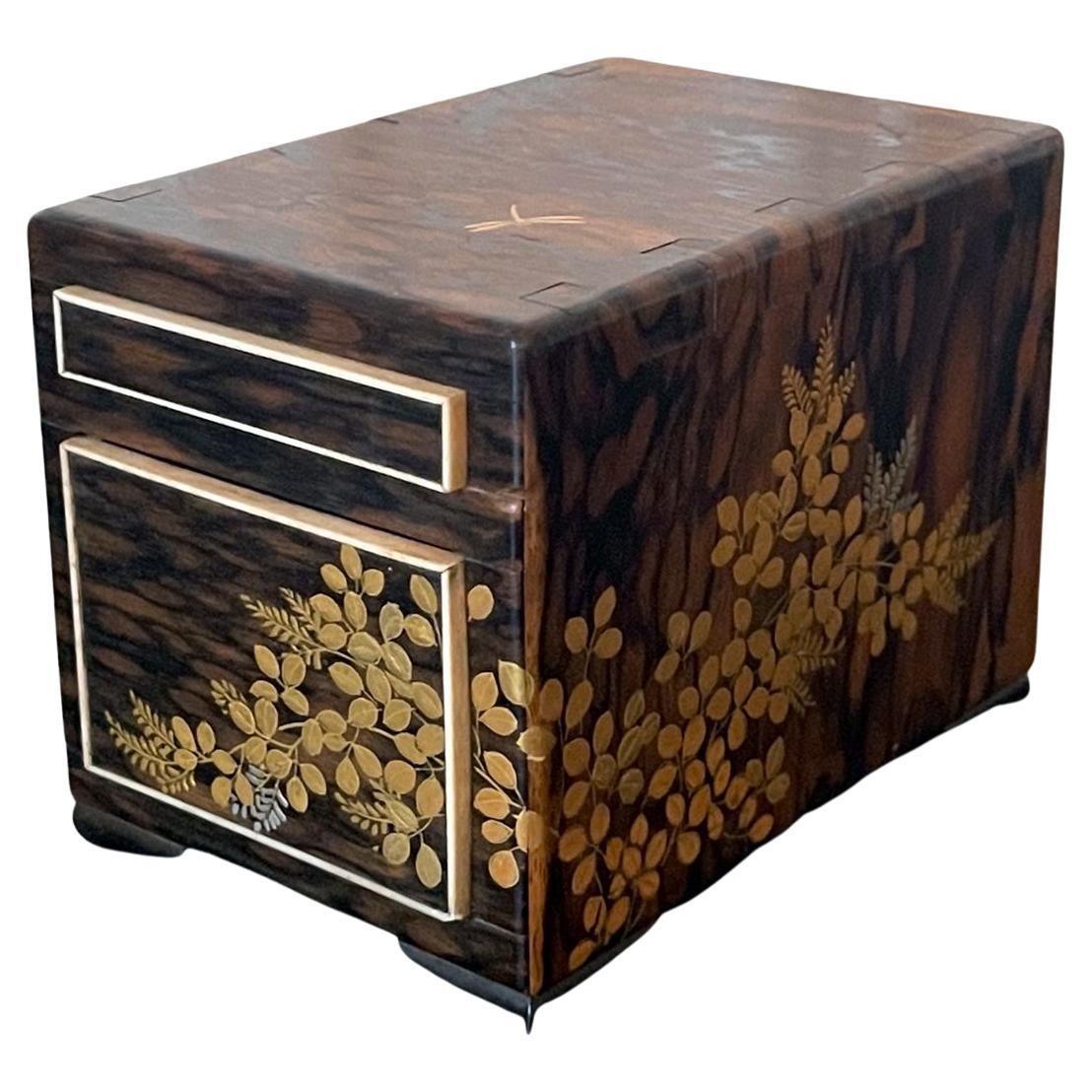
This example dates to the early 20th century and is comprised of a single cross section of paulownia wood (kiri). Metal inlay shaped as cherry blossoms, maple leaves, and a floating duck decorate the top and sides, with added detail applied with red lacquer and gilding. The copper dish set into the top is a small hibachi (hi-ire) and held lit coals used to light one's pipe. The second, smaller dish holds a length of bamboo, used as a receptacle for ash and waste. This wooden tabako-bon has gained a wonderful patina over time and lives on as a charming keepsake of the past.
Additional Dimensions:
With Handles Upright: 6.25"Height
Hibachi Interior: 3.25"Diameter x 2"Height.
- Dimensions:Height: 3.25 in (8.26 cm)Diameter: 6.25 in (15.88 cm)
- Style:Taisho (Of the Period)
- Materials and Techniques:
- Place of Origin:
- Period:
- Date of Manufacture:circa 1930s
- Condition:Wear consistent with age and use.
- Seller Location:Chicago, IL
- Reference Number:Seller: CANT0011stDibs: LU820028372132
About the Seller
5.0
Platinum Seller
Premium sellers with a 4.7+ rating and 24-hour response times
Established in 1997
1stDibs seller since 2006
1,760 sales on 1stDibs
Typical response time: 2 hours
- ShippingRetrieving quote...Shipping from: Chicago, IL
- Return Policy
More From This Seller
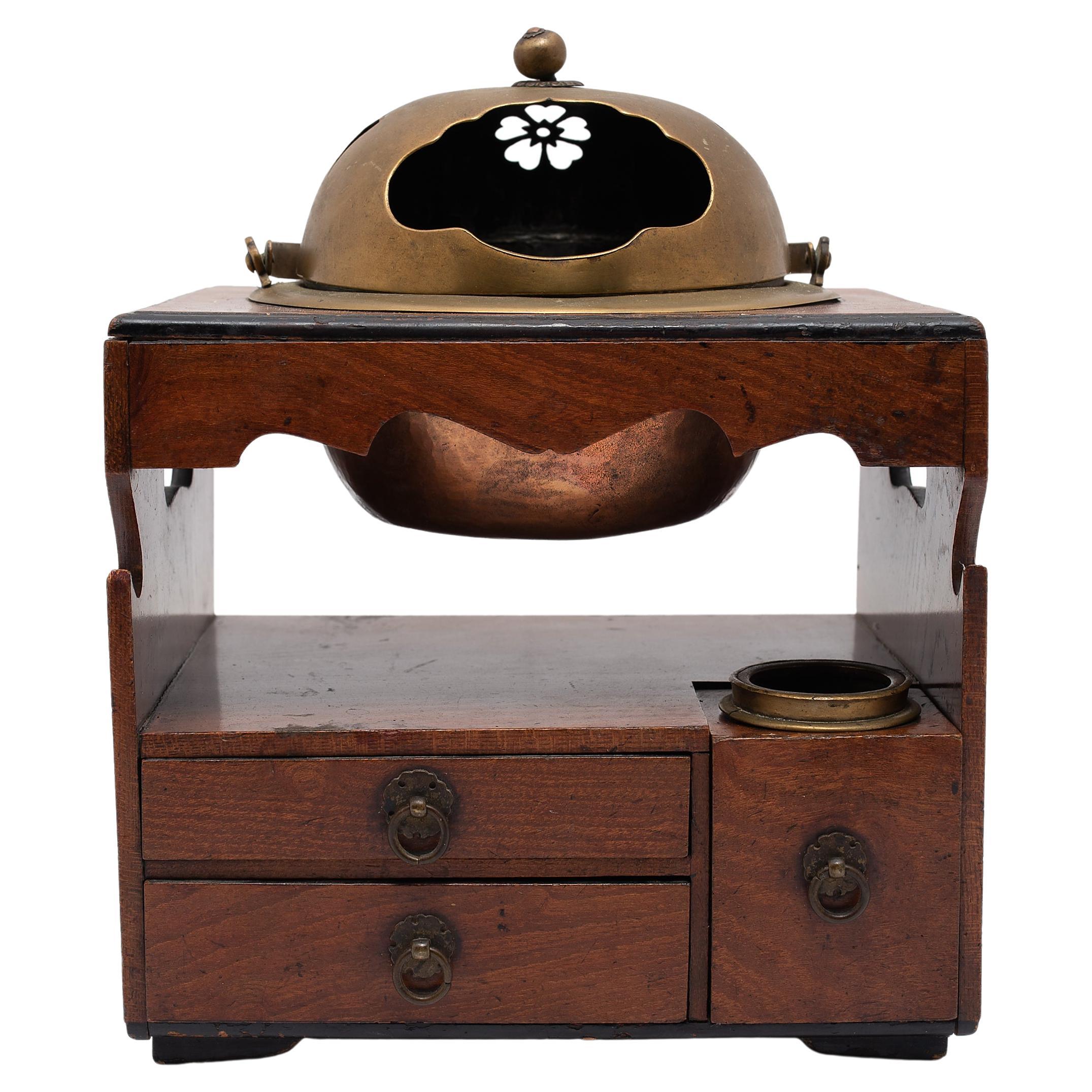
View AllJapanese Keyaki Elm Tabako-Bon, c. 1900
Located in Chicago, IL
This box with many drawers is a Japanese tabako-bon, or 'tobacco tray,' used to store tobacco and smoking accessories. Believed to have evolved from the t...
Category
Antique Late 19th Century Japanese Meiji Snuff Boxes and Tobacco Boxes
Materials
Brass
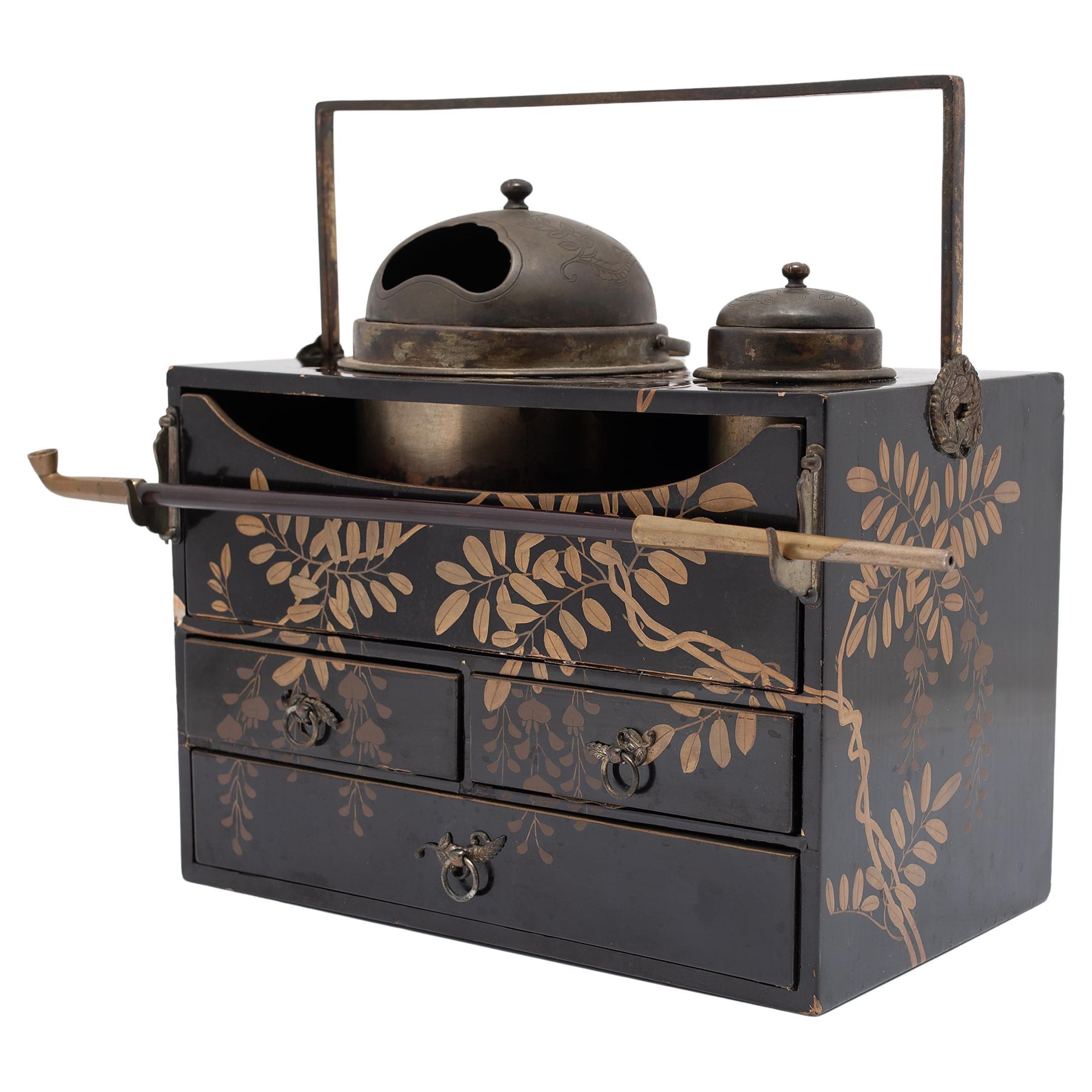
Japanese Gilt Takamaki-E Tabako-Bon, C. 1850
Located in Chicago, IL
This box with many drawers is a Japanese tabako-bon, or 'tobacco tray,' used to store tobacco and smoking accessories. Believed to have evolved from the t...
Category
Antique Mid-19th Century Japanese Meiji Lacquer
Materials
Brass
Japanese Spotted Bamboo Tobacco Inro, circa 1850
Located in Chicago, IL
Because traditional Japanese kimono didn't include pockets, men and women carried their belongings in small compartments known as inro. Hung from the obi sash belted around the waist and secured by carved netsuke beads, inro were worn as fashionable accessories and often crafted of fine materials.
Paired with a cylindrical case that once held a thin smoking pipe (kiseru), this 19th century inro was likely used for storing shredded tobacco. Both components are carved from spotted bamboo...
Category
Antique Mid-19th Century Japanese Edo Tobacco Accessories
Materials
Bone, Bamboo, Hardwood
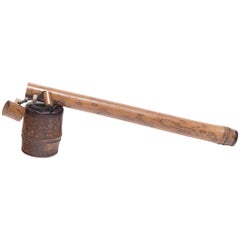
Petite Burmese Yun Betel Box, c. 1900
Located in Chicago, IL
An exquisite example of Burmese artistry, this palm-sized container dates to the late 19th century and was likely originally used as a betel box (kun-it). A blend of betel leaves, ar...
Category
Antique Late 19th Century Burmese Folk Art Lacquer
Materials
Bamboo
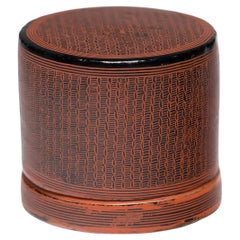
Japanese Tokyo Shop Tabako-Bon
Located in Chicago, IL
This wooden box is a Japanese tabako-bon, or 'tobacco tray,' used to store tobacco and smoking accessories. Believed to have evolved from the traditional ...
Category
Early 20th Century Japanese Taisho Snuff Boxes and Tobacco Boxes
Materials
Brass, Sheet Metal
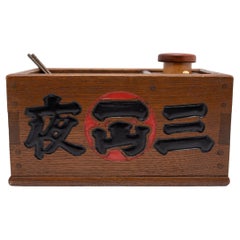
Japanese Woven Bamboo Tabako-bon, c. 1900
Located in Chicago, IL
This woven basket is actually a Japanese tabako-bon, or 'tobacco tray,' used as a portable hibachi for lighting tobacco pipes. Believed to have evolved from the traditional accessories of Japanese incense ceremony, tabako-bons first came into use in the 17th century and were often beautifully decorated to display one's wealth and status. This tabako-bon is woven of smoked bamboo and features a ceramic...
Category
Early 20th Century Japanese Meiji Decorative Baskets
Materials
Ceramic, Bamboo
You May Also Like
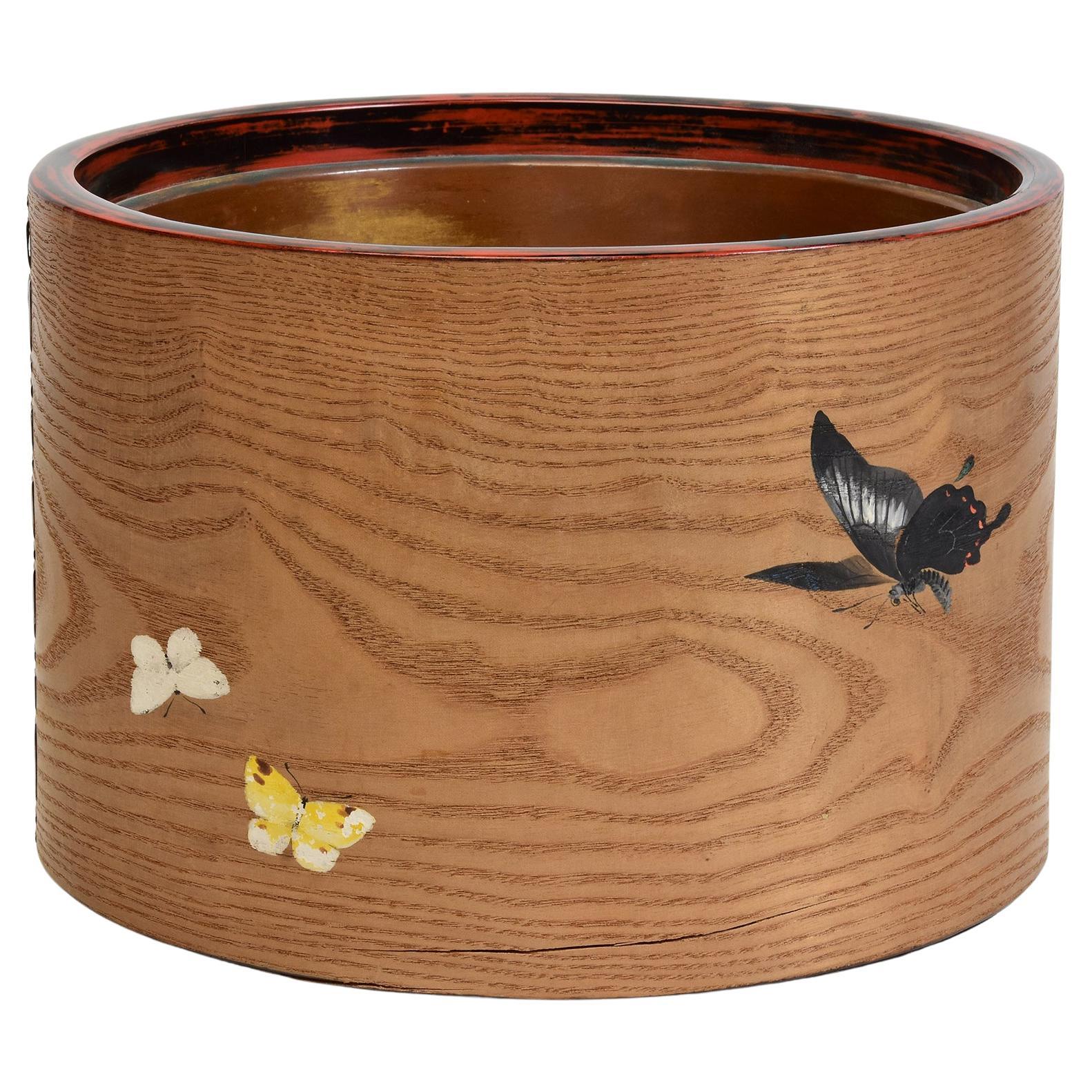
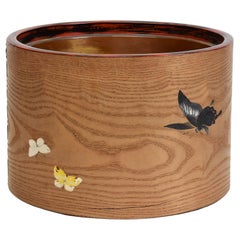
Early 20th Century, Showa, Antique Japanese Wooden Hand Painted Pot
Hibachi
Located in Sampantawong, TH
Antique Japanese wooden hand painted Hibachi.
Hibachi is a traditional Japanese heating device.
Age: Japan, Showa Period, Early 20th Century
Size: Height 18.7 C.M. / Width 27.5 C.M...
Category
Early 20th Century Japanese Antiquities
Materials
Wood
$760 Sale Price
20% Off
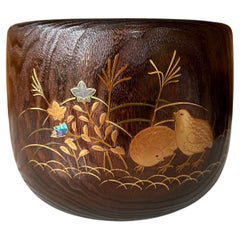
Fine Japanese Hibachi Lacquer with Inlays Meiji Period
Located in Atlanta, GA
A fine Japanese wood Hibachi with copper insert circa 1900-30s end of Meiji to Taisho Period. It can be used as a unique planter or to showcase a...
Category
Early 20th Century Japanese Meiji Lacquer
Materials
Copper
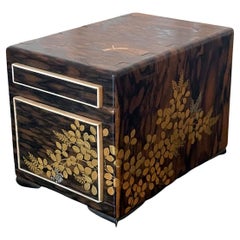
Fine Miniature Japanese Kodansu with Lacquer Inlays
Located in Atlanta, GA
A fine Japanese miniature kodansu constructed from Kaki wood (Persimmon) circa 19th century, late Meiji period. With its expressive exotic wood grains and exposed tenon construction,...
Category
Antique Late 19th Century Japanese Meiji Lacquer
Materials
Wood
Kobako in nashiji lacquer imitating wood texture, lid decorated with an ikebana
Located in PARIS, FR
Imposing kobako in nashiji lacquer on a black ground, decorated with a motif imitating wood grain. The lid is adorned with an ikebana basket (hanakago) containing a bouquet of remark...
Category
Antique Early 19th Century Japanese Meiji Lacquer
Materials
Gold

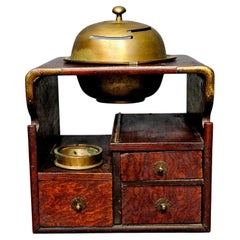
Antique Japanese Keyaki Elm Tabako-Bon, 19th C.
Located in Norton, MA
JAPANESE ELMWOOD TABAKO-BON
19th c. Wooden Tobacco Tray, used to store tobacco and smoking items, the top with domed brass hibachi or hi-ire with removable vented lid for lighting a ...
Category
Early 20th Century Japanese Lacquer
Materials
Brass
Japanese Edo Period Lacquer and Mother-of-Pearl Embellished Stoneware Koro
Located in Austin, TX
A highly unusual Japanese crackle glazed koro (incense burner or censer), lacquered and inlaid with mother-of-pearl embellishment, signed Gyokusen, Ed...
Category
Antique 19th Century Japanese Edo Scholar s Objects
Materials
Copper