Brocade Antiquities
to
1
1
1
230
694
517
480
287
1
1
1
1
1
1
Material: Brocade
Rare set of 2 Japanese suits-of-armour, complete with 2 matching folding screens
Located in Amsterdam, NL
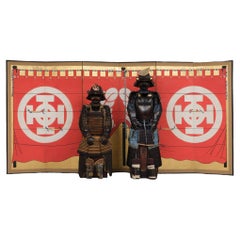
Important unique set of two suits-of-armour (yoroi), complete with two high six-panel screens, that belong together as is indicated by the used family crests (mon). Two crests are used, both belonging to the Nakagawa family of Oka Castle, Ôita prefecture on Kyûshû.
They are:
– the Nakagawa-kurusu, a circle depicting a Celtic-like cross through a ring.
The cross was originally a Christian symbol but after the ban on Christianity in Japan the use of a hidden cross in family crests could continue.
– the Nakagawa-kashiwa, two leaves of the Japanese Emperor Oak turned to each other (dakikashiwa mon).
The remarkable aspect of this ensemble is the presence of matching crests on both the yoroi and the accompanying folding screens. The kurusu and kashiwa crests adorning the yoroi are elegantly replicated on the screens, providing compelling evidence that these pieces form a harmonious and unified set. This exceptional cohesion between the armour and screens further enhances their artistic and historical value.
After the warlord Toyotomi Hideyoshi (1537-1598) had interfered in the battle between the Lord of Bungo Province Ôtomo Yoshi-mune (1558-1605) and the Shimazu of Hyûga Province, he split the Bungo Province in a number of small fiefs and transferred in 1594 Nakagawa Hideshige (1570-1612) from Miki Castle
in the Harima Fief to Oka Castle in Kyûshû.
The Nakagawa family stayed in possession of Oka Castle till the abolishment of the military use of castles in 1873. In 1884 the Nakagawa family received the title of Count (a title in use till the abolishment of aristocracy in 1947).
After the Nakagawa’s left, the castle and the building soon dilapidated and is now known as Oka Castle Ruins. The castle is located in Taketa Village part of Taketa Town in Ôita Province on Kyûshû.
> Set of two tall byôbu (folding screens),
painted with large red jinmaku (camp enclosure curtain) on a gold leaf ground. The curtains show both crests of the Nakagawa family: one screen depicts two Nakagawa-kurusu crests next to a Nakagawa-kashi crest in the middle, and the other shows the symbols the other way round.
Dimensions:
Total width 148.66 in/377.6 cm (2 x 25.35 in/64.4 cm, 4 x 24.48 in/62.2 cm); Height 72.63 in/184.5 cm.
Period: Japan – Late Edo period (First half 19th century), and maybe even older.
> Yoroi with Nakagawa-kashiwa crest:
A Japanese black lacquered suit-of-armour (yoroi) completely laced with orange cords (kuro’urushinuri hi’ito odoshi nimai’dô’maru).
A thirty-two plate suji’bachi kabuto (helmet with raised ridges) with in front a maedate (fore crest) -with traces of gilding- in the shape of flames, resembling a mythical flaming bird flying down. The fukikaeshi (face guards) and the mabizashi (visor) have the Nakagawa-kashiwa crest in gold maki-e lacquer.
Five curved ‘itazane’-plate neck guards (shikoro) laced with orange cords.
Together with an ‘angry man...
Category
18th Century Japanese Antique Brocade Antiquities
Materials
Gold Leaf, Iron, Metal
Related Items
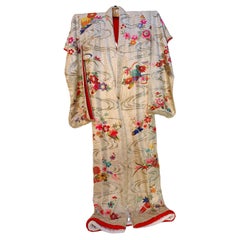
Rare Spectacular Hand-Embroidered Silk Japanese Kimono
Located in Brea, CA
This highly collectable spectacular rare kimono has detailed hand-embroidery throughout accented . This ceremonial Japanese kimono is hand sewn and hand-quilted throughout.
Category
Early 20th Century Chinese Chinese Export Brocade Antiquities
Materials
Silk

Byobu - Japanese Folding Screen
Located in Brescia, IT
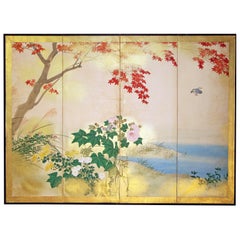
Nice four-panel Japanese screen painted on vegetal paper, depicting a landscape with a red maple, flowers and birds.
The size is very refined and easy to place in a design project.
Category
Mid-20th Century Japanese Showa Brocade Antiquities
Materials
Paper
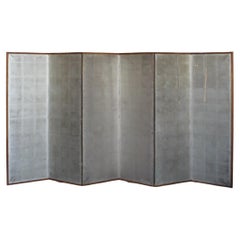
B46 Old Japanese 6panels, Silver Paper, folding Screen, brown-rimmed
Located in Niiza, JP
Material: Paper, wooden frame
1 piece: Width 435 x Height 1370 x Depth 18 mm
Expanded size: Width 2650 mm
Folded size: Width 455 x Height 1370 x Depth 100 mm, weight 9 kg
estimate Pa...
Category
20th Century Japanese Brocade Antiquities
Materials
Paper
$2,000
H 53.94 in W 104.34 in D 0.79 in
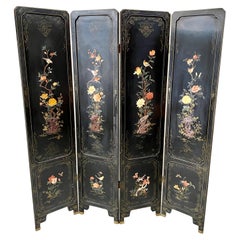
Chinese Black Carved Soapstone Flower Birds 4 Panel Folding Screen Room Divider
Located in DE MEERN, NL
Looking for a statement piece to elevate your living space? Look no further than this midcentury Chinese 4 Panel Carved Soapstone Brutalist Room Divide...
Category
1950s Brutalist Vintage Brocade Antiquities
Materials
Soapstone
$2,641
H 70.87 in W 63 in D 1.19 in
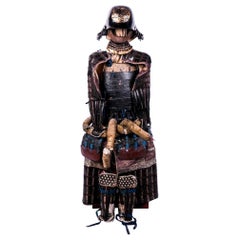
18th Century, Japanese Edo Period Lacquer
Chain Mail Suit of Samurai Armor
Located in Atlanta, GA
Japanese, Edo Period (1603-1868), likely late 18th century.
Step into the rich tapestry of Japanese history with this exquisite 18th-century Edo Period Lacquer & Chain Mail Suit of Armor, a masterpiece that seamlessly blends martial craftsmanship with artistic elegance. Crafted during a period of unparalleled cultural refinement, this armor is a testament to the meticulous skill and dedication of Japanese artisans.
The Gosuko armor, at the heart of this ensemble, embodies the traditional armor design of the Edo Period. Each meticulously lacquered plate, carefully adorned with ornate motifs, reflects not only the functional sophistication required for battle but also the aesthetic sensibilities intrinsic to Japanese art. The incorporation of chain mail adds a layer of flexibility and mobility, harmonizing the demands of protection with the fluidity required in combat.
A crowning glory to this armor is the Kabuto Helmet, an iconic symbol of samurai identity and resilience. Its design not only provides formidable protection but also serves as a canvas for artistic expression. The helmet's form, combined with lacquer embellishments and a crest, creates a striking visual statement, a representation of the wearer's identity and lineage.
To complete the ensemble, the armor comes with a brocade fabric, adding a touch of regality to this already magnificent piece. The interplay of textures and colors in the brocade further elevates the visual impact, turning the act of donning this armor into a ceremonial experience.
For the discerning collector, this piece is presented in a lacquer armor box, meticulously crafted to safeguard and showcase the historical significance of the armor. The accompanying wood armor display stand serves as a stage, allowing this masterpiece to command attention in any setting, whether it be a private collection, museum exhibit, or a distinguished living space.
Owning this 18th-century Japanese Edo Period Lacquer...
Category
18th Century Japanese Japonisme Antique Brocade Antiquities
Materials
Iron, Gold Leaf
$10,000 Sale Price
20% Off
H 55 in W 18 in D 20 in
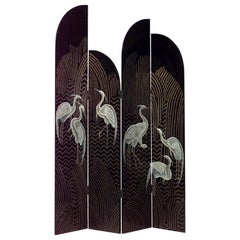
Chinese Coromandel 4-Fold Screen with Graduated Tiered Panels
Located in Queens, NY
Asian Chinese style (20th Century) black coromandel 4 fold screen with heron design and 4 graduated tier panels.
Category
20th Century Chinese Chinese Export Brocade Antiquities
Materials
Wood
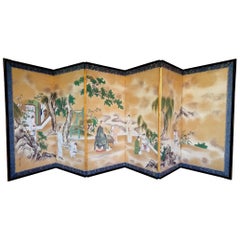
Rare Antique Japanese Folding Screen by Kano Tanshin
By Kano Tanshin
Located in Atlanta, GA
An exquisite Japanese folding screen painted and signed by Kano Tanshin (Morimasa) (1658-1719), circa early Edo Period. An important member of the Kano painter family, the son of Kano Tanyu...
Category
17th Century Japanese Japonisme Antique Brocade Antiquities
Materials
Brass
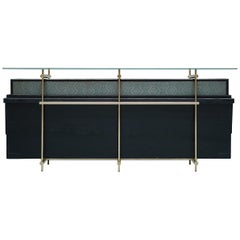
Contemporary Japanese Console with Folding Screen Zen Japanese Modern
Located in Shibuya-ku, Tokyo
Name: Early Dawn
Collection: STILLIFE
A console table that using a wooden box that stores two Japanese gold folding screens. It is a new histor...
Category
2010s Japanese Edo Brocade Antiquities
Materials
Brass
$16,000
H 31.7 in W 71.66 in D 15.75 in
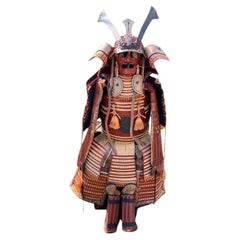
Japanese Red Samurai Armour Beginning of Meiji period 1900s
Located in Paris, FR
This is an armour of samurai. It was made around 1900s in Meiji era. This armour was not used in actual war so it was made as decoration, because of that, it is in good condition as its age.
There are some scratches and missing parts, if you need some more information, please let us know, we will respond you as soon as possible and send more photos.
This armour can be folded in a box. The box is getting damaged so it is not in good condition. We might send this armour in other box.
Dimensions: 50 x 50 x H170 cm
Scholars agree that Japanese armour first appeared in the 4th century, with the discovery of the cuirass and basic helmets in graves. During the Heian period, the unique Japanese samurai...
Category
Early 1900s Japanese Meiji Antique Brocade Antiquities
Materials
Metal, Iron
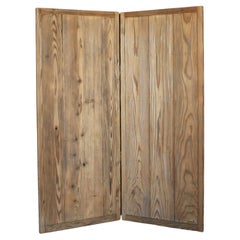
B47 Japanese antique, cedar Byobu folding screen, room dividers
Located in Niiza, JP
Material: Cedar, wood
1 piece: Width 680 x Height 1690 x Depth 33 mm
Expanded size: Width 1400 mm
Folded size: Width 680 x Height 1690 x Depth 70 mm, weight 10 kg
Packaging (4-5 mm t...
Category
19th Century Japanese Antique Brocade Antiquities
Materials
Wood, Cedar
$1,600
H 66.93 in W 55.12 in D 1.19 in
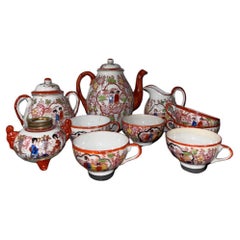
Eggshell porcelain set with lithophany from Japan 1940s in 24k.
Located in Palermo, IT
ncantevole Japanese tea set hand-painted in 24k gold, with Japanese garden landscape and geisha girls. 1940s.
Japanese Eggshell Porcelain Tea Set with Lithophane “Geisha”
Teapot wi...
Category
20th Century Japanese Japonisme Brocade Antiquities
Materials
Porcelain
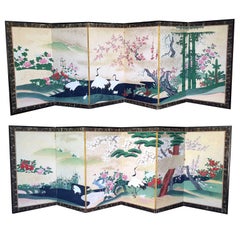
Pair of Rare Antique Japanese Folding Screens with Provenance
Located in Atlanta, GA
An amazing pair of matching antique Japanese folding screen predating 1812-1813, most likely from Kano School. Six panels each depict C...
Category
1810s Japanese Japonisme Antique Brocade Antiquities
Materials
Brass
Previously Available Items
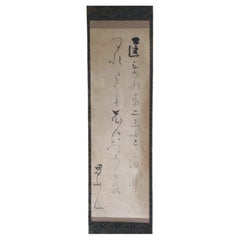
19th century Edo-period Japanese Hanging Scroll Calligraphy of Mad Poetry
Located in Chiba, JP
Hanging scroll with such unstrained and refined calligraphy of ‘Kyoka’ (lit. ‘Mad poetry’ – Humorous style of Japanese tanka poetry with joke or irony or satire) by a late Edo-period...
Category
19th Century Japanese Edo Antique Brocade Antiquities
Materials
Brocade, Wood, Paper
H 71.46 in W 13.78 in D 1.38 in
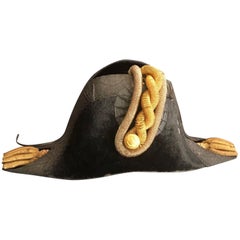
Japanese Antique Imperial Naval Officers Gold Gilt Hat, Meiji Period
Located in South Burlington, VT
A fine Japanese antique Imperial Naval Officers gold gilt hat, authentically worn and used, Meiji period 19th century
A rare find.
This is a very fine example beautifully crafted w...
Category
19th Century Japanese Meiji Antique Brocade Antiquities
Materials
Brocade, Leather
Still Thinking About These?
All Recently ViewedMore Ways To Browse
Schist Buddha
Tibetan Prayer Wheel
Vung Tau Vase
Walking Buddha
Wei Horse
Afghanistan Buddha
Ancient Luristan Bronze
Antique Wood Foot Warmer
Bronze Age Sword
Chinese Dagger
Chinese Dragon Pottery Jar
Chinese Porcelain 8 Immortals
Gandharan Schist
Gerald Hong
Gong Cambodia
Han Dynasty Bowl
Haniwa Heads
Ichimatsu Doll