Items Similar to A Molded Longquan Celadon
Fu Shou
Ewer, Ming Dynasty
Want more images or videos?
Request additional images or videos from the seller
1 of 10
A Molded Longquan Celadon
Fu Shou
Ewer, Ming Dynasty
$3,990
£3,014.30
€3,456.75
CA$5,567.28
A$6,058.91
CHF 3,211.83
MX$72,893.37
NOK 40,736.26
SEK 37,270.82
DKK 25,824.51
About the Item
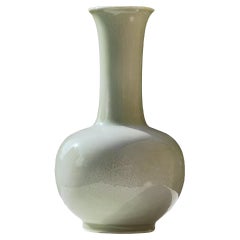
One side of the vase showcases a panel with the Shou character at its center, symbolizing longevity, while the opposite side displays the Fu character, signifying luck. The neck of the vase is adorned with leaves. There are similar types and decoration but varying in shape, resembling a pear, all from the same era and crafted in celadon, often referred to as 'fu shou' vases.
Period: Yuan-Ming Dynasty (1271-1644)
Region: Longquan, China
Medium: Celadon
Type: Ewer
Provenance : Acquired in late 1990s from Hongkong
Reference
1) British Museum - Museum number 1931,1118.5
(Type : Closely related)
2) Christies NEW YORK 24–25 MAR 2022 - Important Chinese Ceramics and Works of Art - Lot 1105
(Price realised : 9,450 USD / Type : Related)
3) Sotheby's New York 19 March 2024 - Chinese Art - Lot 172
(Price range : 15,000 USD - 20,000 USD / Type : Related)
* Ming Dynasty Longquan Celadon
Longquan celadon from the Ming Dynasty typically exhibits a more robust and heavier stoneware body compared to its Song Dynasty predecessors. The Ming era saw an evolution in celadon glaze, achieving a wider spectrum of green hues, from olive to bluish-greens. Ming celadons often had thicker glaze applications, sometimes featuring multiple layers and even multiple firings to attain depth and richness in the glaze.
In contrast, Song Dynasty Longquan celadons are known for their more refined and thinner bodies, with a glaze palette that tends toward more subtle and more uniform green shades. The shapes of Song celadons were usually simpler, emphasizing the glaze's quality and texture.
During the Song period, there was also a greater emphasis on subtle and elegant forms, with less ornate decoration compared to the Ming pieces, which showcased more elaborate decorative motifs, including incised or moulded patterns. Song Dynasty Longquan wares were also highly prized for their thin walls and lightness, reflecting a high level of technical mastery in pottery-making.
Overall, while both dynasties produced celadons of exceptional quality, the Ming Longquan celadons are distinguished by their bolder forms and more varied glaze effects, while the Song Dynasty celadons are celebrated for their simplicity and the pure beauty of their glazes.
About the Seller
4.8
Platinum Seller
Premium sellers with a 4.7+ rating and 24-hour response times
Established in 1999
1stDibs seller since 2023
46 sales on 1stDibs
Typical response time: 1 hour
- ShippingRetrieving quote...Shipping from: seoul, Korea South
- Return Policy
More From This Seller
View AllYue Celadon Ewer, Late Tang-Northern Song Dynasty
Located in seoul, KR
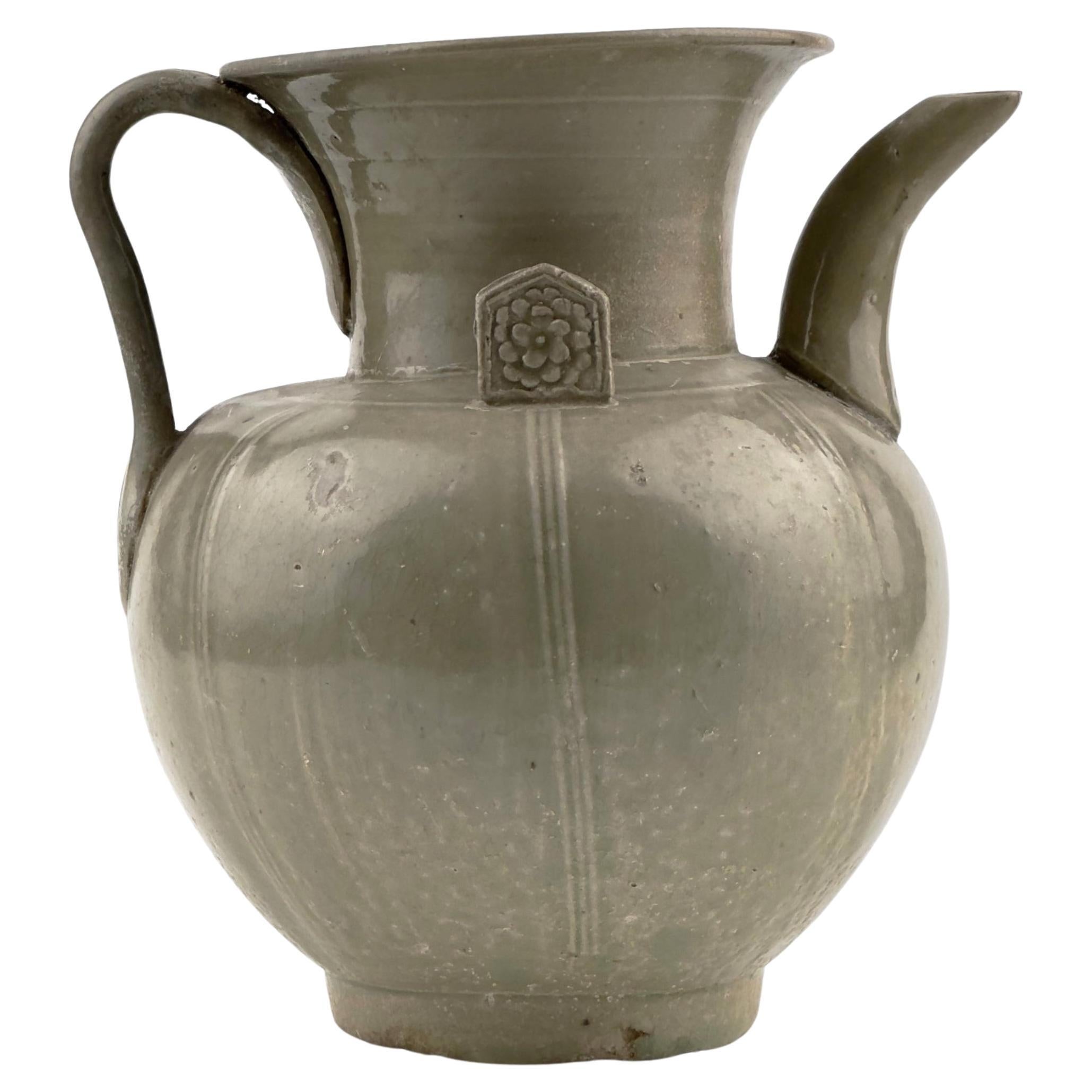
This Yue ware celadon ewer features a gracefully rounded body that expands smoothly, complemented by a wide, flaring mouth. The translucent olive-green glaze envelops the surface, en...
Category
Antique 15th Century and Earlier Hong Kong Tang Antiquities
Materials
Celadon
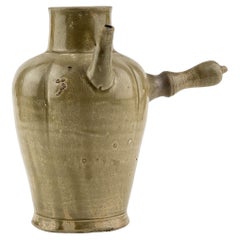
Celadon Ewer with Straight Handle, Tang to Northern Song Dynasty
Located in seoul, KR
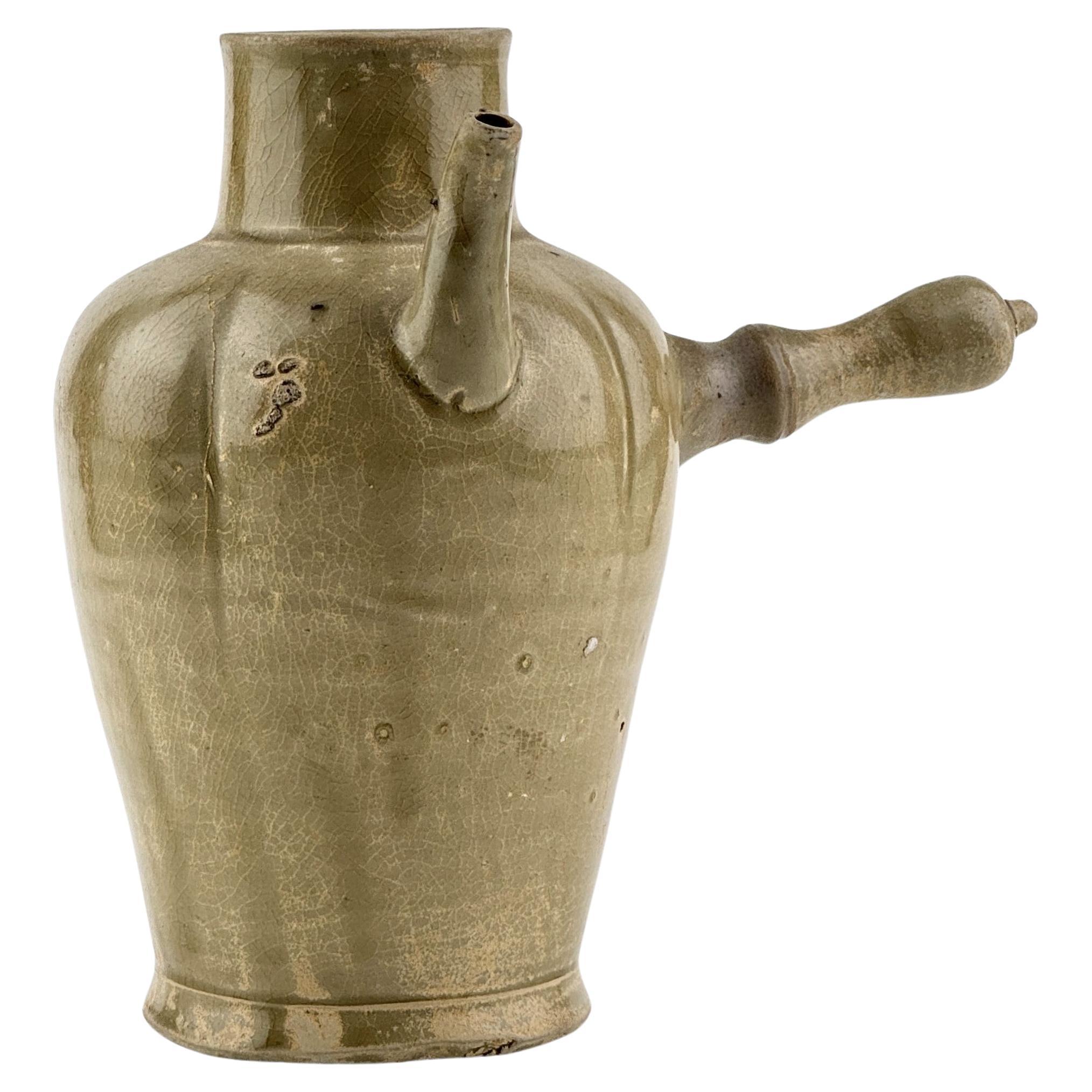
Celadon-glazed ewer characterized by its simple and functional design. The piece features a straight handle extending horizontally from the body and a short spout for pouring liquids...
Category
Antique 15th Century and Earlier Hong Kong Tang Antiquities
Materials
Celadon
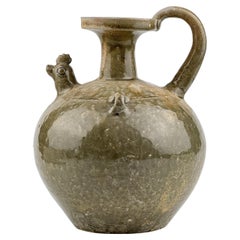
Rare Yue Celadon Chicken-Head Ewer, Jin-Southern Dynasty
Located in seoul, KR
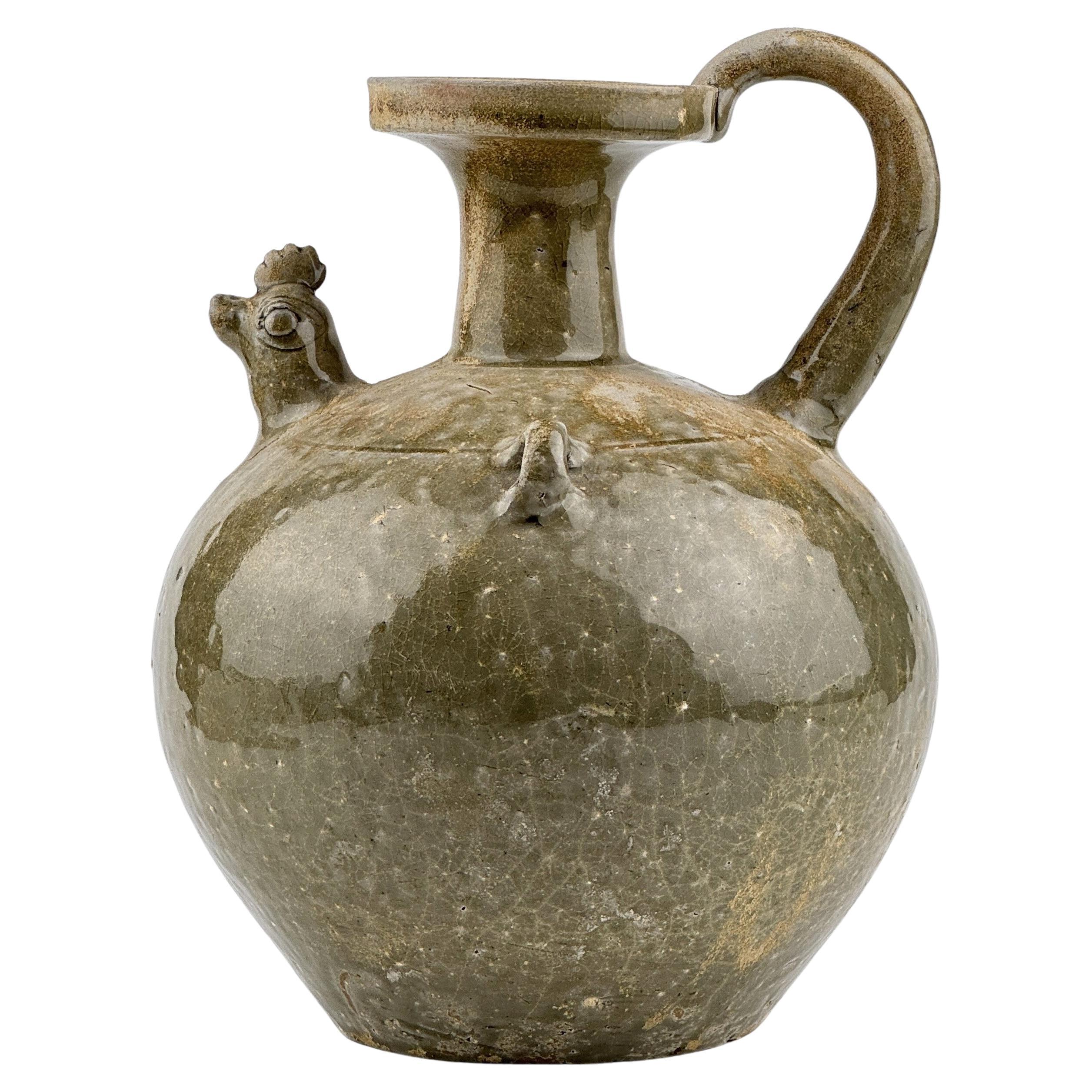
Chicken-head ewers are among the most distinct and emblematic pottery pieces from the Han (206 BC ~ AD 220) to the Tang dynasties. Their production commenced during the Jin dynasty i...
Category
Antique 15th Century and Earlier Hong Kong Han Antiquities
Materials
Pottery
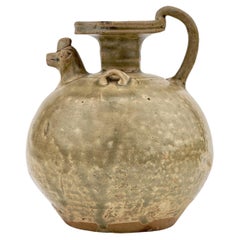
Rare Yue Celadon Chicken-Head Ewer, Jin-Southern Dynasty
Located in seoul, KR
Chicken-head ewers are among the most distinct and emblematic pottery pieces from the Han (206 BC - AD 220) to the Tang (618-907) dynasties. Their production commenced during the Jin...
Category
Antique 15th Century and Earlier Hong Kong Han Antiquities
Materials
Celadon, Stoneware
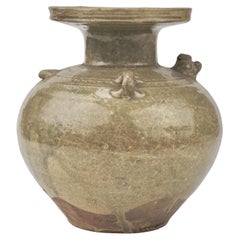
Rare Yue Celadon Chicken-Head Ewer, Jin-Southern Dynasty
Located in seoul, KR
Chicken-head celadon is among the most distinct and emblematic piece from the dynamic yet innovative era spanning from the Han (206 BC - AD 220) to the Tang (618-907) dynasties. Thei...
Category
Antique 15th Century and Earlier Chinese Han Antiquities
Materials
Celadon
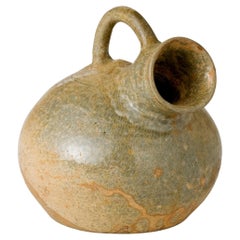
Rare Yue Celadon-Glazed Vessel, Jin dynasty (265-420)
Located in seoul, KR
A Yue celadon vessel from the Jin Dynasty period, notable for its characteristic greenish-glazed pottery which was prominent during this time. The vessel features a globular body wit...
Category
Antique 15th Century and Earlier Hong Kong Han Antiquities
Materials
Stoneware
You May Also Like
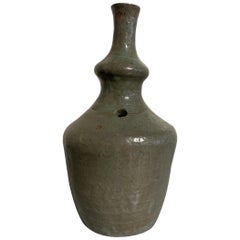
Korean Celadon Glazed Ritual Ewer, Kundika, Goryeo Dynasty, 13th-14th Century
Located in Austin, TX
An understated and very heavily potted celadon glazed Korean ritual ewer or water sprinkler, kundinka, Goryeo Dynasty, 13th-14th century.
The unusu...
Category
Antique 15th Century and Earlier Korean Ceramics
Materials
Stoneware
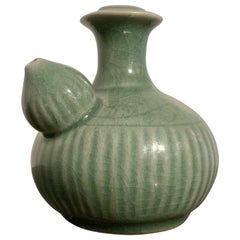
Small Chinese Celadon Glazed Porcelain Kendi, Qing Dynasty, 18th Century, China
Located in Austin, TX
A darling small Chinese celadon glazed kendi, or pouring vessel, mid Qing Dynasty, 18th century, China, for the Southeast Asian market.
The diminutive kendi of typical form, with ...
Category
Antique 18th Century Chinese Qing Ceramics
Materials
Porcelain
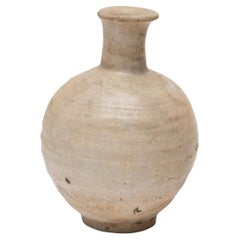
Chinese Ming Celadon Bottle Vase, c. 1500
Located in Chicago, IL
This petite ceramic bottle is a Ming-dynasty (1368-1644) vessel originally used for serving rice wine or spirits. The small round bottle is beautiful in its imperfection, shaped with...
Category
Antique 16th Century Chinese Ming Ceramics
Materials
Earthenware
Antique Chinese pottery green-glazed vase/[Liao Dynasty]/10th century
Located in Sammu-shi, Chiba
We are pleased to introduce a glazed ceramic vase from the Liao dynasty of China, dating from the 10th century, about 1,000 years ago.
The Liao dynasty was established by the Qidan ...
Category
Antique 15th Century and Earlier Chinese Other Vases
Materials
Pottery
![Antique Chinese pottery green-glazed vase/[Liao Dynasty]/10th century](https://a.1stdibscdn.com/antique-chinese-pottery-green-glazed-vase-liao-dynasty-10th-century-for-sale/f_54872/f_442987721743342424199/f_44298772_1743342424463_bg_processed.jpg?width=240)
Chinese Ming Celadon Oil Bottle, c. 1500
Located in Chicago, IL
This petite ceramic vessel is a Ming-dynasty (1368-1644) bottle originally used for storing cooking oil or condiments. Dated to the 15th/16th century, the bottle has a gracefully cur...
Category
Antique 16th Century Chinese Ming Ceramics
Materials
Earthenware
A Neoclassical CHINESE CELADON Ceramic VASE, CHINA 1950
Located in PARIS, FR
A beautiful celadon-glazed ceramic vase, Art Deco, Neoclassical, Shabby Chic, with a superb curved body and a tapered neck, adorned with four magnificent and subtle decorations aroun...
Category
Vintage 1950s Chinese Ceramics
Materials
Ceramic