Egyptian Antiquities
to
1
1
1
1
1
656
1,862
1,320
726
384
1
1
1
Place of Origin: Egyptian
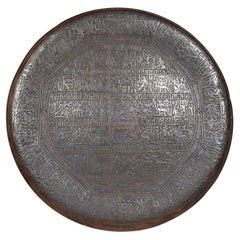
Egyptian Copper Plate with Silver Inlay Hieroglyphics, Early 19th Century
Located in Islamabad, PK
The large-scale copper charger plate with silver inlay is a truly awe-inspiring work of art. Its grand size and intricate design make it a captivating piece that commands attention a...
Category
19th Century Egyptian Antique Egyptian Antiquities
Materials
Silver, Copper
Related Items
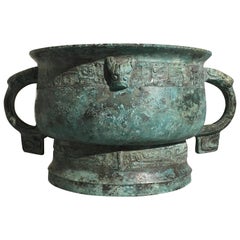
Archaic Chinese Bronze Ritual Vessel, Gui, Early Western Zhou, 11th century BCE
Located in Austin, TX
A stunning and rare Chinese archaic bronze gui, a type of ritual bronze vessel used to hold grain, either for feasting, or for making offerings ...
Category
15th Century and Earlier Archaistic Antique Egyptian Antiquities
Materials
Bronze

$48,000
H 5.13 in Dm 10 in
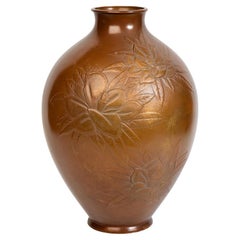
Early 20th Century, Showa, Japanese Bronze Vase
Located in Sampantawong, TH
Japanese bronze vase.
Age: Japan, Showa Period, Early 20th century
Size: Height 40.2 C.M. / Width 27.5 C.M.
Condition: Nice condition overall.
Category
Early 20th Century Egyptian Antiquities
Materials
Bronze
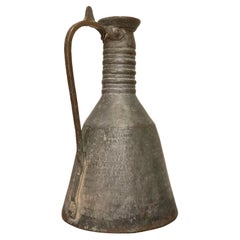
19th Century Middle Eastern Copper Ewer
Located in Basingstoke, Hampshire
A large highly decorative middle eastern copper ewer. Dating from the early 19th century, displaying a charming patination throughout.
Measures: Height...
Category
19th Century Antique Egyptian Antiquities
Materials
Copper
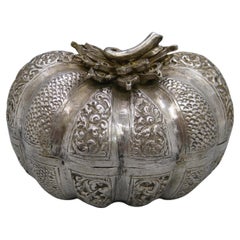
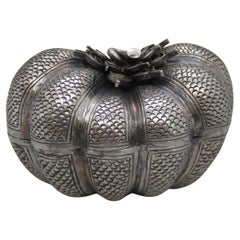
Fine Antique 19C Malaysia Southeast Asia .900 Silver Repousse Pumpkin Box
Located in San Diego, CA
Fine antique 19th century Malaysia Southeast Asia .900 silver box in the form of a pumpkin. Wonderful shape and form. Has repousse relief around the box. Opens and closes as it shoul...
Category
Late 19th Century Antique Egyptian Antiquities
Materials
Silver
$925
H 3 in W 3.75 in D 3 in
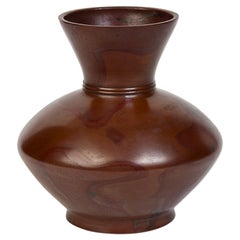
Early 20th Century, Showa, Japanese Bronze Vase
Located in Sampantawong, TH
Japanese bronze vase with nice form, used to decorate single flower arrangement in Japanese traditional tea ceremony.
Age: Japan, Showa Period, Early 20th Century
Size: Height 18.7 ...
Category
Early 20th Century Egyptian Antiquities
Materials
Bronze
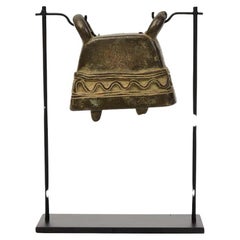
19th Century, Antique Burmese Bronze Cow Bell with Stand
Located in Sampantawong, TH
Burmese bronze cow bell with clapper inside with stand.
Age: Burma, 19th century
Size: height 7 cm / width 8 cm.
Size including stand: height 16.2...
Category
19th Century Antique Egyptian Antiquities
Materials
Bronze
$256 Sale Price
20% Off
H 2.76 in W 3.15 in D 1.78 in
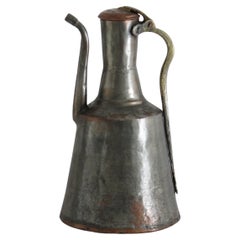
Ewer or Pitcher tinned Copper Turkish / Middle Eastern, Early 19th Century
Located in Lincoln, Lincolnshire
This is a handmade Ewer / Pitcher made from tinned copper and dating to the early 19th Century. It is of Islamic influence made in the Middle East, probably Turkey.
This piece is al...
Category
Early 19th Century Islamic Antique Egyptian Antiquities
Materials
Brass, Copper
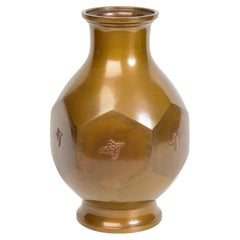
Early 20th Century, Showa, Japanese Bronze Vase
Located in Sampantawong, TH
Japanese bronze vase.
Age: Japan, Showa Period, early 20th century
Size: height 29.1 cm / width 16.3 cm.
Condition: nice condition overall.
Category
Early 20th Century Egyptian Antiquities
Materials
Bronze
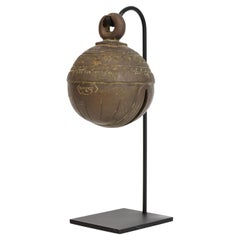
19th Century, Antique Burmese Bronze Elephant Bell with Stand
Located in Sampantawong, TH
Burmese bronze elephant bell with stand.
Age: Burma, 19th Century
Size: Height 12.5 C.M. / Width 9 C.M.
Size including stand: Height 23.5 C.M.
Condition: Nice condition overall...
Category
19th Century Antique Egyptian Antiquities
Materials
Bronze
$384 Sale Price
20% Off
H 9.26 in Dm 3.55 in
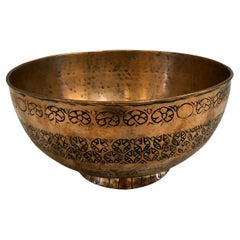
19th Century Persian Copper Bowl
Located in Middleburg, VA
19th Century Persian Copper Bowl. Intricate hand-hammered geometric decoration with a splayed foot and wonderful patination.
An elegant 19th-centu...
Category
19th Century Moorish Antique Egyptian Antiquities
Materials
Metal, Copper
Fine Antique 19C Malaysia Southeast Asia .900 Silver Repousse Pumpkin Box
Located in San Diego, CA
Fine antique 19th century Malaysia Southeast Asia .900 silver box in the form of a pumpkin. Wonderful shape and form. Has repousse relief around the box. Opens and closes as it shoul...
Category
Late 19th Century Antique Egyptian Antiquities
Materials
Silver
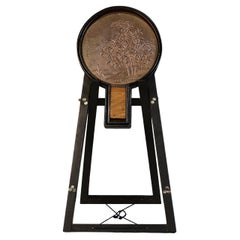
Early 20th Century, Japanese Bronze Mirror with Wooden Case and Stand
Located in Sampantawong, TH
Japanese bronze mirror with wooden case and stand.
Age: Japan, Showa Period, early 20th century
Size of mirror only: Height 40 C.M. / Diamet...
Category
Early 20th Century Egyptian Antiquities
Materials
Bronze
$1,080 Sale Price
20% Off
H 26.7 in W 13.55 in D 13 in
Previously Available Items
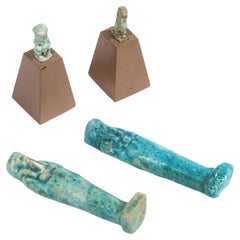
Set of Four Egyptian Antiquities, Pair of Sarcophagus Faience
Two Figurines
Located in New York, NY
This captivating authentic Egyptian Faience set was realized in ancient Egypt circa 3100 BCE. It offers two sarcophagus figurines- suggestive of miniature versions of King Tut's tomb- hand finished in a beautiful turquoise hue (a glaze created by pulverizing the stone into pigment). Additionally, the set features two figurines (one representative of the Egyptian god Anubis), and the other seemingly a depiction of one of the ruler's as a young child also in a turquoise glaze atop volumetric rhombus plinths with tapered sides in a refined terra cotta hue. Full of historical importance (and stunning as stand alone objects) this collection of Egyptian antiquities...
Category
15th Century and Earlier Egyptian Antique Egyptian Antiquities
Materials
Faience
H 2 in W 1.25 in D 1.25 in
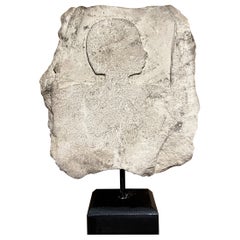
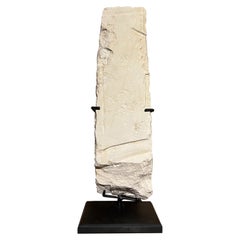
Egyptian figurative limestone architectural fragment
Located in Vosselaar, BE
A fragment of a trial piece of a relief with the upper body and head of a male figure with cropped hair facing right. New Kindom 1550-1070 bC. Acquired on the London art market 2022.
Category
15th Century and Earlier Egyptian Antique Egyptian Antiquities
Materials
Limestone
Egyptian limestone architectural fragment
Located in Vosselaar, BE
A fragment of a rectangulare limestone panel from a larger relief with a portion of a extended arm holding a was sceptre. New Kindom 1550-1070 bC.
Category
15th Century and Earlier Egyptian Antique Egyptian Antiquities
Materials
Limestone
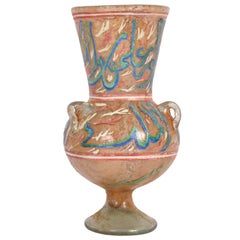
Ancient Antique 16th Century Islamic Calligraphy Mamluk Glass Mosque Lamp 1500
Located in Portland, OR
A rare and ancient Mamluk period Islamic handblown glass mosque lamp, Egypt or Syria, early 1500's.
The lamp of diminutive form & having a flared neck with Islamic calligraphy, the g...
Category
16th Century Islamic Antique Egyptian Antiquities
Materials
Glass
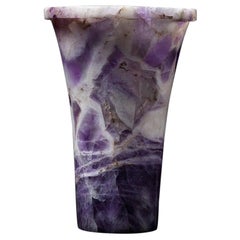
Ancient Egyptian Purple Amethystine Quartz Ointment Vase
Located in London, GB
From the Old Kingdom onwards, many descriptive wall reliefs and paintings can be found depicting the production of various stone vessels . We can infer from these portrayals that the...
Category
15th Century and Earlier Antique Egyptian Antiquities
Materials
Stone
Bronze Osiris
Located in London, GB
This statuette is in keeping with the canonical iconography of Osiris: in his hands, he holds the flagellum, the nekhekh and hekat scepters, and on his head he wears his usual atef c...
Category
15th Century and Earlier Antique Egyptian Antiquities
Materials
Bronze
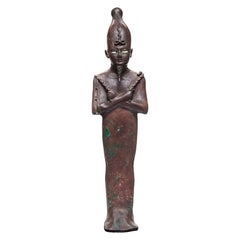
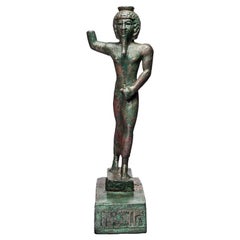
Figure of Onuris
Located in London, GB
This arresting Egyptian bronze depicts Onuris, the god of war and patron of the army. He stands with his leg foot stepping forwards, his muscular arms set in a powerful pose. His rig...
Category
15th Century and Earlier Antique Egyptian Antiquities
Materials
Bronze
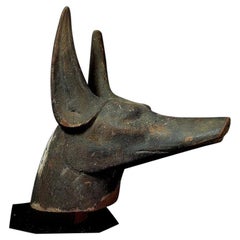
Head of Anubis
Located in London, GB
Anubis the God of Death is among the most iconic gods in ancient Egypt and people during this time knew him as Anpu or Inpu. Anubis is among the oldest deities whose mentioning can b...
Category
15th Century and Earlier Antique Egyptian Antiquities
Materials
Wood
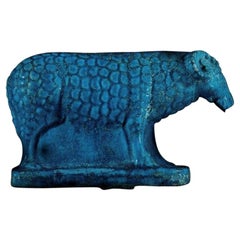
Large Faience Ram
Located in London, GB
Strikingly similar to the Romano-Egyptian Ram currently in the Met this piece depicts a ram, with a highly textured and naturalistically modelled coat, curled horns and a static forw...
Category
15th Century and Earlier Antique Egyptian Antiquities
Materials
Ceramic
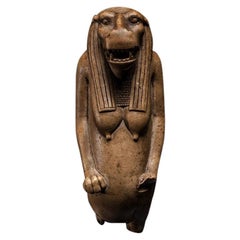
The
Gillot
Taweret
Located in London, GB
This statuette represents the goddess Taweret, an apotropaic goddess, whose domain was the protection of pregnant women and their babies, especially during childbirth. Her threatenin...
Category
15th Century and Earlier Antique Egyptian Antiquities
Materials
Limestone
Ushabti of
Paser
Located in London, GB
An Ushabti is a funerary figurine used throughout ancient Egypt, placed in a tomb to aid as a servant to the deceased, conducting manual labour for them...
Category
15th Century and Earlier Antique Egyptian Antiquities
Materials
Limestone
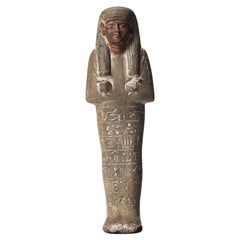
Ushabti of
Kenj
Located in London, GB
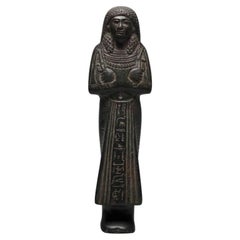
The XIX Dynasty of Ancient Egypt was part of the Egyptian New Kingdom and was founded by Vizier Ramasses I, whom Pharaoh Horemheb chose as his successor to the throne. The XIX Dynasty is best remembered for its military conquests in the lands of Canaan. The relative peace of the XVIII Dynasty gave way to a century of wars, which produced art that attempted to maintain ancestral traditions in order to claim its dynastic lineage and succession to the throne.This large serpentine statue tells of the prominence of administrative art during this period. The figure is an ushabti, a funerary statue that would have been placed in a tomb among the grave goods of the inhabitant, intended to act as a servant for the deceased in the afterlife. The ushabtis would be called upon to perform their menial tasks, each figure's purpose is often attested to by objects in their hands, such as bread-baker holding grain or farmer holding a scythe, and they would be donated by the workers of the deceased to fulfill their roles for them in death. Hieroglyphics could often also be found running the length of their legs giving further clues to their roles and stating whom they intended to work for. These inscriptions were called answers and asserted the figures readiness to be summoned to the gods work The practice of placing ushabtis inside tombs originated in the Old Kingdom, with the earliest evidence from the middle of the third millennium B.C. when they buried next to mummies[2]. They are normally miniature in size, of hard stones such as limestone, granite or serpentine (and occasionally of faience or bronze), and produced in multiples to provide the important deceased with an army of workers. Sometimes so many were produced that they world cover the entire surface floor of a tomb. Due to this commonness, many extant examples survive, in varying qualities, and as a collection of artifacts they provide a unique insight in to the fascinating death customs of the Ancient Egyptians, highlighting their very real belief in an eternal afterlife.This beautifully carved statue holds hoes and a seed sack, indicating they were destined for manual toil in the eternal afterlife amongst the fields growing grain to produce food for the interred. Another agricultural implement with crisscrossing ropes is tucked in to the back of the figure's kilt, making sure he is ready for any farming situation necessary. He wears a long-sleeved shirt with a long pleated kilt, which has a large over-fold and broad beaded collar. He also wears a double wig composed of zig-zags and echeloned curls, and his face has a slightly aquiline nose, with almond-shaped eyes a fixed, determined gaze.A column running the length of his over-fold contains five lines of hieroglyphic inscription that name the owner of the worker (Kenj), and recite chapter VI from the Ancient Egyptian Book of...
Category
15th Century and Earlier Antique Egyptian Antiquities
Materials
Granite