18th Century and Earlier Antiquities
to
171
267
82
764
5
1
1
1
764
642
671
20
291
89
71
35
2
18
12
7
16
11
10
17
2
446
146
132
105
100
740
449
235
231
127
764
764
764
1
Period: 18th Century and Earlier
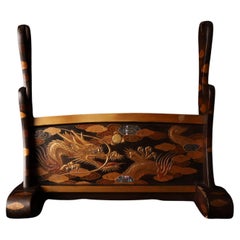
Japanese Gold Maki-e Katana Kake (Sword Stand) with Dragon Motif
Located in Fukuoka, JP
This elegant katana kake (sword stand) is crafted from wood and finished with a rich lacquer coating. Its surface is adorned with a striking gold maki-e depiction of a dragon — a tim...
Category
Japanese Edo Antique 18th Century and Earlier Antiquities
Materials
Gold Leaf
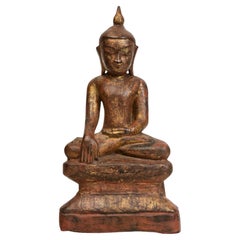
18th Century, Shan, Antique Burmese Wooden Seated Buddha
Located in Sampantawong, TH
Antique Burmese wooden Buddha sitting in Mara Vijaya (calling the earth to witness) posture on a base.
Age: Burma, Shan Period, 18th Century
Size: Height 41.7 C.M. / Width 21.8 C.M....
Category
Burmese Antique 18th Century and Earlier Antiquities
Materials
Wood

$1,320 Sale Price
20% Off
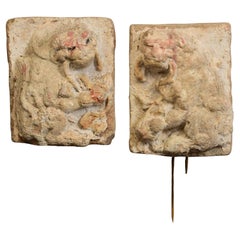
10th - 12th Century, Song Dynasty, A Pair of Antique Chinese Pottery Lion Panel
Located in Sampantawong, TH
A pair of Antique Chinese pottery lion panel with stand.
Age: China, Song Dynasty, 10th - 12th Century
Size excluding stand: Height 23.6 - 24.3 C.M. / Width 18.8 - 20.5 C.M. / Thick...
Category
Chinese Antique 18th Century and Earlier Antiquities
Materials
Pottery
$1,600 Sale Price / set
20% Off
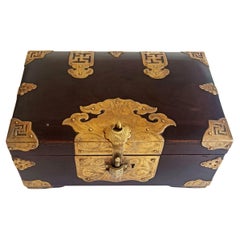
Fine Chinese Antique Rosewood Box with Brass Mounts – Qing Dynasty décor
Located in London, GB
Fine Chinese Antique Rosewood Box with Brass Mounts – Qing Dynasty Style
A beautifully crafted Chinese antique rosewood box, richly mounted with engraved brass fittings in traditional Qing dynasty style. The dark, dense rosewood contrasts elegantly with the finely detailed brass corner plates, cloud-form panels, Buddhist motives and ornate turtle central latch.
This high-quality scholar’s or jewellery box features hand-engraved decoration throughout, including geometric fret motifs and stylised foliate designs characteristic of late Qing decorative metalwork. The box retains its original lock plate with turtle (key not present).
A decorative and functional piece ideal for collectors of Chinese antiques, scholar’s objects, and classical Asian furniture.
Keywords: Chinese rosewood box...
Category
Chinese Antique 18th Century and Earlier Antiquities
Materials
Wood
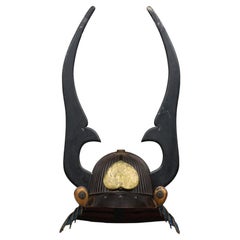
Japanese Edo-Period 62-Plate Kabuto 兜
Helmet
with Long Lacquer Wakidate
Located in Amsterdam, NL
An old and exceptional completely lacquered akoda-nari suji’bachi kabuto (helmet with raised ridges) with a bronze maedate (decorative front piece) shaped like a spade, and mounted b...
Category
Japanese Antique 18th Century and Earlier Antiquities
Materials
Bronze, Copper, Iron
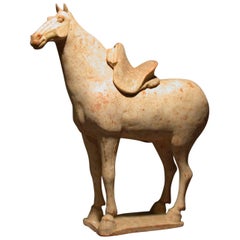
Fine Tang Dynasty Pottery Horse, Oxford TL Tested
Located in Greenwich, CT
Tang dynasty pottery statue of standing horse with removable saddle, Tang dynasty 618-907, come with Oxford authentication TL test certificate. Oxford test num...
Category
Chinese Tang Antique 18th Century and Earlier Antiquities
Materials
Terracotta
$6,800 Sale Price
30% Off
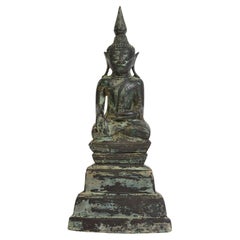
17th Century, Shan, Antique Burmese Bronze Seated Buddha
Located in Sampantawong, TH
Antique Burmese bronze Buddha sitting in Mara Vijaya (calling the earth to witness) posture on a base.
Age: Burma, Shan Period, 17th Century
Size: Height 20.3 C.M. / Width 9.2 C.M. ...
Category
Burmese Antique 18th Century and Earlier Antiquities
Materials
Bronze
$560 Sale Price
20% Off
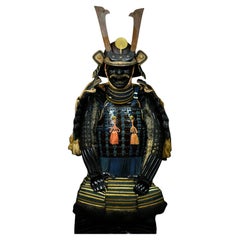
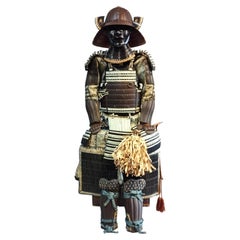
Rare Antique Original high Ranking Edo period Samurai armor Yoroi Japan Daimyō
Located in Ijzendijke, NL
This complete Edo-period samurai armor is an exceptional example of the refined martial elegance and ceremonial grandeur associated with Japan’s warrior aristocracy. Every component reflects a precise harmony of functionality, symbolism, and prestige.
At the heart of the set is a superb suji-bachi kabuto, constructed from multiple riveted iron plates arranged with flawless symmetry and enriched by a beautifully aged patina. It is crowned with a gilt tehen no kanamono, and the imposing maedate presents a pair of antler-like blades framing a gilded sun disc an emblem of celestial authority and divine lineage.
The Fukigaeshi feature extraordinary gilt dragon ornaments, carved in high relief. Dragons, ancient symbols of protection and power, were reserved for armor of the highest rank, strongly indicating that this set belonged to a Daimyō or high-ranking retainer.
The menpō, lacquered in deep black, includes a natural-hair moustache and an articulated jaw (resseibō), lending the face a vivid sense of character. Below it, the shikoro is composed of finely lacquered blue-and-gold plates, meticulously laced with silk.
The okegawa ni-mai dō cuirass is finished in a dark brown lacquer and laced in deep indigo silk, complemented by elegant orange ceremonial tassels a hallmark of formal presentation armor. The sode (shoulder guards) retain their rare bear-fur trimming, an expensive and status-laden material symbolizing courage and noble rank.
Completing the ensemble are beautifully made kote, haidate, and suneate, each executed with rich fabrics and refined lacquer work. A butterfly mon (chō-mon) appears on the leg guards an elegant symbol of transformation, adding a poetic contrast to the armor’s martial presence.
The extensive use of gilding, the rare bear-fur details, and the prominent dragon motifs confirm this as a piece created for the highest echelons of samurai society. It is a masterpiece where ceremonial artistry, symbolism, and authority converge.
Artistic and Historical Significance
This armor epitomizes the Edo-period ideal, when arms and armor transcended their battlefield origins and became expressions of identity, dignity, and cultural refinement. The interplay of dark lacquer, golden ornamentation, and natural materials embodies the spirit of bushidō discipline, inner strength, and beauty through restraint.
Whether displayed in a private collection, gallery, office, or interior setting, this armor commands attention. Its presence transforms any space, making it a truly museum-worthy centerpiece for collectors of Japanese, military, or historical art.
The set includes its traditional stand and storage box. As with all antique armor...
Category
Japanese Japonisme Antique 18th Century and Earlier Antiquities
Materials
Metal
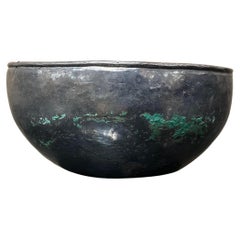
Rare Silver Ritual Bowl – Sukhothai Kingdom, 11th–13th Century
Located in Fukuoka, JP
A rare and refined silver bowl from the Sukhothai Kingdom (11th–13th century), likely used in a ritual context — either within a temple setting or as a treasured personal object belo...
Category
Asian Antique 18th Century and Earlier Antiquities
Materials
Silver
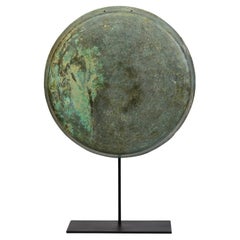
12th Century, Angkor Vat, Antique Khmer Bronze Gong with Stand
Located in Sampantawong, TH
Antique Khmer bronze gong with nice green patina with stand.
Age: Cambodia, Angkor Vat Period, 12th Century
Size of gong only: Diameter 33.6 C.M. / Thickness 4.2 C.M.
Height includi...
Category
Cambodian Antique 18th Century and Earlier Antiquities
Materials
Bronze
$1,080 Sale Price
20% Off
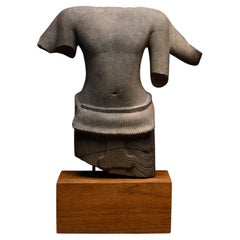
Ancient Khmer Sandstone Torso of a Four Armed Deity
Located in Los Angeles, CA
This impressive broad chested Khmer torso likely depicts Lokesvara, the famous bodhisattva of compassion in Buddhism. Our deity is seen wearing a pleated sampot with an oval-pattern...
Category
Cambodian Antique 18th Century and Earlier Antiquities
Materials
Sandstone
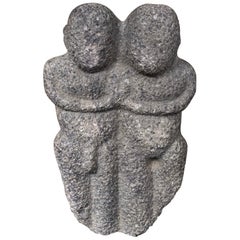
Chinese Ancient Hongshan Culture Pregnant Female Fertility Sculpture 4700-2900BC
Located in South Burlington, VT
China, a fine archaic conjoined bust sculpture of a male and female hand carved from a granular medium to dark gray stone. Neolithic period, Hongshan culture (circa 4700-2900 BC)
Likely a fertility - progeny sculpture. Please note the pecked surfaces and the stone carved hair line particularly on the back head area.
Quality: Fine original condition, no repairs, as collected. Dark varied patina from appropriate age.
This is likely a unique carving.
Dimensions: 12.25 inches tall and 4.25 inches width.
About Hongshan Culture:
The Hongshan culture was a Neolithic culture in northeastern China. Hongshan sites have been found in an area stretching from Inner Mongolia to Liaoning, and dated from about 4700-2900 BC. The culture is named after Hongshanhou, a site in Hongshan District, Chifeng. The Hongshanhou site was discovered by the Japanese archaeologist Torii Ryuzo in 1908 and extensively excavated in 1935 by Kosaku Hamada and Mizuno Seiichi.
Provenance:
Our private collection and accompanied by our Lifetime Guarantee of Authenticity. Originally collected in the area of Chifeng City, Inner Mongolia.
In addition, our Hongshan stone effigy...
Category
Chinese Antique 18th Century and Earlier Antiquities
Materials
Stone
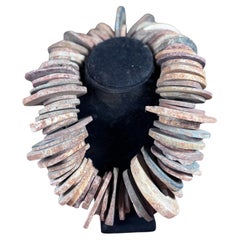
Chinese Cache Ancient Heavenly Green Jade Bi , 94 pieces
Located in South Burlington, VT
This is a guaranteed authentic ancient Chinese jade bi cache of ninety four (94) discs from the Qijia culture, Northwestern China, circa 3000-2000 BCE.
Including Our Certificate of ...
Category
Chinese Antique 18th Century and Earlier Antiquities
Materials
Jade
$1,600 Sale Price
20% Off
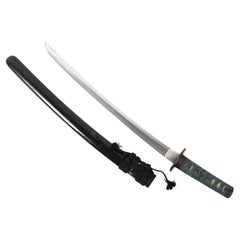
Antique Japanese Koto Wakizashi Sword
Located in Dallas, TX
Japanese Koto Wakizashi Sword
Japan
Ca. 1400-1600s
Length: 24.25” Blade
Total Length: 27.25
Nagasa: 18.5”
Koto wakizashi, with wild midare (Soshu?) hamon, including wild boshi. Hada indeterminate, with Shakudo & gold dragon menuki, beehive design fuchi kashira...
Category
Japanese Japonisme Antique 18th Century and Earlier Antiquities
Materials
Steel
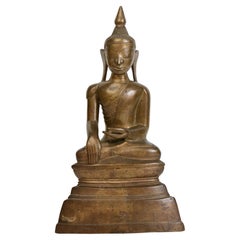
18th Century, Shan, Antique Burmese Bronze Seated Buddha
Located in Sampantawong, TH
Antique Burmese bronze Buddha sitting in Mara Vijaya (calling the earth to witness) posture on a base.
Age: Burma, Shan Period, 18th Century
Size: Height ...
Category
Burmese Antique 18th Century and Earlier Antiquities
Materials
Bronze
$3,080 Sale Price
20% Off
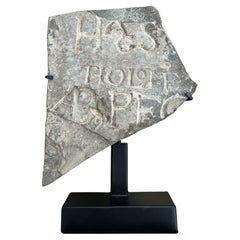
16th century stone architectural fragment
Located in Vosselaar, BE
A 16th century Spanish slate stone architectural fragment. Probably part of a commerative plaque. The Latin inscription only partly present but most likely being a religious referenc...
Category
Spanish Medieval Antique 18th Century and Earlier Antiquities
Materials
Slate
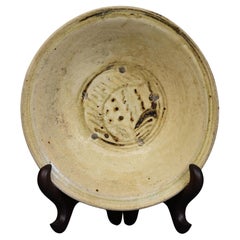
14th - 16th Century, Sukhothai, Antique Thai Sukhothai Glazed Ceramic Fish Dish
Located in Sampantawong, TH
Antique Sukhothai glazed ceramic fish dish.
Age: Thailand, Sukhothai Period, 14th - 16th Century
Size: Diameter 23.8 C.M. / Thickness 8.2 C.M. (size...
Category
Thai Antique 18th Century and Earlier Antiquities
Materials
Ceramic
$400 Sale Price
20% Off
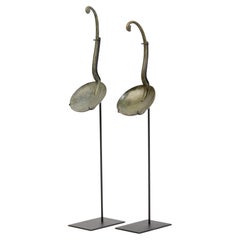
12th Century, A Pair of Antique Khmer Bronze Ritual Ladle Spoon for Holy Water
Located in Sampantawong, TH
A pair of antique Khmer bronze ritual ladle spoon for holy water with stand.
Age: Cambodia, Angkor Vat Period, 12th Century
Size of each ladle: Length 21.1 - 23.8 C.M. / Width 9.2 -...
Category
Cambodian Antique 18th Century and Earlier Antiquities
Materials
Bronze
$1,280 Sale Price / set
20% Off
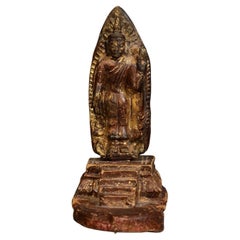
15th Century, Ava, Antique Burmese Pottery Standing Buddha
Located in Sampantawong, TH
Burmese pottery standing Buddha.
Age: Burma, Ava Period, 15th Century
Size: Height 13.4 C.M. / Width 6.2 C.M. / Length 10.7 C.M.
Condition: Nice c...
Category
Burmese Antique 18th Century and Earlier Antiquities
Materials
Pottery
$480 Sale Price
20% Off
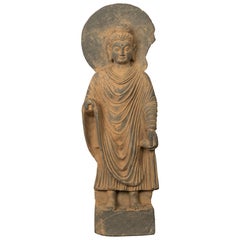
Ancient Indian Carved Stone Gandharan Shakyamuni Buddha Statue 2nd Century A.D.
Located in Portland, OR
A rare and large ancient majestic carved stone Shakyamuni Buddha Statue, ancient region of Gandhara, Kushan Period, 2nd/3rd century CE.
The figure from Gandhara is deserving of direc...
Category
Indian Archaistic Antique 18th Century and Earlier Antiquities
Materials
Schist
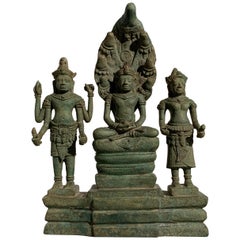
Khmer Bronze Buddhist Triad, Style of the Bayon, 12th-13th Century, Cambodia
Located in Austin, TX
An important Khmer bronze Buddhist triad group featuring an image of the Buddha sheltered by a naga, and flanked by the bodhisattvas Avalokiteshvara and Prajnaparamita, Angkor Period, Style of the Bayon, late 12th-early 13th century, Cambodia.
This triad represents one of the most important images in Khmer art...
Category
Cambodian Antique 18th Century and Earlier Antiquities
Materials
Bronze
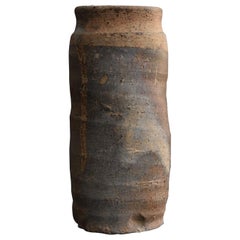
Antique Vases in Southern China / Small Vases / 16th to 17th Centuries
Located in Sammu-shi, Chiba
It is believed that pottery baked in southern China in the early Ming dynasty was imported into Japan.
It is a small size.
The upper part is slightly ...
Category
Chinese Ming Antique 18th Century and Earlier Antiquities
Materials
Pottery
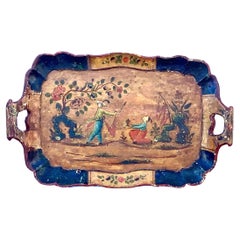
18th Century Venetian Wooden Tray
Located in Bradenton, FL
Large 18th century wooden Venetian tray with Chinoiserie decoration. Florals and Chinese figures in colors of red, green on dark wood background.
Category
Italian Baroque Antique 18th Century and Earlier Antiquities
Materials
Wood, Paint
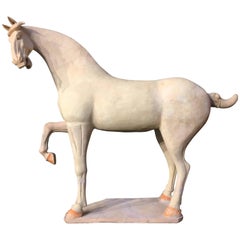
Large Early Tang Dynasty Painted Pottery Model of a Prancing Horse, TL Tested
Located in Austin, TX
A magnificent and large early Tang dynasty (618-906 AD) model of a prancing or dancing horse, circa 7th century.
The majestic animal is caught mid-motion, one leg raised, head grace...
Category
Chinese Tang Antique 18th Century and Earlier Antiquities
Materials
Pottery
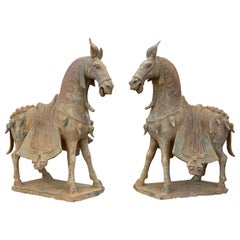
Northern Wei Dynasty Terracotta Horses, TL Tested,
386 AD-535 AD
Located in Miami, FL
A massive pottery pair of horses standing on all fours and striding with its right hoof forward. Extended snout ends in parted lips showing teeth beneath in a braying attitude. Low relief bridle on face and well defined eyes. Raised mane down back of the neck
A fantastic example of the Wei dynasty horses.
Large, exquisite walking Ferghana horses with great attention paid to anatomical detail were the choice of the wealthy. The horse was second only in importance to the dragon. It was supposed to possess magical powers which the early Chinese were eager to explore. It would be the horse that would carry the deceased to the next life and it would be the amount of horses that an individual owned that would guarantee his ongoing status in the hereafter.
Thermoluminescence certificate from Madrid Labs included.
In southern China, people turned to Daoism, and mingqi, as well as above-ground sculptures, became ever more infused with animal iconography and energized with dynamic lines.
The north of China was eventually united by nomadic Tuoba invaders who founded the Northern Wei dynasty...
Category
Chinese Han Antique 18th Century and Earlier Antiquities
Materials
Terracotta
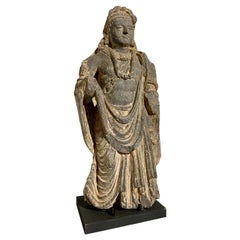
Gandharan Standing Bodhisattva Maitreya, Carved Black Schist, 2nd-4th Century
Located in Austin, TX
An impressive and well carved Gandharan figure of the Bodhisattva Maitreya, the Buddha of the Future, carved black schist, ancient Kingdom of Gand...
Category
Pakistani Antique 18th Century and Earlier Antiquities
Materials
Schist
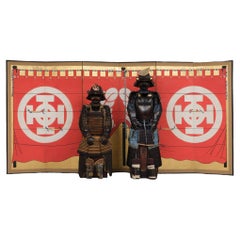
Rare set of 2 Japanese suits-of-armour, complete with 2 matching folding screens
Located in Amsterdam, NL
Important unique set of two suits-of-armour (yoroi), complete with two high six-panel screens, that belong together as is indicated by the used family crests (mon). Two crests are used, both belonging to the Nakagawa family of Oka Castle, Ôita prefecture on Kyûshû.
They are:
– the Nakagawa-kurusu, a circle depicting a Celtic-like cross through a ring.
The cross was originally a Christian symbol but after the ban on Christianity in Japan the use of a hidden cross in family crests could continue.
– the Nakagawa-kashiwa, two leaves of the Japanese Emperor Oak turned to each other (dakikashiwa mon).
The remarkable aspect of this ensemble is the presence of matching crests on both the yoroi and the accompanying folding screens. The kurusu and kashiwa crests adorning the yoroi are elegantly replicated on the screens, providing compelling evidence that these pieces form a harmonious and unified set. This exceptional cohesion between the armour and screens further enhances their artistic and historical value.
After the warlord Toyotomi Hideyoshi (1537-1598) had interfered in the battle between the Lord of Bungo Province Ôtomo Yoshi-mune (1558-1605) and the Shimazu of Hyûga Province, he split the Bungo Province in a number of small fiefs and transferred in 1594 Nakagawa Hideshige (1570-1612) from Miki Castle
in the Harima Fief to Oka Castle in Kyûshû.
The Nakagawa family stayed in possession of Oka Castle till the abolishment of the military use of castles in 1873. In 1884 the Nakagawa family received the title of Count (a title in use till the abolishment of aristocracy in 1947).
After the Nakagawa’s left, the castle and the building soon dilapidated and is now known as Oka Castle Ruins. The castle is located in Taketa Village part of Taketa Town in Ôita Province on Kyûshû.
> Set of two tall byôbu (folding screens),
painted with large red jinmaku (camp enclosure curtain) on a gold leaf ground. The curtains show both crests of the Nakagawa family: one screen depicts two Nakagawa-kurusu crests next to a Nakagawa-kashi crest in the middle, and the other shows the symbols the other way round.
Dimensions:
Total width 148.66 in/377.6 cm (2 x 25.35 in/64.4 cm, 4 x 24.48 in/62.2 cm); Height 72.63 in/184.5 cm.
Period: Japan – Late Edo period (First half 19th century), and maybe even older.
> Yoroi with Nakagawa-kashiwa crest:
A Japanese black lacquered suit-of-armour (yoroi) completely laced with orange cords (kuro’urushinuri hi’ito odoshi nimai’dô’maru).
A thirty-two plate suji’bachi kabuto (helmet with raised ridges) with in front a maedate (fore crest) -with traces of gilding- in the shape of flames, resembling a mythical flaming bird flying down. The fukikaeshi (face guards) and the mabizashi (visor) have the Nakagawa-kashiwa crest in gold maki-e lacquer.
Five curved ‘itazane’-plate neck guards (shikoro) laced with orange cords.
Together with an ‘angry man...
Category
Japanese Antique 18th Century and Earlier Antiquities
Materials
Gold Leaf, Iron, Metal
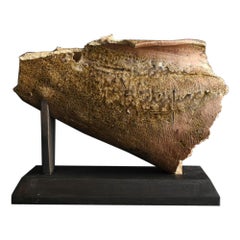
Japanese antique pottery fragments/12th to 13th century/Flower vase
Located in Sammu-shi, Chiba
Tokoname ware is a historic kiln in Japan, where pottery has been made since before the Common Era, and a kiln was established in the 5th century. This kiln is located in Aichi Prefe...
Category
Japanese Other Antique 18th Century and Earlier Antiquities
Materials
Pottery
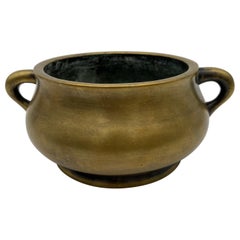
Antique Qing Dynasty Chinese Twin Handled Bronze Censer Xuande Marks to Base
Located in Brea, CA
Qing dynasty 18th century Chinese twin handled bronze censer bearing XuanDe marks to base , 990 grams , 17cm wide, internal width 10cm , 7cm high.
Category
Chinese Qing Antique 18th Century and Earlier Antiquities
Materials
Bronze
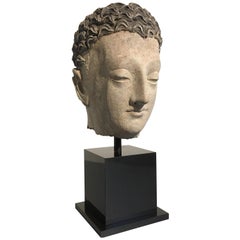
Gandharan Stucco Head of the Buddha, 3rd-5th Century
Located in Austin, TX
A sublime Greco-Buddhist stucco head of the Buddha, ancient region of Gandhara, circa 3rd-5th century.
A fragment of a larger statue, the Buddha's face...
Category
Pakistani Antique 18th Century and Earlier Antiquities
Materials
Stucco
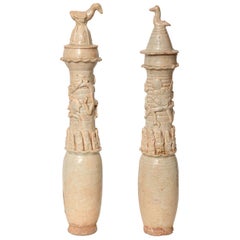
Antique Ceremonial Urns, Song Dynasty, 12th-13th Century
Located in New York, NY
Two tall ceremonial urns dating from the 12th-13th century, Southern Song dynasty. Glazed terracotta. They depict 12 traditional ritual attendant...
Category
Chinese Other Antique 18th Century and Earlier Antiquities
Materials
Earthenware
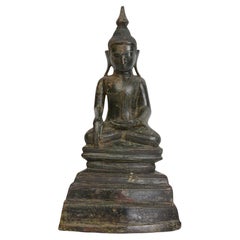
17th Century, Shan, Antique Burmese Bronze Seated Buddha
Located in Sampantawong, TH
Antique Burmese bronze Buddha sitting in Mara Vijaya (calling the earth to witness) posture on a base.
Age: Burma, Shan Period, 17th Century
Size: Height 26.2 C.M. / Width 14.5 C.M....
Category
Burmese Antique 18th Century and Earlier Antiquities
Materials
Bronze
$1,200 Sale Price
20% Off
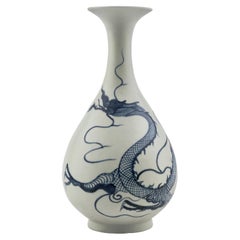
Blue And White Yuan-style ‘Dragon’ Bottle Vase, Yuhuchunping, Early Qing dynasty
Located in seoul, KR
The vase is delicately potted featuring a pear-shaped body that rests on a slightly flared foot and extends upward into a trumpet-shaped neck. Its exterior showcases a dynamic, three-clawed dragon in stride amidst flames.
This piece reflects a similar style to Yuan dynasty Yuhuchunping dragon vases, while reinterpreting certain details, such as the sharp and simplified shape of the dragon's head, the distinctive straight design of its claws, and the intricate depiction of the dragon’s scales.
The sticker on the base indicates that the absolute age was determined through radiological mechanical appraisal using the quantum absolute dating method, with the results pointing to the early 18th century.
Period : Qing Dynasty(Presumably Kangxi or Yongzheng Period)
Type : Yuhuchunping
Medium : Blue and White glaze
Condition : Excellent(slight salt residue remains on the surface, and the glaze is worn primarily around the edges, such as mouth and base)
Provenance: Southeast Asia, South China Sea from Shipwreck in early 2000s
Reference :
1) Christies Hong Kong 26 SEP 2024 - Lot 2
(Price realised : 819,000 HKD / Type : related)
* Yuan-Ming Style from Qing Dynasty
During the Qing dynasty, many ceramics were produced that imitated the styles of the Ming and Yuan dynasties. This practice was not mere imitation but a creative endeavor to inherit and innovate upon past techniques and styles. Qing dynasty ceramicists mastered the exceptional techniques of Ming and Yuan ceramics and used them as a foundation to develop more advanced works. Particularly, Yuan dynasty blue and...
Category
Vietnamese Qing Antique 18th Century and Earlier Antiquities
Materials
Porcelain
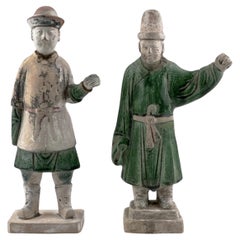
Two Figures of Attendants, Ming Period(1368-1644)
Located in seoul, KR
Statues of attendants crafted from terracotta, featuring glazes in green, Set on rectangular bases.
Period: Ming Dynasty
Medium: Glazed Pottery
Type: Figure
Condition : Excellent(It has soil on it, which is presumed to be evidence of excavation)
Provenance : Acquired in late 1990s from Hongkong
Reference :
1) Indianapolis Museum of Art - Dinastia ming, figure maschili, 1368-1644
(Type : Closely related)
2) V&A Museum - Accession number FE.295:1, 2-2005
(Type : Closely related)
3) Sotheby's 01 May 2007 - The Collection Of Paul Otto Taubert & Jewellery And Decorative Arts - Lot 233
(Price range : 5,000 - 7,000 AUD / Type : Closely related)
4) Asian Art Museum, San Francisco - Object number B60P1631 - Standing Man Tomb Figure
* Ming Dynasty Glazed Pottery Figures
Ming Dynasty glazed pottery figures are renowned for their bold color palette, intricate detailing, and lifelike forms, distinguishing them from earlier traditions. These figures, which depict officials, warriors, animals, and mythical creatures, are characterized by high-gloss lead-based glazes in green, amber, ochre, and sancai (three-color) combinations. The thickly applied glaze pools in recesses, creating depth and enhancing sculptural details. With dynamic postures, expressive facial features, and meticulously rendered drapery, these figures reflect the period’s advancement in ceramic craftsmanship, offering a greater sense of movement and realism compared to the rigid and stylized forms of earlier dynasties.
A defining characteristic of Ming glazed pottery is its elaborate surface detailing, often achieved through raised relief elements and contrasting glazes. Equestrian figures, for example, feature carefully sculpted saddles, harnesses, and decorative embellishments, while human figures are adorned with intricate robes and headdresses. The large scale of these tomb figures, often more imposing than those from previous periods, underscores the increasing importance of funerary art during the Ming era. Unlike later Qing Dynasty figures...
Category
Hong Kong Ming Antique 18th Century and Earlier Antiquities
Materials
Pottery
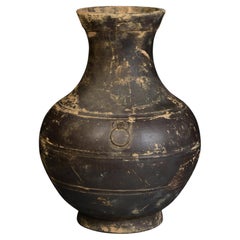
Han Dynasty, Antique Chinese Pottery Hu Jar
Located in Sampantawong, TH
Antique Chinese pottery Hu jar decorated with bands of raised lines and a pair of monster masks on the shoulder.
Age: China, Han Dynasty, 206 B.C. - A.D.220
Size: Height 46.6 C.M. /...
Category
Chinese Antique 18th Century and Earlier Antiquities
Materials
Pottery
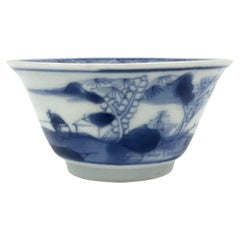
Riverscape Blue and White Teabowl, Circa 1725, Qing Dynasty, Yongzheng Reign.
Located in seoul, KR
The serene landscape and leisure activity of fishing are meticulously captured in cobalt blue on the porcelain's white surface, suggesting the value placed on harmony with the natura...
Category
Vietnamese Qing Antique 18th Century and Earlier Antiquities
Materials
Ceramic
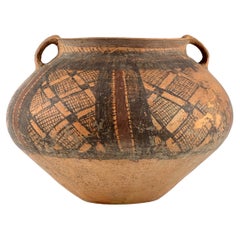
Neolithic Pottery Jar, Majiayao culture, 3rd-2nd Millenium BC
Located in seoul, KR
Fine-grained, buff-colored clay. Potted thin. Upper part of body painted with symbolic patterns in black and chocolate brown. Majiayao culture, Banshan type, 3rd millennium BC
Peri...
Category
Hong Kong Antique 18th Century and Earlier Antiquities
Materials
Earthenware, Pottery
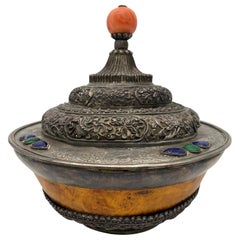
17th Century Rare Tibetan Silver Mounted Brul Covered Bowl with Coral
Located in Brea, CA
17th century rare Tibetan silver mounted brul covered bowl with coral bottom, the repousse and domed cover inset with Cora and lapis, big 3cm diameter red coral bottom, some tarnish,...
Category
Tibetan Tibetan Antique 18th Century and Earlier Antiquities
Materials
Silver
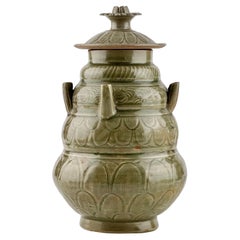
A Longquan Celadon Five-spouted Jar, Sui-Northern Song Dynasty
Located in seoul, KR
The jar features a round body with well-proportioned four distinct tiers and a short, stable foot. The surface is coated in a deep green Longquan celadon glaze, showcasing the sprout...
Category
Hong Kong Antique 18th Century and Earlier Antiquities
Materials
Celadon
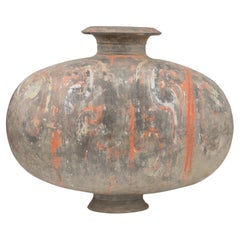
Large Cocoon-shaped jar with cloud-scroll design, Han Dynasty
Located in seoul, KR
This jar would have served as a mortuary object (mingqi), placed in a tomb as a substitute for the more valuable bronze and lacquer vessels used in daily life. Along with a variety o...
Category
Hong Kong Han Antique 18th Century and Earlier Antiquities
Materials
Pottery
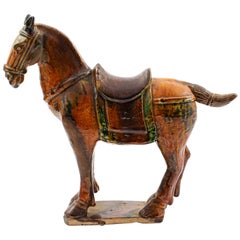
Late Ming Era Documented Glazed Pottery Horse
Located in Kastrup, DK
An elegant Chinese Ming dynasty pottery figurine depicting a horse in a standing pose with polychrome finish (aubergine, light brown and g...
Category
Chinese Ming Antique 18th Century and Earlier Antiquities
Materials
Pottery
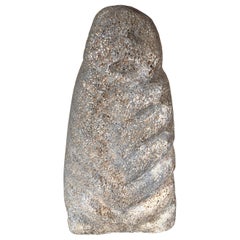
Chinese Ancient Hongshan Culture Stone Sculpture, 4700-2900 BC
Located in South Burlington, VT
China, a fine archaic human effigy hand-carved from a granular medium to dark gray volcanic stone with six (6) "V" sections carved front. Neolithic period, Hongshan culture...
Category
Chinese Antique 18th Century and Earlier Antiquities
Materials
Stone
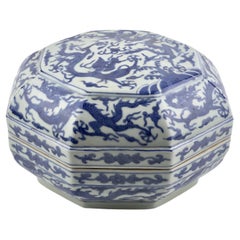
$6,800 Sale Price
54% Off
A Rare Blue And White Octagonal Box And Cover, Ming Dynasty Wanli Six-Character
Located in seoul, KR
Numerous similar octagonal blue and white boxes with Wanli, Jiajing marks are housed in prestigious museum collections. An example in the Tokyo National Museum is featured in Illustr...
Category
Hong Kong Ming Antique 18th Century and Earlier Antiquities
Materials
Ceramic
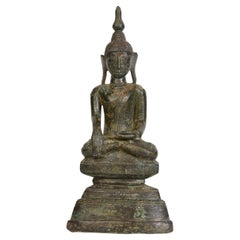
17th Century, Shan, Antique Burmese Bronze Seated Buddha
Located in Sampantawong, TH
Burmese bronze Buddha sitting in Mara Vijaya (calling the earth to witness) posture on a base.
Age: Burma, Shan Period, 17th Century
Size: Height 25.8 C.M. / Width 12.1 C.M. / Thick...
Category
Burmese Antique 18th Century and Earlier Antiquities
Materials
Bronze
$1,336 Sale Price
20% Off
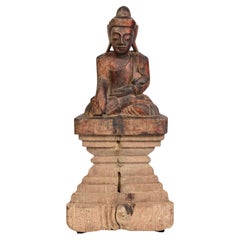
18th Century, Shan, Antique Burmese Wooden Seated Buddha
Located in Sampantawong, TH
Burmese wooden Buddha sitting in Mara Vijaya (calling the earth to witness) posture on a base.
Age: Burma, Shan Period, 18th Century
Size: Height 40.4 C.M. / Width 20 C.M. / Depth 1...
Category
Burmese Antique 18th Century and Earlier Antiquities
Materials
Wood
$560 Sale Price
20% Off
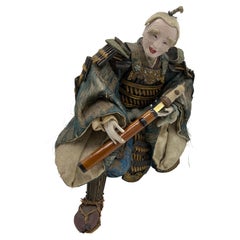
Japanese Samurai Figure Hinaningyo, Edo Period
Located in Munich, Bavaria
Antique samurai doll called Hinaningyo; Japan, late EDO period
Praised at the Tang-no-sekku boys' festival on May 5th as a sign of bravery, embodying the...
Category
Japanese Antique 18th Century and Earlier Antiquities
Materials
Textile, Wood
$2,719 Sale Price
20% Off
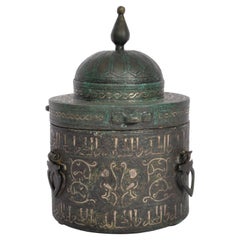
Ancient Islamic Persian Khurasan Silver Inlaid Bronze Caligraphy Inkwell 1200
Located in Portland, OR
An important Islamic Khurasan bronze and silver-inlaid inkwell & cover, Eastern Persia, Circa 1200.
The inkwell of cylindrical form and having a shallow dome top cover with a tall knopped finial and inlaid with a twin band of scrolled silver. The base of the dome and the rim of the cover having bands on interlaced silver inlay, the inkwell having three loop handles.
The body of the inkwell having two bands of silver inlaid Naskh script, between the bands are twin panels...
Category
Persian Islamic Antique 18th Century and Earlier Antiquities
Materials
Silver, Bronze
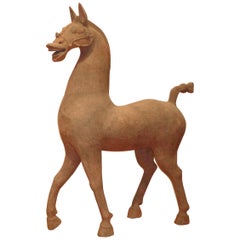
Massive Chinese Han Dynasty Sichuan Terracotta Pottery Horse, Oxford TL Tested
Located in Greenwich, CT
A massive Chinese Han dynasty Sichuan terracotta pottery figure of a horse
Han dynasty (206 BC-220 AD)
Powerfully modelled in a pose of alert attention, its strong neck and head pois...
Category
Chinese Han Antique 18th Century and Earlier Antiquities
Materials
Terracotta
$58,000 Sale Price
31% Off
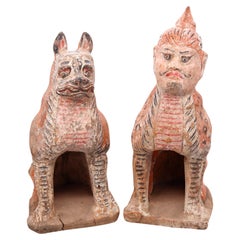
China 618-907 AD Tang Dynasty Pair Of Polychromate Earth Spirits Zhenmushou
Located in Miami, FL
Pair of Earths Spirits "Zhenmushou" from the China Tang Dynasty 618-907 AD.
A beautiful and rare pair of "Earths Spirits guardians" from the Yunnan province region in the ancient China. This was created in clay earthenware pottery during the Tang Dynasty period between 618 and 907 AD. Featuring the molded figures of two seated guardians with decorations with polychrome pigmentations. The figures are seated on their haunches with cloven hooves planted firmly on the base looking forward with their front legs in a straight position. Both with face and body alert expressions on a rectangular base.
Earth spirits usually appear in pairs, one with a human head and the other with a lion head. Their supernatural powers, indicated by antlers, spiky flanges and flames, enable them to confront evil spirits and protect any precincts within their gaze. Have been believed to protect the living by keeping the spirits of the dead from inappropriately roaming the world outside the tomb.
Zhenmushou or guardian deities, developed from a line of protective spirits found normally in pairs at the front of Tang dynasty tombs. They served both to protect the figure from untoward spirits, and the outside world from the roving spirit of the dead. Combining features from a number of animals to form the perfect mythic beast, these mythical creatures were perceived to be the ideal guardians of the dead
The semi human faced figure has a measures of 11.25 by 4.5 by 5.75 inches (28.57 x 11.43 x 14.60 Cm).
The mythological lion animal figure has a measures of 10 by 5 by 5.8 inches (24.5 x 12.7 x 14.73 Cm).
Tang dynasty or Tang Empire, was an imperial dynasty of China that ruled from 618 to 907, with an interregnum between 690 and 705. It was preceded by the Sui dynasty and followed by the Five Dynasties and Tend Kingdoms period. Historians generally regard the Tang as a high point in Chinese civilization, and a the golden age of cosmopolitan culture. Tang territory, acquired through the military campaigns of its early rulers, rivaled that of the Han dynasty.
The Li family founded the dynasty, seizing power during the decline and collapse of the Sui Empire and inaugurating a period of progress and stability in the first half of the dynasty's rule. The dynasty was formally interrupted during 690–705 when Empress Wu Zetian seized the throne, proclaiming the Wu Zhou dynasty...
Category
Chinese Tang Antique 18th Century and Earlier Antiquities
Materials
Earthenware, Pottery
$4,025 Sale Price / set
30% Off
Two Annamese Miniature Kettle, 15th century, Le Dynasty
Located in seoul, KR
These 15th-century Le Dynasty ceramic vessels from northern Vietnam feature distinct designs. One is beige with faint blue floral patterns, a rounded body, and an elongated spout. Th...
Category
Vietnamese Antique 18th Century and Earlier Antiquities
Materials
Ceramic

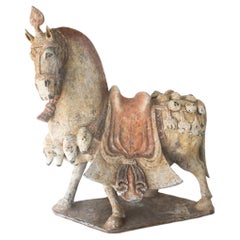
China 549-577 AD Northern Qi Dynasty Ancient Caparisoned Horse In Earthenware
Located in Miami, FL
Exceedingly rare Chinese pottery caparisoned horse from the Northern Qi region.
A beautiful sculptural piece, created in China during the Northern Qi dynasty period, between the 549 and 577 AD. This horse statue is extremely finely modeled of earthenware pottery, standing in a very elegant and majestic position striding on a trapezoidal shaped base.
The animal has a gracefully arched neck to the left and its extremely well modeled. The head is adorned with a large detailed tassels of plumes and the body is embellished with a beautiful saddle and intricate harnesses. The trapping around the chest and rump is adorned with elaborated tassels and the straps are accented with multiples florets and bosses in high relief.
The surface is treated with applications of natural pigments such; red, white and others.
Has a measurements of 394 mm by 343 mm by 257 mm (15.53 x 13.52 x 10.15 Inches) (39.4 x 34.3 x 25.7 Cm).
Northern Qi, was the successor state of the Chinese Xianbei state of Eastern Wei...
Category
Chinese Archaistic Antique 18th Century and Earlier Antiquities
Materials
Earthenware, Pottery
$27,989 Sale Price
30% Off
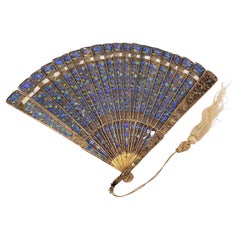
Rare Unique Late 18th Century Chinese Gilt Silver Filigree and Enamel Brise Fan
Located in Brea, CA
Unique rare fine antique 18th century Chinese gilt silver filigree and enamel brise fan, Qing dynasty, the fan has 20 sticks with a 24k gold ring loop, wonde...
Category
Chinese Qing Antique 18th Century and Earlier Antiquities
Materials
Silver, Enamel
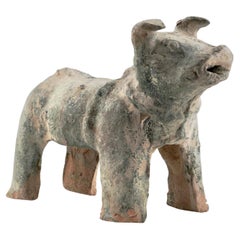
Green Glazed Red Pottery Figure of Dog
Located in seoul, KR
The dog faces forward, with clearly defined eyes that stand out. Its ears are slightly curled, giving the impression of a relaxed, natural stance. The collar around its neck, connect...
Category
Hong Kong Han Antique 18th Century and Earlier Antiquities
Materials
Pottery
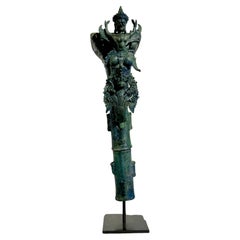
Khmer Bayon Bronze Garuda on Naga Finial, 12th/14th Century, Cambodia
Located in Austin, TX
A large and impressive Khmer cast bronze finial or standard featuring a fantastic image of Garuda atop Naga, Angkor Period, Style of the Bayon, 12th to 14th century, Cambodia.
The t...
Category
Cambodian Antique 18th Century and Earlier Antiquities
Materials
Bronze
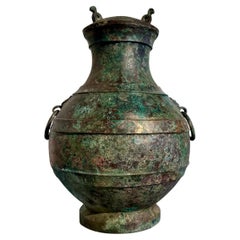
Chinese Archaic Bronze Hu and Cover, Han Dynasty (206 BC - 220 AD), China
Located in Austin, TX
A fantastic Chinese Han Dynasty archaic bronze ritual wine vessel, hu, and cover, ex. Michael Goedhuis, Han Dynasty (206 BC - 220 AD), China.
The archaic ritual bronze hu of typical...
Category
Chinese Han Antique 18th Century and Earlier Antiquities
Materials
Bronze
A Rare Longquan Celadon
Peony
Vase Yuan-Ming Dynasty
Located in seoul, KR
This vase features a traditional vase coated with a clear and rich green celadon glaze. A fine network of crazing covers the surface. The neck is adorned with raised vine motifs, whi...
Category
East Asian Ming Antique 18th Century and Earlier Antiquities
Materials
Celadon

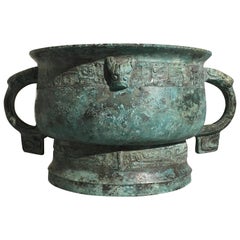
Archaic Chinese Bronze Ritual Vessel, Gui, Early Western Zhou, 11th century BCE
Located in Austin, TX
A stunning and rare Chinese archaic bronze gui, a type of ritual bronze vessel used to hold grain, either for feasting, or for making offerings ...
Category
Chinese Archaistic Antique 18th Century and Earlier Antiquities
Materials
Bronze
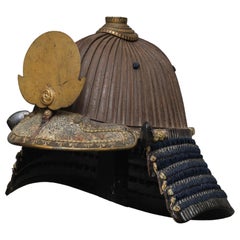
Signed Japanese Edo suji’bachi kabuto (helmet) with a moon
cloud maedate
Located in Amsterdam, NL
An antique, outstanding signed suji’bachi kabuto (helmet with ridges) surmounted by a gilt metal maedate (forecrest) shaped like a full moon emerging from the clouds heightened by a ...
Category
Japanese Antique 18th Century and Earlier Antiquities
Materials
Metal, Iron
18th Century Hirate Clan Samurai Armor with Signed Kabuto Helmet
Located in Fukuoka, JP
This is a truly exceptional set of 18th century Samurai armor that is sure to impress any collector or enthusiast. The patinated iron used in its construction has aged beautifully, giving the armor a truly unique appearance that is sure to catch the eye. The brocade silk and cotton padding used to line the armor not only provide a comfortable fit for the wearer, but also add an extra layer of decorative flair.
One of the most striking features of this armor is the crests of the Hirate samurai clan that adorn it. These crests are a symbol of the clan's identity and heritage, and their presence on the armor speaks to the deep connection between samurai warriors and the clans they belonged to.
The Kabuto...
Category
Japanese Antique 18th Century and Earlier Antiquities
Materials
Iron
Small Celadon Chrysanthemum Dish, Five Dynasties/Song Dynasty
Located in seoul, KR
Potted with the fluted sides rising from a recessed base, carved to the interior with Chrysanthemum, covered overall with a grayish-green glaze, save for a ring to the underside left unglazed to reveal the gray stoneware...
Category
Hong Kong Ming Antique 18th Century and Earlier Antiquities
Materials
Celadon

Still Thinking About These?
All Recently ViewedMore Ways To Browse
Jade Belt Hook
Kojima Shoten
Tibetan Travelling Buddha Shrine
Tigers Eye Snuff Bottle
Wood Carved Tamil Nadu
Yak Horn
Ancient Egypt Amulet
Ancient Jade Artifacts
Antique Japanese Sword Stand
Antique Rickshaw
Asian Wooden Shoes
Bactrian Stone
Burmese Fans
Chinese Opium Pipes
Cloisonne Pots Bonsai Trees
Dragon Mantle
Egyptian Cartonnage
Framed Asian Plate