Items Similar to Qingbai ewer with slip decoration of two phoenix and lotus leaves, Yuan Dynasty

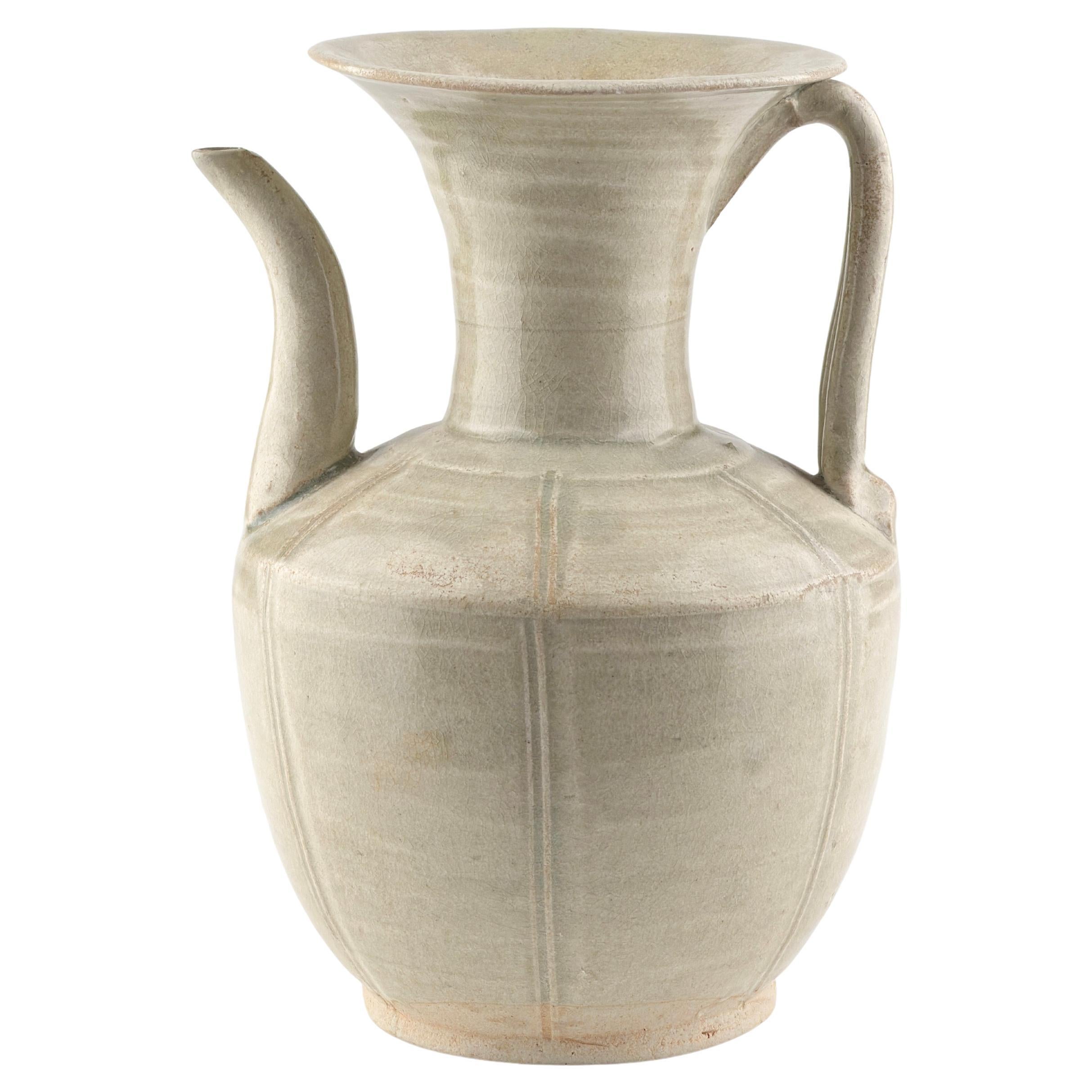
Want more images or videos?
Request additional images or videos from the seller
1 of 7
Qingbai ewer with slip decoration of two phoenix and lotus leaves, Yuan Dynasty
$5,900
£4,492.73
€5,173.25
CA$8,360.82
A$8,993.26
CHF 4,806.26
MX$106,004.88
NOK 60,595.65
SEK 55,395.92
DKK 38,652.94
About the Item
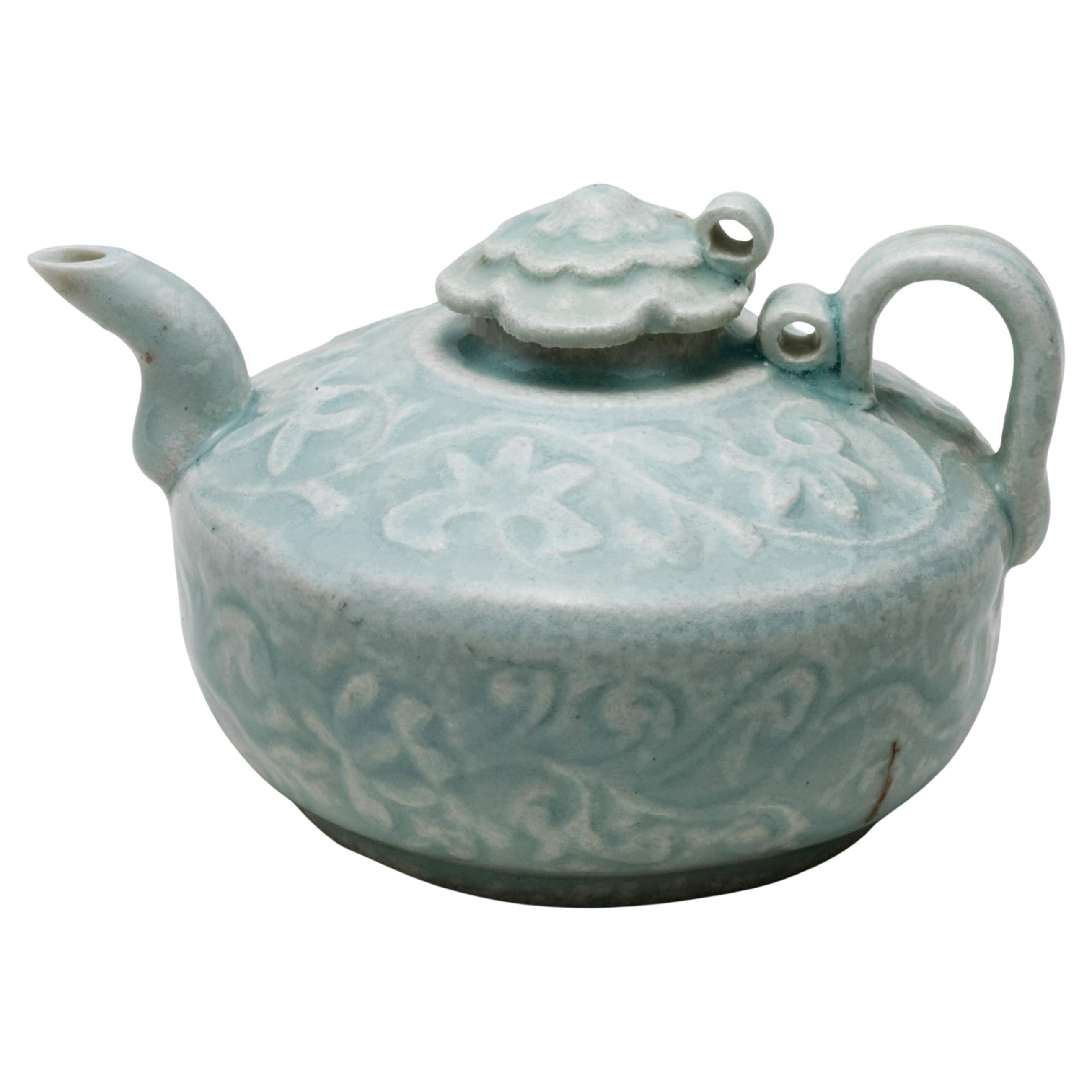
This small ewer is an exquisite example of Qingbai ware, known for its pale blue-tinged glaze. The vessel showcases the advanced ceramic techniques and artistic sophistication of the era. Its delicate form is enhanced by relief decorations depicting two phoenixes amidst lotus leaves, motifs rich in cultural and symbolic significance.
The body of the ewer tapers gently toward the base and is balanced by an elegantly curved spout and handle, the latter of which is finished with a slight twist typical of Yuan dynasty style. The relief decoration employs a technique that adds depth and texture to the surface, highlighting the craftsmanship of Yuan potters.
The phoenix, a mythical bird revered in Chinese tradition, symbolizes longevity and prosperity and is often associated with virtue and grace. The lotus leaves accompanying the phoenixes are emblematic of purity and enlightenment, echoing Buddhist teachings. The interplay of these symbols on the ewer suggests that it was more than a mere utilitarian object; it was imbued with cultural resonance and spiritual depth.
Period : Yuan Dynasty(1271-1368)
Type : Small Ewer
Medium : Qingbai Ware
Size : 9.0 cm(Height), 4cm(Diameter)
Provenance : Acquired in late 1990s, Hongkong
Reference : Art Gallery of NSW(Museum), Australia
Accession number 2311998
* Qingbai Ware
Qingbai ware, which translates to "blue-white ware," is a type of Chinese porcelain that was made at the Jingdezhen and other kilns in the porcelain-producing regions of China, primarily during the Song dynasty (960–1279) and continuing into the Yuan dynasty (1271–1368). It is known for its translucent quality and the pale blue-green glaze that characterizes most of its pieces.
The qingbai glaze was achieved using a small amount of iron in a reduction-fired atmosphere, which produced the subtle blue-green tint. The body of qingbai ware is typically made of a fine, white porcelain that is often referred to as 'artificial jade' due to its resemblance to the esteemed stone. The thinness of the body and the high firing temperatures used contributed to the translucent quality of the finished product.
Qingbai ware includes a range of items such as bowls, cups, vases, and ewers. The designs are usually simple and elegant, with an emphasis on the graceful lines and form of the objects. Decorative motifs, when present, are often incised, carved, or molded in relief and can include floral patterns, dragons, phoenixes, and other symbolic elements drawn from Chinese culture.
Over time, the technology and techniques used to produce qingbai ware evolved, leading to innovations in glaze and decoration that would influence later types of Chinese porcelain. Despite these changes, qingbai ware remains a distinguished example of the potters' art in Song and Yuan China, reflecting the refined aesthetic and cultural values of the period.
- Dimensions:Height: 3.55 in (9 cm)Diameter: 1.58 in (4 cm)
- Materials and Techniques:
- Place of Origin:
- Period:
- Date of Manufacture:14th century
- Condition:Minor fading.
- Seller Location:seoul, KR
- Reference Number:1stDibs: LU9577238090742
About the Seller
4.8
Vetted Professional Seller
Every seller passes strict standards for authenticity and reliability
Established in 1999
1stDibs seller since 2023
46 sales on 1stDibs
Typical response time: 1 hour
- ShippingRetrieving quote...Shipping from: seoul, Korea South
- Return Policy
More From This Seller
View AllRare Qingbai Carved Ewer, Song-Yuan Dynasty
Located in seoul, KR
This Qingbai ewer features a rounded body with smooth curves, a short spout, and a looped handle, presenting a harmonious and balanced form. The lid is adorned with a flower-shaped f...
Category
Antique 15th Century and Earlier Hong Kong Antiquities
Materials
Ceramic
Yue Celadon Ewer, Late Tang-Northern Song Dynasty
Located in seoul, KR
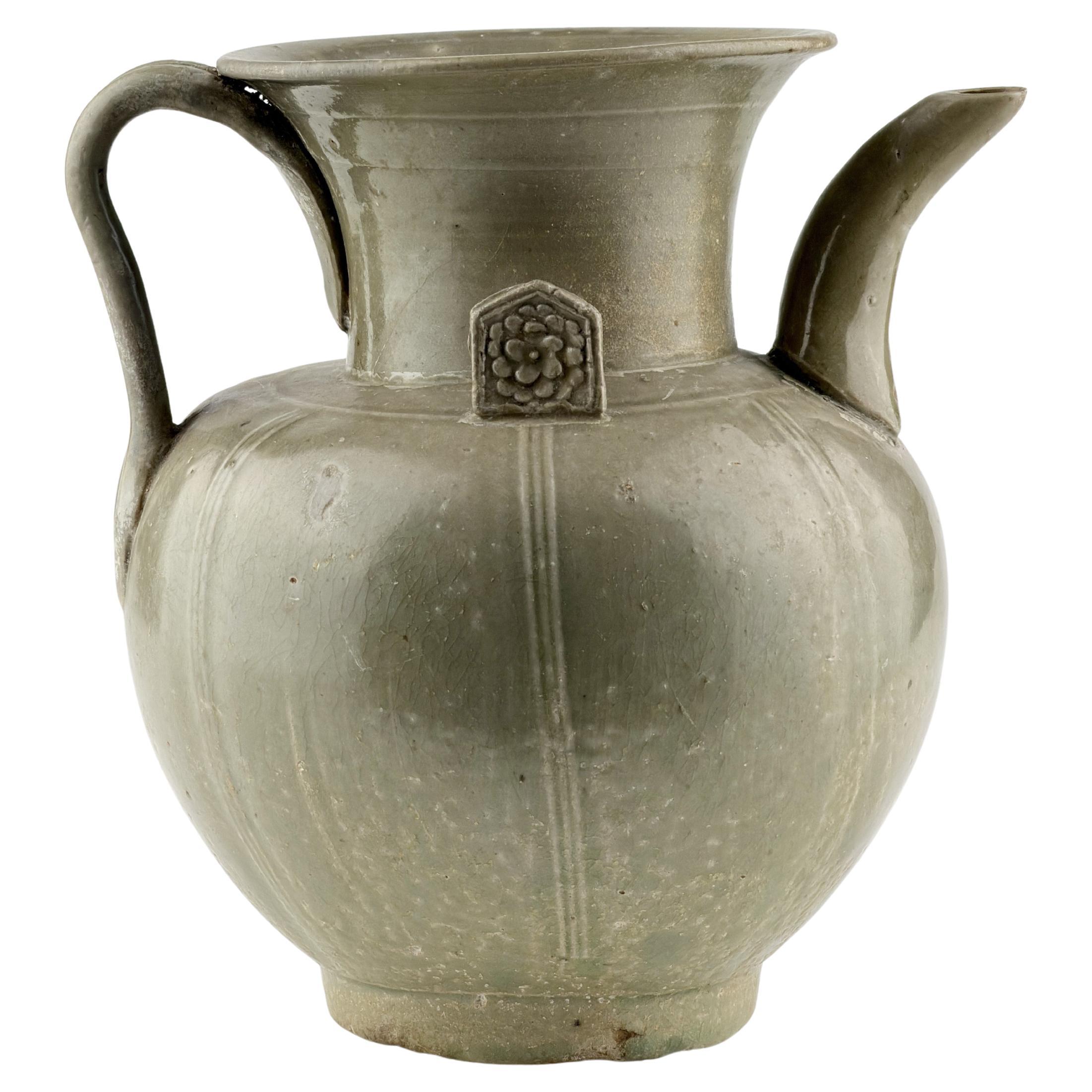
This Yue ware celadon ewer features a softly rounded body rising from a stable foot to a wide, flaring mouth. A translucent olive-green glaze is evenly applied, pooling gently in rec...
Category
Antique 15th Century and Earlier East Asian Tang Antiquities
Materials
Celadon
A Qingbai Ewer and Lion-Finial Cover, Song Dynasty
Located in seoul, KR
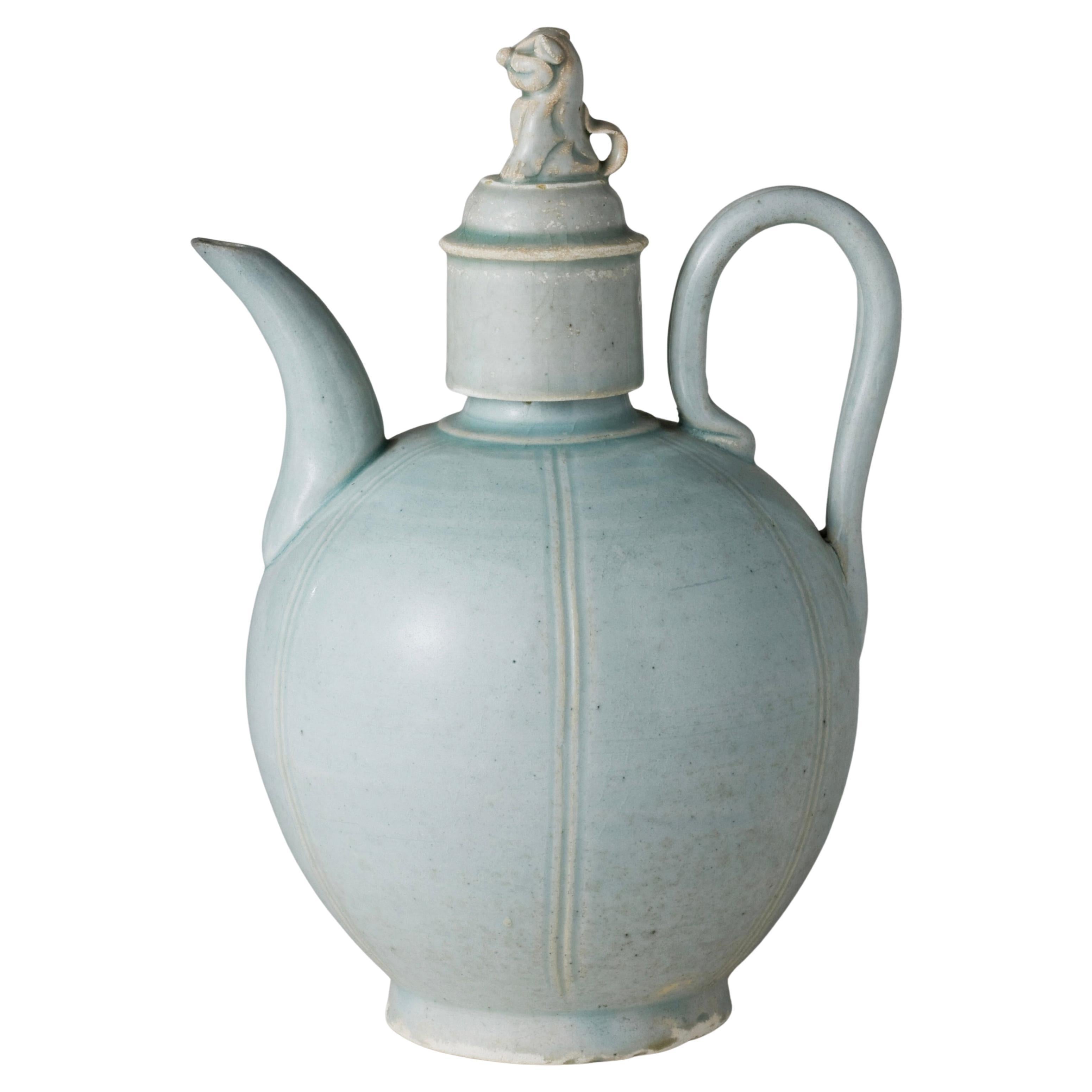
The ewer features a globular body with a straight spout and an arched handle, creating a sense of balanced stability. Four vertical incised lines run evenly along the body, relieving...
Category
Antique 15th Century and Earlier East Asian Antiquities
Materials
Ceramic
Celadon Ewer with Straight Handle, Tang to Northern Song Dynasty
Located in seoul, KR
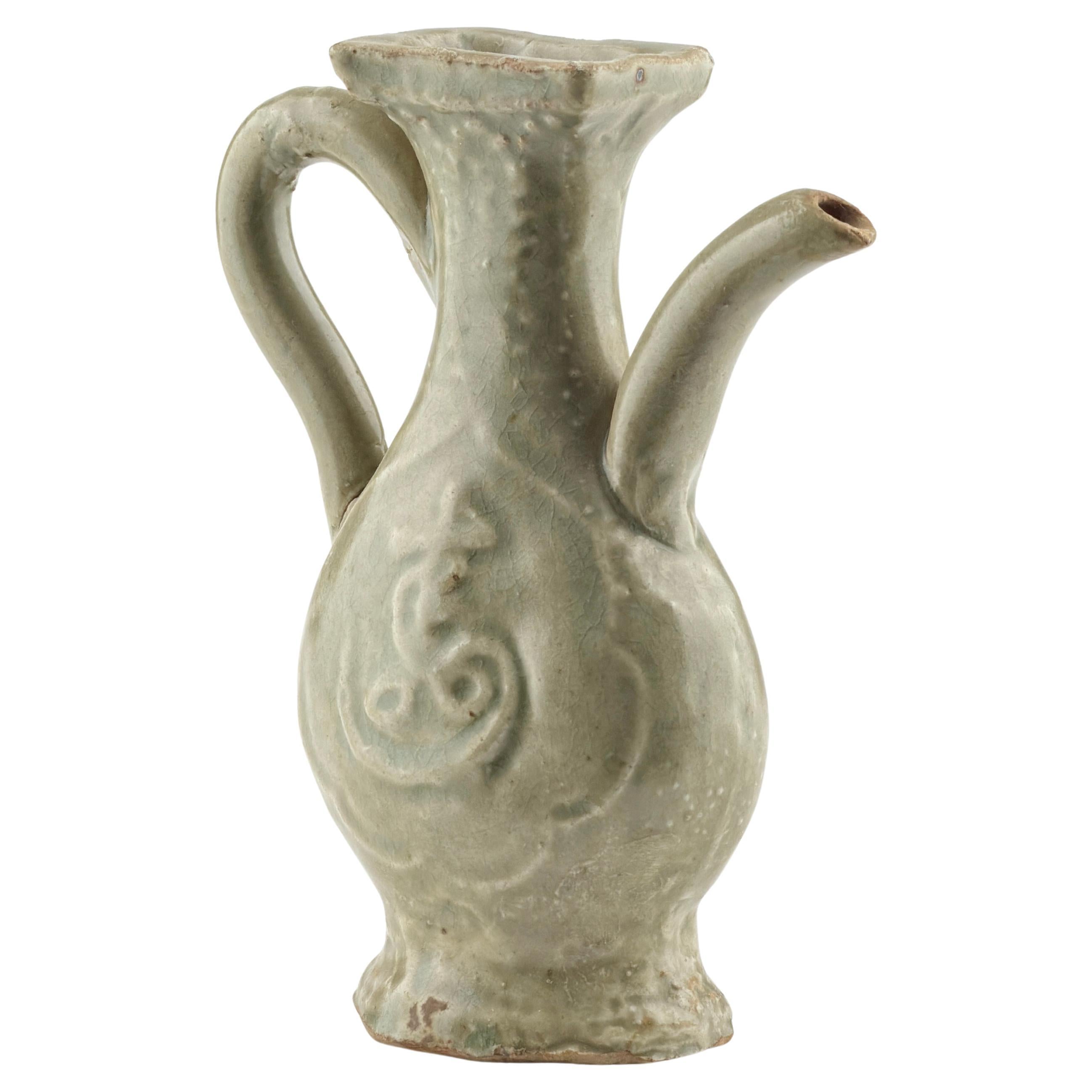
The piece features a straight handle extending horizontally from the body and a short spout for pouring liquids. Its surface is coated with a soft, olive-green glaze, which is typica...
Category
Antique 15th Century and Earlier East Asian Tang Antiquities
Materials
Celadon

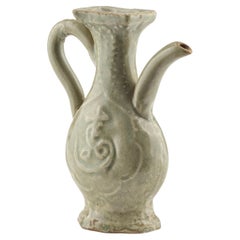
A Molded Longquan Celadon
Fu Shou
Ewer, Ming Dynasty
Located in seoul, KR
One side of the vase showcases a panel with the Shou character at its center, symbolizing longevity, while the opposite side displays the Fu character, signifying luck. The neck of the vase is adorned with leaves. There are similar types and decoration but varying in shape, resembling a pear, all from the same era and crafted in celadon, often referred to as 'fu shou' vases.
Period: Yuan-Ming Dynasty (1271-1644)
Region: Longquan, China
Medium: Celadon
Type: Ewer
Provenance : Acquired in late 1990s from Hongkong
Reference
1) British Museum - Museum number 1931,1118.5
(Type : Closely related)
2) Christies NEW YORK 24–25 MAR 2022 - Important Chinese Ceramics and Works of Art - Lot 1105
(Price realised : 9,450 USD / Type : Related)
3) Sotheby's New York 19 March 2024 - Chinese Art - Lot 172
(Price range : 15,000 USD - 20,000 USD / Type : Related)
* Ming Dynasty Longquan Celadon
Longquan celadon from the Ming Dynasty typically exhibits a more robust and heavier stoneware body compared to its Song Dynasty predecessors. The Ming era saw an evolution in celadon glaze, achieving a wider spectrum of green hues, from olive to bluish-greens. Ming celadons...
Category
Antique 15th Century and Earlier East Asian Ming Antiquities
Materials
Celadon
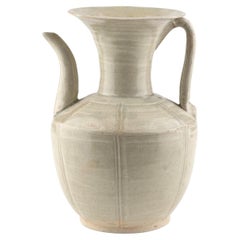
A Zhejiang Porcelain Ewer, Northern Song Dynasty
Located in seoul, KR
The oviform body is divided into few lobes. All covered in a finely crackled pale olive-green glaze. The surface and glaze characteristics are definitive, confirming the authenticity...
Category
Antique 15th Century and Earlier East Asian Antiquities
Materials
Porcelain
You May Also Like
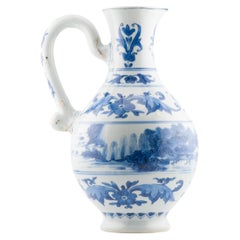
Antique Chongzhen Shunzhi Transitional Chinese Porcelain Ewer, 17th Century
Located in Amsterdam, Noord Holland
A very nicely decorated and Ewer in underglaze blue. The globular body rises to a flared neck decorated with tulips and supported by a high handle. The main decoration depicts a nice...
Category
Antique 17th Century Chinese Ming Vases
Materials
Porcelain
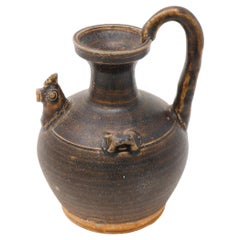
Antique Chinese Yue Chicken Head Spout Ewer
Located in Point Richmond, CA
A globular stoneware body that is well potted with a cup shaped mouth supported on a narrow tall neck. The characteristic chicken head form serves as the spout. The handle is pulled ...
Category
Antique 15th Century and Earlier Chinese Other Ceramics
Materials
Ceramic
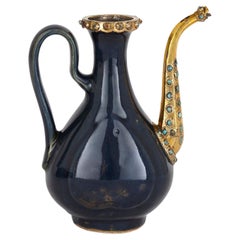
Very Rare Ming Dynasty Porcelain Ewer with Ottoman Gem-Set Tombak Mounts
Located in London, GB
Very rare Ming dynasty porcelain ewer with ottoman gem-set tombak mounts
Chinese and Turkish, 16th/17th century
Measures: Tombak: height 20cm,...
Category
Antique 16th Century Chinese Ming Bottles
Materials
Multi-gemstone, Brass
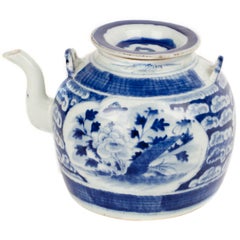
Canton Chinese Teapot with Lid
Located in Asheville, NC
Beautiful hand-painted, floral paneled ceramic teapot from China with contrasting dish lid gives pause to one as to how this cherished pot was loved enough to justify the makeshift t...
Category
Antique 19th Century Chinese Ceramics
Materials
Porcelain
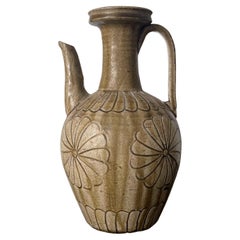
Japanese Ko-Seto Stoneware Ewer with Carved Design
Located in Atlanta, GA
On offer is a rare Ko-seto (old seto) stoneware ewer from Kamakura period (12-14th century) Japan. The exceptionally heavily potted ewer is made of stoneware. The main body was likely hand-coiled with individually built handle, sprout and wheel-made neck and mouth assembled. It takes the basic form from the contemporary Chinese ewer...
Category
Antique 15th Century and Earlier Japanese Archaistic Ceramics
Materials
Stoneware
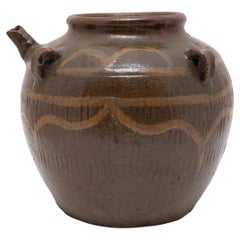
Provincial Chinese Glazed Water Jug, c. 1850
Located in Chicago, IL
This 19th-century kitchen vessel is coated inside and out with a dark brown glaze that clings to its ribbed sides with subtle color variation. Designed for serving water or tea, the squat jar features a narrow neck, small strap handles, and a short spout for pouring. The rounded shoulders are brushed with simple linework in a contrasting light brown glaze. Textured with pitted wear and other imperfections, the rustic vessel is wonderful as an unusual vase...
Category
Antique Mid-19th Century Chinese Qing Ceramics
Materials
Ceramic
More Ways To Browse
Antique Slip
Lotus Leaves
Lotus Asian Art
Chinese Song Dynasty
Antique Vases And Bowls
Dragon And Phoenix
Chinese And Porcelain And Phoenix
Lotus Porcelain
Porcelain Ewer
Porcelain Phoenix
Yuan Dynasty Blue And White Porcelain
Ming Dynasty Figures
Northern Wei
J Ulrich
Antique Celadon Pottery
Asian Wooden Bowl
Carved Wooden Crown
12th Century Khmer