Items Similar to Qingbai Floriform Dish, Song-Yuan Dynasty
Want more images or videos?
Request additional images or videos from the seller
1 of 12
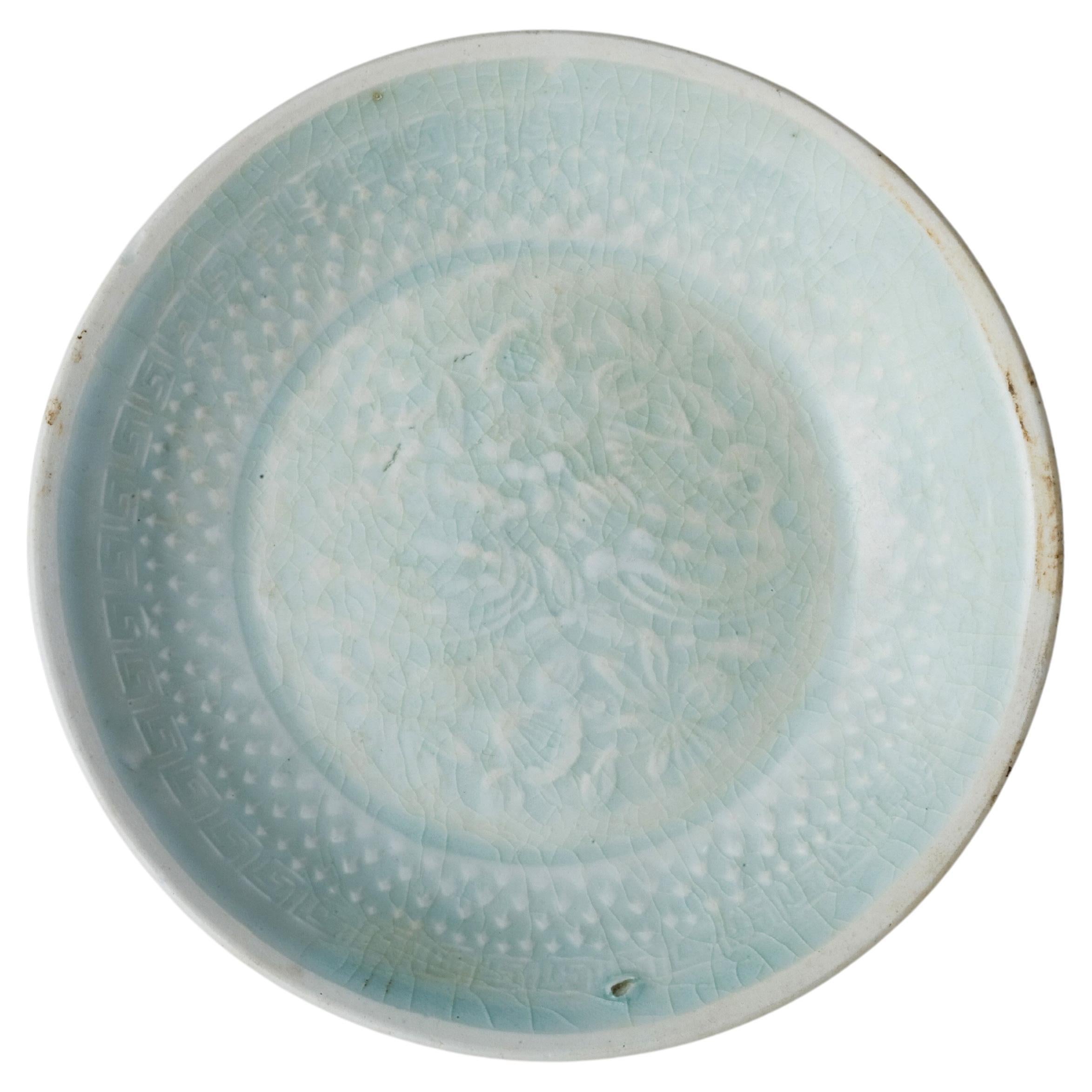
Qingbai Floriform Dish, Song-Yuan Dynasty
$6,000
£4,544.44
€5,219.14
CA$8,407.96
A$9,141.15
CHF 4,846.65
MX$109,579.21
NOK 61,598.41
SEK 56,432.52
DKK 39,006.43
About the Item
The dish has a scalloped rim, which gives it a flower-like appearance. The wavy edges were often inspired by nature. It has a pale, almost translucent blue-green glaze, typical of Qingbai ware. This type of glaze is highly valued for its smooth and delicate finish, which often resembles jade.
Period : Southern Song-Yuan Dynasty(12th-14th century)
Type : Dish
Medium : Qingbai
Provenance : Acquired in late 1990s from Hongkong
Reference :
1) Christies New York 21–22 SEP 2023 - Important Chinese Ceramics and Works of Art - Lot 1020
(Price realised : 6,930 USD / Type : related)
2) Sotheby's Newyork 27 September 2021 - Junkunc: Chinese Art - Lot 557
(Price realised : 11,340 USD / Type : related)
3) Christies Hongkong 3 JUN 2015 - The Imperial Sale
Important Chinese Ceramics and Works of Art - Lot 3208
(Price realised : HKD 175,000 / Type : related)
* Qingbai Ware
Qingbai ware refers to a refined type of porcelain produced mainly during the Northern and Southern Song dynasties (10th–13th centuries), centered at Jingdezhen (景德鎭) and nearby kilns in Jiangxi province. It is characterized by a white, compact porcelain body covered with a transparent glaze of pale bluish tone, which gives the ware its distinctive “bluish-white” appearance—hence the name Qingbai (literally “blue-white”).
The glaze, produced under a reduction firing atmosphere, contains a small amount of iron oxide that turns a subtle bluish or greenish hue when fully reduced at high temperature (around 1250–1300°C). The resulting color is clear and translucent, often compared to polished jade (玉質) for its purity and soft luster.
Decoration was typically achieved through molded or incised designs, most commonly lotus flowers, phoenixes, birds, peonies, or scrolling foliage, rendered beneath the glaze. These motifs appear faintly through the transparent glaze, producing an elegant and understated visual effect.
The footring is usually unglazed, revealing the fine white body with traces of reddish oxidation from firing supports. Over time, genuine Qingbai pieces may develop fine natural crackles (crazing) or slight iridescence due to long-term burial and glaze weathering — features often referenced in authenticity assessments.
Qingbai ware represents one of the earliest fully vitrified porcelains of China and is admired for its clarity, lightness, and quiet sophistication, standing as a direct precursor to later white porcelain (白瓷) and blue-and-white ware (青花瓷) traditions of the Yuan and Ming dynasties.
- Dimensions:Height: 1.3 in (3.3 cm)Diameter: 5.24 in (13.3 cm)
- Materials and Techniques:
- Place of Origin:
- Period:
- Date of Manufacture:12th-14th century
- Condition:Minor fading.
- Seller Location:seoul, KR
- Reference Number:1stDibs: LU9577241134202
About the Seller
4.8
Vetted Professional Seller
Every seller passes strict standards for authenticity and reliability
Established in 1999
1stDibs seller since 2023
46 sales on 1stDibs
Typical response time: 1 hour
- ShippingRetrieving quote...Shipping from: seoul, Korea South
- Return Policy
More From This Seller
View AllA Molded Qingbai
Flowers
Dish, Southern Song Dynasty
Located in seoul, KR
This dish is coated with a transparent bluish-white glaze over a thin white body. The center is incised with a design of lotus flowers and a bird, while the inner wall is encircled b...
Category
Antique 15th Century and Earlier East Asian Antiquities
Materials
Ceramic
Lotus Pattern Dish From Ca Mau Ship Circa 1725, Qing Dynasty, Yongzheng Reign
Located in seoul, KR
This lotus dish from Ca Mau Ship was held in our gallery in three pieces(according to sizes). One was sold in 2024.
With radiating lotus-petal 8 panels painted with single flowers a...
Category
Antique Early 18th Century Vietnamese Qing Ceramics
Materials
Ceramic
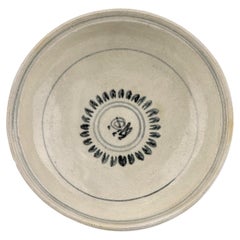
Annamese Dish Circa 15th Century, Le Dynasty
Located in seoul, KR
Its surface is coated with a smooth, glossy white or cream-colored glaze, exuding a clean and elegant finish. At the center, a geometric motif painted in black pigment draws the eye,...
Category
Antique 15th Century and Earlier Vietnamese Antiquities
Materials
Stoneware
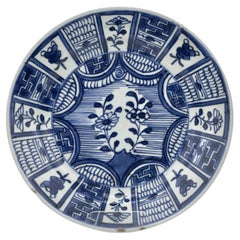
Japanese Arita Kraak type Dish, Mid-17th century, Edo Period
Located in seoul, KR
This piece was created in Japan presumably during the second half of the 17th century, with two archaic-style kanji characters, "酬酬" (shu shu), engraved on the bottom. A identical piece is housed in the National Museum of Warsaw.
Period : Edo Period, Japan
Date : 17th century
Provenance : Acquired in late 1990s from Hongkong
Reference : National Museum of Warsaw - Inventory Number SKAZsz 1230 MNW
(Type : Highly related)
* Japanese Edo Period Kraak
The Japanese 17th...
Category
Antique 17th Century Japanese Antiquities
Materials
Ceramic
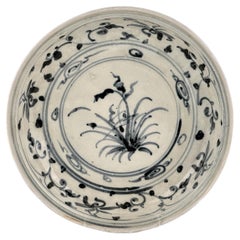
Annamese Stoneware Dish with Lotus Motif, 15-16th Century Vietnam, Le Dynasty
Located in seoul, KR
This Annamese ceramic dish features a central lotus motif, enclosed by a thin circular border. The rim is adorned with intertwining vine patterns and swirling motifs. The dish has a gently curved form with a well-proportioned depth and a neatly finished rim.
Dates : 15th century Le Dynasty
Region : North Annam, Vietnam
Type : Dish
Found/Acquired : Southeast Asia , South China Sea, Hoi An Ship
Reference : Double checked with reference to the original catalogue
Butterfield Treasures Hoi An Hoard Auction Catalogs / San Francisco Butterfields 2000
* Vietnamese trade ceramics
Around the mid-14th century, Vietnam developed its ceramics production technology by producing blue and white porcelain, and began to export it overseas. During this period, China Ming Dynasty implemented a policy of lifting the ban from 1371 to 1657 and restricted foreign trade. This served as a good opportunity in the trade history of Vietnamese ceramics, and ceramic exports...
Category
Antique 15th Century and Earlier Vietnamese Ming Antiquities
Materials
Stoneware
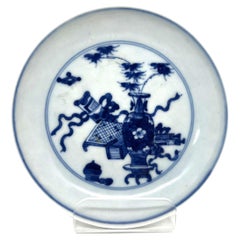
Artefacts of the Literati Pattern Plate c 1725, Qing Dynasty, Kangxi Era
Located in seoul, KR
In the center, a vase adorned with a floral pattern suggests appreciation for nature. Notably, there is an object resembling a Go board, indicative of the intellectual pursuits favor...
Category
Antique 1720s Vietnamese Qing Scholar s Objects
Materials
Ceramic
You May Also Like
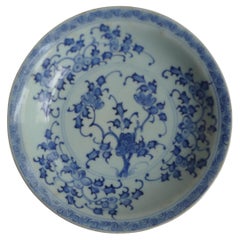
Handcrafted Chinese Plate from the Kangxi Period
Located in Vienna, AT
Blue and white hand-painted porcelain plate from the Kangxi period. Finely executed cobalt-blue decoration with characteristic clarity and balance of early Qing craftsmanship. The gl...
Category
Antique 18th Century Chinese Ming Ceramics
Materials
Porcelain
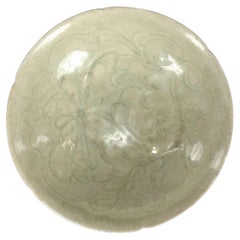
Chinese Qingbai Lobed Foliate-Rim Bowl, Song Dynasty
Located in Houston, TX
Chinese Qingbai lobed foliate-rim bowl, Song Dynasty, porcelain shallow bowl resting upon tapered footed base. Peony flower decoration incised upon interior of bowl. Known colloquial...
Category
Antique 15th Century and Earlier Chinese Decorative Bowls
Materials
Earthenware
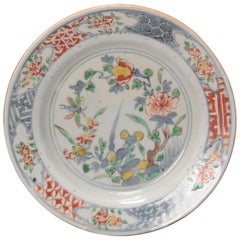
Rare Chinese Porcelain Ming Period Ko Akae Floral Dish, ca 1600-1660
Located in Amsterdam, Noord Holland
Dish with iron-red, green, aubergine, yellow, brown and black with an insect in flight above flowering peony issuing from rockwork, the rim with flower sprays reserved on diaper-patt...
Category
Antique 17th Century Chinese Ming Decorative Dishes and Vide-Poche
Materials
Porcelain
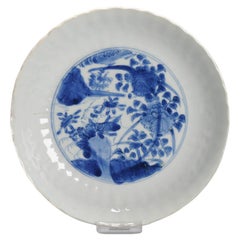
$3,118 Sale Price
20% Off
Wanli Antique Ming Period Chinese Porcelain Kraak Plate CHENGHUA MARKED
Located in Amsterdam, Noord Holland
A very nicely potted and painted kraak plate of a desirable cobalt blue! Stunning piece with beautiful and typical landscape scene. Visible is a grasshopper on a rock
Moulded in the ...
Category
Antique 17th Century Chinese Ming Ceramics
Materials
Porcelain
$11,901 Sale Price
20% Off
Unusual Wanli Antique Ming Period Chinese Porcelain Kraak Floral Objects Plate
Located in Amsterdam, Noord Holland
A very nicely potted and painted kraak plate of a desirable cobalt blue! Stunning and unusual scene with geometric design, flowers and objects.
Absolute top Quality kraak ware!
Co...
Category
Antique 17th Century Chinese Ming Ceramics
Materials
Porcelain
$1,567 Sale Price
20% Off
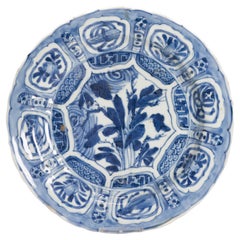
Antique Chinese Porcelain Jiajing or Wanli Small Plate 16th/17th Cen
Located in Amsterdam, Noord Holland
A very nicely decorated plate with a scene of spring. A very subtle design that we have never encountered before! Cool piece!
Additional information:
Material: Porcelain & Pottery
R...
Category
Antique 16th Century Chinese Decorative Dishes and Vide-Poche
Materials
Porcelain
$599 Sale Price
39% Off
More Ways To Browse
Song Dynasty
Chinese Song Dynasty
Dragon And Phoenix
Song Ceramics
Green Ware
Yuan Dynasty Blue And White Porcelain
Song Dynasty Ceramics
Tibetan Shell
Ancient Weapon
Antique Chinese Water Pot
Cizhou Pottery
Han Dynasty Pot
Korean Buddha
Mandalay Wood Figure
Yuan Celadon
Chinese Bronze Wine Vessel
Chinese Coconut
Conch Trumpet